


Break the habit this Ramadan and quit for life
Tobacco and vaping are harmful and deadly. So don’t harm yourself and others around you during Ramadan and always. Ramadan is a perfect time to break the habit and quit for life. You stay off tobacco for 15 hours every day so why not break the habit this Ramadan and quit for life.

New and emerging nicotine and tobacco products pose challenges for tobacco control
The tobacco industry is using new strategies to fuel its multi-billion-dollar turnover. It is flooding markets around the world with new and emerging nicotine and tobacco products which it sells as “smoke free”, “less harmful”, “cleaner” and “safer” than their conventional counterparts, and claims can be used as effective cessation aids.
Know the truth about new and emerging nicotine and tobacco products
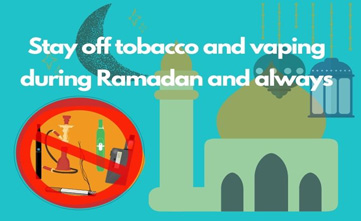
Kick the habit during Ramadan
Tobacco and vaping are harmful and deadly. So don’t harm yourself and others around you during Ramadan and always. Ramadan is a perfect time to kick the habit. You stay off tobacco for 15 hours every day so why not kick the habit once and for all.
Don’t smoke or vape during Eid and always
Tobacco in all its forms and e-cigarettes are harmful and deadly so don’t harm yourself and people around you during Eid and always. Eid is fun time for family and friends so don’t spoil the fun by harming yourself and people around you. Protect yourself and people who breathe in the smoke around you.
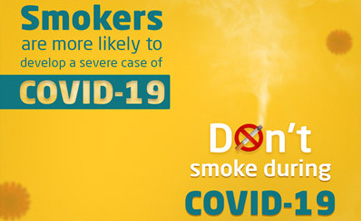
Smoking and vaping increase your chances of developing a severe case of COVID-19
Don’t smoke or vape during COVID-19 and always. Smokers are more likely to develop a severe case of COVID-19. Waterpipe use can increase your chances of getting COVID-19. Tobacco products, heated tobacco products and e-cigarettes are dangerous to your health, and also hurt people who breathe in the smoke around you.
Smoking and vaping increases your chances of developing a severe case of COVID-19

COVID-19 and beyond: banning tobacco and e-cigarettes in public places is a public health must
Following the spread of the COVID-19 pandemic in the world, 15 countries from the Eastern Mediterranean Region took a bold decision to ban waterpipe use temporarily in public places, in addition to the two countries that had already banned it previously, making the total number of counties that have banned waterpipe use in public places 17.
COVID-19 and beyond: banning tobacco and e-cigarettes in public places is a public health must

Tobacco and waterpipe use increases the risk of suffering from COVID-19
Any kind of tobacco smoking is harmful to the bodily systems, including the cardiovascular and respiratory systems. COVID-19 can also harm these systems. People who have cardiovascular and respiratory conditions caused by tobacco use, or otherwise, are at higher risk of developing severe COVID-19 symptoms.

Young people are being increasingly targeted by the tobacco industry
The tobacco industry promotes its products to potential smokers, including young people, to ensure the market for tobacco continues to increase and that dying smokers and those who quit smoking are replaced. Take measures to protect young people against the harms of tobacco use.

Waterpipes are not a safe alternative to cigarettes
Waterpipe tobacco use is damaging to health in similar ways to cigarette tobacco use. Waterpipe tobacco use is not a safe alternative to cigarettes, and there is no proof that any device or accessory can make waterpipe smoking safer. Include waterpipes in tobacco control efforts.

Smokeless tobacco use is rising among young people and women
Smokeless tobacco use is rising, especially among young people and women. Smokeless tobacco is being increasingly marketed by the tobacco industry. It is highly addictive and damaging to health yet it has not had the same amount of regulation as cigarettes. Include smokeless tobacco use in tobacco control efforts.
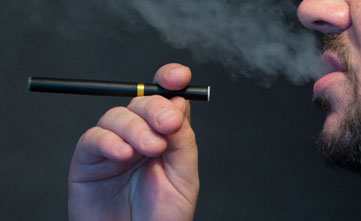
E-cigarettes are a threat to health
Claims about the safety of e-cigarettes and their efficacy in cessation are unfounded in scientific evidence. E-cigarettes contain nicotine, which is a harmful and addictive ingredient, and affects brain development in youth. E-cigarettes are also associated with injuries and illnesses, such as explosions and fires, throat and mouth infections, coughs, nausea and vomiting. Educate about use of e-cigarettes.