


Select your language

WHO presence in Pakistan
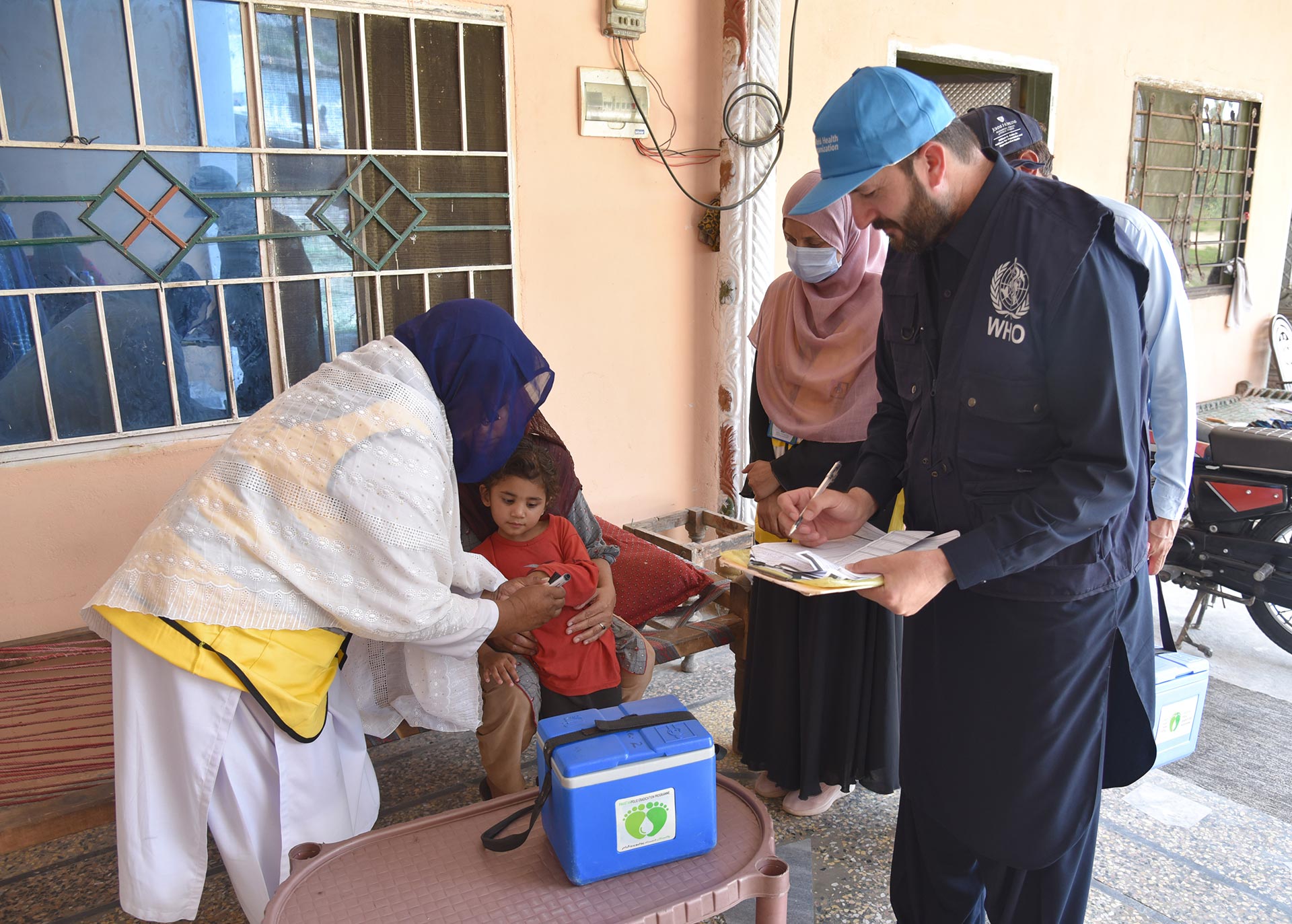 WHO staff member monitors a vaccination campaign in Rawalpindi. Photo credit: Hamid InamThe World Health Organization (WHO) has maintained a permanent presence in Pakistan – a WHO founding member – since establishing its country office in 1960. Through its partnership with the Government of Pakistan, WHO provides comprehensive technical, policy and operational support to strengthen health services, address public health concerns and foster research in the health sector.
To ensure healthier lives and promote well-being for all at all ages, major areas of collaboration with the Government of Pakistan for the period 2020–2025 are based on the following goals:
that 46 million more people benefit from universal health coverage;
36 million more people are better protected from health emergencies; and
30 million more people enjoy better health and well-being.
As the leading health agency, WHO collaborates closely with partners to support the Government of Pakistan in achieving universal health coverage and the Sustainable Development Goals (SDGs), working under the umbrella of WHO’s Strategic Operational Plan for the Eastern Mediterranean Region 2025–2028 which adapts the Organization’s 14th Global Programme of Work (GPW 14) to the regional context.
