Top story
The challenges facing TB patients in Syria

The challenges facing TB patients in Syria
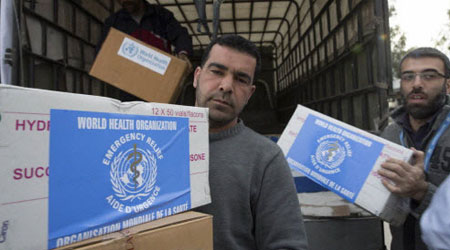
Between July 2019 and September 2020, hundreds of tuberculosis (TB) cases were detected in northwest Syria. However, there are still several challenges and some missing links for the optimal implementation of the End TB Strategy according to World Health Organization guidelines. Rifampicin- and multidrug-resistant tuberculosis (MDR/RR-TB), which requires more complex treatment than drug-susceptible (DS) TB, is one of the biggest obstacles to meeting 2020 milestones to end TB.
Since the beginning of July 2020, there has been a reported increase in RR/MDR-TB cases detected in northwest Syria, totalling 12 cases in the most recent reporting period.
WHO Regional Director's statement on his mission to Syria

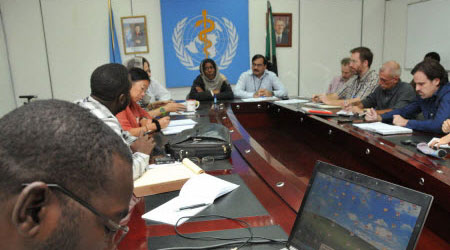
8 November 2020 – I recently returned from a 4-day mission to Syria, where I met with officials at all levels, health workers, partners, academia, and others to learn more about the overall health situation, find new ways of working together to strengthen service delivery, protect Syrians from current threats, and help strengthen the devastated health system.
I met frontline health workers and patients in Damascus, Homs and Hama, including 6-year-old Jaafar, who depends on dialysis sessions 3 times a week at a WHO-supported NGO-run health care centre in Homs to stay alive and grow up. Doctors at the same centre told me of a single mother of 2 blind boys who had waited 2 years for a heart angioplasty, and was finally able to have this life-saving operation only last week.
Latest situation report on COVID-19

Read the latest situation report on COVID-19 in the Eastern Mediterranean Region
Coronaviruses (CoV) are a large family of viruses that cause illness ranging from the common cold to more severe diseases such as Middle East respiratory syndrome (MERS-CoV) and severe acute respiratory syndrome (SARS-CoV). A novel coronavirus (nCoV) is a new strain that has not been previously identified in humans.
Coronaviruses are zoonotic, meaning they are transmitted between animals and people. Detailed investigations found that SARS-CoV was transmitted from civet cats to humans and MERS-CoV from dromedary camels to humans. Several known coronaviruses are circulating in animals that have not yet infected humans.
Common signs of infection include respiratory symptoms, fever, cough, shortness of breath and breathing difficulties. In more severe cases, infection can cause pneumonia, severe acute respiratory syndrome, kidney failure and even death.
Standard recommendations to prevent infection spread include regular hand washing, covering mouth and nose when coughing and sneezing, thoroughly cooking meat and eggs. Avoid close contact with anyone showing symptoms of respiratory illness such as coughing and sneezing.