


Introduction
This comprehensive guidance on floods, intended primarily for individuals and communities in flood-prone areas, also serves as a vital resource for local authorities, first responders and public health professionals. It provides essential information to support disaster readiness and response efforts, particularly when working with affected communities.
The guidance seeks to equip people with a clear understanding of the risks that floods present, including immediate threats, short- and long-term health risks and their effects on vulnerable populations such as pregnant women, children, older adults, people with disabilities, migrants and internally displaced persons, and of how environmental changes and unsustainable practices can worsen flooding events.
Building on established risk communication, community engagement and infodemic management (RCCE-IM) principles which emphasize active listening to communities, fostering two-way dialogue, building trust through transparent and accessible information, empowering individuals and communities to take informed action and tailoring communication strategies to specific needs and contexts, the guidance provides step-by-step advice on actions that should be taken before, during and after a flood.
Covering readiness measures, safe behaviours during flooding and post-flood activities that promote health, safety and recovery, the guidance highlights the importance of community resilience and collaborative efforts across different sectors.
Designed to inform messaging that targets diverse groups and communities, disseminated through accessible channels, the guidance offers countries a foundational resource with recommendations that can be adapted to specific local and cultural contexts.
Countries are encouraged to adapt and tailor the guidance, including by presenting the information it contains in local languages and dialects to ensure accessibility, through communication channels that communities use and trust.
The guidance was developed by the RCCE-IM team, in collaboration with experts on health promotion, noncommunicable diseases, mental health, communicable disease prevention and control, health security and preparedness at the World Health Organization (WHO) Regional Office for the Eastern Mediterranean.
 Applying RCCE-IM principles throughout the flood cycle
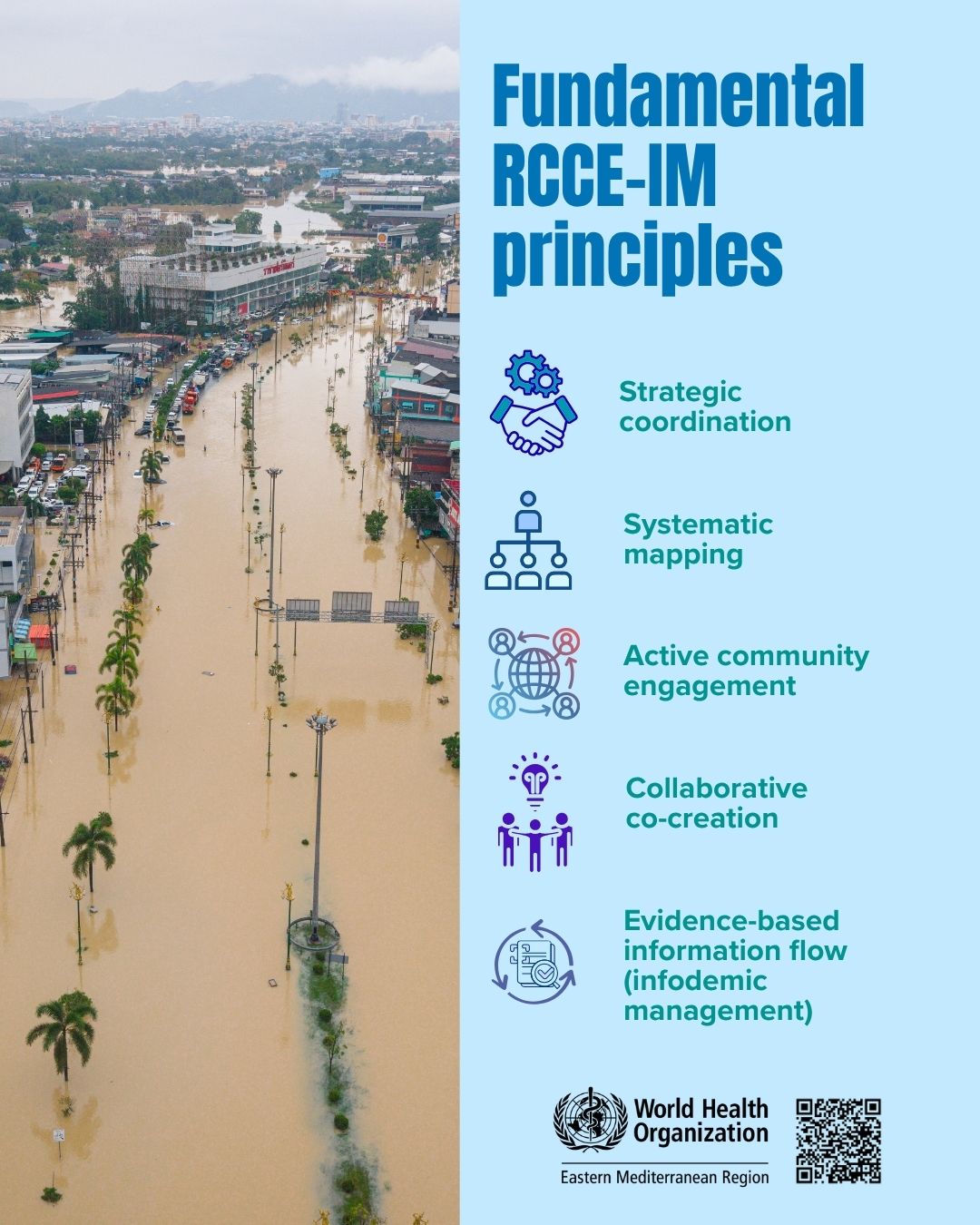
Effective flood preparedness, response and recovery hinge on robust RCCE-IM. All actions, from early warnings to post-disaster cleanup, should be rooted in clear, trustworthy communication and active community involvement. By systematically applying RCCE-IM principles, stakeholders enhance the effectiveness of protective measures, foster community resilience and ensure the wide-ranging impacts of floods are addressed.
Fundamental RCCE-IM principles should guide action across all stages of a flood event.
- Strategic coordination
Ensure all stakeholders – from meteorological and hydrological services to health authorities, emergency responders, civil society organizations and community leaders – work in unison. Establish joint planning mechanisms, clear lines of communication and agreed-upon roles and responsibilities to unify flood preparedness and response efforts.
- Systematic mapping
Identify the specific needs and concerns of at-risk and vulnerable communities affected by floods, including pregnant women, children, older adults, people with disabilities, migrants and internally displaced persons, alongside the communication channels they use. This mapping helps inform tailored messaging and targeted support.
- Active community engagement
To build trust, address fears and gather vital insights into flood experiences and needs, work with – not just for – affected populations. This involves engaging communities in flood risk assessments, developing local evacuation plans and identifying safe shelters that meet the requirements of those at risk.
- Collaborative co-creation
Develop messaging, interventions and support mechanisms alongside communities to ensure they are culturally appropriate and meet community needs. This includes co-developing messages on flood safety practices, health risks, access to services, safe water, food hygiene, disease prevention and safe cleanup practices using simple language, visuals and local dialects.
- Evidence-based information flow (infodemic management)
Disseminate accurate, timely and empathetic information to counter misinformation, rumours and unofficial news. This empowers individuals to take protective actions and helps manage infodemics of potentially harmful information. Key information should include flood warnings, health advisories (e.g. on water contamination or vector-borne diseases) and guidance on accessing relief and recovery services. Using trusted sources and channels reinforces public confidence and adherence to official guidance.
By applying these RCCE-IM principles, stakeholders can effectively leverage the guidance to enhance preparedness, respond sensitively, support the well-being of those impacted by floods, foster resilience and facilitate access to essential care and services.
 Understanding floods and their impact
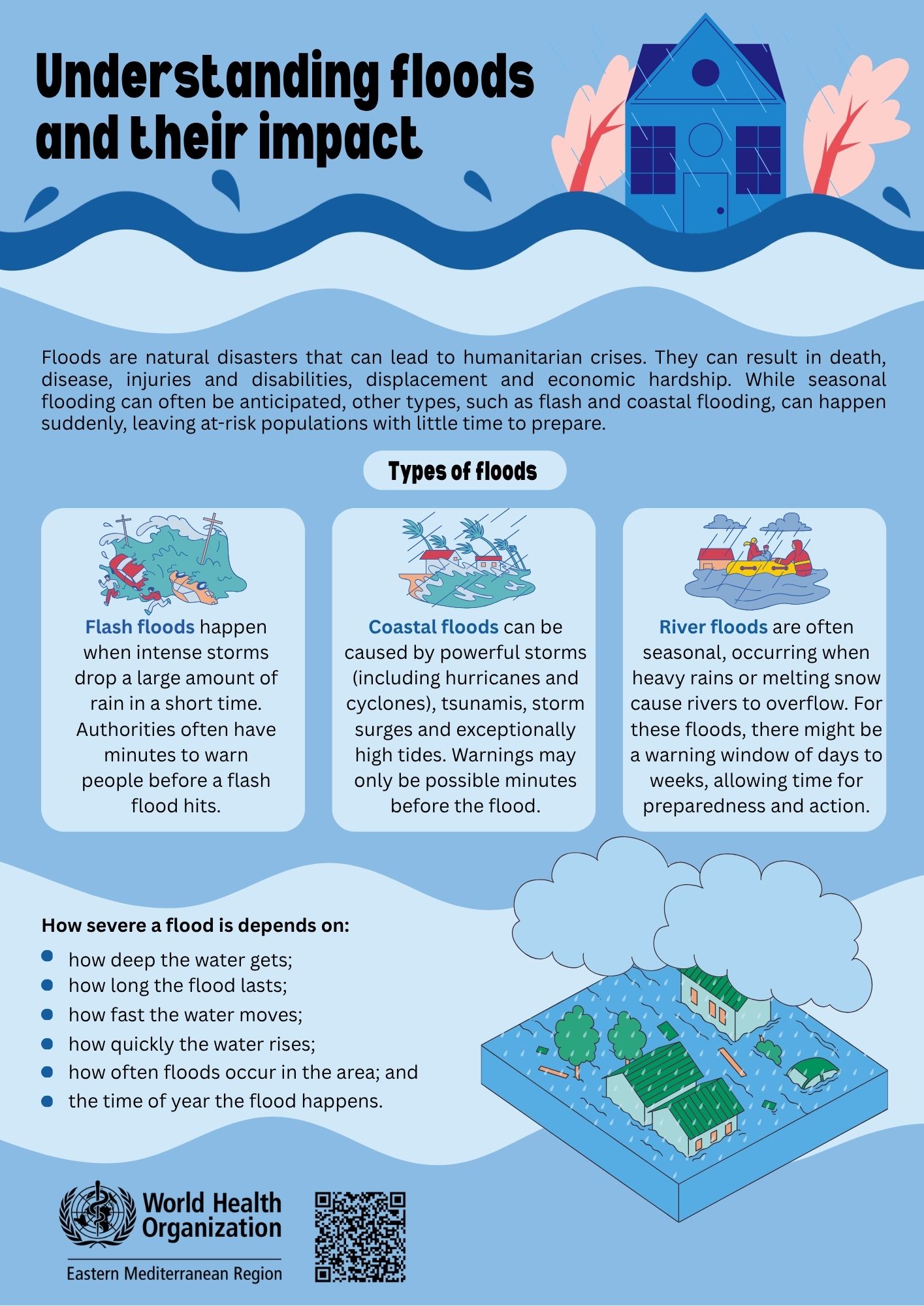
Floods are natural disasters that can lead to humanitarian crises. They can result in death, disease, injuries and disabilities, displacement and economic hardship. While seasonal flooding can often be anticipated, other types, such as flash and coastal flooding, can happen suddenly, leaving at-risk populations with little time to prepare.
Types of floods
- Flash floods happen when intense storms drop a large amount of rain in a short time. Authorities often have minutes to warn people before a flash flood hits.
- River floods are often seasonal, occurring when heavy rains or melting snow cause rivers to overflow. For these floods, there might be a warning window of days to weeks, allowing time for preparedness and action.
- Coastal floods can be caused by powerful storms (including hurricanes and cyclones), tsunamis, storm surges and exceptionally high tides. Warnings may only be possible minutes before the flood.
The severity of floods
How severe a flood is depends on:
- how deep the water gets;
- how long the flood lasts;
- how fast the water moves;
- how quickly the water rises;
- how often floods occur in the area; and
- the time of year the flood happens.
 Reducing the impact of floods
The impact of floods on people can be reduced by:
- educating the public and raising awareness among communities and civil society;
- building networks and partnerships to support evacuation and provide shelters; and
- ensuring effective flood warning systems are in place.
Reducing the impact of floods on infrastructure
- Flood risk assessment and mapping
Systematically identify areas prone to flooding and create detailed maps that show potential flood depths, velocities and impacts. These assessments should inform land-use planning, building codes and the placement of critical infrastructure.
- Managing floodplains
Strategies to manage floodplains, including restoring natural wetlands, constructing dykes and implementing zoning regulations that limit development in high-risk areas, can help control water flow and reduce inundation.
For health infrastructure, comprehensive capacity and vulnerability assessments should be conducted. The structural integrity of health facilities and the resilience of essential services – power, water and sanitation – needed for them to operate should be assessed, as should facility accessibility – for medical supplies, personnel and people seeking care – during and after a flood event. Corrective measures based on the assessments can then be implemented, which may include elevating critical equipment, reinforcing building structures and establishing alternative care sites.
Global best practices emphasize multisectoral planning, integrating climate change projections into infrastructure design and promoting build back better principles after disasters to enhance long-term resilience.
In flood-prone areas, climate-resilient, environmentally sustainable health care facilities should be prioritized. Designed to remain operational during extreme weather events, these facilities incorporate renewable energy sources and sustainable water systems and are often elevated or otherwise flood-protected. They not only ensure continuity of care but also contribute to broader environmental goals.
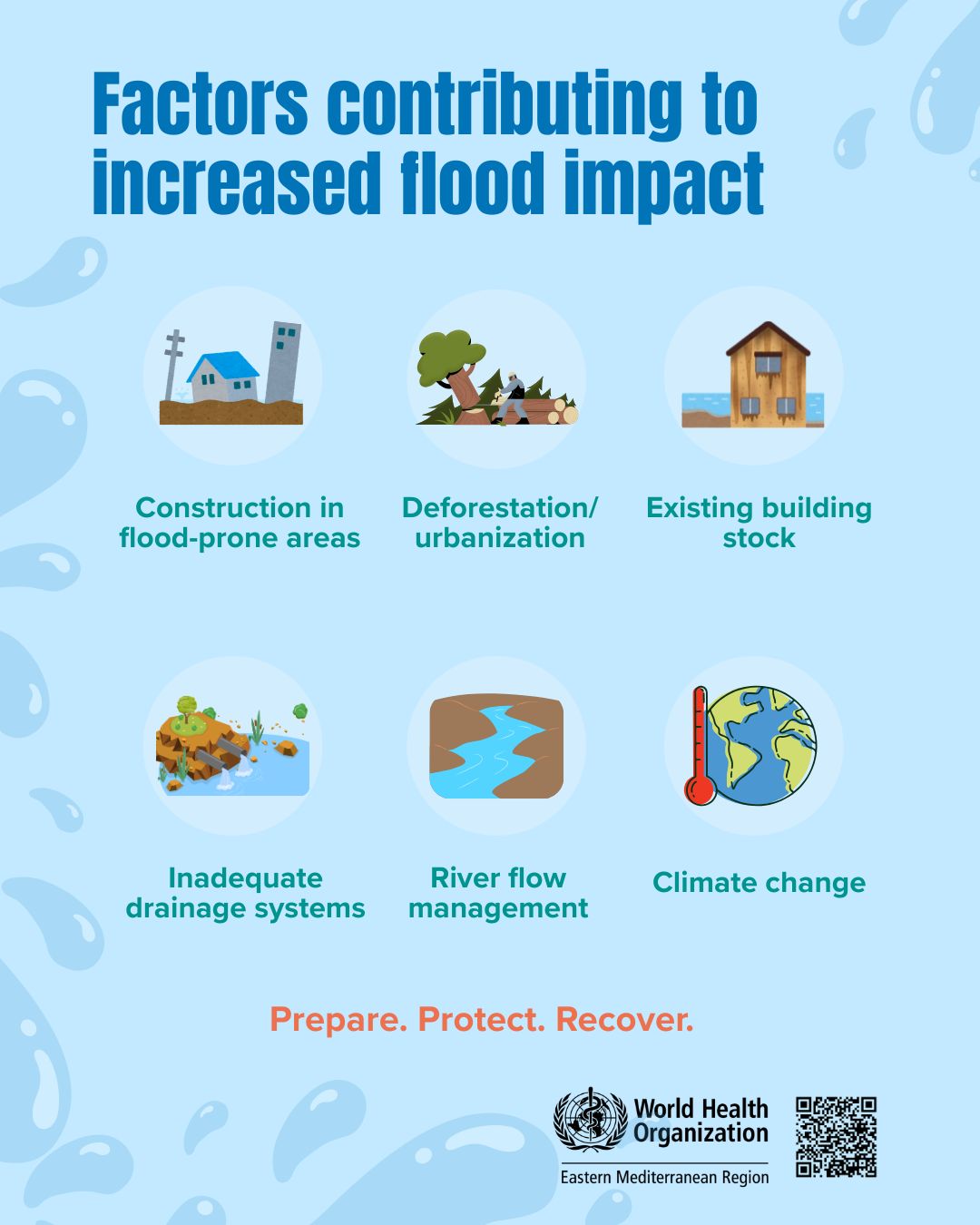
Factors contributing to increased flood impact
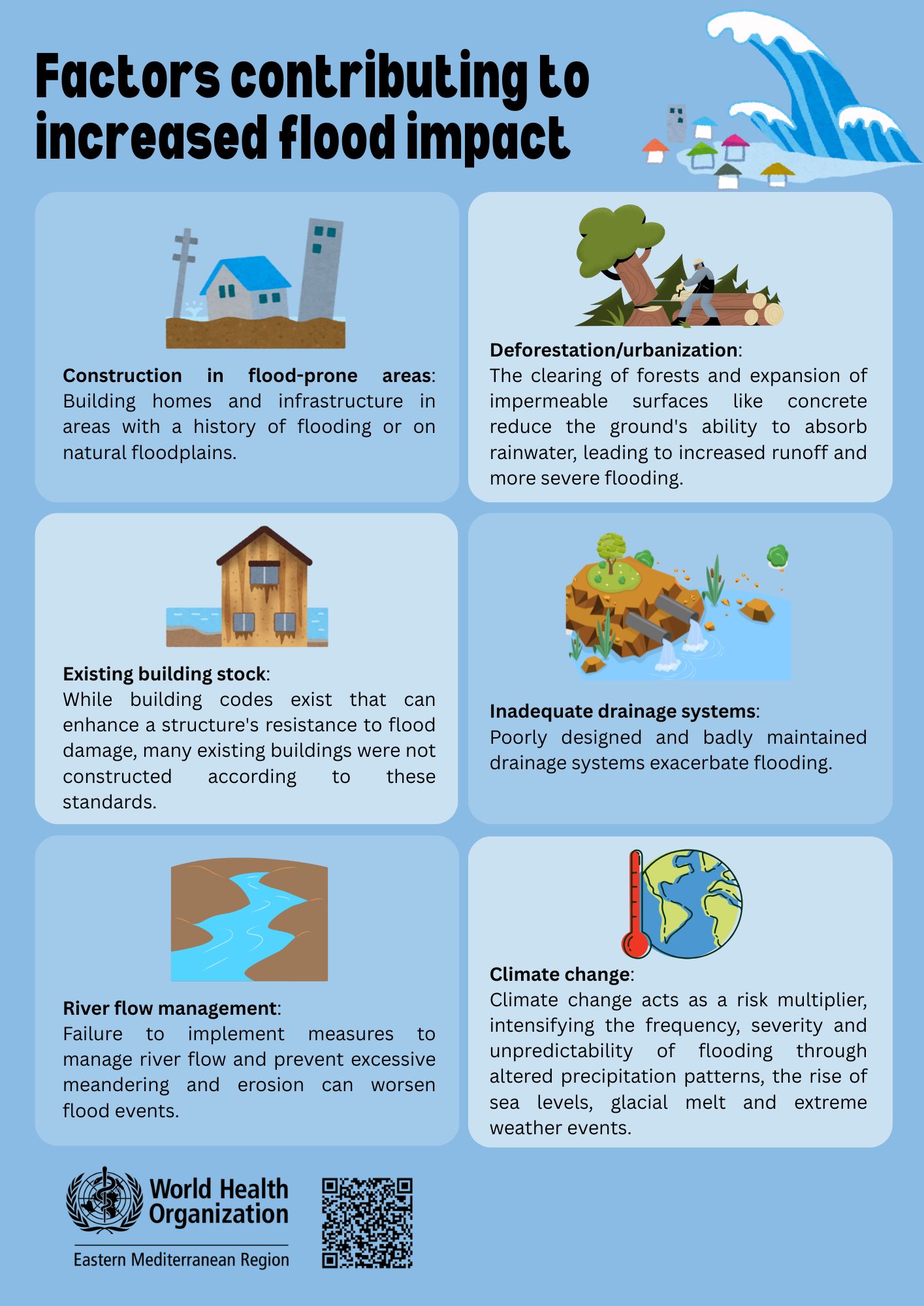
- Construction in flood-prone areas
Building homes and infrastructure in areas with a history of flooding or on natural floodplains.
- Deforestation/urbanization
The clearing of forests and expansion of impermeable surfaces like concrete reduce the ground's ability to absorb rainwater, leading to increased runoff and more severe flooding.
- Existing building stock
While building codes exist that can enhance a structure's resistance to flood damage, many existing buildings were not constructed according to these standards.
- Inadequate drainage systems
Poorly designed and badly maintained drainage systems exacerbate flooding.
- River flow management
Failure to implement measures to manage river flow and prevent excessive meandering and erosion can worsen flood events.
- Climate change
Climate change acts as a risk multiplier, intensifying the frequency, severity and unpredictability of flooding through altered precipitation patterns, the rise of sea levels, glacial melt and extreme weather events.
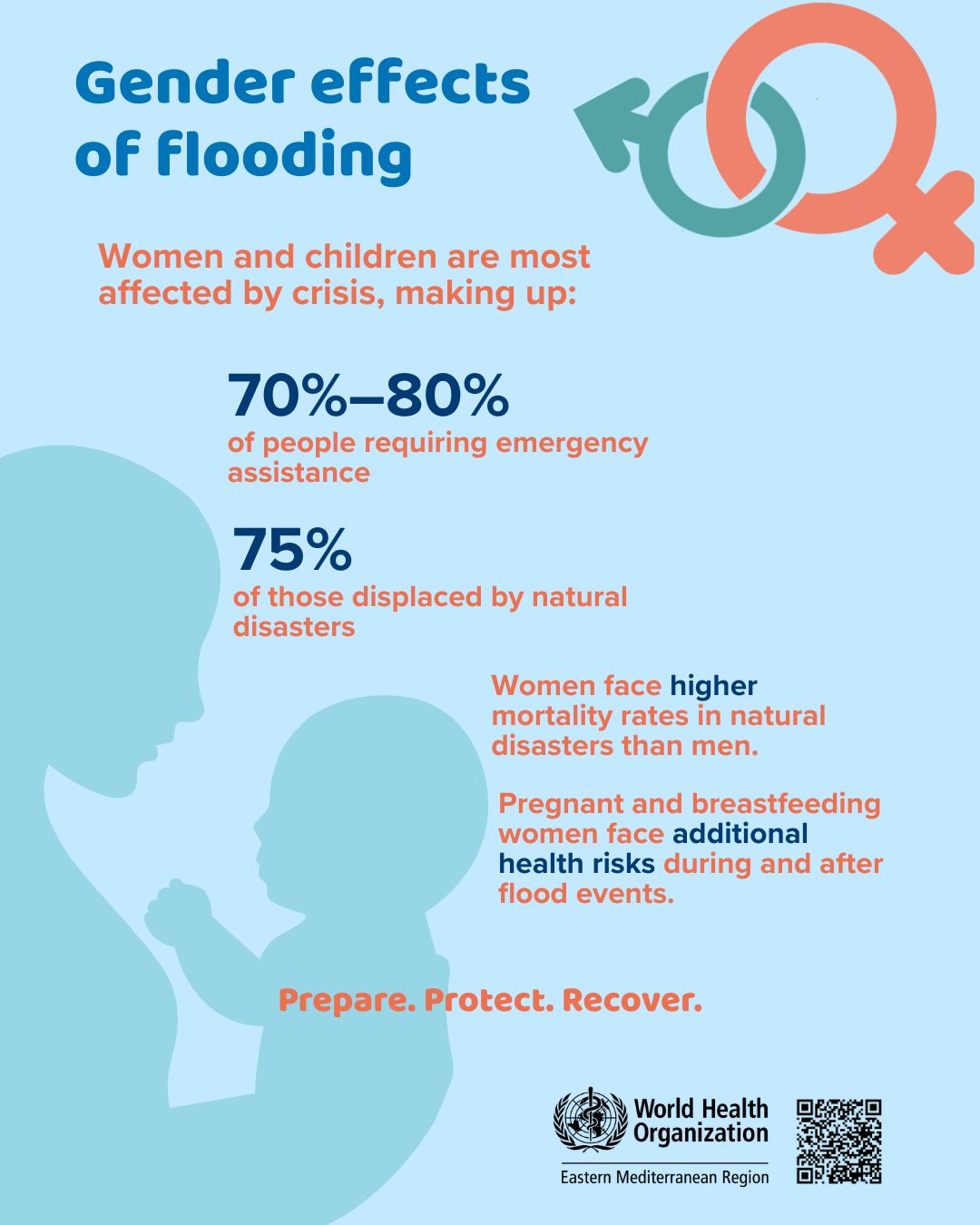
Gender effects of flooding
Research consistently indicates that women and children are disproportionately affected by crisis situations, typically making up 70%–80% of individuals requiring emergency assistance and comprising over 75% of those displaced by natural disasters. During heavy rains in East Africa in 2023–2024, for example, when thousands of refugees were forced from their homes, women and girls bore the greatest burden.
Women face higher mortality rates in natural disasters than men. In the 1991 Bangladesh cyclone, women accounted for 90% of the 140 000 fatalities. During the 2004 Indian Ocean tsunami, 4 times more women died than men. Discriminatory gender norms and lower socioeconomic status compound women’s vulnerability by restricting their mobility, limiting access to critical services and reducing their capacity to respond and adapt to emergencies.
Beyond the immediate death toll, women and girls suffer disproportionately from post-disaster health impacts. They often have less access to clean water and sanitation and bear primary responsibility for caring for children and the elderly. Pregnant and breastfeeding women face additional health risks during and after flood events. A review of 130 studies found that women are more likely than men to experience negative outcomes, including poor physical and mental health and food insecurity, following such disasters.
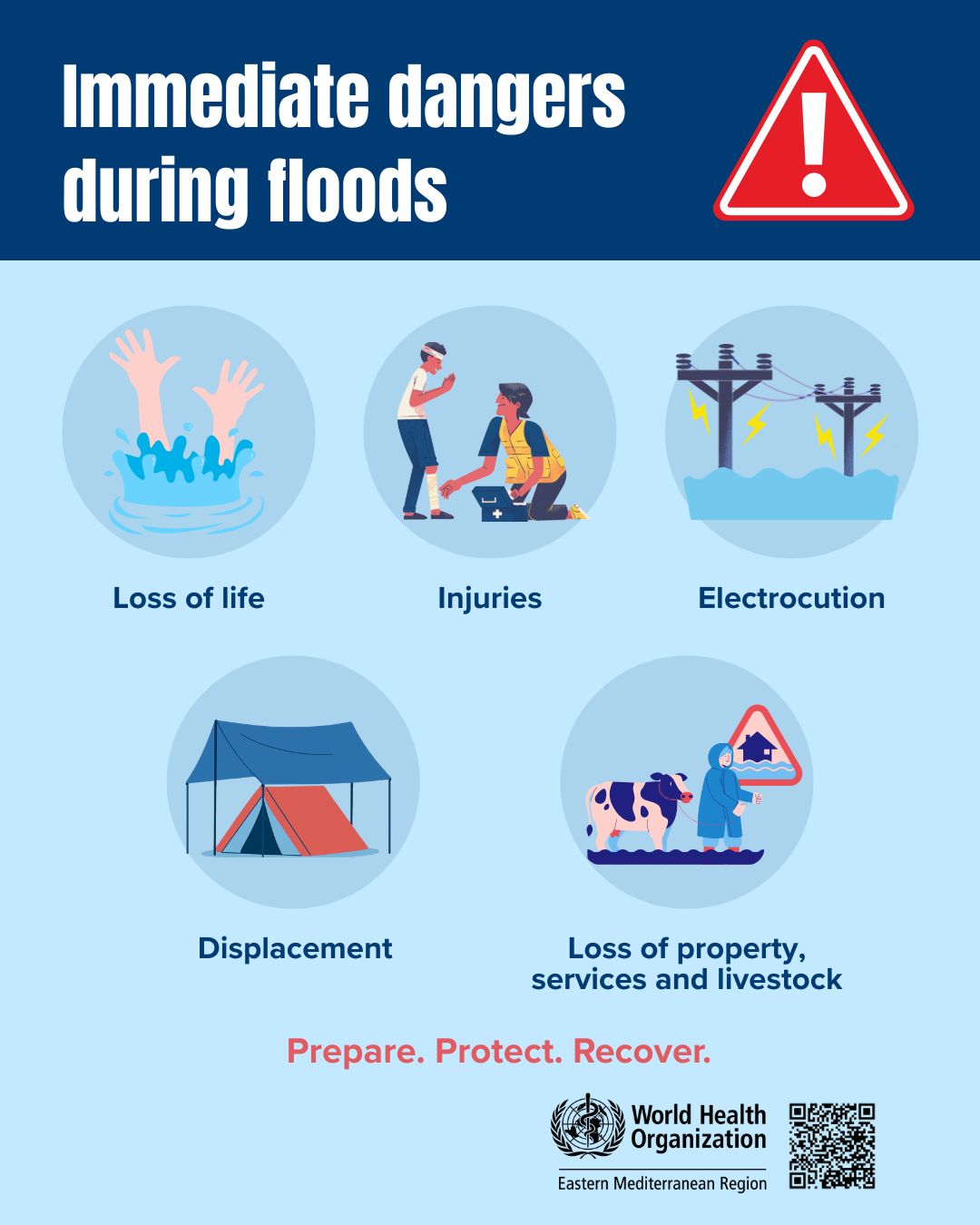
 Immediate dangers
- Loss of life: drowning is the greatest danger in flash and coastal floods. The fast-moving waters can sweep away anything in their path.
- Injuries: people can sustain injuries during floods, evacuation and cleanup efforts. The risks and types of injuries can vary significantly based on individual factors such as pregnancy, disability and age.
- Electrocution: floodwater can conduct electricity, leading to increased risk of shocks.
- Displacement: floods can force people to relocate to shelters or temporary accommodation.
- Loss of property, services and livestock can lead to food and health insecurity.
 Health risks
- Short-term (days to weeks)
- Water and foodborne diseases
Floods can cause water used for drinking and cooking to become contaminated with sewage from septic tanks and damaged sewage pipes, chemicals and heavy metals from industrial spills, toxic waste and plastic from landfills and rubbish collection sites, pesticides and fertilizers, and pathogens from the decomposition of dead bodies.
Polluted water and contaminated food cause many diseases, including:
- cholera;
- typhoid fever;
- hepatitis A;
- dysentery;
- leptospirosis; and
- skin infections.
- Vector-borne diseases
Floods create pools of stagnant water which form ideal breeding sites for mosquitoes. As mosquito vector populations increase, so does the risk of outbreaks of mosquito-borne diseases like malaria and dengue, particularly in endemic areas.
Vectors can transmit infectious pathogens – parasites, bacteria or viruses – between humans or from animals to humans, leading to a range of diseases that can greatly impact health. Standing water is a breeding ground for multiple disease vectors, increasing the risk of vector-borne illnesses at a time when many people are vulnerable to other health threats. Vector-borne diseases include:
- dengue;
- malaria;
- chikungunya;
- Zika virus;
- yellow fever;
- West Nile fever; and
- Rift Valley fever.
- Medium- and long-term
- Increased domestic violence against women and children, with stress – linked, for example, to property and job loss – as a contributing factor, and gender inequality as a root cause. The results can include controlling and coercive behaviour, physical, emotional and economic violence and a resurgence of traditional practices such as child or forced marriage and child labour.
- Sexual violence, with heightened risks for those living in overcrowded shelters, removed from their usual support systems. Inadequate infrastructure and WASH facilities and a lack of lighting contribute to the risk of sexual violence.
- Long-term (months to years)
- Flood damage to roads and health facilities, equipment and medicines undermine care delivery. Given the heightened health threats posed by floods, interruptions to health delivery can have severe impacts.
- Food shortages are common as floods damage infrastructure, destroy crops, kill livestock and disrupt food supply chains.
 Key steps: preparedness and action
Effective readiness and response planning must be inclusive. It should take into account the needs and vulnerabilities of all population groups, including specific needs related to age, gender and disability. A variety of actions are required to target different groups within the community and the full range of stakeholders, including health responders. The steps below focus on actions to be taken before and during a flood event to enhance readiness and mitigate flood impacts.
- Strengthen preparedness in flood-prone areas
Proactively implement comprehensive preparedness measures. These include conducting community risk assessments, including those specific to age, gender and disability, to ensure the needs of all population groups are considered. Attention must be given to gender-based violence and violence against children-related risk assessments and health care facility climate vulnerability assessments, the pre-positioning of resources, the development of evacuation plans tailored to vulnerable populations and public awareness campaigns focused on early warning systems and safe practices.
- Integrate climate resilience into early warning and RCCE-IM systems
Communication strategies should be climate-informed, with seasonal forecasts, extreme weather alerts and hazard modeling integrated into early warning messaging. RCCE-IM tools need to be aligned with climate services to alert communities well ahead of climate-exacerbated flooding risks, using real-time data whenever possible.
- Flood mitigation strategies
Public health messaging should include the value of nature-based ways to mitigate flood impacts, such as restoring wetlands, enhancing urban green spaces and reforestation of flood plains. These measures help water absorption and flow regulation and offer climate co-benefits.
- Effective communication and evacuation
Clearly communicate warnings and instructions to the public. Implement and manage safe and efficient evacuation procedures when necessary.
- Search and rescue
Have mechanisms in place to quickly find and help people who are trapped.
- Medical care
Ensure people have access to medical treatment, regardless of gender, age or disability, and that equipped and trained emergency responders are available.
- Evacuation and shelters
Provide people with safe places to stay, and ensure such sites have measures in place to prevent any risk of violence and abuse.
- Disease prevention
Ensure disease prevention strategies are in place and can be effectively implemented.
- Safe cleanup
Teach people how to cleanup safely after a flood.
- Food safety and security
Ensure people have access to safe and nutritious food.
 Protecting vulnerable and at-risk groups
- Vulnerable groups include pregnant women, children, older people, people with disabilities and people with mental health or chronic conditions. They face heightened risks of exploitation and abuse during crises, including sexual exploitation, mistreatment and psychological harm. Protection measures include:
- strong systems for preparedness and prevention;
- safe ways to report abuse and quick investigations of abuse claims;
- support for survivors; and
- collaboration between agencies to keep people safe.
- At-risk groups – women and girls may be at increased risk of violence, abuse and exploitation as well as harmful traditional practices.
- Climate-sensitive vulnerabilities – climate change disproportionately affects vulnerable groups by compounding their exposure to cascading hazards (e.g. post-flooding heatwaves and disease outbreaks linked to prolonged displacement). Messaging and preparedness must consider these interlinked risks, especially in fragile and conflict-affected settings where climate stress intersects with limited health access.
 Health concerns after flooding
Groups at heightened risk
- Pregnant women may face complications and unsafe delivery conditions.
- Older people who are more susceptible to infections and may have mobility challenges.
- People with pre-existing mental health or chronic conditions which can be exacerbated by the stress and disruption caused by floods.
- Women and girls may be at increased risk of violence, abuse and exploitation as well as harmful traditional practices, with medium and long-term consequences on their physical, mental, sexual and reproductive health.
- Persons with disabilities may face systemic failures to accommodate their needs, increasing their exposure to risk factors and infections.
Clean water, sanitation and hygiene (WASH)
Harmful bacteria and viruses spread quickly in floodwater, increasing the risk of diseases like:
- polio;
- diarrhoea (cholera, typhoid); and
- skin infections, including scabies, a contagious itch caused by tiny mites.
Mental health and psychosocial support
The loss of homes, belongings and businesses is traumatic. People will need help coping with stress, sadness, anxiety and the loss of social support/family networks. Floods can profoundly impact the social and emotional well-being of individuals and communities. Exposure to disaster, loss of or separation from family members and friends, deteriorating living conditions, the inability to provide for oneself and one’s family and lack of access to services can have immediate and long-term consequences for people’s balance and fulfillment. These can manifest as persistent distress, anguish, feelings of being overwhelmed, psychosomatic illness, depression, anxiety and increased interpersonal violence.
The way aid is administered influences psychosocial outcomes: it can either support or harm affected people. Humanitarian action is strongest when affected people are engaged early in guiding and implementing the disaster response. Aid delivery should promote dignity, enable a sense of agency through meaningful participation, respect religious and cultural practices and strengthen the ability of community members to support their children, families and neighbours.
Mental health and psychosocial support (MHPSS) requires multiple level interventions, ranging from broad programmes on basic services and security to community and family support and specialized mental health services. It is crucial to distinguish between interventions that benefit the population at large (non-specialized services) and those that require specialized expertise. Implementing MHPSS interventions requires extensive collaboration between humanitarian actors. No single community or agency has the capacity to implement the full range of minimum responses needed during an emergency.
Understanding reactions and coping
- Strong reactions and feelings are normal and can be overcome
It is normal to experience intense emotions after a difficult event. Common reactions include loss of interest in daily life, feeling sad, irritable or confused, having difficulty concentrating and experiencing physical reactions or vivid memories of the event. Recognize that this is a challenging time, but one that can be managed. Individuals have overcome hardships before. With time and support, these difficulties can be overcome.
- Taking care of yourself helps in caring for others
Do not be ashamed to ask for help. Prioritizing self-care is essential to effectively support others. Focus on personal strengths and be patient when your feelings and reactions change. Try to reestablish daily routines such as regular sleeping and eating and to make time for satisfying activities. If you feel unable to cope, or that you are not improving, seek assistance from a health clinic.
- Working together strengthens coping abilities
Helping others, and accepting help, are among the most effective ways to navigate difficulties. Listen to others, offer comfort and participate in regular social activities. Do not hesitate to accept or ask for help from trusted individuals in the family and community.
- Rebuilding communities collectively
Work with others to organize community and social activities such as religious ceremonies, community meetings, sports, arts, cleanup efforts and mutual aid.
- Reach out to those most affected
Reach out to those who are most affected, including injured people, older people, individuals with disabilities, widows and children who have lost their parents.
Supporting children
- Adults play a vital role in helping children cope
Children require extra care after a flood event. Protect children by ensuring their safety, listening to them, speaking kindly, offering reassurance, engaging in play and providing hugs. Create opportunities for children to share their concerns and hopes, play with friends and participate in daily life such as helping with family tasks.
- Protect children more than usual
Children need adults’ love and attention during difficult times. Consistent watchfulness and providing comfort throughout the day can help prevent further harm. To ensure children's safety, they should be close to their parents or a trusted caregiver day and night.
- Children are best cared for by known and trusted people
Unless they are lost or abandoned, never move children away from their communities. If you become aware of children living without parents, notify a designated helpline or trusted organization. Report anything that seems suspicious. Children are always better with familiar caregivers. Do not hand children over to people who promise a better future elsewhere.
Vector-borne diseases spread by biting insects
Floods create breeding grounds for mosquitoes which can spread diseases like dengue fever, a viral infection spread by mosquitoes, and malaria, a parasitic disease spread by mosquitoes.
Increased risk of leishmaniasis
- Though leishmaniasis is spread by sand flies, which do not breed in floodwater, floods can indirectly increase the risk of this disease.
- Environmental changes, such as humid conditions created by poor solid waste management after a flood, favour sand fly habitats.
- Displacement due to floods can move people from lower-risk areas to regions where leishmaniasis is more common, increasing their exposure to sand flies.
Problems with rats and other pests
Floods can increase the problems caused by rats and other pests that carry diseases such as leptospirosis (Weil's disease), a bacterial infection transmitted through their urine in contaminated water, and salmonellosis, a foodborne illness that spreads through contact with rodent faeces.
Cleanup injuries
People can get hurt by:
- hidden debris and sharp objects in the water;
- falling into uncovered manholes; and
- exposing themselves to contaminated floodwater.
Respiratory illnesses
When people live close together in shelters, respiratory infections like COVID-19, influenza and measles can easily spread.
Nutrition
In the WHO Eastern Mediterranean Region, food security and access to adequate nutrition is seriously undermined in countries affected by emergencies. There is widespread hunger and malnutrition among refugees and displaced populations – currently over 56 million people in the Region – many of whom, infants, children, adolescents, adults and older people, suffer from one or more of the multiple forms of malnutrition.
Besides acute malnutrition, deficiencies of micronutrients such as iodine, vitamin A and iron are common in emergency-affected populations. Across the region, 7.5 million children (9.1%) are wasted.
The prevalence of food insecurity is almost double in countries affected by emergencies, conflict, unrest and population displacement (19.0% compared to 9.8%).
In emergencies, malnutrition risk levels depend on multiple factors, including the degree of civil security, food availability and accessibility, mechanisms for the delivery of assistance and access to health services. Compromised access to a diverse healthy diet and the impact of emergencies on breastfeeding and infant and young child feeding are major concerns.
People suffering acute malnutrition are more likely to become sick and die, with vulnerable groups, including children under 5, pregnant and breastfeeding women and elderly people, at heightened risk.
Climate change can increase the risk of food insecurity before floods occur, affecting agricultural productivity, crop cycles and livestock health. RCCE-IM interventions are needed to raise awareness of climate-resilient agriculture and promote early food security planning as preventive measures in flood-prone zones.
Key nutrition concerns post-flood
- Food insecurity
- Floods destroy crops and livestock, disrupting food supply chains. Power outages and infrastructure damage can result in the loss of large quantities of food.
- While the livestock sector gets little attention during and after floods, cattle productivity and poultry production can be seriously affected. Meat and milk production and animal reproduction rates fall, and animal health can be adversely affected.
- Floods increase the risk of epizootics (animal epidemics), which can include anthrax, a disease caused by bacteria that can lead to sudden death in livestock, and haemorrhagic septicemia, a severe and often fatal disease characterized by fever and difficulty breathing that mainly affects cattle and buffalo.
- Disruption of health and nutrition services
The closure of clinics and halt in outreach programmes limit access to routine services, including:
- growth monitoring and promotion;
- infant and young child feeding services and counselling;
- micronutrient supplementation;
- supplementary feeding programmes; and
- therapeutic food for severely malnourished children.
- Unsafe infant and young child feeding
- Mothers may stop breastfeeding due to stress, misinformation or lack of privacy.
- Use of formula feeding – breast milk substitute – may increase, often on the back of misinformation or donations to mothers without medical staff consultation.
- Waterborne diseases impacting nutrition
- Diarrhoea, cholera and other infections lead to rapid nutrient loss and cause malnutrition.
- Children who become sick are more likely to be undernourished.
- Foodborne illnesses
Floods disrupt food distribution and critical infrastructure, can contaminate crops with heavy metals, mold and sewage and cause contamination with foodborne pathogens like e. coli, salmonella, norovirus and hepatitis A.
- Displacement
When people feel stress they may reduce food intake. Combined with a lack of food diversity, this can result in macro- and micronutrient deficiencies.
Chemical poisoning
- Generators used for pumping water and drying out buildings produce carbon monoxide, a deadly gas that you can’t see or smell. Use generators safely, and only outdoors.
- Flooding in areas used to store industrial waste and with poorly regulated chemical storage can lead to acute chemical exposure. Risk communication must include climate-sensitive mapping of such hazards and community-specific guidance on safe behaviours around flood-contaminated zones.
Ongoing health needs
People with pre-existing health problems need to be able to access their regular care, including:
- diabetes management;
- prenatal (before birth) and postnatal (after birth) care; and
- childhood vaccinations.
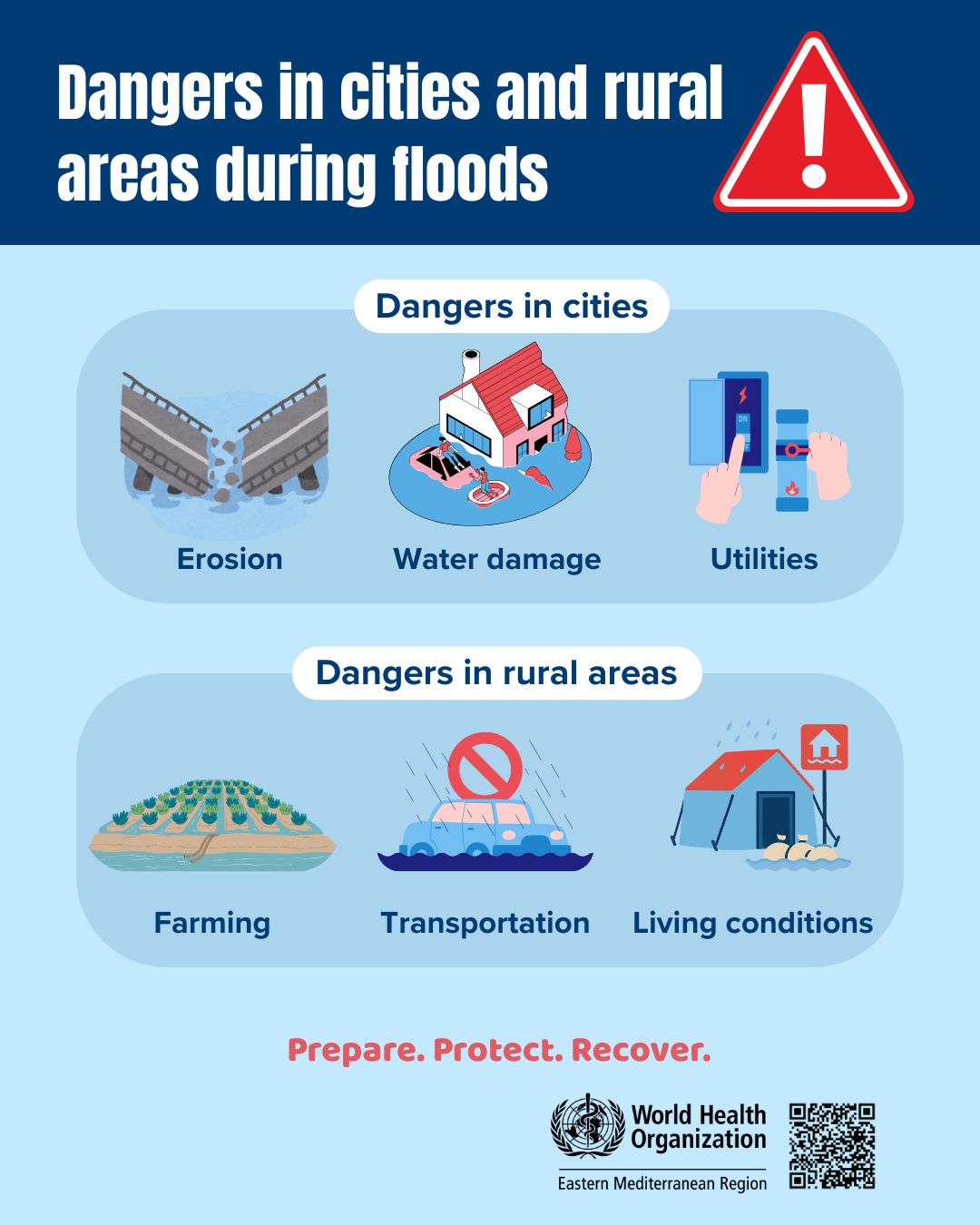
 Dangers in cities
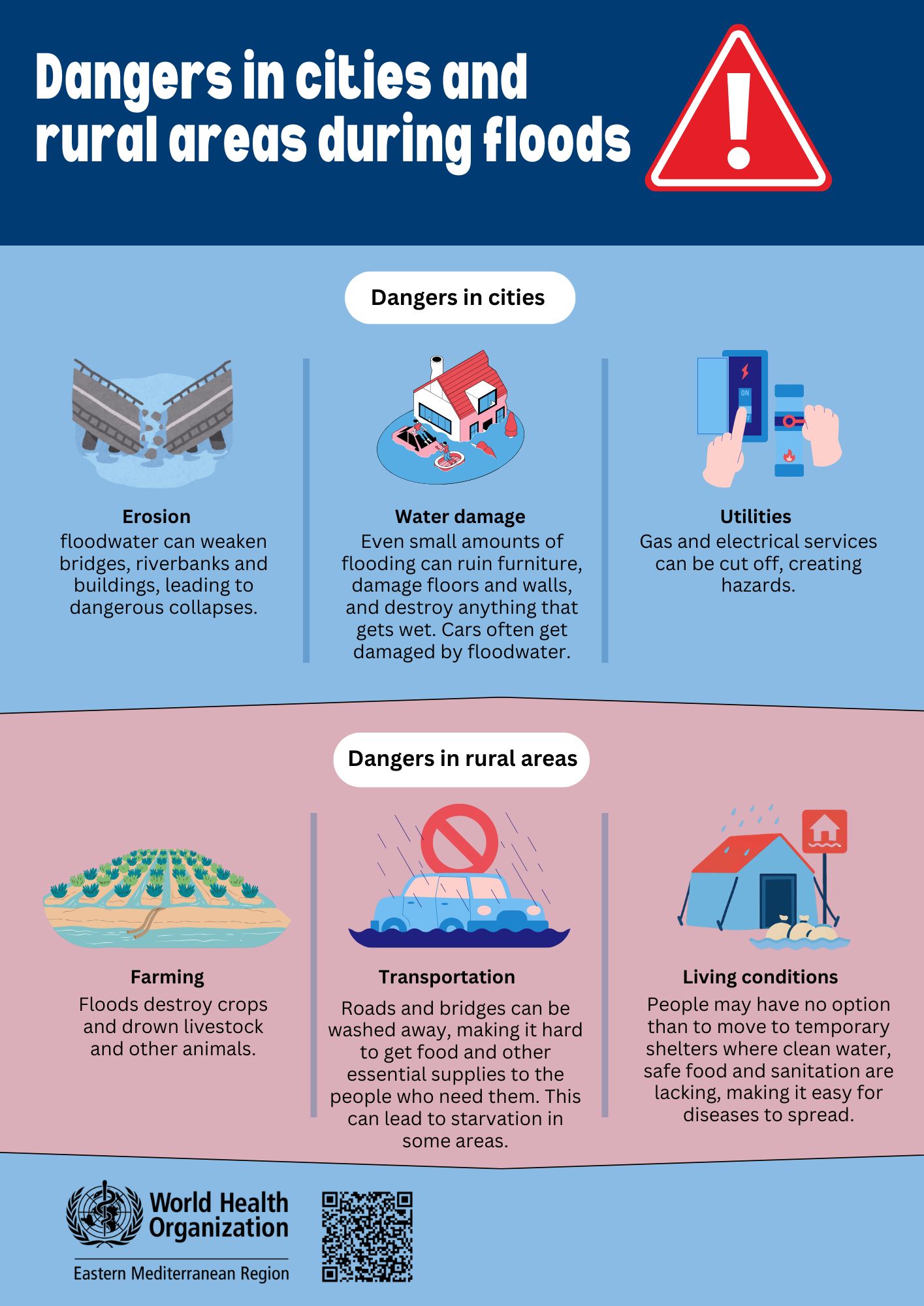
- Erosion: floodwater can weaken bridges, riverbanks and buildings, leading to dangerous collapses.
- Water damage: even small amounts of flooding can ruin furniture, damage floors and walls, and destroy anything that gets wet. Cars often get damaged by floodwater.
- Utilities: gas and electrical services can be cut off, creating hazards.
Dangers in rural areas
- Farming: floods destroy crops and drown livestock and other animals.
- Transportation: roads and bridges can be washed away, making it hard to get food and other essential supplies to the people who need them. This can lead to starvation in some areas.
- Living conditions: people may have no option than to move to temporary shelters where clean water, safe food and sanitation are lacking, making it easy for diseases to spread.
Actionable health and safety guidance for communities
This section provides critical health and safety information. The aim is to empower individuals and groups to adopt protective behaviours, modify risky practices and build collective resilience before, during and after a flood event.
The guidance is designed to be adapted into effective, actionable messages targeting diverse populations affected by floods. Content should be tailored to local and cultural contexts, translated into relevant languages and dialects and disseminated through channels the target communities trust.
 Staying safe before, during and after a flood
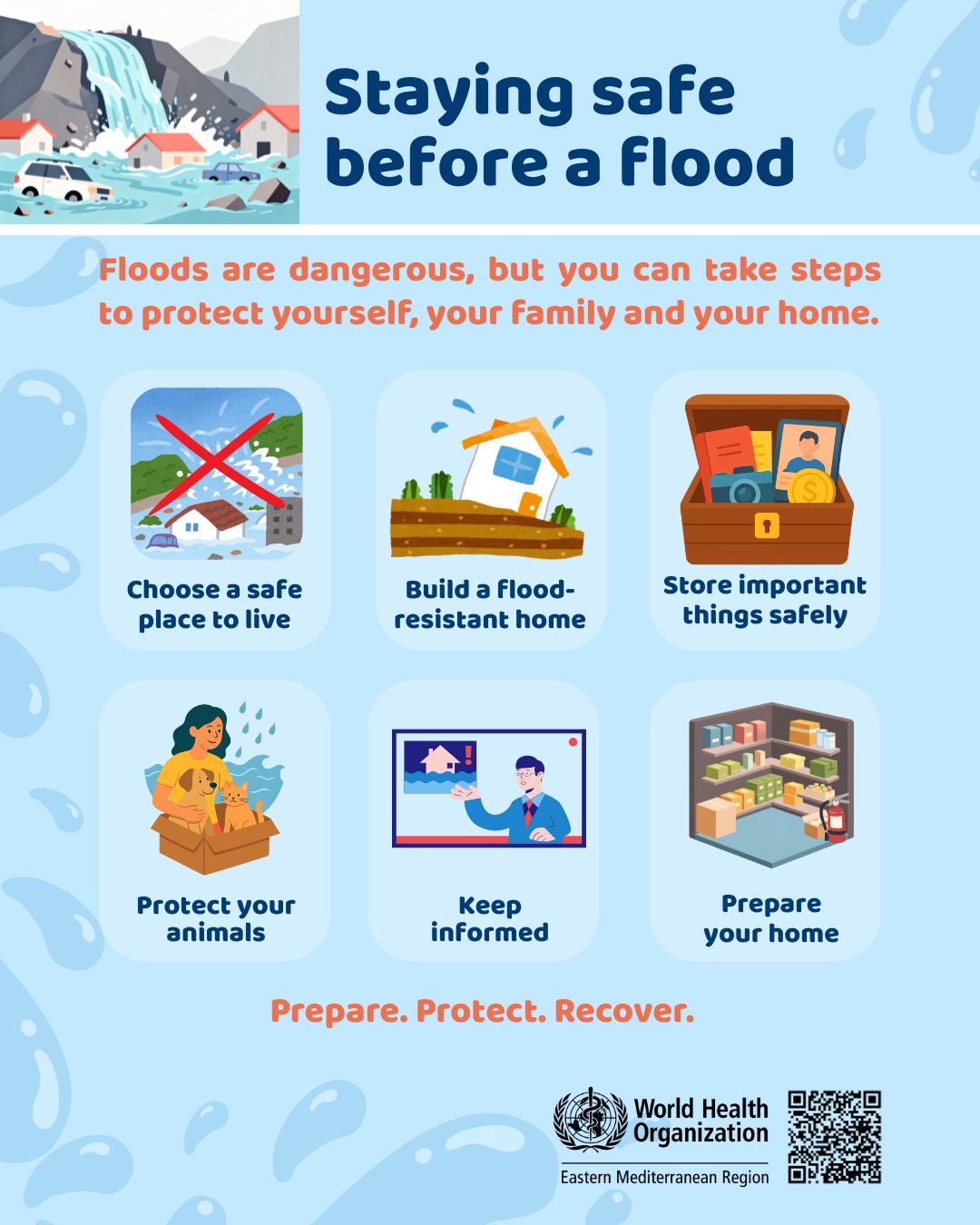
Before a flood
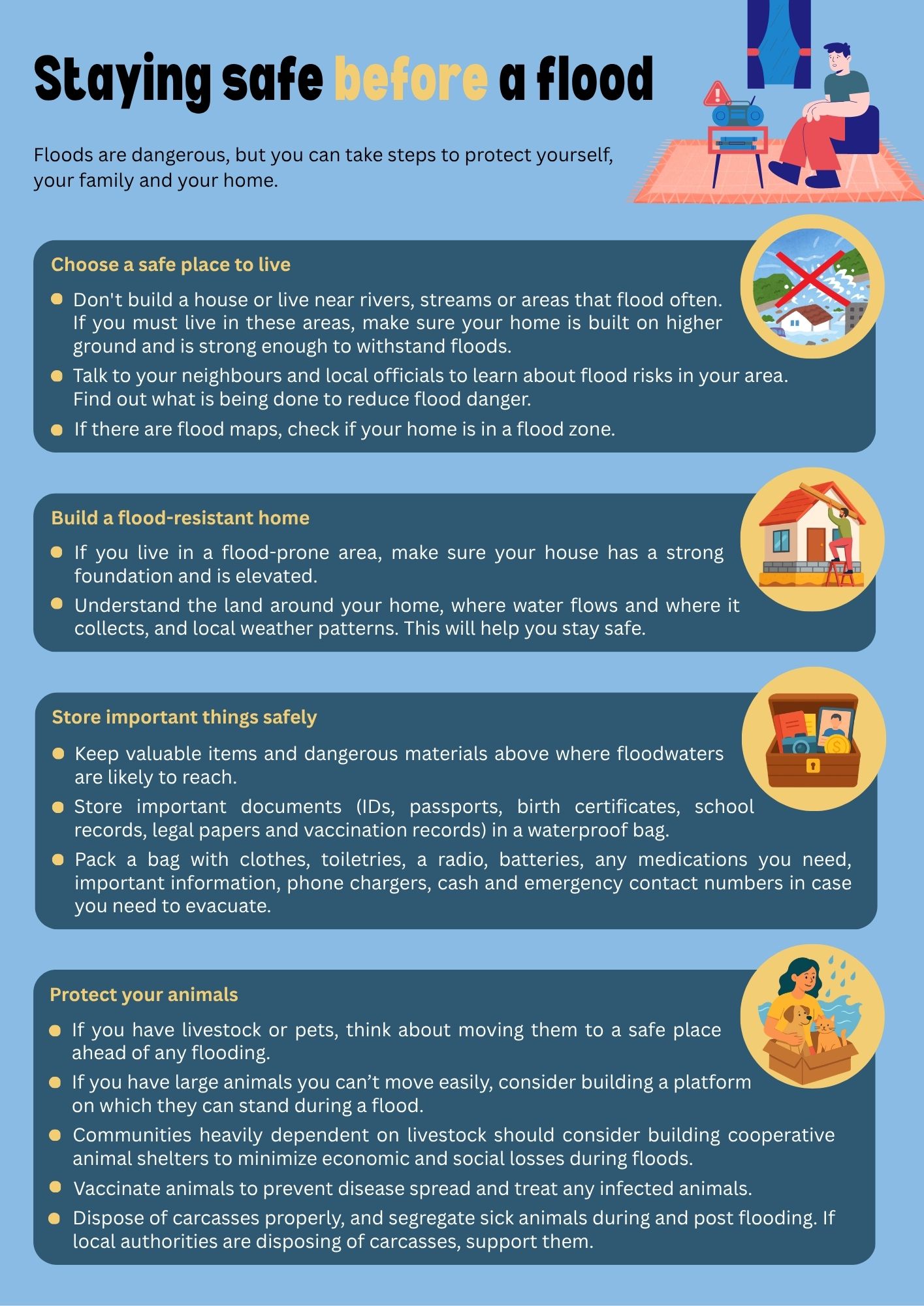
- Choose a safe place to live
- Don't build a house or live near rivers, streams or areas that flood often. If you must live in these areas, make sure your home is built on higher ground and is strong enough to withstand floods.
- Talk to your neighbours and local officials to learn about flood risks in your area. Find out what is being done to reduce flood danger.
- If there are flood maps, check if your home is in a flood zone.
- Build a flood-resistant home
- If you live in a flood-prone area, make sure your house has a strong foundation and is elevated.
- Understand the land around your home, where water flows and where it collects, and local weather patterns. This will help you stay safe.
- Store important things safely
- Keep valuable items and dangerous materials above where floodwaters are likely to reach.
- Store important documents (IDs, passports, birth certificates, school records, legal papers and vaccination records) in a waterproof bag.
- Pack a bag with clothes, toiletries, a radio, batteries, any medications you need, important information, phone chargers, cash and emergency contact numbers in case you need to evacuate.
- Protect your animals
- If you have livestock or pets, think about moving them to a safe place ahead of any flooding.
- If you have large animals you can’t move easily, consider building a platform on which they can stand during a flood.
- Communities heavily dependent on livestock should consider building cooperative animal shelters to minimize economic and social losses during floods.
- Vaccinate animals to prevent disease spread and treat any infected animals.
- Dispose of carcasses properly, and segregate sick animals during and post flooding. If local authorities are disposing of carcasses, support them.
- Keep informed
Pay attention to weather reports, listen to the radio and follow instructions from local officials. If a flood happens, listen to the news and check for information from emergency services.
- A flood watch means a flood might happen in your area.
- A flood warning means a flood is happening or will happen very soon.
- Evacuation orders: if you are told to evacuate or if you feel unsafe, leave your home.
- Stay put: if you are told not to evacuate but your home might flood, move to a safe place inside and take any essential items with you.
- Use climate services: national meteorological and hydrological services should disseminate seasonal outlooks and extreme weather warnings in community-friendly formats. Community education on interpreting these forecasts is central to climate-smart preparedness behaviour.
- Prepare your home
- Turn off electricity: switch off the power if water is likely to reach electrical outlets, if you see downed power lines or if you are evacuating.
- Shut off utilities: if you are leaving or a flood is coming, turn off gas and water at the mains switches.
- Fire safety: make sure you have a fire extinguisher and everyone in your family knows how to use it.
- Stock up: if you have to stay home during a flood, keep enough supplies to last 3–5 days. Ensure you have:
- bottled water;
- canned and dried foods;
- first-aid kit with essential medications;
- a battery-powered radio;
- flashlights with extra batteries;
- blankets;
- soap, sanitary napkins and other hygiene supplies;
- mosquito nets; and
- a fully charged cell phone.
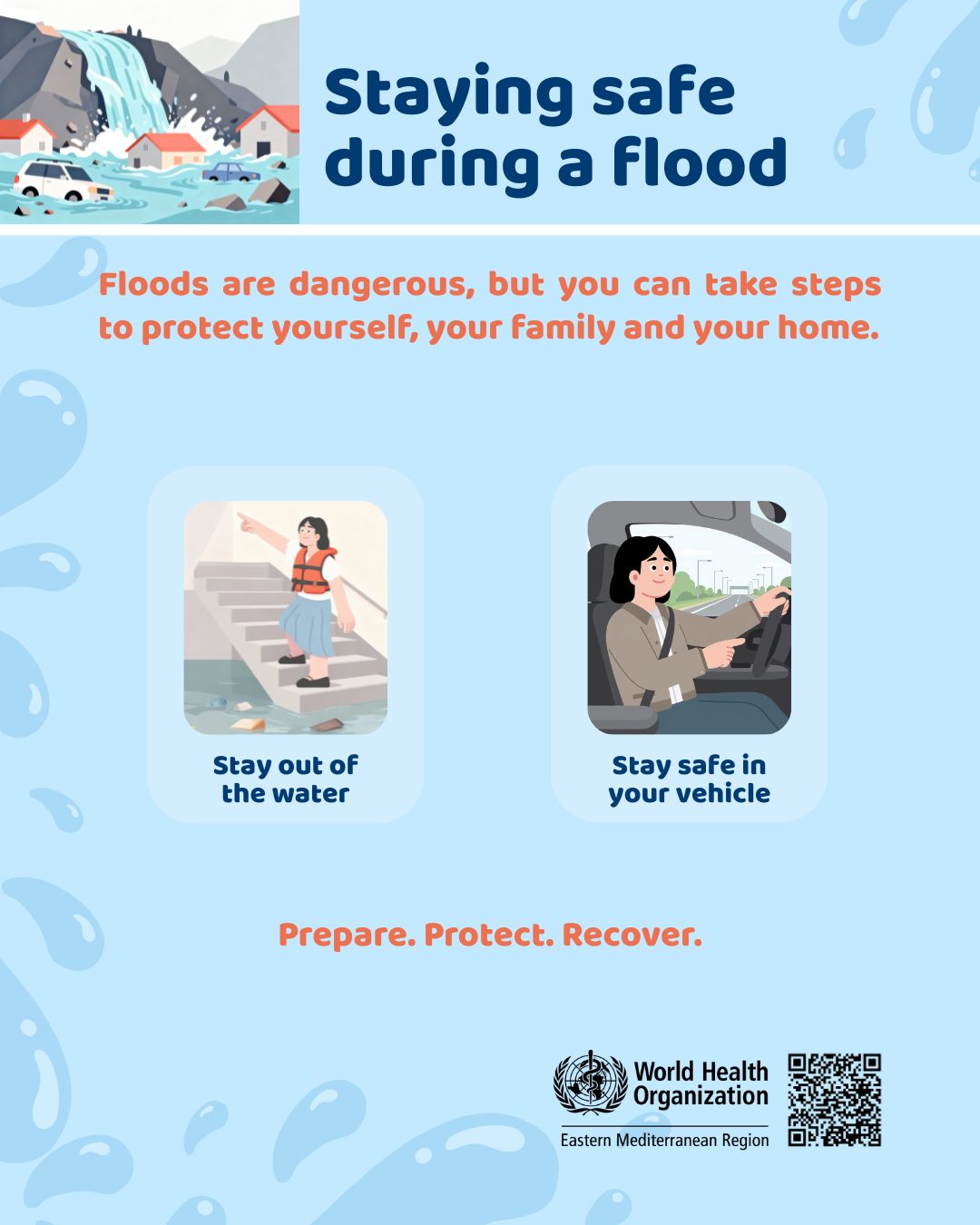
During a flood
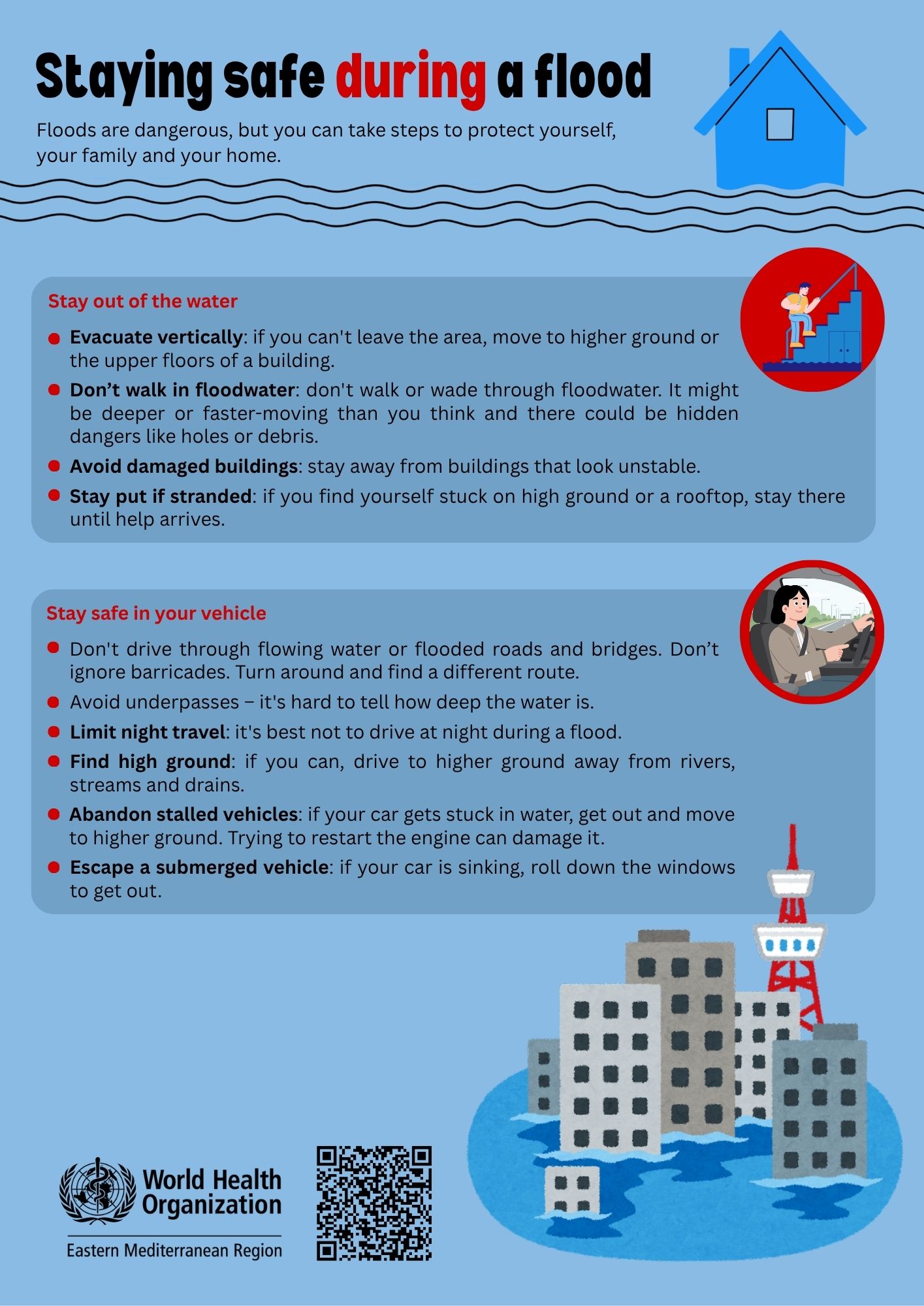
- Stay out of the water
- Evacuate vertically: if you can't leave the area, move to higher ground or the upper floors of a building.
- Don’t walk in floodwater: don't walk or wade through floodwater. It might be deeper or faster-moving than you think and there could be hidden dangers like holes or debris.
- Avoid damaged buildings: stay away from buildings that look unstable.
- Stay put if stranded: if you find yourself stuck on high ground or a rooftop, stay there until help arrives.
- Stay safe in your vehicle
- Don't drive through flowing water or flooded roads and bridges. Don’t ignore barricades. Turn around and find a different route.
- Avoid underpasses – it's hard to tell how deep the water is.
- Limit night travel: it's best not to drive at night during a flood.
- Find high ground: if you can, drive to higher ground away from rivers, streams and drains.
- Abandon stalled vehicles: if your car gets stuck in water, get out and move to higher ground. Trying to restart the engine can damage it.
- Escape a submerged vehicle: if your car is sinking, roll down the windows to get out.
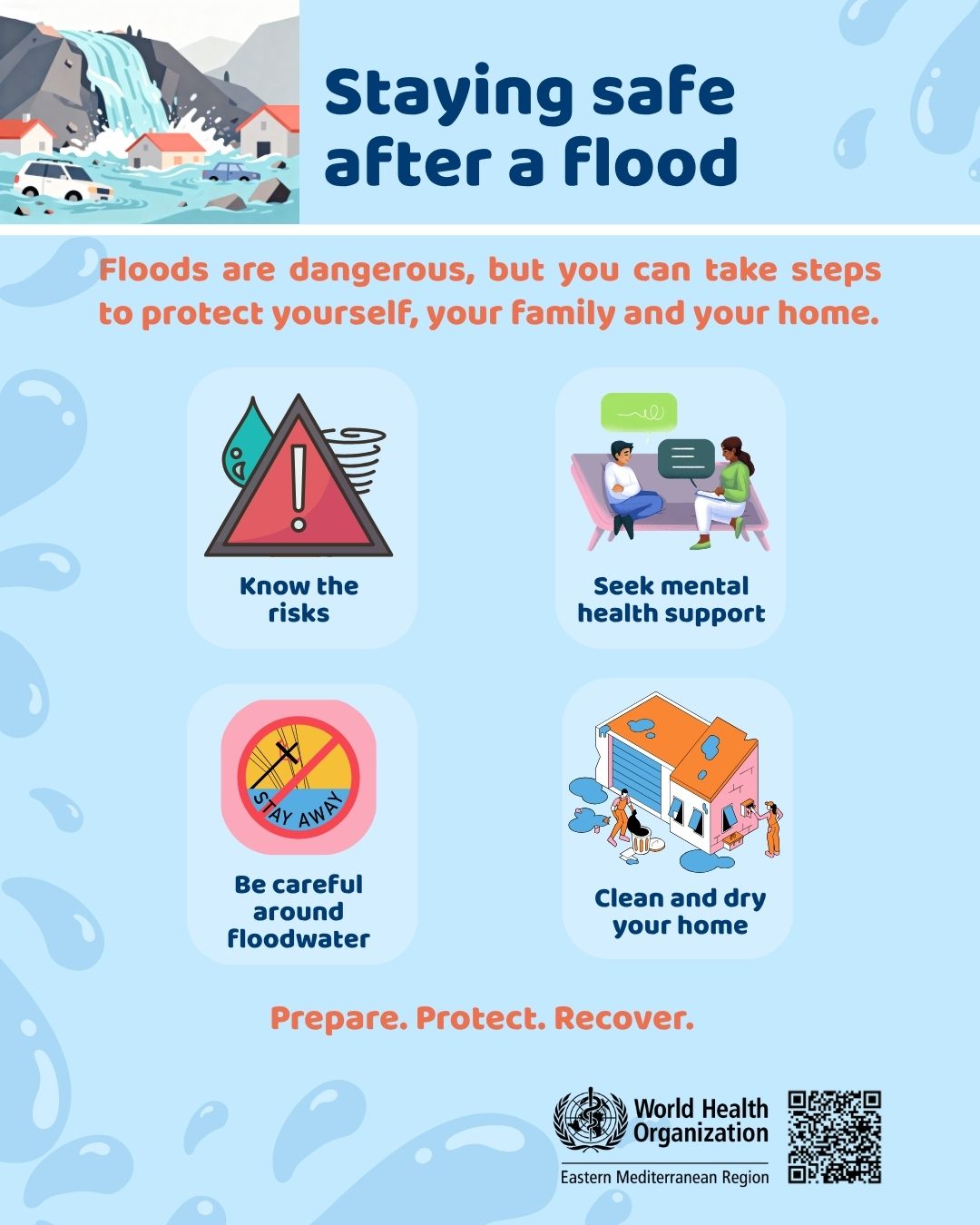
After a flood
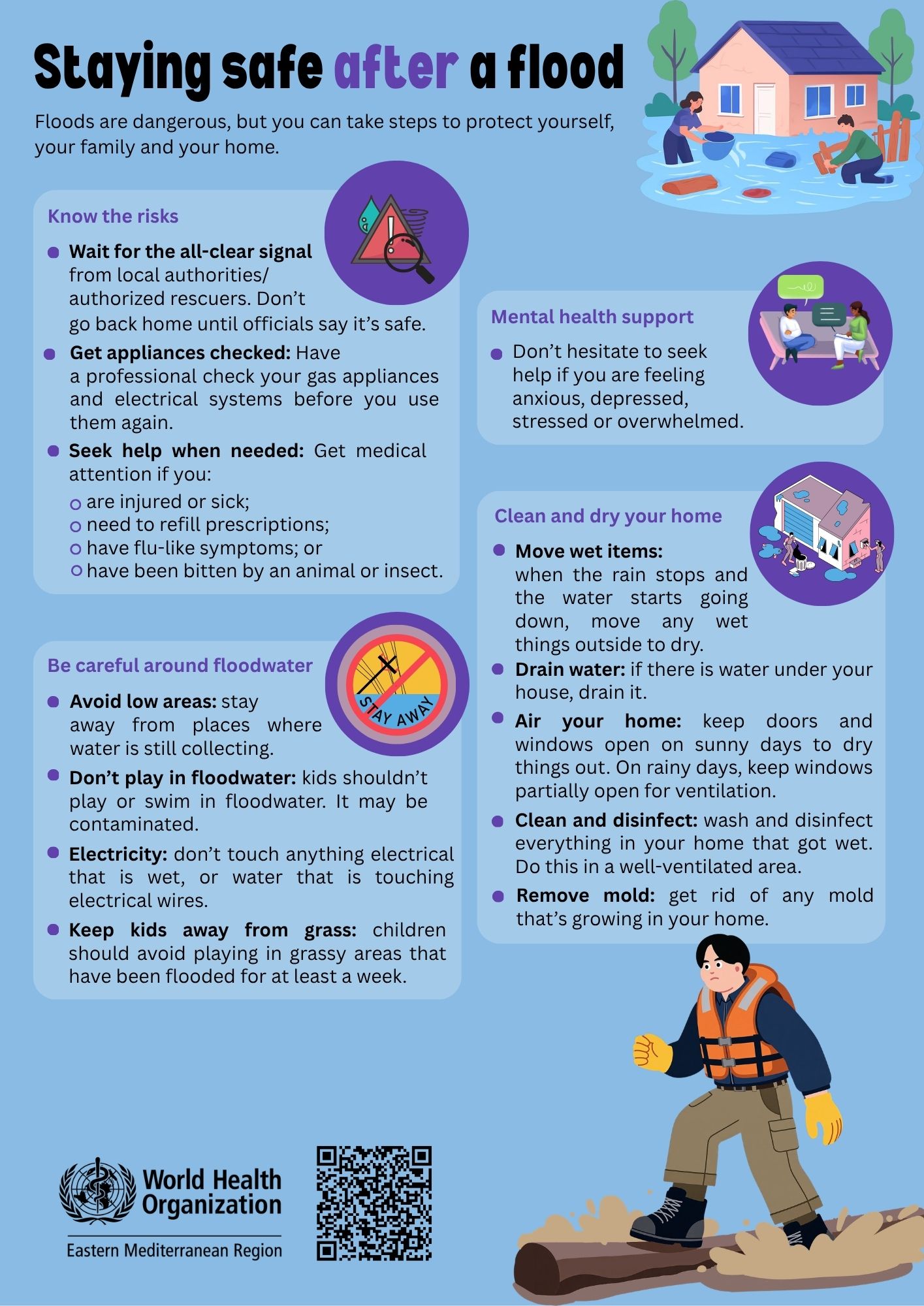
- Know the risks
- Wait for the all-clear signal from local authorities/authorized rescuers. Don’t go back home until officials say it’s safe.
- Get appliances checked
Have a professional check your gas appliances and electrical systems before you use them again.
- Seek help when needed
Get medical attention if you:
- are injured or sick;
- need to refill prescriptions;
- have flu-like symptoms; or
- have been bitten by an animal or insect.
- Mental health support: don’t hesitate to seek help if you are feeling anxious, depressed, stressed or overwhelmed.
- Be careful around floodwater
- Avoid low areas: stay away from places where water is still collecting.
- Don’t play in floodwater: kids shouldn’t play or swim in floodwater. It may be contaminated.
- Electricity: don’t touch anything electrical that is wet, or water that is touching electrical wires.
- Keep kids away from grass: children should avoid playing in grassy areas that have been flooded for at least a week.
- Clean and dry your home
- Move wet items: when the rain stops and the water starts going down, move any wet things outside to dry.
- Drain water: if there is water under your house, drain it.
- Air your home: keep doors and windows open on sunny days to dry things out. On rainy days, keep windows partially open for ventilation.
- Clean and disinfect: wash and disinfect everything in your home that got wet. Do this in a well-ventilated area.
- Remove mold: get rid of any mold that’s growing in your home.
 Staying healthy after a flood
Food, water and insect safety
Floods make it harder to stay healthy. Here’s what you need to know about staying safe.
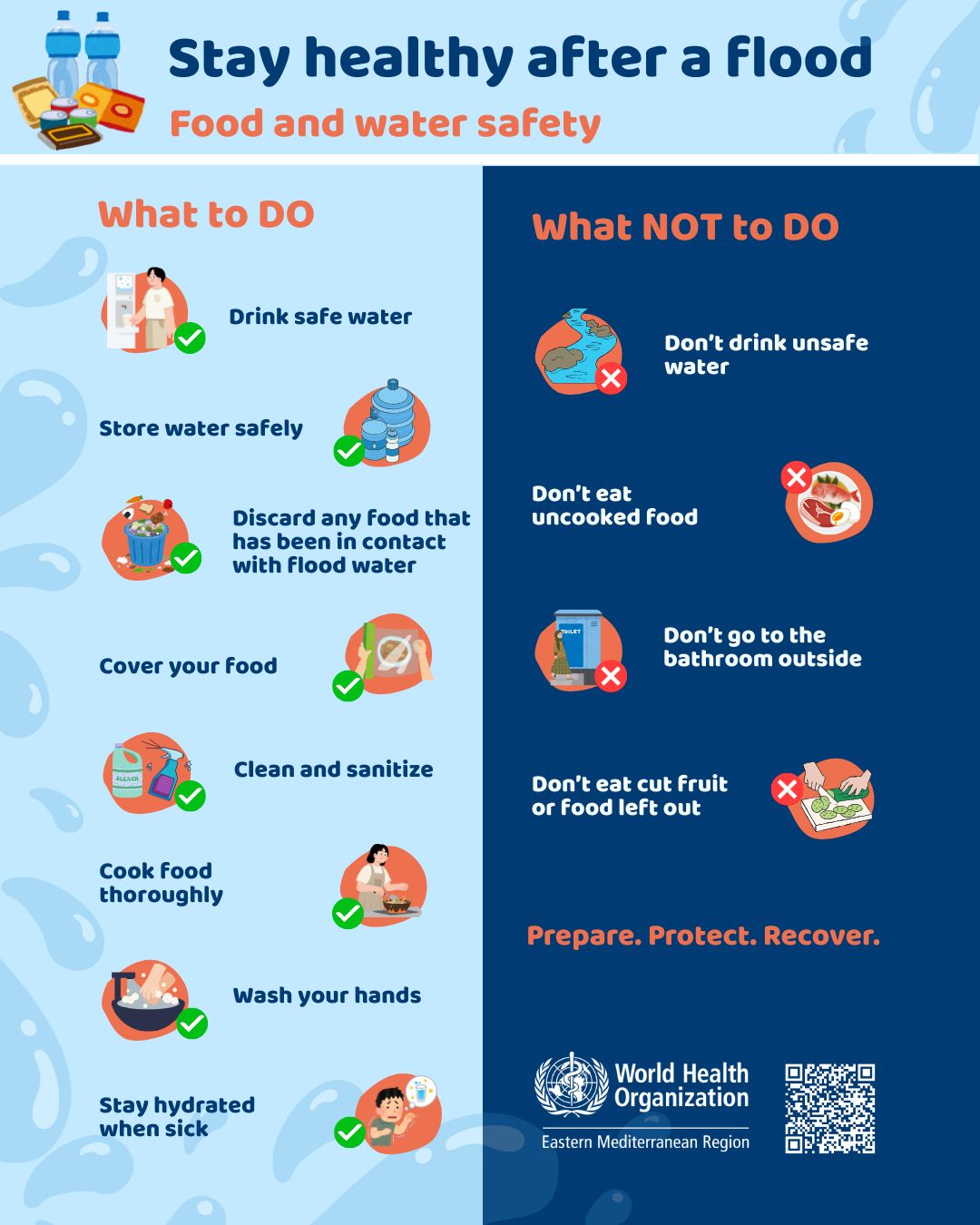
Food and water safety
What to DO
- Drink safe water: only drink water from a safe, reliable source or water that has been treated (boiled or chlorinated).
- Store water safely: keep drinking water in containers with narrow openings to prevent contamination.
- Discard any food that has been in contact with flood water: food stored in permeable packaging, has an unusual smell or appearance or can't be effectively cleaned should be discarded.
- Cook food thoroughly: make sure food is cooked completely and reheated until it’s steaming hot. Eat it right away.
- Cover your food: don’t leave food exposed to flies or other contaminants.
- Wash your hands: wash your hands with soap and clean water for 20 seconds before you touch food, before you eat and after using the toilet.
- Clean and sanitize: undamaged food that has been recovered, such as canned food, should be cleaned with a sanitization solution by mixing 1 teaspoon of household unscented bleach in 750 ml of clean water. Use the solution to sanitize surfaces and kitchen utensils.
- Stay hydrated when sick: if you have diarrhoea, drink plenty of fluids – oral rehydration solutions with salts and sugars to prevent dehydration or homemade electrolyte drinks like salted rice water or lemon water with a pinch of salt and sugar.
When to seek medical help
If a child with diarrhoea has any of these symptoms, take them to a health worker right away.
- Irritability, restlessness or drowsiness.
- Not eating or drinking well.
- Extreme thirst.
- Blood in their stool.
What NOT to DO
- Don’t drink unsafe water: avoid drinking water from rivers, streams, wells or taps that may be contaminated.
- Don’t eat uncooked food: unless it’s something you can wash and peel or shell, like a banana or an orange, avoid eating uncooked food.
- No cut fruit or food left out: don’t eat fruits that have been cut and left out or any food that has been left at room temperature for more than two hours.
- Don't go to the bathroom outside: use designated toilets or latrines.
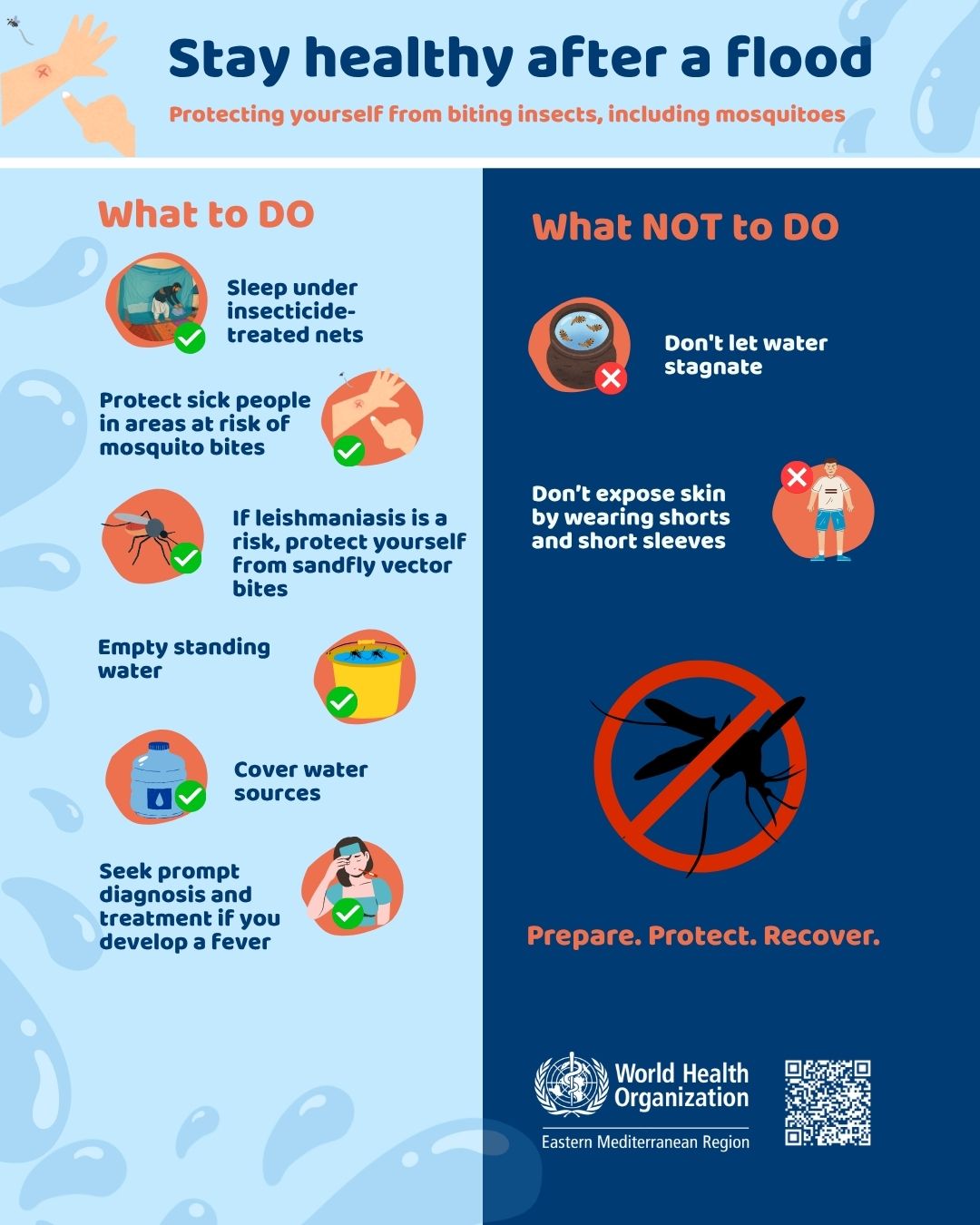
Protecting yourself from biting insects, including mosquitoes
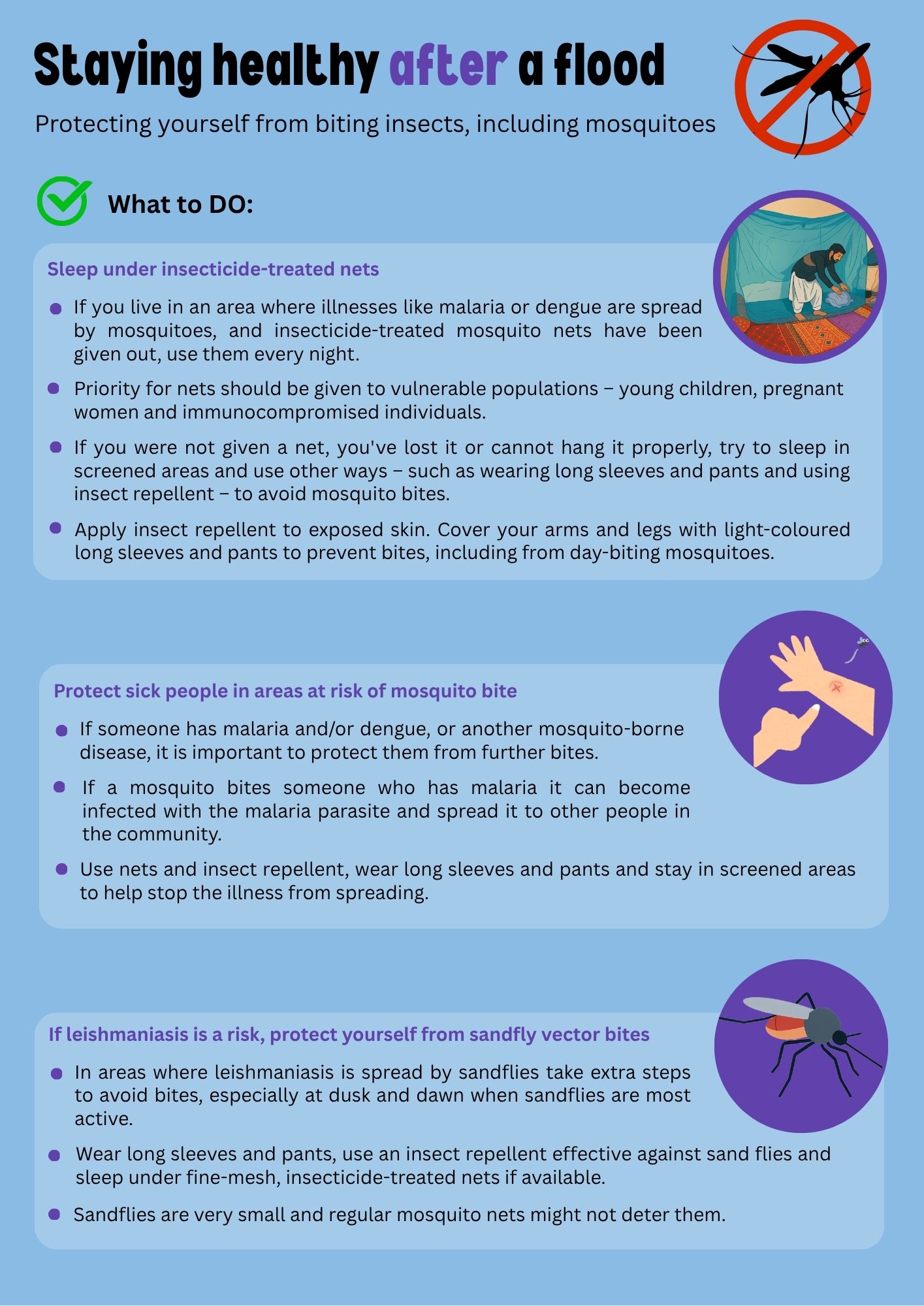
What to DO:
- Sleep under insecticide-treated nets
If you live in an area where illnesses like malaria or dengue are spread by mosquitoes, and insecticide-treated mosquito nets have been given out, use them every night. Priority for nets should be given to vulnerable populations – young children, pregnant women and immunocompromised individuals. If you were not given a net, you've lost it or cannot hang it properly, try to sleep in screened areas and use other ways – such as wearing long sleeves and pants and using insect repellent – to avoid mosquito bites. Apply insect repellent to exposed skin. Cover your arms and legs with light-coloured long sleeves and pants to prevent bites, including from day-biting mosquitoes.
- Protect sick people in areas at risk of mosquito bites
If someone has malaria and/or dengue, or another mosquito-borne disease, it is important to protect them from further bites. If a mosquito bites someone who has malaria it can become infected with the malaria parasite and spread it to other people in the community. Use nets and insect repellent, wear long sleeves and pants and stay in screened areas to help stop the illness from spreading.
- If leishmaniasis is a risk, protect yourself from sandfly vector bites
In areas where leishmaniasis is spread by sandflies take extra steps to avoid bites, especially at dusk and dawn when sandflies are most active. Wear long sleeves and pants, use an insect repellent effective against sand flies and sleep under fine-mesh, insecticide-treated nets if available. Sandflies are very small and regular mosquito nets might not deter them.
- Empty standing water
Remove standing water from around your home and any discarded containers and objects that can collect water at least once a week. Drill holes in unwanted tyres. Mosquitoes breed in standing water.
- Cover water sources
Place lids on water tanks and other water-storage containers, seal any openings on septic tanks or soak-away pits and cover tyres and other water collecting objects exposed to rains.
- Seek prompt diagnosis and treatment if you develop a fever
If someone has a fever, they should be rapidly diagnosed to confirm whether it is malaria and, if it is, treated with antimalarial medicine as soon as possible. In endemic areas it's essential to quickly find out if the fever is due to malaria or another mosquito-borne disease like dengue or chikungunya.
What NOT to DO:
- Don't let water stagnate: don't let water collect in containers, tyres, old buckets or other objects. Throw away items like old tyres, tubes, coconut shells or anything that can collect water.
- Don’t expose skin by wearing shorts and short sleeves.
Food safety
Five keys to safer food
- Keep clean: wash your hands and keep cooking areas, tools and utensils clean.
- Separate raw from cooked foods: separate raw food like meat, poultry and seafood from cooked food during storage and preparation. Use separate equipment and utensils like knives and cutting boards.
- Cook thoroughly: cook food all the way through to reach 70°C to kill dangerous germs.
- Keep food at safe temperatures: keep hot food hot and cold food cold. Don't leave food out at room temperature for longer than two hours.
- Use safe water and ingredients: use clean water for cooking and washing, and make sure your ingredients are fresh and safe.
Important food safety reminders
- Eat cooked food immediately: do not leave it at room temperature for more than two hours.
- Reheat properly: if you eat cooked food later, heat it till it’s steaming hot.
- Hold cooked food safely: keep cooked food steaming hot (more than 60°C) until you serve it. Remember that for thorough cooking, especially of meats, food should reach an internal temperature of 70°C to kill harmful germs.
- Refrigerate or discard: store perishable foods (meat, dairy) in the refrigerator if you have one. If you can’t keep it cold, throw it away.
- Safe meat and poultry: the juices from cooked meat and poultry should be clear, not pink or red.
- Boil soups and stews: bring soups and stews to a boil, then continue boiling for at least a minute to make sure they are safe to eat.
If the power goes out
- Spoiled food: check for signs of spoilage such as changes in odour, color or texture.
- Refrigerator safety: food in your refrigerator should be safe for up to four hours if the power is cut. To help it stay cold longer, avoid opening the fridge door too often.
- Shelf-stable foods: dried foods, canned goods, bottled drinks and jars are safe to eat without refrigeration.
- Use thawed food first: use up any frozen food that has thawed. Don’t refreeze it.
- Trust your senses: if food smells bad, looks unusual or feels slimy, throw it away. When in doubt, throw it out.
- Safe disposal: discard unsafe food in a place where it won’t contaminate other things. Make a note of where you dispose of food.
- Trusted sources: only buy food from sources you trust.
Keep everything clean
- Sanitize: wash and disinfect any recovered food, cooking surfaces and cooking tools.
- Clean water: use clean water for drinking and preparing food.
- Purify water: if you don’t have clean water, you can boil it, use water purification tablets or add four drops of unscented bleach (5% chlorine) to every litre of water. Wait 30 minutes before using or drinking the water.
- Strain food: use a strainer to catch food scraps and leftovers. This prevents contamination.
- Frequent waste removal: throw away garbage several times a day from homes and businesses.
- Hygiene facilities: make sure people have toilets and access to clean water and soap to wash their hands. Always prepare and eat food in a clean environment.
Extra advice for food businesses
- Inspect everything: check every step of food production, from the farm to the table, to make sure it’s safe. Floodwater can contaminate food at any stage, so check all sources, processing plants, restaurants and markets, and make sure food handlers are well informed. Everyone who handles food should know how to do so safely and have clear instructions.
- Look for contamination: look for any signs of food that has thawed, has leaking liquids or hasn't been handled safely. Mark any unsafe food clearly and don't let anyone eat it.
- Check for flood damage: check if food has been in contact with floodwater. Pay extra attention to signs of sewage, oil, chemicals or contact with dead animals.
- Slow down defrosting: give instructions on how to slow down defrosting while keeping food clean.
Though filling an almost-empty freezer with crumpled paper might seem like it adds insulation, paper isn't a good insulator and can become damp, potentially contaminating food, especially as the freezer warms. Adding paper also lets in warmer air when you open the freezer, speeding defrosting instead of slowing it down. A better way to keep food cold longer is to limit opening the freezer door to times when it is strictly necessary. This helps keep the cold air inside.
- Cover freezers with blankets or cardboard to provide some insulation. If you have ice packs or dry ice available, these can be added to the freezer to help maintain a colder temperature. Remember to always wear gloves when handling dry ice. It's important to keep track of the freezer temperature. Food becomes at risk when it rises above 4°C (40°F).
- Don't waste food: remind people that food and water are precious and should only be thrown away if they are unsafe.
- Freezer tips
- A full freezer stays cold for about 48 hours (24 hours if it’s half full) when the power is out.
- Foods with more water freeze better than foods with less water.
- Don’t refreeze: if food has completely thawed, don't refreeze. Refreeze only if you can still see ice crystals in it.
- Throw out food with signs of spoilage or damage: tell food sellers to dispose of any food that can't be saved. Put up clear signs to warn people, especially in storage places. Make sure unsafe food is kept out of reach.
Extra advice for families
- Breastfeed infants: keep breastfeeding babies under six months old. Don't give them any other liquids that might be contaminated.
- Pregnant/lactating women: stay hydrated as much as you can, and make sure you have sufficient quantities of prescribed medicines and supplements in case you get displaced.
- Listen to experts/rescuers: follow the advice given by local authorities about food safety. Share this information with your family and neighbours. Get help from a health worker if anyone gets sick. Cleanup vomit and faeces carefully to prevent spreading germs.
- Keep food cool and dry: store food and drinks in a cool, dry place, away from moisture and direct sunlight. If you can, use ice blocks or dry ice to keep your refrigerator or freezer cold.
- Clean hands and tools: wash your hands and use clean utensils when handling food. Cook food thoroughly.
- Use thawed food right away.
- Don't refreeze food unless it still has ice crystals in it.
- Save non-perishables, including canned food and bottled drinks.
- Throw away contaminated food: discard any food that has touched floodwater. Things you shouldn’t try to clean and reuse – cardboard juice or milk cartons, food containers with screw tops, snap lids (plastic covers that click into place), pull-tops (metal lids with a ring-pull tab like soda or canned meat) or crimped caps (metal bottle tops with ridged edges like glass soda or juice bottles).
 Information, education and communication materials
Infographics


Social cards
Sources
Consolidated emergency report 2022. Afghanistan: United Nations Children’s Fund; 2023 (https://open.unicef.org/sites/transparency/files/2023-05/Afghanistan%20CER%202022.pdf).
Emergencies. Geneva: World Health Organization; 2025 (https://www.who.int/emergencies/overview).
Exploring the links between flooding and violence against women and girls in the Eastern and Southern African region-GBV AoR helpdesk 2024. Geneva: Gender-Based Violence AoR Global Protection Cluster; 2024 (https://gbvaor.net/node/1973).
Fact sheet on climate change. Geneva: World Health Organization; 2023 (https://www.who.int/news-room/fact-sheets/detail/climate-change-and-health).
Fires: four tips to reduce food safety risks for households. Manila: WHO Regional Office for the Western Pacific; 2024 (https://iris.who.int/bitstream/handle/10665/375867/WPR-2024-DSE-007-eng.pdf?sequence=1).
Flood fury: a recurring hazard. New Delhi: WHO Regional Office for South-East Asia; 2007 (https://iris.who.int/bitstream/handle/10665/205101/B0629.pdf?sequence=1).
Flood response. Pakistan: WHO Eastern Mediterranean Region; 2025 (https://www.emro.who.int/pak/information-resources/pakistan-floods.html).
Flooding: managing health risks in the WHO European Region. Copenhagen: WHO Regional Office for Europe; 2017 (https://iris.who.int/bitstream/handle/10665/329518/9789289052795-eng.pdf?sequence=1).
Floods. Copenhagen: WHO Regional Office for Europe; 2025 (https://www.who.int/europe/health-topics/floods#tab=tab_1).
Floods and health: fact sheets for health professionals. Copenhagen: WHO Regional Office for Europe; 2014 (https://iris.who.int/bitstream/handle/10665/375390/WHO-EURO-2014-8519-48291-71705-eng.pdf?sequence=1).
Floods in the WHO European Region: health effects and their prevention. Copenhagen: WHO Regional Office for Europe; 2013 (https://iris.who.int/bitstream/handle/10665/108625/9789289000116-eng.pdf?sequence=1).
Floods: four tips to reduce food safety risks for food suppliers and vendors. Manila: WHO Regional Office for the Western Pacific; 2024 (https://iris.who.int/bitstream/handle/10665/375866/WPR-2024-DSE-004-eng.pdf?sequence=1).
Gender differences in human loss and vulnerability in natural disasters: a case study from Bangladesh. IDEAS; 2005 (https://ideas.repec.org/a/sae/indgen/v2y1995i2p171-193.html).
Gender-responsive disaster risk reduction strategic plan and action plan 2020–2030: prevent risk creation and reduce existing risks for women, men, girls and boys. Gaborone: Southern African Development Community; 2020 (https://www.gfdrr.org/sites/default/files/publication/SADC_GRDP_Feb%202020%20%28clean%29.pdf).
Health emergencies. Geneva: World Health Organization; 2025 (https://www.who.int/our-work/health-emergencies).
How women were affected by the tsunami: a perspective from Oxfam. PLOS Medicine; 2005 (https://journals.plos.org/plosmedicine/article?id=10.1371/journal.pmed.0020178).
Mental health and substance use. Cairo: WHO Regional Office for the Eastern Mediterranean; 2025 (https://www.emro.who.int/entity/mental-health/index.html).
Nutrition. Cairo: WHO Regional Office for the Eastern Mediterranean; 2025 (https://www.emro.who.int/entity/nutrition/index.html).
Pakistan: inter-agency monsoon contingency plan 2024. New York: United Nations Office for the Coordination of Humanitarian Affairs; 2025 (https://www.unocha.org/publications/report/pakistan/pakistan-inter-agency-monsoon-contingency-plan-2024).
Power outages: four tips to reduce food safety risks for food suppliers and vendors. Manila: WHO Regional Office for the Western Pacific; 2024 (https://iris.who.int/bitstream/handle/10665/375865/WPR-2024-DSE-001-eng.pdf?sequence=1).
Resilient, green and inclusive health facilities: guidance on planning, design and operation. Washington, D.C.: World Bank Group; 2025 (https://documents1.worldbank.org/curated/en/099032725113028865/pdf/P178556-4158cc18-04a0-4127-a787-79810ee19264.pdf).
Resilient infrastructure. Geneva: United Nations Office for Disaster Risk Reduction; 2025 (https://www.undrr.org/resilient-infrastructure).
Resilient infrastructure for adaptation and vulnerability reduction. Washington, D.C.: World Bank Group; 2025 (https://projects.worldbank.org/en/projects-operations/project-detail/P173312).
Sendai framework for disaster risk reduction 2015–2030. Geneva: United Nations Office for Disaster Risk Reduction; 2025 (https://www.undrr.org/publication/sendai-framework-disaster-risk-reduction-2015-2030).
Situation reports on the flooding in Pakistan. Pakistan: WHO Eastern Mediterranean Region; 2025 (https://www.emro.who.int/pak/pakistan-infocus/situation-reports-on-the-flooding-in-pakistan.html).
Why we need resilient infrastructure for a sustainable future. Washington, D.C.: World Bank Blogs; 2024 (https://blogs.worldbank.org/en/voices/why-we-need-resilient-infrastructure-for-a-sustainable-future).
World’s largest study reveals the long-term health impacts of flooding. Melbourne: Monash University; 2025 (https://www.monash.edu/medicine/news/latest/2025-articles/worlds-largest-study-reveals-the-long-term-health-impacts-of-flooding).
