During the holy month of Ramadan, Muslims fast daily from dawn until sunset, refraining from eating, drinking, smoking, and vaping. It is also a time of communal prayers, family gatherings, and the sharing of meals, which brings spiritual and social benefits but can also present unique health considerations.
Fasting may raise important questions for people with health conditions such as diabetes, for pregnant women, and for others who may be at risk. In addition, close personal interaction during prayers and family meals can have implications for the spread of illnesses, including respiratory infections.
 By following simple guidelines, people who may otherwise be at risk can stay healthy and keep safe.
By following simple health guidelines, individuals can protect themselves, maintain well-being, and enjoy a safe and fulfilling Ramadan.
Ramadan Kareem.
Diabetes and Ramadan
Diabetes is one of the most prevalent diseases in the Eastern Mediterranean Region. More than 9 million people in Egypt have diabetes, and the number is increasing as a result of unhealthy lifestyles, lack of physical activity and dietary changes.
With the advent of the Holy Month, misinformation is circulating which may endanger lives. Common misconceptions need to be corrected to help people with diabetes make healthy and safe decisions, especially when it comes to fasting during Ramadan.
To keep healthy, diabetics should:
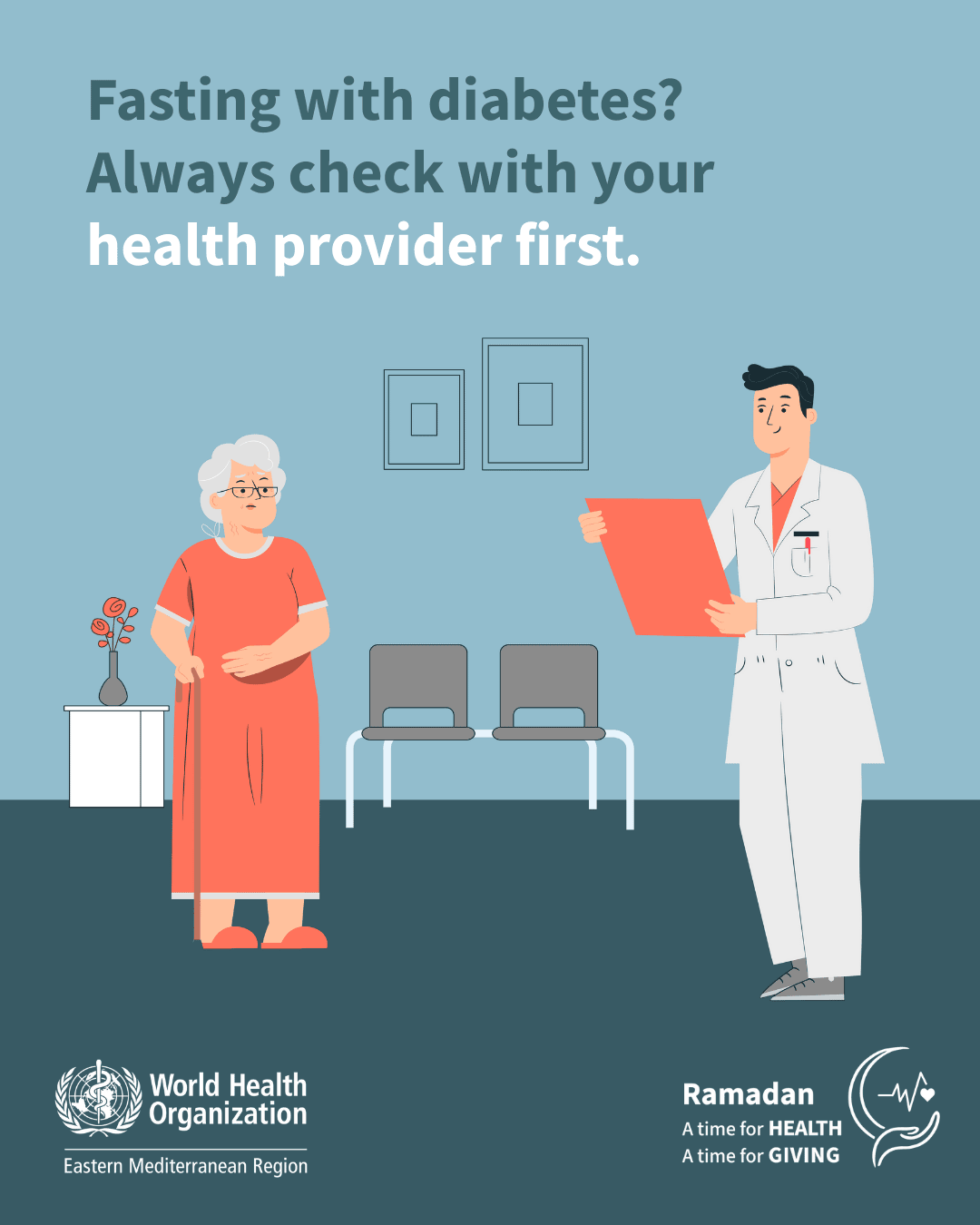
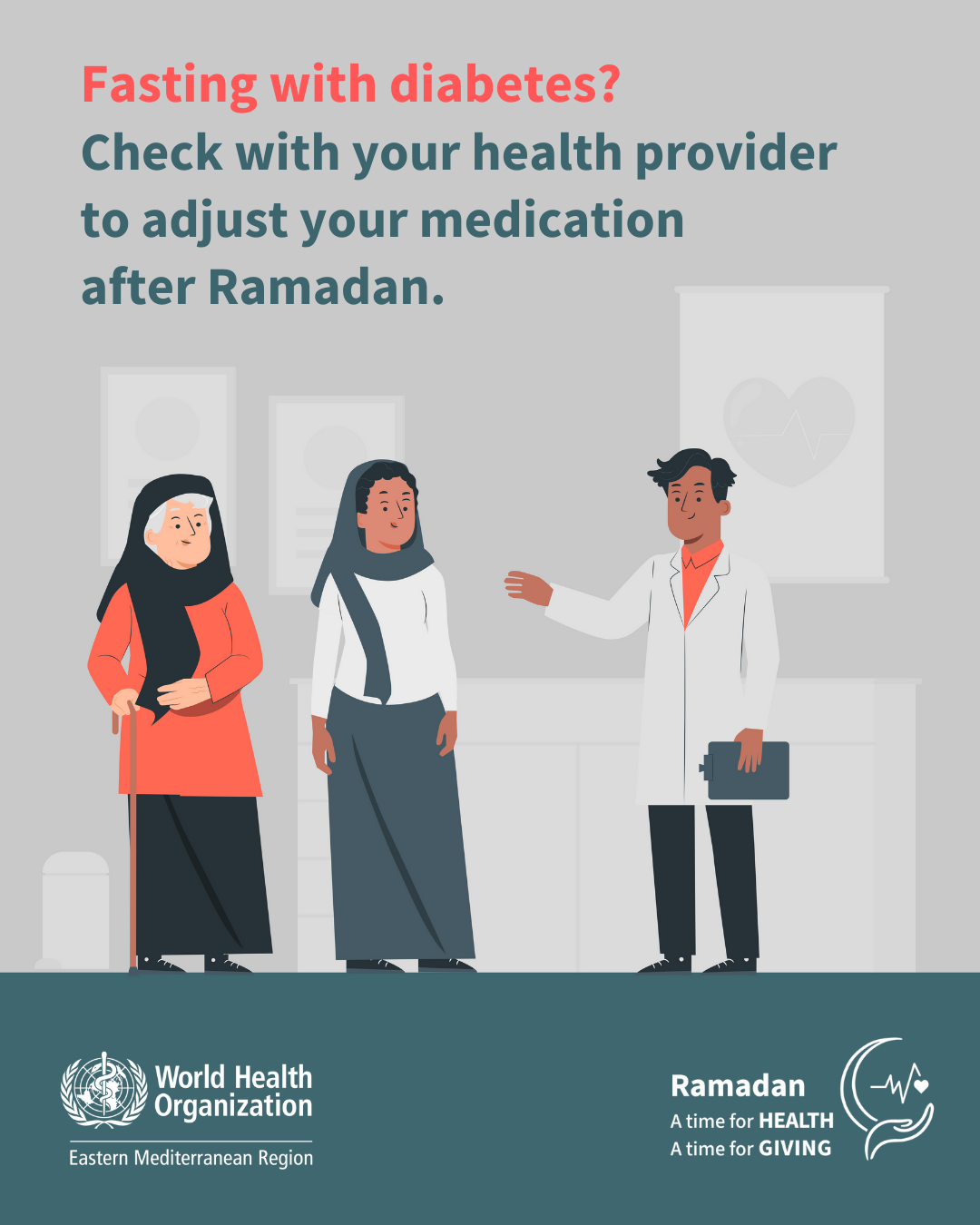
- consult a doctor before Ramadan to develop a safe fasting plan or appropriate alternatives;
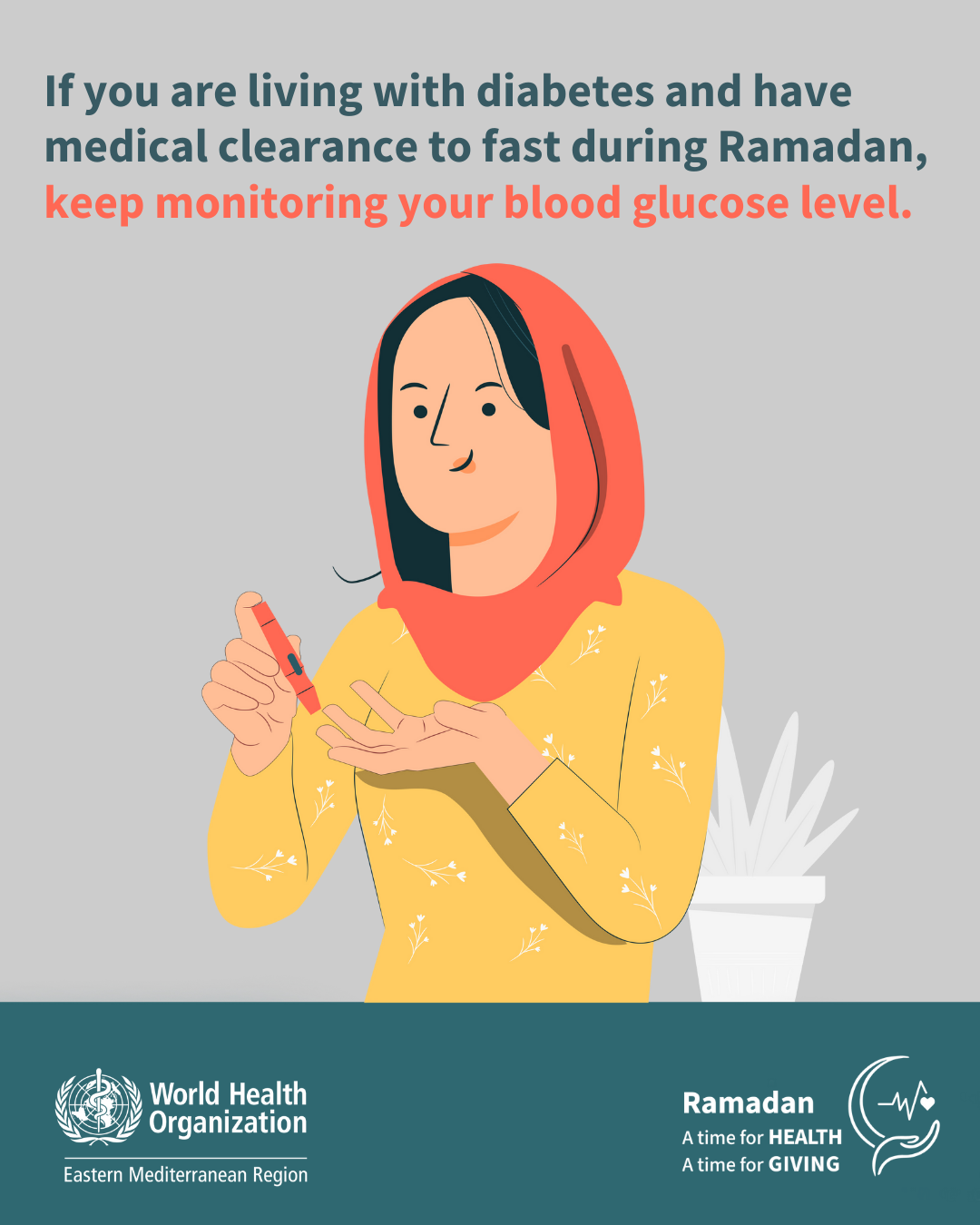
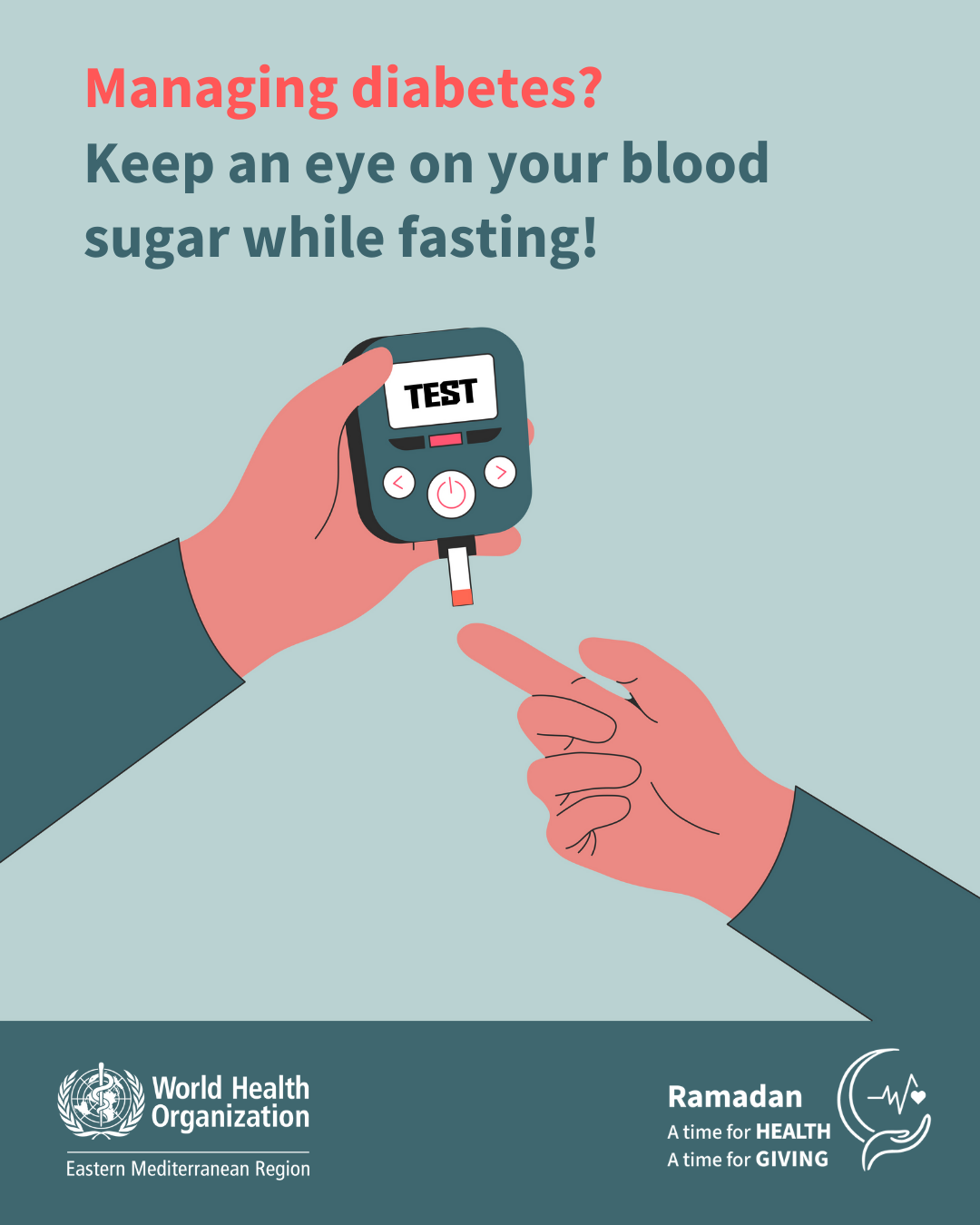
- measure sugar regularly, even during fasting, and act immediately in response to any low or high;
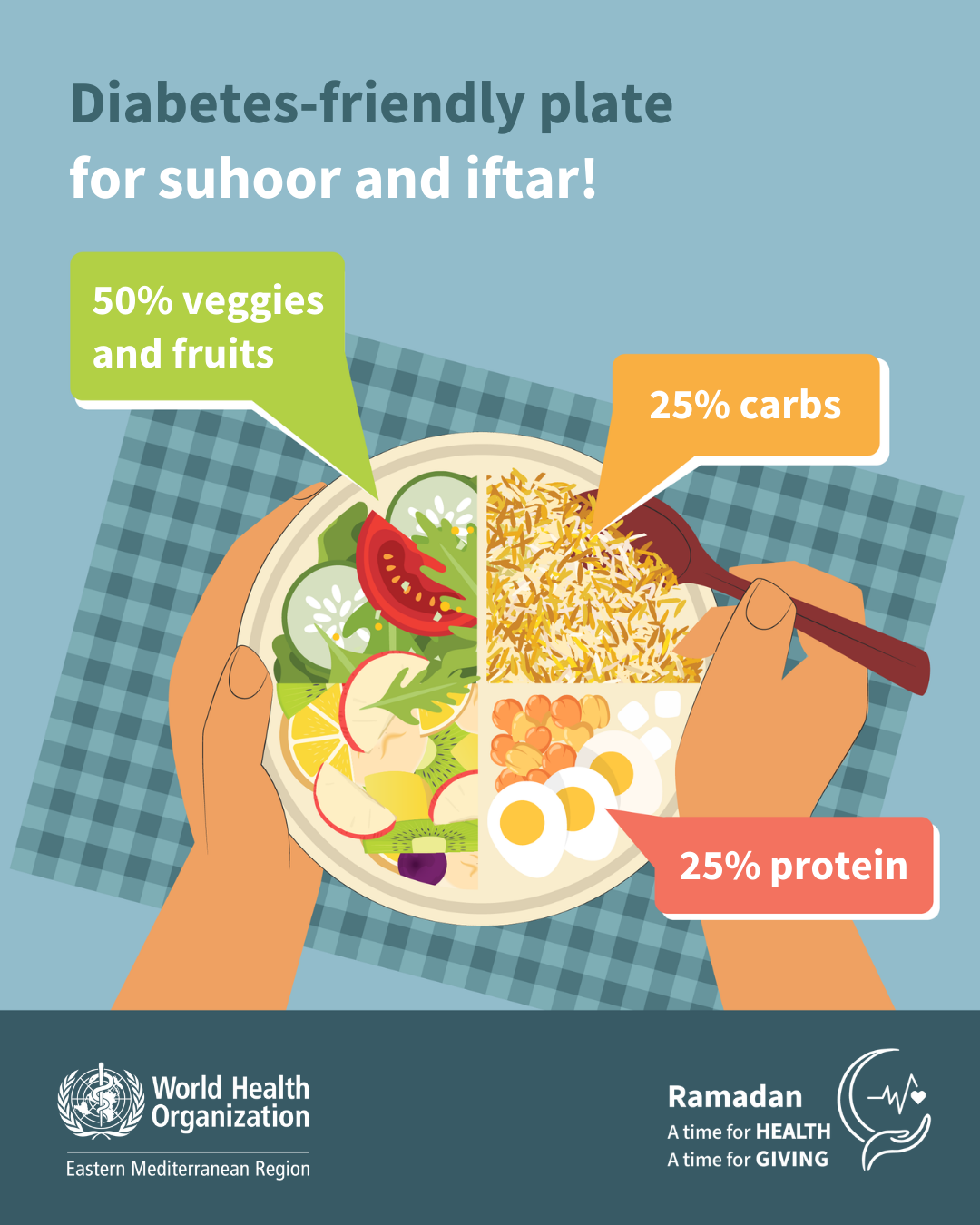
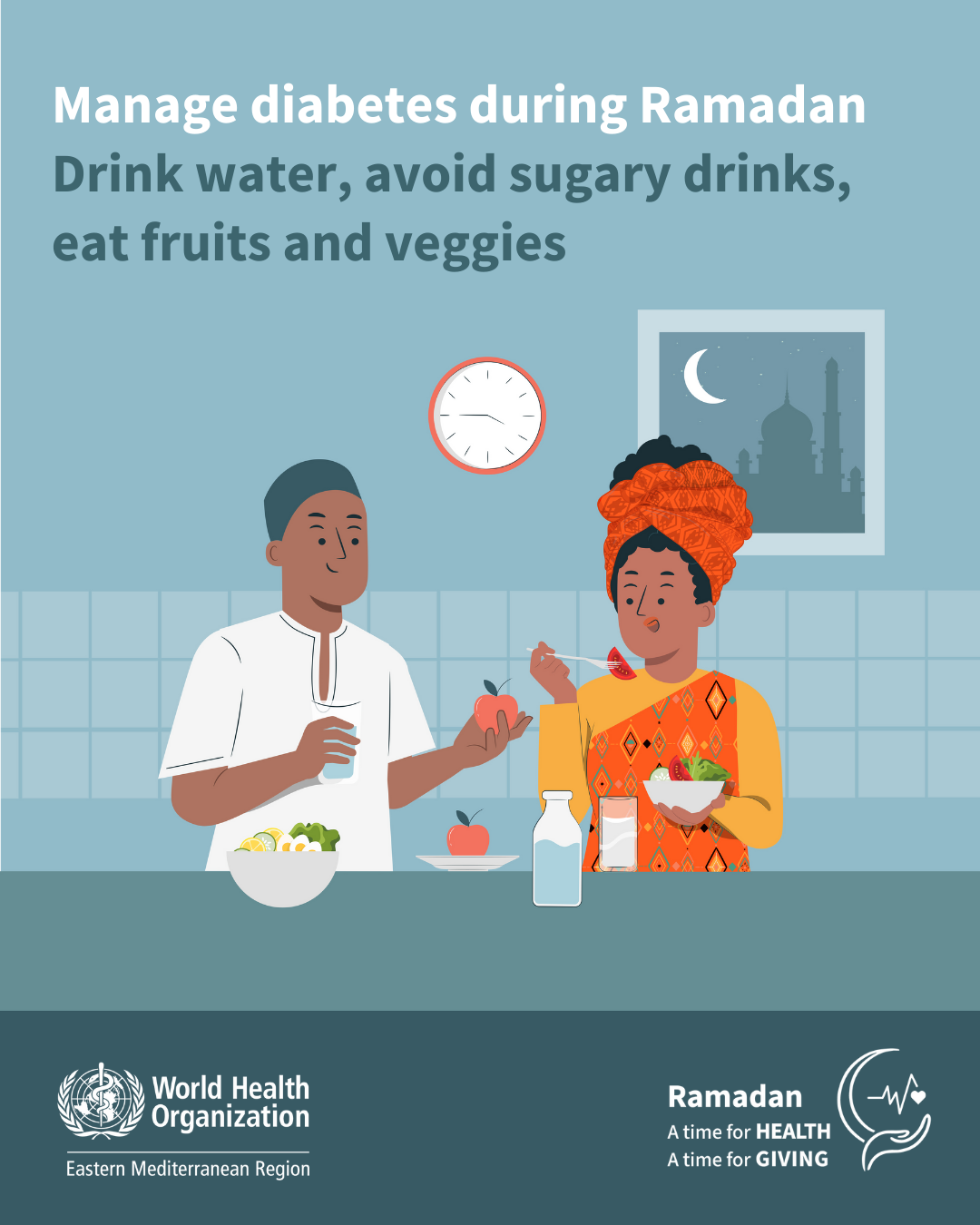
- choose healthy foods when breaking their fast and limit sugar and fat intake;
- drink water regularly, avoid sweetened drinks and limit fat and salt intake; and
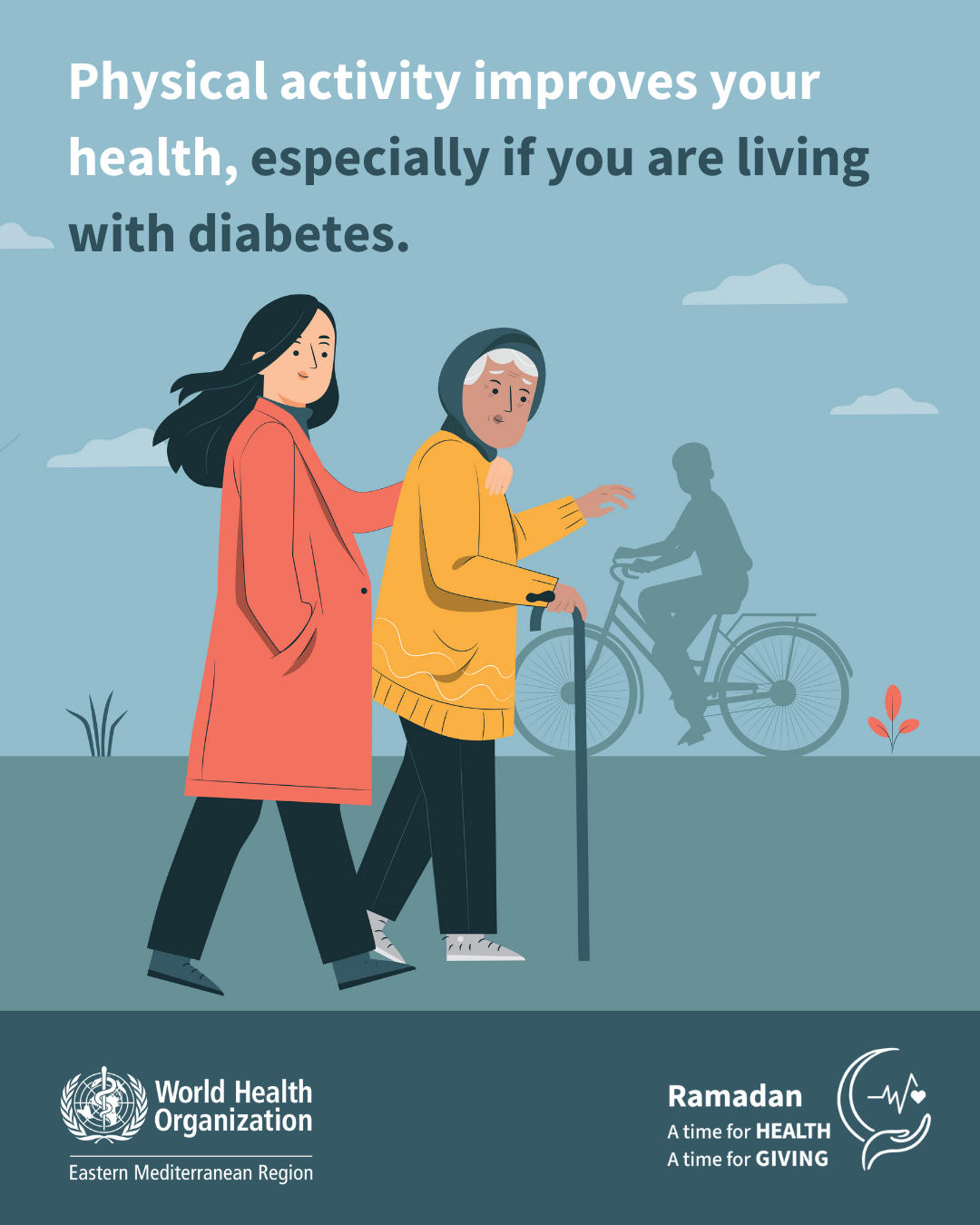
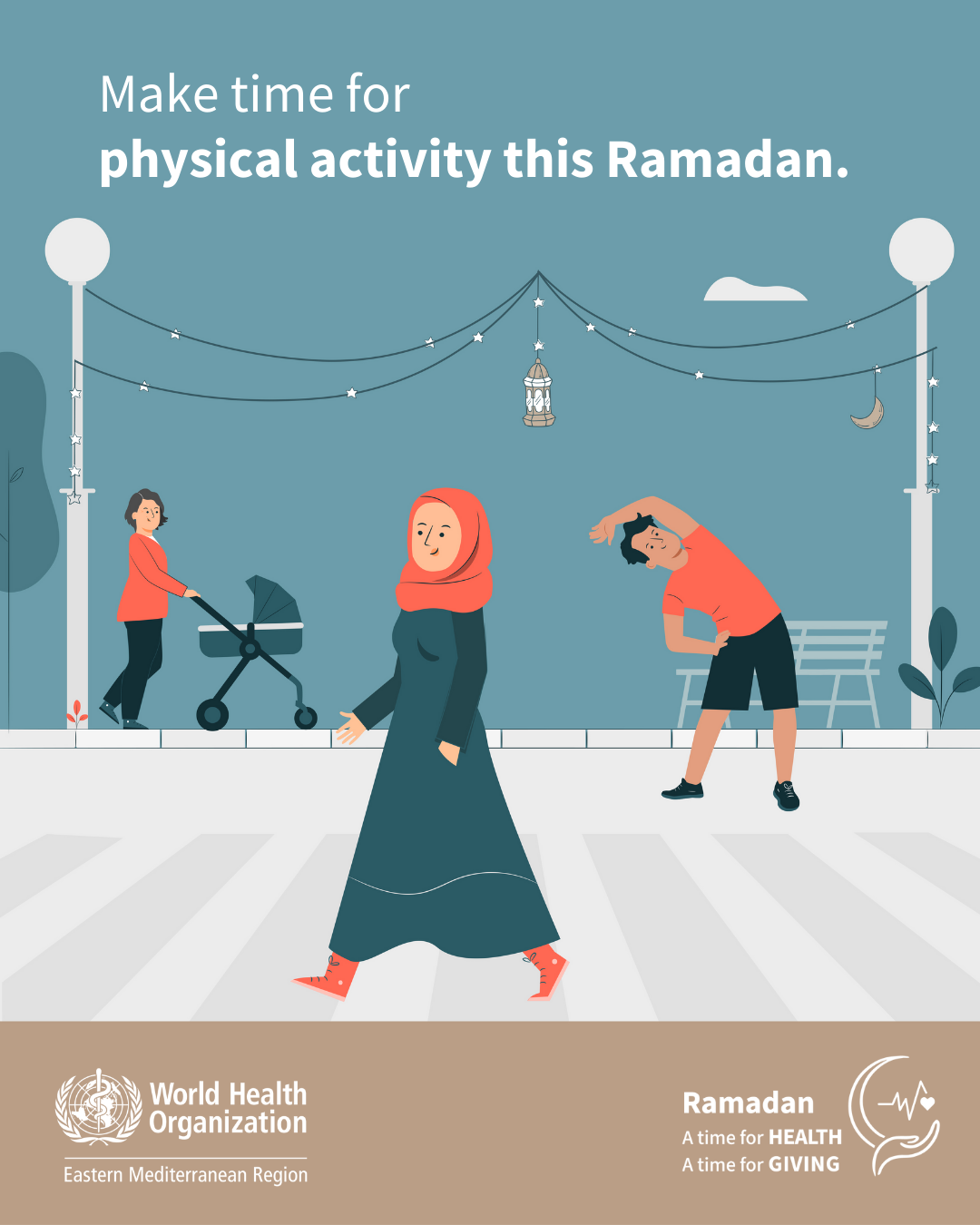
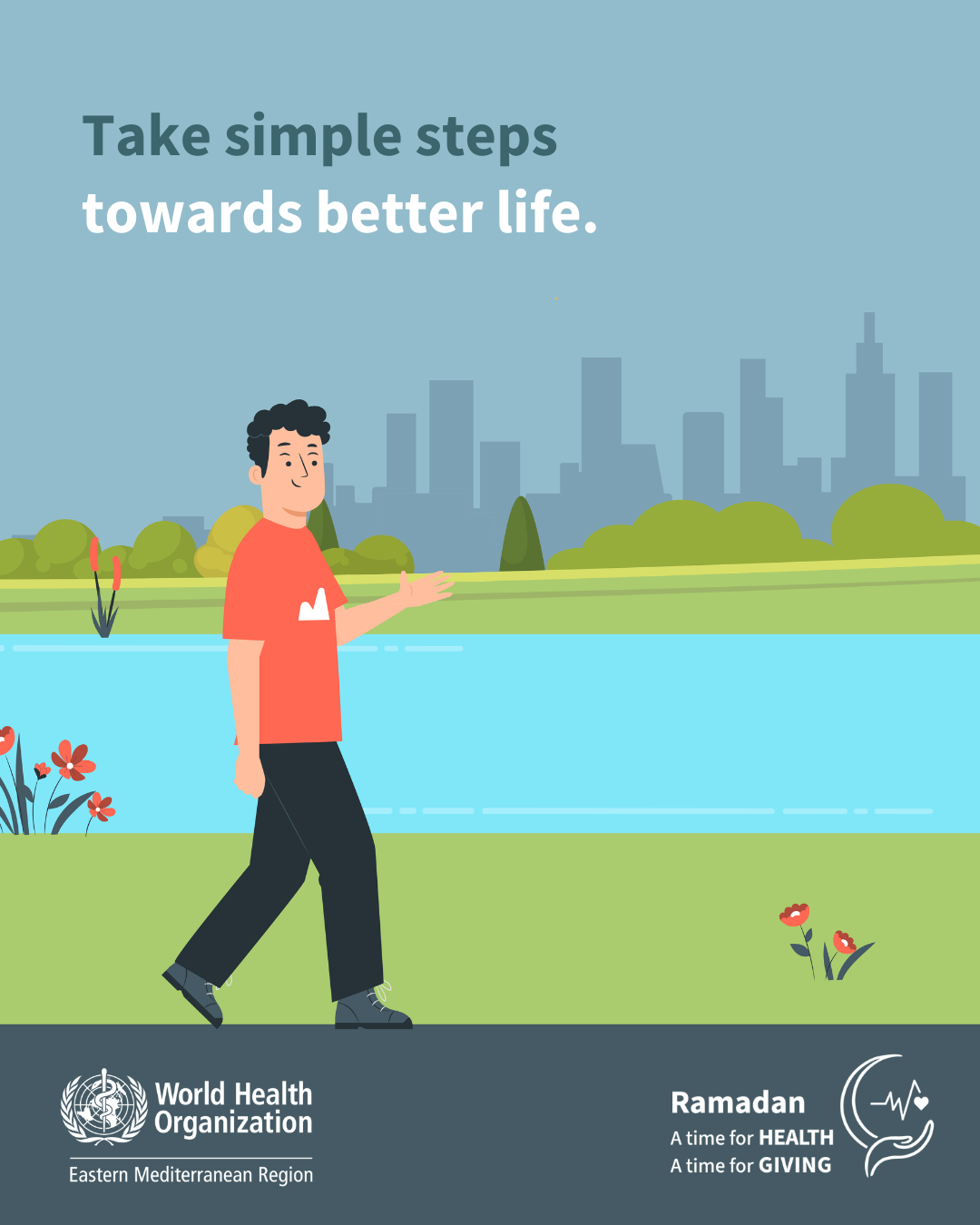
- exercise sensibly, perhaps by walking or undertaking light exercise after breakfast.

Infection free Ramadan
As we welcome the holy month of Ramadan, we must value our health, especially in the prevention of respiratory diseases. During this holy month, our social activities, celebrations and eating together increase, increasing the risk of respiratory infections as a result of proximity and interpersonal interaction. Therefore, we must commit to the following messages, and make this commitment part of our lifestyle to stay with us even after the Ramadan is over. Here are three key messages we all remember:
- 1. This year, Ramadan coincides with influenza season. Learn the symptoms and warning signs and follow safety measures to prevent germs from interrupting your fast.
- cough and sneeze into the inside of your elbow
- wash your hands often, especially after coughing or sneezing
- avoid large gatherings if you are sick
- stay hydrated and take medications when prescribed by your doctor
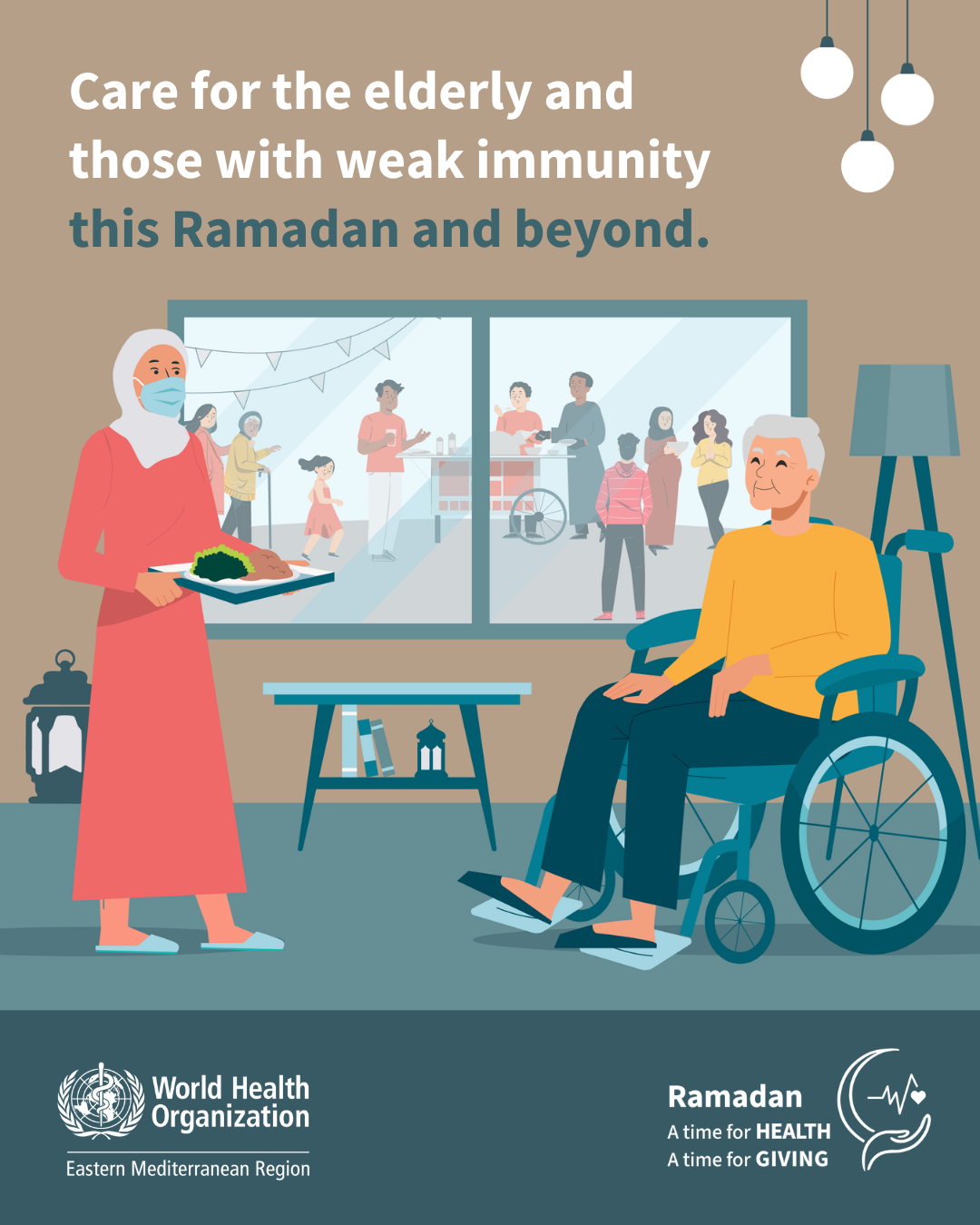
- 2. Do you know that the elderly, pregnant women, and persons with weak immunity are at a higher risk of respiratory infections? Ensure Ramadan is safe for everyone by following safety measures to stop germs before they spread:
- cover your mouth and nose when you cough and sneeze and properly dispose of used tissues
- Seek and follow medical advice for a healthy fasting experience
- Annual vaccination is especially important for people at high risk
- 3. Fasting during winter season has its own set of challenges:
- Don’t forget to stay hydrated. Monitor your water intake as you might not feel as thirsty during winter
- Stay active. Movement will help you stay warm and improve circulation
- Stay home if you are sick. Prioritize your health and that of others

A time to heal, a time to give.
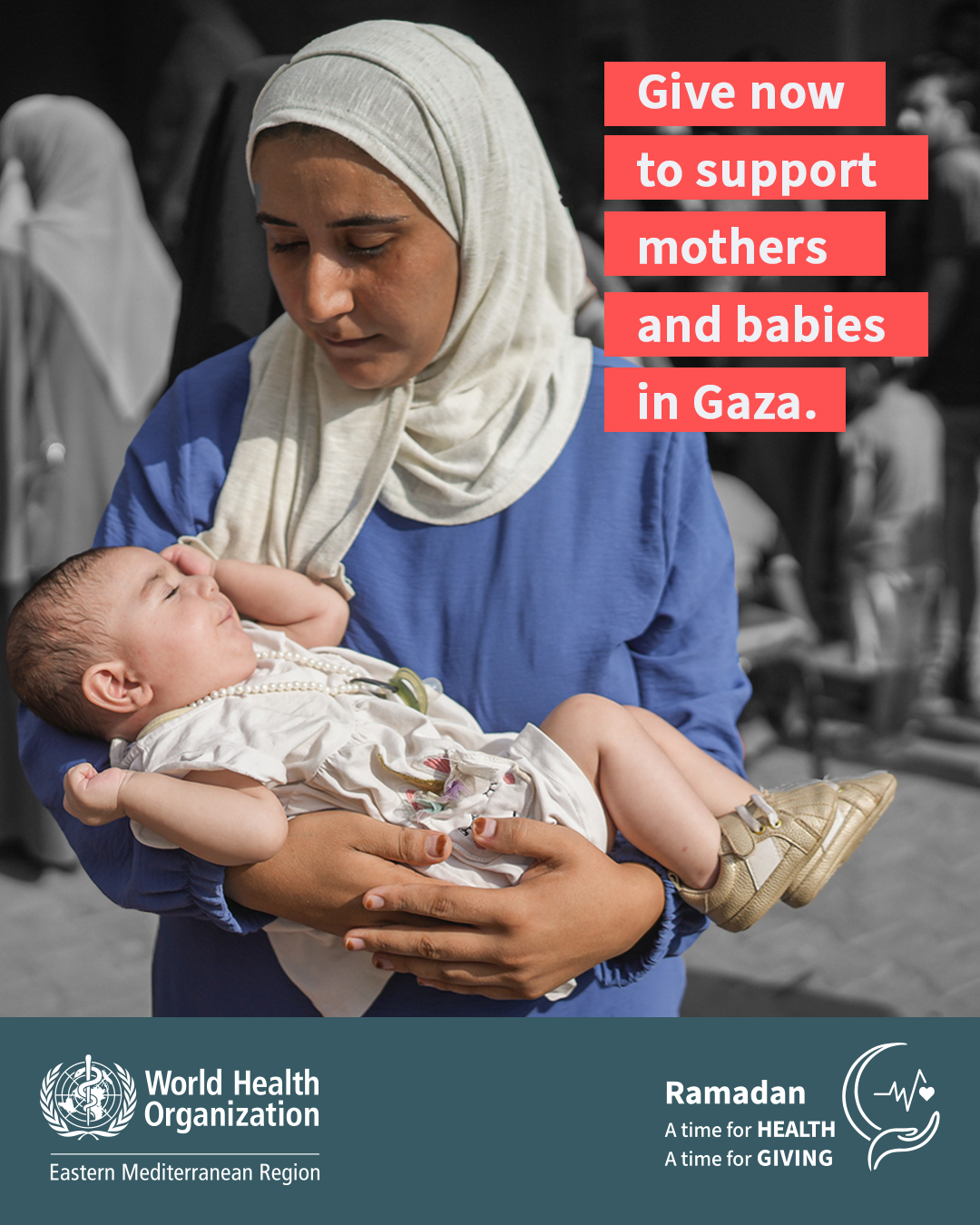
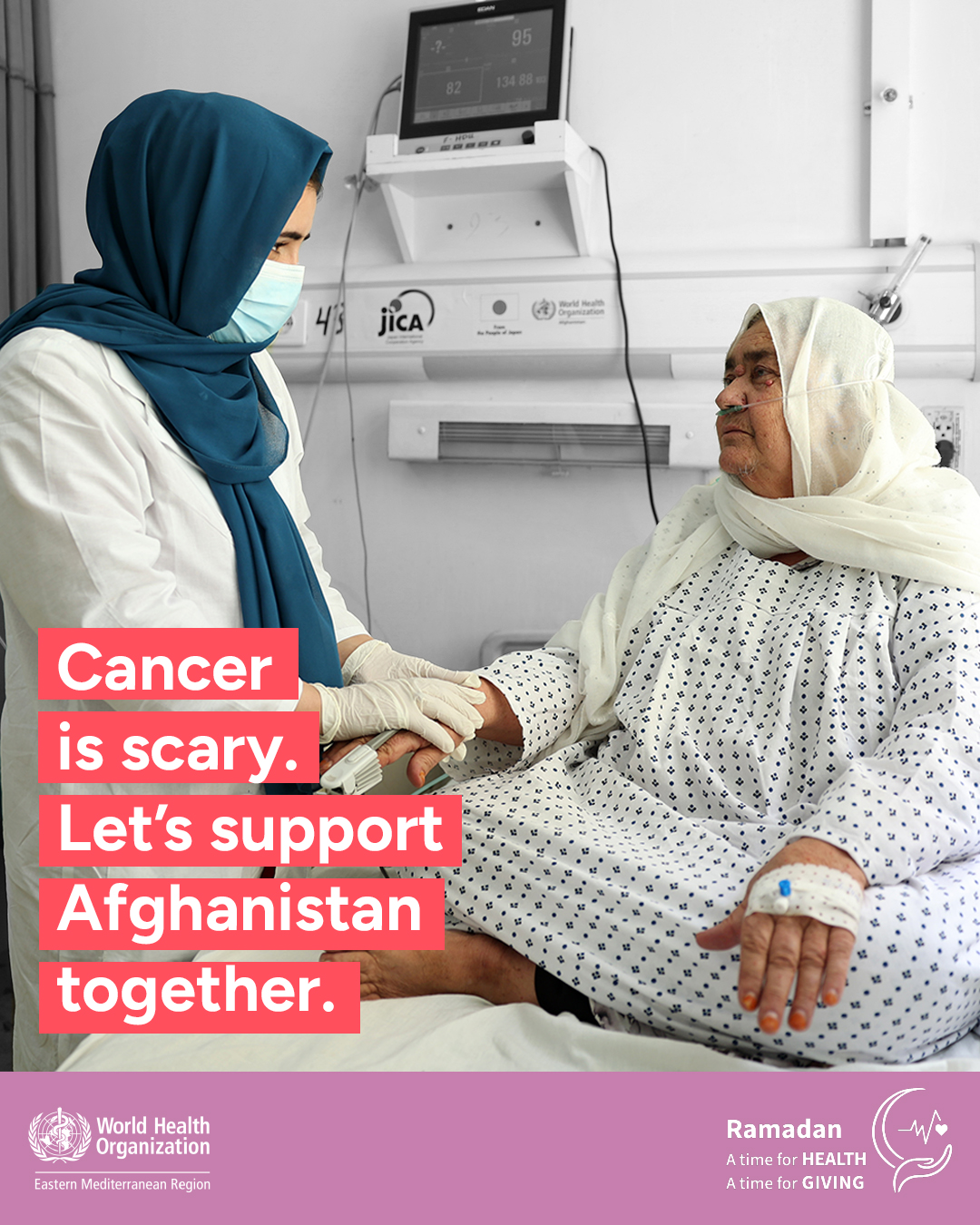
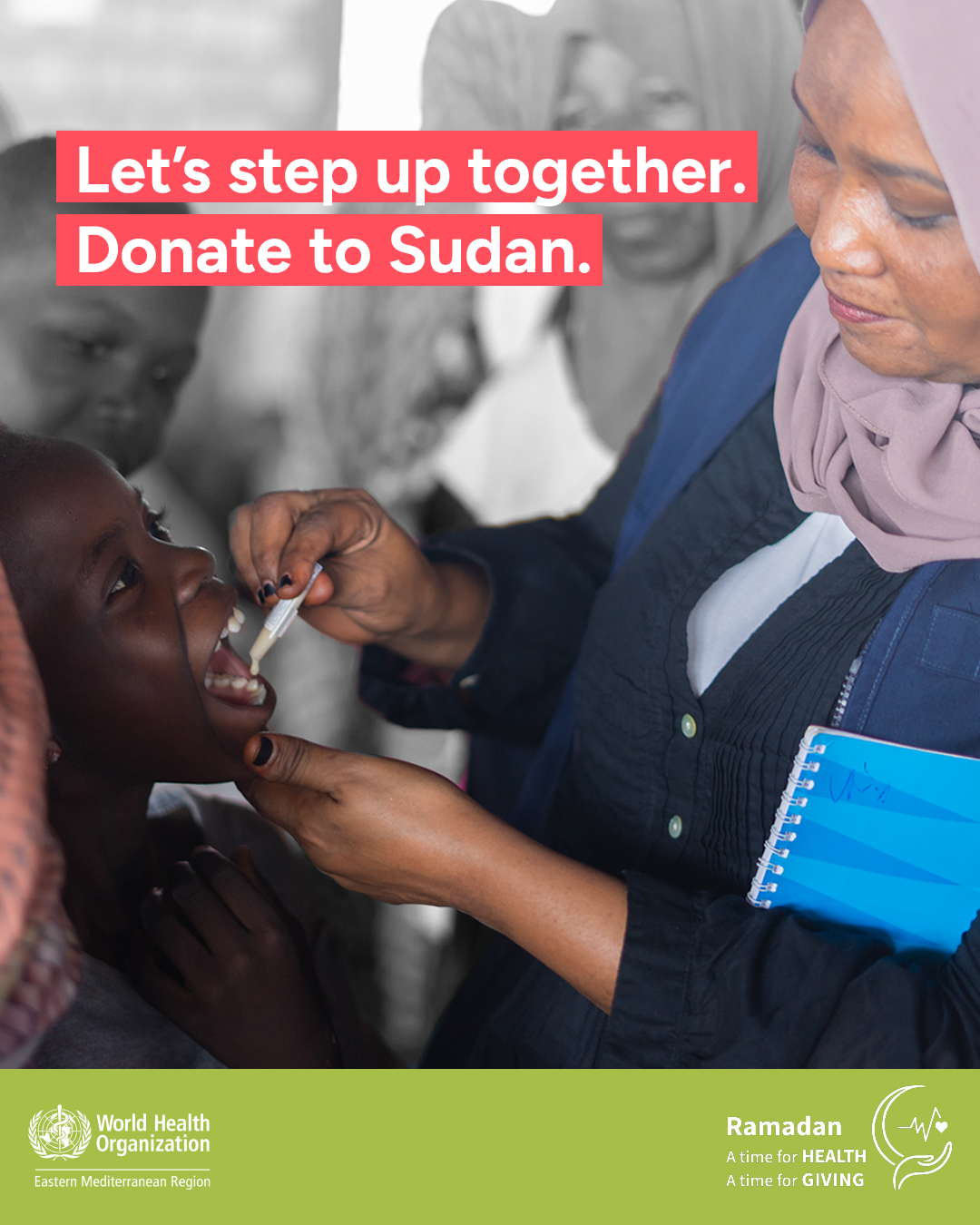
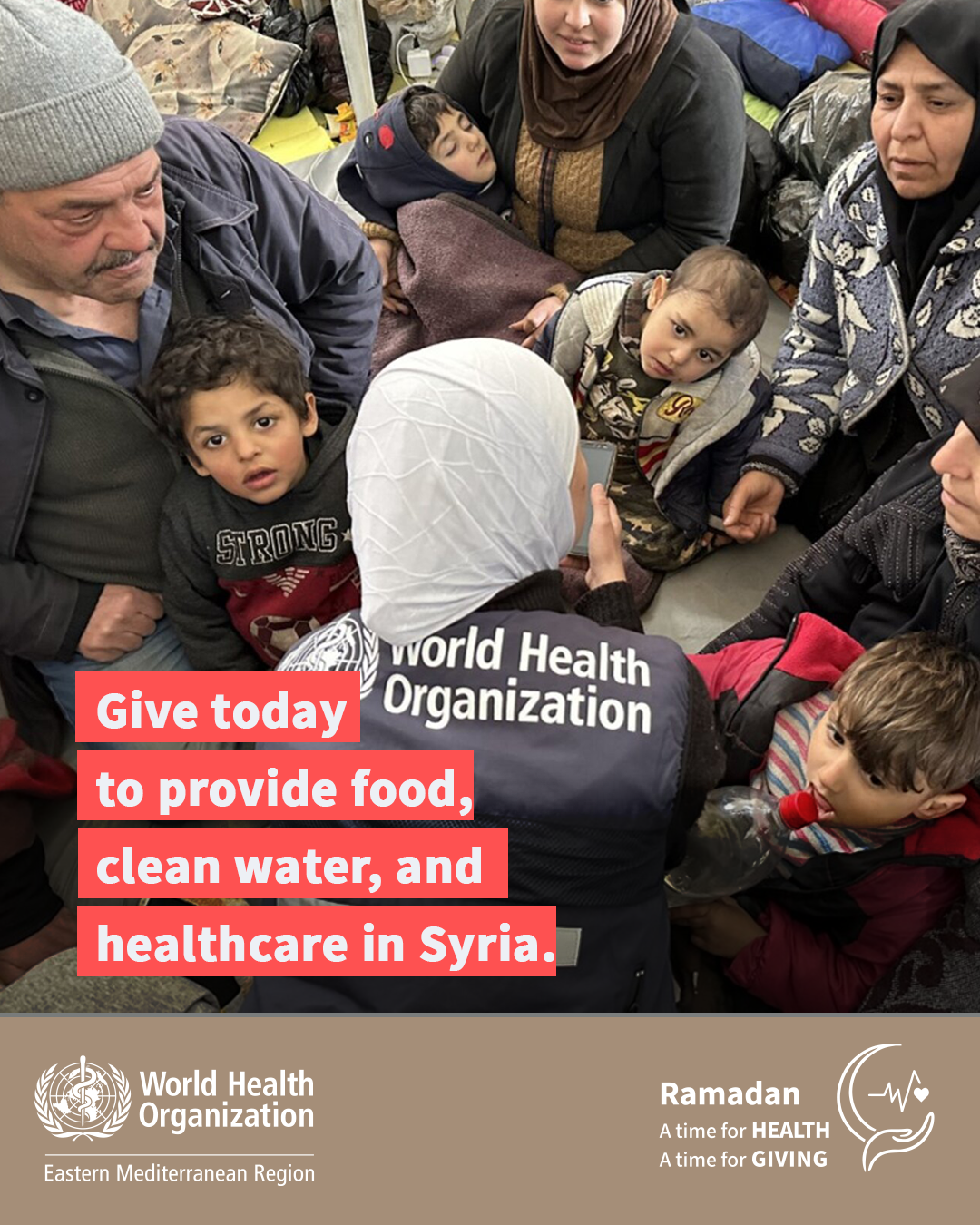
This Ramadan, as families gather to break their fast, spare a thought for the millions of people across the Eastern Mediterranean Region who face a very different reality. In Syria, hospitals lack essential medicines. In Sudan and Yemen, malnourished children are too weak to fight disease. In Gaza, doctors perform surgeries without basic supplies like anaesthetics. In Afghanistan and Somalia, disease outbreaks are spreading unchecked against a backdrop of health systems devastated by years of conflict.
WHO is working on the frontlines, delivering urgent health aid, but needs far outweigh resources. We cannot let war, hunger, displacement and disease define Ramadan for so many.
Your support can restore health, bring lifesaving treatment and offer hope where it is desperately needed.
This Ramadan, let your generosity heal. Give now.
Mental health: sharing and caring in Ramadan
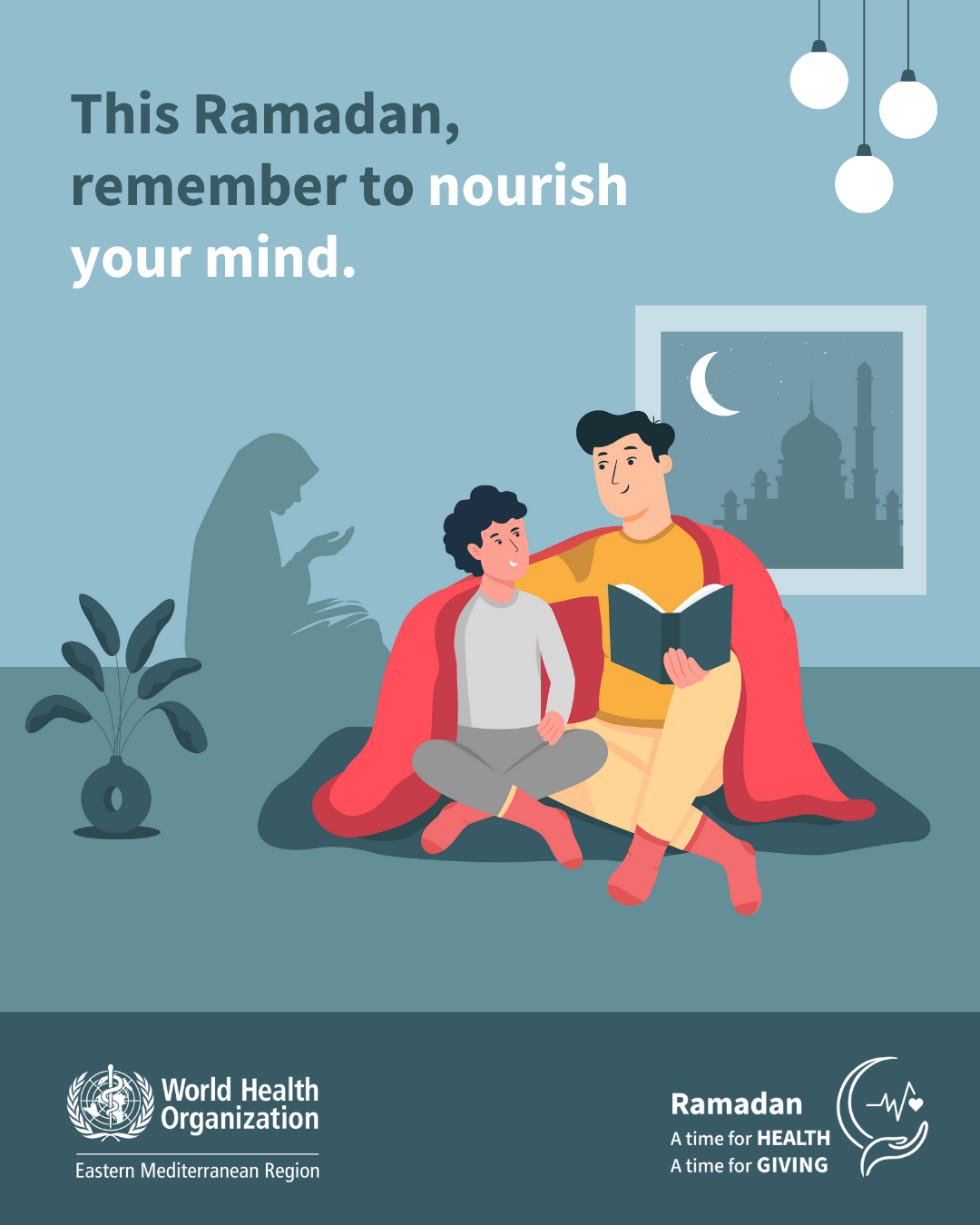
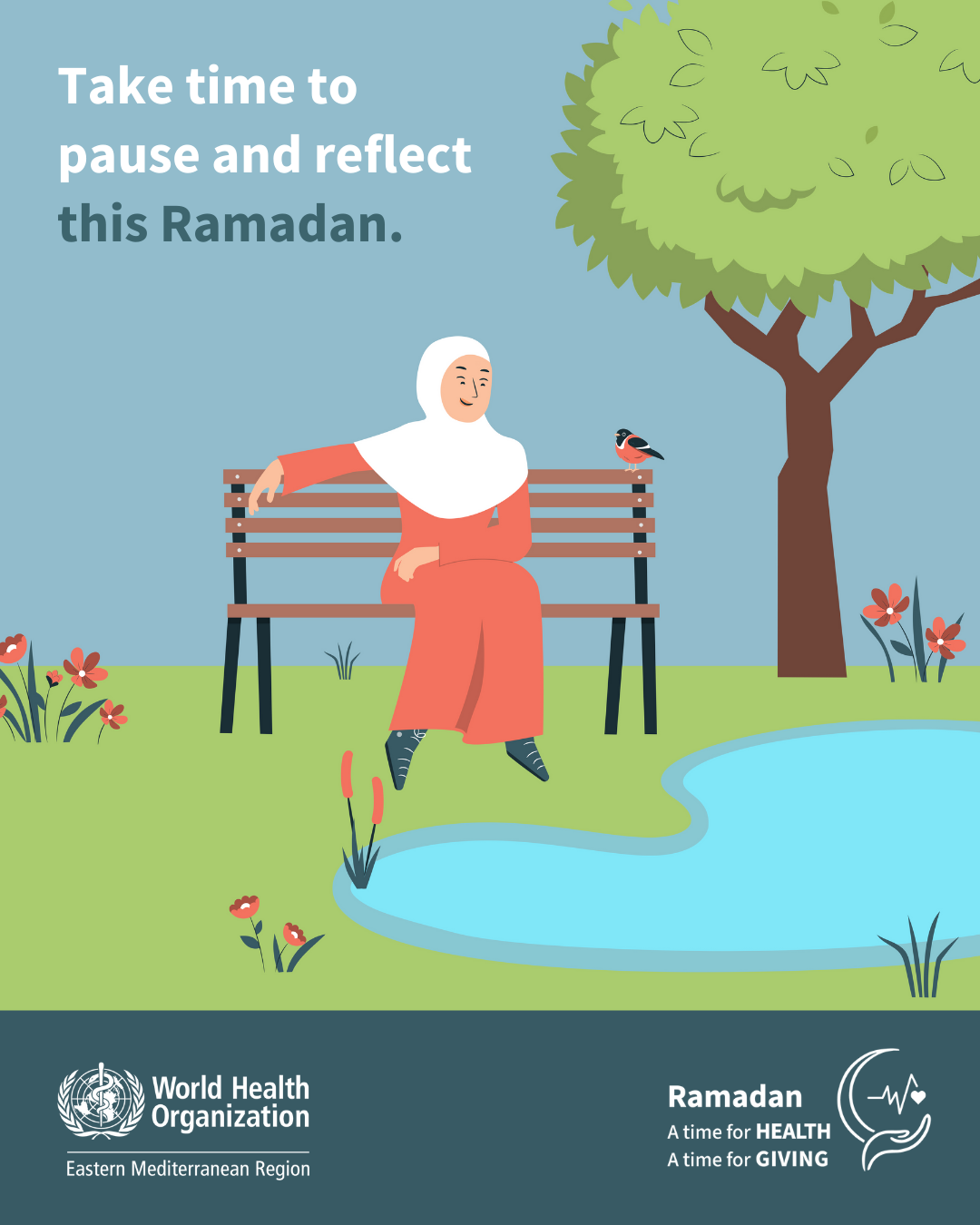
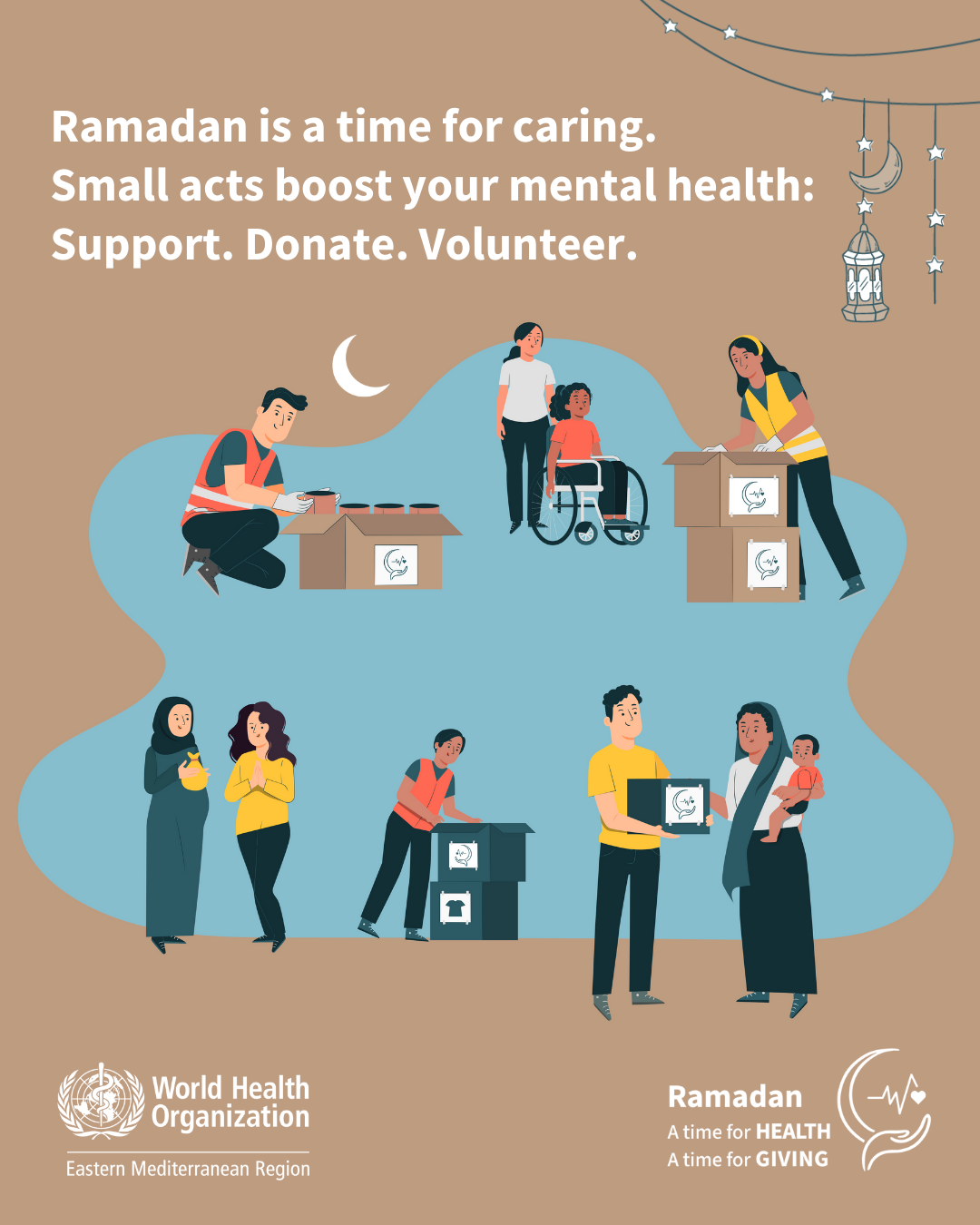
Ramadan is a time when the spirit of community should come to the fore. It offers opportunities for reflection, of sharing blessings with loved ones and those less fortunate, and the space to step back from our often-stressful lives, take stock and recharge.
Below are ways you can share and care while staying safe this Ramadan.
Volunteer
Help people by volunteering for community activities.
Offer support from a distance
Check-in on people in your extended circle by phone or video chat and help them cope with any stress they are feeling.
Look after yourself
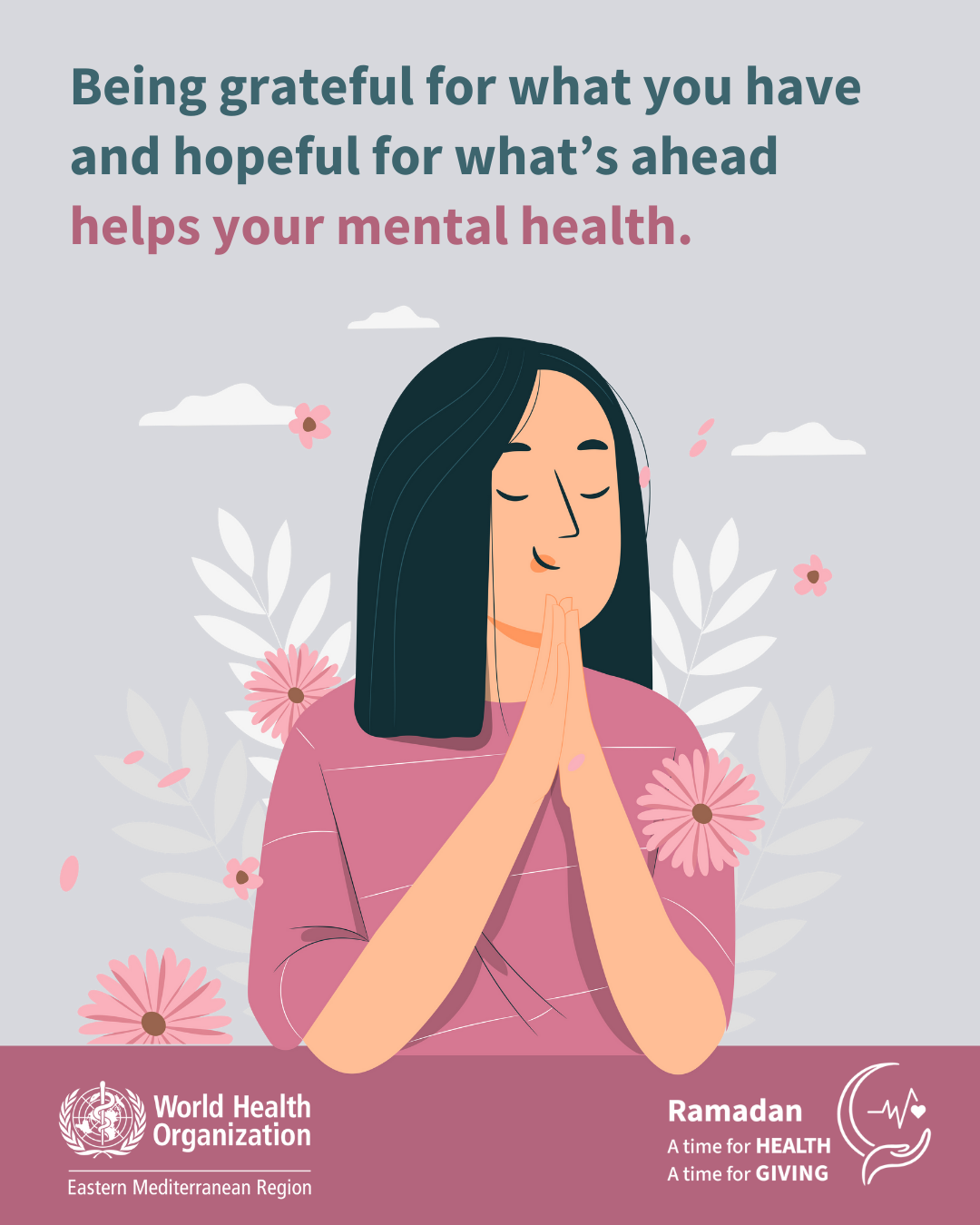
Don’t forget to show yourself kindness and compassion this month. Caring for yourself allows you to care for others.
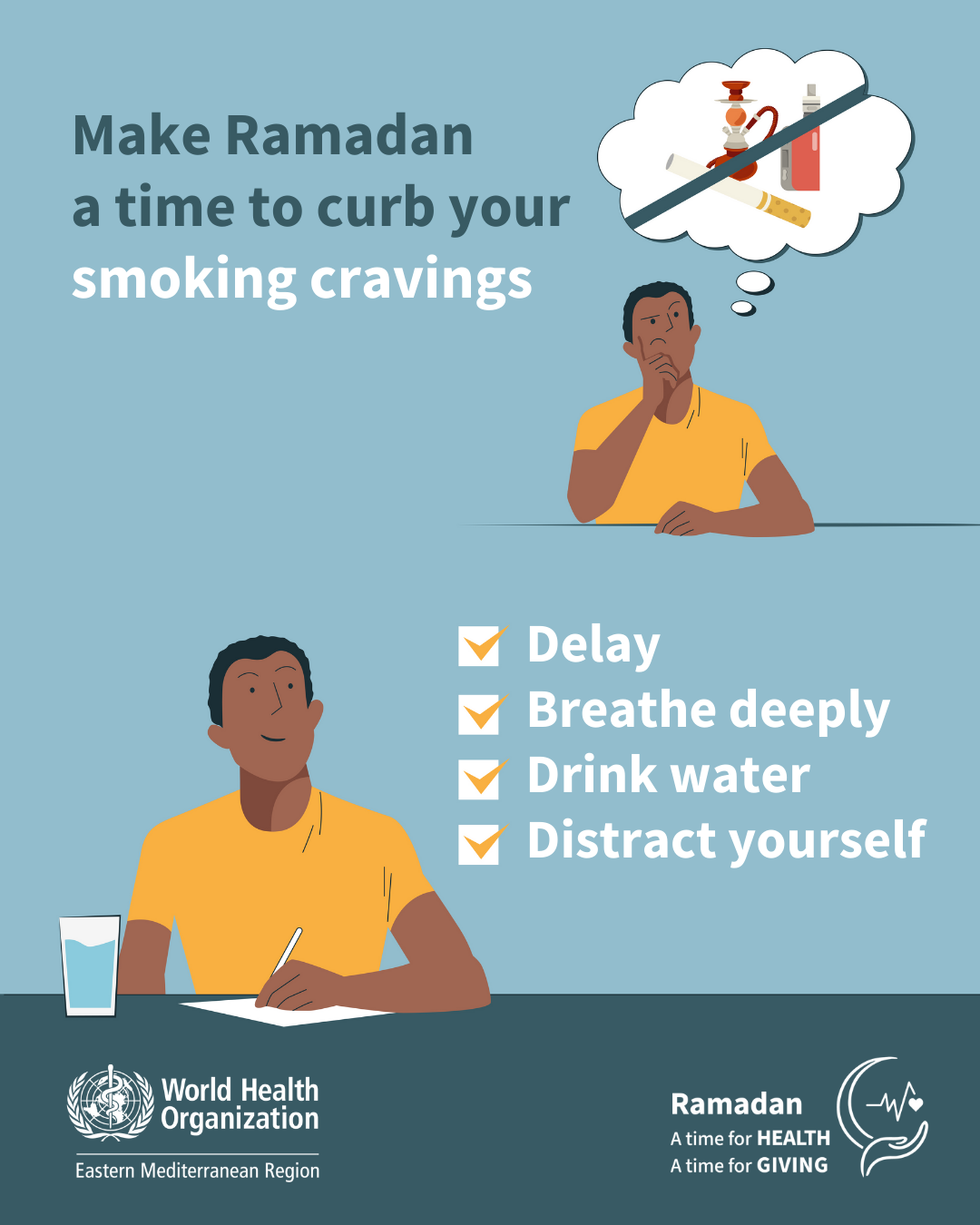
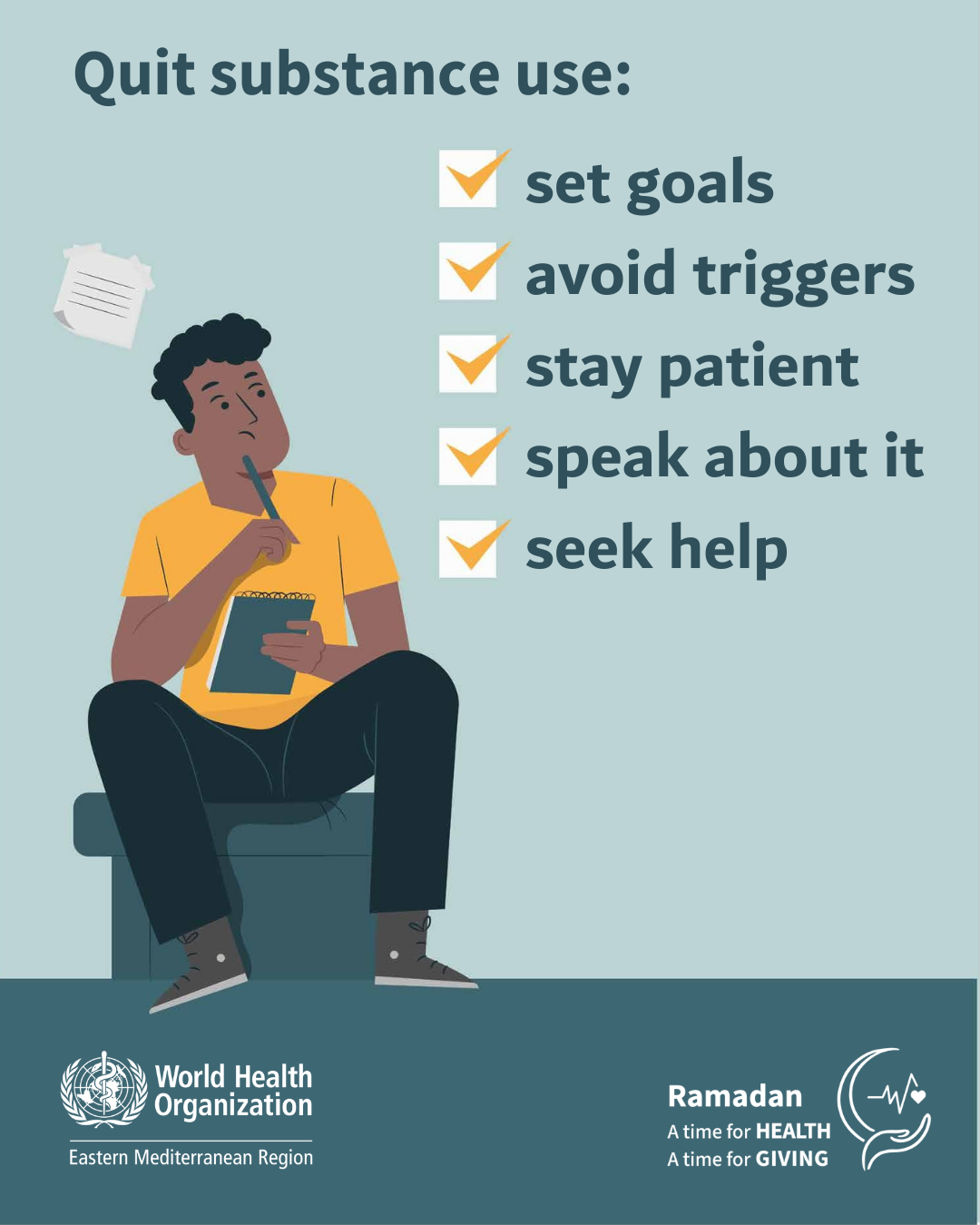
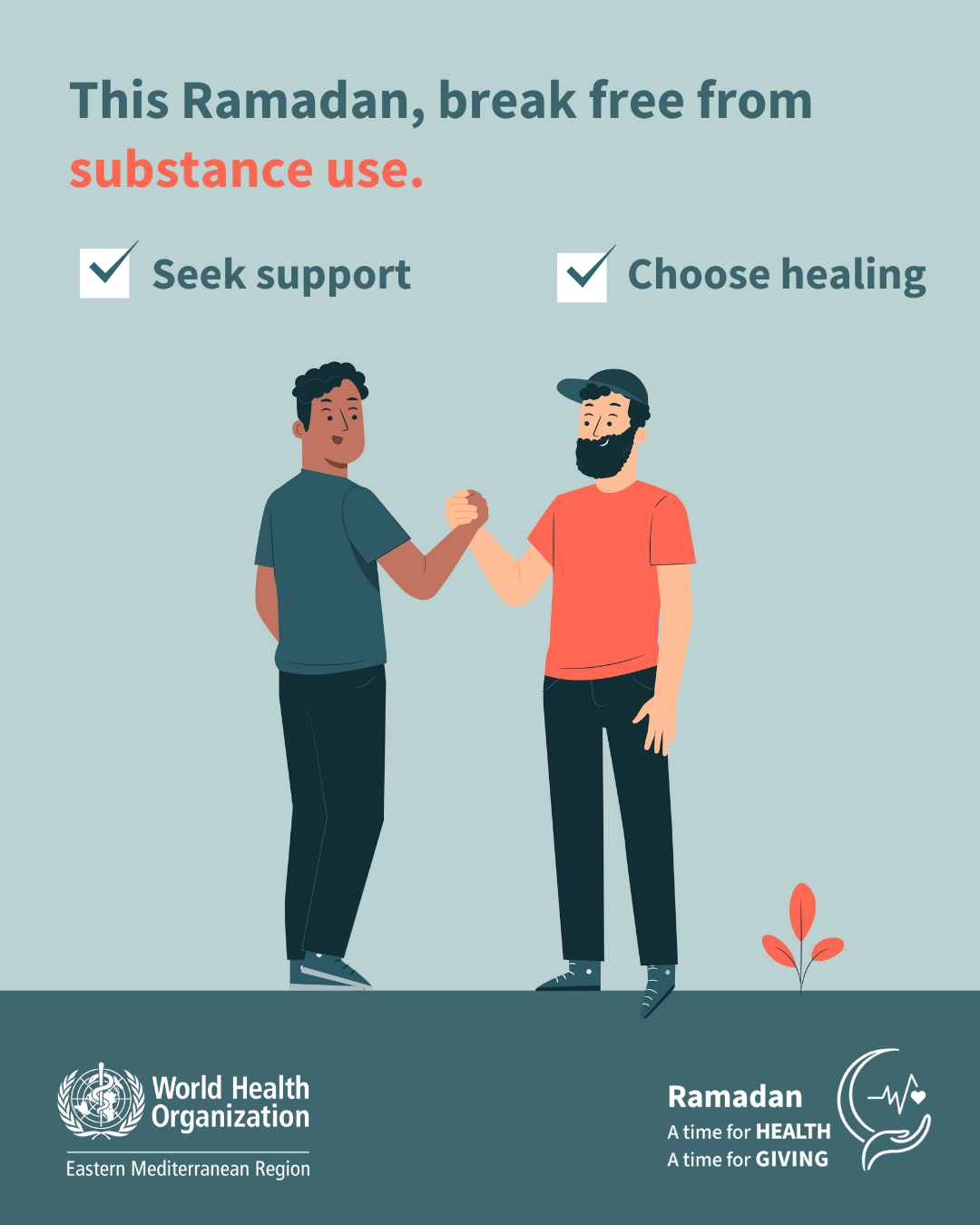
Quit/cut down on substance use
Make a contract with yourself by setting realistic targets. Be specific, make sure you can measure your progress and set a timeframe to reach your goals.
Let people know that you plan to stop or cut down. Making others aware of your intentions allows them to help and encourage you to reach your goal.
Fasting while pregnant
For pregnant women, the decision to fast during Ramadan should be made on an individual basis, in consultation with a health care provider.
Pregnant and breastfeeding women who enjoy good health can usually fast without any impact on their health or the health of their baby.
It is, however, essential to:
- ensure Iftar and Suhoor meals are healthy and balanced and contain all necessary nutrients, including carbohydrates, plant and/or animal protein, vitamins and mineral salts;
- eat sufficient amounts of fresh and fibre-rich fruits and vegetables;
- delay Suhoor till as late as is practical; and
- be aware of dehydration and drink sufficient water after meals.
Stick to regular follow-ups with qualified midwives or specialized doctors
Know warning signs such as lack of fetal movement, persistent vomiting, fainting, change in urine colour and quantity and unusually heavy sweating. Contact your health provider immediately if you develop any of them.
Healthy diet- Eat healthily this Ramadan
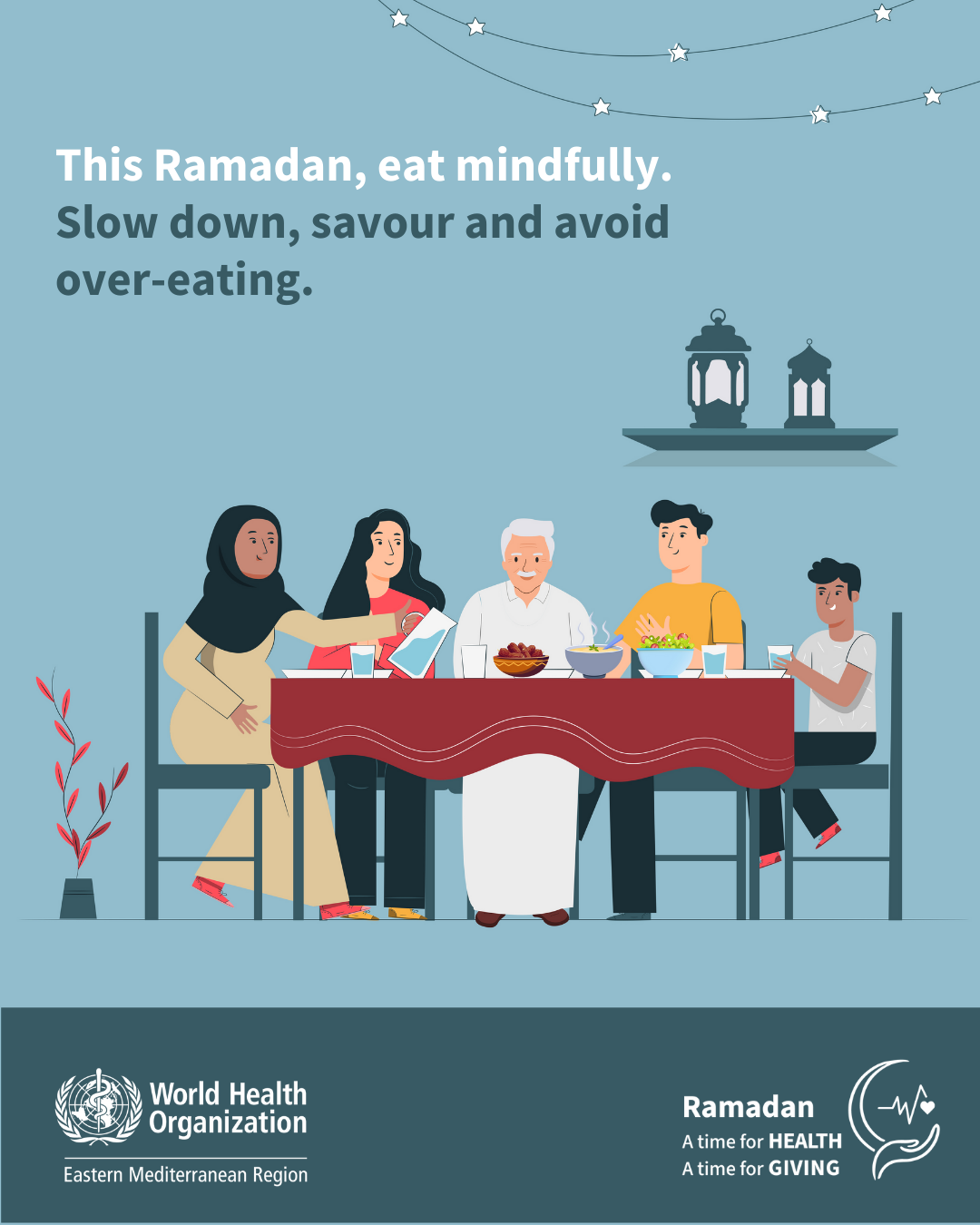
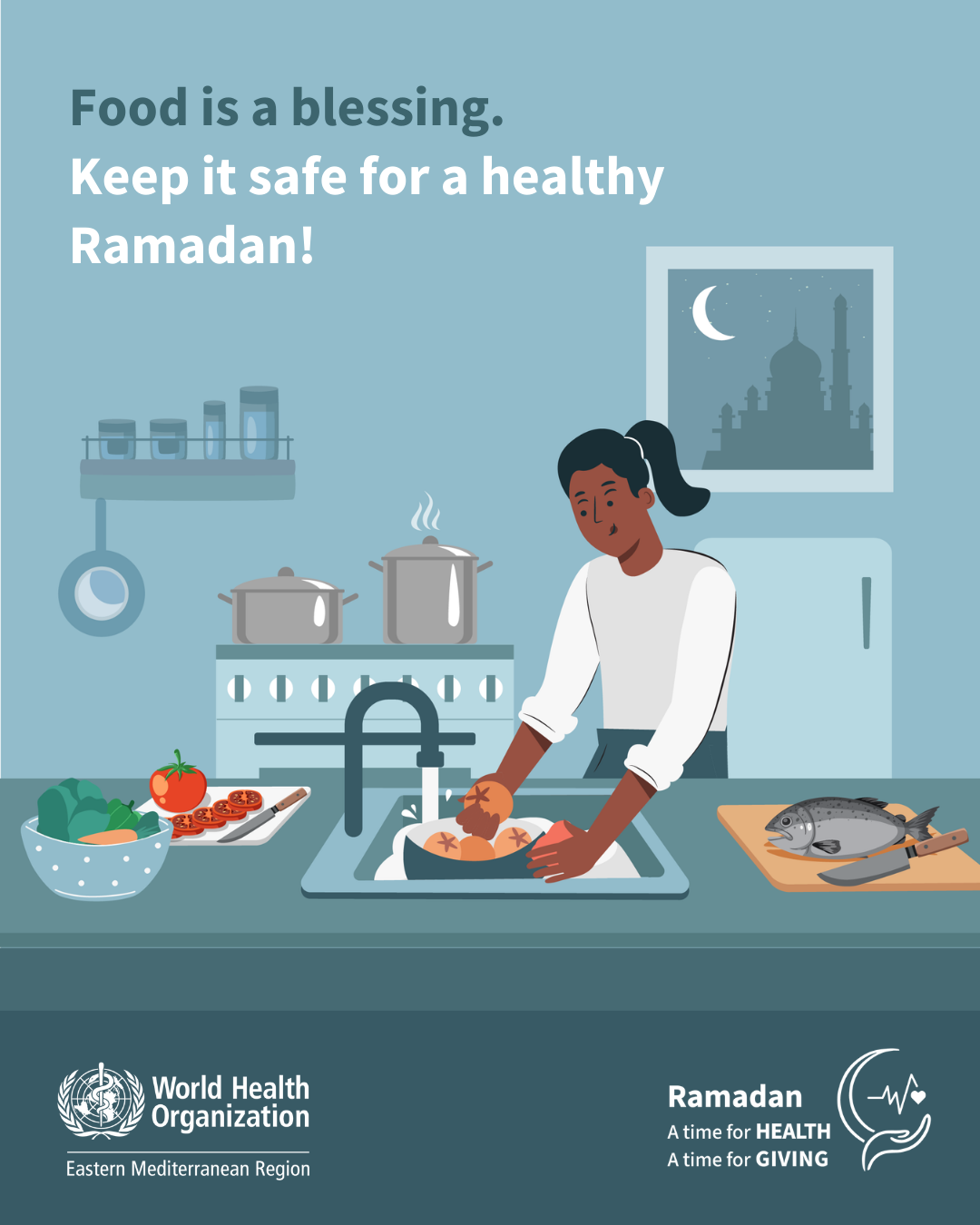
Remember, the foods you might crave after the day’s fast are not necessarily healthy. Be as conscious of what you eat as you are of when you eat.
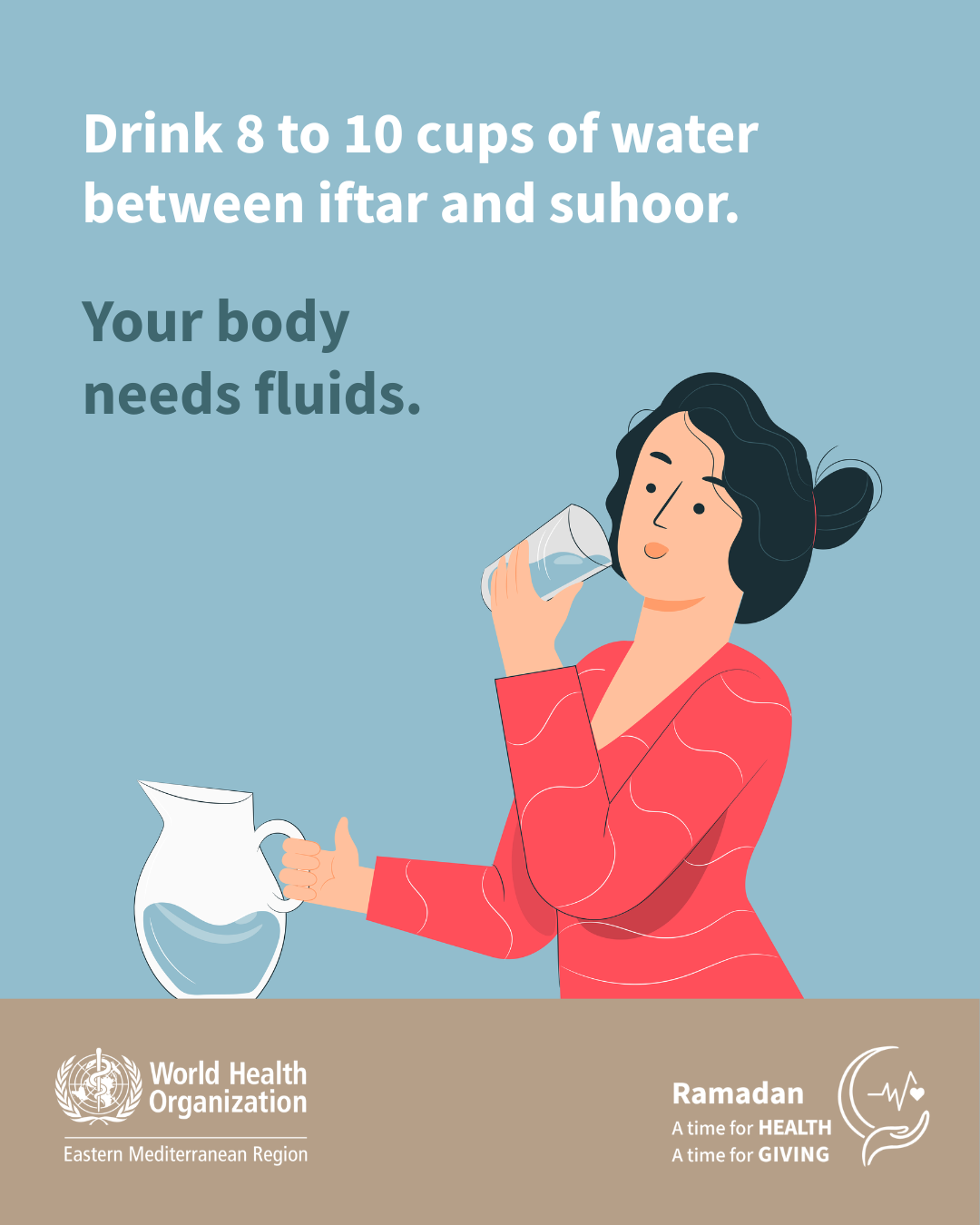
Drink plenty of water (at least 10 glasses) and eat hydrating foods such as soups, watermelon and green salads.
Avoid caffeinated drinks such as coffee, tea and cola.
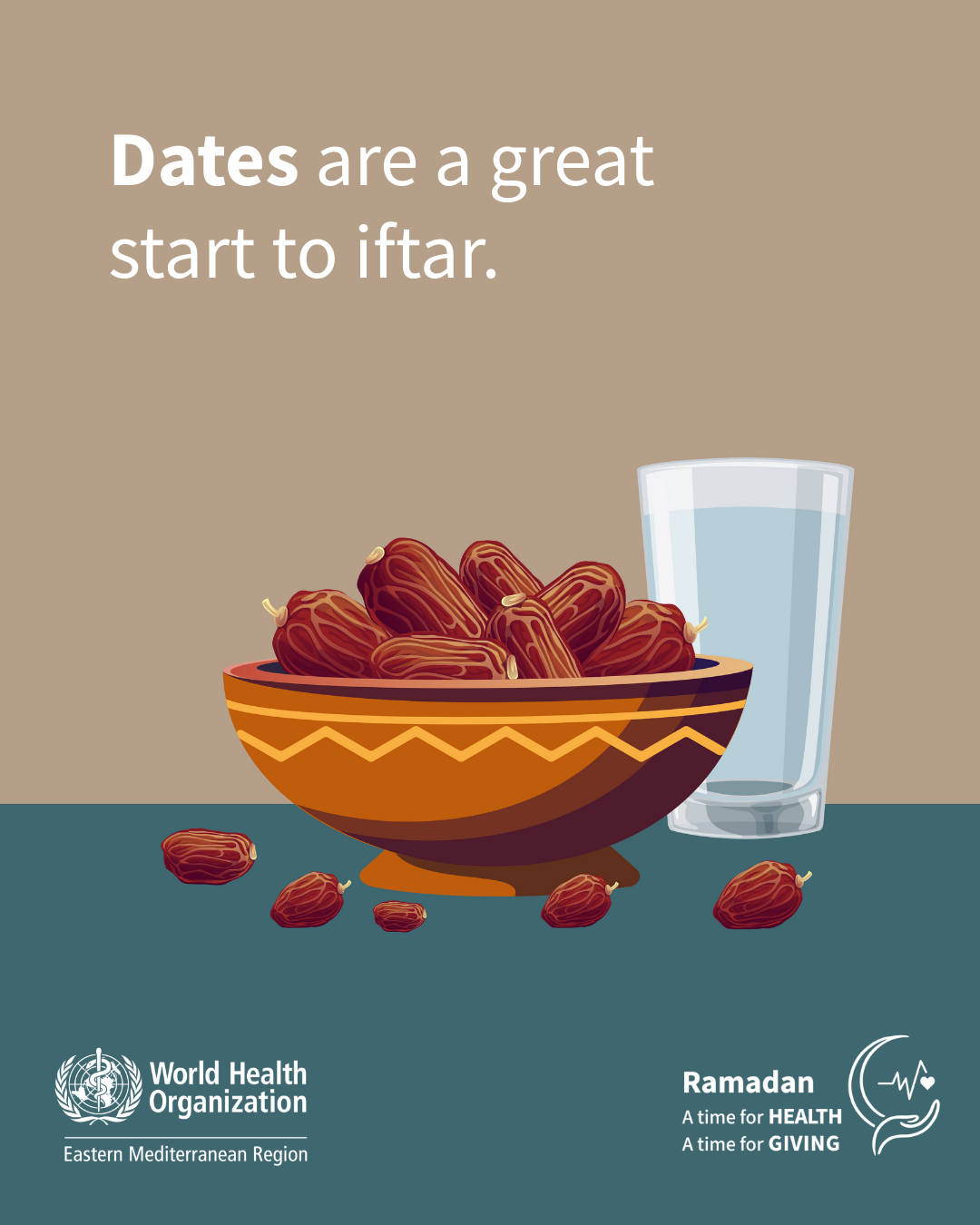
Break your fast with dates. They are an excellent source of fibre.
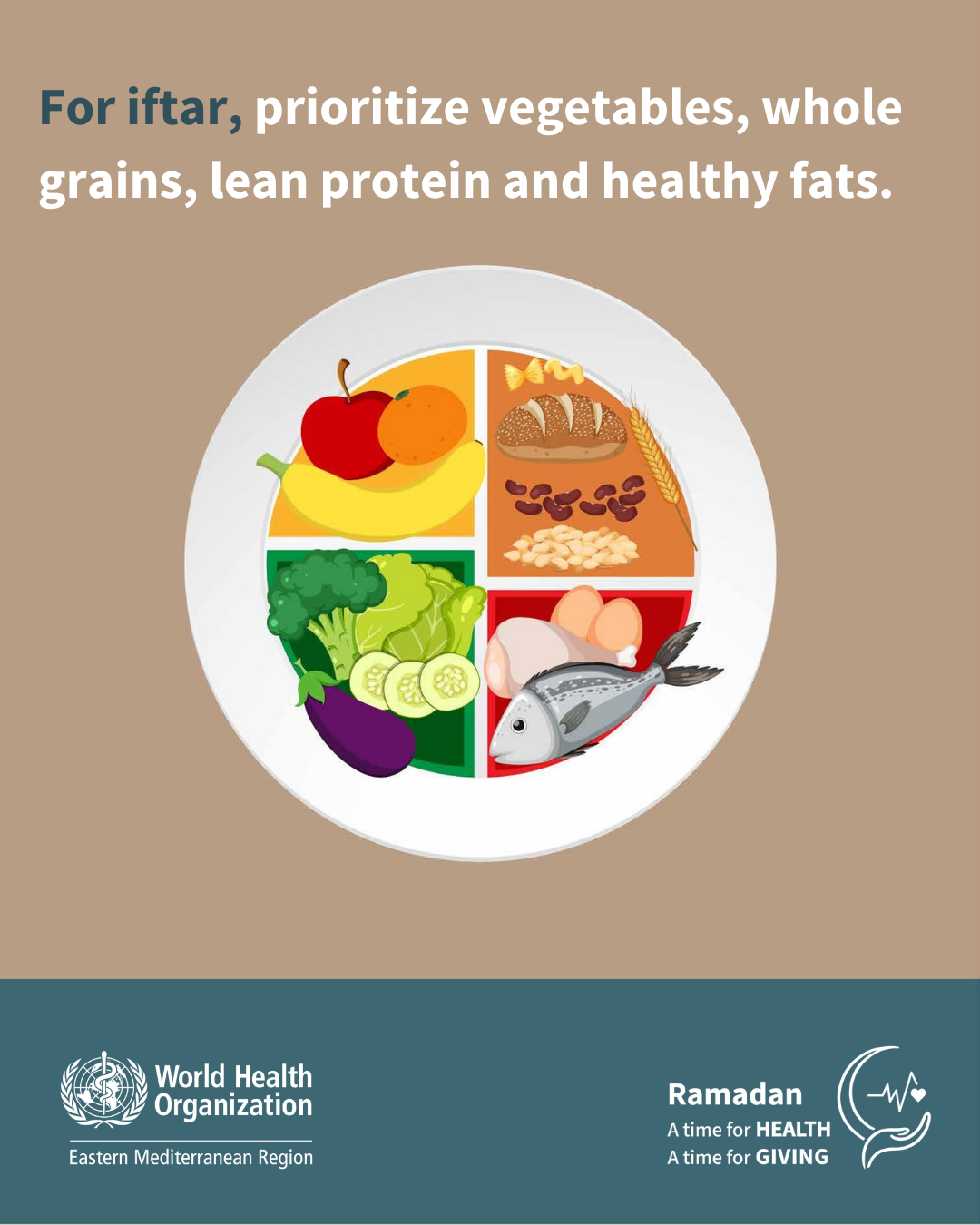
Incorporate plenty of vegetables to provide vitamins and nutrients.
Choose whole grains, which provide the body with energy and fibre.
Grill or bake lean meat, skinless chicken and fish to get a good portion of healthy protein.
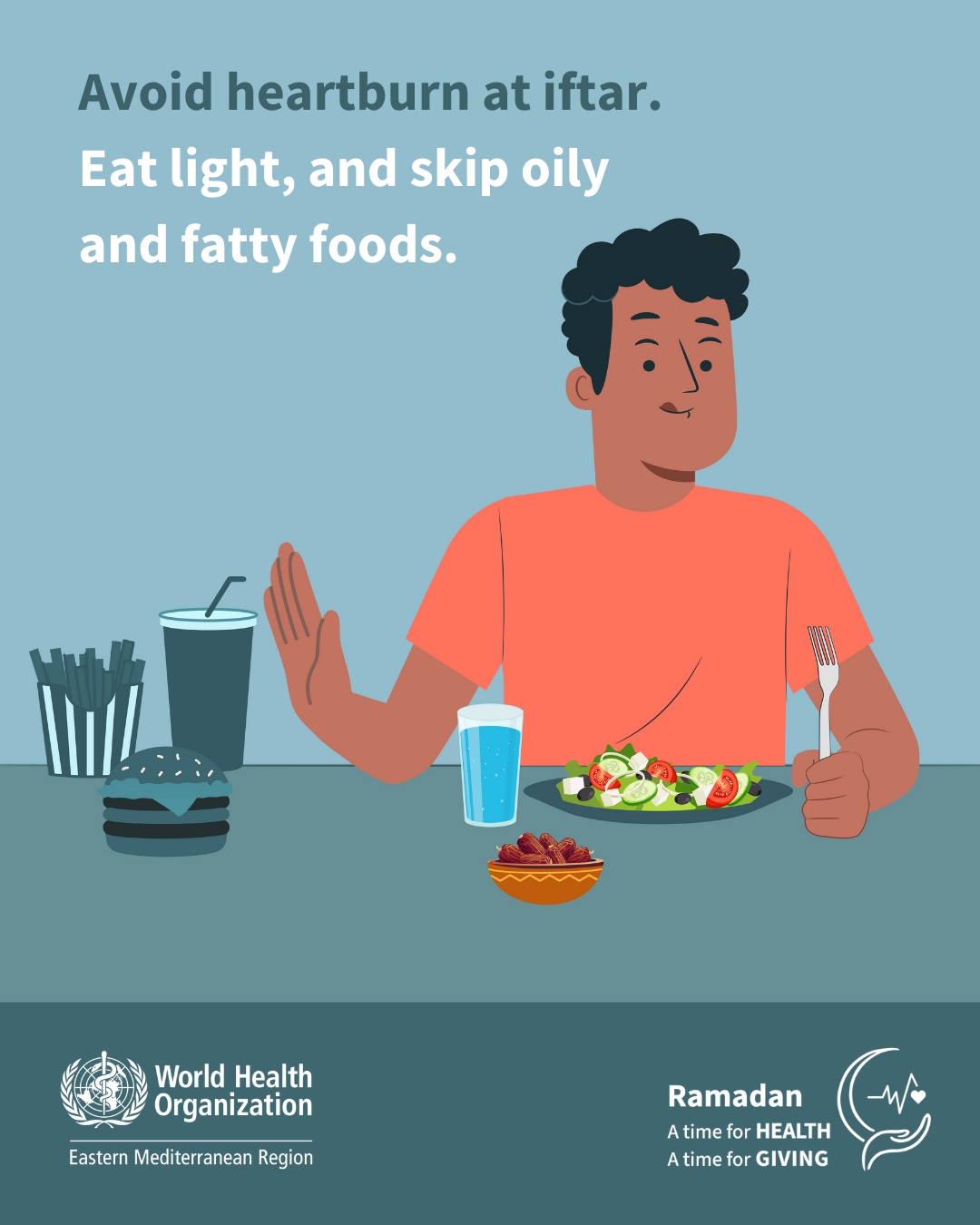
Avoid fried and processed foods that are high in fat or sugar as much as possible.
Eat slowly to avoid overeating.
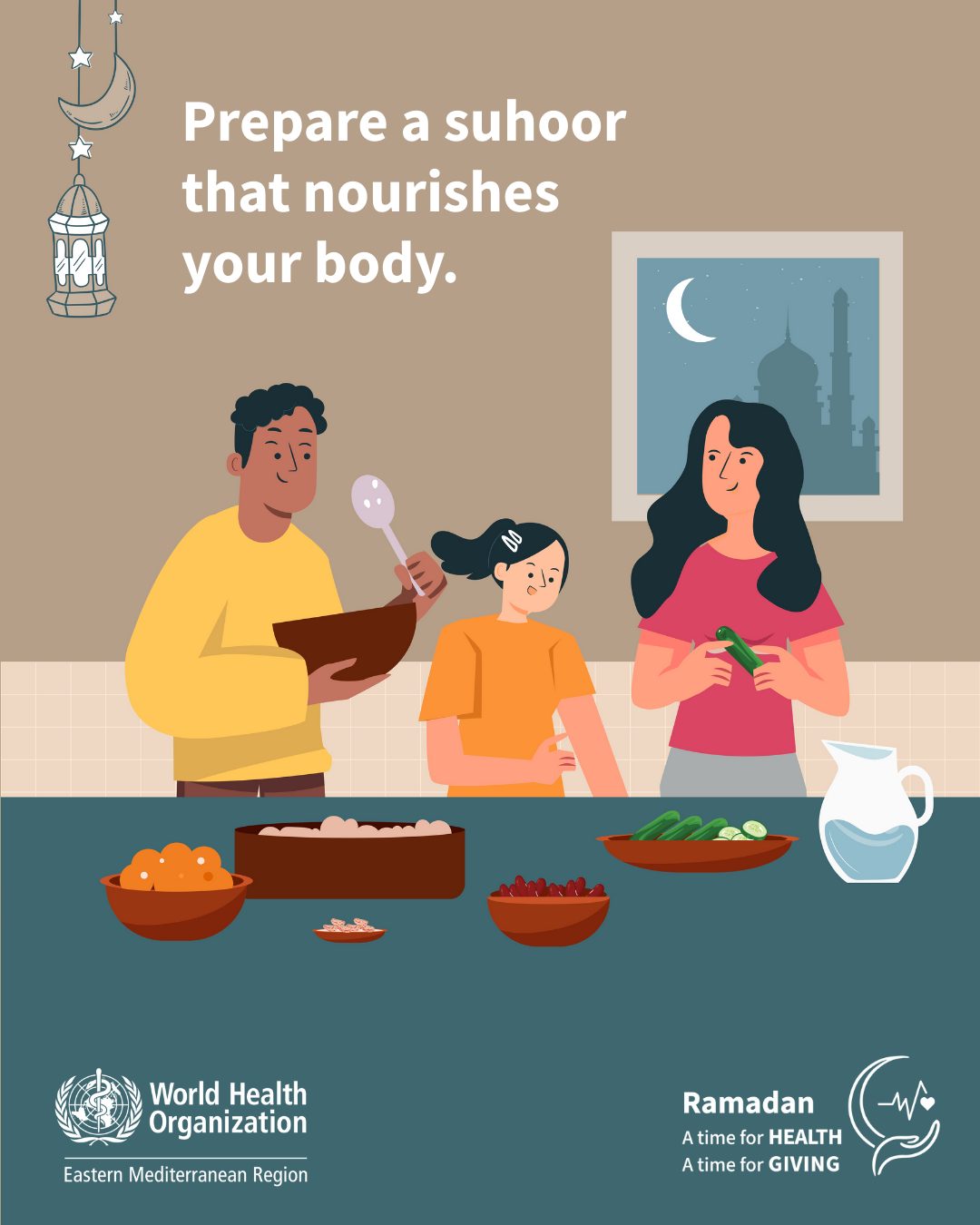
Suhoor is your fuel for the day ahead and is particularly important for older people, adolescents, pregnant women, nursing mothers and children who choose to fast. Make it light and nutritious.
Eat healthily this Ramadan
Remember, the foods you might crave after the day’s fast are not necessarily healthy. Be as conscious of what you eat as you are of when you eat.
Drink plenty of water (at least 10 glasses) and eat hydrating foods such as soups, watermelon and green salads.
Avoid caffeinated drinks such as coffee, tea and cola
Break your fast with dates. They are an excellent source of fibre.
Incorporate plenty of vegetables to provide vitamins and nutrients.
Choose whole grains, which provide the body with energy and fibre.
Grill or bake lean meat, skinless chicken and fish to get a good portion of healthy protein.
Avoid fried and processed foods that are high in fat or sugar as much as possible.
Eat slowly to avoid overeating.
Suhoor is your fuel for the day ahead and is particularly important for older people, adolescents, pregnant women, nursing mothers and children who choose to fast. Make it light and nutritious.
Tobacco-free Ramadan
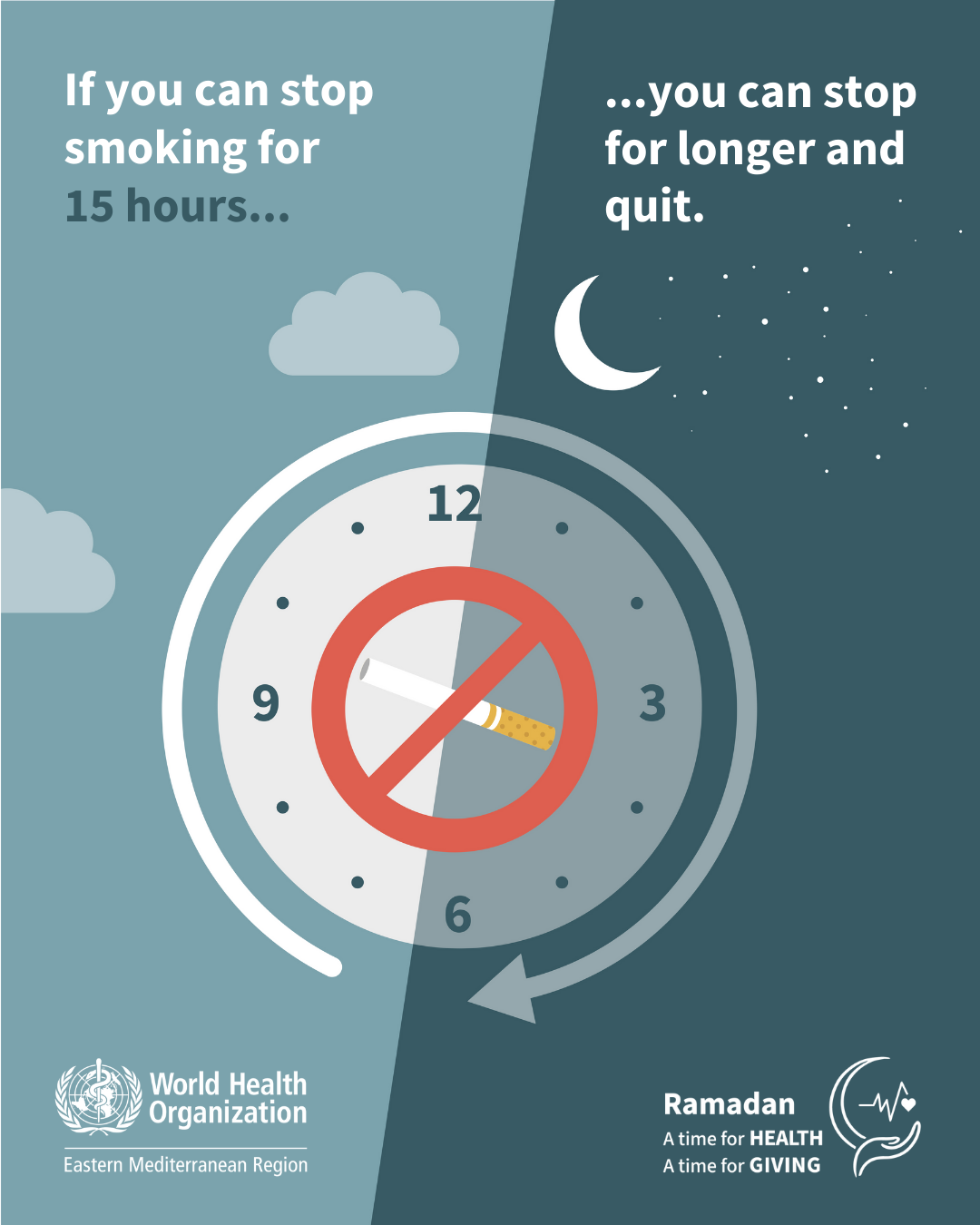
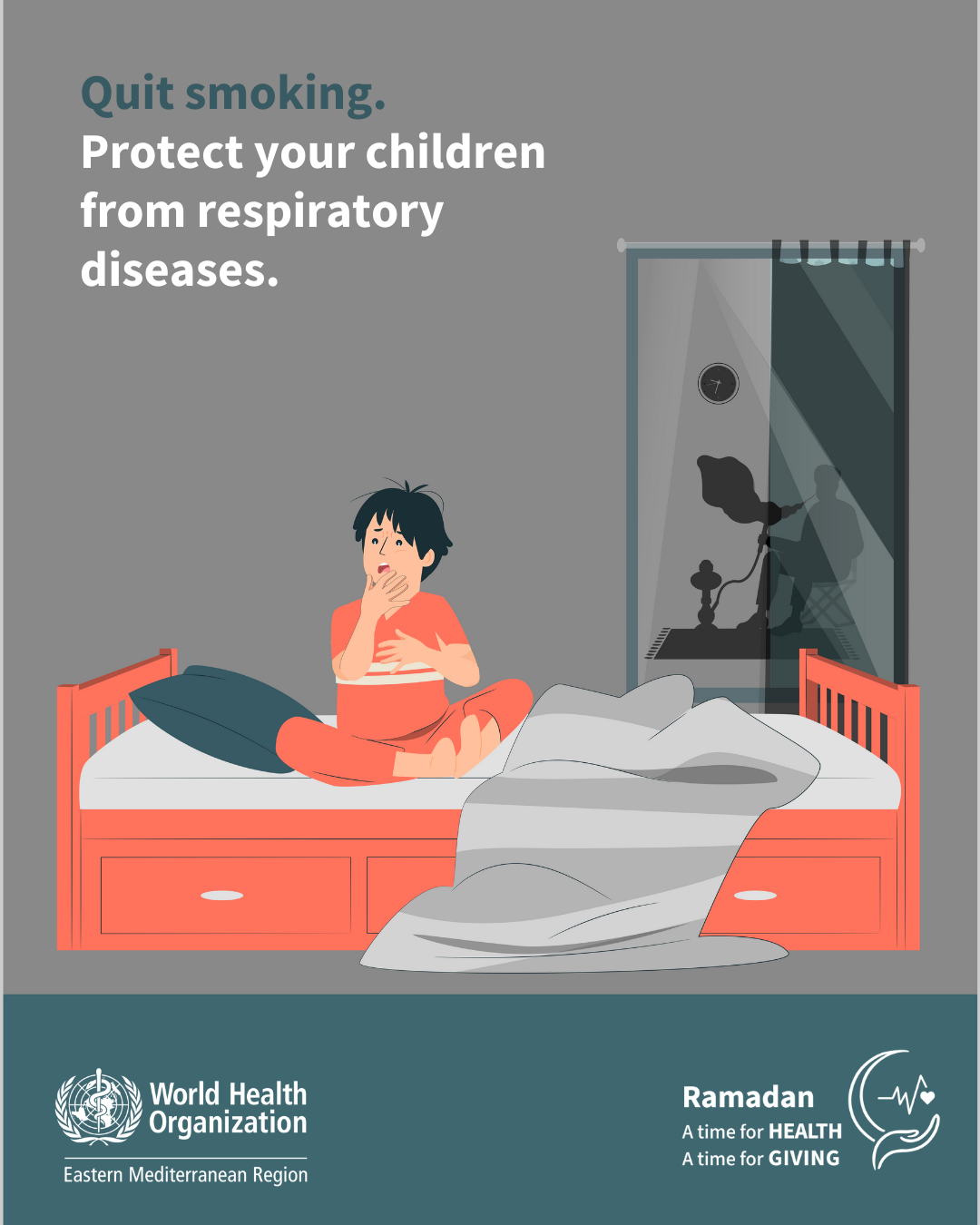
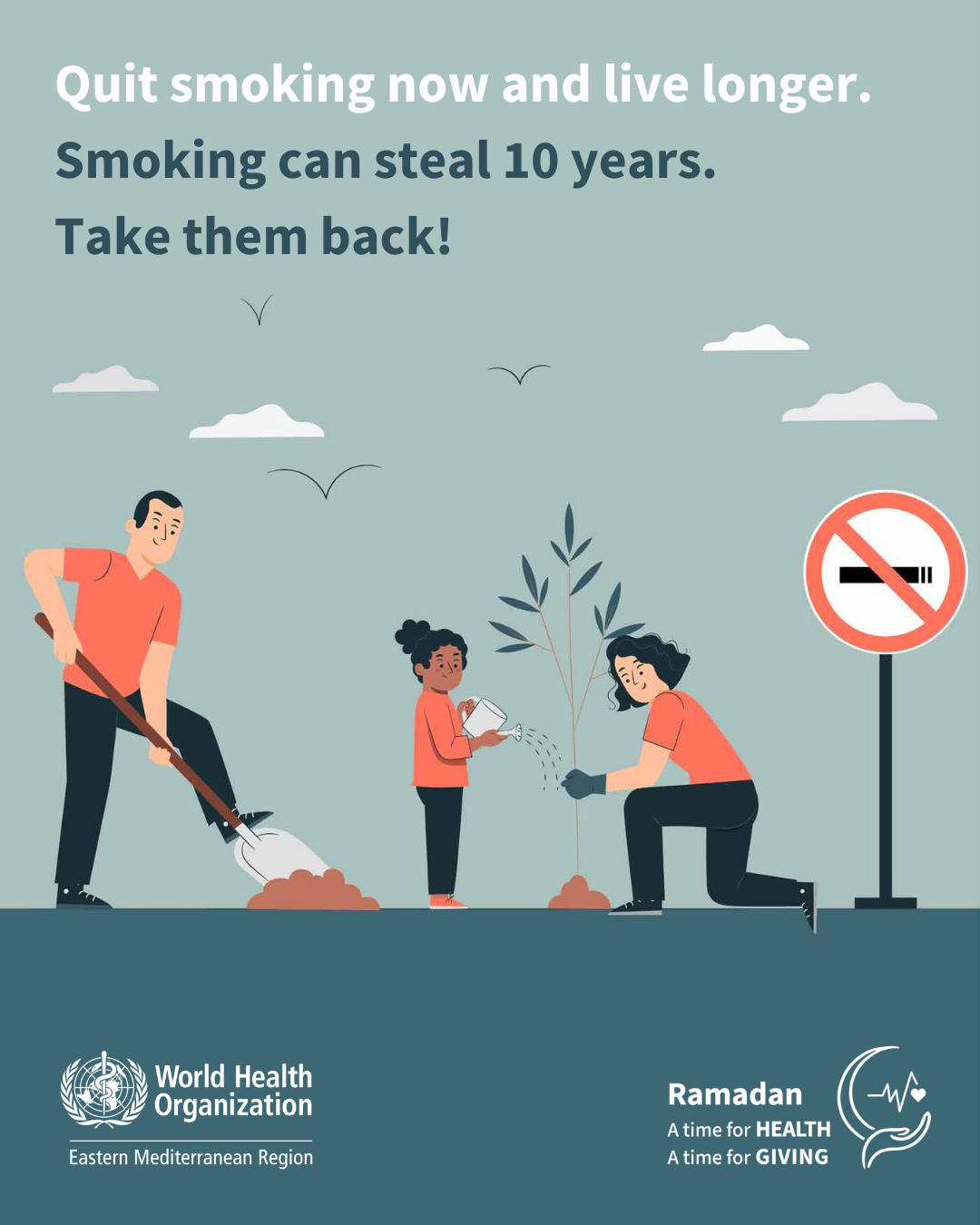
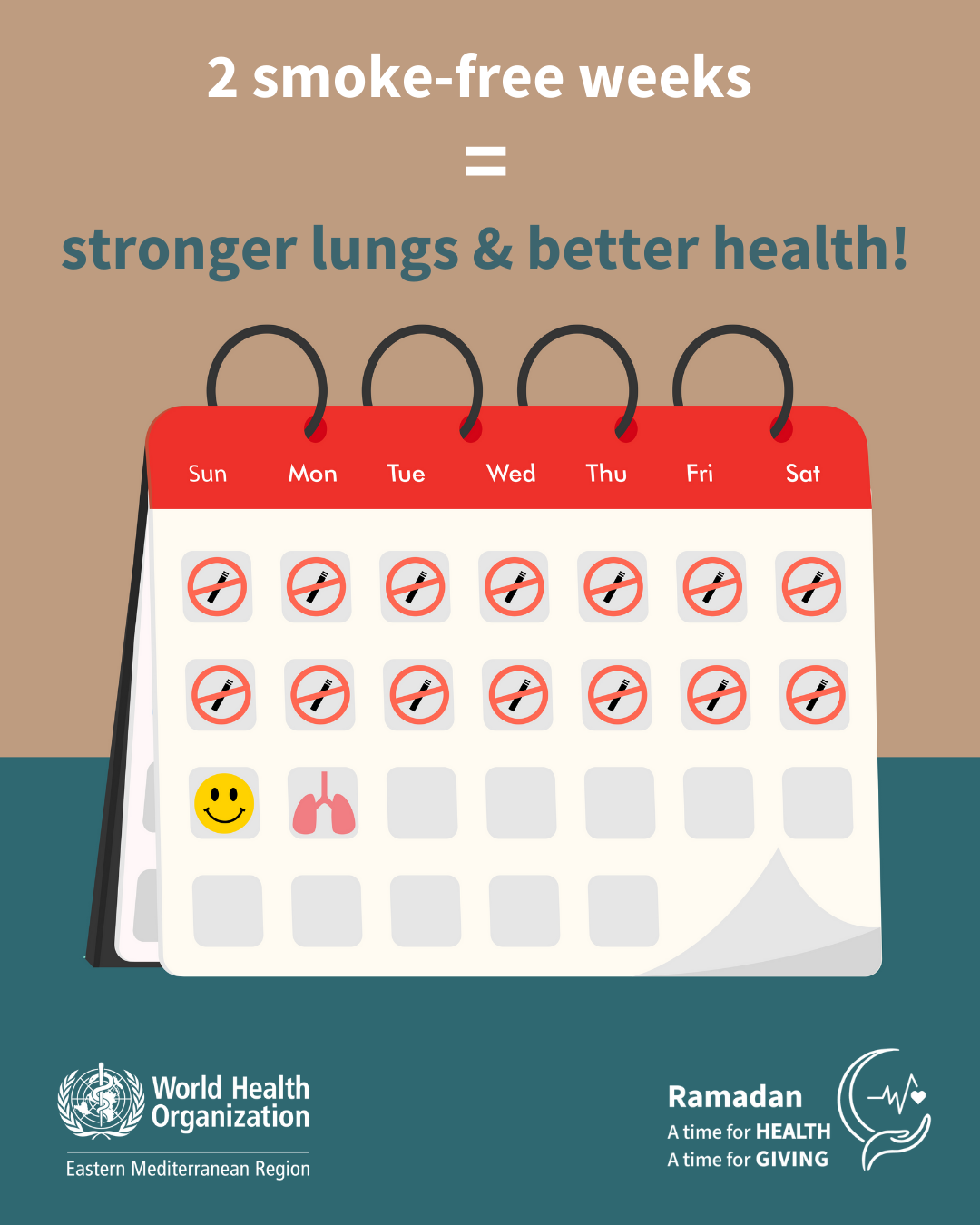
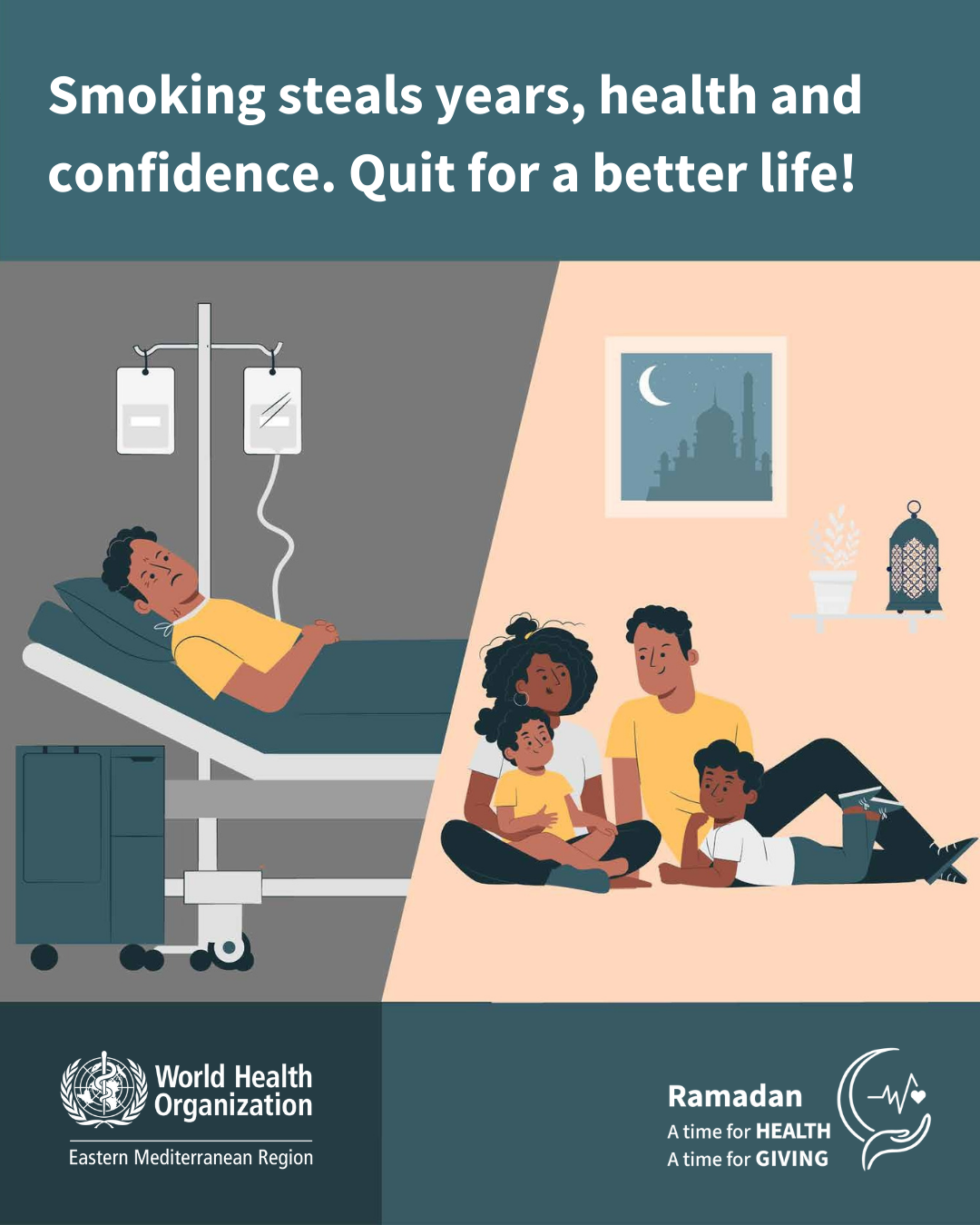
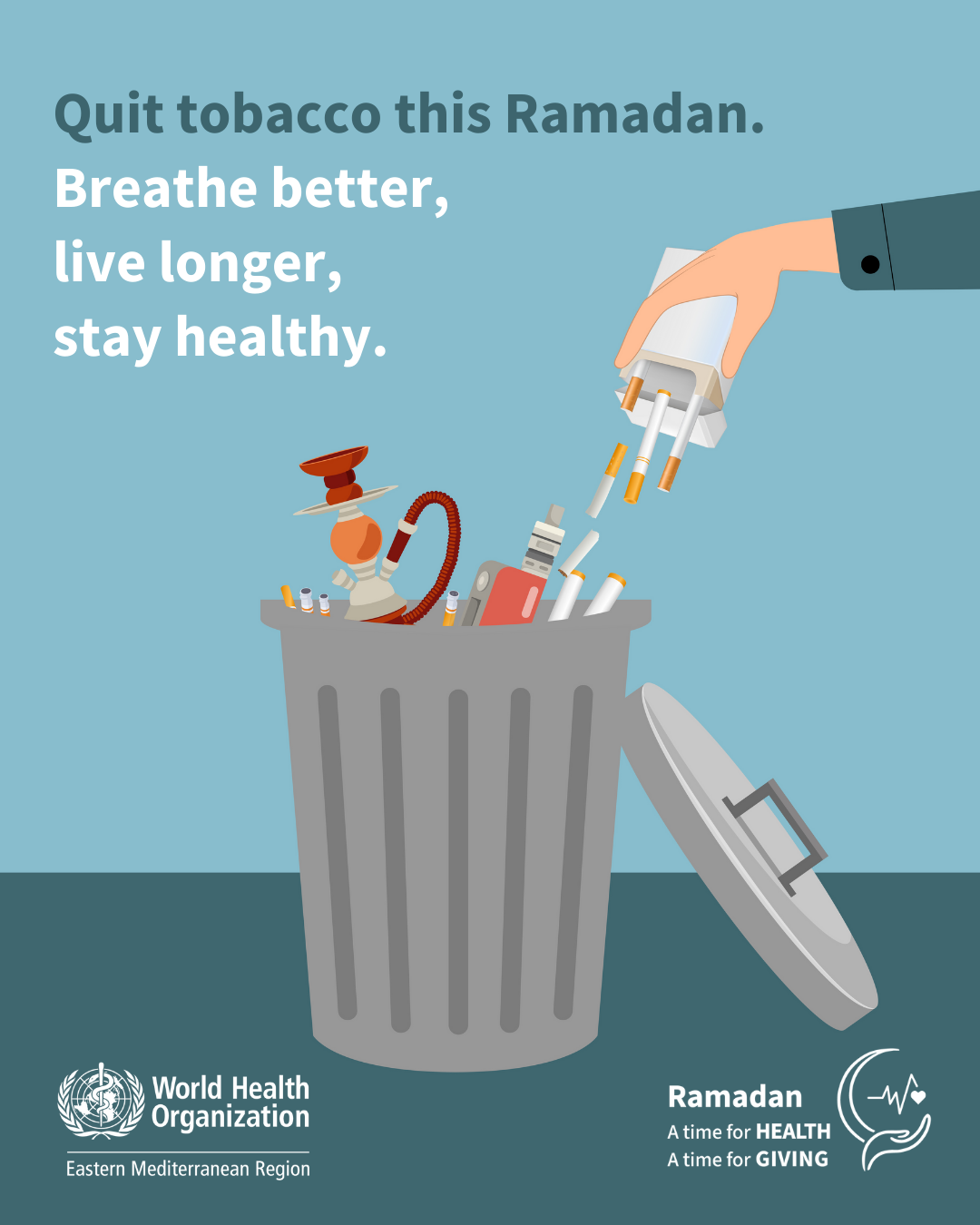
During Ramadan, fasting people refrain from smoking between dawn and dusk. It is a golden opportunity to clear your mind and quit tobacco and nicotine for good. Thousands of people have done it. Everyone can take the first steps towards a healthier life.
Every coin spent on tobacco, vapes or heated tobacco products harms you and fuels an industry that profits at the expense of people’s health.
This Ramadan, break the cycle. Choose health and give to those in need instead of spending on tobacco and nicotine products.
Over 80% of the world’s 1.3 billion tobacco users live in low- and middle-income countries. Use this month of self-discipline to break free and start a healthier, tobacco-free life.
Take a stand. The tobacco and nicotine industry spends millions of dollars each day to hook people. Don’t let them win. Stay smoke-free. Speak out. Protect your health and the health of others.
Quit smoking and in 5 years your stroke risk drops to that of a non-smoker. Protect your heart. Start today and choose health.