WHO EMRO
  • Regions
WHO EMRO
WHO Regional websites
Africa Africa
Americas Americas
Asie du Sud-Est Asie du Sud-Est
Europe Europe
Méditerranée orientale Méditerranée orientale
Pacifique occidental Pacifique occidental
  • Home
  • Health topics
  • Health topics
  • Data and statistics
  • Media centre
  • Information resources
  • Countries
  • Programmes
  • About Us
Search Search

Search

- All words: Returns only documents that match all words.
- Any word: Returns documents that match any word.
- Exact Phrase: Returns only documents that match the exact phrase entered.
- Phrase Prefix: Works like the Exact Phrase mode, except that it allows for prefix matches on the last term in the text.
- Wildcard: Returns documents that match a wildcard expression.
- Fuzzy query: Returns documents that contain terms similar to the search term. For example: If you search for Kolumbia. It will return search results that contain Columbia or Colombia.
  • Global
  • Regions
    WHO Regional websites
    Africa Africa
    Americas Americas
    Asie du Sud-Est Asie du Sud-Est
    Europe Europe
    Méditerranée orientale Méditerranée orientale
    Pacifique occidental Pacifique occidental
Search Search

Search

- All words: Returns only documents that match all words.
- Any word: Returns documents that match any word.
- Exact Phrase: Returns only documents that match the exact phrase entered.
- Phrase Prefix: Works like the Exact Phrase mode, except that it allows for prefix matches on the last term in the text.
- Wildcard: Returns documents that match a wildcard expression.
- Fuzzy query: Returns documents that contain terms similar to the search term. For example: If you search for Kolumbia. It will return search results that contain Columbia or Colombia.

Select your language

  • اللغة العربية
  • Français
WHO EMRO WHO EMRO
  • Home
  • Health topics
    • All Topics »
    • A
    • B
    • C
    • D
    • E
    • F
    • G
    • H
    • I
    • J
    • K
    • L
    • M
    • N
    • O
    • P
    • Q
    • R
    • S
    • T
    • U
    • V
    • W
    • X
    • Y
    • Z
  • Health topics
  • Data and statistics
  • Media centre
  • Information resources
  • Countries
  • Programmes
  • About Us
  1. Malaria and Vector-borne and Neglected Tropical Diseases
  2. Vector control
  • Malaria and Vector-borne and Neglected Tropical Diseases
    • About us
    • Epidemiological situation
    • Tips for travellers
    • Regional malaria action plan
    • Vector control
      • Regional burden of vector-borne diseases
      • Global strategy for vector control
      • Invasive vectors
      • Insecticide resistance
    • World Malaria Day
    • Information resources
    • Knowledge platform

Vector control

WHO with KSrelief fund launched a comprehensive emergency vector control campaign in targeted districts of Aden and Lahj governorates in YemenWHO with KSrelief fund launched a comprehensive emergency vector control campaign in targeted districts of Aden and Lahj governorates in Yemen

Vector control seeks to prevent the transmission of disease. The transmission cycle of vector-borne diseases depends on the infectious bite of a specific disease vector. Vector control breaks this cycle and thus prevents disease. It does this either by killing the vector or by reducing human–vector contact.

Vector control is one aspect of vector-borne disease control. The other is the medical component, which comprises prophylactic chemotherapy, diagnosis, treatment and case management.
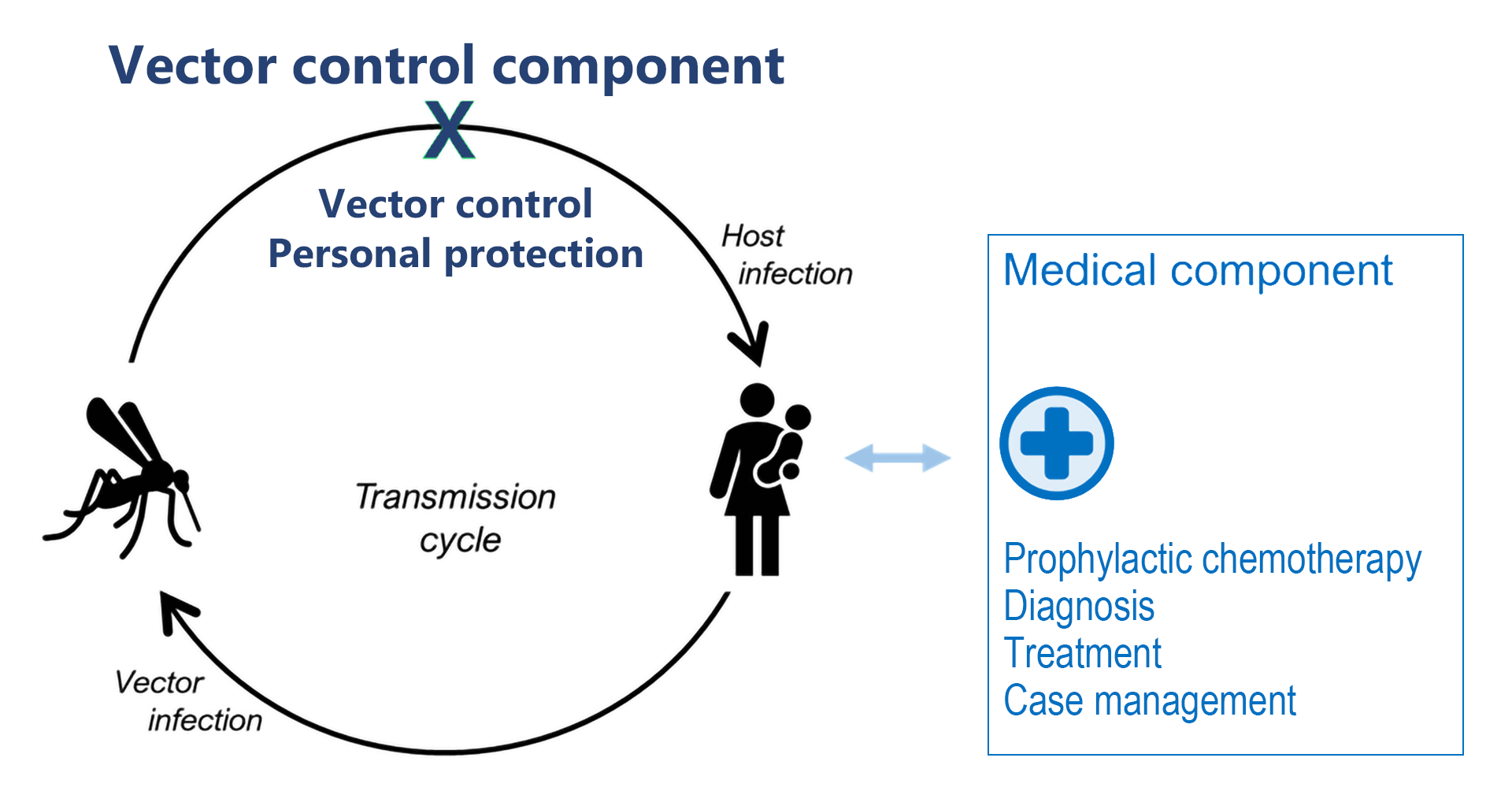
Figure 1. The vector control component and the medical component of vector-borne disease controlFigure 1. The vector control component and the medical component of vector-borne disease control

Vector control is a cross-cutting activity that is essential within a health system to enhance the impact of other strategic interventions.

A multisectoral approach to vector control is a key strategy to reduce the burden and threat of vector-borne diseases. Political commitment and leadership are vital to sustain a multisectoral approach to the prevention and control of outbreaks of vector-borne diseases.

Extreme climate events can affect the transmission of vector-borne diseases. It is important to engage with climate experts to know the seasonality/climate drivers that can help to predict hot spots for outbreaks.

Existing integrated vector management committees can be an entry point for the One Health approach.

  • Site map
    • Home
    • Data and statistics
    • Health Topics
    • Media centre
    • Information Resources
    • Countries
    • Programmes
    • About Us
  • Help and services
    • Careers
    • Copyright
    • Privacy
    • Contact us
  • WHO Offices
    • WHO Headquarters
    • WHO African Region
    • WHO Region of the Americas
    • WHO European Region
    • WHO South-East Asia Region
    • WHO Western Pacific Region
WHO EMRO

Privacy policy

© WHO 2026