

Sélectionnez votre langue
Polio eradication within reach in Pakistan
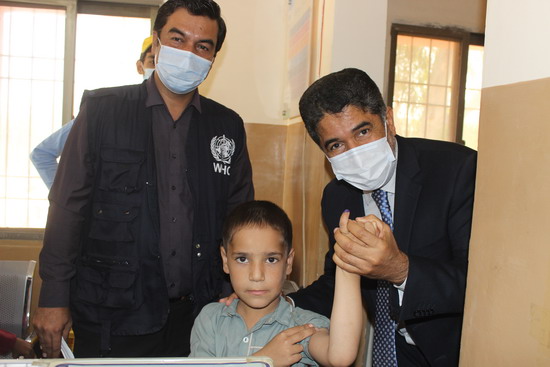 WHO Regional Director, Dr Ahmed Al-Mandhari, observes polio vaccination in Karachi
UNICEF and WHO Regional Directors visit the polio-endemic country as efforts to eradicate polio yield crucial progress
ISLAMABAD, Pakistan, 13 December 2021 – UNICEF Regional Director for South Asia, Mr George Laryea-Adjei, and WHO Regional Director for the Eastern Mediterranean, Dr Ahmed Al-Mandhari, recently concluded a visit to Pakistan to support the polio programme as it closes in on the long-sought goal of eradicating polio.
Both Regional Directors said that they continue to be impressed by the high level of government leadership and engagement at all levels – from Prime Minister Imran Khan, who chaired a meeting of the National Task Force on Polio Eradication which the two directors attended, to provincial ministers of health, chief secretaries and district commissioners in the key provinces of Sindh, Baluchistan and Khyber Pakhtunkhwa. Only one child paralyzed by wild poliovirus has been detected in Pakistan in 2021, an impressive result compared to the 306 children with paralytic polio reported in 2014. The polio programme has come a long way since an estimated 20 000 children paralyzed by polio in 1994.
This was Laryea-Adjei’s and Al-Mandhari’s second joint mission to support the polio programme in Pakistan as part of a visit of the Polio Oversight Board, the highest decision-making body in the Global Polio Eradication Initiative. Together with Afghanistan, Pakistan is one of only two remaining countries in the world to still have active wild poliovirus transmission.
The Regional Directors agreed the programme is now at a critical juncture. Noting that that the virus will exploit any weakness, they emphasized the need to reinforce the impressive progress achieved in reducing the number of missed children and vaccine refusals, and to continue targeting high-risk areas, particularly southern Khyber Pakhtunkhwa and those along the border with neighbouring Afghanistan.
The Regional Directors congratulated the Pakistan programme on the results of its recent surveillance review, which found the country’s polio surveillance system to be performing strongly. The review recommended additional measures to further enhance virus detection capacity, particularly in high-risk areas and among high-risk groups. Noting that surveillance was a key driver of eradication efforts, Laryea-Adjei and Al-Mandhari urged the programme to remain hyper vigilant and to continue to search for and encourage the reporting of suspected cases of acute flaccid paralysis (AFP).
Children affected by wild poliovirus recently detected in northern Afghanistan and the recent environmental detection of poliovirus in southern Khyber Pakhtunkhwa in Pakistan serve as a reminder that the polio virus does not recognize borders.
“Afghanistan and Pakistan must work together to fully capitalize on the current opportunity of low numbers of children paralyzed by poliovirus,” said WHO Regional Director, Dr Ahmed Al-Mandhari. “To interrupt transmission, we need both countries to engage bilaterally on this shared threat. Focusing on areas along the border of the two countries, and on mobile and cross-border populations is the key to eradication. The upcoming polio vaccination campaigns must reach all children in both countries.”
The Regional Directors’ visit took place as front-line workers immunized almost 32 million children under-five years of age against polio during a two-week drive coordinated with an historic measles and rubella campaign. Led by Pakistan’s expanded programme on immunization (EPI), the latter reached nearly 93 million children, with support from UNICEF, WHO and Gavi, the Vaccine Alliance. Both Regional Directors encouraged further synergy between the national polio programme and EPI to help protect polio’s gains and keep every child safe from disease.
Laryea-Adjei and Al-Mandhari noted the impressive progress achieved by the integrated services delivery model. Visiting a basic health unit in Quetta, the provincial capital of Balochistan, UNICEF Regional Director, George Laryea-Adjei, said that the units play a crucial role in providing integrated services to vulnerable families living in high-risk districts. Children are not only given polio drops, but also immunized against other preventable diseases as well as provided with screening and treatment for malnutrition, access to safe drinking water and sanitation services, and advice on hygiene, child health care and early childhood development.
The Regional Directors also met with frontline polio workers in Peshawar, Quetta and Karachi. Frontline workers play a critical role in helping to build trust in the vaccines and immunize girls and boys everywhere in Pakistan, including in remote areas and among marginalized communities.
“We remain impressed and inspired by the level of drive, thoroughness and enthusiasm of the Government of Pakistan, the front-line workers and the communities which work to protect every child from this deadly virus,” said Mr Laryea-Adjei as he administered oral polio drops to children at Quetta’s Bolan Medical College Hospital. “Pakistan’s fight against polio has been challenging and enduring. We all need to work together and give a final push so that the number of polio-affected children drops to zero – and stays there.”
While acknowledging the significant progress of the polio programme, Laryea-Adjei and Al-Mandhari emphasised that there is no room for complacency: “The virus is still being detected in environmental samples and further cases can still emerge, so we must be relentless in our efforts in 2022 and beyond.”
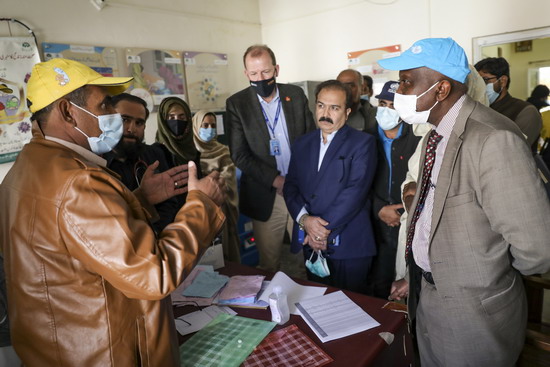 UNICEF Regional Director for South Asia Mr George Laryea-Adjei meets with health workers in Quetta
Sudan expands environmental surveillance sites to enhance detection of polioviruses
30 November 2021 – Until last year, environmental surveillance for polioviruses in Sudan was confined to Khartoum State, the country’s capital. In the context of a circulating vaccine-derived poliovirus type 2 (cVDPV2) outbreak that has paralysed 58 children, collaboration between Sudan’s Federal Ministry of Health, the National Polio Laboratory and WHO colleagues across the Region has expanded the practice from five sites in this one state, to 14 sites in seven states.
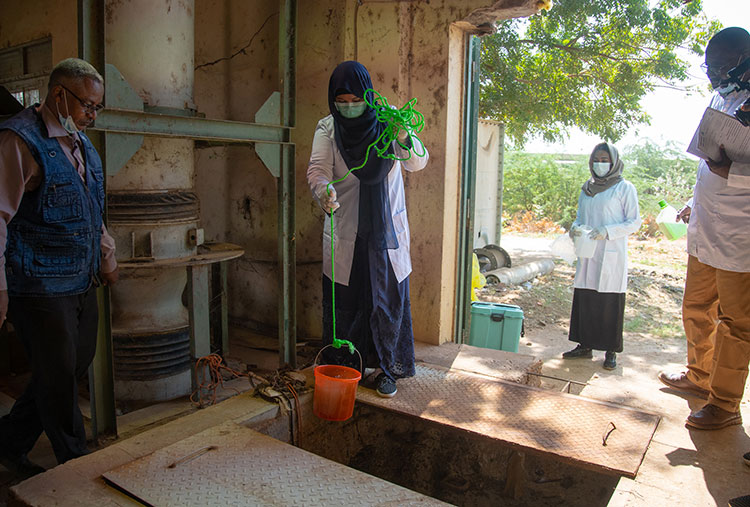
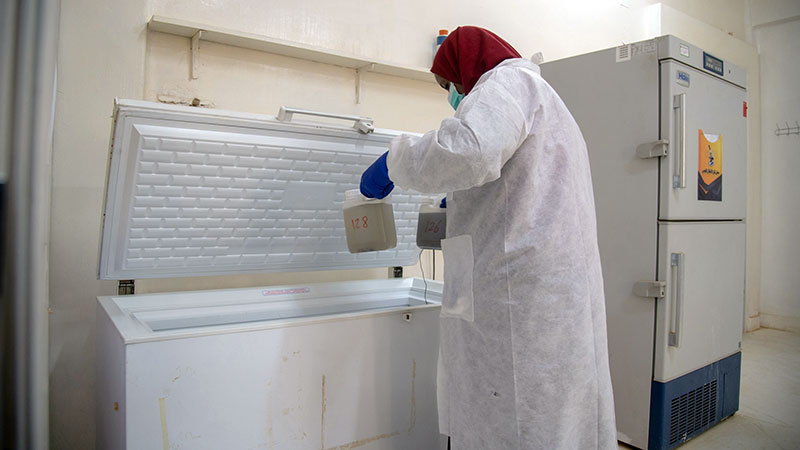 A Federal Ministry of Health employee collects wastewater samples from one of the environmental surveillance sites in Khartoum
Environmental surveillance is the practice of testing sewage runoff for the presence of viruses and other pathogens. Depending on the immunity levels of children in any given community, poliovirus can circulate for a long time without paralysing a child, making environmental surveillance one of the Global Polio Eradication Initiative’s most important surveillance tools.
Sudan’s environmental surveillance expansion plan has brought the practice to West Darfur, North Darfur, East Darfur, Red Sea, White Nile and Gezira states – all areas with frequent mass population movement. With polio outbreaks in multiple neighbouring countries, it is crucial to enhance the surveillance measures in place to detect any importation and respond to it as quickly as possible.
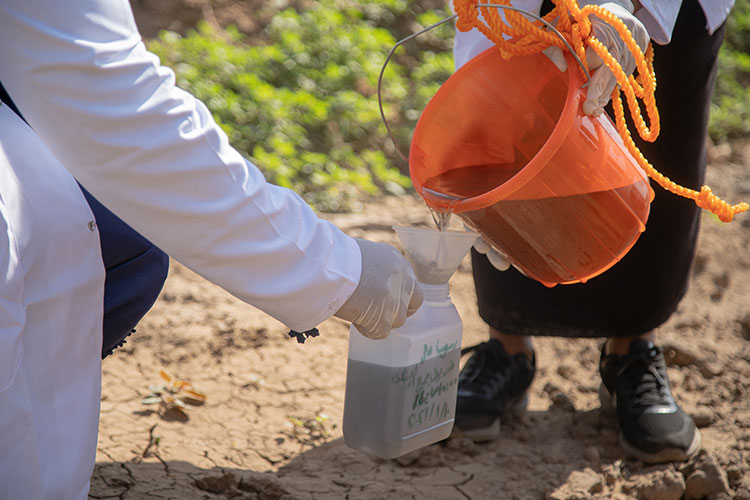
 Between one and two litres of sewage runoff is poured into a labelled jerrycan. It is then sealed, wiped down and transported to the National Polio Laboratory in reverse cold chain
In the first half of 2021, the WHO country office, with support from the Central Surveillance Unit of the Federal Ministry of Health, led the expansion of the environmental surveillance network, giving the polio programme a whole new level of visibility over large parts of the country. Mr Hatim Othman, Manager of the National Polio Laboratory in Sudan played a major role in training state-level officers and district-level personnel on all aspects of environmental surveillance, including the collection of samples.
“The current cVDPV2 outbreak showed us the critical importance of environmental surveillance. It also gave us confidence in our ability to track the virus in the environment as well as in human beings,” said Dr Ni’ma Saeed Abid, the WHO Representative in Sudan.
Following a coordinated response, including two high-quality national vaccination campaigns, communication and education efforts and improvements to other programmatic areas, there has been no detection of cVDPV2 in 2021. The last case was a child whose paralysis had a date of onset of 18 December 2020 and the last positive environmental isolate was collected in Khartoum in November 2020. However, the risk of cVDPV2 transmission remains high as nearby countries continue to battle cVDPV2 outbreaks.
 A National Polio Laboratory employee in Khartoum stores an environmental surveillance sample for testing
“The expected formal closure of the outbreak in 2022 will be good news after a challenging two years, but the utility of Sudan’s increased ability to detect poliovirus in the environment will last long into the future,” said Dr Mohammad Taufiq Mashal, the Team Lead for Polio and Immunization at WHO’s Sudan country office.
“It’s critical to have effective environmental surveillance to maintain the polio-free status of Sudan,” he said.
Statement from the WHO Regional Director on WHO's zero tolerance policy on sexual exploitation and abuse
“The World Health Organization has zero tolerance for sexual exploitation and abuse and takes all allegations of misconduct seriously at all levels of our workforce. I appreciate the swift response by the National Emergency Operations Centre in Pakistan to allegations of harassment of a polio frontline worker.
WHO has an uncompromising commitment to uphold and promote policies that prevent sexual exploitation and abuse and all forms of harassment. The polio eradication programme in particular relies on female frontline workers to carry out the essential work of eradication and ensuring all enjoy a respectful and safe environment within which to work is a basic prerequisite.
Across the Eastern Mediterranean Region WHO is taking critical steps to ensure the protection and safety of all female frontline workers and to create a culture in which there is no opportunity for sexual exploitation and abuse to happen, no impunity if it does and no tolerance for inaction.
All WHO staff, consultants and contractors are receiving refresher training for the prevention of sexual exploitation and abuse and staff with expertise in the prevention, detection and response to sexual exploitation are being recruited to ensure more robust safeguards are in place in our offices. Given the scale of our field operations in Afghanistan, Pakistan, Somalia, Sudan, and Yemen, WHO is taking extra measures to prevent and vigorously respond to incidents of harassment and abuse.”
The polio retirees spending their golden years on the eradication trail
For many of the women and men who spent their careers fighting polio, retirement offers not rest and relaxation, but a continuation of their life’s work towards eradication. Across the Eastern Mediterranean Region, once-and-forever polio fighters are inspiring the next generation of eradicators with their commitment to the cause and belief in the benefits of a polio-free future.
Meet some of the Region’s most beloved polio fighters as they look back on their careers and describe their motivation to continue their quest, for as long as it takes.
Dr Ali Farah, Somalia
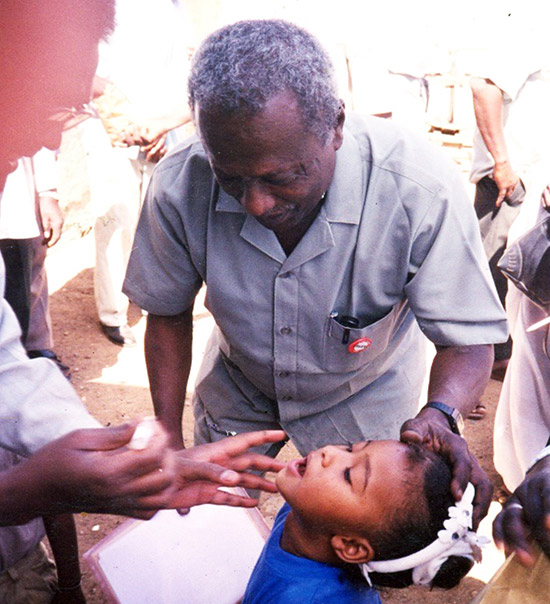
Back in 1997, during the devastating civil war, Dr Ali Farah started a pilot project to conduct Somalia’s first-ever national immunization days. Today, that pilot project is one of the reasons Somalia has not seen a case of wild poliovirus in more than seven years.
Dr Farah retired in 2015 after years of hard work in a highly complex, volatile and risky context. Yet he continues to fight polio by providing technical support to the polio programme team, participating in social mobilization activities and training district-level polio officers and vaccinators.
“I always feel that we must keep working to fight polio. It’s a humanitarian action,” he says. “Technical staff still call me occasionally to receive guidance about AFP cases and other technical areas. I feel so happy to provide advice and support when needed.”
Dr Farah has also utilized his long experience with the polio programme to support COVID-19 immunization in Somalia.
“This COVID-19 campaign wouldn’t succeed if there was no polio infrastructure. We used the polio system and network to make it happen,” he says.
Professor Elsadig Mahgoub, Sudan
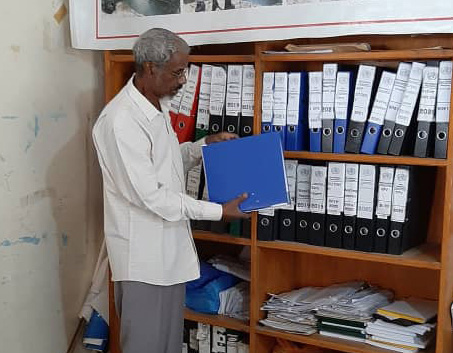
After completing his bachelor’s degree in 1969, Professor Elsadig Mahgoub trained as a physician and epidemiologist. He devoted his career to infectious diseases, largely focusing on disease surveillance. In February 2000, he focused his efforts on polio, particularly surveillance for acute flaccid paralysis (APF), the primary symptom of paralytic polio.
Although he retired four years later, Professor Elsadig has not stopped working or providing his technical support to polio programmes in Sudan and across the Region.
“I’m obliged to continue working. My enjoyment is when I see progress towards polio eradication,” he says. “The service we’re providing is critical. We always need to be vigilant to avoid any setback to our achievements towards polio eradication. When we end polio for good, then I will truly resign.”
Dr Mohammed Hajar, Yemen
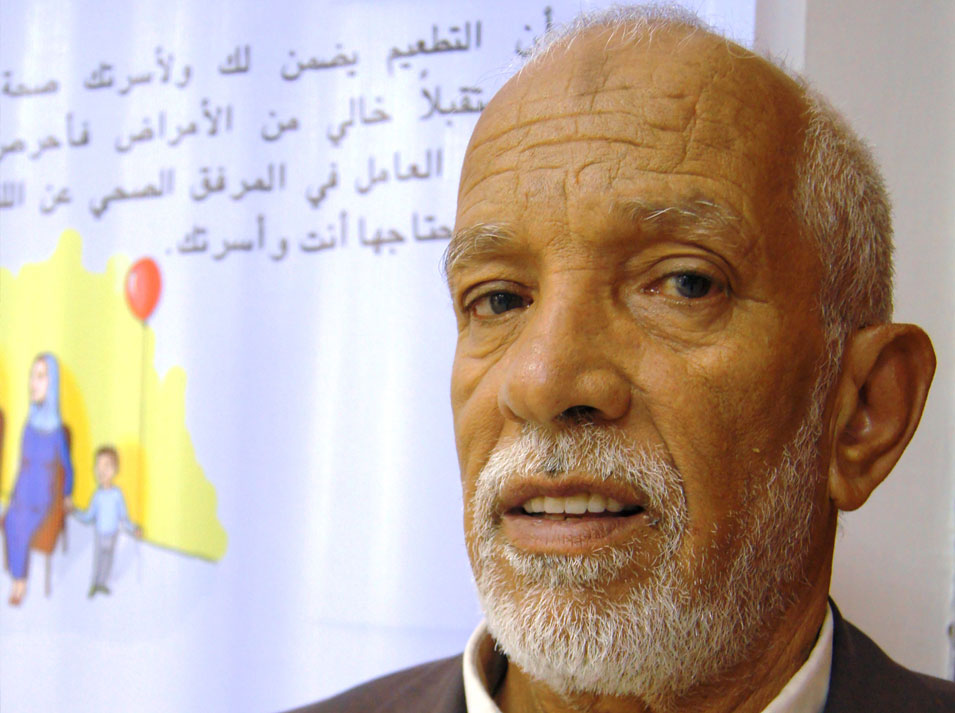
Yemen’s Dr Mohammad Hajar is one of the oldest, most veteran health professionals in Yemen, having served the health sector and combated infectious diseases, including polio, for around 50 years.
In 1977, Dr Hajar was one of the founders of Yemen’s expanded programme on immunization. He played a major role in planning and conducting the first-ever polio campaigns in the country, and he contributed substantially to setting up the epidemiological surveillance system for polio and other diseases.
“Even after reaching retirement age in 2009, I continued to work for the polio programme, which I consider as one of my sons. Until now, I follow up and evaluate the activities of the immunization programme and polio campaigns,” says Dr Hajar.
“I had the privilege of working with nine WHO representatives and more than 10 ministers of health in Yemen to help Yemen reach a polio-free status.”
Dr Ibrahim Barakat, Egypt
When Dr Ibrahim Barakat was appointed as a manager of Egypt’s expanded programme on immunization in 2000, he was determined to achieve something remarkable – a polio-free Egypt.
“It was a hard journey, but we did it. Egypt was declared polio-free in 2006,” he says.
In 2009, Dr Barakat retired, but he hardly rested. “I cannot stop working when it comes to polio eradication. I take great comfort in working hard to combat this disease whether in Egypt or any place in the world.”
After 12 years of retirement, Dr Barakat still considers his office in the Ministry of Health and Population as “a second home.”
“I continue going to the office every working day to plan, supervise and evaluate different polio activities, including polio vaccination campaigns, risk assessment and AFP surveillance. I can never be complacent,” he says.
“This is my life. My real retirement starts when I see this disease completely wiped out from all parts of the world.”
Mr Alam and Mrs Fatima, Pakistan
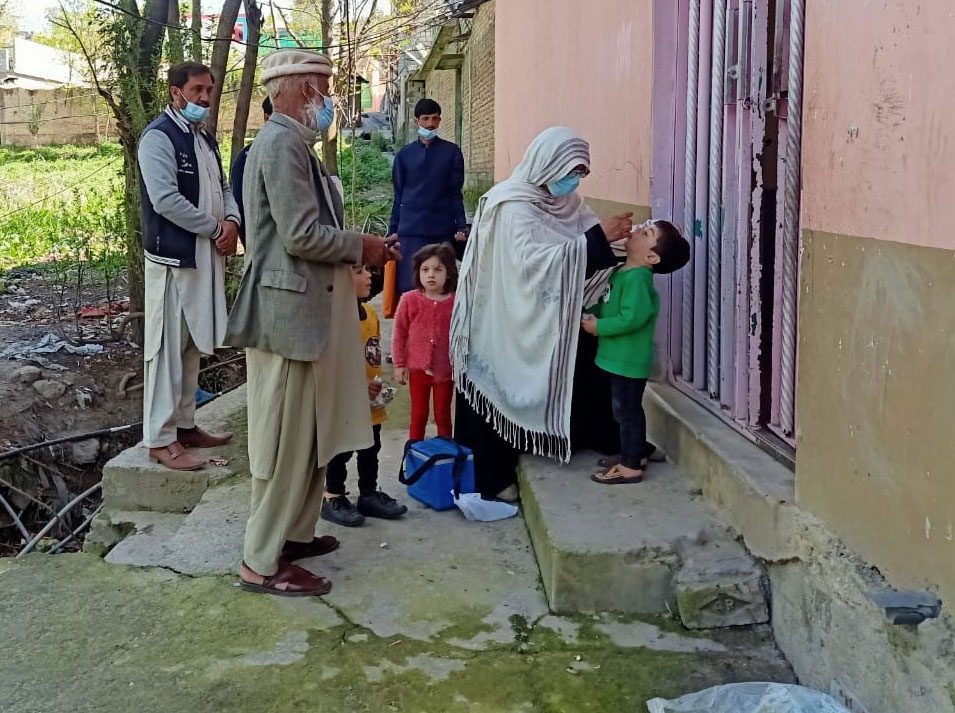
Khursheed Alam, 68, and Kaneez Fatima, 56, are a married couple who have spent 25 years working in the polio eradication programme in Batagram district of Khyber Pakhtunkhwa province, Pakistan.
Rain or shine, Mr Alam and Mrs Fatima have taken part in countless door-to-door vaccination campaigns, helping to vaccinate thousands of children.
“Now those little children have grown up, some have gotten married and had children who we have also vaccinated. This is fascinating and rewarding for us,” says Mr Alam. “Wherever we go, people welcome us and don’t let us go without offering food.”
Mrs Fatima personally knows every child in her neighbourhood, including the newborns. She maintains close relationships with the mothers in her community and gives them health and hygiene advice.
Despite their age and medical complications such as asthma, their commitment to the polio programme remains strong.
“We take our work as a divine duty to serve our community for the sake of God. To see healthy children with smiles on their faces is our reward. This has kept us going for so long,” says Mrs Fatima.
Dr Faten Kamel, Egypt
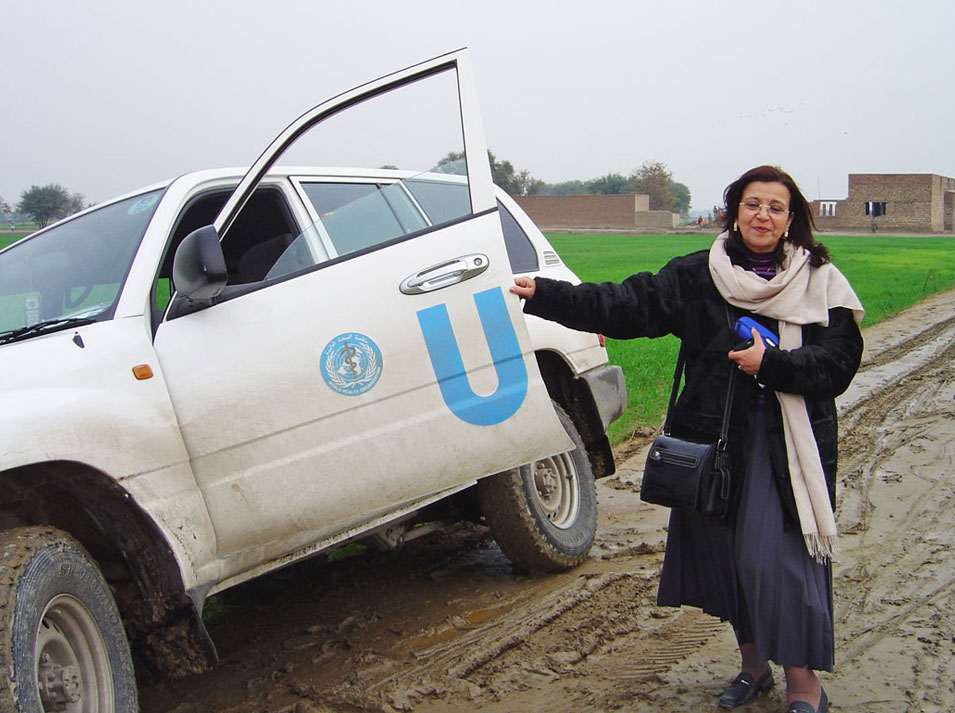
Dr Faten Kamel took a leading role in polio eradication efforts in the 1990s and early 2000s – years where the Global Polio Eradication Initiative made considerable gains against polio.
Growing up in Alexandria, Egypt, Dr Faten was exposed to the life-altering effects of polio on the people around her. She saw the human toll of the disease, and was inspired by the work of her father, a surgeon and Rotarian.
“We pushed the boundaries to make the programme more effective, shifting to house-to-house vaccination, detailed microplanning and mapping, retrieval of missed children and independent monitoring,” she says.
For Dr Faten, every child can, and must, be reached.
“If someone comes and says this area is inaccessible, this is not an answer for me. I ask: What should we do to reach? I like to make use of the ideas and experience that come from local people,” she says.
Dr Faten is proud to continue to be part of the polio eradication programme and looks forward to the day when polio eradication is achieved. After that, she plans to spend more time with her family in Australia.
“As a grandmother, I am especially determined to finish the job. I want my grandkids to grow up in a world free of polio. This will be my contribution to their futures.”