

Sélectionnez votre langue
Le ministère de la Santé à Djibouti lance la deuxième phase de la campagne nationale de vaccination contre la poliomyélite
Plus de 150 000 enfants de moins de cinq ans à Djibouti devraient recevoir une deuxième dose de vaccin contre la poliomyélite à la suite de la première dose administrée au cours de la 1ère phase de la campagne en février 2022.
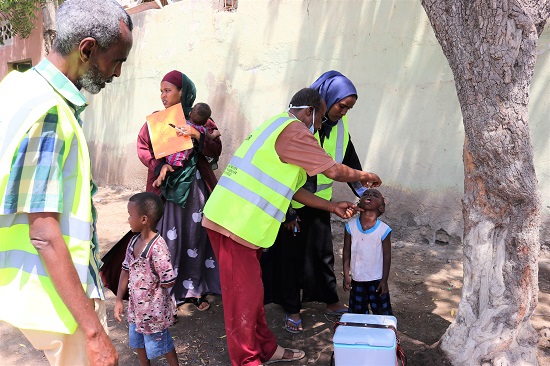
Djibouti – 27 mars 2022 – La deuxième phase de la campagne nationale de vaccination contre la poliomyélite, menée par le gouvernement par l’intermédiaire du ministère de la Santé en collaboration avec l’UNICEF et l’OMS, a commencé le dimanche 27 mars, pour une durée de cinq jours, jusqu’au jeudi 31 mars.
Djibouti lance une campagne nationale de vaccination contre la poliomyélite
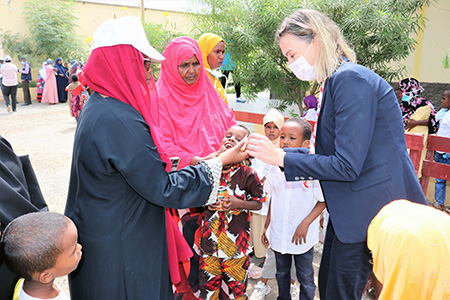
Djibouti, 27 février 2022 - Son Excellence, Monsieur le Ministre de la Santé, Dr Ahmed Robleh Abdilleh, avec le soutien technique de l’OMS et de l’UNICEF, a lancé ce vendredi 25 février, une campagne nationale de vaccination contre la poliomyélite, d’une durée de cinq jours qui débutera le 27 février 2022, visant à atteindre tous les enfants âgés de zéro à 59 mois présents sur le territoire, soit environ150 000 enfants.
Des équipes multidisciplinaires de vaccinateurs, de mobilisateurs sociaux et d’experts techniques sont déployées à travers le pays pour frapper à toutes les portes, vacciner chaque enfant de moins de cinq ans et augmenter les niveaux d’immunité contre cette maladie infantile mortelle. Il s’agit d’une campagne de maison en maison, la vaccination étant également proposée dans les établissements de santé.
Djibouti a été déclaré exempt de polio en 1999, mais les épidémies de poliovirus de type 2 en Éthiopie, en Somalie et au Yémen accentuent le risque pour tous les enfants de la Corne de l’Afrique et de la région. La poliomyélite circule avec les personnes, et les mouvements de population de masse à travers les frontières internationales soulignent l’urgence d’augmenter les niveaux d’immunité dans toute la région, de sorte que le virus n’ait plus nulle part où aller.
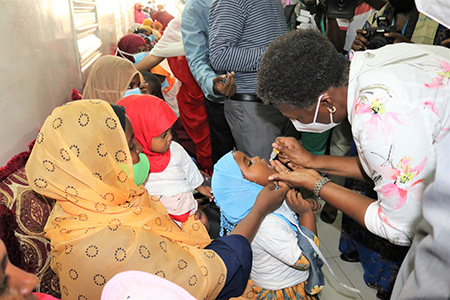
La poliomyélite est une maladie contagieuse causée par un virus qui envahit le système nerveux pouvant entraîner une paralysie à vie et même la mort. Bien qu’incurable, la poliomyélite peut facilement être prévenue par la vaccination.
La campagne de Djibouti est menée avec un nouveau vaccin oral contre la poliomyélite de type 2 (nVPO2), un vaccin de dernière génération. Des essais cliniques ont démontré que le nVPO2 est aussi sûr et efficace que le vaccin antipoliomyélitique oral monovalent (VPOm2), tout en étant plus stable sur le plan génétique. Le nVPO2 est ainsi le vaccin recommandé par l’Initiative mondiale pour l’éradication de la poliomyélite pour les activités de vaccination supplémentaires.
Grâce à cette campagne, Djibouti devient le deuxième pays de la Région OMS de la Méditerranée orientale à utiliser ce vaccin, après l’Égypte qui a mené sa campagne nationale fin 2021.
À la suite de cette campagne de vaccination, une deuxième est prévue fin mars avant le mois de Ramadan, conformément aux meilleures pratiques mondiales visant à renforcer les niveaux d’immunité et à sauver la vie des enfants à Djibouti.
Point focal pour les médias
Zeinab Ismail Abdillahi
Contact :
21 35 06 29
Pakistan commended for commitment to eradicating polio
As we begin 2022, we have our best opportunity to end polio for good
Statement by George Laryea-Adjei and Dr Ahmed Al-Mandhari
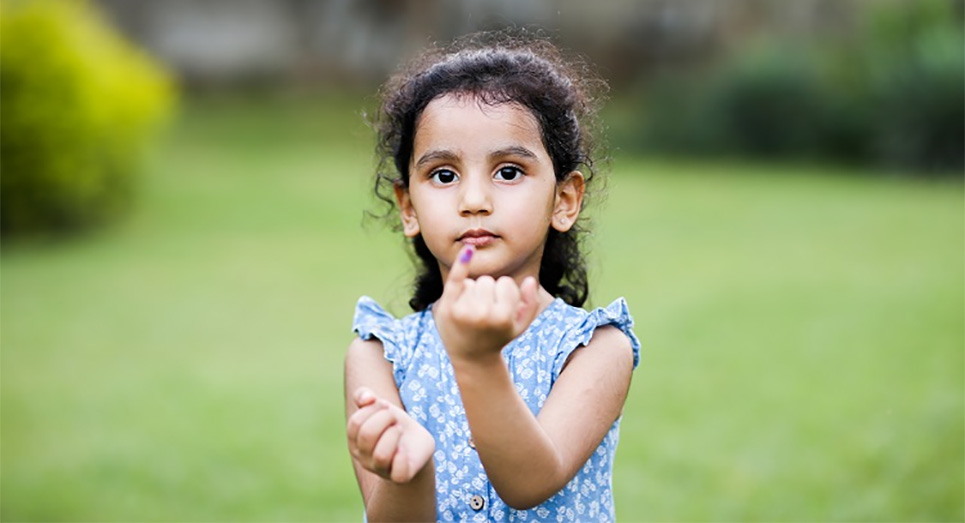
In June last year, we visited Pakistan, one of two countries in which wild poliovirus is still endemic. Together, we returned to the country in November to witness the impressive progress in Pakistan’s polio programme and its no-holds-barred approach to stopping transmission – progress that has brought about our best opportunity yet to end this disease.
In our roles, we deal with a vast array of health and humanitarian challenges, but few are as close to being solved as polio. As we begin 2022, with only one child paralysed with wild poliovirus in Pakistan last year and four children in neighbouring Afghanistan, we have our best opportunity to end polio for good.
We say this clearly: we have made remarkable progress, but we are not there yet.
To reach the final goal we need the commitment and progress we saw in Pakistan to be sustained until the very end, until transmission is interrupted, and the case number reaches zero.
We need to stop thinking in terms of Pakistan and Afghanistan as two separate challenges. They are one epidemiological block and the two countries must work together to counter this shared threat.
And we need to ensure that quality campaigns on both sides of the Afghanistan-Pakistan border reach every child – because if we are not reaching every child, we are not eradicating polio.
We concluded our second mission in November heartened that Pakistan’s polio programme is fit for purpose in a way it has never been before. Vaccination campaigns have become more precise, operations and monitoring more rigorous and corrective actions timelier and more effective. The recent Independent Surveillance Review reassured us that Pakistan has one of the most developed polio surveillance systems in the world, capable of detecting poliovirus circulation – and it does. Cases of children with flaccid paralysis are reported from across the country. Sewage samples are routinely collected from 65 sites strategically located in 44 districts across the country. What we need to do now is close the gaps on the ground, so this system is even more sensitive to the timely detection of very low levels of poliovirus circulation.
We continue to be impressed by the high level of government leadership and engagement at all levels – from Prime Minister Imran Khan, who chaired a meeting of the National Task Force on Polio Eradication which we attended, to the senior government officials and district commissioners in the key provinces of Sindh, Baluchistan and Khyber Pakhtunkhwa. We commend the Government for confirming that it will continue to contribute funds for the Polio Eradication Programme under a new five-year plan.
Both listening to and engaging with communities, especially in those areas at high risk of polio transmission, is key to finishing the job. We know that some parents don’t have all the information they need to understand that polio is a highly infectious, crippling and sometimes fatal disease that can easily be prevented with oral drops. During our visits, it was inspiring to see frontline teams, the majority of them women, forge new connections with communities, foster local alliances, build and maintain trust in vaccines, and directly engage with the families and caregivers of persistently missed children.
We have long known that the polio programme and its infrastructure are central to public health across the Region, and especially in Pakistan and Afghanistan, where it spearheaded the COVID-19 response. In Peshawar, Karachi and Quetta, we witnessed this first-hand as Pakistan conducted one of the largest vaccination campaigns in history. Nearly 93 million children from 9 months to 15 years were vaccinated against measles and rubella. At the same time, and in close coordination, almost 32 million children were vaccinated against polio. It was a remarkable synergy that called up our shared vision of a polio-free Pakistan and WHO’s regional vision of health for all, by all.
But the three children paralysed with wild poliovirus in northern Afghanistan late last year, and the recent environmental detection of polio in southern Khyber Pakhtunkhwa, are a reminder that this virus does not recognize borders and the two countries must work together to fully capitalize on the current opportunity of low case counts.
Along both sides of the border, a laser focus on core reservoirs and high-risk districts is critical to stopping transmission, and closer coordination on common reservoirs and corridor challenges is a welcome sign. The surveillance review in Pakistan is being complemented by a similar review in Afghanistan, giving us a better indication of gaps and how to address them. The effort to synchronize vaccination activities is an important step forward, one which we expect will have a significant impact.
Restrictions on funding are threatening to severely compromise the health care system and escalating humanitarian needs in Afghanistan where both WHO and UNICEF have taken the responsibility to help sustain the provision of health services, primarily through the Sehatmandi programme. Vaccination activities and surveillance cannot continue if the health system is allowed to collapse.
Together the world has made remarkable progress in eradicating polio, but we are not there yet. As we begin 2022, we will continue to work with the members of the Regional Subcommittee on Polio Eradication, comprising ministers of health from across the Eastern Mediterranean Region, supporting a regional response to a regional problem.
We need extraordinary, widespread urgency from across the Region and the world to push through this last mile. We need political will, funding, and relentless determination from all corners to keep this public health emergency front and centre – until the number of children paralysed with polio reaches zero and stays there.
George Laryea-Adjei is UNICEF Regional Director for South Asia; Dr Ahmed Al-Mandhari is WHO Regional Director for the Eastern Mediterranean.
December polio vaccination begins in Afghanistan
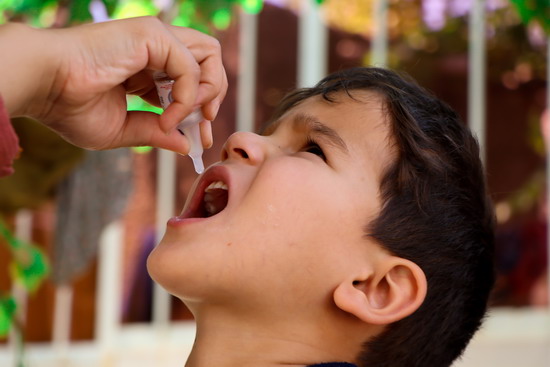 KABUL, 13 December 2021 - The fourth round of a national polio immunization campaign begins this week (13–16 December 2021), and will be synchronized with Pakistan to improve cross-border polio eradication efforts. The campaign targets 9.9 million children aged 0–59 months across the country and is scheduled to start later this month in some parts of the country, including in the south and east, and in the provinces of Paktia and Ghazni in the south-east, Ghor in the west, and Balkh in the north.