


Select your language

Campaign toolkit
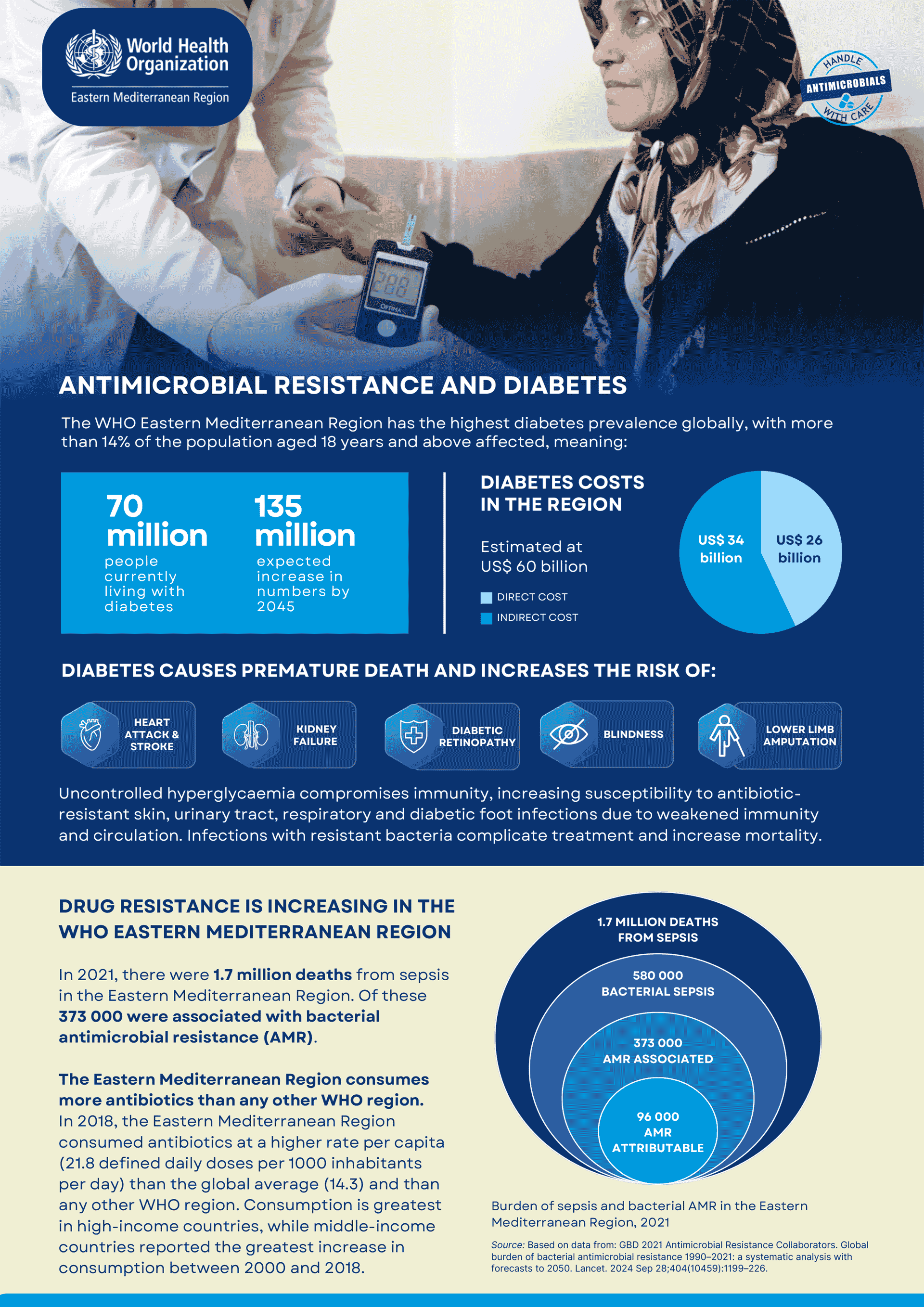
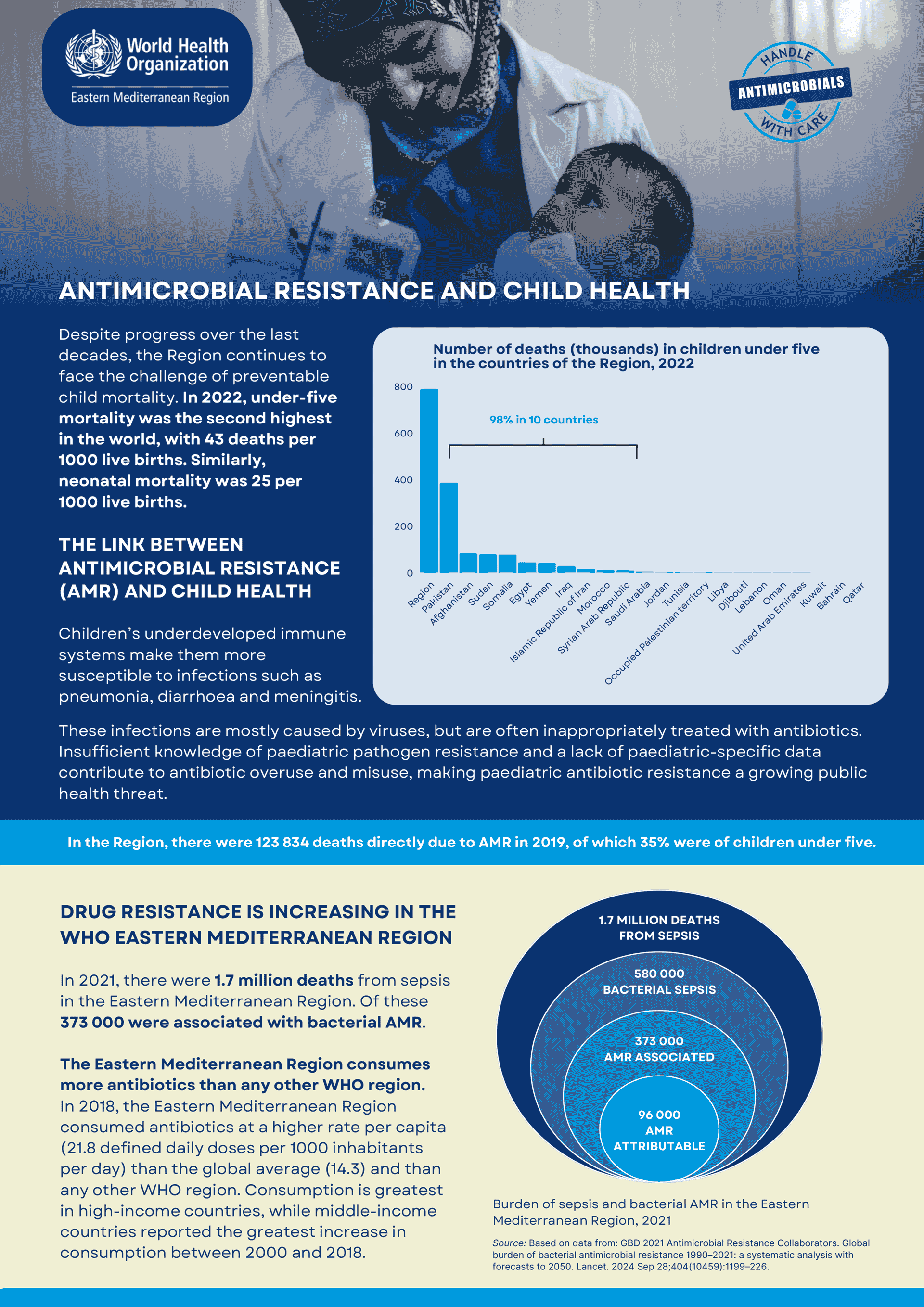
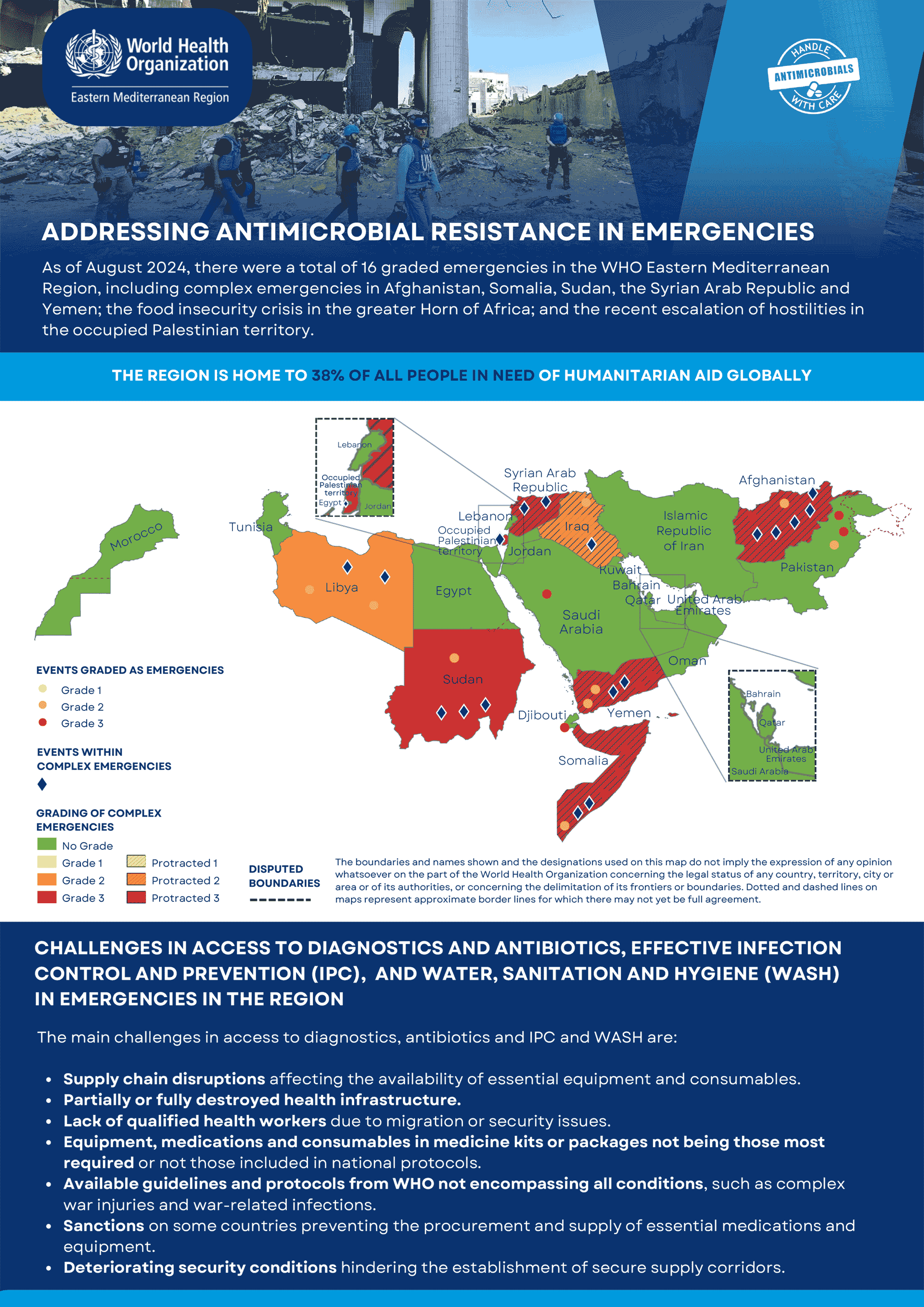
Fact sheets
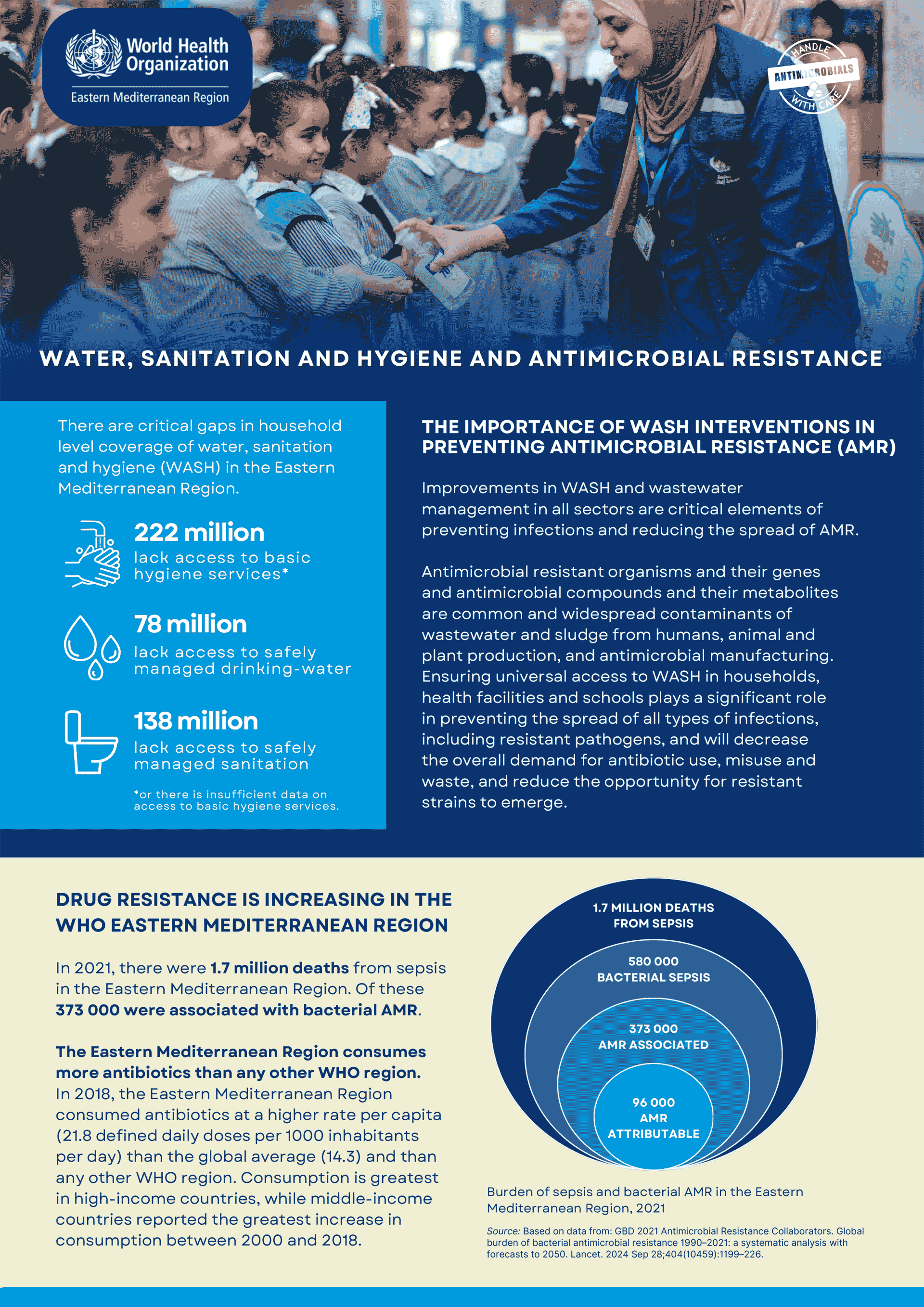
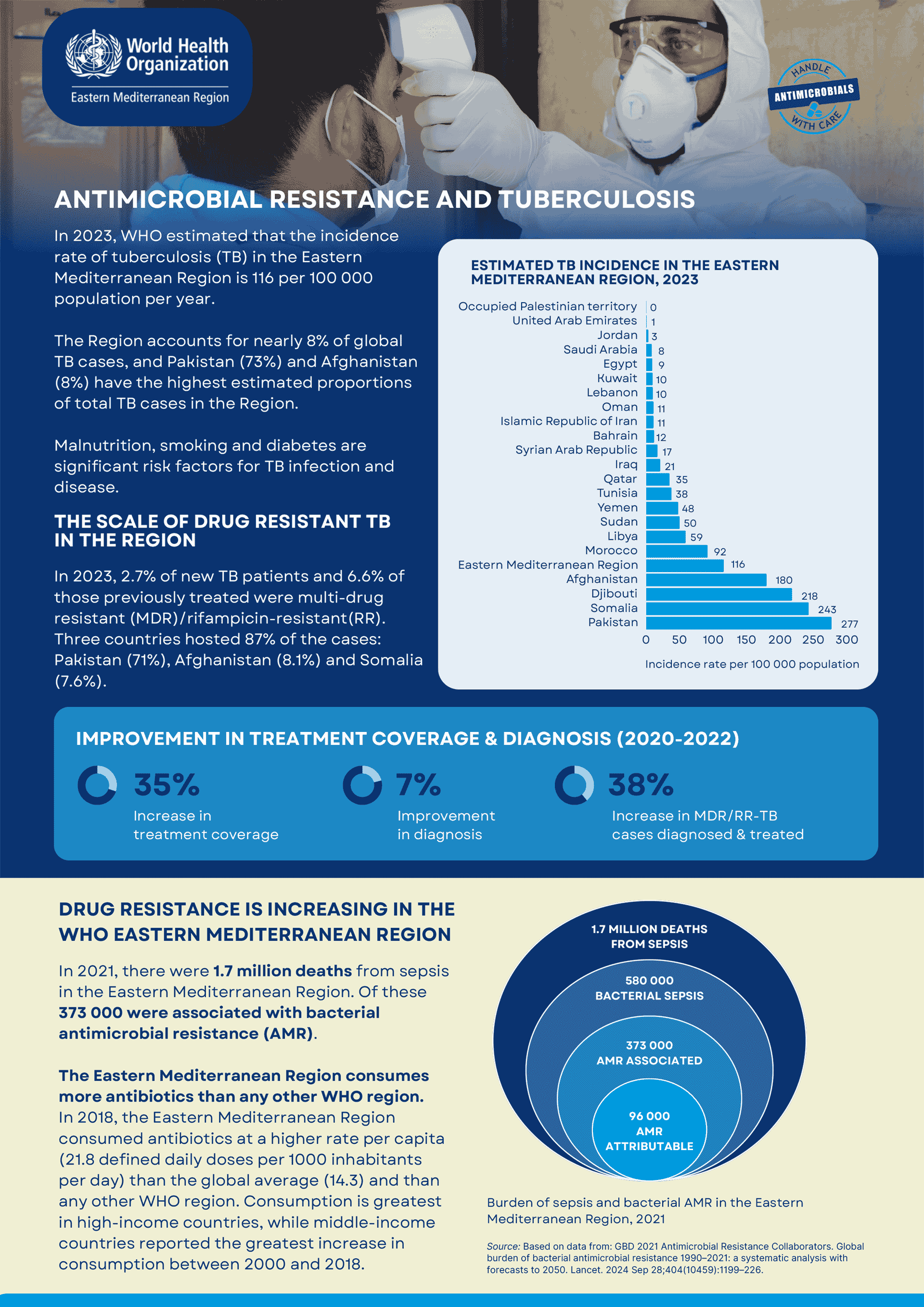
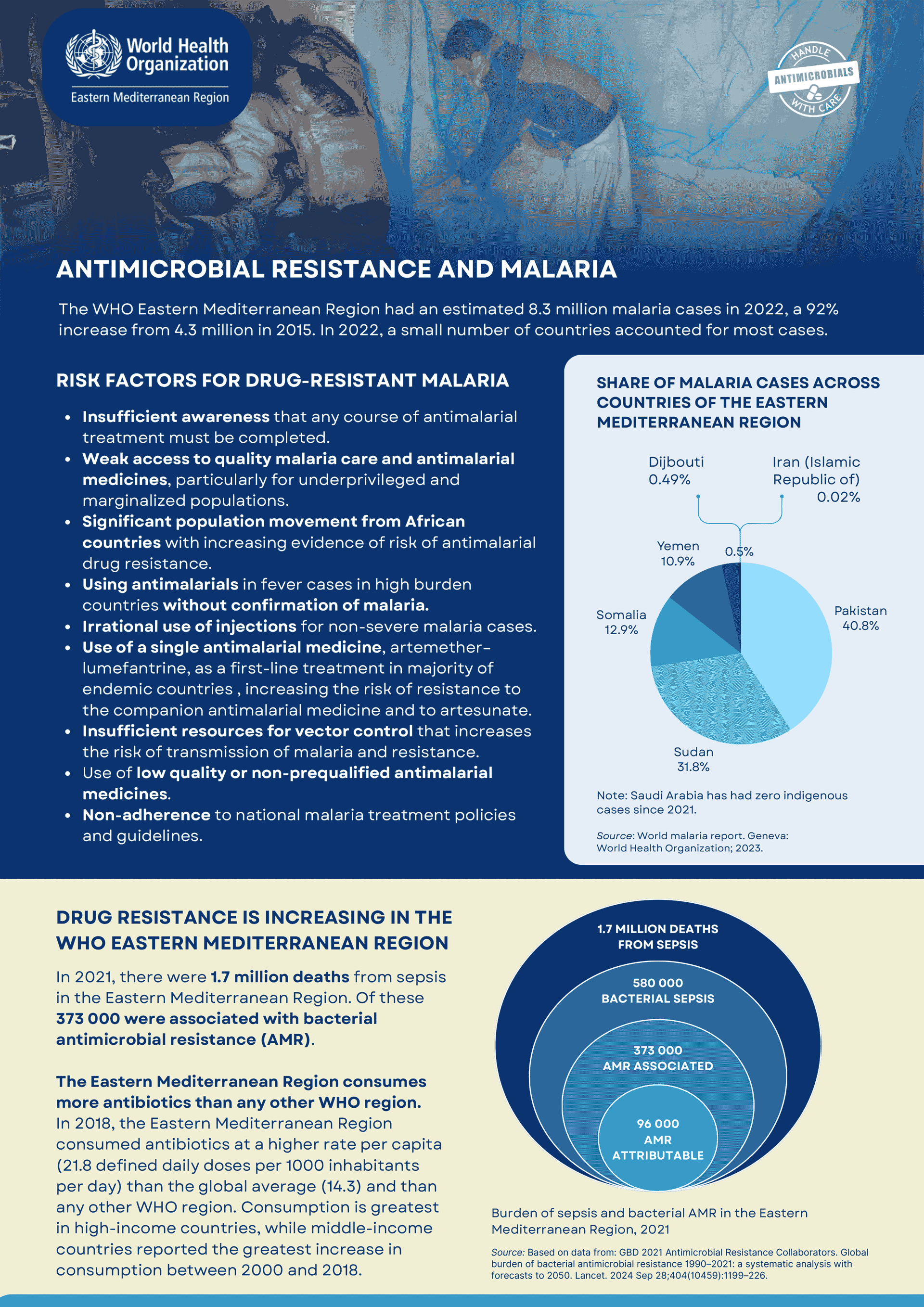
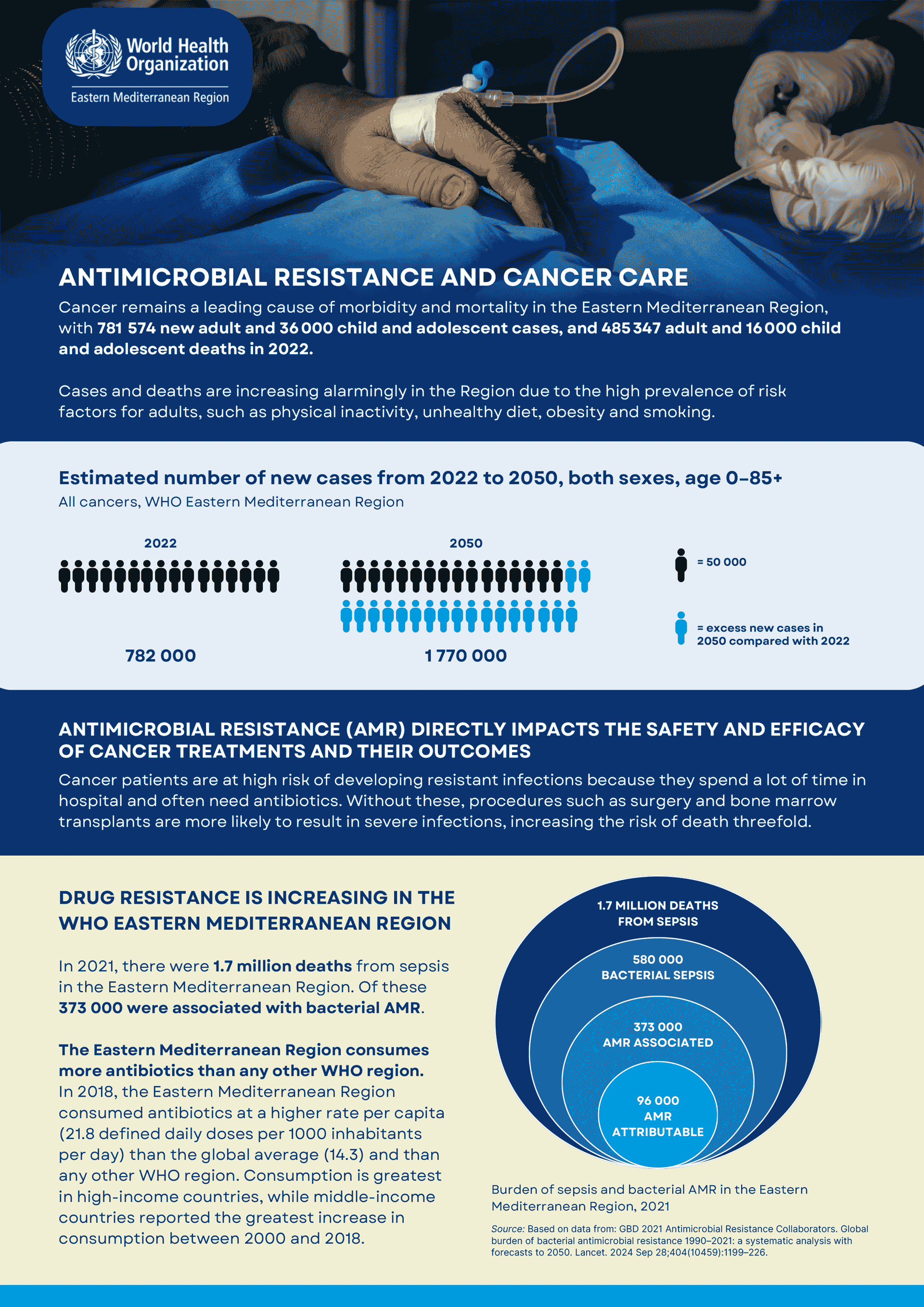
Videos
Regional Director Dr Hanan Balkhy on World Antimicrobial resistance (AMR) Awareness Week 2025
Watch on YouTubeAntimicrobial resistance: a global health threat facing humanity
Watch on YouTubeAntimicrobial resistance can lead to longer hospital stays and life-long disability or death
Watch on YouTubeWhat is antimicrobial resistance and how does it happen?
Watch on YouTubeOveruse and misuse of antimicrobial medicines is increasing drug resistance
Watch on YouTubeHow to use antimicrobial medicines correctly and help reduce antimicrobial resistance
Watch on YouTubeResources
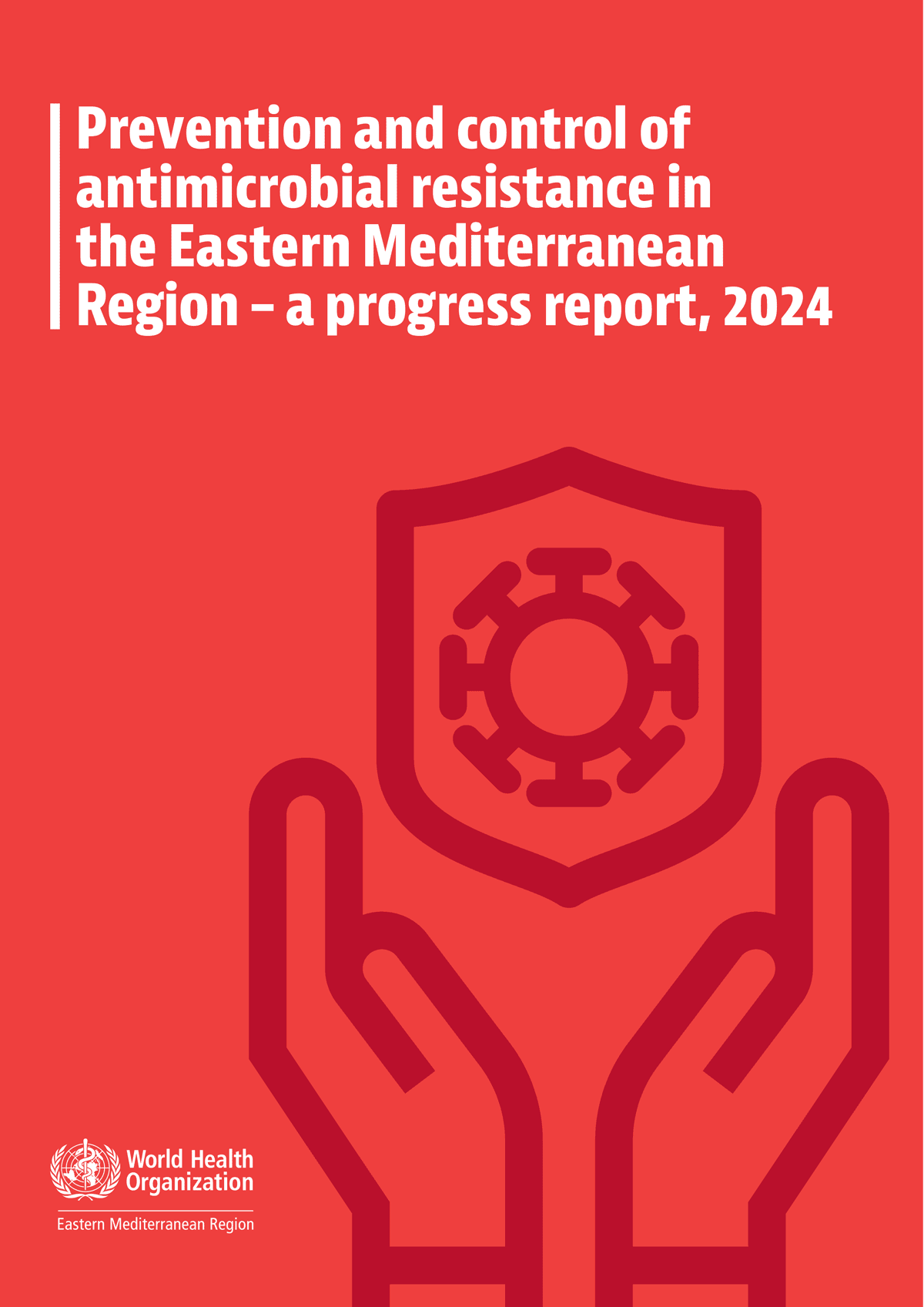
Related links
Regional statistics
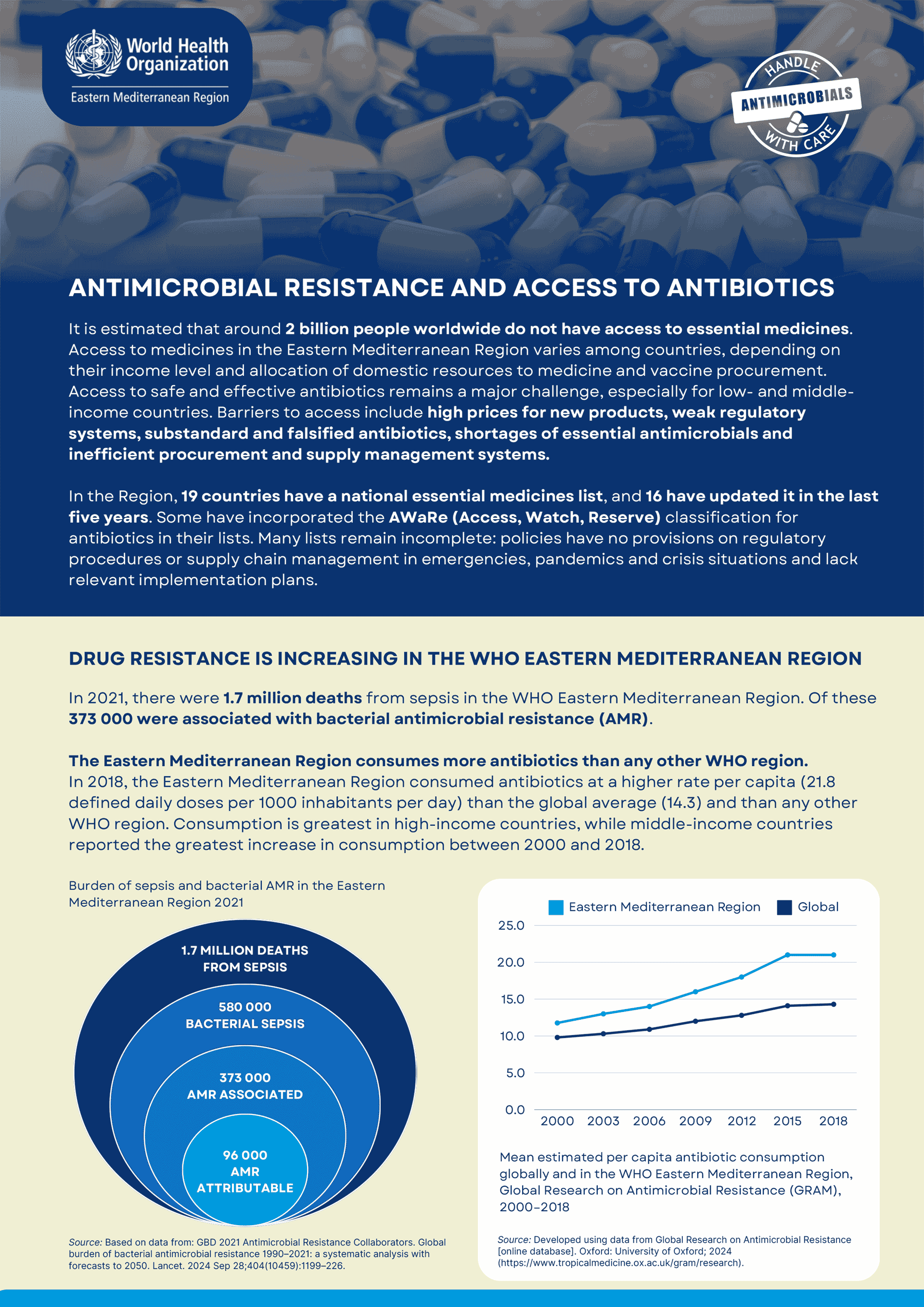
Antibiotic misuse is the most important factor fueling AMR. The WHO report on antibiotic use shows that overall antibiotic use in the Eastern Mediterranean and South-East Asia regions was the highest of all WHO regions.
Antibiotic use was 23.0 defined daily doses per 1000 inhabitants per day (DID) in the Eastern Mediterranean.
The highest relative enrolment of countries in WHO GLASS antimicrobial use surveillance in 2023 was in the Eastern Mediterranean Region, with 95.5% of CTAs enrolled (21/22)
However only 9 countries out of these 21 enrolled submitted data for 2023.
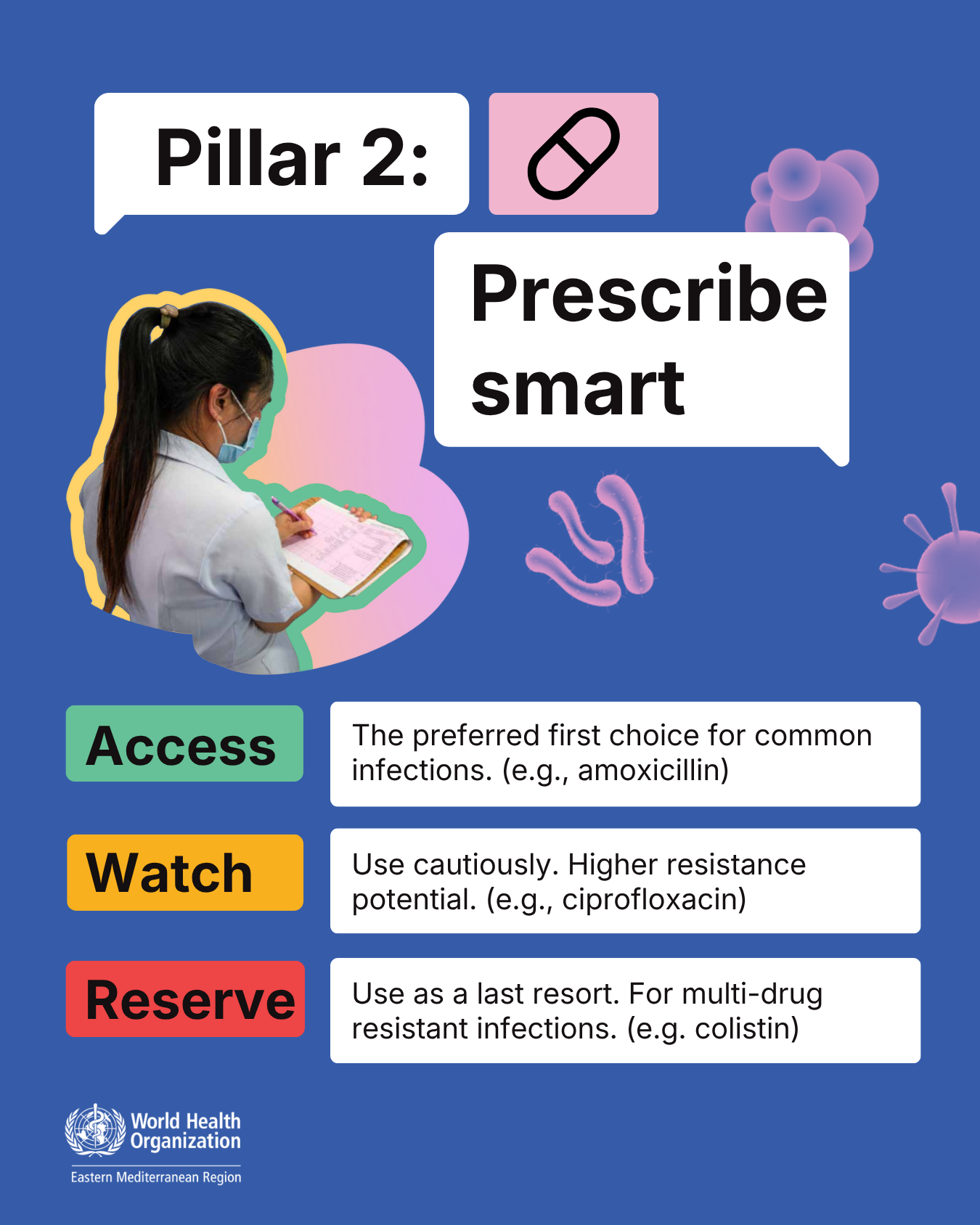
In 2023, the global target was to have at least 60% of national antibiotic consumption coming from the “Access” group antibiotics—which are the first line antibiotics with low potential for resistance and indicated for common infections.
Globally, 58% (35/60) of CTAs reported meeting the WHO 2023 target
Only 4 countries out of the 9 countries which submitted data for 2023 from the Eastern Mediterranean region achieved the target.
Moreover, only 1 country—Tunisia—has achieved the 2030 target (70% Access) set by the UN General Assembly in 2024.
In 2023, nearly 1 in 3 infections in the Region were resistant to antibiotics, among the highest figures globally
MRSA (methicillin-resistant Staphylococcus aureus) in bloodstream infections was 50.3%, the highest of all WHO regions
Gonorrhoea resistance to last-resort antibiotic ceftriaxone is 2.5%, the highest among all WHO regions
Acinetobacter spp resistance to imipenem – at 66.5% – is the highest globally and rising fastest with an 11.3% annual increase
Salmonella resistance to ceftriaxone – at 56.9% – is the highest of all WHO regions
Shigella resistance to azithromycin – 1.2% – is the lowest among WHO regions
Klebsiella pneumoniae resistance to cefotaxime in the Region declined by 5.2% annually between 2016 and 2023
While the Eastern Mediterranean Region had the highest completeness of AMR data globally, the score is still modest at 61.2%
In 2023, 88% of countries in the Region reported providing data on over half of the bacteria antibiotic combinations tracked
Source
WHO Global Antimicrobial Resistance and Use Surveillance System (GLASS)
Global antibiotic resistance surveillance report 2025
How you can help
The general public
-
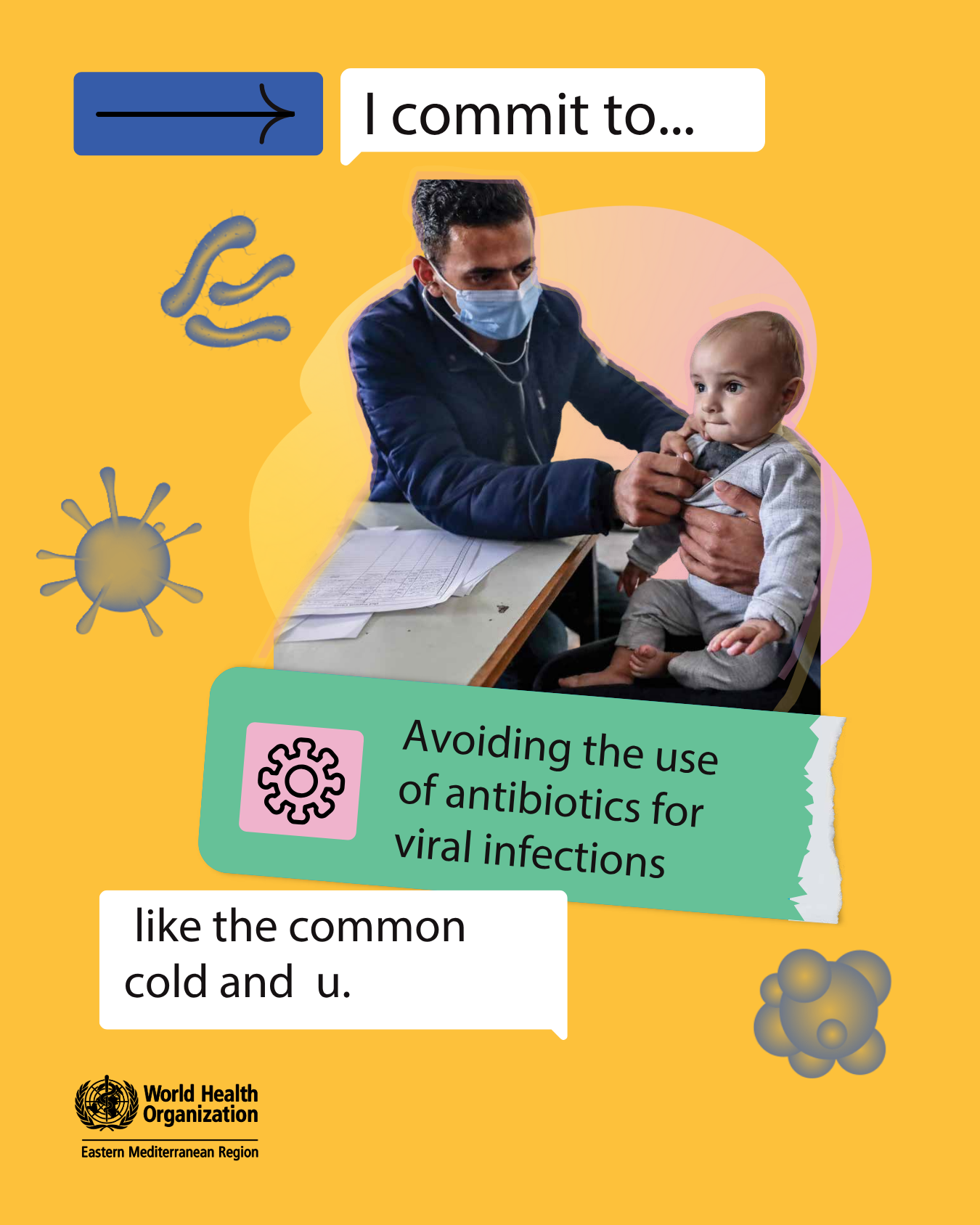
Do not use antibiotics for viral infections like colds or flu
-
Refrain from using left-over antibiotics or sharing antibiotics
-
Use antibiotics only when prescribed and follow your health care provider's advice
-
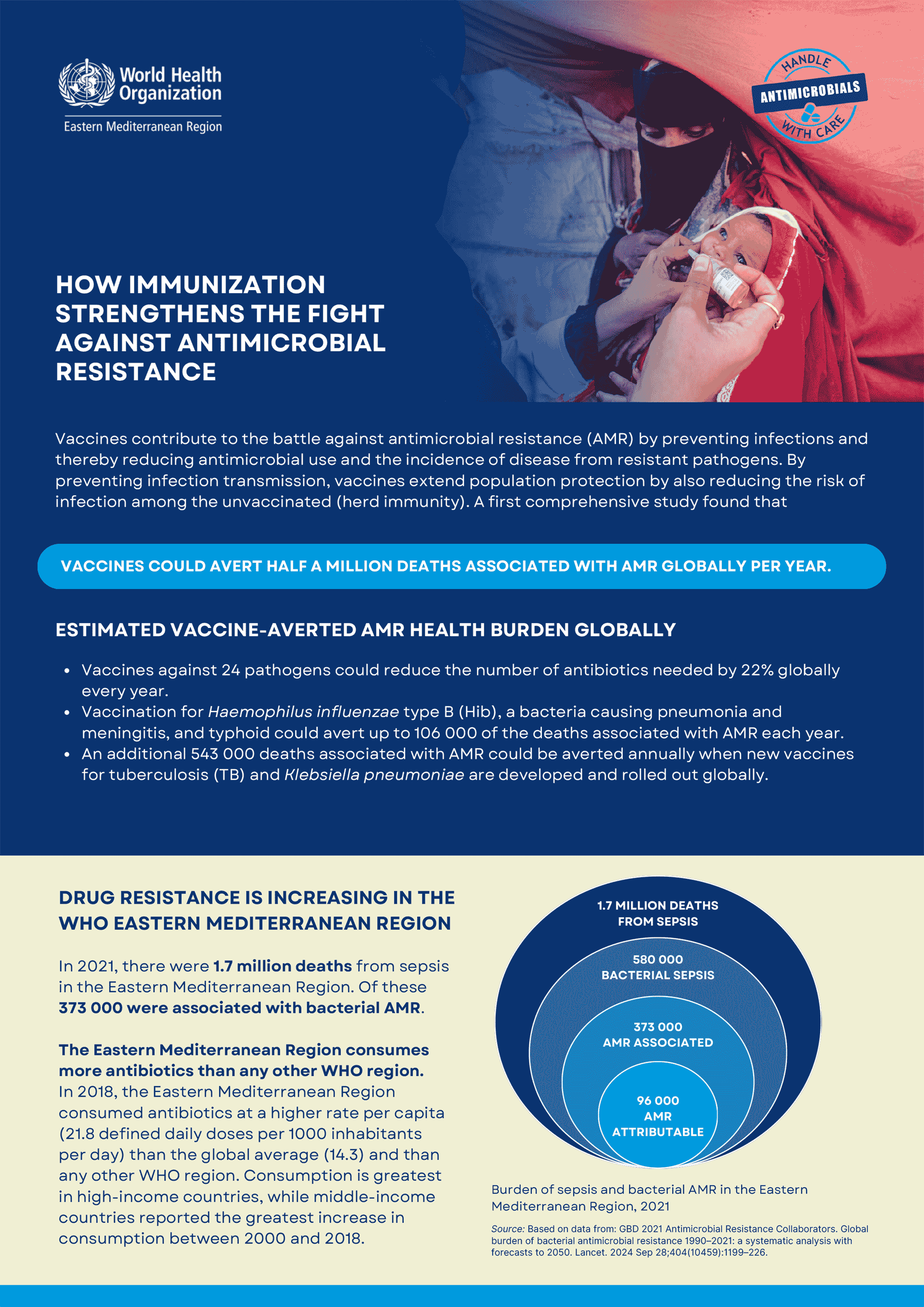
Practice good hygiene, drink safe clean water and keep up to date with vaccinations
Health workers and pharmacists
-
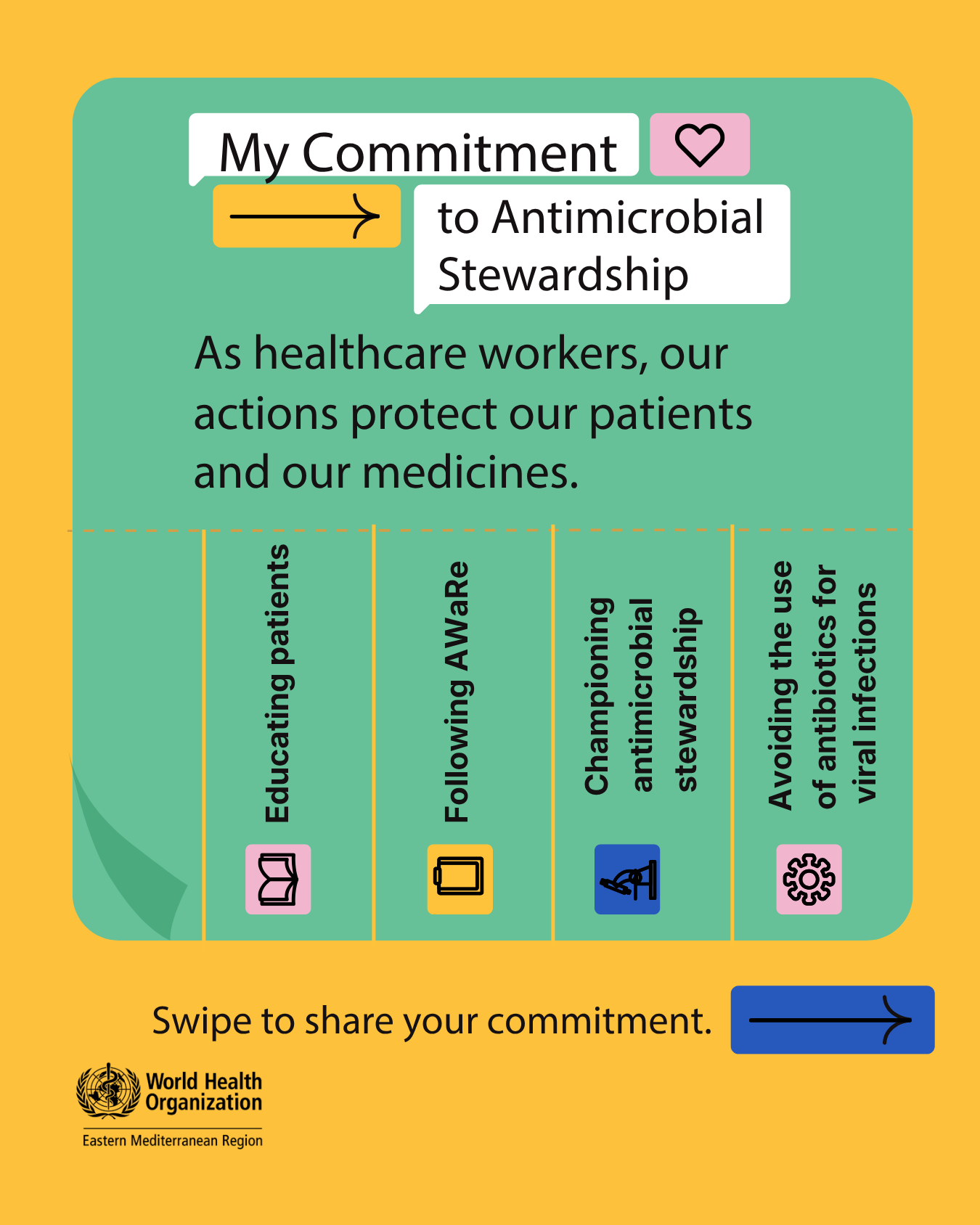
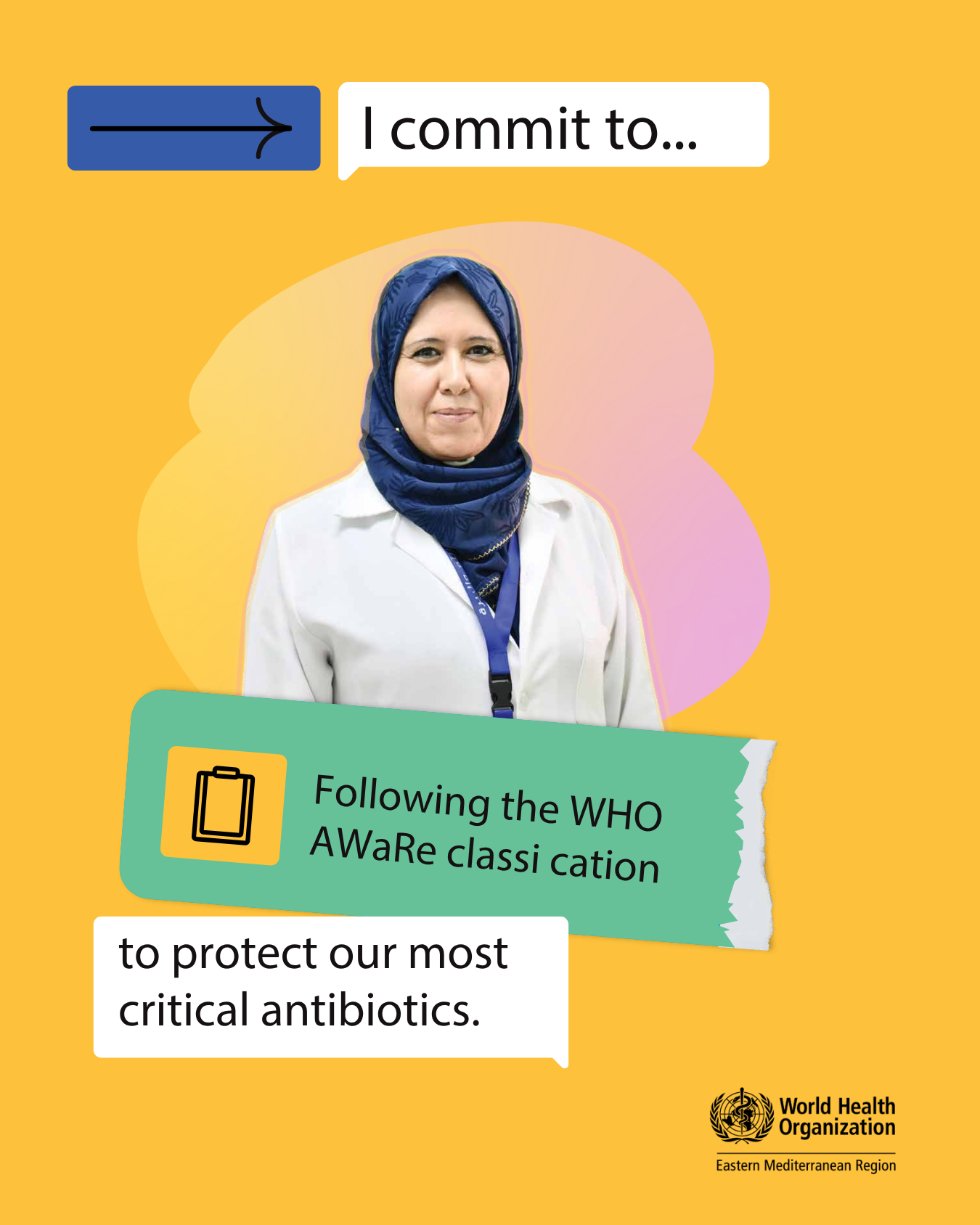
Follow guidelines
-
Prescribe and dispense antibiotics only when necessary
-
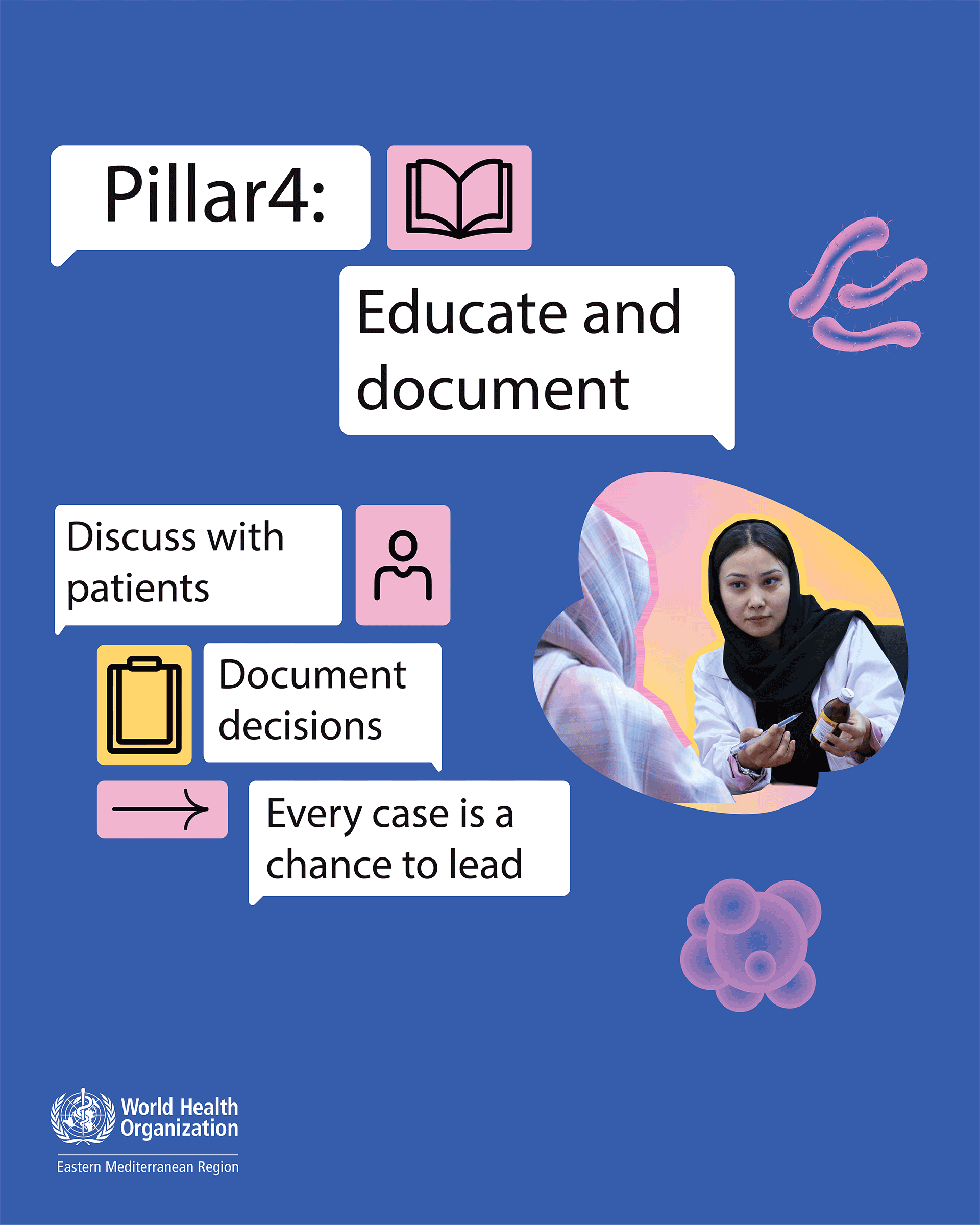
Educate patients on proper use and the dangers of misuse
-
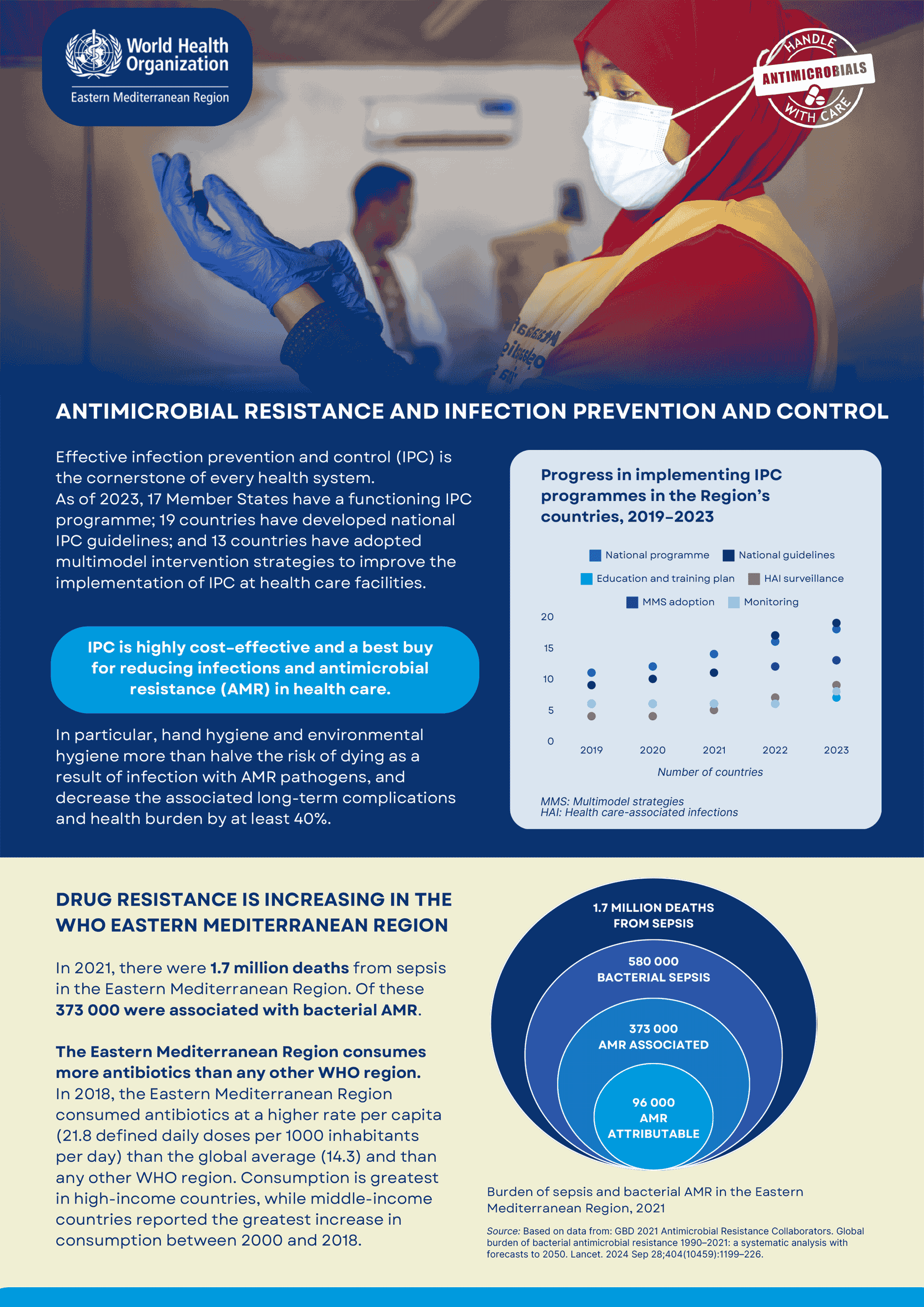
Make IPC a core component of all patient care activities
Policy-makers and industries
-
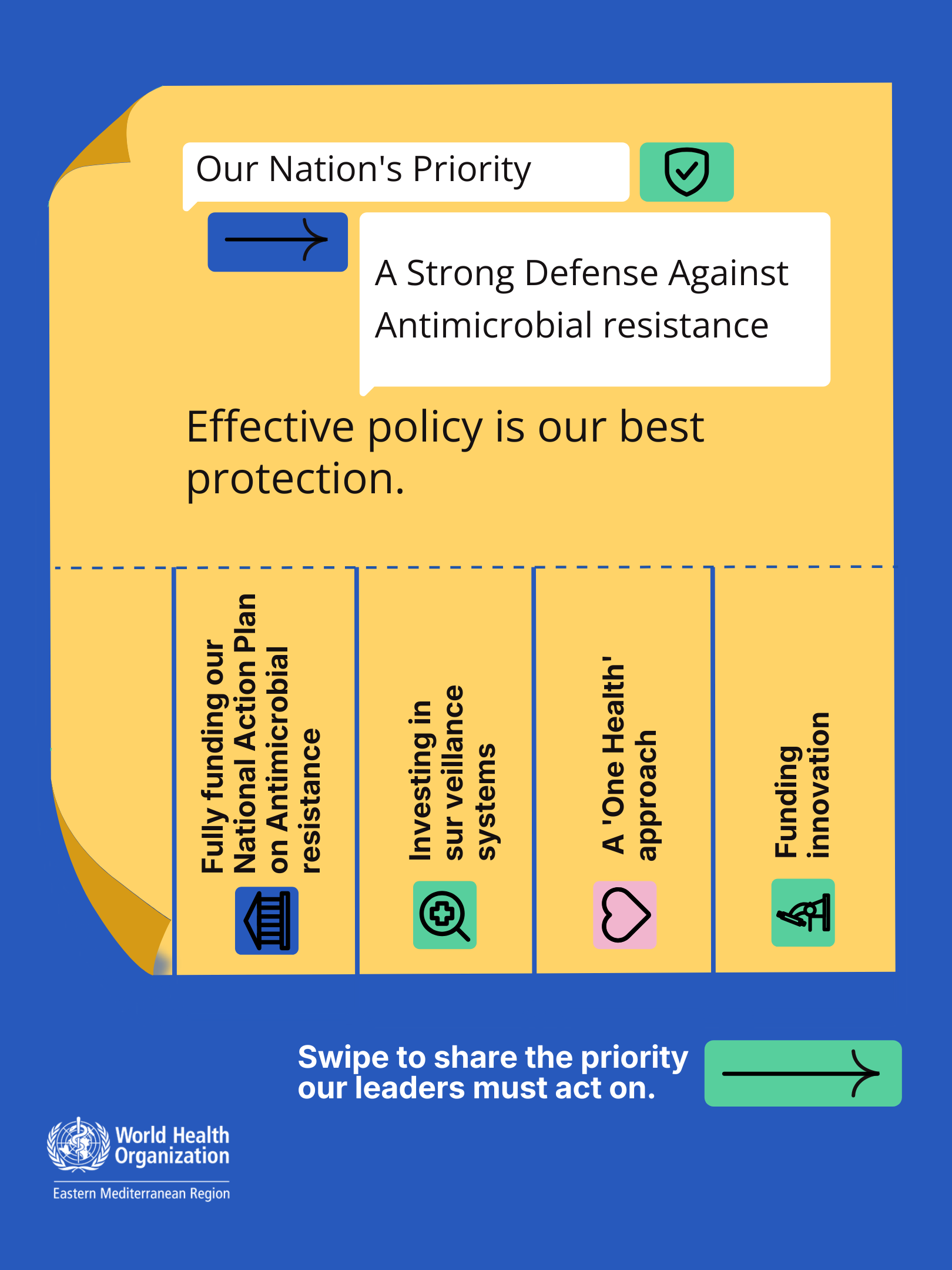
Strengthen regulations on antimicrobial use and invest in AMR and IPC national action plans
-
Support stewardship in agriculture, food industry, animal and human health
-
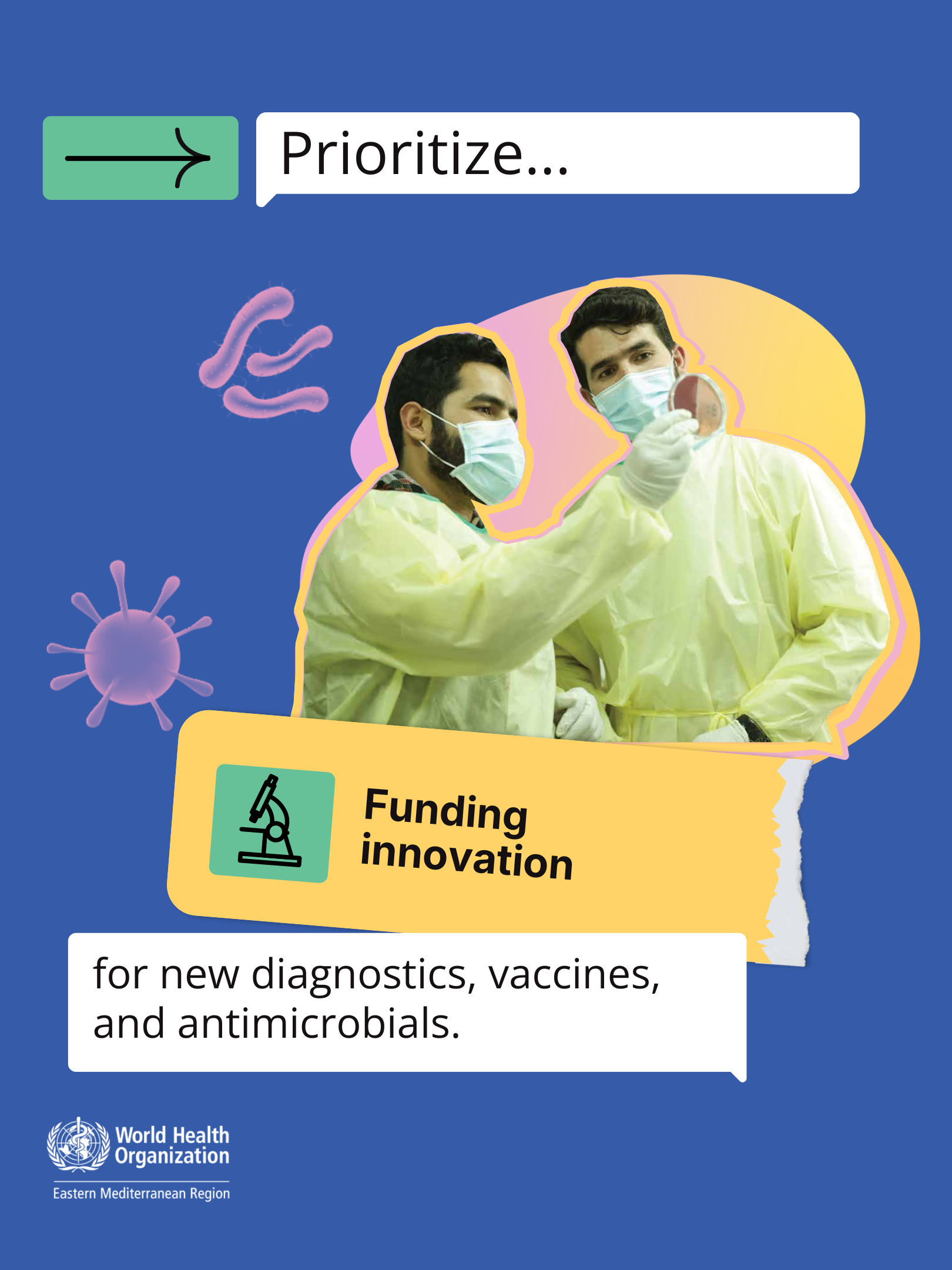
Promote surveillance, research and innovation
-
Commit to responsible manufacturing and marketing of antimicrobials
Media
-
Report responsibly on AMR to raise public awareness
-
Highlight success stories and best practices
-
Support the fight against misinformation
-
Report human interest stories by engaging with AMR survivors, patient advocates and civil society
Youth
-
Learn and teach about AMR and its dangers
-
Promote behavioural change and awareness among peers using social media and other tools
