


World Disability Day 2025: WHO Lebanon works to advance inclusive health
3 December 2025, Beirut, Lebanon – International Day of Persons with Disabilities (IDPD), celebrated every year on 3 December, provides a platform to promote the rights and well-being of persons with disabilities at every level of society, and an opportunity to assess – and raise awareness of – the situation of persons with disabilities in all aspects of political, social, economic and cultural life.
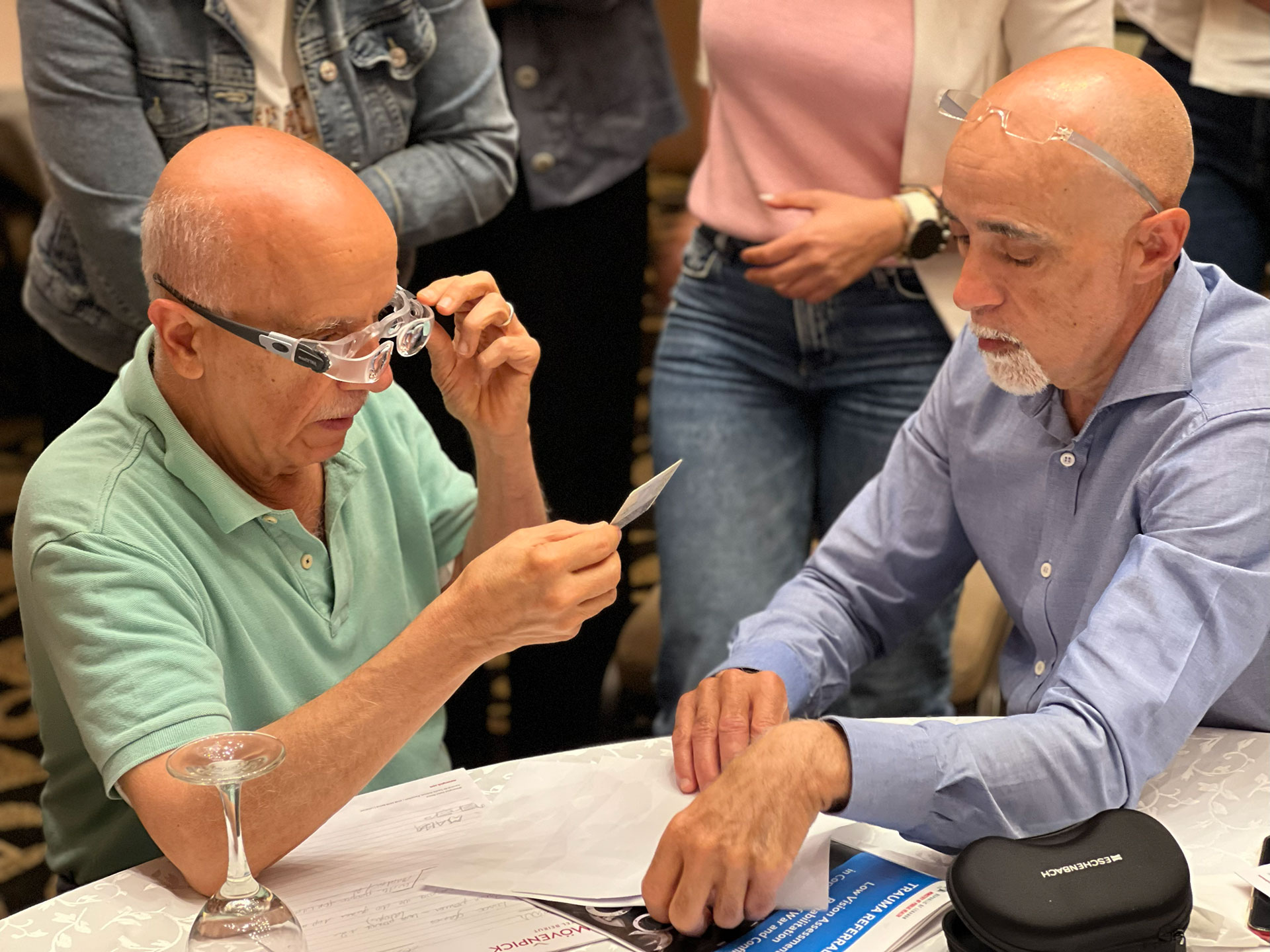 During an in-person training on low vision assessment and Rehabilitation in conflict settings organized by WHO Lebanon and partners. Photo credit: WHO Lebanon
In Lebanon, where ongoing emergencies and chronic pressures on the health system shape daily life, the World Health Organization (WHO) works with national authorities and partners to safeguard the rights, dignity and well-being of people with disabilities.
“Experience has shown that responses often fail when designed without the most vulnerable at the centre, first among them persons with disabilities,” said Minister of Public Health Dr Rakan Nasreddine during the first national conference to develop an inclusive emergency plan for persons with disabilities in Lebanon.
“Launching is not just a technical document, it is a national declaration of intent and a message of ethical, humanitarian, and rights-based commitment.”
Dr Nasreddine underscored three core messages: (1) disability is not a marginal issue but an urgent priority; (2) health is incomplete without cross-sectoral coordination, and (3) no disability plan should be developed without the participation of persons with disabilities.
Echoing this, WHO Representative in Lebanon Dr Abdinasir Abubakar said: “Disability inclusion is not optional – it is central to achieving health for all. Even in the midst of conflict and crises, WHO is firmly committed to ensuring that persons with disabilities are not left behind, and that their right to health is protected, respected and fulfilled.”
Ensuring access to medication, health services and assistive devices during conflict
In collaboration with the Public Health Emergency Operations Center (PHEOC), WHO played a central coordinating role to ensure persons with disabilities were not left behind during months of heightened conflict in Lebanon.
Through a dedicated call centre mechanism, individuals with chronic diseases/disabilities and their caregivers were supported in accessing essential medication, rehabilitation services and assistive products, and a dedicated video for persons with disabilities was produced and disseminated to improve awareness of access pathways to medication.
These efforts helped ensure continuity of care for some of the country’s most vulnerable individuals at a time when movement, services and supplies were severely disrupted.
As part of the Emergency Taskforce for Persons with Disabilities, PHEOC and WHO led the health component and contributed technical expertise to the development of the National Inclusive Emergency Preparedness Plan for Persons with Disabilities. The Plan seeks to ensure access to health care, psychosocial support, assistive devices, inclusive shelters, accessible communication and equitable relief distribution across all phases – preparedness, response and recovery – of emergencies.
Training audiologists and optometrists to strengthen disability-responsive health services
PHEOC, in close collaboration with WHO Lebanon, organized a series of high-impact trainings to strengthen specialized care. In May 2025, 2 expert-led workshops on managing war trauma hearing loss strengthened clinical capacity on hearing-aid candidacy and fitting for patients affected by blast injuries and conflict-related trauma, in alignment with WHO guidelines on managing aural blast Injury.
A month later, online and in person trainings on low vision assessment and rehabilitation in conflict settings were held in collaboration with the WHO Collaborating Centre at the Ophthalmic Hospital of Rome and coordinated with the Syndicat des Opticiens et Optométristes du Liban.
The trainings engaged more than 50 optometrists online and 24 optometrists and 10 patients during the 3 days of hands-on training, significantly strengthening national vision rehabilitation services.
To expand access to essential assistive technology, more than 200 visual aids for adults and children with visual impairments were supplied to the Ministry of Public Health by WHO.
2025: a year of progress and renewed commitment
On World Disability Day 2025, WHO Lebanon reaffirms its commitment to advancing the rights of, and health equity for, persons with disabilities. Through strengthened emergency coordination, inclusive national planning, professional training and expanded access to assistive technologies, WHO continues to work with national counterparts and partners to build a health system that ensures everyone can live, participate and thrive with dignity.
