Overview
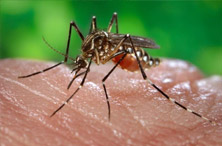
Chikungunya is a viral disease caused by the chikungunya virus (CHIKV), which is spread to people through the bite of infected Aedes aegypti and Aedes albopictus mosquitoes. These mosquitoes primarily bite during the daytime. The disease is a concern in tropical and subtropical regions around the globe.
A total of 445 271 suspected and confirmed CHIKV cases were detected in the first 9 months of 2025, along with 155 deaths, from 40 countries around the world. WHO Eastern Mediterranean Region accounted for 1596 suspected and 67 confirmed out of these cases. While some WHO regions reported fewer cases than in 2024, others show significant increases. This ongoing risk of spread is driven by several factors, including the expanding areas where Aedes mosquitoes live due to climate change, growth of cities without proper planning, human travel, and gaps in controlling the mosquitoes.
The WHO Eastern Mediterranean Regional Office supports countries in managing outbreaks by providing technical assistance and guidance, strengthening coordination, enhancing surveillance and laboratory confirmation, mobilizing resources and building the national capacity to implement the Integrated vector management (IVM) strategy. Prevention efforts are strongly focused on controlling the Aedes mosquitoes, which includes cleaning up water-filled containers where they breed.
Symptoms
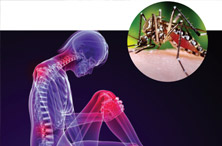
Symptoms of chikungunya appear between 4 and 8 days (range 2–12 days) after the patient has been bitten by the infected mosquito. Chikungunya is rarely fatal. Most symptoms are generally self-limiting and last for 2–3 days. The disease is characterized by an abrupt onset of fever, which is frequently accompanied by joint pain. Other common signs and symptoms include muscle pain, headache, nausea, fatigue and rash. The joint pain is often debilitating and usually lasts for a few days but may be prolonged, lasting for weeks, months or even years.
Most patients recover fully from the infection; however, occasional cases of eye, heart and neurological complications have been reported with CHIKV infections. Patients at extremes of the age spectrum are at higher risk for severe disease including newborns infected during delivery to infected mothers or bitten by infected mosquitoes in the weeks after birth, and older people with underlying medical conditions. Patients with severe disease require hospitalization because of the risk of organ damage and death. Often symptoms in infected individuals are mild and the infection may go unrecognized or be misdiagnosed in areas where dengue and other arboviruses also occur.
Once an individual is recovered, available evidence suggests they are likely to be immune from future chikungunya infections.
Treatments
Treatment is directed primarily at relieving the symptoms, including joint pain. This is largely achieved by using anti-pyretic drugs to reduce fever, by optimizing the use of pain medication and by administering fluids. Aspirin and other non-steroidal anti-inflammatory drugs should not be administered until dengue can be ruled out to reduce the risk of bleeding. There is no specific antiviral drug treatment for chikungunya.
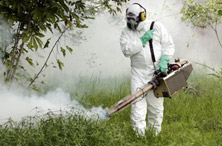
Prevention and control rely heavily on reducing the number of water-filled habitats that allow mosquitoes to breed. During outbreaks, insecticides may be sprayed to kill flying mosquitoes; applied to surfaces in and around water-filled habitats where the mosquitoes land; and used to treat these habitats to kill the immature larvae.
There are currently two chikungunya vaccines that have received regulatory approvals and/or have been recommended for use in populations at risk in several countries, but the vaccines are not yet widely available nor in widespread use. WHO and external expert advisors are reviewing vaccine trial and post-marketing data in the context of global chikungunya epidemiology to inform possible recommendations for use.
For protection in areas of chikungunya transmission, people with risk of exposure to infected mosquitoes are advised to wear clothing which minimizes skin exposure to day-biting mosquitoes. Window and door screens should be used to prevent mosquitoes from entering homes. Repellents can be applied to exposed skin or to clothing in strict accordance with product label instructions. Repellents should contain DEET, IR3535 or icaridin.
Insecticide-treated mosquito nets should be used against day-biting mosquitoes by people who sleep during the daytime, for example young children, sick patients or older people. Mosquito coils or other insecticide vaporizers may also reduce indoor biting.
Information resources
Tool for the diagnosis and care of patients with suspected arboviral diseases
Guidelines for prevention and control of chikungunya fever
Guidelines on Clinical Management of Chikungunya Fever
Protecting the health and safety of workers in emergency vector control of Aedes mosquitoes
Monitoring and managing insecticide resistance in Aedes mosquito populations