

Sélectionnez votre langue
Joint statement by UN Special Envoy for Yemen, UN Humanitarian Coordinator for Yemen and World Health Organization in Yemen on UN medical air bridge flights
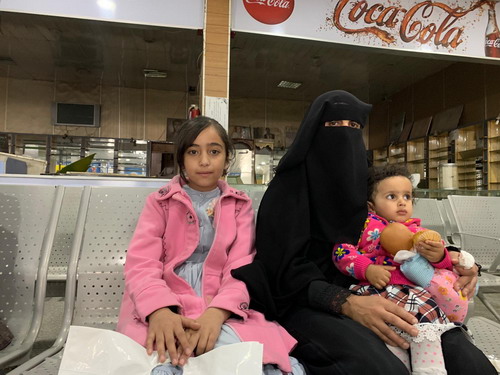
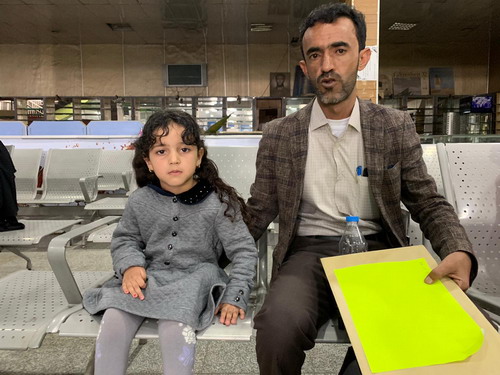
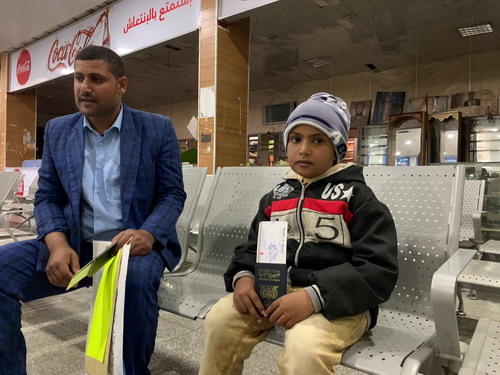 3 February 2020, Sana’a/Amman — The UN Special Envoy for Yemen, Martin Griffiths, the UN Humanitarian Coordinator for Yemen, Lise Grande and the World Health Organization Representative for Yemen, Altaf Musani, welcomed today the launch of the medical air bridge operation that brought the first group of Yemeni patients in need of specialized medical assistance from Yemen to Jordan.
Today was the maiden voyage of the medical air bridge operation that brought a number of patients out of an initial group of 30 along with their respective travel companions from Sanaa to Amman. The remaining of the first group of 30 patients will travel in a second flight while more patients will follow on subsequent flights. The World Health Organization in collaboration with the local public health and population authorities coordinated these flights. The medical air bridge flights come as part of the United Nations’ ongoing humanitarian assistance in Yemen including providing support to the health care system.
The United Nations is grateful to the host countries, Egypt and Jordan, but also to Saudi Arabia, for their efforts in this humanitarian measure. The collaboration and commitment of both the Government of Yemen and Sana’a authorities made the operation possible.
Many United Nations entities and several governments in the Region and around the world have collaborated to get these patients the treatment they need abroad, and we are grateful to them all. The United Nations will do what it can to ensure the continuation of the medical air bridge as a temporary solution to reduce the suffering of the Yemeni people until a more sustainable solution is reached in the near future.
For more infomation:
World Health Organization: Christine Cool,
Office of the Special Envoy for Yemen: Mayy El Sheikh,
Office of the Humanitarian Coordinator for Yemen: Tapiwa Gomo,
Emergency Health and Nutrition Project reduces infection in Yemen
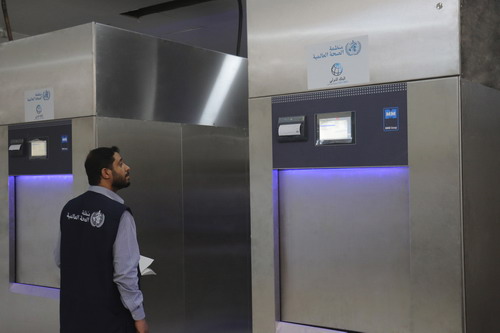 With the support of the World Bank, the Emergency Health and Nutrition Project has updated sterilization equipment at Al-Thawra hospital.
29 December 2019 – Based on data gathered by WHO from a number of countries, it can be estimated that each year, hundreds of millions of patients around the world are affected by health care-associated infections (HAI). The burden of HAI is several fold higher in low- and middle-income countries than in high-income ones.
In a country torn apart by war, Yemeni people seeking medical support struggle to receive proper and effective medical treatment. Most of the hospital’s medical equipment requires replacement like the sterile supply department of Al-Thawra hospital. The equipment was so old that it would be the cause of delay or cancellation of critical surgeries since the sterilization process of instruments would take hours instead of minutes.
But thanks to the support of the World Bank through the International Development Association under the framework of the Emergency Health and Nutrition Project, Al-Thawra hospital now has the updated sterilization equipment it has desperately needed. This is crucial since the proper sterilization process is a necessary component in ensuring that infection prevention and control in hospitals remains a priority.
“The number of patients in Al-Thawra hospital benefiting from the support is three to four thousand beneficiaries on a monthly basis and approximately from 120 to 130 operations a day in 26 medical departments, some of these operations need to go through sterilization process in 16 minutes, but the central sterile equipment, very old, resulted in delaying or cancelling the operations, so the modern sterile supply can sterilize in 16 minutes to save lives through performing urgent surgeries without procrastinating” said the Manager of the CSSD of Al-Thawrah Hospital, Mansor Kuhazah.
“Now the central sterile department of Al-Thawra is in a position to sterilize plastic and instrumens rapidly due to the modern sterile equipment being provided by WHO through the Emergency Health and Nutrition project”, said the Engineer Mohammed Nofal, who rehabilitated the sterilization department of the hospital.
Under the Emergency Health and Nutrition Project, WHO and UNICEF with its technical partner the World Bank through the International Development Association continue to meet health needs, as well as expectations, in Yemen.
The EHNP is a crosscutting project providing essential health and nutrition services across the country. In the midst of the ongoing war, the EHNP is protecting and preserving the health system. EHNP supports 72 hospitals across the Republic of Yemen with a suite of essential life-saving health services. WHO, the World Bank and UNICEF work closely to strengthen the referral system the primary and secondary levels to the tertiary levels of care. In addition, EHNP supports public health programmes, disease response and outbreaks such as cholera and diphtheria.
Seasonal influenza in Yemen
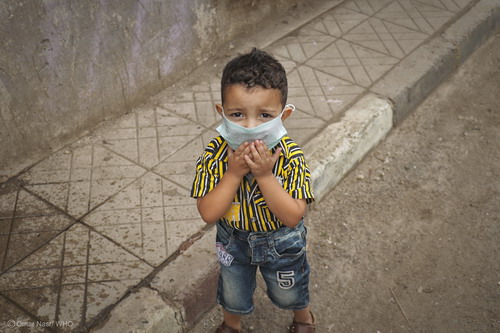 18 December 2019, Yemen – WHO has confirmed that there are no signs of unusually high rates of influenza in Yemen. Infection rates are typically higher between October and March, in Yemen as in other countries of the Eastern Mediterranean Region, but they have not risen beyond the normal seasonal pattern in 2019.
Seasonal influenza is an acute respiratory infection caused by influenza viruses which circulate in all parts of the world. Symptoms include a sudden onset of fever, cough, headache, muscle and joint pain, severe malaise (feeling unwell), sore throat and runny nose. The cough can be severe and can last 2 or more weeks, but most people recover from fever and other symptoms within a week without requiring medical attention.
However, influenza can cause severe illness or death, especially in people at high risk such as pregnant women, children under 5 years and the elderly. Vaccination is therefore recommended for these high-risk groups, and infection rates are monitored to detect possible outbreaks and respond to them quickly.
The number of reported severe acute respiratory infection (SARI) cases in Yemen this year is comparable to previous influenza seasons. No cluster of severe influenza cases or deaths has been reported through the national surveillance system, and there is no evidence of an avian influenza outbreak among poultry or wild birds, or any human case of avian influenza.
WHO continues to work with public health authorities in Yemen to monitor the situation, raise awareness, and prevent and control infection.
More information
Dengue and malaria update
 Updated: 18 November 2019, Yemen – Over 4 years of conflict in Yemen have resulted in the displacement of over 2 million people, destroyed infrastructure and taken systems to the brink of collapse. Yemen, like the majority of countries in conflict, has sustained massive damage to its infrastructure. The successive onslaught of heavy rains, resulting in flash floods and inadequate drainage have turned harmless puddles into active mosquito breeding sites. These larvae are given space and time to turn into adult mosquitos who then infect people.
“Containing these diseases has been a challenge given the operational environment and scale of this conflict, but WHO remains commited to the people of Yemen. These vector control measures along with sustained community involvement can improve vector control efforts substantially. We will continue working with local health authorities to fight all diseases that serve as a threat to public health in Yemen,” said Altaf Musani, WHO Representative in Yemen.
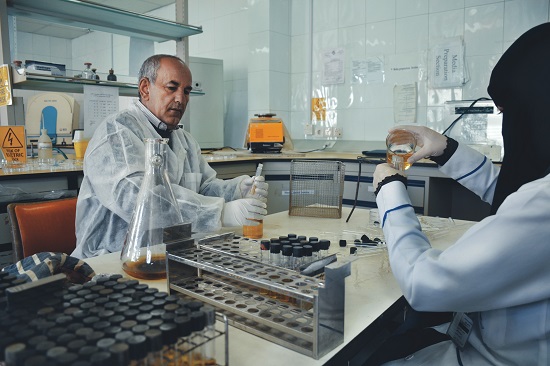
In Yemen, malaria and dengue are endemic, while for dengue the number of suspected cases (as of 18 Nov 2019) is at 29 509. WHO, with the support of health authorities in Yemen, have been fighting dengue and malaria for years. In the first 2 weeks of November alone, we have continued to provide response kits enough to treat 15 000 people, deployed technical teams to investigate suspect cases, provided diagnostics and laboratory support for vector-borne diseases, IV solutions, and built the capacity of health care staff in health facilities to treat these diseases. In communities, WHO along with support from local health authorities, has continued to educate communities and conducted mass spray campaigns to kill these mosquitos.
Malaria and dengue are known as vector-borne diseases that are transmitted to humans by infected mosquitoes. These vector-borne diseases affect many countries across the globe, including Yemen. An estimated 70% of the world’s malaria burden is located in 11 countries — 10 of which are in Africa and 1 in India. As for dengue, an estimated 390 million infections are recorded every year, worldwide.
Related links