

Sélectionnez votre langue
Training senior health staff to improve service delivery in Yemen
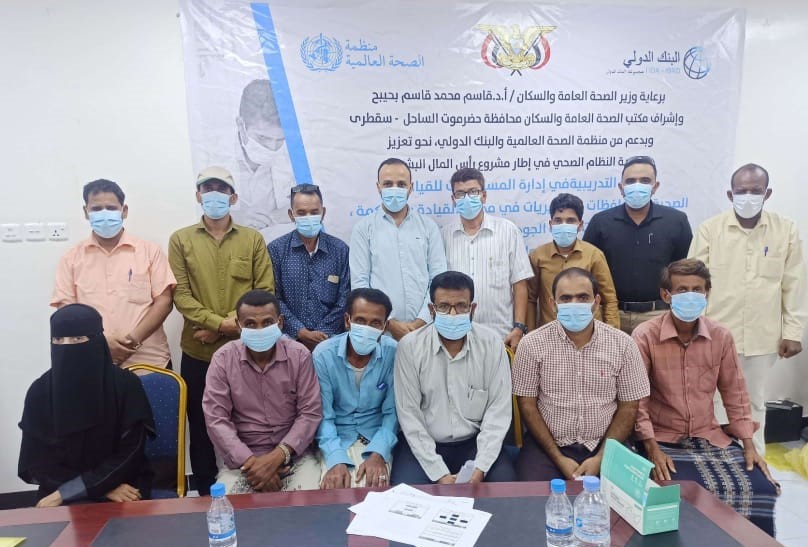
Aden, Sana’a, 31 August 2022 – Quality care in health facilities is key to a high performing health system. To achieve this, managers and senior officials must be equipped with the skills, knowledge and attitude to course correct when there are challenges and lead action for continuous improvements in service delivery.
In 2019, through the Emergency Health and Nutrition Project, with the support of the World Bank, WHO developed the hospital care and management programme for Yemen, to help in addressing major issues in hospital management. A pilot phase initially trained 150 hospital managers and then training was rolled out to 1410 senior health workers.
Now, since March 2022, under the successor project to the Emergency Health and Nutrition Project, the Yemen Emergency Human Capital Project, an additional 430 health workers have participated in the training in the governorates of Al-Mahra, Hadramaut, Marib, Shabwa and Socotra. The programme has now reached all World Bank-supported hospitals in Yemen.
Over 1700 senior health workers have now completed the training from across the 22 governorates of Yemen. The participants include 1380 hospital directors, managers and senior staff, 210 district health managers and 250 governorate health managers.
The training covers 5 essential modules to improve hospital performance: governance, leadership and strategic planning; quality and patient safety; health information management; hospital emergency and disaster management; and supply chain management. Each module runs for 4 days, via a face-to-face workshop. Participants join one or more of the modules, depending on its relevance to their current role in the health sector. All modules are delivered in Arabic, using interactive learning involving lectures, plenary and group discussions, case studies, mini-projects and field visits.
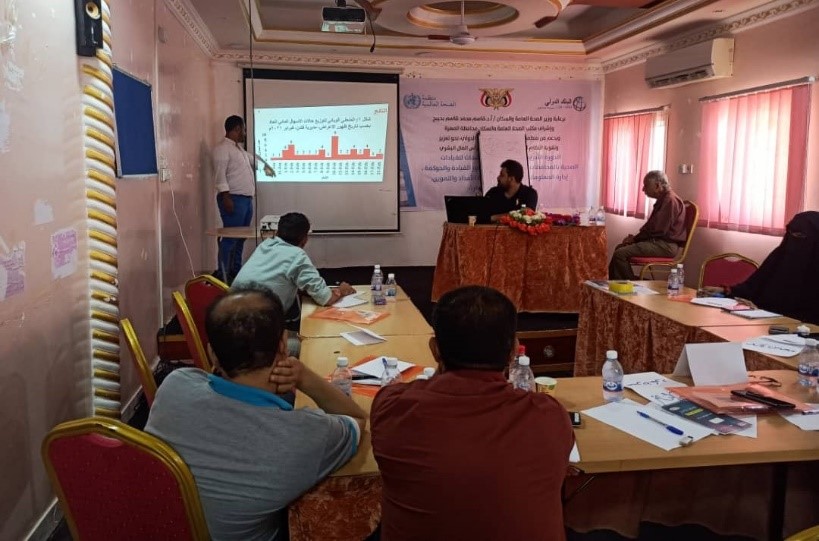 For quality assurance, WHO directly supervises the training activities in each governorate through several channels, including field presence, direct daily electronic evaluation of trainees, visits by the internal monitoring and evaluation team, and the presence of governorate-level supervisors nominated by the central health authorities. Participant evaluations are reviewed on a daily basis, and training activities are adjusted accordingly, to suit the needs of each group of learners.
The training materials were prepared by WHO Regional Office for the Eastern Mediterranean, in collaboration with international specialists and academics in the field of hospital care and management, and International Hospital Federation trainers. This programme has also been implemented in Afghanistan, Islamic Republic of Iran and Iraq with WHO support.
In Yemen, there are 48 health care management trainers who lead delivery of the programme. These trainers come from the central authorities, public universities in Aden, Hadramaut and Sana’a, Yemen Council for Medical Specializations, and private institutions such as Balqees College and Al-Razi University.
The WHO country office in Yemen took the lead in translating all the course materials into Arabic and has made the Arabic version available to other interested countries. In November 2021, a review meeting was held with the trainers to check all the Arabic translations and to contextualize materials, practical scenarios, peer learning, and sharing of experiences relevant to the context of Yemen. This helped to enhance the preparedness of the trainers to become well prepared for the rollout of the programme.
Dr Saeelah Awadh, the General Manager for Zungibar Hospital in Abyan Governorate and a participant in health care management, articulated the impact of this training on their day-to-day tasks, saying: “this training is targeting us in the management unit, in terms of how to execute our tasks properly for improving the service provided to the public”.
The ongoing data collection and analysis from the health care management programme show around 97% participant satisfaction with the programme. Almost all participants (98%) recognized the importance of training topics to enhance and strengthen the quality of services provided in their facilities.
Data review also shows managers and senior officials are gaining the skills and knowledge they need to carry out their roles safely and effectively. Preliminary analysis shows a significant improvement between the pre-test (average 32%) and post-test (average 88%) scores. Dr Adham Rashad Ismail Abdel Moneim, WHO Representative to Yemen, reflected: “These initial results indicate that the health care management programme is helping to fill critical gaps in knowledge that will contribute to strengthening hospital performance towards achieving the universal health coverage in Yemen.”
The next steps for the health care management in Yemen will be to launch phase 2 of the programme with development of 2 more modules on human resources management and financial management. This work is starting in the second half of 2022, with the ongoing support of the World Bank via the Yemen Emergency Human Capital Project.
Giving newborns a healthy start to life in Yemen
 31 August 2022, Aden – The first 90 minutes of a newborn’s life are a critical window to prevent sepsis, asphyxia, and other birth complications. In these first moments, there are simple, cost-effective practices that can benefit every mother and child.
The key components are to dry the baby immediately and thoroughly after birth, to do immediate skin-to-skin contact for at least 90 minutes, to clamp the cord after pulsations stop and cut the cord with a sterile instrument, and to initiate early breastfeeding.
Other key interventions include ensuring the presence of a birth companion, adopting a position of choice, providing adequate food and fluids, using evidence-based criteria for episiotomy, avoiding unnecessary practices such as fundal pressure and forced pushing, and giving oxytocin within one minute of birth.
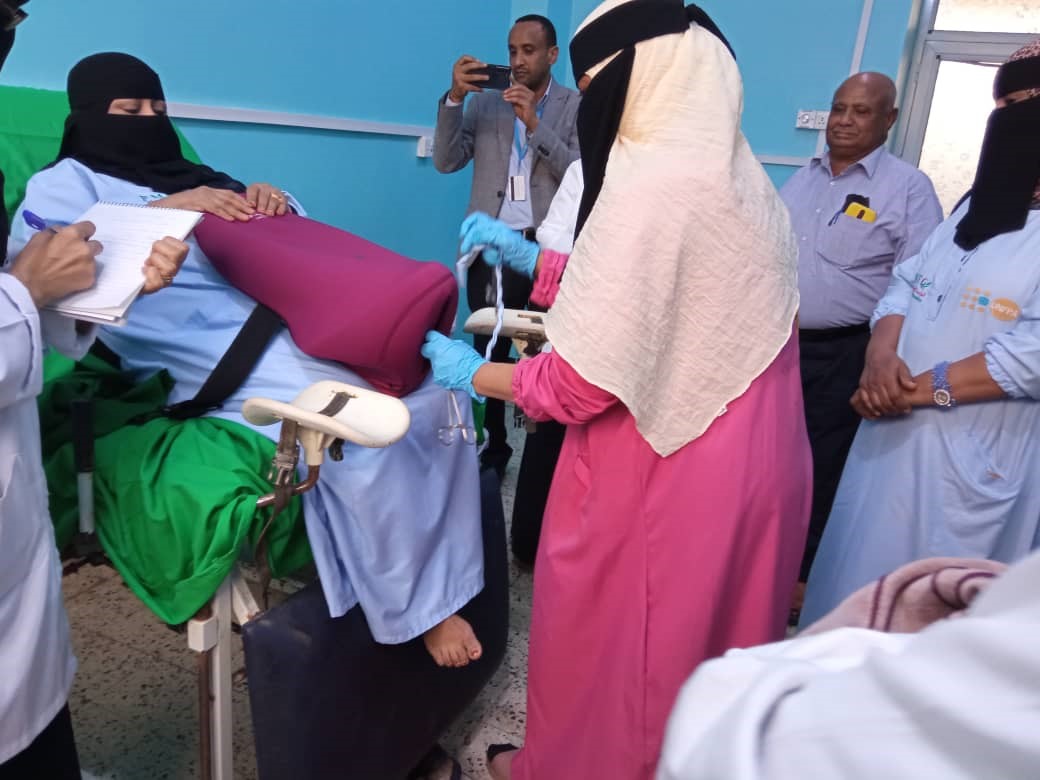
With the support of the World Bank, WHO and the authorities in Yemen, are providing coaching to health workers to change hospital practices and improve the quality of newborn care.
Coaching in early essential newborn care has started at Al Sadaqa, the biggest referral hospital in Aden, led by 13 facilitators, who passed their skills on to another 7 staff members, as well as 6 staff from other hospitals (Al-Sha’ab, Al-Razi and Ibn Khaldoun) and governorate newborn health coordinators.
The coaching uses on-the-job methods and immediate application in the workplace, with no lectures, presentations, or reading materials. Needed supplies were also provided to the participating hospitals, including MamaNatalies, NeonNatalies, glogerm, room thermometers, and wall clocks with digital number displays for hours, minutes and seconds.
The participants’ skills and knowledge significantly improved as measured in pre-and post-test results. Before the coaching, the participants’ scores averaged 44% in a written test, 0% for the management of a breathing baby, and 30% for the management of a non-breathing baby. After the coaching, these scores increased to 81%, 96%, and 93%, respectively.
“This is a huge step forward and a starting point for positive improvements in maternal and child health in Yemen,” said the WHO Representative to Yemen Dr Adham Rashad Ismail Abdel Moneim.
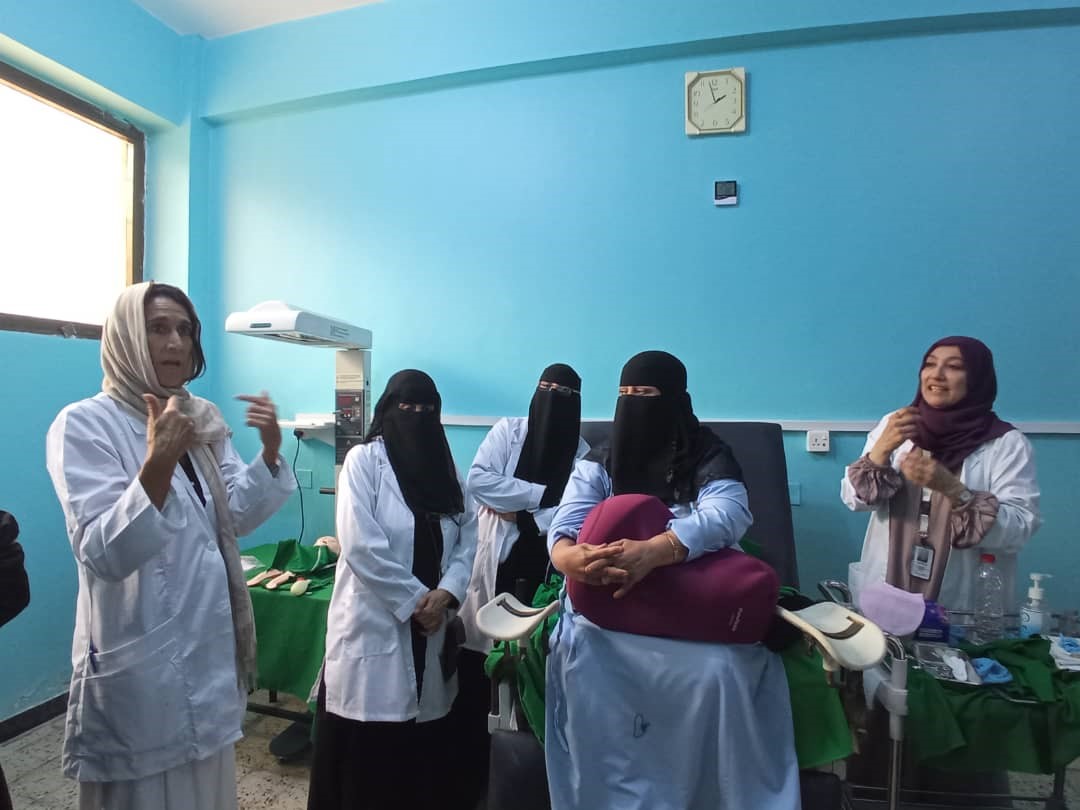 Moving forward, plans are under way to share early essential newborn care knowledge and skills with all key staff working in the labour department, including midwives, obstetricians, pediatricians and nurses from neonatal Intensive care units, between August and October 2022. WHO has also developed a detailed staff coaching plan for the participants, with supportive supervision and review of hospital registries to measure improvements in the quality of care provided to newborns and mothers.
WHO provides timely response to flood-affected governorates in Yemen
Sana’a, 16 August 2022 – In urgent response to the needs of the communities affected by floods in Yemen, the World Health Organization (WHO) has provided emergency health and laboratory supplies, supported specialized trauma teams and joined field missions with national health authorities and other humanitarian partners.
Triggered by the heavy seasonal rains, extensive flooding has ravaged several governorates in Yemen since mid-July 2022. Tens of thousands of people have been affected so far, with more than 35 000 households impacted across 85 districts in 16 governorates, according to local authorities.
At least 77 people, including children, were killed in Al Bayda, Amran, Dhamar, Hajja, Ma’rib and Sana’a governorates. In addition, displacement sites and infrastructure – including water supply, public services, and private properties – were severely damaged.
WHO supported 4 specialized trauma teams and 6 on-duty ambulances on the ground, as well as set up 34 epidemiological early warning detection points in Ma’rib – one of the most affected governorates – where thousands of shelters for displaced families were destroyed. Additional essential emergency health supplies were also released to the rapid response and emergency medical teams in Hajjah, Al Mahaweet, and Raymah governorates.
Along with its constant monthly supply of 144 600 litres of fuel to 11 hospitals, WHO, jointly with the sub-national health cluster, had also prepared a comprehensive heavy rainfall and floods preparedness and response plan in Al Hodeidah governorate, provided the Central Public Health Laboratory with equipment, and trained 25 laboratory technicians on the microscopic diagnosis of malaria.
“The risk of water- and vector-borne diseases, including malaria, cholera and other communicable diseases is unfolding,” said Dr Adham Rashad, WHO Representative to Yemen. “With heavy rains expected to continue until the end of August 2022, we have scaled up our response to reach affected people and prevent any potential outbreak of these diseases.”
Additional cholera kits, IV fluids, rapid diagnostic tests for cholera, and supplementary modules of the interagency emergency health kit are under way. WHO continues to provide aid as the situation evolves.
For further information, please contact:
• Muneera Al-Mahdli, Emergency Communications Officer, WHO’s Regional Office for the Eastern Mediterranean,
• Kevin Cook, Communications Advisor, WHO-Yemen Office,
Protecting Yemeni children against measles and rubella
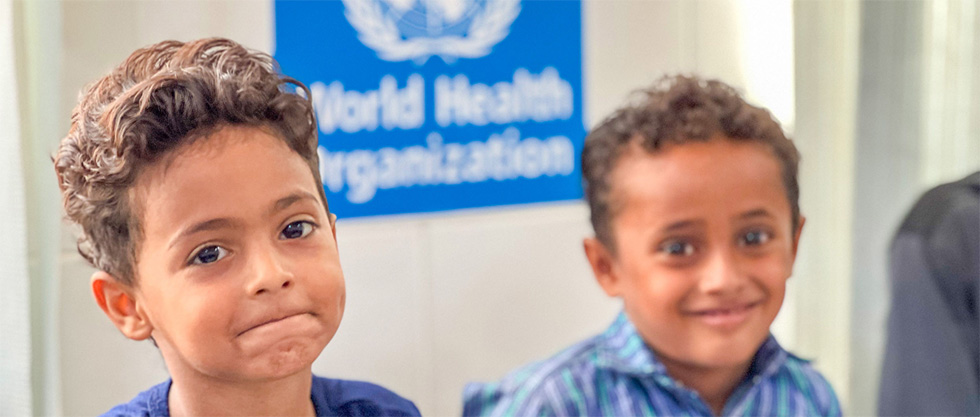
15 August 2022 - WHO together with public health authorities and partners is implementing a vaccination campaign against outbreaks of measles and rubella. The campaign aims to protect 1.35 million infants and children up to age 10, in 74 high-risk districts of 10 governorates across Southern Yemen.