

Sélectionnez votre langue
Ministry of Health in Aden confirms the first case of COVID-19 in Yemen
10 April 2020, Yemen – Today, the Ministry of Public Health and Population in Aden announced the first laboratory confirmed case of coronavirus in Yemen. The individual who has tested positive has been isolated and is being treated in a local hospital where he is currently in a stable condition. Specially trained rapid response teams are tracing, and where appropriate, isolating everyone who has come into contact with him.
“For weeks we have feared this, and now it’s happened. COVID-19 is in Yemen,” said Lise Grande, the Humanitarian Coordinator in Yemen.
“After 5 years of war, people across the country have some of the lowest levels of immunity and highest levels of acute vulnerability in the world,” said Ms Grande. “What’s facing Yemen is frightening. More people who become infected are likely to become severely ill than anywhere else.”
“Only half of all health facilities are currently functioning,” said Ms Grande. “Fighting the virus is going to be hard, but it’s our highest priority.”
“We’re doing everything we can to prevent further spread of the virus and to help authorities be ready to treat people if they contract it,” said Altaf Musani, the WHO Representative for Yemen.
“Our aim is to bend the epi-curve. This is why we are calling on communities to practise social distancing and to stay at home and practise protective behaviours,” said Mr Musani.
WHO is providing medical supplies, testing kits, ventilators and training and is helping to accelerate information campaigns and strengthen surveillance capacities. “We need the support of authorities to get in supplies and allow us to make sure they reach the right facilities at the right time,” said Ms Grande.
“This is one of the biggest threats in the past 100 years to face Yemen,” said Ms Grande. “It’s time for the parties to stop fighting each other and start fighting COVID together.”
Yemen remains the world’s worst humanitarian disaster. Nearly 80% of the population requires some form of humanitarian assistance and protection. Ten million people are a step away from famine and 7 million people are malnourished. Of the United Nations’s 41 major humanitarian programmes, 31 will either reduce or shut during April unless funding is urgently received.
***
World Bank and WHO scaling up readiness and response to COVID-19 in Yemen
Yemen, April 6, 2020 – The World Bank’s International Development Association (IDA) announced critical support to WHO — providing US$ 26.9 million towards Yemen’s preparedness and response scale-up to COVID-19 under a new World Bank-funded Yemen COVID-19 project.
“Yemen’s health system is already fragile, and an outbreak of COVID-19 would be catastrophic — overwhelming hospitals, health facilities and health care workers,” said Altaf Musani, WHO Representative in Yemen.
Globally and as of the moment, COVID-19 affects 208 countries, resulting in a case load of over 1 133 700, including almost 62 784 deaths. Drastic measures have been taken by these affected countries to contain the spread of the disease, while countries with no cases have rapidly scaled up preparedness and response measures in the eventuality of an imported case.
“Diseases do not respect international borders, and countries like Yemen must remain vigilant in ensuring the reduction of the cross border potential of COVID-19, but also that it is ready to respond if we do end up with cases,” said Altaf Musani, WHO Representative in Yemen.
This new World Bank support for the Yemen COVID-19 project comes at a crucial time as cases continue to increase worldwide.
Countries are cancelling school days, events and mass gatherings, while others have imposed restricted or no entry policies for people coming from COVID-19-affected countries.
All this signals how seriously the world is taking this public health threat, making sure that they too are ready to respond.
Government of Japan and WHO strengthen emergency response to meet the needs of the most vulnerable in Yemen
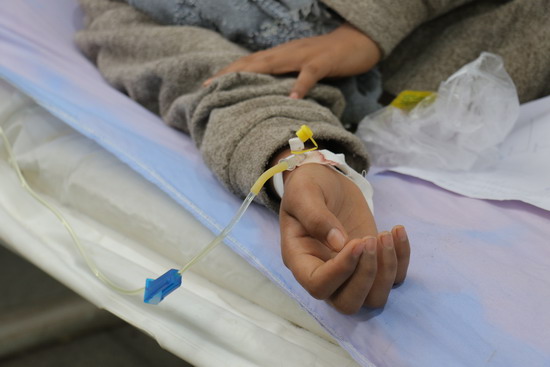 30 March 2020 – It is the continuous support and contributions of partners like the Government of Japan that allow the World Health Organization (WHO) to serve the people of Yemen in the best way possible.
The generous funding from the Government of Japan ensures that more than 7 million Yemenis will have increased access to essential health care, and at the same time, ensure urgent treatment is given to patients suffering from communicable diseases.
Another priority addressed through these funds is infectious disease prevention and control by building capacity of national staff to prepare for and respond to epidemic-prone diseases through field epidemiology training, making the rapid detection and response to epidemics a reality.
Disease surveillance a priority in Yemen
In countries like Yemen, where health capacity in terms of functionality, availability and health care workforce capacity remains an issue, disease surveillance and early warning systems are a must. Due to the breakdown in basic civic and health infrastructure, Yemen has become home to treatable diseases, which, due to context can turn into serious health threats for a population that has been chronically malnourished for years.
“Thanks to the Government of Japan, WHO can buy life-saving medicine for immediate distribution to treat diphtheria and dengue. WHO will also be able to build the capacity of doctors and nurses, to manage dengue cases, increasing the cure rate,” says Altaf Musani, WHO Representative in Yemen.
Weakened immune systems, make the average Yemeni more susceptible to infectious diseases that are otherwise preventable, through vaccines or other treatments. As the conflicts drags on, exacerbating factors such as damaged water supply infrastructure, inadequate sanitation, low vaccination coverage, a fragile health system and population movement, will be some of the issues that WHO and its partners will continue to address through the lens of health.
The Government of Japan has played a critical role in supporting WHO’s humanitarian response in Yemen, donating more than US$ 11.2 million between 2015 and 2019. These generous contributions from them have enabled WHO to provide much needed life-saving health services.
For more information, please contact:
Inas Hamam
Communications Officer
WHO Regional Office for the Eastern Mediterranean
Muneerah Al-Mahdli
Communications Officer
WHO, Yemen
King Salman Humanitarian Aid and Relief Centre supports WHO with US$ 10.5 million for malaria prevention and control in Yemen
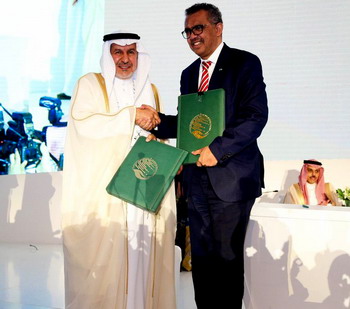 Dr Abdullah Al Rabeeah, Supervisor General of the King Salman Humanitarian Aid and Relief Centre and Dr Tedros Adhanom Ghebreyesus WHO Director-General 5 March 2020 –The World Health Organization (WHO) and the King Salman Humanitarian Aid and Relief Centre (KSrelief) have signed a joint cooperation agreement for US$ 10.5 million further bolstering malaria prevention and control efforts across Yemen. The agreement was signed during the recent humanitarian conference in Riyadh, this is the second time the conference convened dignitaries from all over the world to discuss humanitarian response support and the development nexus.
Today, Yemen accounts for 17% of the regional malaria burden. In the war-torn country, a total of 18.2 million people are at risk of malaria. In 2019, Yemen reported almost 203 062 malaria cases in public health facilities; however, the estimated number of malaria cases by WHO is noted at 842 226 cases. The governorates of Al Hudaydah, Hajja, Aden, and Taizz report the highest numbers of cases with incidence rate at 8.5 confirmed cases per 1000.
“As a result of this generous support from KSrelief, WHO will be able to continue the fight against malaria and focus on building response capacities in the areas of clinical case management focused on training health care providers to effectively manage and treat cases, and vector control to stop the spread of the disease in communities”, said Altaf Musani, WHO Representative in Yemen. Preparedness efforts will also be scaled-up — surveillance strengthening and establishing a total of 7 febrile treatment centres in Aden, Lahj, Taizz, Al Hudaydah, Hajjah, Shabwa and Hadhramout is in the plan as well as training of 1000 health workers to improve malaria and dengue preparedness and response.