

Sélectionnez votre langue
Training a new generation to strengthen disease surveillance in Syria - with support from WHO, ECHO and EMPHNET
7 May 2026, Damascus, Syrian Arab Republic – In a training room in Damascus, health workers from across Syria are learning how to detect the first signs of an outbreak – before it spreads.
For many, this is a shift from routine reporting to something more proactive: understanding patterns, analysing data, and responding early to protect communities.
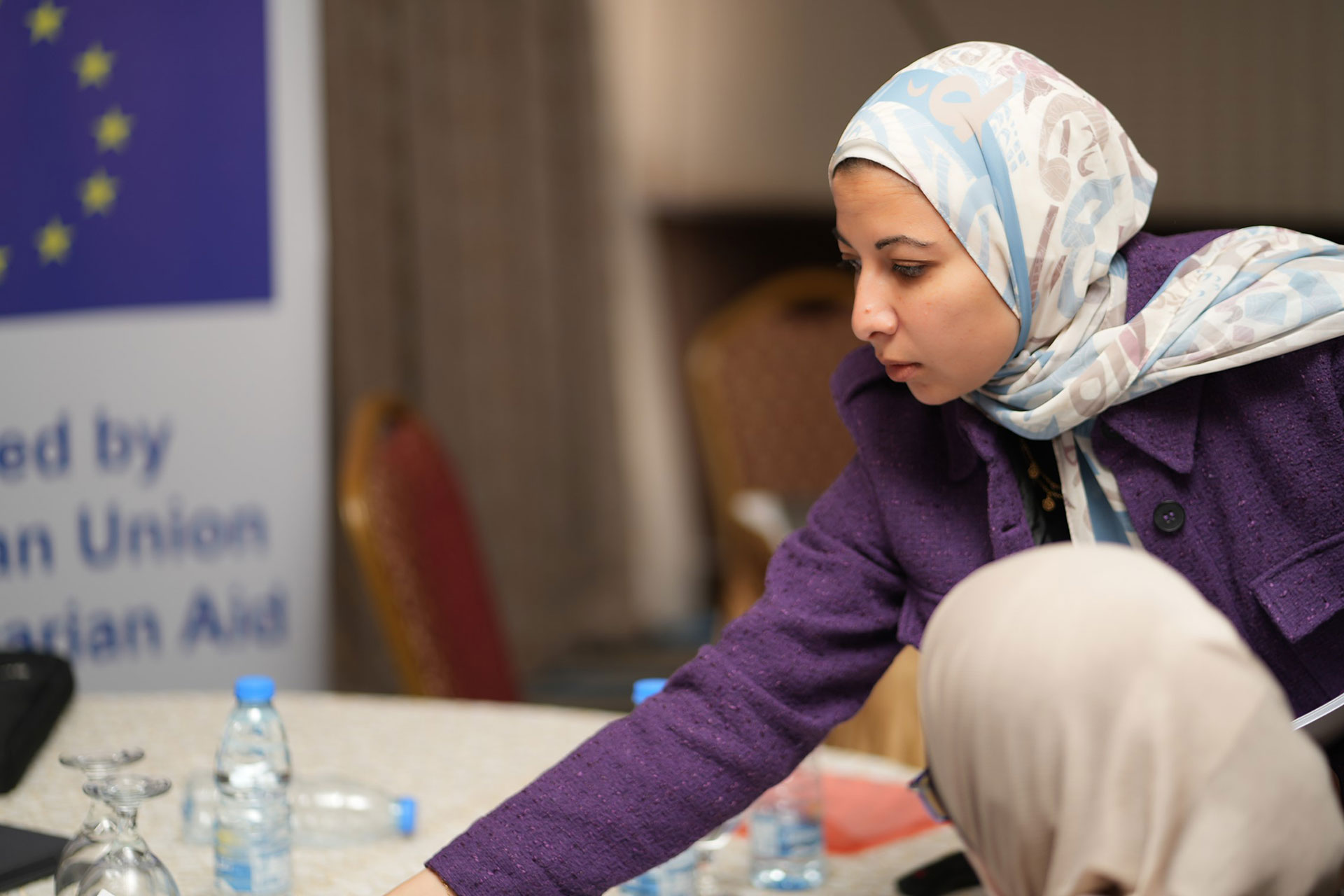 Dr Shireen Nseiri, Medical Officer for the Field Epidemiology Programme at WHO’s Regional Office for the Eastern Mediterranean, during the Frontline FETP training in Damascus. Photo credit: WHO
The Field Epidemiology Training Programme (FETP) is helping build these skills across the health system, strengthening how Syria detects and responds to public health threats. This Ministry of Health initiative will add to existing efforts to sustainably expand human resources for health.
Implemented over three months from February to May 2026, with support from WHO, ECHO and EMPHNET, the Frontline FETP combines classroom learning with fieldwork, equipping health workers to apply surveillance and response skills directly within their communities.
“This is not just a training – it’s a comprehensive programme,” says Dr Shireen Nseiri from WHO’s Regional Office. “It aims to build national capacity in surveillance and outbreak response, so countries can detect health threats early and act quickly.”
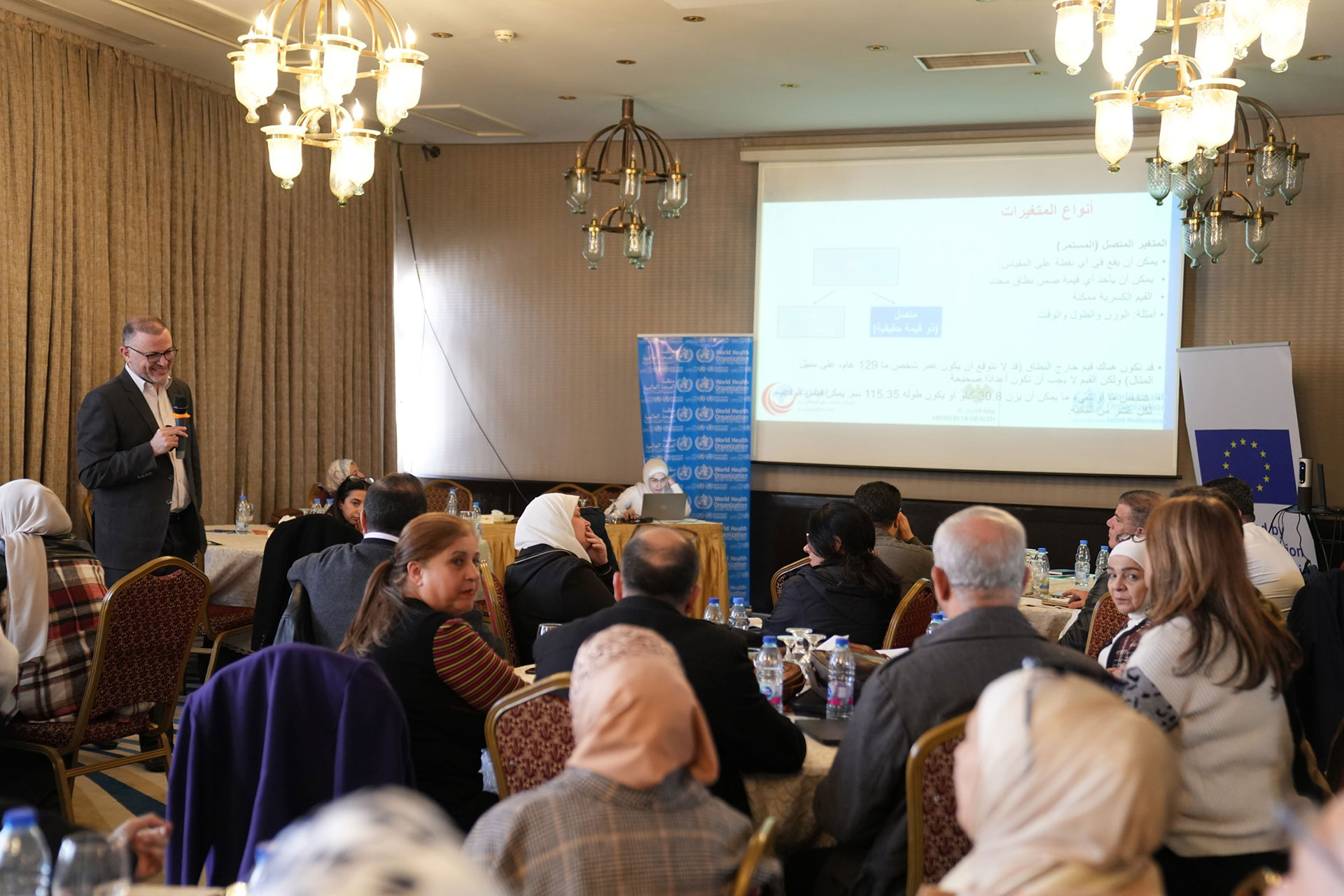 Health workers participate in the Frontline Field Epidemiology Training Programme in Damascus, strengthening skills in disease surveillance and outbreak response. Photo credit: WHO
Strengthening public health preparedness and response systems
Participants in the programme include health workers drawn from central Ministry of Health departments, governorate-level surveillance teams, and the Ministry of Interior—reflecting a coordinated, system-wide approach to outbreak detection and response.
For Yasir Al Edlebi, working in surveillance and rapid response at the Ministry of Health, the training introduces updated approaches that are already shaping how teams work.
“It gives us modern methods to track diseases, analyse data, and respond effectively,” he says. “This will help strengthen and integrate disease surveillance systems across the country.”
The sessions cover core public health functions – case definitions, data collection, analysis, and outbreak investigation – ensuring that teams across different locations are working with the same standards and approaches. Delivered across three workshops, the training includes 17 days of theoretical sessions, alongside practical components that strengthen data analysis and interpretation.
“It’s helping us update our knowledge and align how we work,” says Ibtisam Mohammad Ali, a surveillance officer from Tartous. “We can take this back and train our teams so the response to public health events is more consistent.”
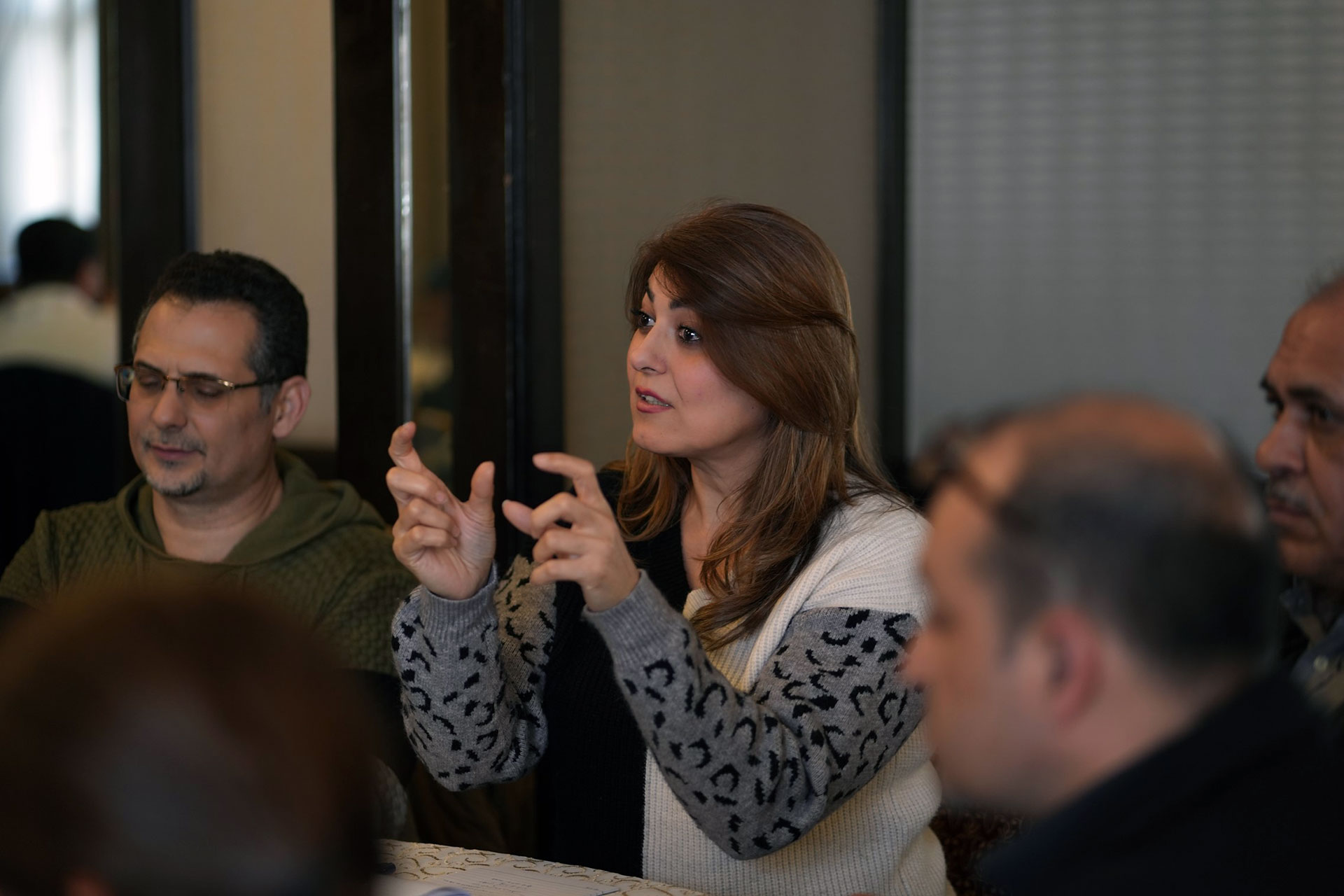 During a training session in Damascus, Ibtisam Mohammad Ali, Surveillance Officer from Tartous, shares insights on strengthening disease surveillance. Photo credit: WHO
From training to field impact
The programme combines classroom learning with practical application, with participants expected to apply these skills in their day-to-day work.
“We are currently in the theoretical phase, but this extends into field work. Each participant will execute tasks to practice public health data analysis and investigation of disease outbreaks,” says Dr Nael Al-Zoubi, Manager of Communicable Disease program in DOH Dar’a. “It helps improve how we respond to outbreaks and strengthens public health surveillance.”
This approach is critical in a context where health workers are often the first to detect unusual patterns of disease in their communities.
Within the first three months, participants have already translated training into action—producing surveillance reports, improving data quality, and supporting outbreak investigations, demonstrating early gains in detection and response capacities at the frontline.
Building capacity for early detection
Strengthening early detection and rapid response remains a priority for the health system.
“With the increase in diseases and the current context, there is a need for trained teams ready to respond,” says Dr Jamal Haj Ali from the Ministry of Health. “This programme helps build a workforce that can act quickly and effectively.”
The first cohort of trainees is expected to form the foundation of a national network of field epidemiologists, deployed across governorates to support surveillance and response. The cohort spans multiple governorates, including Aleppo, Homs, Lattakia, Tartous, Damascus, Rural Damascus, Idleb, Hama, Deir-ez-Zor, Quneitra and Dar’a—extending surveillance capacity across diverse contexts.
“These teams will be on the ground, ready to respond to any health emergency,” says Dr Khaled Mustafa, Director of the Integrated Management of Childhood Illness (IMCI) unit at the Ministry of Health. “This is the first cohort, and more will follow.”
Improving data for better decisions
A key part of the programme focuses on improving how health data is collected and used – ensuring that signals of outbreaks are identified early and acted upon.
“Early detection and rapid response are essential,” says Dr Ahmad Sbeih from Idleb. “This training strengthens our ability to recognise unusual increases in disease and respond immediately.”
Better data quality and analysis also support more informed decision-making at all levels of the health system.
Investing in people to strengthen the system
At its core, the programme is about investing in people – health workers who play a critical role in protecting communities. “Building these capacities means we can better safeguard people’s health,” says Dr Haj Ali.
As Syria continues to strengthen its health system, programmes like FETP are helping rebuild core public health functions – supporting earlier detection, faster response, and more resilient systems.
The three-month programme brought together 19 residents working across central and subnational levels of the health system. Led by the Ministry of Health, with support from WHO and Eastern Mediterranean Public Health Network (EMPHNET), and funding from EU Civil Protection & Humanitarian Aid, it strengthens surveillance, outbreak investigation, data analysis, and rapid response across the health system.
Patients in Homs receive quality care when it matters most
30 April 2026, Homs, Syrian Arab Republic – When 22-year-old Ahmad Al-Hawlani was rushed into Homs University Hospital after a severe nephrotic attack he was struggling with pain and uncertainty. For Ahmad and his family, it was not only a critical health situation but a heavy burden. The cost of treatment was far beyond their means and his life hung in the balance.
“I was admitted to Homs University Hospital as an emergency case following a severe nephrotic attack. I received treatment, tests and medication free of charge,” Ahmad says. “This means a lot to me, as I cannot afford these health services elsewhere due to their high cost.
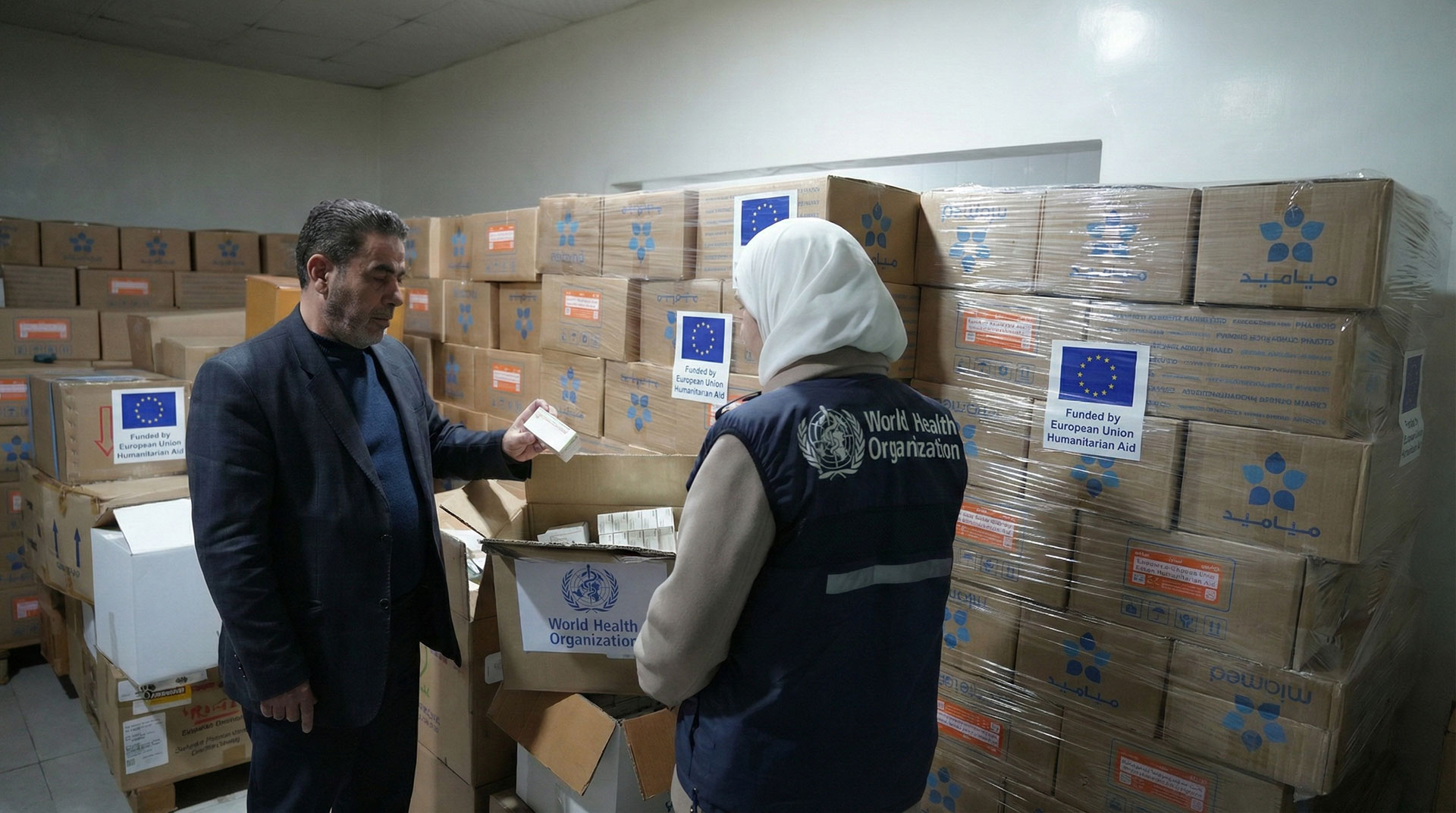 Medicines and medical supplies provided through ECHO support. Photo credit: WHO
With support from the European Union (EU) through its Civil Protection and Humanitarian Aid Operations (ECHO), the World Health Organization (WHO) delivers medicines, medical supplies, trauma and emergency kits to Homs University Hospital, enabling patients like Ahmad to access care when it is most needed.
“This hospital is a source of hope for us,” he says. “It ensures continued access to medical services that we cannot afford at private hospitals. Supporting this hospital helps save many lives and reduces the burden on patients.”
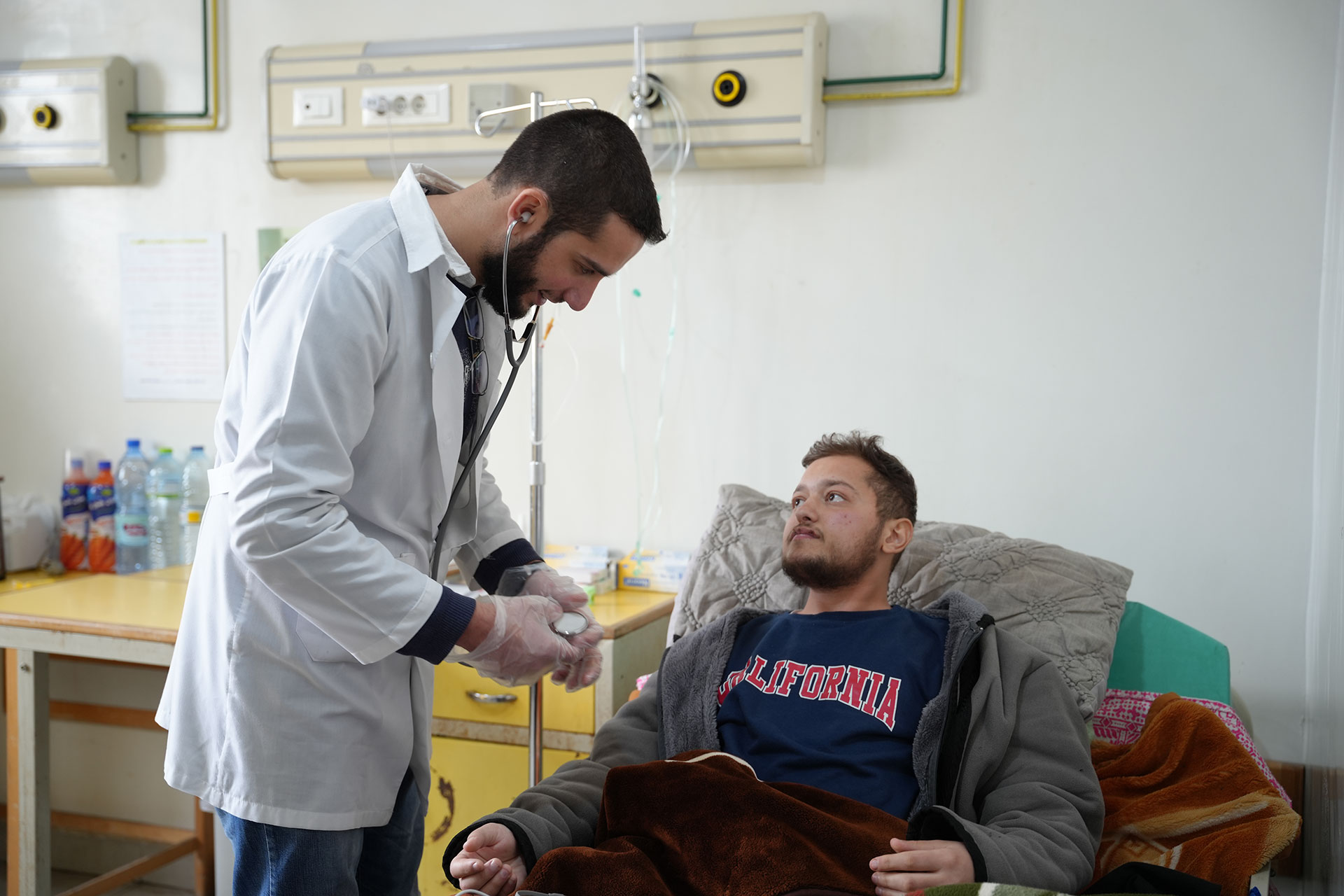 Ahmad with the doctor, checking on his health situation and providing him with the medical treatment needed. Photo credit: WHO
On the second floor, 14-year-old Ghazal Al-Ahmad and her family are facing a different but equally challenging journey. Ghazal, who has lived with epilepsy since infancy, requires continuous medical care and specialized treatment.
“From the moment my daughter became ill our lives changed forever,” her mother says. “For years, we moved from one hospital to another, searching for help and answers. As a mother, watching your child suffer is a pain beyond words.”
Today, Ghazal receives regular care at Homs University Hospital, where she is provided with essential health services and medications.
 Ghazal and her mother at Homs University Hospital, with the medical team checking on her health. Photo credit: WHO
“This hospital is more than a place of treatment for us,” her mother adds. “It is a place of support in our most difficult moments. The free services provided here help us move forward with hope.”
With consistent care, Ghazal’s condition is better managed, improving her quality of life and easing the burden on her family.
As Syria moves towards recovery, health needs are substantial and continue to grow, particularly among the vulnerable. Population movements, chronic diseases, trauma-related conditions and financial constraints continue to strain families and public health facilities alike.
With support from ECHO, WHO works with partners to strengthen health services, restore health systems and expand access to care, supporting Syrian communities on their path toward a healthier future.
Reaching missed children and rebuilding trust through Syria’s Big Catch-Up campaign
27 April 2026, Ar-Raqqa, Al-Hasakah, Deir ez-Zor and Aleppo, Syrian Arab Republic – Before sunrise, vaccination teams begin their day, setting out across villages, towns and displacement sites to reach children who may have missed routine immunization. Some travel long distances to remote communities, while others prepare health centres to receive families arriving throughout the day.
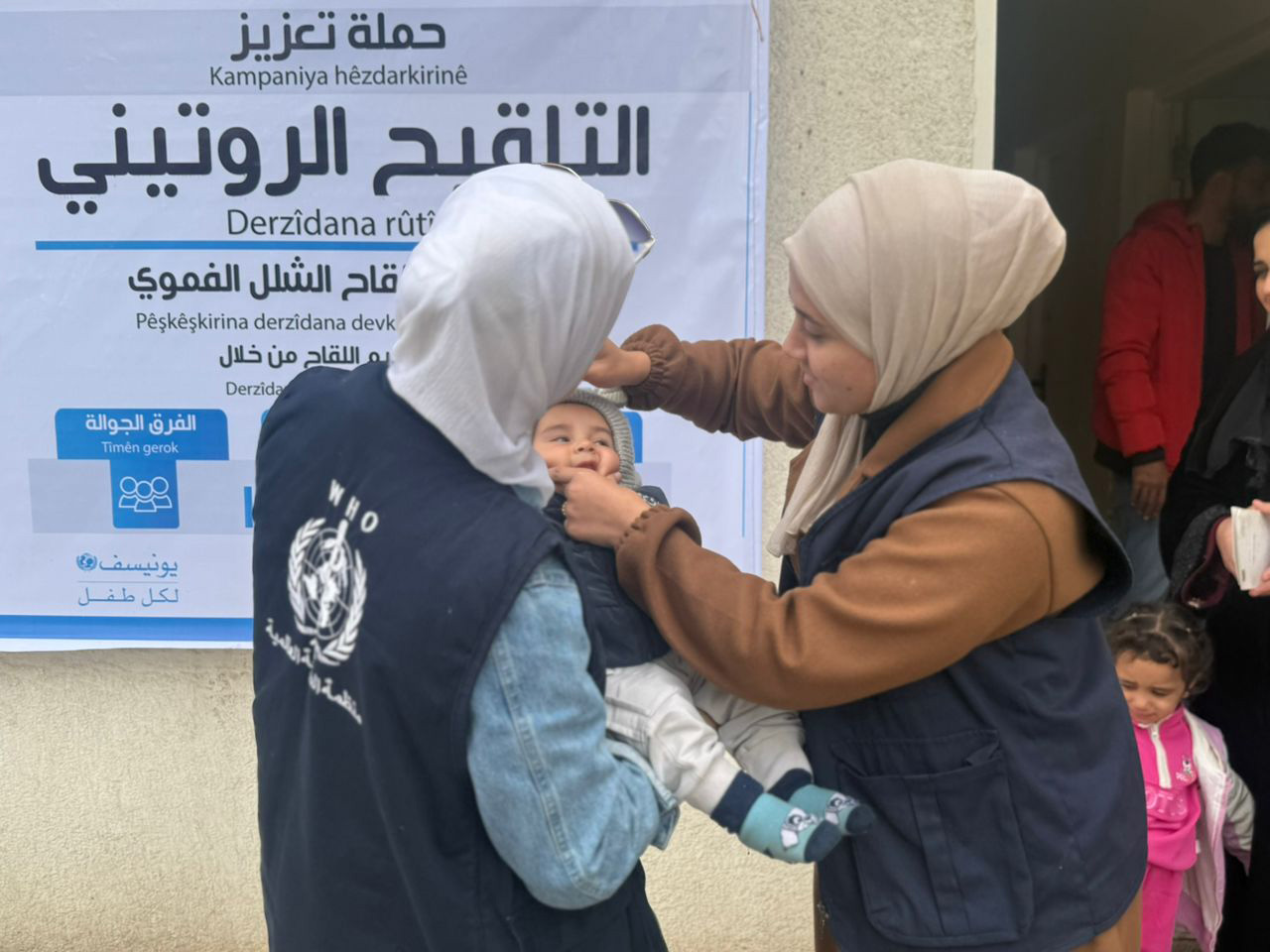 Rania, a vaccinator in Al-Hasakah, administers a routine vaccine to a child during the Big Catch-Up campaign, while speaking with the caregiver to address questions and build trust. Photo credit: WHO
 Basil Al Atel, Vaccination Officer in Al-Hasakah, carries Mona after she received her vaccine at the health centre — a moment that reflects care, protection, and the importance of immunization for every child. Photo credit: WHOFrom 31 March to 26 April, the Ministry of Health, with support from WHO, UNICEF and vaccines funded by Gavi, the Vaccine Alliance, implemented a nationwide Big-Catch Up campaign to trace zero-dose and under-immunized children and close critical immunity gaps. Nearly 900,000 children were targeted across 19 districts in four governorates, including all districts in Deir ez-Zor, Al-Hasakah and Ar-Raqqa, in addition to Manbij, Ain Alarab and Deir Hafeer in Aleppo. Children reached during the campaign also received oral polio vaccine, regardless of their previous vaccination status.
“Our work is not only giving vaccines,” she said. “It is also listening to parents and helping them feel comfortable. People want to protect their children. Sometimes they only need someone they trust to explain.” She explained that some families are initially hesitant, often influenced by rumours or lack of information. But many change their minds after speaking directly with health workers.
Among the children reached was Mona, whose family learned about the campaign when vaccination teams moved through the village with loudspeakers. For families unable to travel to urban health facilities, the arrival of mobile teams has made access to services easier.
Mona’s mother said her family had previously missed a dose due to limited awareness. “Now I understand how important it is,” she said. “When the team came to our area, it made it easier for us to vaccinate our children.”
In Ar-Raqqa, vaccinators described the detailed planning behind the campaign. Communities were mapped in advance, target numbers reviewed, and mobile teams assigned to reach hard-to-access areas.
“We prepare area by area, so no child is missed,” one vaccinator said. “When families see us arrive, most welcome us because they know the teams and trust the vaccines.”
In Deir ez-Zor, Ghufran Walid Al-Khazan, a vaccination supervisor at Al-Qusour Health Centre, said the impact of the campaign is most visible when children who previously missed are reached. “When a child who missed earlier doses receives the vaccine, it means they are now protected,” she said.
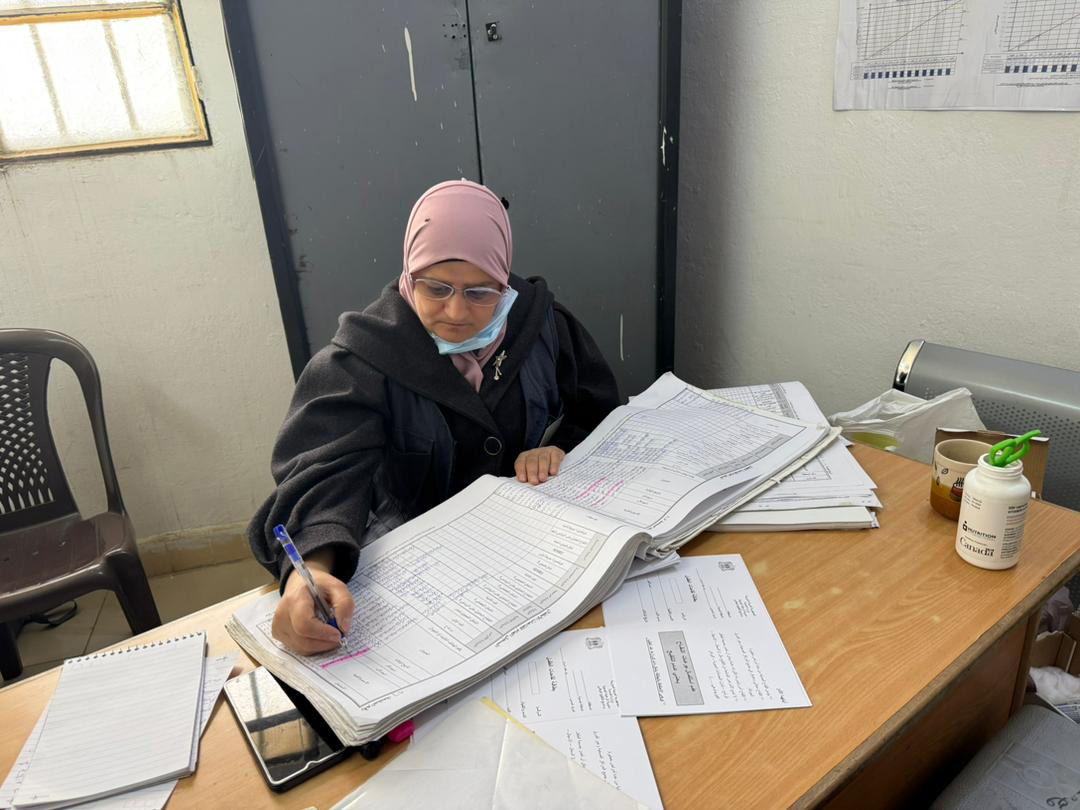 Ghufran Walid Al-Khazan, the vaccination officer at Al-Qusour Health Center in Deir ez-Zor, recording the data of children who have been vaccinated. Photo credit: WHO
At the same health centre, Aseel arrived with her family after hearing about the campaign through social media and community outreach. “Sometimes we miss information,” her mother said. “But when we understand, we make sure our children receive every vaccine.”
She added that having services available closer to home reduces the burden on families and encourages more people to come forward.
 At Al-Qusour Medical Center in Deir ez-Zor, Aseel’s mother making sure her daughter receives all of her vaccinations. Photo credit: WHO
To date, approximately 776,000 children (~87%) were screened, with 179,000 receiving routine vaccinations. Among those reached, only 2% of children were identified as zero-dose, underscoring not only the reach vaccination services have had to date, but also the importance of targeted efforts to find and vaccinate children who had not previously received any routine immunization. Thanks to previous efforts and coordinated partnership among health authorities, WHO and UNICEF, most children were either fully vaccinated or on track with their routine schedules. The campaign was also integrated with polio vaccination, with around 771,500 children receiving the oral polio vaccine (bOPV) across targeted districts. These figures remain subject to change and are expected to evolve as final reports are received from all campaign areas.
As Syria marks World Immunization Week, the Big Catch-Up campaign is a reminder that the promise of vaccines depends on reaching every child, including those missed by routine services. As efforts continue to strengthen routine immunization, campaigns like this play a critical role in preventing outbreaks of vaccine-preventable diseases and ensuring children are not left behind. By reaching missed children, strengthening community engagement, and expanding access through mobile and fixed teams, the campaign is helping rebuild confidence in essential health services and setting a course for a healthier future for Syria.
How science is protecting health across Syria
20 April 2026, Syrian Arab Republic: In a small vaccination room in Deir-ez-Zor, a child hesitates as a nurse prepares a dose. The space is crowded, the day is long, and some families are unsure. But with patience and reassurance, the team continues – explaining, listening, and building trust, one conversation at a time.
Across Syria, moments like this are where science meets everyday life. Not in headlines or laboratories alone, but in clinics, camps and communities—where health workers rely on science, data and collaboration to guide decisions that protect people’s health, often in challenging and resource-constrained settings.
As efforts to sustain and strengthen Syria’s health system continue, these approaches remain critical to protecting health and expanding access to care.
From evidence to trust
In Aleppo and Idlib, Dr Aya Hallak, WHO’s risk communication and community engagement focal point, works at the intersection of science and trust, ensuring that health information is not only accurate, but understood. “Health information needs to be clear, simple and practical,” she says. “Our role is to translate evidence into messages that people can actually use in their daily lives.”
 Dr Aya Hallak, WHO risk communication and community engagement focal point, leads a session in Aleppo to support community understanding of health risks and services. Photo credit: WHO
Her work is grounded in data – from tracking rumours to analysing community feedback and patterns in service use. These insights help shape messaging, address concerns and adapt responses in real time. “Vaccines are one of the most important public health interventions,” she explains. “But their success depends directly on how much people trust them. Through transparent communication and listening to concerns, we help people make informed decisions.”
That connection between information, trust and action is visible across communities.
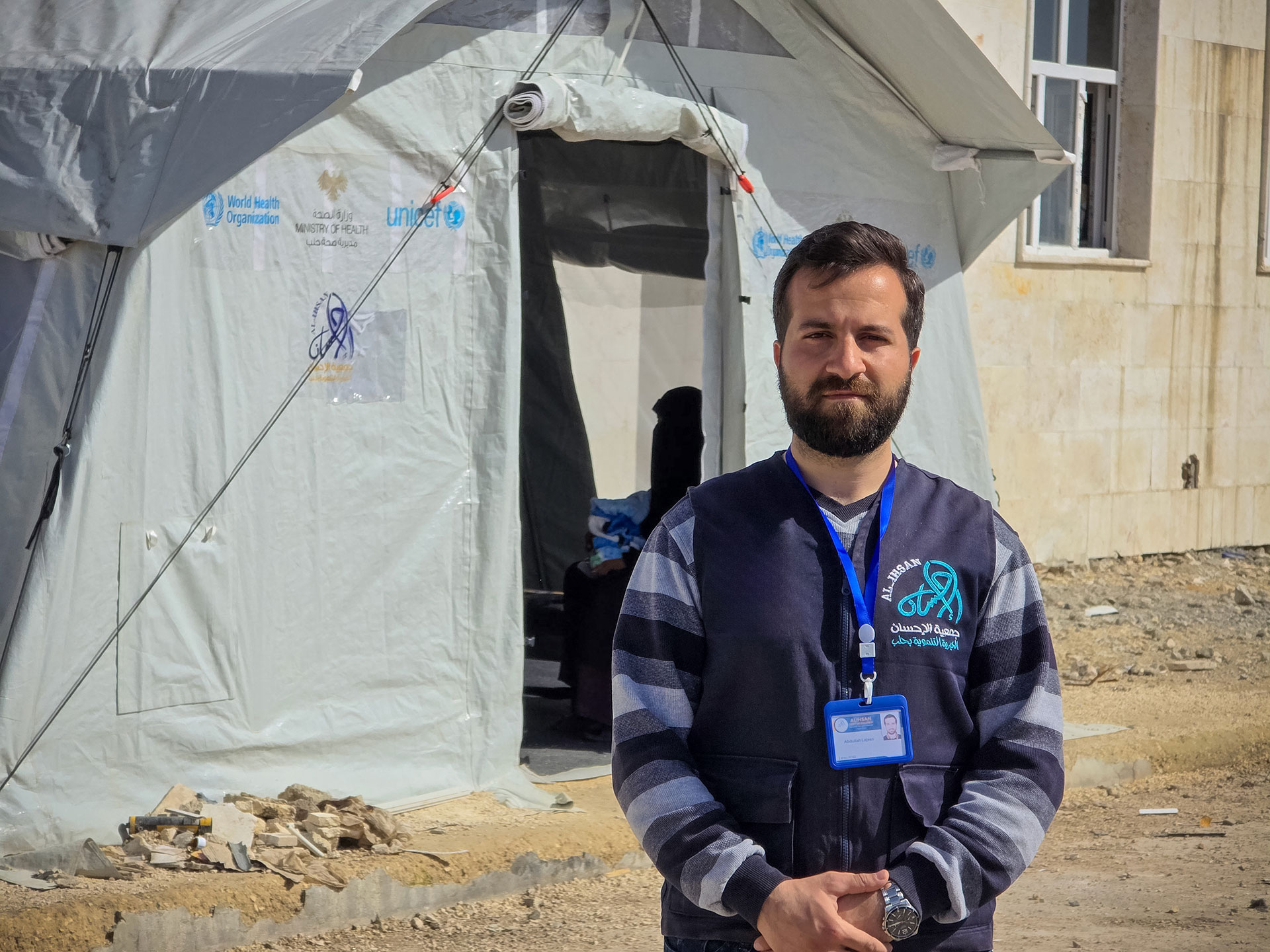 Abdallah Lasheen, a health educator with Al Ihsan NGO, stands outside a health tent in northern Aleppo, where he works with families to raise awareness on hygiene, nutrition and disease prevention. Photo credit: WHO
In northern Aleppo, health educator Abdallah Lasheen moves between families in a camp, speaking about hygiene, nutrition and disease prevention. His work is guided by evidence and data from WHO but shaped by what people are experiencing on the ground.
“We work to correct misconceptions and encourage healthy behaviours,” he says. “When people understand the risks, such as diseases linked to unsafe water – they are better able to protect themselves and their children.”
Through conversations with caregivers, especially mothers, he helps address concerns around vaccination, reinforcing trust in health services.
Detecting risks early
While community engagement builds understanding, surveillance systems work quietly in the background to detect risks before they escalate. At the Ministry of Health, Dr Yasser Farouh, the Director of the Communicable Diseases Directorate, describes surveillance and early warning systems as the first line of defence.
 Dr Yasser Farouh, Director of the Communicable and Non-Communicable Diseases Department at the Ministry of Health, supports national surveillance and early warning systems that help detect and respond to disease outbreaks across Syria. Photo credit: WHO
“Through weekly reporting and immediate alerts, we can quickly detect any unusual increase in cases,” he says. “During the cholera response, this allowed us to identify hotspots within days and respond rapidly – helping to limit the spread of the disease and save lives.”
Advances in epidemic intelligence are strengthening this work further. By combining official reporting with digital and open-source data, signals can now be detected earlier.
“We no longer rely only on traditional reporting,” he explains. “Sometimes we detect alerts even before laboratory confirmation, which gives us valuable time to verify and respond.”
But surveillance is not only about systems, it depends on people. Health workers, communities and partners all contribute to the flow of information that enables timely, evidence-based decisions.
Behind the scenes in laboratories
In Deir-ez-Zor, this early detection is confirmed through laboratory testing. Dr Ziad Mahmoud Shouaibi, a laboratory diagnostics specialist, oversees a public health laboratory supported by WHO. Here, samples are analyzed to track diseases such as influenza and cholera, and to monitor environmental risks, including water quality.
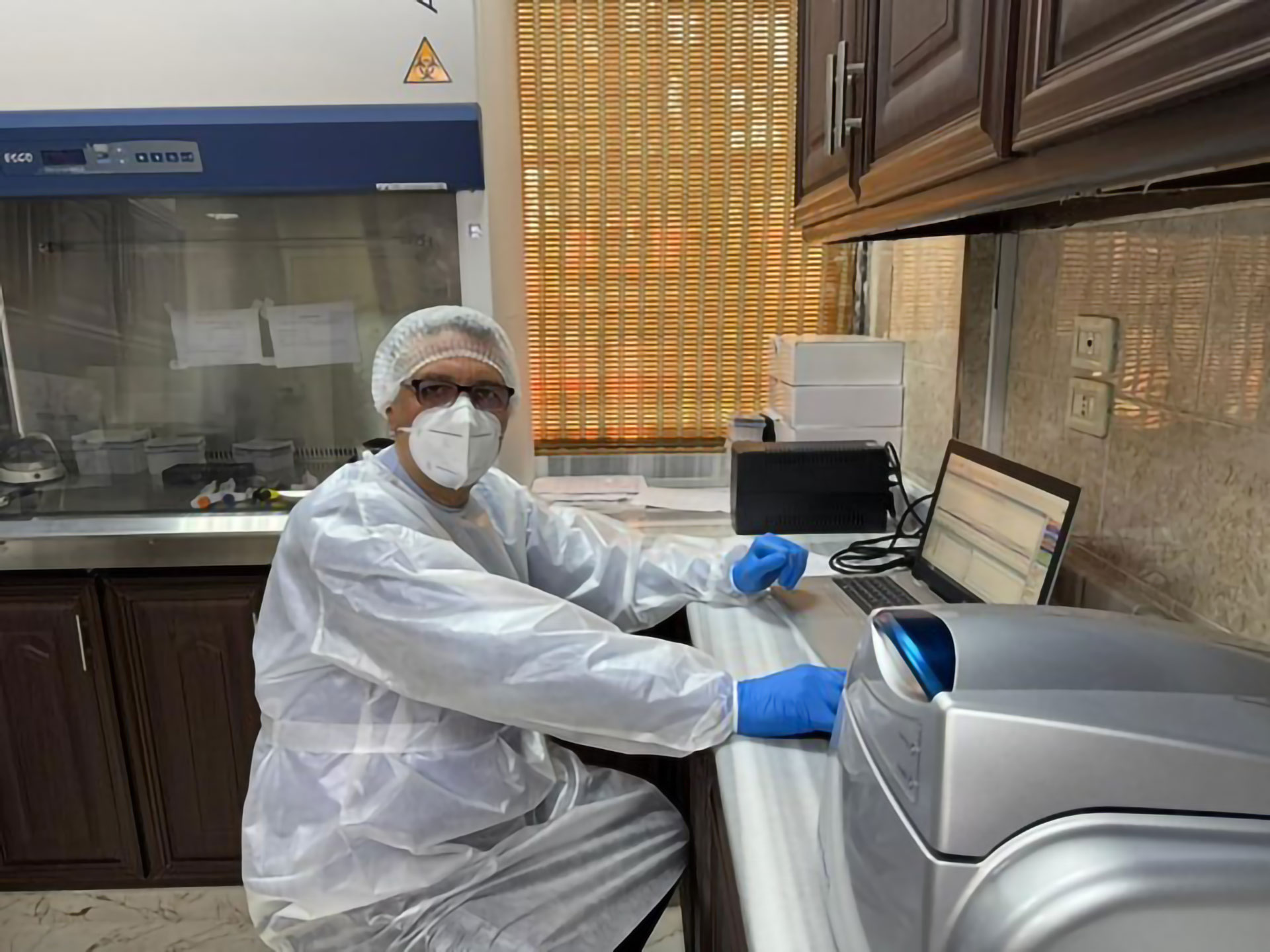 Dr Ziad Mahmoud Shouaibi, a laboratory diagnostics specialist in Deir-ez-Zor, conducts testing to detect infectious diseases and monitor public health risks. Photo credit: WHO
“Laboratories are the first line of defence for public health,” he says. “Through testing and surveillance, we can detect outbreaks early and support the right response.”
In a context shaped by displacement and strained health systems, laboratory work becomes even more critical. The team monitors data, follows national and global guidance, and remains alert to potential outbreaks that do not respect borders.
“Epidemic diseases do not stop at boundaries,” he adds. “Our role is to detect them early, report them quickly and support action to break transmission.”
Science in everyday care
In health centres across the country, science is also guiding daily clinical decisions.
In Hama, primary health care doctors are applying science in everyday decisions. Dr Moustafa Hasoun describes how evidence-based medicine shapes care for children – from routine follow-ups to early detection of conditions such as malnutrition or developmental concerns.
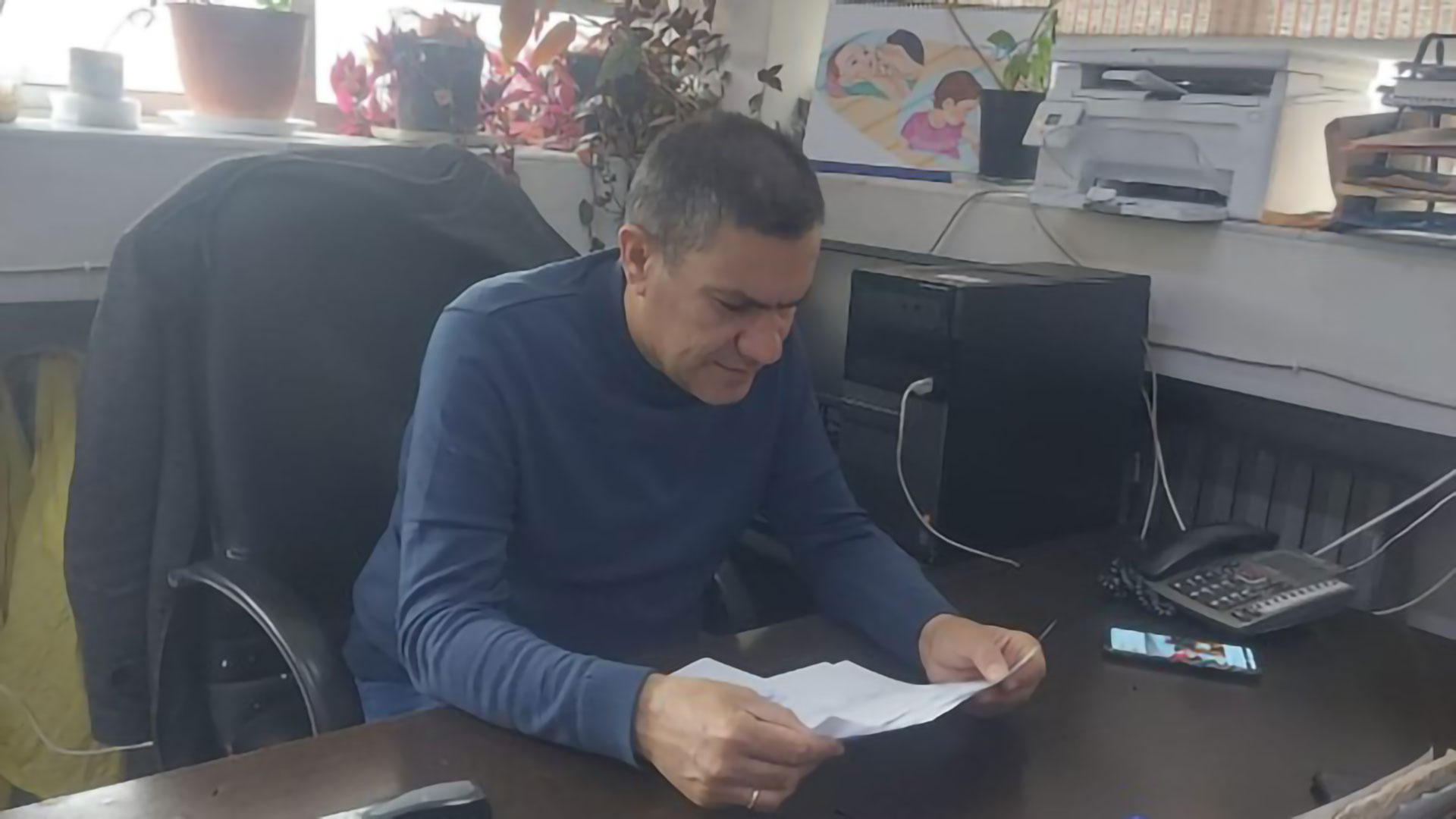 Dr Moustafa Hasoun, a primary health care doctor in Hama, reviews patient information as part of routine consultations. Photo credit: WHO
“Evidence helps us make the right medical decisions, not just rely on personal experience,” he says. “It allows us to diagnose early, treat effectively and avoid practices that are not useful.”
His colleague, Dr Saad Shoumal, a general practitioner, highlights the importance of prevention and early detection.
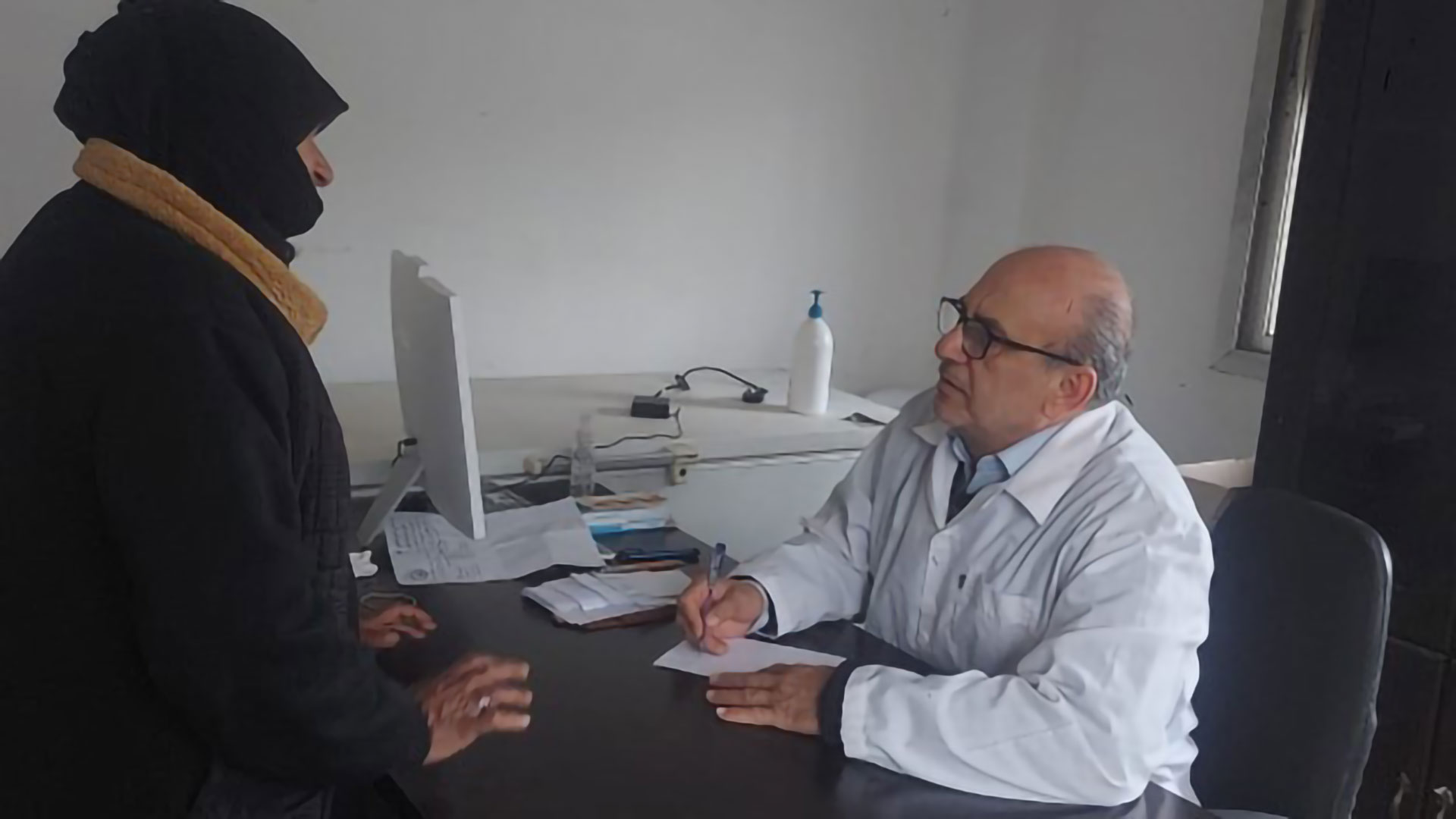 Dr Saad Shoumal, a general practitioner in Hama, consults with a patient at a primary health care centre. Photo credit: WHO
“Primary health care plays a key role in identifying diseases early and supporting prevention,” he says. “Using evidence and updated medical knowledge helps us make better decisions for patients every day.”
Protecting children through vaccination
Back in Deir-ez-Zor, vaccination teams continue their work, often under challenging conditions. Ghofran Khozam, a vaccination focal point, describes both the progress and the challenges – from limited space in clinics to hesitancy among families and fear among children.
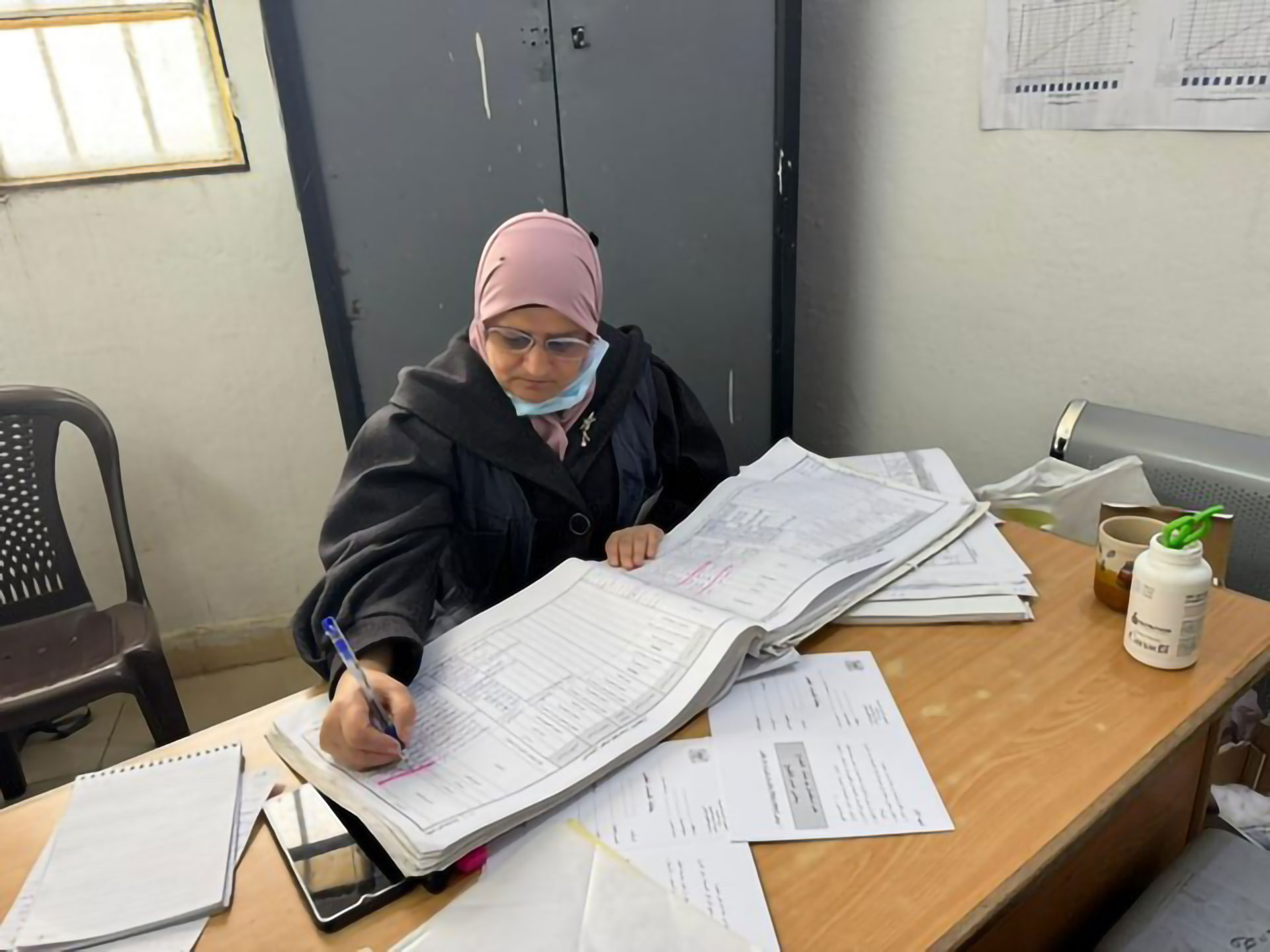 Ghofran Khozam, a vaccination focal point in Deir-ez-Zor, reviews records as part of efforts to ensure children receive life-saving vaccines. Photo credit: WHO
“We speak with families directly, explain why vaccines are important, and reassure them that they are safe and effective,” she says.
When children who may have missed routine immunization are finally reached, the impact is immediate. “When we succeed in vaccinating a child, especially those who were missed before, we feel a real sense of relief and happiness,” she says. “Because we know we are protecting them from serious disease.”
Vaccination, she adds, is not only about individual protection, it helps safeguard entire communities.
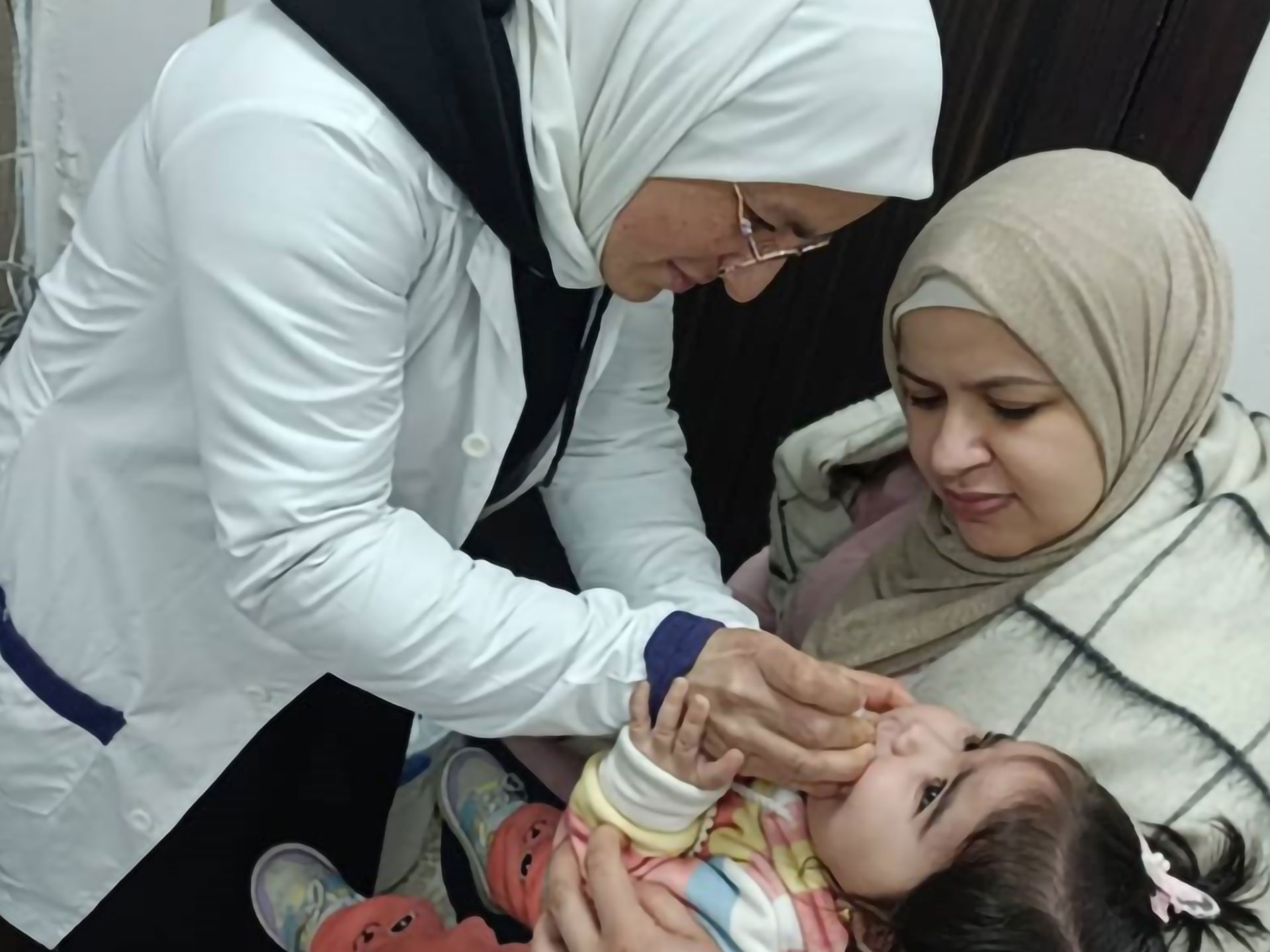 Dr Ruba Shaalan Atasi administers a vaccine to a child in Homs as part of ongoing immunization efforts. Photo credit: WHO
At the programme level, this work is supported through systematic monitoring and outreach. In Homs, Dr Ruba Shaalan Atasi, Head of the Child Health and Immunization Programme, explains how data guides vaccination efforts.
“We continuously track coverage levels across different areas,” she says. “If we identify gaps, we investigate the reasons and intensify efforts through outreach, awareness and targeted campaigns – to ensure all children are reached.”
From routine immunization to follow-up of missed children, her team works to ensure that vaccines reach every community, including newly displaced populations and hard-to-reach areas.
A system that works together
Across Syria, these efforts are deeply interconnected – from laboratories and surveillance systems to health centres and community outreach. Science does not sit in one place. It moves through systems, decisions and relationships – carried forward by people who use evidence every day to protect lives.
Their work is a reminder that standing with science is not only about research or data. It is about ensuring that knowledge reaches people, builds trust, and translates into care that makes a difference.
Strengthening national capacity to manage severe acute malnutrition in Syria
09 March, Damascus, Syrian Arab Republic – Severe acute malnutrition remains a critical public health challenge in Syria, particularly among children under five. Timely identification and proper treatment are essential to reduce mortality and prevent long-term complications.
 A trainer delivers a session during the TOT on WHO's new guidelines on managing severe acute malnutrition with complications. Photo credit: WHO
More than 50 health workers from across Syria recently participated in a training-of-trainers workshop on managing severe acute malnutrition with complications. The workshop, supported by the World Health Organization (WHO) and funded by the European Union (EU) through its Civil Protection and Humanitarian Aid Operations (ECHO), aims to prepare national trainers who can cascade life-saving knowledge and skills to hospital staff nationwide.
 د. هالة داود، مديرة برنامج التّغذية في وزارة الصّحّة، خلال إحدى الجلسات.
Dr. Hala Dawoud, Director of the Nutrition Program at the Ministry of Health, emphasized that strengthening hospital capacity directly benefits children’s health: “Updating and reinforcing the national guidelines improves the care children receive and enhances the national nutrition program, particularly for those with severe acute malnutrition and complications.”
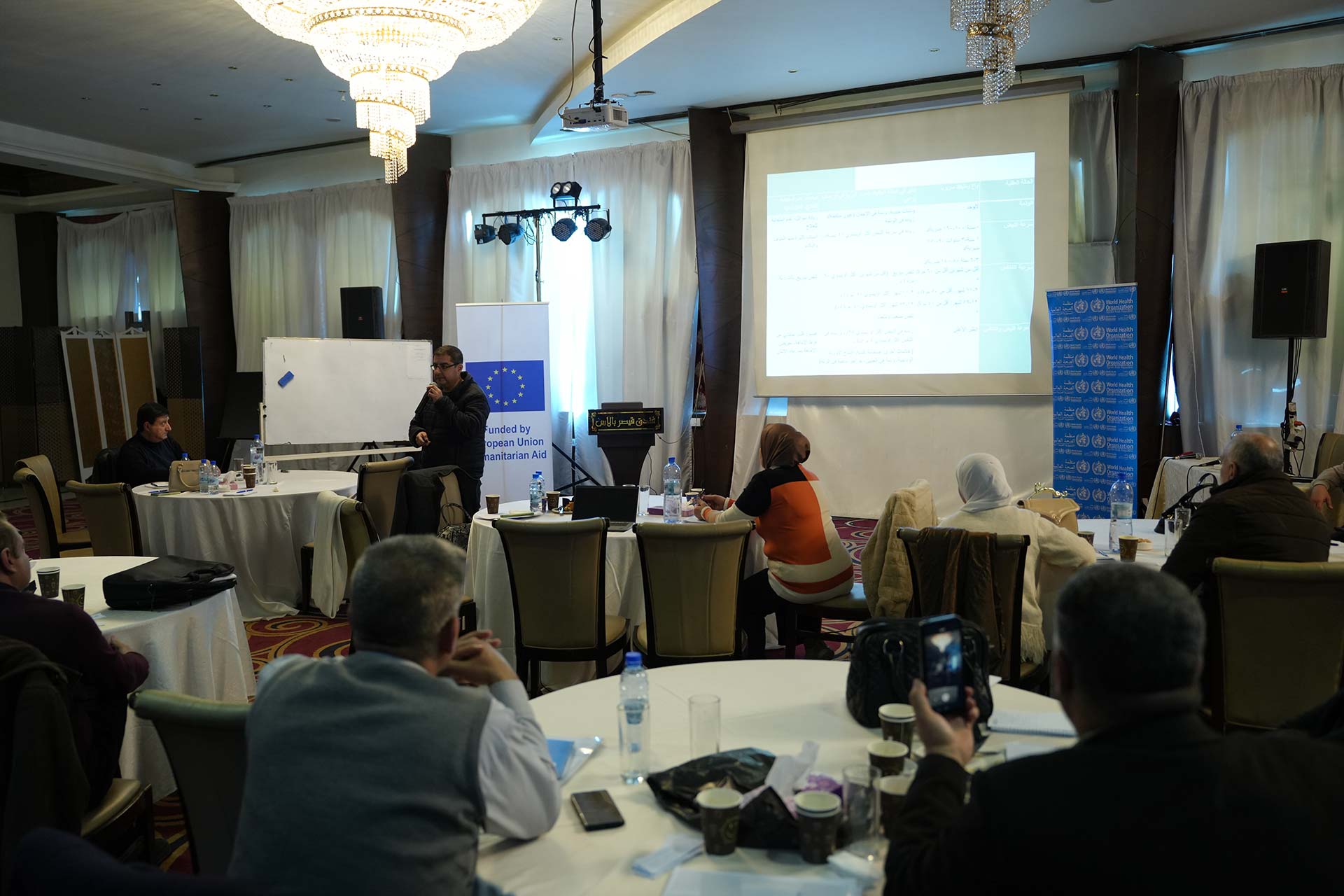 Participants engage with the trainer at one of the sessions. Photo credit: WHO
The training focuses on unifying treatment practices across governorates to ensure all hospitals follow standardized protocols. “By establishing a unified protocol, medical staff across Syria can provide consistent, high-quality care to children with acute malnutrition,” said Bassam Shahadeh, Nutrition Program Coordinator in Quneitra Governorate.
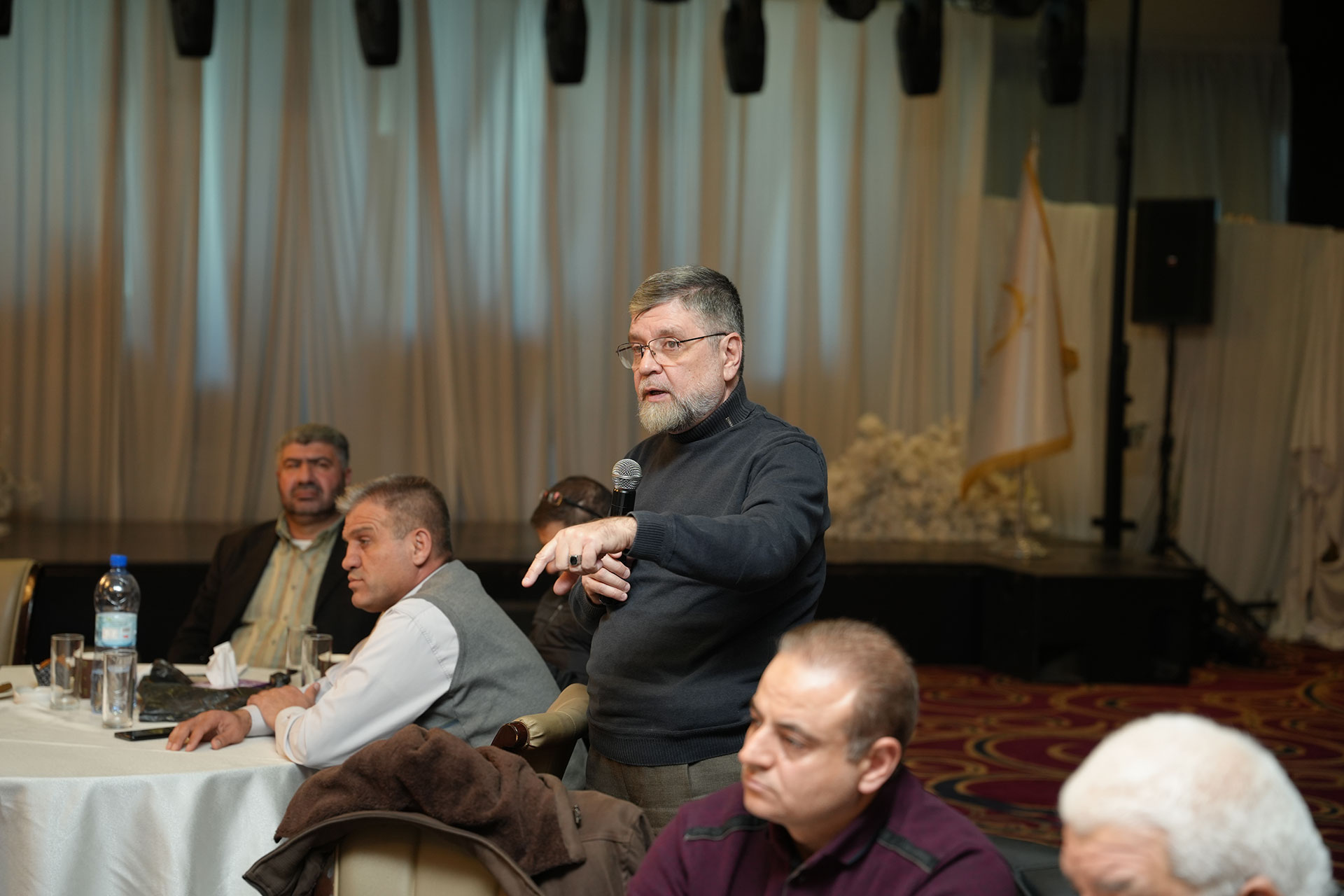 Dr Mahmoud Bouz, Nutrition and Child Health Program Officer at WHO Syria, during one of the sessions.
Dr. Mahmoud Bouzo, Nutrition and Child Health Program Officer at WHO Syria, described the training as a critical step forward. “This training provides life-saving care for children at high risk who suffer from severe acute malnutrition with complications such as diarrhea, dehydration, pneumonia, or meningitis,” he said. “It ensures that medical staff are equipped to manage these cases effectively, following updated WHO protocols.”
As trained health professionals return to their hospitals and communities, they apply strengthened technical knowledge and practical skills to improve the quality of care provided to vulnerable children.
WHO, in coordination with the Ministry of Health and with continued support from the European Union, remains committed to strengthening Syria’s health system and supporting national efforts to address malnutrition. Through investments in capacity-building and essential health services, this support contributes to improving health outcomes and enhancing resilience for communities across the country.
EU commits EUR 8 million to strengthen primary health care and support health system recovery in Syria
25 February 2026, Damascus, Syria – The European Union (EU) announced today EUR 8 million in new funding to strengthen Syria’s primary health care system and advance national health sector recovery, including EUR 1 million to the World Health Organization (WHO) and EUR 7 million to the Italian non-governmental organization, Un Ponte Per (UPP).
 Representatives of the Ministry of Health, the European Union, WHO, Un Ponte Per (UPP) and partners pose for a group photo following the launch of the EU-funded primary health care initiative in Damascus, 25 February 2026
The EU-funded initiative aims to improve access to quality, people-centred primary health care services while reinforcing national systems and implementation capacity. By combining policy and institutional strengthening with service delivery support at community level, the project contributes to Syria’s transition from emergency response towards recovery and longer-term health system strengthening.
Through its component of the project, WHO will work with the Syrian Ministry of Health and national institutions to strengthen primary health care in practical, Ministry-led ways. The support will help put the national primary health care action plan into action, build leadership and management capacity for those running services, strengthen the role of the Centre for Strategic Studies and Health Training (CSSHT), and support stronger hospital management. Better-run hospitals are paramount to safer and more reliable care. The project will also advance the Family Health approach, strengthen the link between primary health care and mental health and psychosocial support, and improve communication and community engagement so people understand and trust the services available to them. Overall, the project will support training for around 680 people, strengthening both the health workforce and the institutions that make primary health care work.
UPP intervention aims to complement the Ministry of Health efforts in restoring the primary health care system at area level across conflict-affected and underserved regions in Syria (Safira district and Tel Damman sub-district in Aleppo Governorate), through a comprehensive, patient-centred and area-based approach that supports safe and integrated service delivery in 22 Primary Health Care centres, health workforce development and retention, and effective local health governance. It is designed to reach the vulnerable populations in the most underserved areas in Aleppo Governorate, address systemic health system gaps, and reinforce national-local coordination and health systems integration, under the leadership of the Ministry of Health and in coordination with WHO and other relevant actors both at central and at regional level.
 H.E. Dr Musab Al-Ali, Minister of Health, addresses participants during the launch of the EU-supported primary health care and health system recovery initiative in Damascus, 25 February 2026.
H.E. Dr. Musab Al-Ali, Minister of Health, said, “Primary health care is the foundation of a just health system, and our vision is based on providing integrated services that put people at the centre of attention. By integrating mental health and promoting community care, to ensure we achieve universal health coverage and build a healthier, more sustainable future.”
 Michael Ohnmacht, Chargé d’affaires of the EU Delegation to Syria, speaks at the launch of the EU-supported primary health care and health system recovery initiative in Damascus, 25 February 2026.
Mr. Michael Ohnmacht, Chargé d’affaires of EU Delegation to Syria, said, “The two projects implemented by WHO and UPP, developed in partnership and with the Ministry’s guidance, directly support Syria's national health priorities and strategy. By working with WHO on systemic reform and UPP on local service delivery, we are ensuring that robust national governance translates into quality healthcare for the communities that need it most. However, for this progress to endure, the EU’s investment must be matched by the Ministry’s continued stewardship and financial commitment, especially to its workforce and essential supplies, building a resilient health system truly rooted in national sovereignty.”
Dr Asmus Hammerich, Acting WHO Representative to Syria, said, “Primary health care is where most people first seek help – and it is the foundation for health services people can trust. With EU support, and in close partnership with the Ministry of Health, this programme will strengthen primary health care in practical ways, support better hospital management, and help translate national plans into real improvements in care for people across Syria.”
The projects will be implemented in close coordination with the Ministry of Health, reinforcing national leadership in planning, implementation, and oversight, and ensuring alignment with Syria’s national health strategy and primary health care reform agenda.
For more information please contact:
Zeinoun Joy
Communication and Press Officer, EUD to Syria
Email:
Mrinalini Santhanam
Communications Officer, WHO Syria
Email:
Cecilia Dalla Negra
Communication Manager, UPP
Email:
In Homs, essential medicines restore hope for patients and health workers
24 February 2026, Homs, Syrian Arab Republic – Every day, Homs University Hospital receives thousands of people seeking urgent care. From emergency trauma cases to patients managing chronic diseases, the hospital operates at full capacity, serving both the city and surrounding rural communities.
 Dr Fahd Shreibati, Director General of Homs Hospital, explains how the new medications and emergency kits are improving health care. Photo credit: WHO
In a health system still recovering from years of strain, ensuring the availability of medicines and emergency supplies can mean the difference between delay and survival.
In Homs Governorate, recent support has enabled the delivery of more than one ton of essential medicines, medical supplies, and trauma and emergency surgical kits to Homs University Hospital. Each month, more than 58 000 patients rely on the hospital’s emergency, outpatient, laboratory, imaging and surgical services.
 Dr Shreibati checking on the health situation of a young girl in Homs University Hospital. Photo credit: WHO
Dr Fahd Shreibati, Director General of Homs University Hospital, has witnessed firsthand how shortages affect care. “The situation in the past was very challenging,” he says. “At times, we faced gaps in critical medicines and supplies. With recent support, we are better able to manage urgent cases and ensure patients receive timely treatment.”
The emergency and surgical kits have strengthened the hospital’s capacity to respond to trauma and complex cases, while the shipment of medicines for chronic diseases such as hypertension and diabetes helps patients maintain continuity of care.
Rahaf Ibrahim, a pharmacist at the hospital, explains the impact from inside the pharmacy. “We received medicines for chronic diseases, as well as trauma and emergency kits,” she says. “These supplies are essential, especially in emergencies when every minute matters. When medicines are available, we can focus on patient care rather than worrying about shortages.”
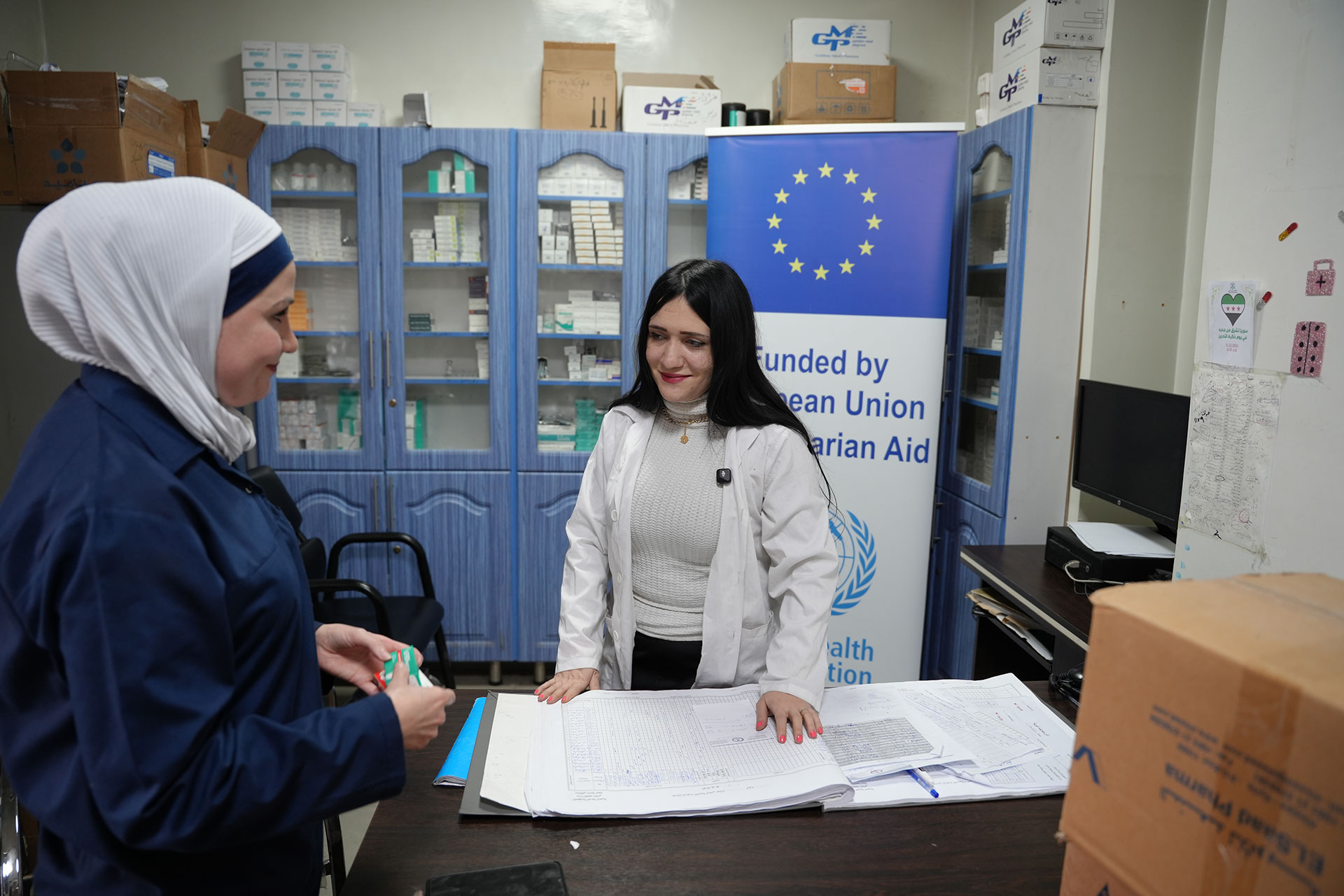 Pharmacist Rahaf, following up with a patient and provides her with the medicines she needs. Photo credit: WHO
Despite improvements, needs remain significant. “There is still a strong demand for medicines, medical supplies and diagnostic equipment,” Dr Shreibati notes. “With the growing number of patients, continued support is very important to sustain services.”
 A nurse tests a patient's pulse and follows up with the needed health services at Homs University Hospital. Photo credit: WHO
The Ministry of Health continues to lead efforts to maintain essential health services across the country. The World Health Organization supports these efforts through technical assistance and the delivery of priority medical supplies. Funding from the European Union through EU Civil Protection & Humanitarian Aid has helped ensure the continuity of life-saving services in Homs.
As hospitals work to meet rising demand, sustained investment in essential medicines and emergency preparedness remains critical to protecting patients and strengthening access to care across Syria.
Strengthening infection prevention and control to curb antimicrobial resistance in Syria
22 February, Damascus, Syrian Arab Republic – Preventing infections in health facilities remains one of the most effective ways to protect patients and preserve the effectiveness of life-saving medicines. In a context where health systems are under pressure, strong infection prevention and control measures are essential to reducing avoidable complications and slowing the spread of antimicrobial resistance.
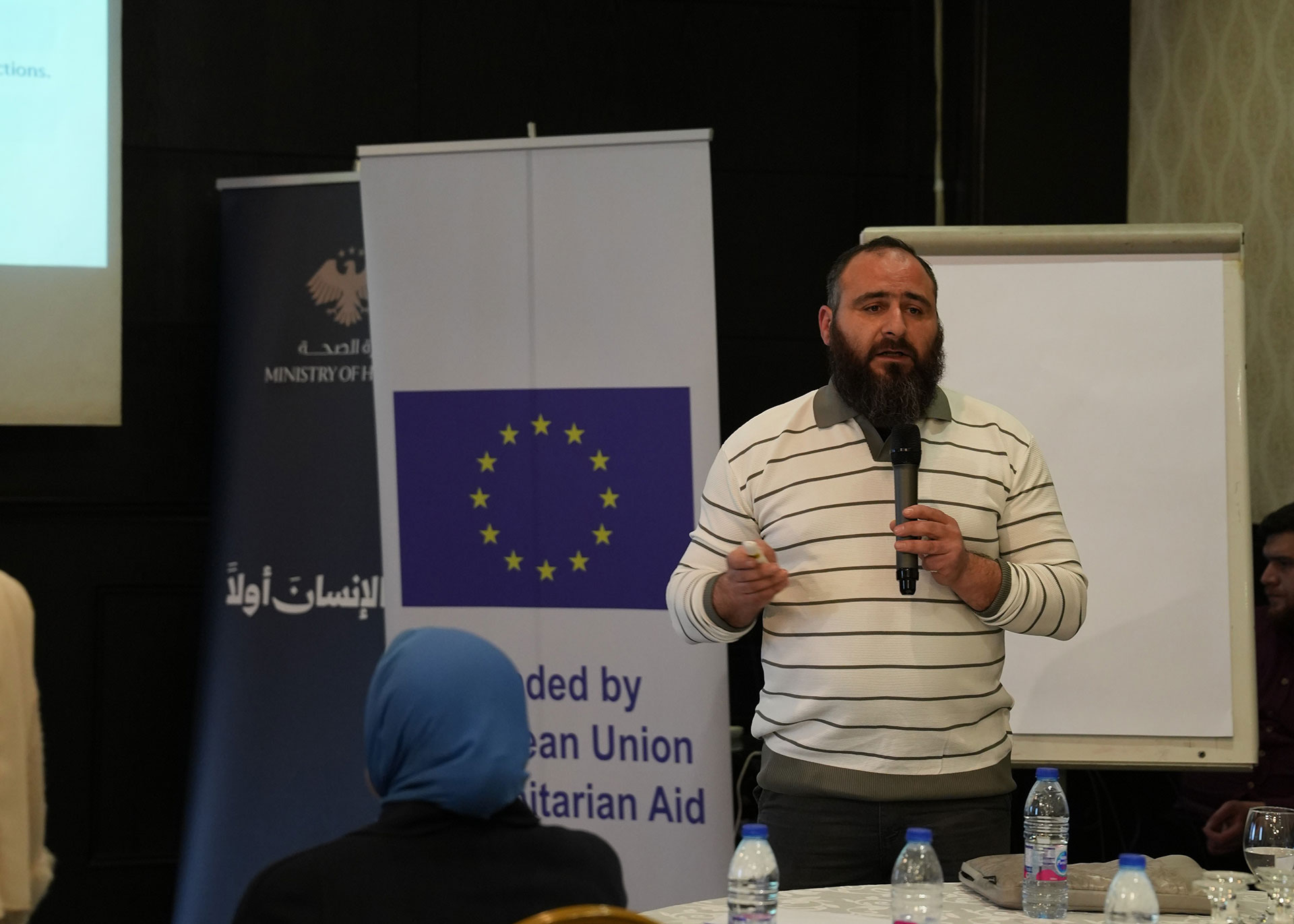 A trainer delivers a session during the workshop on to update Syria’s National Action Plan on Antimicrobial Resistance. Photo credit: WHO
To reinforce these efforts, the Ministry of Health convened a two-day national workshop in Damascus to update Syria’s National Action Plan on Antimicrobial Resistance, with a strong focus on strengthening infection prevention and control. The workshop was supported by the World Health Organization, with funding from the European Union through EU Civil Protection & Humanitarian Aid.
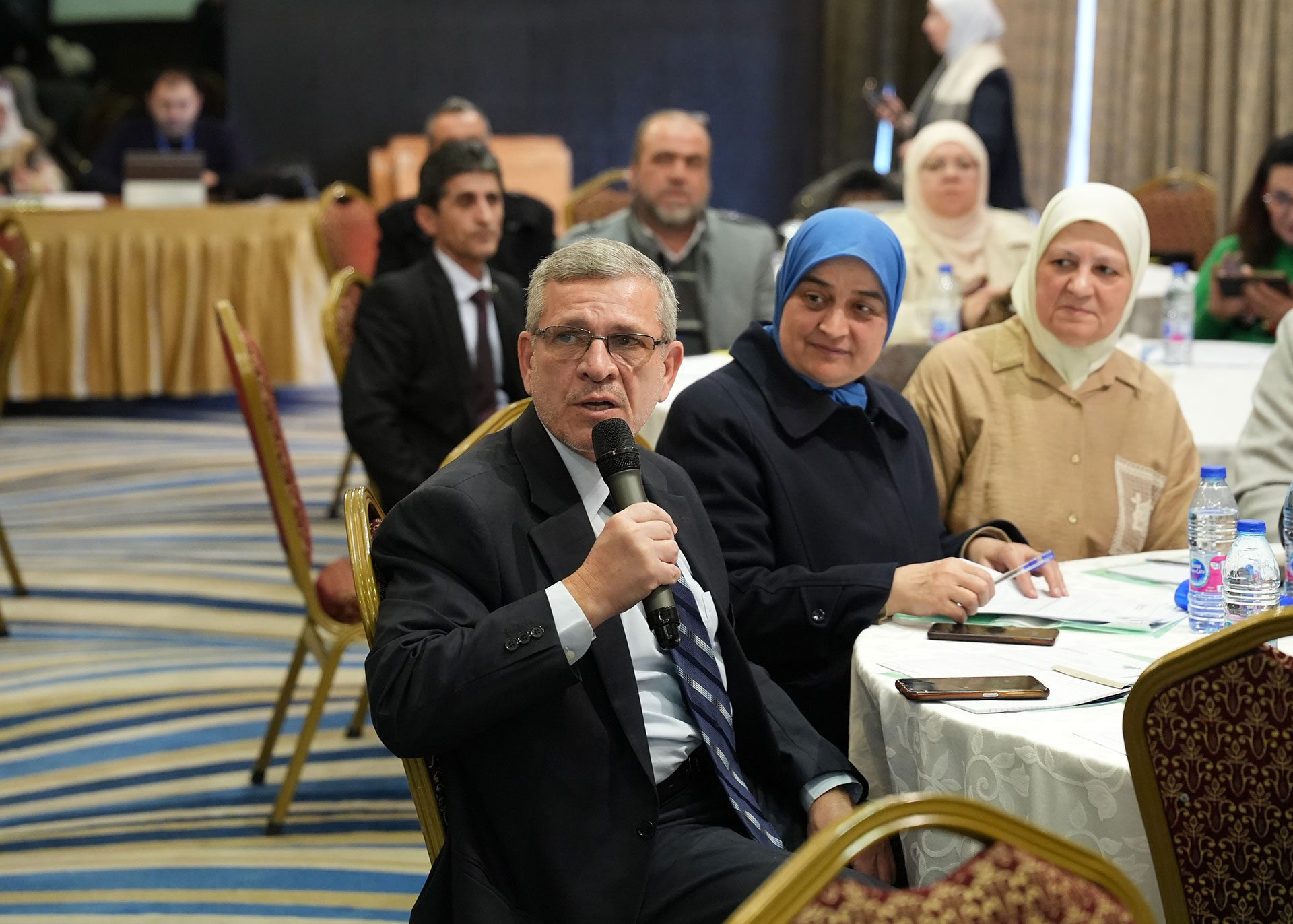 Participants engage with the trainers during the workshop. Photo credit: WHO
More than 50 representatives from government institutions, academic bodies and partner organizations worked together to define clear priorities and agree on practical steps for implementation. The discussions marked a shift from strategic planning towards concrete, coordinated action.
Dr Yasser Farouh, Director of the Communicable Diseases Department at the Ministry of Health, described the discussions as a critical step forward. “This workshop represents the transition from strategic planning to implementation,” he said. “Through these sessions, we are defining priorities and moving towards concrete action.”
“This workshop represents the transition from strategic planning to implementation,” he said. “Through these sessions, we are defining priorities and moving towards concrete action.”
Participants identified key areas for immediate focus, including strengthening infection prevention practices in health facilities, improving surveillance systems, and reinforcing national coordination mechanisms. Practical measures – from safer clinical procedures to responsible antibiotic use – are central to reducing infections and limiting the development of resistance.
Dr Ola Abbara, member of the AMR Expert Committee, emphasized the importance of sustained collaboration. “This meeting brings together all stakeholders to renew the national action plan and strengthen coordinated efforts,” she said. “Infection prevention and control is a core pillar of this work, helping protect patients and reduce antimicrobial resistance in Syria.”
Antimicrobial resistance increases the risk of complications, prolongs hospital stays and raises costs for families and the health system. Dr Susan Nouri, Head of Infection Control and Quality in Healthcare Facilities, highlighted the broader impact of effective programmes.
“Infection control protects patients and healthcare workers and ensures safer medical services,” she said. “It reduces unnecessary antibiotic use, shortens hospital stays and lowers costs for families and the health system.”
WHO regional experts joined the discussions virtually, supporting alignment with regional strategies and strengthening governance frameworks to ensure sustainable implementation.
Dr Mohammed Shafi from the WHO Regional Office noted: “Syria’s decision to revise its National Action Plan on Antimicrobial Resistance is timely and commendable. It reflects strong commitment to addressing this growing threat. The revised plan emphasizes infection prevention, responsible antimicrobial use, awareness, capacity building and strengthened surveillance.”
Through strengthened national leadership, coordinated technical support and sustained investment, Syria is reinforcing its capacity to safeguard the effectiveness of antibiotics and ensure safer care for patients across the country.
For women in Idlib, timely care cannot wait for winter to pass
19 February 2026, Idlib, Syrian Arab Republic – In winter, respiratory infections rise across Idlib. But for many women, seeking care is not always immediate. Symptoms are often endured quietly – until they can no longer be ignored.
 Haifa Hassan Al-Sadeer consults with Dr Imran Al-Jark at the internal medicine clinic of Maaret Al-Numan health centre, where she received treatment for a respiratory infection. Photo credit: WHO
Haifa Hassan Al-Sadeer arrived at the internal medicine clinic at Maaret Al-Numan health centre in Idlib governorate after days of shortness of breath, coughing and abdominal pain. “At first, I told myself it would pass,” she said. “There is always something to manage at home – children, meals, responsibilities. You put your health after everything else.”
But when her breathing became heavier and the discomfort intensified, she made the decision to seek care. “I realized that if I don’t take care of myself, I cannot take care of my family,” she added.
At the clinic, Dr Imran Al-Jark conducted a full examination. Haifa was diagnosed with a chest infection and a common cold and received appropriate treatment and guidance for recovery.
“Women often delay coming to the clinic,” Dr Al-Jark explained. “They minimize their symptoms or prioritize their families. By the time they arrive, the condition may have progressed. Access to nearby, functioning primary health care makes it easier for them to seek help earlier.”
 Fatim Mohammad Al-Sadeer speaks with Dr Imran Al-Jark at the internal medicine clinic of Maaret Al-Numan health centre, where she received treatment for bronchitis and acute influenza. Photo credit: WHO
That same week, Fatim Mohammad Al-Sadeer arrived with shortness of breath, severe coughing and a high fever. The fever had drained her energy, but she hesitated before coming. “You think – maybe tomorrow I will feel better,” she said. “But the fever did not go down. I felt weak and frightened that it might become something more serious.”
Following examination, she was diagnosed with bronchitis and acute influenza. She received medication and clear counselling on how to manage her symptoms and when to return. “What helped me most was that the doctor listened carefully,” Fatim said. “He explained what I had and what I needed to do. It made me feel respected, not rushed.”
The Maaret Al-Numan health centre is one of 70 health facilities across Syria supported by the World Health Organization (WHO) with funding from the King Salman Humanitarian Aid and Relief Centre (KSrelief). Through this initiative, the centre receives essential medicines, medical supplies and operational assistance – enabling internal medicine services to remain available and affordable for communities.
For many women in Idlib governorate, proximity matters. Transportation costs, household responsibilities and financial strain can all delay health-seeking decisions. “When services are consistent and medicines are available, women feel more confident coming forward,” Dr Al-Jark said. “Primary health care is not only about treatment – it is about accessibility and trust.”
For Haifa and Fatim, the ability to walk into a functioning clinic and receive treatment the same day meant avoiding complications and returning home reassured. “In the past, we worried whether medicines would be there,” Haifa said. “Now, I know that if I feel unwell, I can come and be treated properly. That changes how you think about your own health.”
As winter illnesses continue to circulate, strengthened primary health care services in Maaret Al-Numan are helping women seek timely care – protecting not only their own health, but the well-being of the families who depend on them.
In Afrin, breathing easier again
18 February 2026, Aleppo, Syrian Arab Republic – On a cold January morning, Dr Dima Jaabar listened carefully to the uneven breathing of two young boys brought into the Rajo health centre in the rural countryside of Afrin district, north of Aleppo, within days of each other. Both were struggling to breathe. Both needed urgent care. Both are now recovering.
 Dr Dima Jaabar examines Mohammad Ghazi at the Rajo health centre, where he received treatment and follow-up care for acute chest inflammation and breathing difficulties. Photo credit: WHO
Mohammad Ghazi was carried in by his family after developing acute chest inflammation and difficulty breathing caused by smoke inside the home. “He was gasping and could not sleep at night,” his father recalled. “We were afraid it would get worse.”
At the health centre, Dr Jaabar and her team quickly assessed him, provided treatment and scheduled close follow-up. Within days, Mohammad’s breathing began to stabilize.
“During winter, many families rely on indoor heating methods that expose children to heavy smoke,” said Dr Jaabar. “By the time they arrive, they are exhausted from coughing and shortness of breath. Timely treatment makes all the difference.”
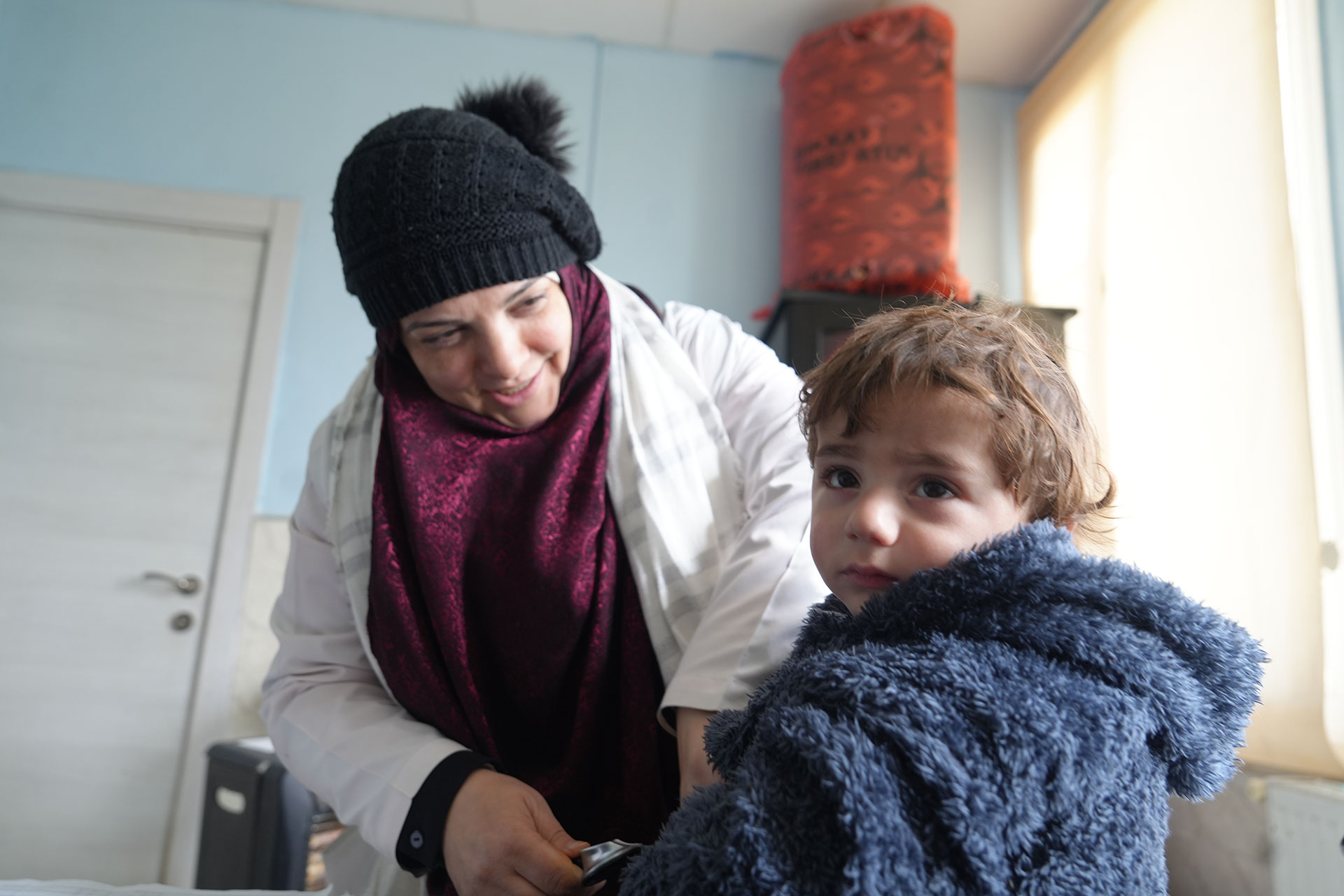 Dr Dima Jaabar examines young Rashid at the Rajo health, where he received treatment for fever and chest inflammation. Photo credit: WHO
Just days later, Rashid’s mother rushed him to the same centre. He had a high fever, persistent cough and chest inflammation. “He was burning with fever and crying from the pain,” she said. “I did not know what to do except bring him here.”
Rashid received treatment, medical consultation and practical guidance to support his recovery at home. His mother was counselled on symptom management, warning signs and how to reduce respiratory risks.
“I felt relieved when the doctor explained everything,” she said. “They did not just treat him; they helped me understand how to care for him.”
The Rajo health centre is one of 70 health facilities across Syria supported by the World Health Organization (WHO) with funding from the King Salman Humanitarian Aid and Relief Centre (KSrelief). Through this initiative, facilities receive essential primary health care medicines and medical supplies, operational support and staffing assistance to ensure services continue for communities affected by years of crisis.
Across Aleppo, Hama, Homs and Idlib governorates, the project strengthens integrated health services, improves access to primary and specialized care, and reduces preventable illness and complications. By securing medicines and consumables and supporting facility operations, WHO and KSrelief are helping centres like Rajo remain open and responsive to community needs.
“For us, the impact is immediate,” Dr Jaabar said. “With consistent supplies and operational support, we can treat children quickly and follow up properly. Families do not have to delay care.”
In Afrin, where many families continue to navigate economic hardship and fragile living conditions, accessible primary health care is not abstract policy – it is the difference between fear and reassurance.
For Mohammad and Rashid, it meant breathing easier again.