

Sélectionnez votre langue
Noncommunicable diseases are a silent burden on the people of Yemen
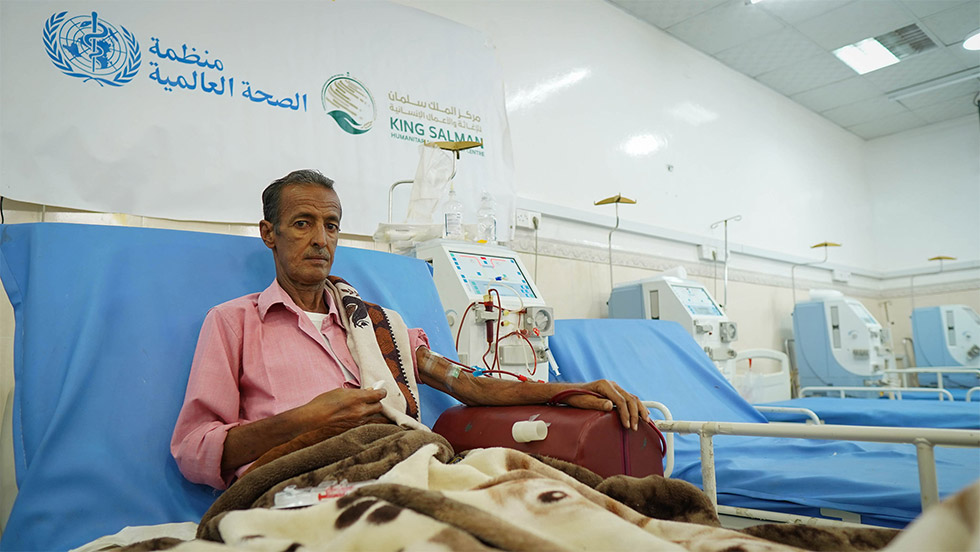 Sameer, 60-years-old, receives dialysis treatment at Al-Sadaqa hospital in Aden
30 June 2020 – Esam is only 16 years old and he battles colon cancer. Esam receives treatment at the national oncology centre in Sana’a governorate, supported by WHO.
“I am hopeful. I’m looking forward to a time when I am feeling better so I can lead a normal life like my friends,” he says.
Patients who suffer from chronic diseases lead a challenging life. The additional burden of not being able to access or afford treatment is unimaginable. An estimated 35 000 cancer patients (10% of them children) and more than 1 million people who suffer from noncommunicable diseases (NCDs) are in need of humanitarian aid.
Sameer is 60 years old. He receives dialysis treatment at Al Sadaqa hospital in Aden. “Being a dialysis patient during this time in Yemen is agonizing. It is crucial that this support continues so we continue to have access to the sessions our lives depend on,” he says.
WHO and KSrelief are procuring up to US$ 24 million worth in supplies to cover the life-saving treatment needs of patients living with chronic life-threatening conditions such as cancer, kidney failure and NCDs, including diabetes. Up to 110 340 dialysis sessions were delivered to 5500 patients at risk of kidney failure between October 2019 and May 2020. This generous support from KSrelief contributed to up to 50% of the total costs of the dialysis sessions among all 21 centres available in the country.
Patients with chronic, life-threatening diseases need access to treatment
If over 5 years of war, ongoing armed conflict and being the worst humanitarian crisis in the world is not enough, Yemen’s humanitarian situation continues to worsen now that COVID-19 is posing additional pressure on the health system. Yemen’s already collapsing infrastructure may face complete obliteration if aid is not provided. The lives of 19.7 million people in need of health care will be at risk. Many of these people are vulnerable communities who are either displaced, disadvantaged, suffering from chronic illnesses, malnourished or all the above.
WHO and partners are aware of the severity of needs in the country and are sparing no effort to support the health system from further deterioration to save the lives of people in need of health care.
Currently, WHO and KSrelief are supporting 189 hospitals across the country. That is 75% of the 252 operational hospitals in Yemen. Up to 4.34 million people will have access to health services through this support. This includes the provision of the Minimum Service Package at the primary and secondary level by supplying medicines and medical equipment and fuel.
In Yemen, ‘hero’ epidemiologist succumbs to COVID-19
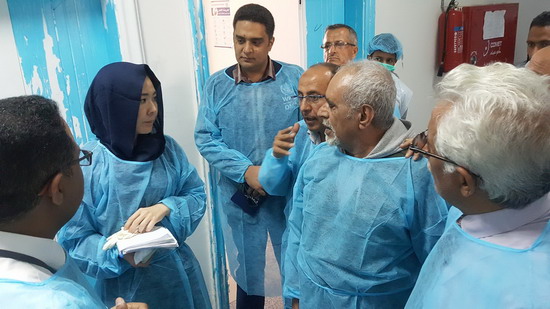 Health officials looked to Dr Yassin as a key source of scientific and historic knowledge on outbreaks and epidemiological surveillance in Yemen
By: Sadeq Al-Wesabi
20 June 2020 – Years after his retirement, Dr Yassin Abdul-Warith's passion for fighting epidemics across Yemen never waned nor did he rest until he died from one of the diseases he fought: COVID-19.
One of the oldest and most well-known epidemiologists in Yemen, Dr Yassin had been working for around 50 years fighting different epidemics in the country, including Rift Valley fever, diphtheria, malaria, cholera and lately COVID-19.
Health officials looked to Dr Yassin as a key source of scientific and historic knowledge on outbreaks and epidemiological surveillance in Yemen.
“Dr Yassin played a major role in detecting and responding to most outbreaks and communicable diseases hitting Yemen,” said Dr Adel Al-Jassari, the malaria control expert for WHO Yemen and former director of the National Malaria Control Programme.
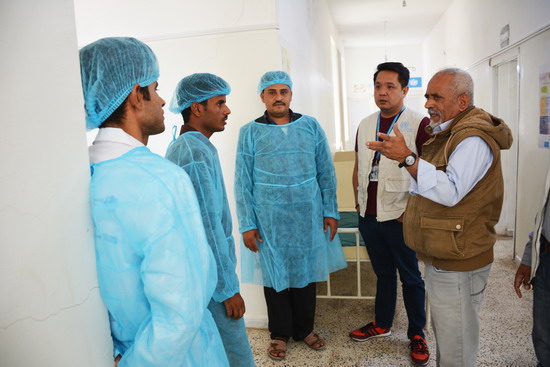 Dr Yassin dedicated his life to contain diseases and outbreaks, travelling to all Yemen’s governorates to help curb the spread of infectious diseases
He added: “As a senior epidemiologist and surveillance advisor, he dedicated his life to contain diseases and outbreaks, travelling to all Yemen’s governorates to help curb the spread of infectious diseases. “His death was a big loss to the health sector and WHO in Yemen.”
With profound knowledge and experience, Dr Yassin mentored thousands of health workers in the field of epidemiology and emergency response.
“He was one of the heroes of primary health care in Yemen and is credited for establishing field epidemiology. He was among the first respondents to any disease outbreak guiding the health sector towards surveillance and effective response,” said Dr Jamal Nasher, the Health System Coordinator for WHO Pakistan and former Deputy Minister for Planning at Yemen’s Ministry of Health and Population.
Weeks before his death, Dr Yassin was responding to COVID-19, training rapid response teams and visiting isolation centres to assess the situation and needs.
“I worked with him closely for years. His dedication and humanity can never be forgotten. He left a significant legacy nearly in every single health programme,” said Dr Saeed Al-Shaibani, a laboratory National Professional Officer for WHO Yemen.
The death of Dr Yassin shocked not only his family and those who worked with him for years, but also many new nurses and physicians who received training and guidance from him.
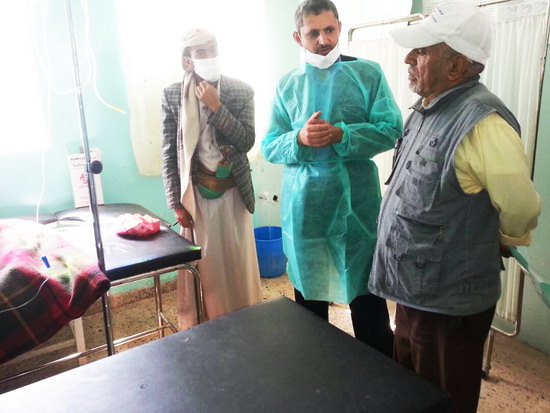 Dr Yassin had been working for around 50 years fighting different epidemics in the country, including Rift Valley fever, diphtheria, malaria, cholera and lately COVID-19
“Every time he visits us, he listens carefully to our urgent needs and try his best to help provide us with these needs. He was always there when we needed training, guidance and advice, especially during the cholera outbreaks,” Dr Amal Al-Haidari, a physician at Aza Health Centre in Sanaa, recalled.
Beside his rich medical knowledge and background, Dr Yassin is also known for his benevolent goodwill and deep humanity
“He was never reluctant when it came to helping others, especially those who needed medical treatment but couldnt afford it,” said his brother Professor Jamal Abdul-Warith.
“Before specializing in epidemiology, he worked as a surgeon in areas where security situation was destabilized. He helped treat and save the lives of many people who couldn’t afford the cost of surgical operations. Most cases were treated free-of-charge” he added.
“Medicine was not only a profession for Dr Yassin, but a humanitarian service and mission.”
Public and private sectors join forces to deliver lifesaving COVID-19 supplies in Yemen
Click here to view the multimedia assets
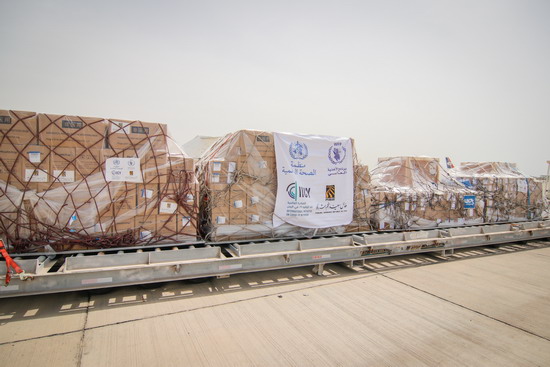
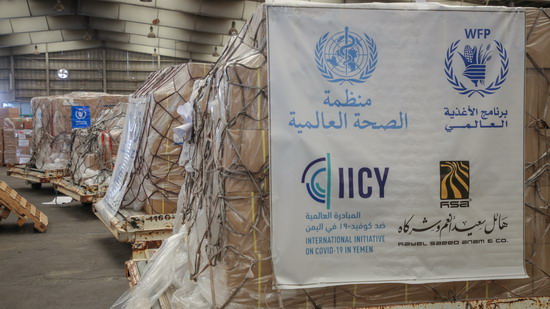 19 June 2020, Aden and Sana’a, Yemen — Aircraft carrying a total of 43 tons of laboratory supplies, ventilators, test kits, PCR machines and vital PPE to fight COVID-19 have arrived in Yemen, thanks to a donation to the World Health Organization (WHO) facilitated by the Hayel Saeed Anam Foundation on behalf of the International Initiative on COVID-19 in Yemen (IICY), a collaborative partnership of multinational companies and the United Nations.
“This donation comes at a critical time. It will have a massive and immediate impact on the ground helping to fill the gaps in Yemen’s hospitals and laboratories countrywide,” said Mr Auke Lootsma, acting Humanitarian Coordinator in Yemen. “We welcome this extraordinary public-private partnership whose goal is to serve the people of Yemen. As the United Nations marks its 75th anniversary during an unprecedented global health crisis with severe economic and social impacts, this partnership is an example of how we can work together with the private sector to face humanitarian threats.”
IICY brings together partners from the public and private sectors, chaired by the Hayel Saeed Anam Foundation and including Unilever, Tetra Pak, the United Nations, the Yemen Private Sector Cluster and the Federation of Yemen Chambers of Commerce and Industry, in an effort to support the actions already being taken by WHO and local public health authorities to respond to the invisible threat of the novel coronavirus.
A fragile health system battling an invisible threat
The first case of COVID-19 in Yemen was declared in April, and the threat of full blown transmission of the virus looms large, spurring WHO and health authorities to fast-track efforts to ensure the establishment of isolation units, quarantine facilities, and clinical management training for the country’s remaining health care workforce.
Mr Nabil Hayel Saeed Anam, Chair of the International Initiative on COVID-19 in Yemen said:
“The deadly COVID-19 pandemic threatens to overwhelm a health care infrastructure already under enormous strain in Yemen. We stand on the brink of catastrophe and our best hope of responding is by working together. The International Initiative on COVID-19 in Yemen believes in the power of partnership. We are united in our desire to help Yemen prevail and by getting much needed medical supplies to WHO and other authorities, we can help make that happen.”
The 43-ton shipment of medical and laboratory supplies, obtained by the Hayel Saeed Anam Foundation on behalf of IICY, contains in total 426 ventilators, more than 1 million pieces of PPE, 34 000 COVID-19 nucleic acid test kits, 28 000 virus collection kits, 10 centrifuges, as well as other essential hospital and laboratory equipment. Delivery of the 43-ton aid shipment is being managed by the World Food Programme (WFP), with flights arriving in Sana’a and Aden, for onward distribution to hospitals and laboratories across Yemen by United Nations agencies.
 Yemen is entering its almost sixth year of conflict, and the fragile health system and a population that has survived on food aid for years lives in fear. The health system in Yemen is only functioning at 50%, and health system functionality, such as access and capacity of health care personnel, is at less than 40%. Chronic malnutrition has left Yemenis vulnerable, their weakened immune systems a prime target for this virus.
Recent estimates based on modelling scenarios by the Imperial College London on the potential impact of the virus on Yemen are dire, predicting an estimated worst case scenario of over 64 000 deaths and more than 460 000 in need of hospitalisation in a population of 30 million.
As part of readiness and response efforts WHO and health authorities have established 59 isolation units, with over 675 ICU beds, and over 309 ventilators. 21 600 rapid tests have also been provided.
As the world continues its fight against this global pandemic, it must not forget countries like Yemen that need their support. The resources being donated by the Hayel Saeed Anam Foundation on behalf of IICY will provide the boost of supplies the COVID-19 response in Yemen desperately needs.
Notes to editors
About the International Initiative on COVID-19 in Yemen
The International Initiative on COVID-19 in Yemen (IICY) is a collaborative partnership of businesses and international organisations united by a desire to assist Yemen’s response to COVID-19, at a critical time for the country and its people. IICY partners have joined together to work collaboratively to help international organisations and the Yemeni authorities respond to COVID-19 and help tackle challenges on the ground. Brought together and chaired by the Hayel Saeed Anam Foundation, IICY aims to make use of its partners’ collective operational expertise, resources and knowledge to assist the Yemeni and international authorities and support communities in need. IICY will seek to help strengthen Yemen’s resilience in the face of the global pandemic and enable clinical and scientific experts to respond effectively to COVID-19. IICY’s founding members include the Hayel Saeed Anam Foundation, Tetra Pak, Unilever, the United Nations, the Yemen Private Sector Cluster and the Federation of Yemen Chambers of Commerce and Industry.
For further information, please contact:
IICY:
UN in Yemen:
Health care workers in the frontlines of the struggle against COVID-19
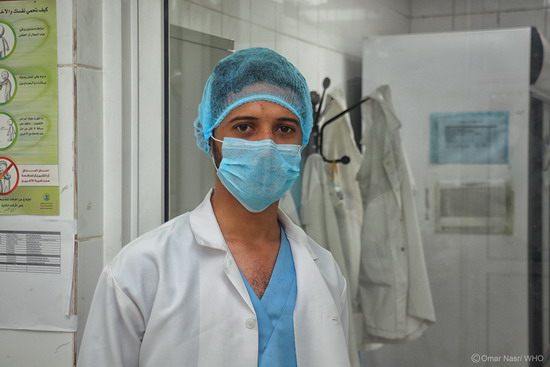 15 June 2020 – “I wished desperately that COVID-19 wouldn’t reach Yemen, as we are already suffering from cholera, diphtheria, dengue, malaria and malnutrition compounded with the ongoing conflict that has wrecked the already appalling health system,” said Khaled Mohammed, a laboratory technician in the polymerase chain reaction (PCR) COVID-19 department in the Central Laboratory in Sana’a.
Yemen is the world’s worst humanitarian crisis, and it is now facing another major threat to health security — COVID-19. If countries with well developed health systems are struggling to contain the virus, the effects on Yemen with just 50% of its health system operational will be catastrophic.
Almost 6 years of ongoing conflict have pushed the country into uncertainty and left its population vulnerable even before COVID-19, leaving it with a collapsed social and civic infrastructure, a frail economy, and a fragile health system. 19.7 million people are in need of access to health care.
“As we were watching the news of COVID-19 ravaging the whole world, with my country as one of the last ones to join the battle, I felt fearful. To watch it on the news and hear about it and to be constantly faced with the risk of contracting it since I’m running COVID-19 tests is a completely different story.”
Due to the ongoing conflict, health workers are not receiving their salaries. Still, they are working tirelessly to respond to the COVID-19 crisis in addition to a host of other communicable and noncommunicable diseases which continue to affect people across the country.
These health workers are the real heroes of the crisis
“Yes, I’m afraid for my health and my family’s, but as long as I can provide help, I will never stay aside. I’m working 24 hours tirelessly in the PCR section to run the COVID-19 tests. And this is the least I can do.”
Now more than ever, all health partners need to galvanize efforts in the fight against COVID-19 and other dangerous diseases that will continue to pose a threat in the lives of Yemenis.
“We are putting our lives at an unprecedented risk to save you and your families, I call on all Yemenis to be extremely vigilant and protect themselves. We are working for you, please stay home for us.”