

Sélectionnez votre langue
WHO requests US$ 1.38 million to continue emergency and life-saving health interventions in flood-affected districts
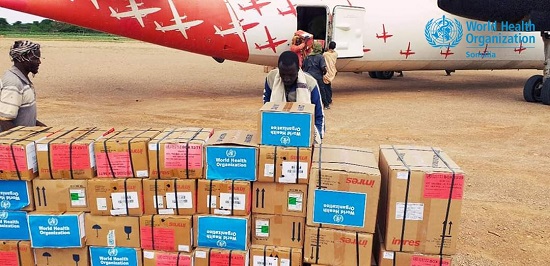
18 November 2019 – Recent flooding has plunged Somalia further into a deep humanitarian crisis. Heavy rains in Somalia and Ethiopian highlands led to increased water levels in the rivers Shbelle and Juba, which has affected an estimated 539 888 people and lead to the displacement of over 370 000 people, leaving 25 dead and 47 injured.
According to the monitoring of the Somalia Water and Land Information Management, heavier and continuing rains are expected, which may lead to greater displacement. As a result of the flooding, health facilities have been damaged and essential health services, such as immunization services and vector control activities, have been suspended. Owing to damage to roads, movement of relief items, including medical supplies, has been difficult.
Along with extensive damage to property and livelihoods, standing flood water is a cause of concern for public health in the affected areas. While WHO is closely monitoring the health situation in affected areas, there remains an increased risk of water- and vector-borne diseases owing to lack of access of the displaced population to safe water and sanitation, including due to disruption of essential health services.
WHO has scaled up its emergency health response operations in the affected districts to prevent epidemics and disease-related mortality. The main focus of response efforts has been to:
- improve access of the flood-affected vulnerable populations to emergency life-saving health interventions;
- support the deployment of rapid response teams;
- enhance the EWARN surveillance system to monitor health threats; and
- replenish essential medical supplies for the provision of health care.
So far, no deaths from communicable diseases have been reported from the flood-affected areas as a result of WHO and other health partner’s intensified response operations.
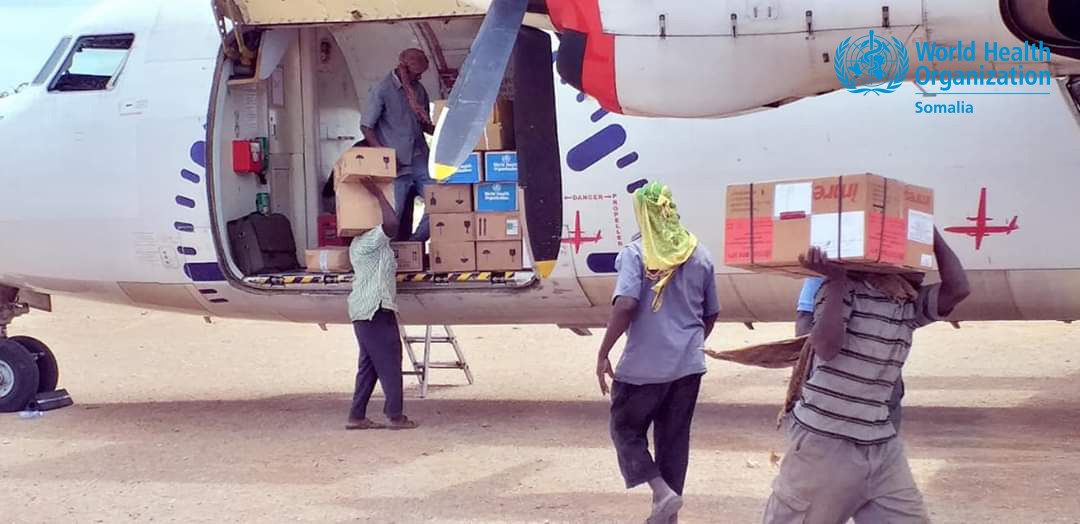
WHO will continue its health response operations in the flood-affected districts over the next 3 months in order to prevent avoidable deaths, protect the health of those most vulnerable from disease and prevent any epidemic in the aftermath of the flooding.
The areas affected by the current flood are prone to epidemics, such as cholera, malaria and other vector-borne diseases. Additionally, at least 10 health facilities have been completely destroyed in the flood, depleting health services in the affected districts.
WHO is requesting for additional support of US$ 1.38 million to further scale up and sustain its current surge operations in the flood-affected districts.
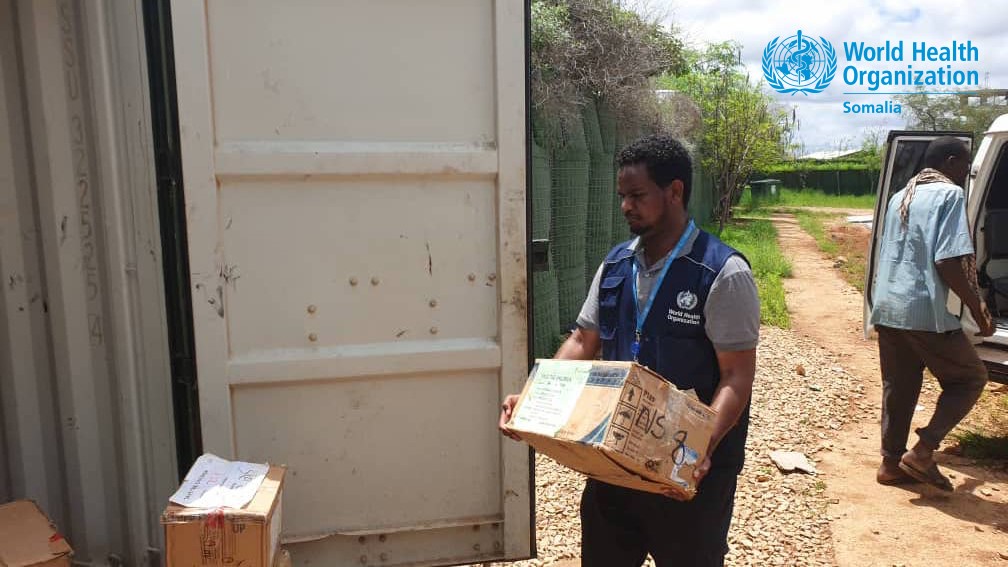
“We are planning to reach out to over 450 000 of the most affected population with essential and life-saving health interventions for next 3 months. As soon as the flood water starts to recede, the next phase of our emergency response operation will help restore and rehabilitate damaged and non-functional health services. Our priorities would continue to be to prevent avoidable mortality and morbidity due to flood-driven environmental health hazards and displacement,” said Dr Sk Md Mamunur Rahman Malik, WHO Representative for Somalia.
The overall objective of WHO’s emergency health response surge plan is to ensure that the targeted beneficiaries, including men, women, boys, girls, and persons with disabilities who are the most vulnerable affected by the current flooding have access to lifesaving health interventions in line with Somalia’s universal health coverage road map and epidemics from flood-associated diseases are detected and prevented early.
For further information, please contact:
Kyle Defreitas
External Relations & Resource Mobilization Officer
T: +254-20-51-21519
M: +254-782-501-324
Fouzia Bano
Communication Officer
M: +252-619235880
WHO supports launch of universal health coverage roadmap in Somalia
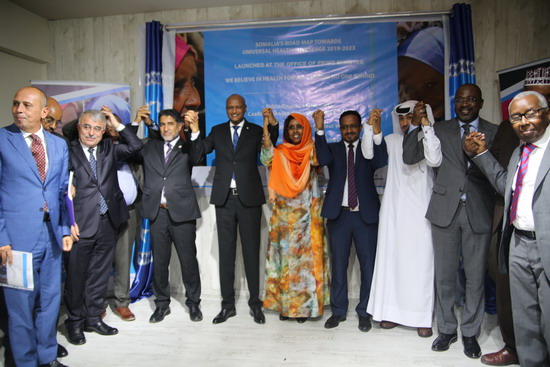
Mogadishu, 16 September 2019 – Universal Health Coverage (UHC) in Somalia experienced a significant milestone yesterday when WHO and the Federal Government of Somalia launched the roadmap to UHC for Somali people in a formal ceremony held at the Somali state house today.
The UHC roadmap portrays the strategic framework and medium-term goals for the Somali health sector and was developed jointly by the Somali Ministry of Health and Human Services along with WHO, UN and development partners, civil society organizations and the donor community. The three strategic goals of the UHC roadmap for the period 2019 – 2023 are:
* More Somali people will benefit from universal health coverage
* More Somali people will be better protected from health emergencies
* More Somali people will enjoy better health and well-being
WHO Regional Director for the Eastern Mediterranean, Dr Ahmed Al-Mandhari congratulated the Deputy Prime Minister, H.E. Mahdi Mohamed Gulaid for the government’s support for UHC, and praised the Minister for Health and Human Services H.E. Dr Fawziya Abikar Nur for her commitment and leadership in bringing UHC to Somali people. “I am confident that with effective collaboration and partnerships between WHO, the government, and our UN and development partners, we can achieve universal health coverage for Somali people”, Dr Al-Mandhari said.
Health systems in Somalia have suffered from continuous emergencies including epidemics of infectious diseases due to prolonged conflict and extreme climatic anomalies such as droughts and floods. Increased population displacement, high levels of malnutrition, lack of access to safe hygiene and sanitation as well as essential health services have all raised the risks to health and well-being.
The launch of the Somali roadmap for UHC was also attended by representatives from UNFPA and UNICEF, ambassadors, cabinet ministers, parliamentarians, and members of civil society. WHO Somalia Country Representative Dr Sk Md Mamunur Rahman Malik emphasised the importance of improving health systems in the country. “The overarching goal of the launch of the universal health care roadmap for Somalia is to build strong and resilient health systems to prevent future disease outbreaks”, Dr Malik said.
UHC ensures all individuals and communities receive the health services they need without suffering financial hardship. It includes the full spectrum of essential, quality health services, from health promotion to prevention, treatment, rehabilitation, and palliative care.
As a fundamental human right, universal health coverage is based on the WHO Constitution of 1948, and the Health for All agenda set by the Alma-Ata Declaration of 1978. It is also entrenched in the 2030 United Nations Sustainable Development Goals on good health and well-being, which was accepted unanimously by world leaders and includes Health for All – a commitment to take concrete steps to advance the health of all people.
WHO and UNICEF Somalia and partners call on all Somalis to vaccinate children against polio
Polio teams roll out targeted polio campaign to halt ongoing outbreak
 A vaccinator marks door of a home to show that the children in the house were vaccinated. Photo: WHO SomaliaMogadishu, 25 June 2019 - Health authorities rolled out a polio campaign yesterday in Puntland and Somaliland to vaccinate more than 940 000 children under 5 years of age to stop an ongoing outbreak of a strain of poliovirus.
The campaign runs from 24 to 27 June 2019, with support from the World Health Organization (WHO) and the United Nations Children’s Fund (UNICEF). It targets all children in 12 districts in Somaliland and 9 districts in Puntland.
By the numbers:
- 945 480 children to be vaccinated
- 3160 vaccinators knocking on doors
- 677 team supervisors taking part
- 1558 social mobilizers sharing messages on vaccination and children’s health
- 15 children have been infected with the polioviruses so far, since outbreaks began
Somaliland, Puntland and other states in Somalia are currently experiencing outbreaks of 2 strains of poliovirus. Each strain requires a different vaccine. Children need several doses of each vaccine to boost immunity. Even though these viruses are not wild poliovirus, both these circulating strains can infect and paralyse children with low immunity. The last case of wild poliovirus in Somalia was in August 2014.
 A vaccinator provides 2 doses of the oral polio vaccine to a young boy“It’s vital that parents ensure their children receive this vaccine because it builds immunity against a specific strain of poliovirus circulating in the country. I call upon all caregivers in the areas being covered in this campaign to please ensure children are at home and accept the oral polio vaccine when it is offered. Oral polio vaccines are stored and administered safely, and can save children from paralysis and permanent disability,” said Dr Mamunur Rahman Malik, WHO Representative for Somalia.
“The only way to protect children from all polioviruses is to ensure they receive multiple doses of polio vaccine, through campaigns and health facilities where possible,” said Werner Schultink, UNICEF Somalia Representative. “Caregivers need to ensure children receive this vaccine when it is available.”
Somalia’s polio programme has conducted 14 immunization campaigns, including 5 nationwide campaigns, since December 2017 to stop further spread of the outbreaks. Despite these efforts, not all Somalia’s children are being vaccinated, which has resulted in the polioviruses spreading across the country and spilling over to Ethiopia. To address this, polio teams from Somalia and Ethiopia conducted a joint planning workshop in Hargeisa last week, and are coordinating immunization activities along their shared border and in high-risk areas in each country during this round in order to prevent cross-border transmission and spillover.
Concurrent to the polio campaign, polio health workers have also been working to vaccinate more than 650 000 people aged one year and above against cholera in high-risk districts of Somalia.
About WHO
The World Health Organization is a specialized agency of the United Nations whose vision is the attainment by all peoples of the highest possible level of health.
Follow WHO on Twitter - @WHOSom
About UNICEF
UNICEF works in some of the world’s toughest places, to reach the world’s most disadvantaged children. Across more than 190 countries and territories, we work for every child, everywhere, to build a better world for everyone. Follow UNICEF on Twitter and Facebook.
About GPEI
The Global Polio Eradication Initiative, is a public-private partnership led by national governments and spearheaded by the World Health Organization (WHO), Rotary International, the US Centers for Disease Control and Prevention (CDC), and the United Nations Children’s Fund (UNICEF) working towards a future where no child will ever again be paralysed by polio.
For additional information, contact:
Dr Kamil Mohamed
Polio/Expanded Programme on Immunization (EPI) Team Lead
WHO Somalia
Email:
Mobile: +252 613 041 057/+962 7 9643 1246
Dr Yasmine Challoub
Polio Team Lead
UNICEF Somalia
Email:
Mobile: +252682418691/ +254719192825
Jamal Abdi Sarman
Communications Officer
UNICEF Somalia
Email:
Mobile +252 634107531
Namita Mediratta
Polio Communications Consultant
WHO Somalia
Email:
Mobile: +254 722 762 145
Cholera vaccination drive begins in high-risk districts in Somalia
 Mogadishu, 22 June 2019 – Somalia has just launched one of Africa’s largest immunization campaigns using oral cholera vaccines (OCV). The campaign, which runs from 22 to 28 June 2019 in high-risk areas of Somalia, will vaccinate more than 650 000 people aged one year and above to eliminate the risk of the disease among vulnerable populations and to prevent recurring cholera outbreaks in the country.
Somali health authorities and the World Health Organization (WHO) are conducting the campaign with the support of the United Nations Children’s Fund, Gavi, the Vaccine Alliance, and the Global Task Force for Cholera Control.
“No one should die of cholera in the 21st century, especially when we have an affordable and easily administrable cure. It remains our collective responsibility to save lives and end cholera in Somalia. We remain committed to keeping the country free from future cholera outbreaks,” said Dr Mamunur Rehman Malik, WHO Representative in Somalia.
During the 2 rounds of the campaign, vaccinators will go house to house in the 6 districts of Heliwa, Kahda and Harmajajab in Banadir, Balad and Afgoye in the South West State, and Kismayo in Lower Juba offering oral cholera vaccine.
Vaccination teams that include 126 supervisors at national, regional and district level and 112 vaccinators will aim to vaccinate around 150 people a day. A total of 217 community mobilizers have been deployed to conduct house-to-house visits and inform communities about campaign dates and benefits of the vaccines prior to beginning of the campaign.
 The Minister of Health of Somalia HE Dr Fauziya Abikar Nur commented on the cholera situation in Somalia, highlighting challenges and efforts, saying, “Cholera remains one of our major public health threats. We now have the means and solutions to end cholera in Somalia. We continue to work with WHO and our other partners to save lives and prevent cholera on a long-term sustainable basis.”
Since the current cholera outbreak began in January 2019, Somalia has reported 1041 cases of suspected cholera, including one related death, in 25 districts of the States located in the basins of the Jubba and Shabelle rivers.
In 2017, the country faced one of the largest outbreaks in its history, with 78 784 cases, including 1159 deaths.
A year later, in 2018, Somalia saw a reduction in the number of reported cases of cholera and related deaths, largely due to improved disease surveillance and case management, with the reported number of cases at 6448, including 45 deaths. The case–fatality rate, a measure of the severity of the disease, defined as the proportion of confirmed deaths of a specified disease or condition, for Somalia dropped from 1.47% in 2017 to 0.69% in 2018. Currently, in 2019, the overall case–fatality rate from cholera in Somalia is 0.09%.
The use of OCV in combination with other proven interventions such as improving access to safe water and sanitation and improving hygiene will help to eliminate the risk of recurrent cholera outbreaks faced by the country.
Related link
Acute watery diarrhoea/cholera situation reports
For additional information, kindly contact:
Dr Mutaawe Lubogo
Epidemiologist
WHO Somalia
+252 612 857 531/+256 701 733 699
Ms Fouzia Bano
Communications Consultant
WHO Somalia
+252 619 235 880