

Sélectionnez votre langue
WHO and KSrelief join efforts to improve water, sanitation and hygiene services in Yemen
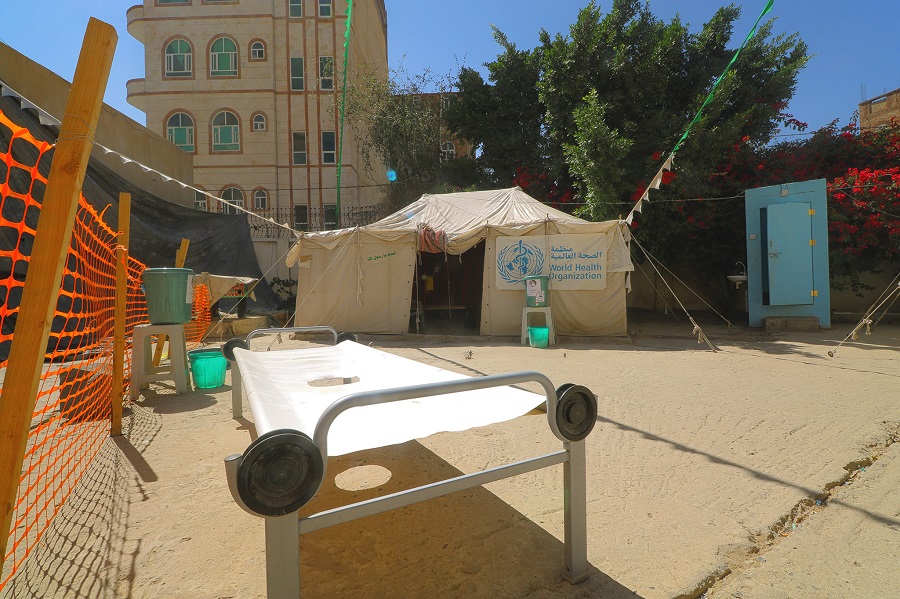
11 April 2022 – In response to Yemen’s historic cholera outbreak and the heightened risk of other infectious diseases, the World Health Organization (WHO) and the King Salman Humanitarian Aid and Relief Center (KSrelief) have joined forces to improve water, sanitation and hygiene (WASH) at health facilities throughout the country’s southern region.
The programme has targeted 45 health facilities in 19 governorates and 33 districts in southern Yemen at high risk for cholera, which is spread through water and food contaminated with faeces. The WHO programme is also improving safe disposal of medical waste, including hazardous used syringes, and strengthening water quality monitoring and surveillance in the 33 high-risk areas.
“We are protecting vulnerable communities by improving WASH services in health care facilities, and through routine water quality surveillance and disinfection,” said Dr Adham Abdel Moneim-Rashad, WHO Representative to Yemen. “It is a simple but powerful programme to combat a number of preventable diseases – but particularly cholera.”
Amid a 7-year war, Yemen is experiencing waves of cholera outbreaks due to the collapsed health system, absence of basic services, including water systems and networks, poor sewage disposal systems, and high displacement of individuals fleeing escalating violence.
The ongoing cholera epidemic, which began in April 2017, is considered the worst in the world since records began. The number of reported suspected cases already exceeds 1.9 million, and cholera has spread to some 96% of Yemen’s governorates since the beginning of the outbreak.
Widespread malnutrition is increasing susceptibility to outbreaks of cholera and other communicable diseases. Vector-borne diseases are surging, including dengue fever and malaria, and severe acute respiratory infections such as COVID-19. Because of a decline in vaccination amid the war, there have been new outbreaks of vaccine-preventable diseases, including polio, which can cause paralysis in children and had been eliminated in Yemen.
The ongoing KSrelief-funded WHO programme targets diseases that are spread due to lack of clean water and sanitation. WHO is rehabilitating and improving infrastructure instrumental to water safety and quality at the 45 targeted health care facilities. The upgrades have included fixing sinks, toilets, and plumbing, and installing water tanks.
The programme includes installation of incinerators at 25 facilities to allow for safe disposal of medical waste. Awareness training about proper medical waste management has been conducted at all of the facilities. Personal protective equipment, disinfection and hygiene improvement supplies were distributed to 280 health care facilities to prevent hospital acquired infections among staff, patients and visitors.
Water quality monitoring and surveillance has been initiated or improved in the 33 cholera high-risk districts. Mobile water testing kits, chemicals and reagents are being provided to water supply providers in 6 governorates in the high-risk districts. Permanent water quality testing laboratories in Aden, Mukalla and Taiz are being established to enhance the capacities of regular water quality monitoring by water supply providers.
The programme has also included delivering more than 24.5 million gallons of fresh water by truck to 80 health care facilities.
“Cholera has caused immense suffering in Yemen,” Dr Moneim-Rashad said. “We are committed to reducing its spread, and that requires greatly expanding access to clean, safe water.”
Humanitarian crisis in Yemen: eight years on, WHO is strengthening the health system, responding to vital health needs, and saving lives
27 March 2022 - Since 2015, Yemen has faced a severe and complex humanitarian crisis due largely to the growing activities of armed groups, inter-community tensions, and economic decline.
The Yemen crisis is also linked to additional factors such as food and nutrition insecurity, COVID-19, other disease outbreaks, climate change, and natural disasters. A devastated health system, disruption of water and sanitation networks, and massive numbers of displaced people have fueled the rapid spread of diseases including cholera, diphtheria, measles, polio, and dengue.
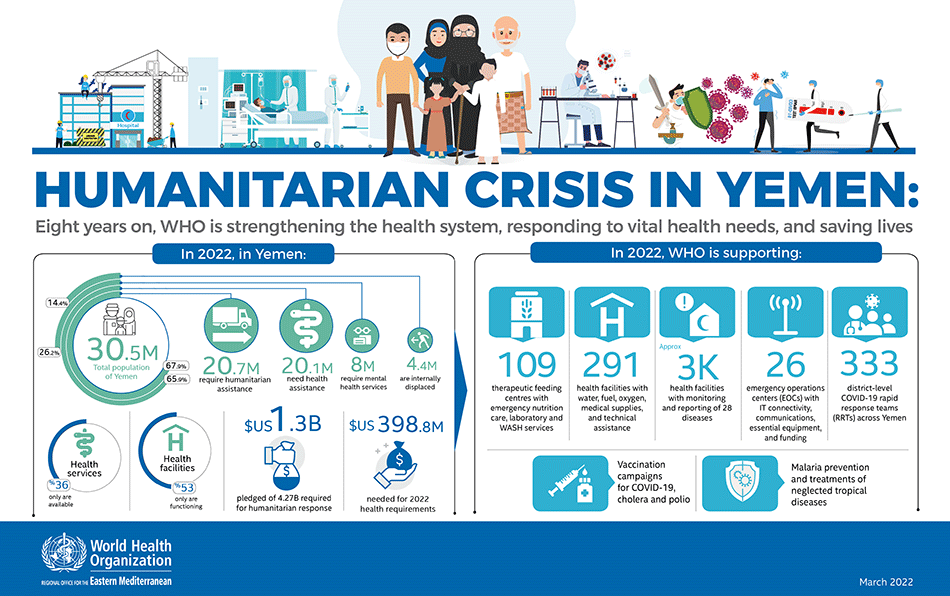
Yet, amidst the devastation, the Yemeni people remain determined, resilient and hopeful.
Today, WHO continues to play a leading role in advising and supporting Yemen health authorities, partners and community health workers in their efforts to sustain essential and life-saving health facilities and services throughout the country, and reaching the most vulnerable populations. WHO is also ensuring life-saving medical and nutrition care for children suffering of severe acute malnutrition (SAM) with medical complications. Medical supplies and equipment are being delivered to COVID-19 isolation centers and emergency operations centers (EOCs) that coordinate responses to all public health emergencies, with nearly 300 health facilities provisioned with fuel, oxygen, water and medical supplies and equipment, allowing them to:
admit 322,454 patients
conduct 6.5 million outpatient consultations
deliver 139,888 babies
perform 37,496 caesarian sections
conduct 246,679 major and minor operations
immunise 104,234 children for Penta 3
The health needs of the Yemeni people are expected to become even more urgent and widespread in 2022, unless there is conflict de-escalation, improvement in the economy, and available funding for humanitarian response sectors, including the health sector.
Although health assistance to Yemen remains severely underfunded, WHO is prioritizing continuity of services and functionality of operation theatres, ICUs and COVID-19 testing and treatment centers. WHO also continues working to provide life-saving medical equipment, essential drugs, supplies, and other support and services so that most vital health services remain available for the Yemeni people.
WHO continues to call on all parties in Yemen to facilitate humanitarian access, and to protect civilians, health workers, patients, and healthcare facilities.
Doctors and volunteers fight malaria with nets, tests, and knowledge
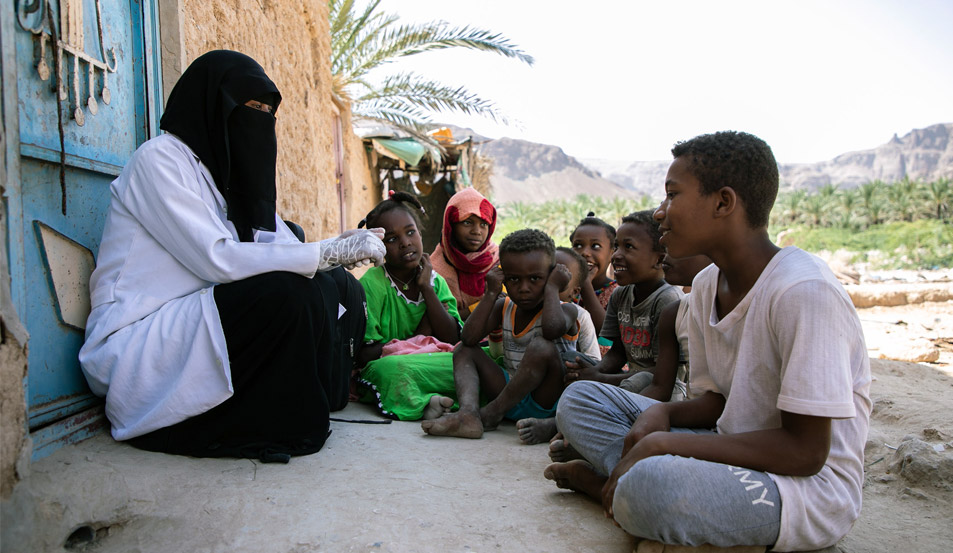
22 March 2022 - The 2020 World Malaria Report estimated that 20.4 million Yemenis (65% of the total population) live in areas that are at high risk of transmission. Malaria is endemic in Hajar District, where torrential rainfall and subsequent pooling have created a fertile breeding ground for mosquitoes, cut off arterial roads to hospitals, and resulted in a large number of deaths.
Thanks to a partnership between the World Health Organization (WHO) and the King Salman Humanitarian Aid and Relief Center (KSrelief), residents have been given mosquito nets, aerosol sprays, free diagnostic tests, and medicine. To this end, seven centers were established to treat fevers in Aden, Lahj, Taiz, Al-Hodeidah, Hajjah, Shabwa, and Hadhramout, and 1,000 healthcare workers were trained on how to manage the disease and educate the public on warning signs.
Improving health care skills to save newborn lives
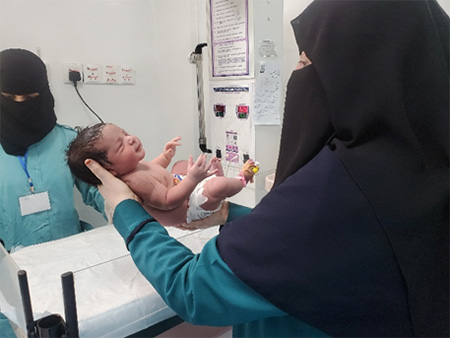 Sana’a, 21 March 2022 – Millions of newborn babies globally are denied the chance to grow and thrive due to complications in pregnancy and childbirth. In Yemen, estimates suggest that a newborn baby dies every 20 minutes.
To give newborns the best start in life, the health authorities in Yemen, with the support of WHO and the World Bank, are striving to improve the quality of care.
To this end, the health authorities have drafted a national operational nursing guide for newborns. The guide was developed by an expert group of paediatricians, nurses and health care practitioners. It is now being pilot tested in intensive training to enhance the knowledge and skills of nurses working in neonatal intensive care units.
Over the past three weeks, 24 senior nurses from 16 hospitals in seven northern governorates (Al-Hudaydah, Saa’da, Hajjah, Ibb, Dhamar, Al-Mahweet, Amran) have come together to look at how to build nursing skills for newborn care across hospitals in Yemen. The 17-day training, which took place in Al-Sabeen hospital in Sana’a, included four days of theory and a strong on-the-job practical component.
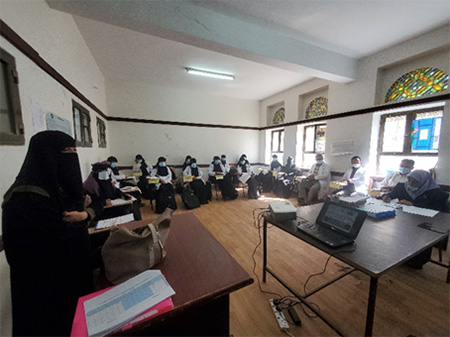 One of the participants, Tahani Al-San’ani, a nurse from Al-Jomhuri Hospital, Al-Mahweet Governorate, described how valuable she found the training and says she hopes more health workers will be able to benefit from this experience.
“This training helped me develop my skills and knowledge on blood transfusion, how to prepare for it and what are the measures followed afterwards. I hope this kind of training will continue being provided for health care workers, and the skills we’ve learned will be transferred to our colleagues in other governorates,” she says.
WHO and the health authorities are planning to include the nursing skills identified during the training as necessary within the national nursing guide.
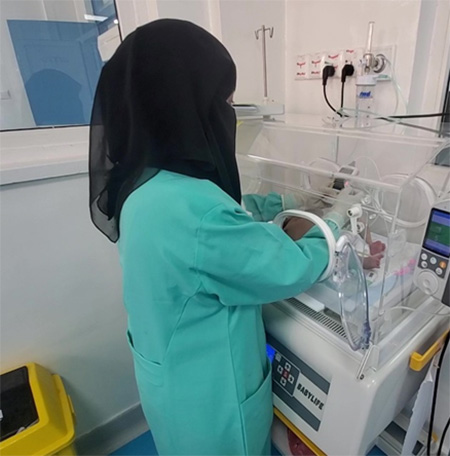 WHO will also work with the authorities to conduct regular visits to supervise the performance of the trained staff. The supervision teams will also review nursing care records for neonatal health indicators to see if there has been an improvement in performance.
Drawing on the lessons learnt from this pilot training, further training sessions are planned for the southern governorates.
Note: The Emergency Health and Nutrition Project (EHNP) implemented by WHO with support from the Word Bank, has contributed towards the delivery of essential services in 72 hospitals in Yemen between 2017 and 2022. Since September 2021, the Emergency Human Capital Project (EHCP) has been providing essential health and nutrition services to the Yemeni people.
Learn more: