

Sélectionnez votre langue
The Czech Republic extends support to the WHO-led cholera response in Syria
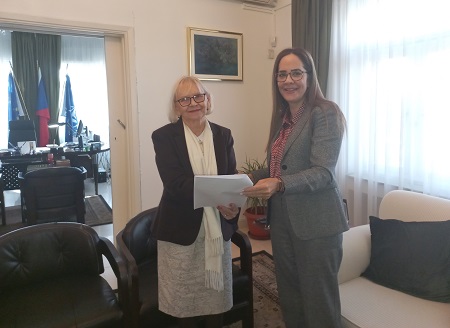
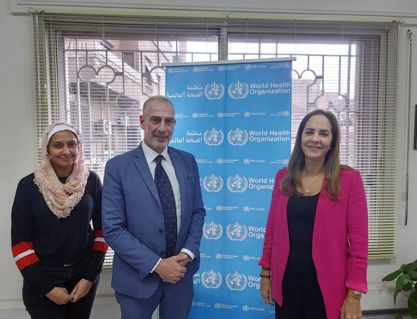
H.E. PhDr. Eva Filipi, Ambassador Extraordinary, and Plenipotentiary of the Czech Republic to the Syrian Arab Republic and Dr Iman Shankiti, a.i WHO Representative in Syria 16 January 2022 – The Government of the Czech Republic has contributed a generous donation of US$ 150 000 to boost WHO’s efforts in combating the cholera outbreak in Syria.
Eleven years into the conflict, damage to the water and sanitation infrastructure in Syria have left much of the population dependent upon unsafe water for their daily use, placing them at greater risk of cholera infection and waterborne and foodborne diseases. Health care facilities also face unsafe water supplies and poor sanitation infrastructure, placing patients and health care workers at risk.
“Safe water, sanitation and hygiene (WASH) are crucial to human health and well-being. Adequate WASH services are not only a prerequisite to health but also contribute to livelihoods and help create resilient communities living in healthy environments,” said Dr Iman Shankiti, WHO Representative a.i. in Syria.
“WHO extends its appreciation to the Government of the Czech Republic for its kind contribution which comes at a crucial time, as multiple efforts join hands to prevent the spread of cholera and alleviate the suffering of the Syrian people,” Dr Shankiti added.
WHO has been working to align and strengthen the collaborative efforts of stakeholders within multisectoral coordination platforms to ensure adequate support for all aspects of WASH in health facilities. With the Czech Republic’s kind donation and in cooperation with the Ministry of Health and WASH sector partners, WHO aims to prevent the further spread of the disease by enhancing infection, prevention, and control measures within specific health care facilities in Deir-ez-Zor governorate through the rehabilitation of WASH facilities; ensuring the provision of safe drinking-water; improving drinking-water surveillance programms by providing water testing equipment and reagents, as well as conducting field-level hands-on training for equipment operations; and strengthening the capacity of central and government laboratories to conduct the necessary tests for food contamination.
Despite the prevailing challenges, WHO continues to support the WASH sector by collecting drinking-water samples and conducting testing for bacterial contamination across Syria. WHO has also provided support to establish safe water supplies in cholera treatment centres and has conducted infection prevention and control activities, playing a crucial role in minimizing the possibility of cholera transmission within health facilities.
Two million doses of oral cholera vaccines arrive in Syria
Damascus, 29 November 2022 – Trucks carrying two million doses of Oral Cholera Vaccines (OCV) arrived in Damascus, Syria, today.
Since the outbreak was declared on 10 September, tens of thousands of suspected acute watery diarrhoea (AWD) cases have been reported in all governorates.
“Both adults and children are at risk of contracting the disease, but children often bear the brunt of severe illness and death. Procuring and delivering the vaccines timely is a top priority for UNICEF as cases continue to be reported in Syria,” said UNICEF Syria Representative a.i., Ghada Kachachi.
The vaccines will be used in an immunization campaign starting on 4 December to reach vulnerable people in the highly affected governorates: Aleppo, Ar-Raqqa Al -Hassakeh, and Deir ez-Zor.
“Cholera is a public health threat affecting the health of populations and imposing substantial costs on public health systems. The arrival of the cholera vaccine reflects the collective efforts of all partners on the ground to curb the spread of cholera and enhance the humanitarian health response to protect, promote and secure the health of all Syrians in need across the country,” said Dr Iman Shankiti, WHO a.i. Representative in Syria. “These vaccines are part of a comprehensive response, and in order to curb the outbreak, we must ensure we continue our joint efforts to improve water networks, increase awareness among the population, and provide treatment to affected patients,” Dr Shankiti added.
WHO and UNICEF, with the Ministry of Health, are implementing a multisectoral approach to control the outbreak. The agencies are mobilizing critical water, hygiene, and sanitation (WASH) and health supplies, response services, and expertise in the affected governorates. This includes providing cholera treatment kits and supplies, including rapid diagnostics tests and tablets for home-based water treatment. UNICEF supports the distribution of sodium hypochlorite to increase chlorine dosages and concentration at household water sources to prevent and curb the spread of the disease. UNICEF engages communities through selected media and dialogues, door-to-door visits, and key messaging on the causes, symptoms, and prevention of cholera.
WHO is working to continuously monitor water quality in high-risk areas, enhance cholera surveillance in high-risk areas at health facilities and community levels and strengthen lab capacities. WHO, UNICEF and health partners have also supported the establishment of oral rehydration points and diarrhoea treatment centers and are working on scaling up the national capacities for cholera case management, including extending cholera treatment services to the primary healthcare level to ensure all communities are served.
“While we are all working to respond to this outbreak urgently, it is equally important we invest in the health and WASH systems underpinning the essential services vulnerable children and families so desperately need,” added Representative Kachachi.
Notes to Editors
UNICEF’s complete AWD kits include oral rehydration solutions, medicine, soap, water purification tablets, and other infection control items to treat moderate and severe AWD cases.
WHO’s complete cholera kits contain intravenous fluids, essential medicines, and supplies for cholera and cholera beds.
About UNICEF
UNICEF works in some of the world’s toughest places, to reach the world’s most disadvantaged children. Across 190 countries and territories, we work for every child, everywhere, to build a better world for everyone. For more information about UNICEF and its work for children, visit www.unicef.org.
About WHO
Under its vision of Universal Health Coverage and the right to health care for all people, everywhere, WHO works worldwide to promote health, keep the world safe, and serve the vulnerable. Its goal is to ensure that a billion more people have universal health coverage, to protect a billion more people from health emergencies, and provide a further billion people with better health and well-being. Visit www.who.int.
For more information, please contact:
Eva Hinds, Chief of Communication, UNICEF Syria,
Christina Bethke, Emergency Team Lead, WHO Syria,
WHO welcomes Italy’s new contribution in support of the cholera outbreak in Syria
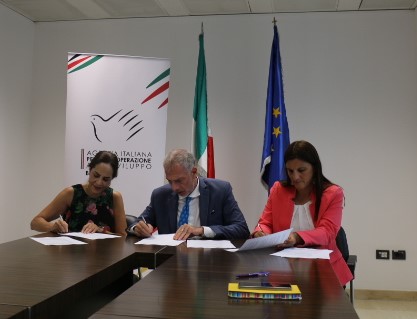 Dr Iman Shankiti, a.i. WHO Representative in Syria, Massimiliano D’Antuono, Chargé D’Affaires of the Italian Embassy in Damascus and Alessandra Piermattei, AICS Director for Lebanon and Syria26 October 2022, Damascus – Lending a humanitarian hand to protect the lives of the people of Syria, the Government of Italy has generously donated € 500 000 to support WHO’s response to the cholera outbreak in the country. This new fund aims at strengthening the capacity of 5 laboratories in affected governorates, thus enabling them to activate bacteriological testing and rapidly detect and identify epidemic diseases and outbreaks in hard-to-reach and high-risk areas.
“The Italian contribution will enable WHO to support health authorities to meet the increasing health needs of the affected populations who have been repeatedly impacted by health emergencies, the latest of which is the cholera outbreak,” said Dr Iman Shankiti, a.i. WHO Representative in Syria. “Supporting labs, at the peripheral level, and enabling them to perform cholera testing, is crucial for reducing morbidity and mortality among Syrians, in addition to delivering a timely response to the impacted communities,” Dr Shankiti added.
“Italy stands together with Syrian people and is committed to supporting them in facing their emergencies and needs. This contribution is in line with our support to WHO in the country, following a contribution focused on COVID-19 testing and another on the operationalization of COVID-19 vaccines, together with the distribution of around 4 million vaccines early this year,” said Massimiliano D’Antuono, Chargé D’Affaires of the Italian Embassy in Damascus.
 Dr Faiqa Kassim Ebrahim, Incident Manager, Cholera, Massimiliano D’Antuono, Chargé D’Affaires of the Italian Embassy in Damascus and Dr Iman Shankiti, a.i. WHO Representative in Syria“The contribution aims at preventing the spread of cholera more than has already been achieved. Providing timely sanitation supplies is critical to prevent and control the transmission of cholera and waterborne diseases. Only by providing for the tools, we can make sure that the country will be able to face future health emergencies," added Alessandra Piermattei, AICS Director for Lebanon and Syria.
This new donation will enhance the capacity of 5 microbiological laboratories in the governorates of Damascus, Lattakia, Tartous, Homs, and Hama, which have been functioning with limited capacity to conduct confirmatory testing due to a shortage of essential equipment and testing tools. The fund will also enable the establishment of 5 new laboratories in other governorates without existing testing capacity, including Aleppo and Deir-ez-Zor, where the majority of cholera cases are reported.
On 22 October 2022, the Syria Ministry of Health reported a cholera outbreak in 13 of 14 governorates with a total of 44 deaths and 942 confirmed cases. Challenges on the ground are rapidly evolving due to the over-stretched health system, limited availability and accessibility of safe water, as well as an socioeconomic decline across the country.
WHO supports national polio, measles, and rubella vaccination campaign in Syria
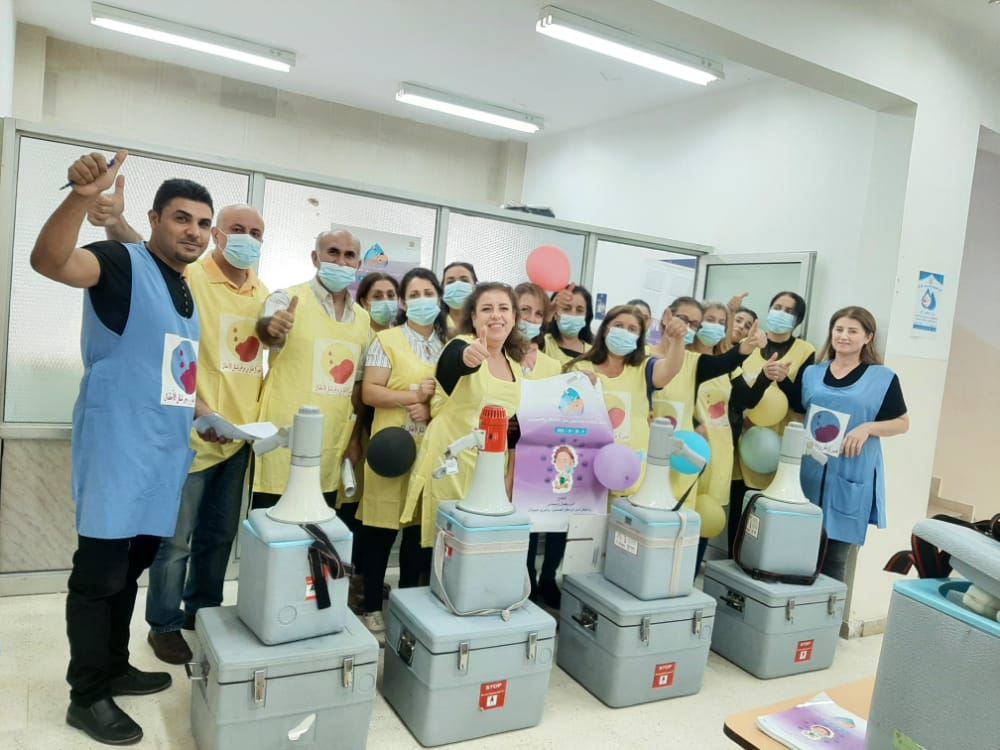
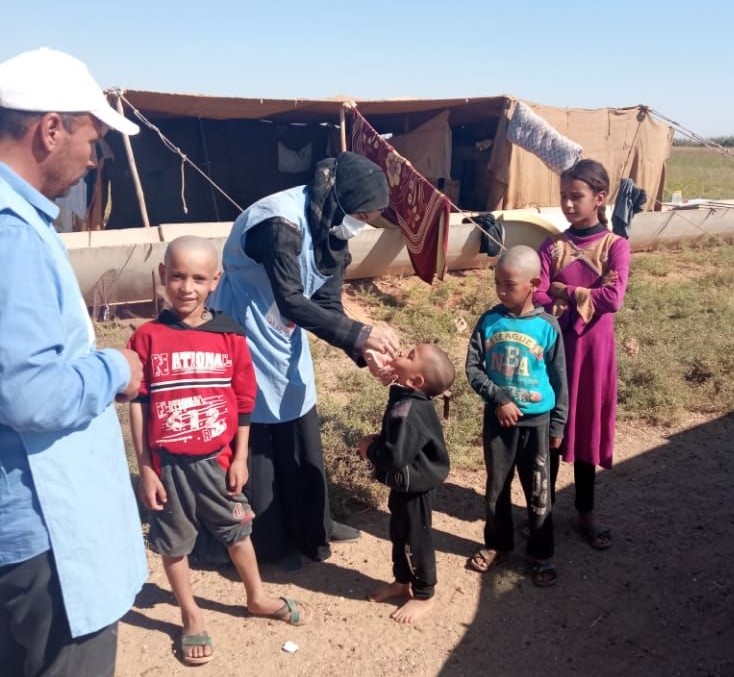 12 October 2022, Damascus – With support from WHO, UNICEF and Gavi, the Vaccine Alliance, the Ministry of Health in Syria has launched a polio, measles and rubella vaccination campaign across the country. The 10-day campaign, which began on 9 October 2022, aims to vaccinate 2.4 million children under the age of 5 in all Syrian governates, regardless of their vaccination status, with a special focus on camps and informal settlements.
“Keeping Syria polio-free has been a major priority over past years for WHO and partners, and we are exerting all efforts to maintain this achievement,” said Dr Iman Shankiti, WHO Representative in Syria, adding that, “The measles and rubella campaigns are equally important to prevent the occurrence of any outbreaks, increase the immunity of children under 5 years, and minimize the risk and exposure to measles, which began showing rising trends of late.”
Despite the socioeconomic challenges facing the country, more than 1034 health facilities and 793 mobile medical teams, supported by nearly 9500 health workers, are being mobilized to reach all children, especially in hard-to-access and remote areas.
WHO-supported vaccination mobile teams are also present in camps and informal settlements – particularly in northeast Syria – targeting over 28 000 children under 5 every 1-2 months. In 2021, 2 vaccination campaigns were conducted through a national immunization week, while another campaign in 2022 reached around 775 651 children under 5.
Prior to the campaign, WHO backed the Ministry of Health with planning, supervision, and capacity-building training to equip the health workers with updated information and guidance. WHO is also covering the campaign’s operational costs of transporting both the vaccines and the vaccinators. After the campaign, WHO will provide the needed support for the independent post-campaign evaluation.
“Despite the many challenges on the ground, WHO is working closely with all partners to ensure the sustainability of the Expanded Programme on Immunization activities so that every last child in Syria is protected and vaccinated,” Dr Shankiti said.
In 2022, the number of confirmed measles cases increased from 22 to over 100 cases due to the accumulation of susceptible children who hadn’t received routine vaccines. WHO is supporting 210 mobile teams, and more than 80 outreach sessions for remote areas, targeting about 48 000 children every month.
Since the conflict erupted in Syria more than a decade ago, humanitarian needs have continually increased, with new complexities adding to the burden of the Syrian people – already fatigued by the ongoing crisis and disease outbreaks. Now, more than ever, the children of Syria need our support to ensure the continuous implementation of immunization activities so that no child is at risk of vaccine-preventable disease.