

Sélectionnez votre langue
Flooding in Somalia raises concern about cholera in the midst of the COVID-19 outbreak
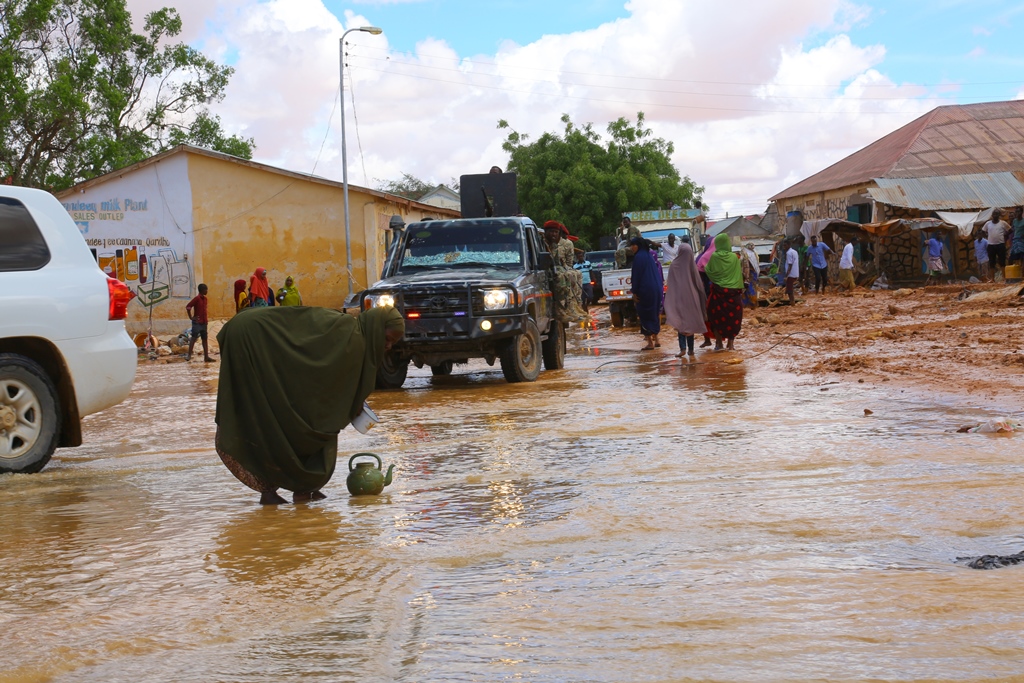
14 May 2020 – While Somalia deals with one of the world's biggest public health threats from COVID-19, which has so far claimed 52 lives in the country and infected 1219 people in less than 2 months, the country is also facing floods in the north that have killed 24 people and affected over 700 000 people in 24 districts. The flood has also displaced almost 283 000 people. Although all the 6 states have been affected by this flash flood, 3 states – Hirshabelle, Jubaland, Southwest and Puntland states – are worst affected. The flooding resulted from a sharp rise in the level of the Shabelle river following heavy and incessant rains in Somalia and Ethiopian highlands, which started in late April. As of 10 May, water levels reached 7.93 metres, which are 0.37 metres below the bank's full level of 8.30 metres.
The low lying areas of Belet Weyne town, such as Hawotako section and Koshin sections, have been acutely affected. The people displaced by the flood water are moving out of their homes to higher places in the nearby villages for shelter and are living in crowded settings. This is also raising concern about the elevated risk of COVID-19 transmission as the virus can be easily and rapidly transmissible in densely populated settings. In addition, there are concerns that the flooding may also result in an increased number of cases of acute watery diarrhoea and cholera. The country is already facing an upsurge of cholera case, especially in the areas badly affected by flooding.
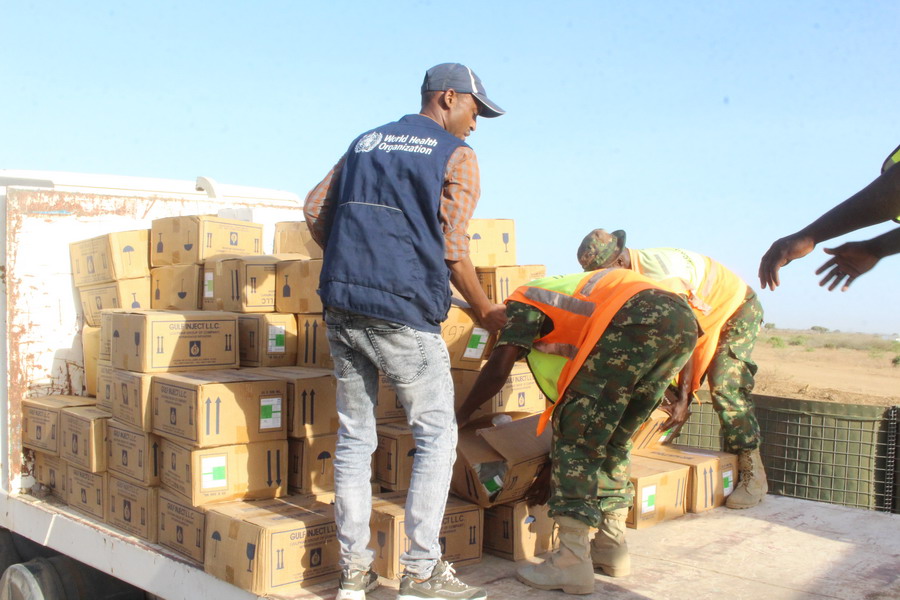
Last year, the country reported a total of 3069 suspected cases of cholera, including 4 associated deaths, while during the first quarter of this year, 3193 suspected cases, including 15 associated deaths were reported, raising concerns that the flooding may elevate the risk of transmission among flood-affected displaced populations with limited access to safe water and sanitation. WHO's country office has sent urgently needed essential medical supplies, including oral rehydration solution and cholera salines for affected areas using United Nations flights.
The flood has occurred at a time when Somalia is facing the challenge of limiting community transmission from COVD-19 and its fragile health system is struggling to cope with the pace in which the outbreak is spreading. The country is also facing one of the worst desert locust infestations in 25 years with new swarms reported in all states across the country.
Despite these threats, funding for humanitarian operations in Somalia remains very low. As of 10 May 2020, the revised 2020 Somalia Humanitarian Response Plan is only 16% funded (US$ 200 million out of $1 1254.3 million). WHO’s current funding request for the COVID-19 response is US$ 25.91 million of which only 30% has so far been funded.
WHO supports accelerated response efforts for contact tracing in Somalia as cases surge
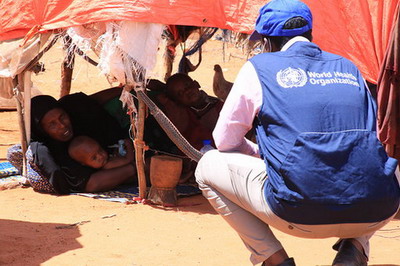
11 May 2020 – As the laboratory-confirmed cases of COVID-19 surge in Somalia, the country has also intensified its operations response to contain the epidemic. The WHO country office in support of this intensified response operations has deployed over 4000 community health care workers, each having to visit at least 5000 households every month for active case identification and contact tracing throughout the country.
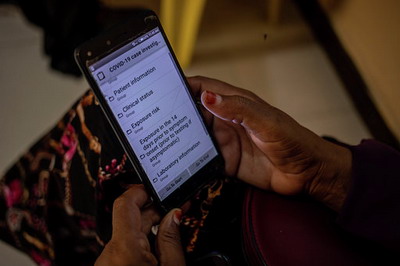 These community health care workers are being supervised by an additional 44 rapid response teams, formed at the district level. Once the community health care workers identify a suspected case through their house-to-house visits, information on the location of the suspected cases are automatically relayed to the rapid response team of the respective districts using open data kit – an open source software for collecting, managing and using data in resource-constrained environments. This data kit has been used in Somalia in the past for polio and cholera surveillance using mobile devices. The submission of the data to a server can be performed when internet connectivity is available. The rapid response teams, in turn, swiftly investigate the case and take appropriate action for testing, isolation and quarantine, as needed.
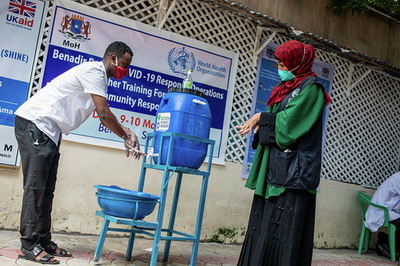 These community health care workers and members of the team were trained by WHO staff before deployment. The training included how to wash hands using soap and water, how to look for suspected cases and how to conduct contact tracing systematically. Despite various restrictions and lockdown, the operation has continued in all parts of the country owing to the commitment and dedication of national staff of the WHO country office who have been working hand in hand with the state and local authorities since the beginning of the epidemic.
Commenting on this massive operations, Dr Mamunur Rahman Malik, WHO Representative in Somalia, remarked, “We can only end this pandemic if we can end it in settings like Somalia, where our operational challenges in conducting house-to house case searching and contact tracing in remote, in accessible and security-compromised areas are a huge undertaking. We will continue to support this operation in the field until we see the end of this outbreak here in this country”.
Up until 11 May 2020, the country has reported 1054 cases, including 51 deaths, and recently there has been an upsurge in cases and deaths. Owing to the geographic vastness of the country and difficulty in accessing remote areas where travel by air was the usual means of reaching the population living in those areas, it has been extremely difficult to access these areas with humanitarian support during this long period of restriction and lockdown. The WHO country office continues to overcome these barriers by ensuring physical presence of contact tracers and other categories of health care workers on the ground who are the essential components of any surveillance and response system of a country for containing this unprecedented epidemic.
WHO's rapid response teams in Somalia are supported by European Civil Protection and Humanitarian Aid Operations.
WHO and European Union unite to fight a common enemy to humanity
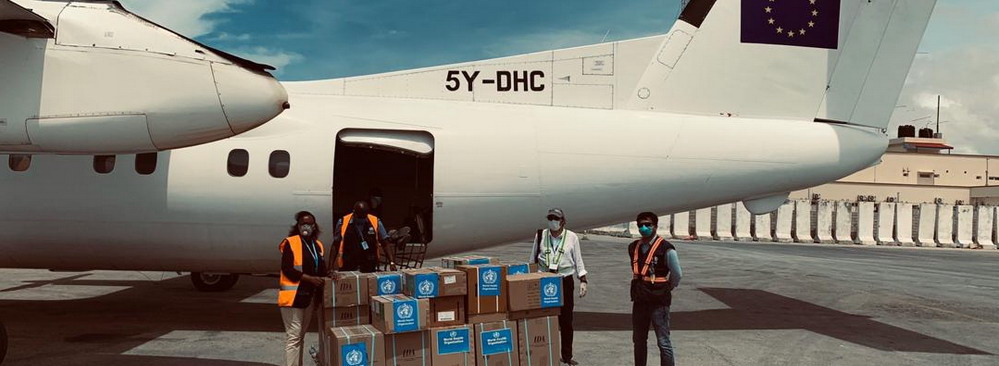
Mogadishu, 7 May, 2020 – The WHO country office and the Delegation of the European Union (EU) to Somalia have joined hands under a new collaboration in the country to strengthen operational response activities for COVID-19. The new collaboration aims to accelerate support for the frontline work of WHO in combating COVID-19 in a seemingly vast country where transportation of vital medical supplies and personnel needed for rapid response to the outbreak remain a perpetual challenge owing to suspension of commercial and cargo flights and the lockdown, which has cut off the capital city from rest of the country.
In this challenging and testing time, WHO has been offered EU flights to airlift critical medical equipment and supplies from Mogadishu to its final destination in Kismayo, the capital of Jubaland state. The equipment and supplies were urgently needed in the state for its isolation centre and the transportation of COVID-19 samples collected from suspected patients.
On the morning of 3 May, the flight picked up and transported 750 kgs of vital hospital supplies and medical equipment, including emergency medicines for patient treatment, from Mogadishu to Kismayo. These supplies and medicines are part of the Interagency Emergency Health Kit (IEHK), which provides essential health care in emergency settings for up to 10 000 people over a 3-month period. Due to the intense medical needs of patients affected by COVID-19, these vital medical supplies, and in particular, the medicines airlifted for treatment of acute respiratory diseases will be used to treat up to 600 COVID-19 patients in Kismayo’s Max Falka isolation facility, which will be opened in the coming week.
On return, the EU flight also picked up 29 samples from suspected cases of COVID-19 in Kismayo and before returning to Mogadishu, the EU flight also collected another 20 COVID-19 samples from Hargeisa, Somaliland. The EU flight then returned to Nairobi and all the 49 samples were handed over to WHO in Nairobi for sending these samples to the Kenya Medical Research Institute (KEMRI) for testing.
In the current race to limit further spread of COVID-19 in Somalia, the EU’s generous support has helped make an important difference in ensuring that suspected cases are tested rapidly and the public health measures are applied quickly thereby preventing transmission in the community. The EU’s support in transporting vital medical equipment and supplies for treatment of COVID-19 patients will ensure that no patient dies of COVID-19 because of lack of critical medical supplies in hospitals in any part of the country.
This new collaboration between the EU and WHO in Somalia is the result of a recently established bilateral coordination mechanism for COVID-19 response, whereby the EU is, inter alia, providing logistical and flight support to WHO for transportation of critical equipment and medical supplies, shipment of COVID-19 samples and personnel in this time of locked down while WHO is providing technical support and advice to the European Delegation for COVID-19 related activities, such as risk communications and awareness-raising initiatives in the country, which are supported by the EU. The collaboration will ensure, on one hand, the vital medical supplies reach the front lines to shield medical workers and save lives, and on the other hand, will ensure that the EU-supported activities, which are mostly implemented by the NGOs and regional health authorities, align with WHO’s strategic priorities for COVID-19 response. The European Civil Protection and Humanitarian Aid Operation (ECHO) of the European Delegation has also contributed funding support to respond to the emergency response appeal of the country office for its work on COVID-19.
Commenting on this successful collaboration, Dr Mamunur Rahman Malik, WHO Representative said “We have started a new collaboration with EU in this country as we continue to fight hard with a common enemy which is affecting humanity at greater speed than ever. The scale of this crisis demands an extraordinary response, a response that is bigger than the magnitude of this crisis. This coordination and solidarity at national level proves that we all need to stick together to get over this crisis together. We are not safe until everyone is safe”.
The new partnership between WHO and the EU delegation will help increase resilience to reduce the health and social impact of COVID-19 and all other future health emergencies in the country by protecting the vulnerable and keeping the country safe.
Somalia’s polio teams help combat COVID-19
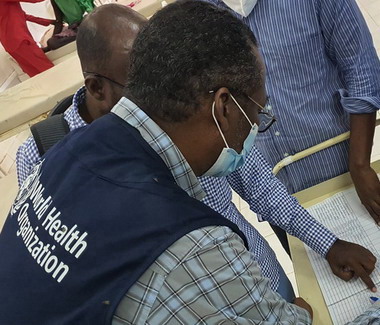 In Somalia, staff and volunteers from the country’s long-running polio programme have been trained to detect COVID-19 cases. Here, a trainee learns how to use a COVID-19 tracking database on her phone.4 May 2020 – “The road to the mountain village was rough. It’s only 50 kilometres, but it took more than 3 hours,” says Dr Fatima Ismail, a disease surveillance officer working in Somaliland. “We were bouncing in the car.”
In early 2020, Dr Fatima’s team headed to a remote village near Djibouti to check on a small boy. The boy’s right arm and leg showed a kind of paralysis that sometimes indicates polio. “The village polio volunteer in this mountainous area, geographically inaccessible, found an acute flaccid paralysis (AFP) case,” Dr Fatima remembers.
When children show signs of this paralysis, it’s critical to get stool samples to a laboratory to determine whether they have polio. Polio teams ride camels in the desert or donkeys in the mountains when they have to. They brave bombs to get samples out of conflict zones to laboratories. In brutally hot climates, they plug mini-freezers into car dashboards to keep samples cool.
All over the world, polio surveillance systems that have been built up over decades track infection sources, evaluate symptoms and transport samples to the laboratory — despite distance, natural disasters, and sometimes war. Now, this network of disease surveillance — reaching into the most far-flung corners of the globe — is being tapped to address the COVID-19 pandemic.
“In Somalia, the polio programme pivoted its workforce of thousands of frontline staff to support the effort as the cases of COVID-19 spread. Rapid response teams — made up of disease surveillance officers, community health care workers and volunteers — were trained to educate people about the virus and to test suspected cases. By April 2020, the teams were deployed in the field,” said Dr Mamunur Malik, WHO Representative in Somalia.
"In Somalia’s remote villages, they know us as their polio teams, and once they see us, what comes to their minds is that we’re giving them information about polio,” says Mohamed*, a surveillance officer. “So we also give them information about COVID-19. Social mobilisers tell them about COVID-19 symptoms, how to prevent getting infected, physical distancing, cleaning their hands very well with running water and soap.”
The careful procedures that the teams learned for polio surveillance have been adapted for COVID-19, where the required sample is a naso-pharyngeal swab. “We’ve trained our surveillance people on the case definition and how to collect the samples correctly, from cases that meet the case definition of a suspected case of COVID-19,” says Dr Fatima. “It’s the same infrastructure. After, when we collect the samples from the patient, we send it to the laboratory in Hargeisa.”WHO has given the laboratory equipment and supplies to test samples for COVID-19".
"As with polio samples, the samples of COVID-19 have to be refrigerated, the ice packs should be VERY cold,” says Mohamed. Teams are used to monitoring the packs’ temperature, even in Somalia’s hot weather.
“The logistical challenges we face with AFP/polio surveillance are still the same. This is the rainy season and the roads tend to be terrible,” says Mohamed. “You can’t get to certain places you normally get to, because of the situation on the road. Most of our vehicles can’t make it through the mud.” In those situations, teams work with other United Nations agencies to arrange special humanitarian flights to ship samples.
Frontline staff put their own lives on the line. In April 2020, the polio team lost a colleague due to COVID-19-related infection. Ibrahim Elmi Mohamed, who joined WHO in 2001, was working as a district polio officer in Lower Shabelle. His tragic death, one of many frontline staff around the world due to COVID-19, reminds us of the risks they face every day they go to work.
“Despite overwhelming challenges, teams are committed to continuing their polio work in tandem with the COVID-19 response. It is critical that polio surveillance continues during the pandemic, as Somalia is also fighting outbreaks of vaccine-derived polio type 2 and 3. With polio vaccination campaigns temporarily paused, the teams must be able to track any resulting spread of poliovirus and get ready to respond as soon as it is safe to do so,” says Dr Malik.
“All of us are still doing polio surveillance at the same time as we do surveillance for COVID-19," says Dr Fatima. “I used to hear from my colleagues that the polio surveillance system is the strongest disease surveillance system. Any polio surveillance team can work in the detection of COVID-19 cases because of the system’s structure, the capacity and experience of the teams.”
Mohamed agrees. “My surveillance coordinator said don’t leave the AFP surveillance behind, follow that normal routine, don’t forget it and leave it aside.’”
As Somalia grapples with the COVID-19 pandemic, its trained teams are working quickly to prevent the spread of both COVID-19 and polioviruses. “What gives me hope in the COVID-19 response is when I look behind and I see what we have done with the polio teams, the impact we’ve had on so many lives,” says Mohamed. “We face everything and we overcome it.”
*Family name withheld for security reasons