

Sélectionnez votre langue
Somalia’s teachers support drive to end polio
26 April 2026, Mogadishu, Somalia – Early on the morning of 19 February 2026, as the sun rose over Dhusamareb, the capital of Somalia’s Galmudug State, a vaccination team arrived at one of the local madrasas on the city’s outskirts where more than 100 boys and girls learn the Qur’an, guided by their teachers.
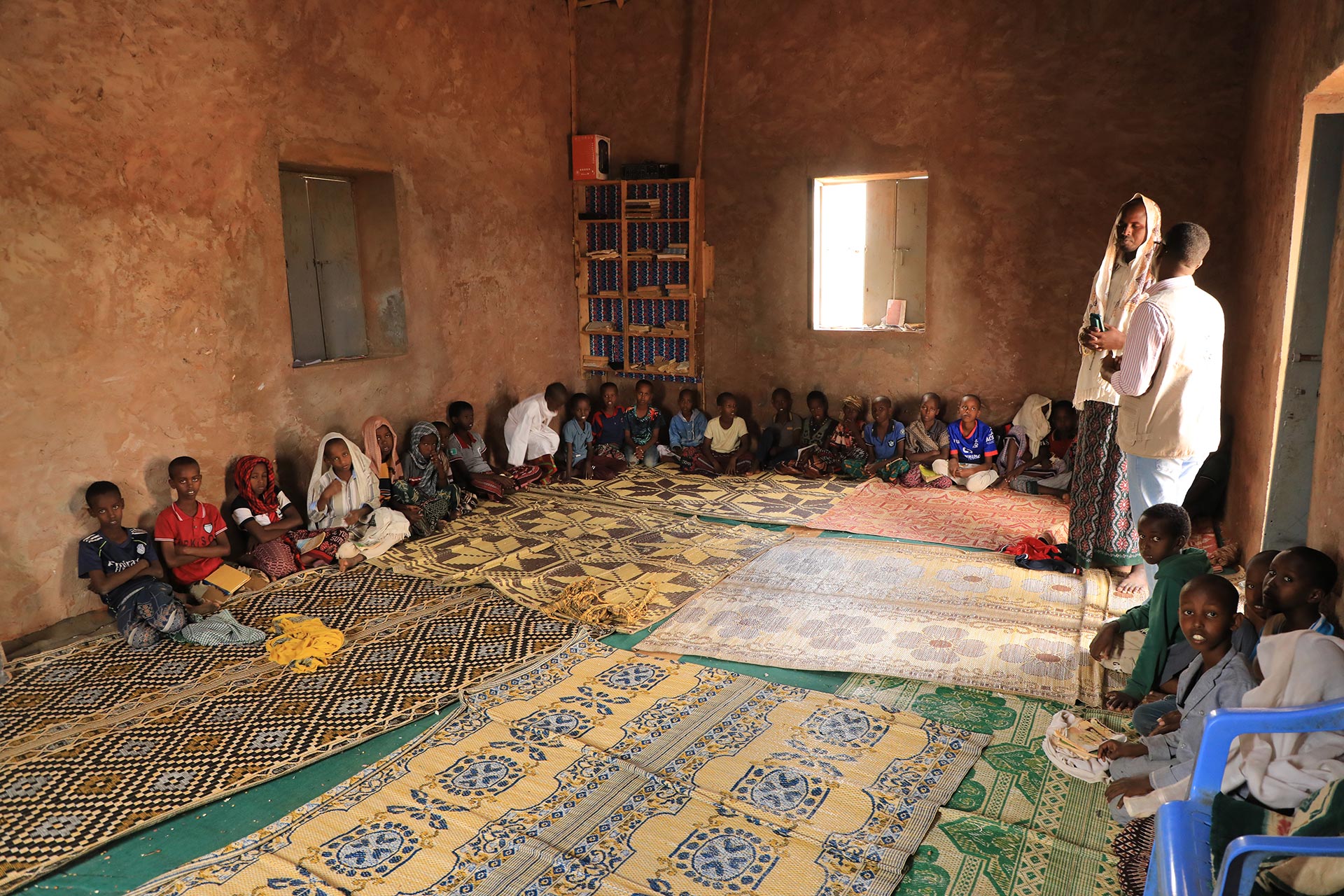 Madrasa teacher Abdullahi Elmi with a Ministry of Health team member inside his classroom, supporting efforts to promote vaccination among children. Photo credit: Diini Abdi Diini
As part of efforts to build children’s immunity in high-risk areas, a team of health workers searched for children aged 5 years to vaccinate. By the time the team set up, teachers had already organized the children, creating a calm environment. One by one, the children stepped forward to receive their vaccines, some curious, others shy, but all reassured by their teachers’ familiar faces.
Building bridges with communities
In Somalia, madrasas are more than places of learning. They are trusted social institutions. This trust makes them a vital link between health services and communities, especially where access to health information can be limited.
By opening their doors and actively encouraging participation and advocating for families to give their children the best shot at staying healthy, madrasa teachers help ensure no child is missed.
“I am a father of 5 and a Qur’an teacher for more than 100 students. Knowing the benefits of vaccination, I always call the vaccination teams to come to the madrasa,” said Abdullahi Elmi Mohamud, head of the learning centre.
 Teacher Abdullahi Elmi alongside Ministry of Health field teams at his Madrasa in Dhusamareeb, working together to ensure children are reached with life-saving vaccines. Photo credit: Diini Abdi Diini
In Somalia, where religious and educational leaders command the trust of their communities, their endorsement of vaccination campaigns helps ease concerns, counter misinformation and improve vaccine acceptance among parents.
Inside the classrooms, children sat attentively as health workers moved from one group to another, administering vaccines and recording doses.
Collaboration helps
Health workers say cooperation from madrasa teachers significantly improves outreach, especially in hard-to-reach areas or during outbreak response campaigns. In Somalia, where diphtheria remains a public health concern, such collaboration is critical to ensuring that every eligible child is reached.
“When religious educators and health workers work hand in hand, we build trust and move closer to protecting every child from preventable diseases,” said Aisha Ali Aden, a member of the District Health Management Team (DHMT) in Galmudug State’s Dhusamareb District.
Expanding immunization coverage
Recent data from Galmudug show steady progress in reaching young children, including those of school-going age. A total of 225 577 children under 15 years of age have been vaccinated against diphtheria in the region.
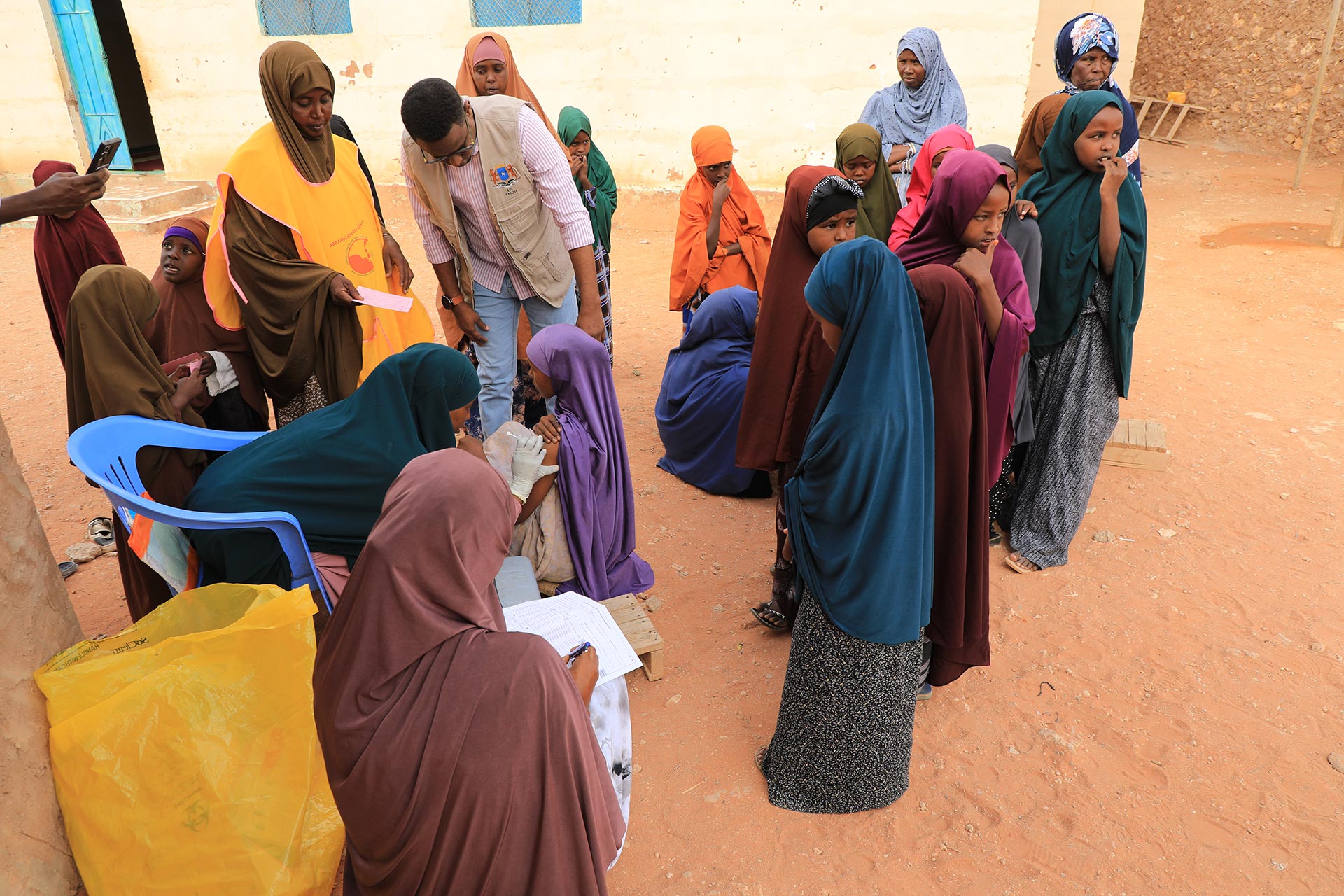 A child receives a vaccine during the diphtheria campaign in Dhusamareeb, Somalia, as other Madrasa students wait in line. Photo credit: Diini Abdi Diini
Children under 5 receive the pentavalent vaccine, protecting them against multiple life-threatening childhood diseases. Children aged between 5 and 15 years are covered with tetanus-diphtheria vaccines, an important measure in areas at risk of outbreaks.
Health authorities say these expanded strategies have helped reach targeted children.
Somalia has faced significant vaccine hesitancy in the past. However, sustained efforts to raise community awareness are driving change. Communities’ understanding and acceptance of vaccination are improving, helping protect Somalia’s children from preventable diseases.
For more information, please contact:
Khadar Hared, Communication Officer, WHO Somalia
Tel: +252619800011
Email:
WHO Somalia convenes field teams to set priorities on immunization, polio eradication and health emergencies
21 April 2026, Mogadishu, Somalia – World Health Organization (WHO) Somalia last week brought together its national and state-level field teams to review progress in immunization, polio eradication and health emergency response and set priorities for 2026.
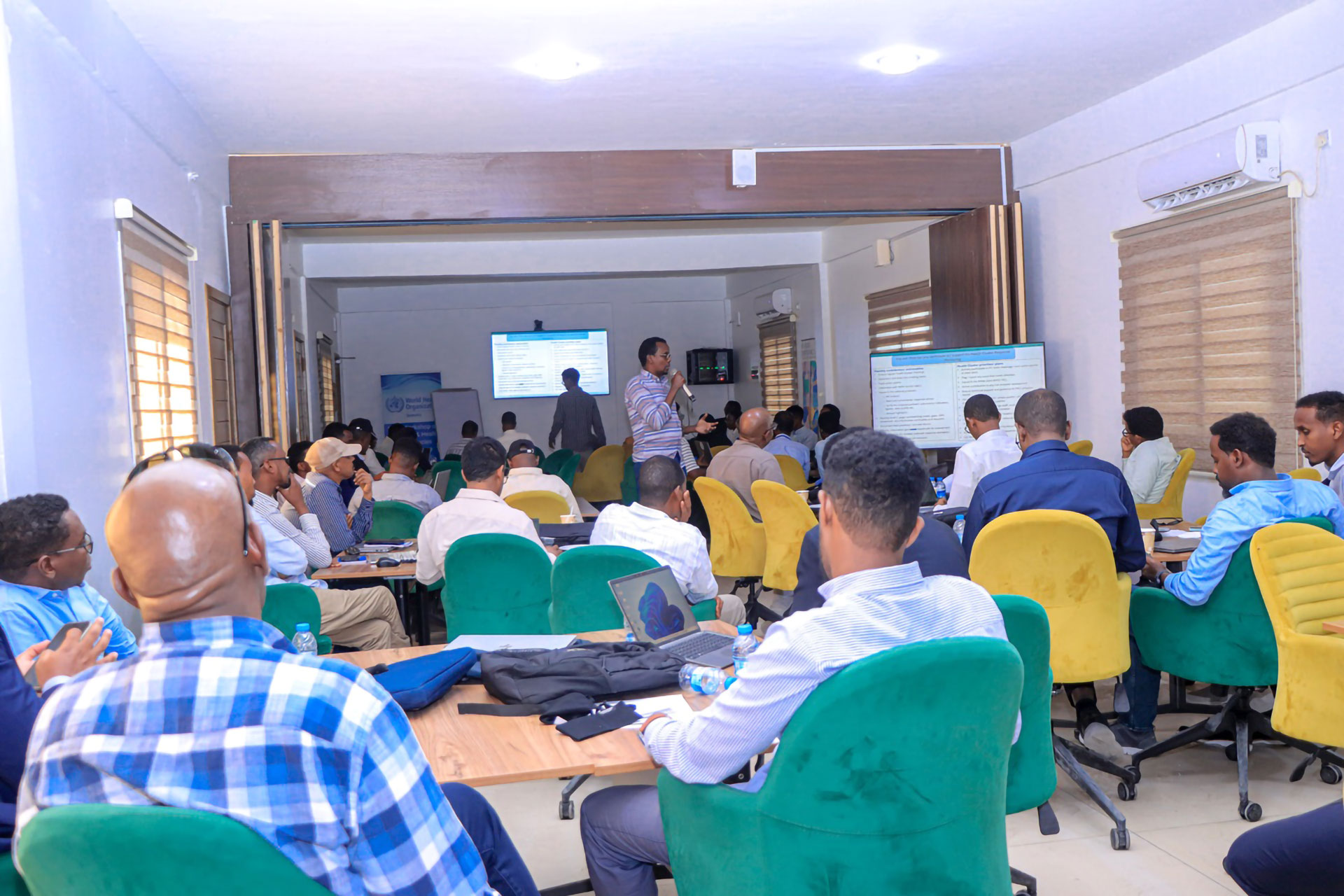 WHO Somalia’s national and state-level field teams convene in Mogadishu to review progress in immunization, polio eradication, and health emergency response, and to set priorities for 2026. Photo credit: Abdirahim Aweis, WHO/Somalia
During the meeting, participants assessed achievements from 2025, examined state-specific challenges and developed integrated operational plans to improve coordination, accountability and data systems.
The teams conducted a comprehensive review of programme performance and developed integrated operational plans to improve coordination, accountability and coverage, identifying gaps in implementation and opportunities to accelerate progress towards universal health and the health-related Sustainable Development Goals.
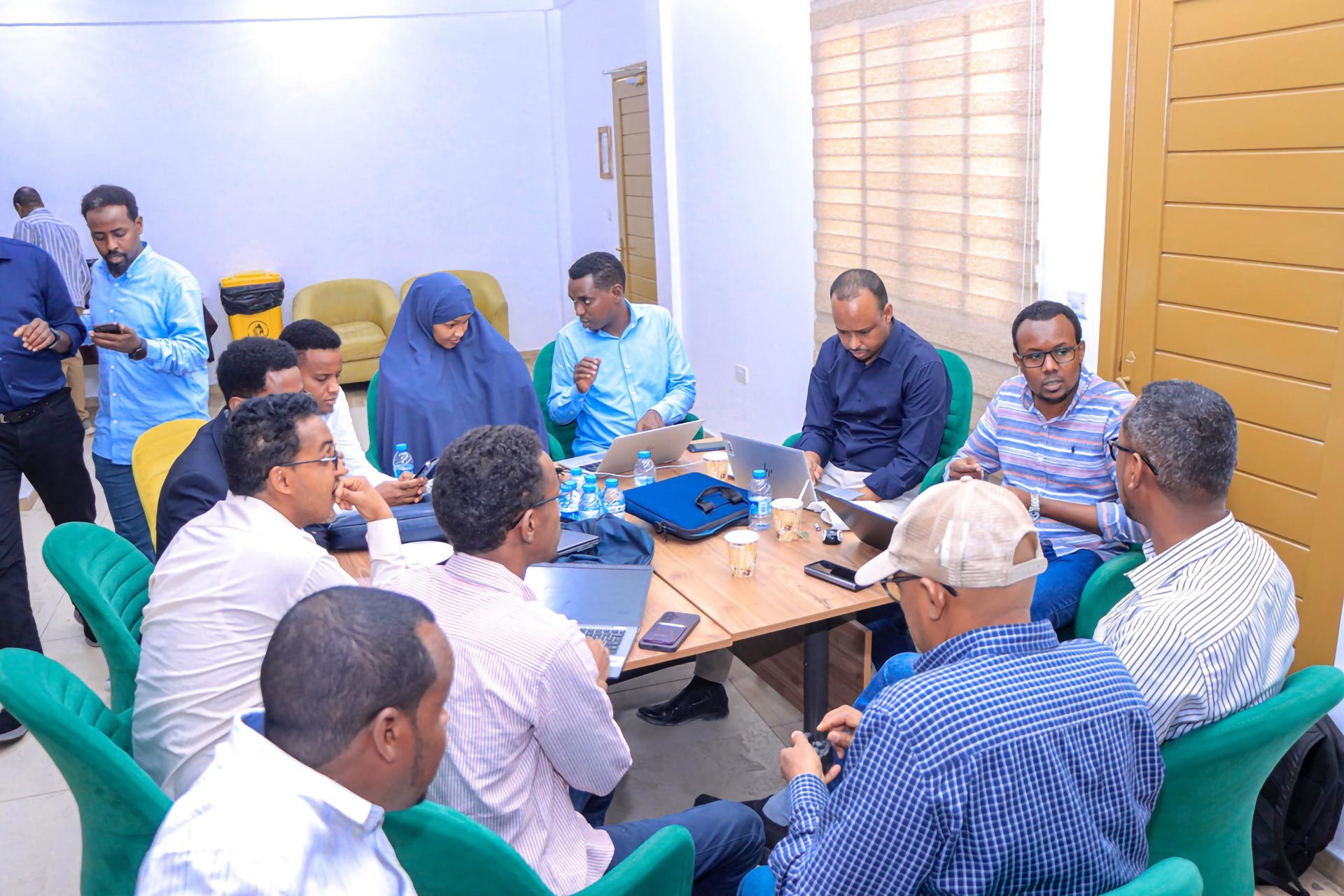 Field teams from national and state levels engage in discussions, exchanging insights and perspectives during the meeting. Photo credit: Abdirahim Aweis, WHO/Somalia
The discussions emphasized the need for a more bottom-up approach, ensuring that state-level insights shape national strategies and that interventions are better coordinated across sectors.
Sessions on logistics, emergency preparedness and drought response reflected a broader shift towards more integrated and resilient health programming nationwide. Participants highlighted the importance of strengthening last-mile delivery, enhancing preparedness for health emergencies in 2026 and improving responses to ongoing drought conditions.
 Participants break into groups for focused discussions and brainstorming on the way forward and priority actions for 2026. Photo credit: Abdirahim Aweis, WHO/Somalia
Sustaining high immunization coverage, closing immunity gaps and strengthening surveillance for polio and other vaccine-preventable diseases were identified as critical priorities.
 Group photo of participants following the conclusion of the five-day workshop. Photo credit: Abdirahim Aweis, WHO/Somalia
In his closing remarks, WHO Representative in Somalia Dr Kamil Mohamed urged teams to translate plans into action, calling for stronger collaboration and a continued focus on delivering measurable impact for communities across the country.
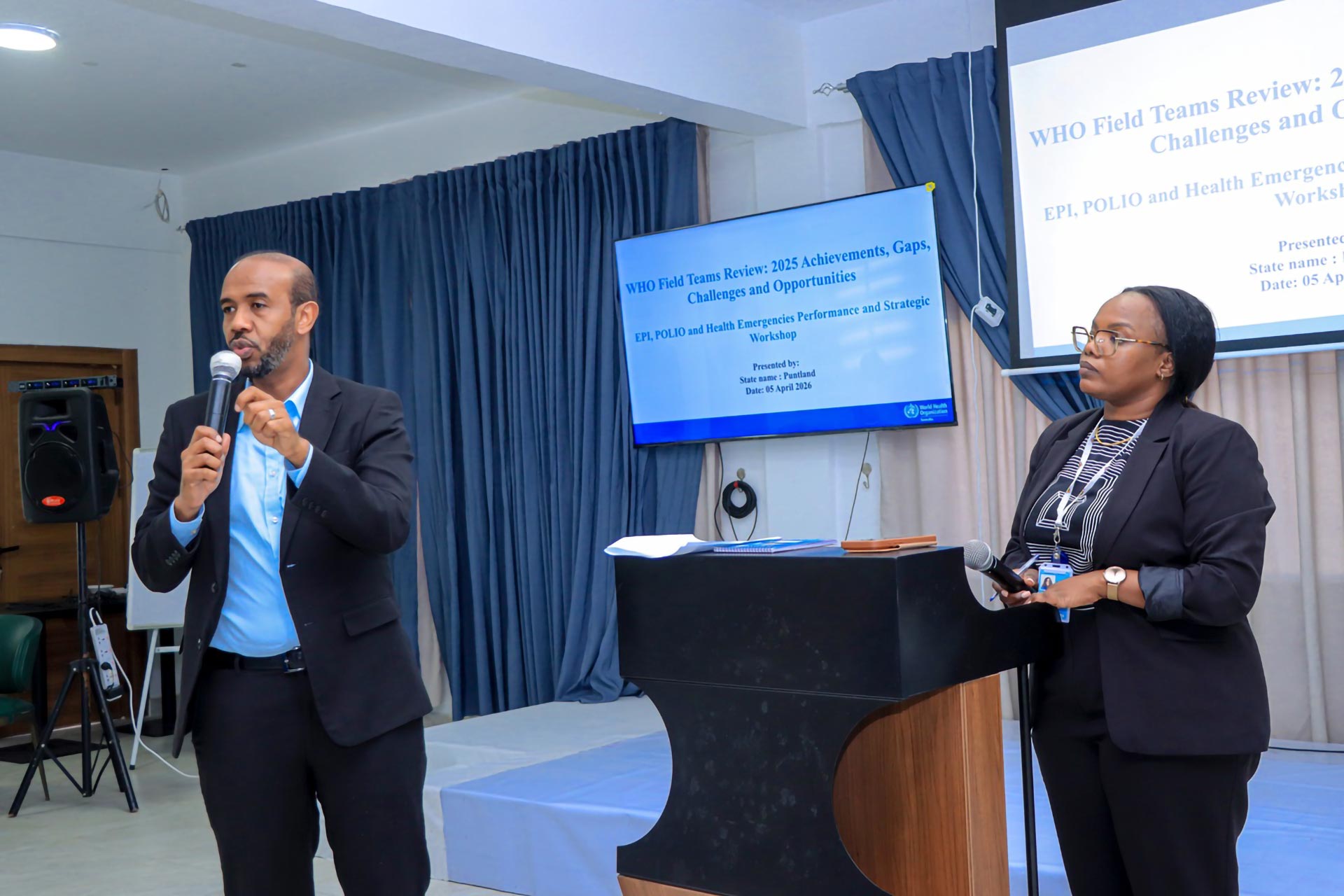 Dr. Ahmed Dahir, WHO Somalia’s EPI, Polio and Health Emergency Coordinator, addressing the participants, emphasizing the importance of translating plans into concrete action, strengthening collaboration, sustaining momentum, and delivering measurable impact for communities across Somalia. Photo credit: Abdirahim Aweis, WHO/Somalia
The meeting underscored a shared commitment to move from planning to action, with WHO Somalia, Ministry of Health and its partners prioritizing stronger coordination, improved data systems and integrated approaches to health programming. As teams align efforts for 2026, the focus remains on delivering measurable results, strengthening resilience and ensuring that communities across Somalia benefit from more responsive and effective health services.
For more information, please contact:
Khadar Hared, Communication Officer, WHO Somalia
Tel: +252619800011
Email:
WHO and AICS restore lifesaving services at Bakool Regional Hospital, renewing hope for families
20 January 2026, Mogadishu, Somalia – Hudur town, the capital of the Bakool region of south-west Somalia, is about 375 kilometres (km) from Mogadishu. For many years this remote region has struggled with conflict and prolonged drought. Most families in Bakool are either displaced or living in severe poverty, their livestock and livelihoods destroyed, leaving them with few options for survival.
 Bakool Regional Hospital in Southwest Somalia, serving communities across the region. Photo credit: Khadar Hared/WHO Somalia, communications officer
With limited access to health services, families across the seven districts of the region have been facing a serious health care crisis. Health clinics that once provided basic services have fallen apart, leaving mothers, children and older people with nowhere to seek help when they are sick. Without working health centres in their villages, families have no choice but to leave their homes and travel to the bigger towns in the region, such as Hudur town, to seek basic medical care.
In 2022, in response to the severe health challenges facing vulnerable families in Bakool, the Ministry of Health, in cooperation with the Italian Agency for Development Cooperation (AICS) and the World Health Organization (WHO), intensified efforts to address the region’s longstanding health care gaps. What began as an urgent intervention, has now grown into a coordinated push to restore essential services for communities in need.
This work is anchored in a 30-month project to improve essential health services using a hospital-based care approach. The initiative has reshaped access to health care for thousands of vulnerable families – 7266 households – mostly internally displaced people (IDPs) living across 76 settlements within Bakool.
For the first time in years, hope is returning to Bakool. Once strained by crumbling facilities and limited resources, the region’s main hospital is beginning to offer the kind of care families have long been waiting for.
Daynabo Ali Abdulrahman, a 50-year-old mother of eight – three boys and five girls – lives at the Garasweyne IDP camp in Hudur, not far from Bakool Regional Hospital. Daynabo’s family is among those households benefiting from the revitalized Bakool Regional Hospital, where several long-closed departments have been reopened and restored through support from AICS and WHO Somalia. For families like hers, these improvements are more than services – they are a lifeline, offering safety, dignity and the hope of a healthier future.
 The newly constructed operating theatre at Bakool Regional Hospital, built with support from WHO Somalia and AICS to strengthen surgical services. Photo credit: Khadar Hared/WHO Somalia, communications officer
“Life is a little easier for my family now. When my children get sick, we can take them to the Regional Hospital in Hudur. Back then, there were no health services at all, and we had to leave our village of Garasweyn, 50 km away, just to survive. Alhamdulillah, these changes give us hope, safety and a chance for our children to grow up healthy, even though life’s challenges are still many,” said Daynabo.
Thanks to generous support from AICS, key sections of the Bakool Regional Hospital – including the outpatient department, operating theatre and radiology unit – have been rebuilt, refurbished and fully equipped. Health workers have received critical training, the referral system has been strengthened and additional renovations have improved infection control, workplace safety and emergency response.
During a recent field visit, Dr Mohamed Ali Kamil and South-West State Minister of Health Sa'id Ahmed Ali toured the upgraded facilities. They praised the hospital’s leadership – supported by Action Against Hunger Somalia – for coordinating partner support effectively and restoring public trust in essential health services.
“The upgrades here in Hudur are a testament to what can be achieved through sustained partnership,” said Dr Kamil. “We are not just rebuilding buildings, we are rebuilding trust in the health system and ensuring families in Bakool and beyond receive faster, safer and more reliable health care.”
 An X-ray room at Bakool Regional Hospital, supported by WHO Somalia to improve diagnostic capacity. Photo credit: Khadar Hared/WHO Somalia, communications officer
For communities across Bakool and neighbouring areas, the impact is already visible. Patients are being seen faster, emergencies are handled more safely and families now feel confident seeking care closer to home.
These improvements mark more than just an infrastructure upgrade; they signal a stronger, more resilient health system for Somalia. By reinforcing regional hospitals like Bakool’s, the country is becoming better prepared to respond to future emergencies and deliver essential health services to every community that depends on them.
While the project has helped ease the hardships caused by recent droughts and disease outbreaks, the journey is far from over. Rebuilt infrastructure and solar-powered facilities have given communities a foundation on which to recover, but ongoing support for health workers remains crucial. The challenge now is to protect and sustain these hard-won gains – so that the lights in Bakool Regional Hospital keep shining, bringing hope, care and healing to families for many years to come.
For more information, please contact:
Khadar Hared, Communication Officer, WHO Somalia
Tel: +252619800011
Email:
WHO and ECHO support training for Somalia’s health workers on new guidelines to protect children from malnutrition
18 January 2026, Mogadishu, Somalia– In health facilities across Somalia, frontline health workers confront the same painful reality every day: children arriving too late, dangerously thin and already fighting for survival.
Acute malnutrition remains one of the country’s most persistent public health challenges, affecting children under-5, pregnant and breastfeeding women, and other vulnerable groups. In fragile and emergency settings, the difference between life and death often depends on how early a child is identified and how well health workers are equipped to respond.
 A WHO technical officer providing hands-on support to a Somali health trainee while assessing a child’s nutritional status at Banadir Hospital in Mogadishu
To reinforce lifesaving nutrition services, the World Health Organization (WHO), in collaboration with the Federal Ministry of Health, is rolling out Somalia’s 2025 updated national guideline for the prevention and management of wasting and nutritional oedema – also known as acute malnutrition. The revised guideline aligns with the latest global evidence and places prevention and early intervention at the centre of care.
More than 40 Somali health professionals from hospitals and stabilization centres across the country recently gathered for a two-week master training-of-trainers course, supported by the European Civil Protection and Humanitarian Aid Operations (ECHO) and WHO. The aim was to equip the national trainers with the knowledge and skills needed to cascade high-quality, standardized nutrition care to health workers nationwide.
“The main goal of this training is to build the capacity of frontline health workers and nutrition programme managers to effectively implement the 2025 Somali Integrated Management of Acute Malnutrition (IMAM) guideline,” said Dr Aweis Olow Hassan, Nutrition Officer at WHO Somalia.
Unlike previous versions, the revised guideline goes beyond treatment alone. It emphasizes prevention, expands care for infants under 6 months who are at risk of poor growth and development, and includes guidance for their mothers and caregivers. It also introduces protocols for moderate wasting and a comprehensive chapter on nutrition in emergencies.
“This guideline reflects the realities health workers face every day,” Dr Aweis explained. “It helps them identify risks earlier and act before children become severely malnourished.”
For participants like Dr Maryan Musse, Health and Nutrition Project Coordinator at World Vision Somalia, the training addressed long-standing challenges encountered in the field.
 WHO team member and a health officer comfort a child at Banadir Hospital during a practical session.
“In our work, we often see limited community awareness about nutrition and differences in how standard protocols are applied across health facilities,” she said. “This training provided clear guidance on case management and will help me support health care workers more effectively.”
Dr Maryan now plans to cascade the training to all World Vision-supported health facilities under her supervision, ensuring consistency and quality of care.
Similarly, Bihi Omar Wehlie, Health and Nutrition Programme Officer for Concern Worldwide, described the practical value of the updated guideline.
“The training helped me understand the new structure of the guideline, especially the stronger focus on prevention,” he said. “The expanded guidance on managing nutritionally at-risk infants under 6 months, pregnant and breastfeeding women, and nutrition support for HIV and TB patients was particularly important.”
By training national trainers, WHO and Somalia’s Ministry of Health are investing in a sustainable system that strengthens Somalia’s health workforce from within.
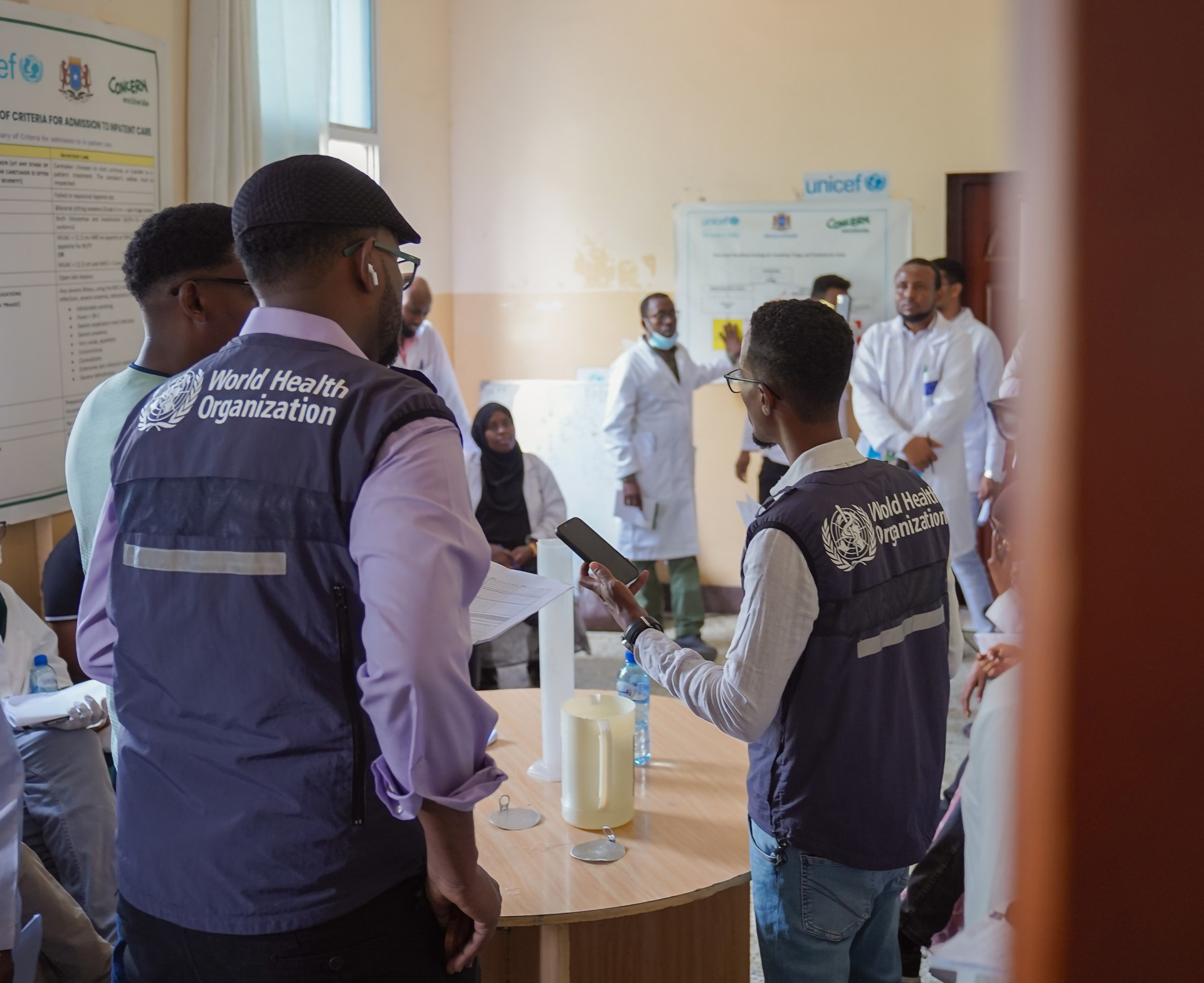 WHO nutrition officers conduct a training session for Somali health workers in Mogadishu. Photo credit: Translieu
“Developing a strong cohort of national trainers ensures knowledge can be continuously cascaded,” Dr Aweis noted. “This enhances service quality and improves child health outcomes across the country.”
But the responsibility does not stop at health facilities. Participants emphasized that communities and families play a crucial role in preventing malnutrition.
“My message to parents is simple,” said Bihi. “Seek care early. Prevention begins at home. The earlier we identify a problem, the stronger and healthier the child will be.”
Dr Maryan echoed the call, urging families to prioritize early breastfeeding, seek timely care and work closely with health workers to protect children and mothers from malnutrition.
As these trained health professionals return to their communities, they carry more than new guidelines – they carry renewed confidence, practical skills and a shared commitment to ensure that no child is left behind due to preventable malnutrition.
For more information, please contact:
Khadar Hared, Communication Officer, WHO Somalia
Tel: +252619800011
Email:
Spreading the word about vaccines in Somalia’s remote communities
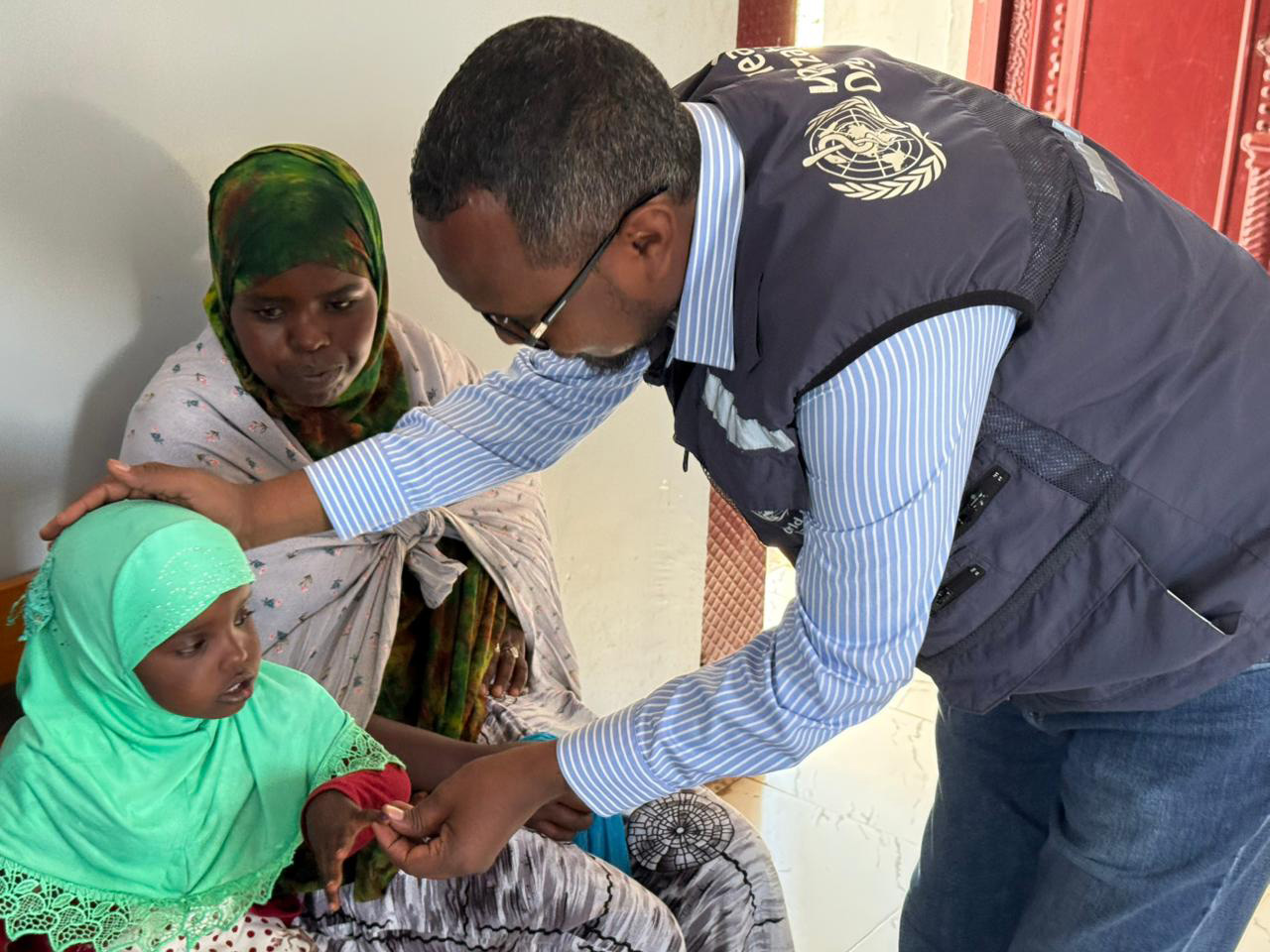 Dr. Husein Mohamed Abdi examines Masna’s finger mark after she received the necessary vaccines at the Maternal and Child Health (MCH) centre in Toon, near Hargeisa, Somalia. Photo credit: WHO, Khadar Hared30 October 2025, Mogadishu, Somalia – On the morning of 27 August 2025, the fourth day of nationwide efforts to deliver the new oral polio vaccine type 2 (nOPV2), health supervisors from WHO Somalia visited Toon, a small village about 20 km southeast of Hargeisa in Somaliland.
At the local maternal and child health centre in the village, the team met 25-year-old Somali mother Hamda Awil Jama and her three-and-a-half-year-old daughter Masna Abdirizak. To their surprise, Hamda revealed that Masna had never received a single routine childhood vaccine.
“I thought I was just bringing Masna for a nutrition check,” recalls Hamda Awil Jama. “But then my daughter received her very first vaccines.”
Hamda explains how the situation arose. “After moving to the village of Jibase I went to the maternal and child health centre in Toon village, 7 km away, to have my daughter checked for nutrition. Before we moved to the village, we were pastoralists and farmers living deep in the Hawd area. I gave birth to my daughter Masna in a place where we had no knowledge of immunization and no access to health services.”
The Hawd area is a stretch of remote bushland along Somalia’s border with Ethiopia. Like many children from pastoralist families who are constantly on the move, searching for grazing and water, Masna had missed all her vaccines.
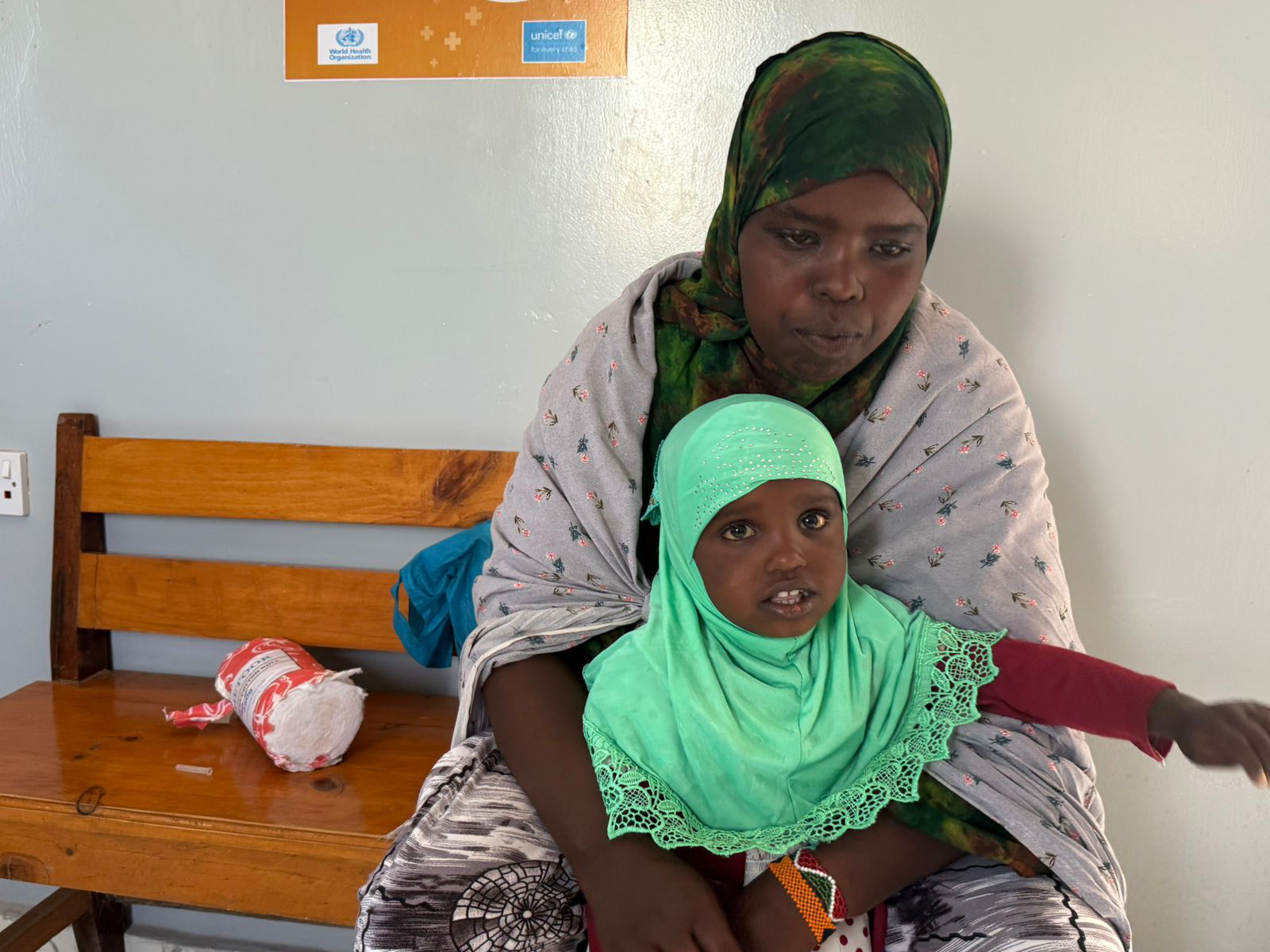 Hamda Awil Jama cradles her daughter, Masna, as they wait for her turn to receive the vaccine at the Maternal and Child Health (MCH) center in Toon village. Photo credit: WHO, Khadar HaredHamda and her daughter had walked to Toon village. When they arrived at the centre, team members asked about Masna’s vaccination status. When it became clear the three-and-a-half-year-old was a zero-dose child, the health workers explained to Hamda how vaccines protect children from deadly diseases, especially during the first 5 years of life, and why completing all doses is crucial.
Masna then received her first essential vaccines. “And now she is doing well,” says her mother. “I have seen no problems with the vaccines – only hope for my daughter’s life and future.”
After Masna received her first doses of oral polio vaccine, pentavalent vaccine, inactivated polio vaccine and measles-containing vaccine, Hamda felt both relief and a determination to ensure that Masna never again missed out on a lifesaving opportunity.
"Now I understand the importance of vaccines and how they protect my child I have been sharing my knowledge with mothers in similar situations. Even though I come from a rural area, I will make sure Masna never misses a vaccine again," said Hamda.
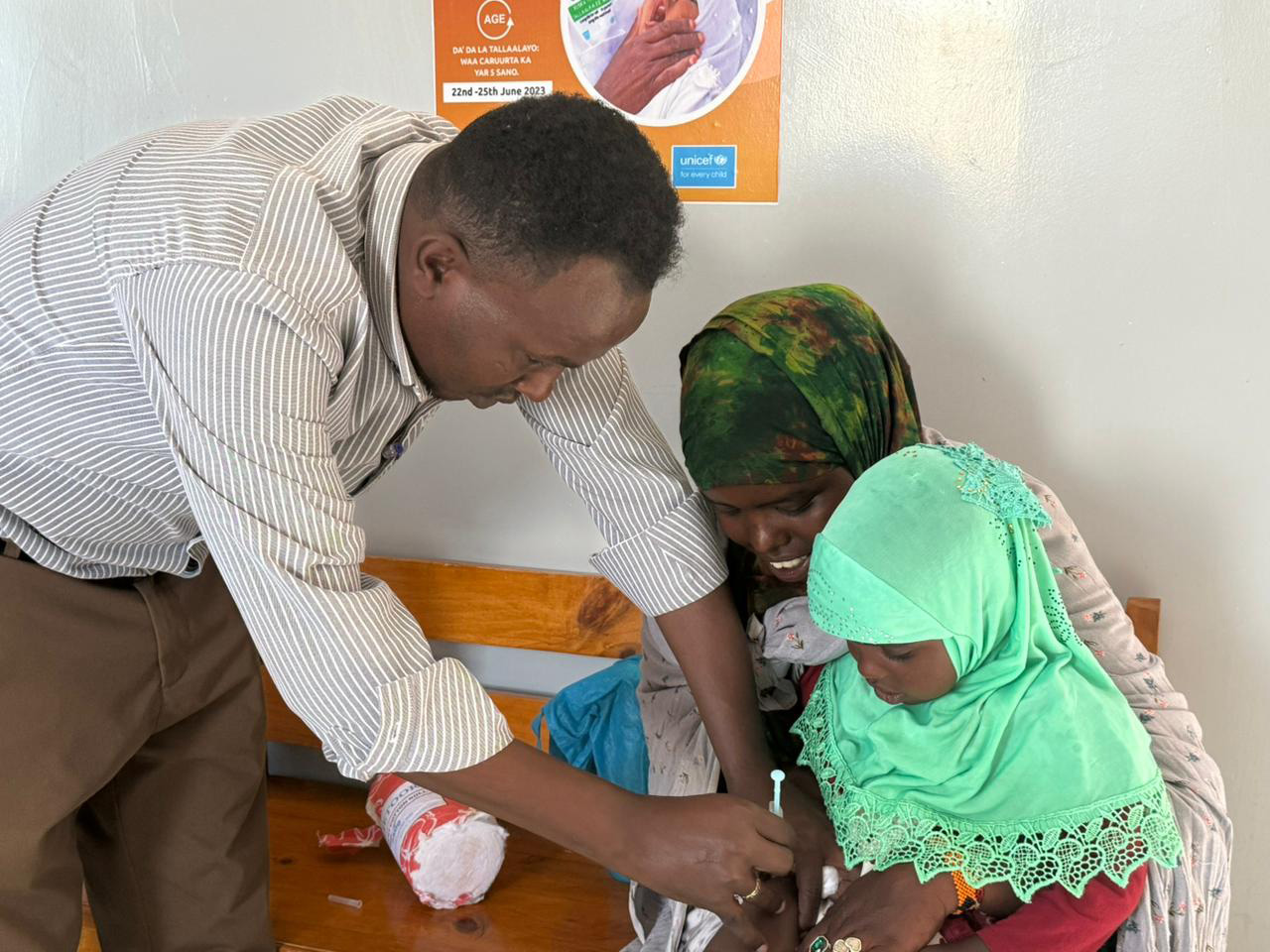 A health worker at the MCH administers vaccines to Masna, a three-year-old receiving immunizations for the first time since birth. Photo credit: WHO, Khadar HaredWhile reaching children in Somalia’s remote communities with vaccines is challenging, Hamda and Masna’s story reveals a simple truth – that every conversation with a parent helps ensure a child grows up healthy and protected.
For more information, please contact:
Khadar Hared, Communication Officer, WHO Somalia
Tel: +252619800011
Email:
Mothers lead the way to a polio-free Somalia
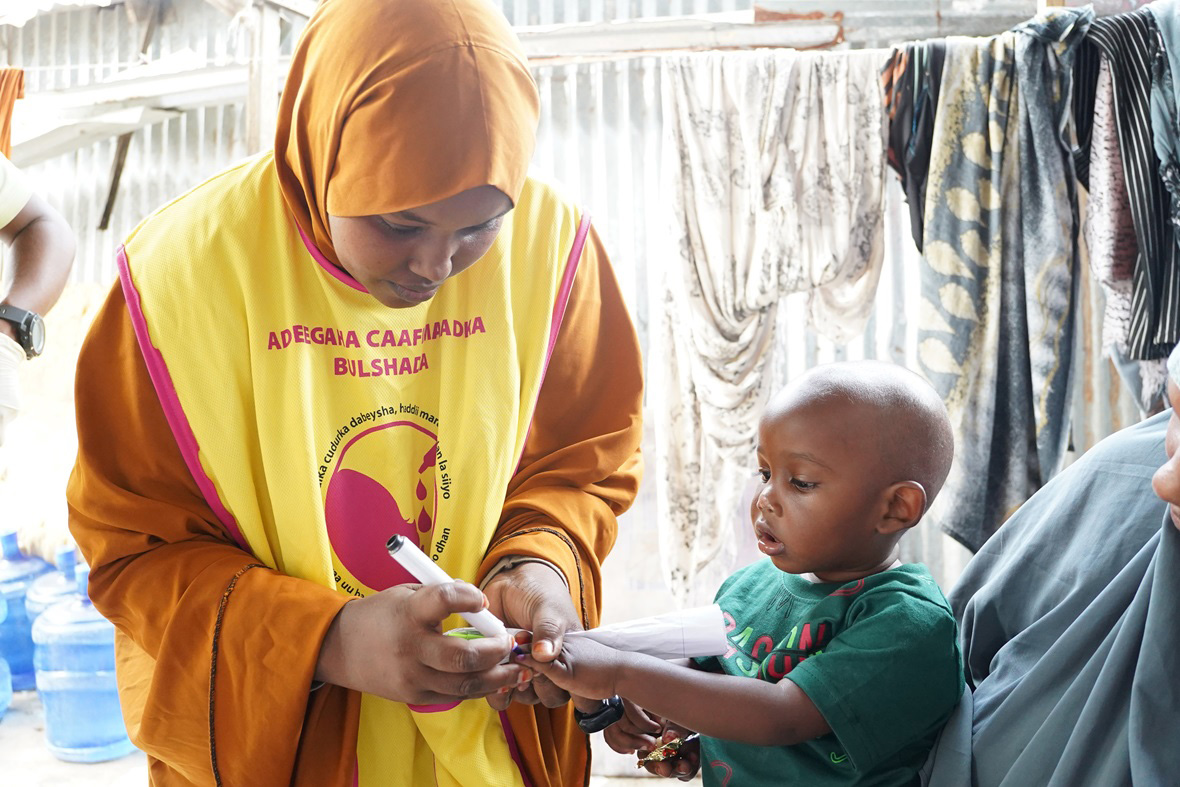
 Layla Omar Mohamed marks a child’s finger after administering the polio vaccine during the NID campaign in the Banadir region, Somalia. Photo credit: Abdirahim Caaylaawe30 October 2025, Mogadishu, Somalia – “When I walk through these neighbourhoods, I am thinking of my children and my community. Each time I knock on a door, I know I am bringing hope,” says Layla Omar Mohamed, a polio vaccinator in Mogadishu and mother of 4.
Across Somalia, mothers from all walks of life are helping to build a healthier future for their children by protecting them from polio.
Layla joined efforts to reach families in Mogadishu’s Hodan district with vaccines in July 2019. Armed with her vaccine carrier, a winning smile and strong sense of purpose, she is among the many Somali mothers who have become vaccinators and health educators in their communities.
“Seeing the effects of polio – especially seeing children paralyzed – keeps me going. When I knock on a door, I know I’m helping to give children a real chance at a healthy future,” says Layla.
Layla, who holds a bachelor’s degree in public health from the University of Sombridge in Mogadishu, actively contributes to the Marwo Caafimaad Programme, a nationwide initiative for female health workers that aims to promote health awareness and expand access to health care in remote communities.
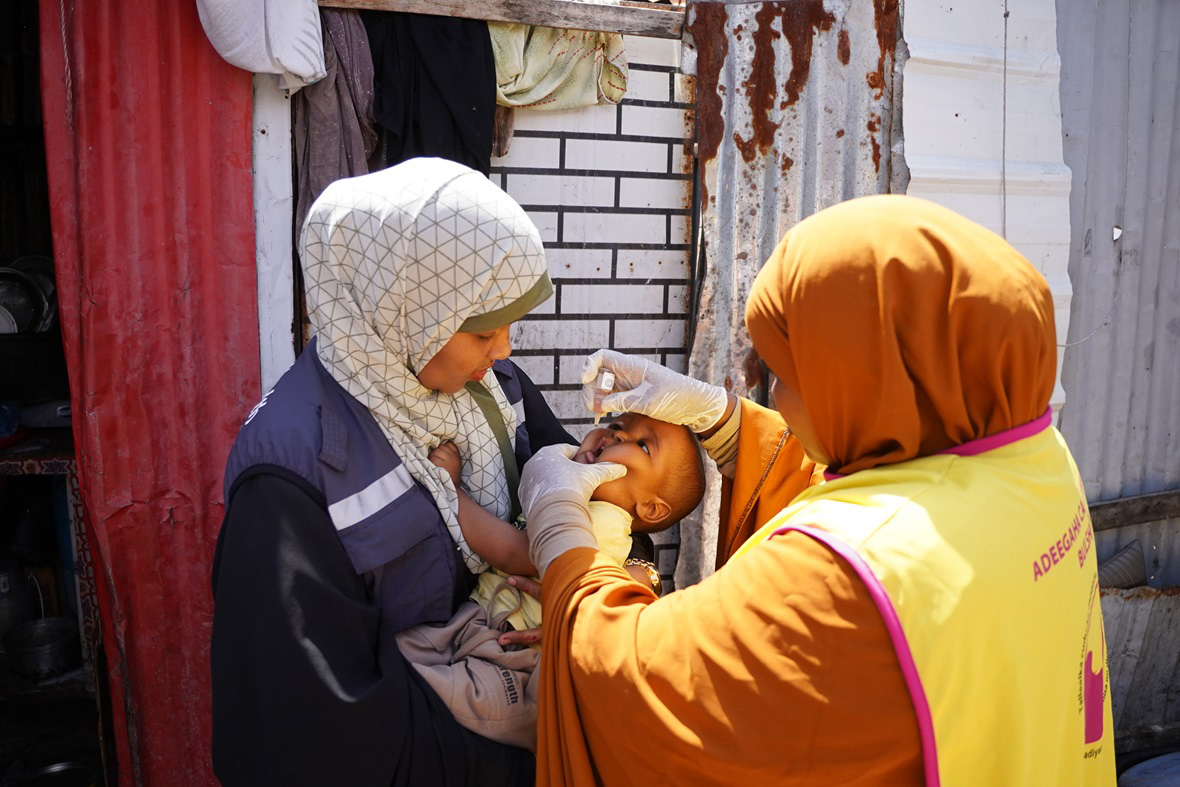
 Layla Omar Mohamed, a polio vaccinator in Hodan district of the Banadir region, administers polio vaccines during the National Immunization Days (NID) campaign held in June in Banadir, Somalia. Photo credit: Abdirahim Caaylaawe Through this government-led programme, Somalia’s Ministry of Health and Human Services recruits and trains women to provide essential health services directly to families in their homes. Their responsibilities include educating mothers about maternal and child health, delivering immunization, identifying symptoms of illnesses early and strengthening community connections to the health system. As part of the programme, Layla regularly explains the importance of getting children vaccinated against polio and other vaccine-preventable diseases.
Layla embodies the spirit of this year’s World Polio Day theme – ‘It’s not time to quit. It’s time to recommit’. Every day, she vaccinates children, answers parents’ questions and brings hope to families. Her unwavering commitment exemplifies the dedication needed to end polio in Somalia.
The fight against polio is more than a public health effort. It is a story of courage, persistence and hope. And it is being shaped by Somali mothers. From busy cities like Mogadishu to the most distant villages, women like Layla are leading the way.
For more information, please contact:
Khadar Hared, Communication Officer, WHO Somalia
Tel: +252619800011
Email:
WHO and ECHO provide essential aid for malnourished children in Somalia
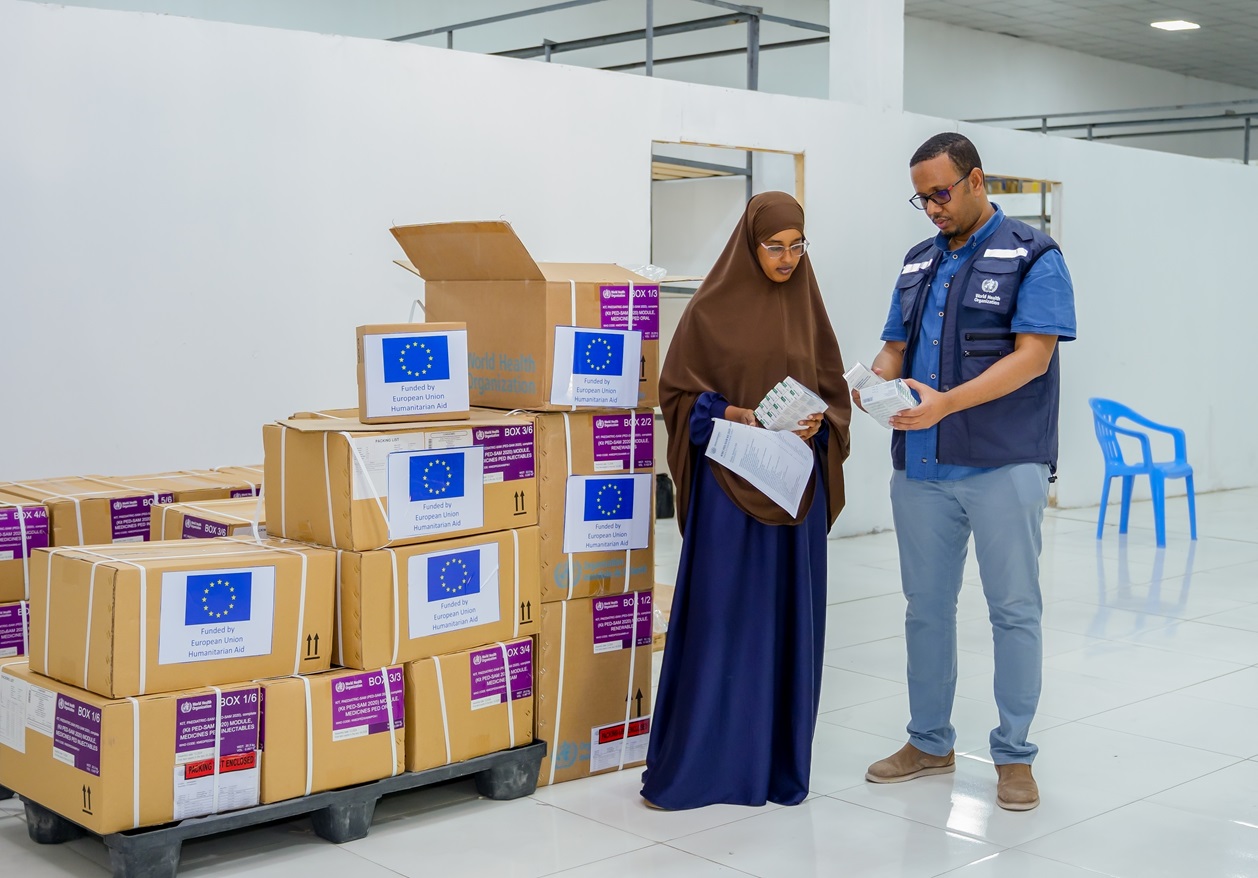 12 October 2025, Mogadishu, Somalia – Banadir Hospital in Mogadishu – Somalia’s largest paediatric referral public hospital – is at the forefront of efforts to address severe acute malnutrition.
Inside the stabilization centre, small hospital beds are lined up, each holding a child fighting not only hunger but illnesses like pneumonia, diarrhoea and dehydration. Nurses move quickly between them, administering essential medicines, checking oxygen and comforting worried mothers who have often walked long distances to find help. For many, Banadir Hospital is their last hope.
“Most of the cases we see are extremely, severely malnourished, and often come with many complications,” says Dr Mohamed Jama Hashi, a paediatric specialist at Banadir Hospital. “Some children arrive swollen, some need oxygen, others come in shock – their small bodies are fighting for survival – and severely dehydrated. The family members who bring them are often visibly malnourished themselves.”
Over the past few months the Hospital’s stabilization centre – Somalia’s main referral point for malnourished children – has seen a sharp increase in emergency cases. Families travel for hours, sometimes days, to reach the hospital, clinging to the hope that their children will survive.
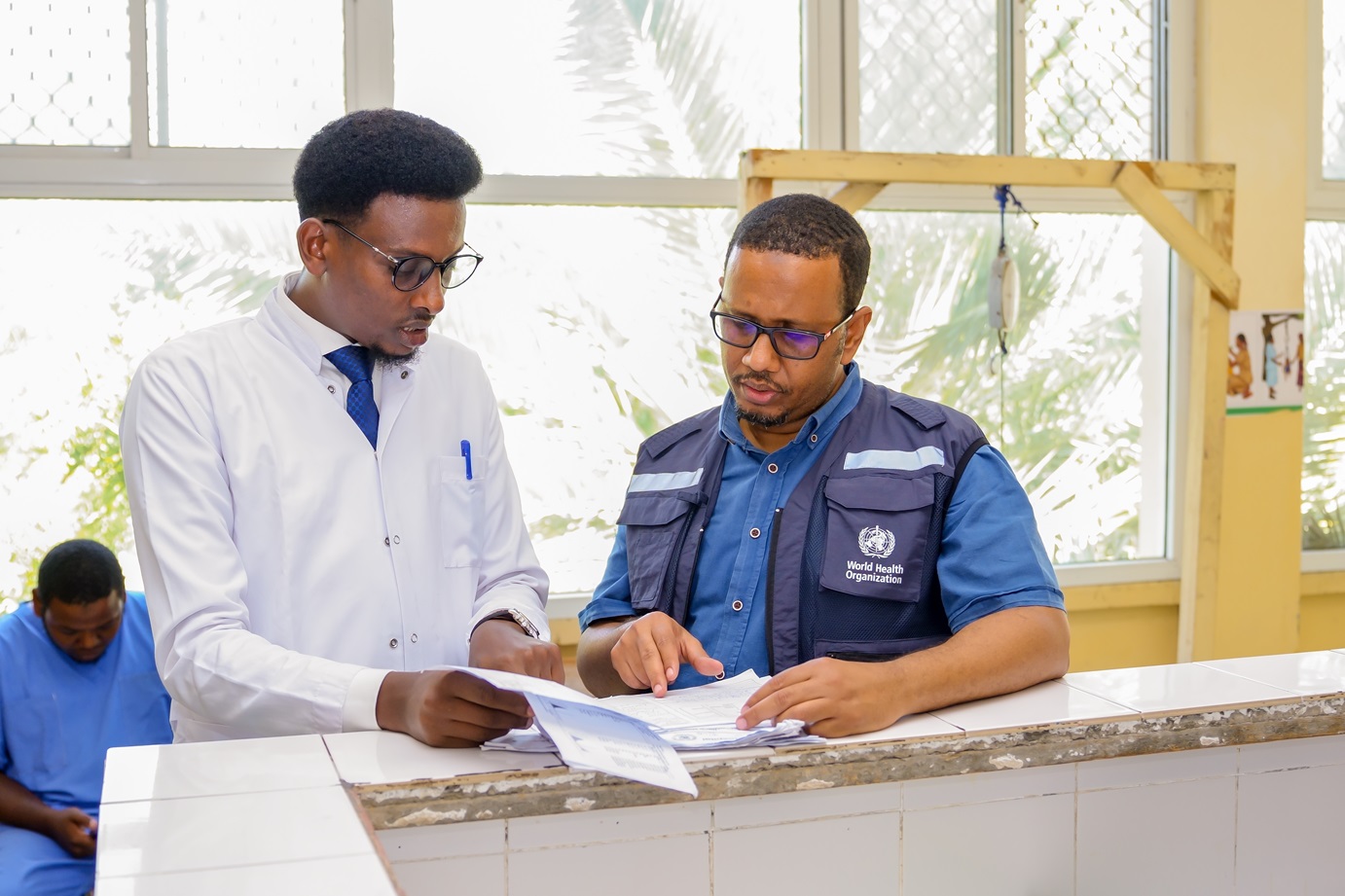 Timely access to essential medicines supports recovery and saves lives. For families struggling to feed their children amid drought and rising prices, finding free treatment here offers a rare sense of relief. “The medicines are critical because they address complications and play an important role in rehabilitation,” says Dr. Hashi. “They also prevent struggling mothers from having to search outside the hospital for treatment they could never afford.”
Supplies mean survival
Inside the ward, treatment begins immediately with essential medicines supplied through the World Health Organization’s (WHO) paediatric severe acute malnutrition (PED/SAM) kits. Delivered with support from European Civil Protection and Humanitarian Aid Operations (ECHO), the kits are designed for inpatient care of severely acute malnourished children with medical complications.
“These medicines are essential for managing the most complicated cases,” explains Dr Abdulmunim Mohamed, Nutrition & Health Technical Focal Point, WHO Somalia. “They help prevent and treat life-threatening complications. Their timely use is crucial in reducing mortality and giving these children a chance to recover.”
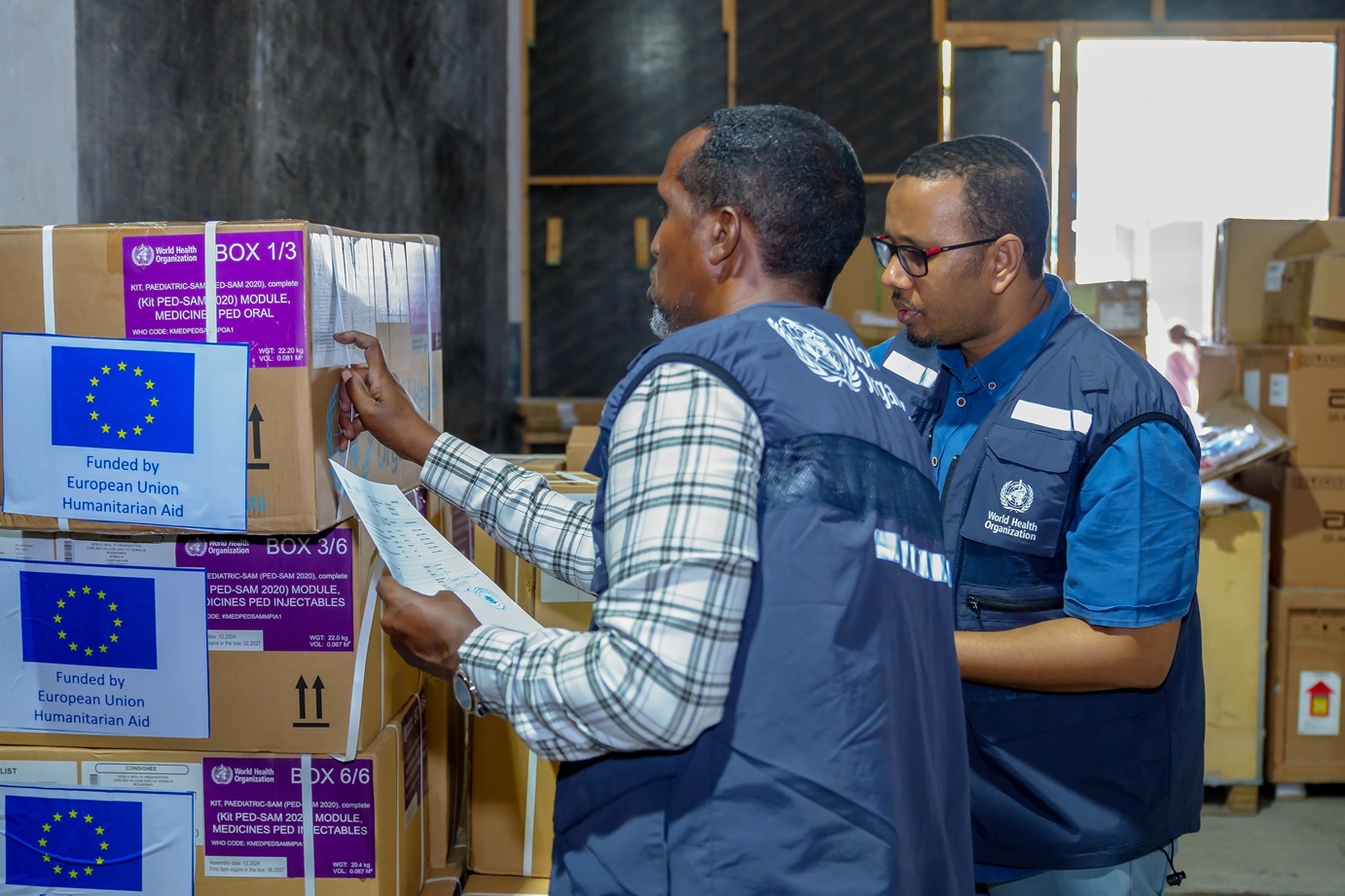 The supplies mean the difference between life and death for thousands of Somali children. According to Dr Abdulmunim, “ECHO’s support has been critical in saving lives today and strengthening systems for tomorrow, ensuring that Somalia’s most vulnerable children not only survive severe acute malnutrition but also access integrated health services that safeguard their long-term recovery.”
At Banadir hospital, the results are visible every day. Severely malnourished children who arrive on the edge of survival gradually regain strength. Family members, many exhausted from their own struggles with hunger, find hope in the knowledge that their children can recover. Parents who bring critically ill children to Banadir Hospital Stabilization Centre can trust that the Hospital is stocked with the essential medical supplies needed to provide quality treatment and reduce preventable child deaths.
ECHO’s contribution has been vital in ensuring that essential medicines reach families who would otherwise have had no access to them. “It is a programme we deeply appreciate,” Dr Hashi said. “Without it, many Somali children would not have survived.”
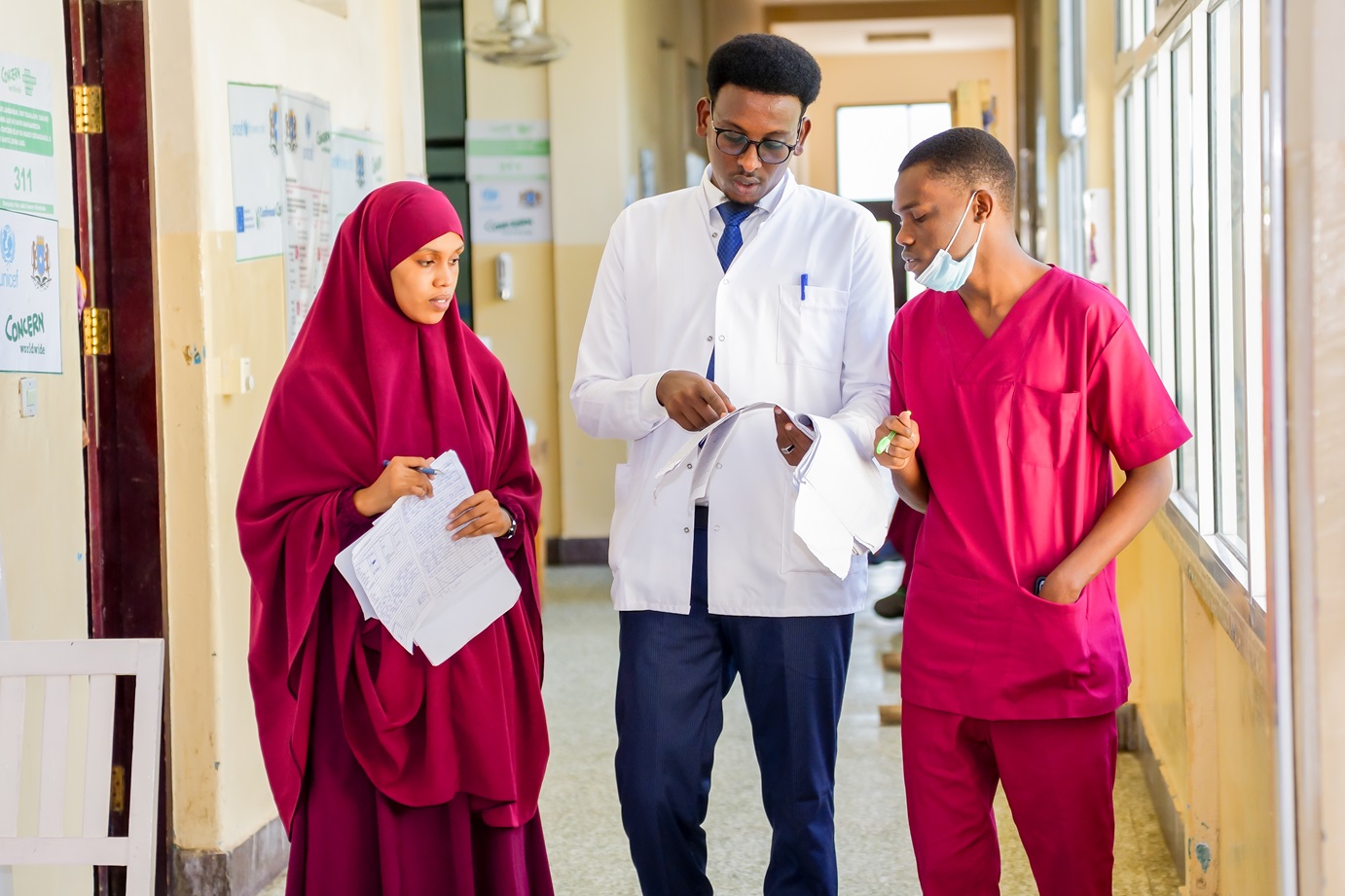 In Somalia, drought, diseases, conflict and poverty continue to put children’s lives at risk. For many, quick access to therapeutic food and medical care is the difference between life and death. With support from WHO and ECHO, thousands of children aren’t just being treated – they’re getting a chance to live, grow and thrive.
For more information, please contact:
Khadar Hared, Communication Officer, WHO Somalia
Tel: +252619800011
Email:
Kim Beentjes, External Relations Officer, WHO Somalia
Email:
Polio campaign reaches more than 1.5 million children in northern Somalia
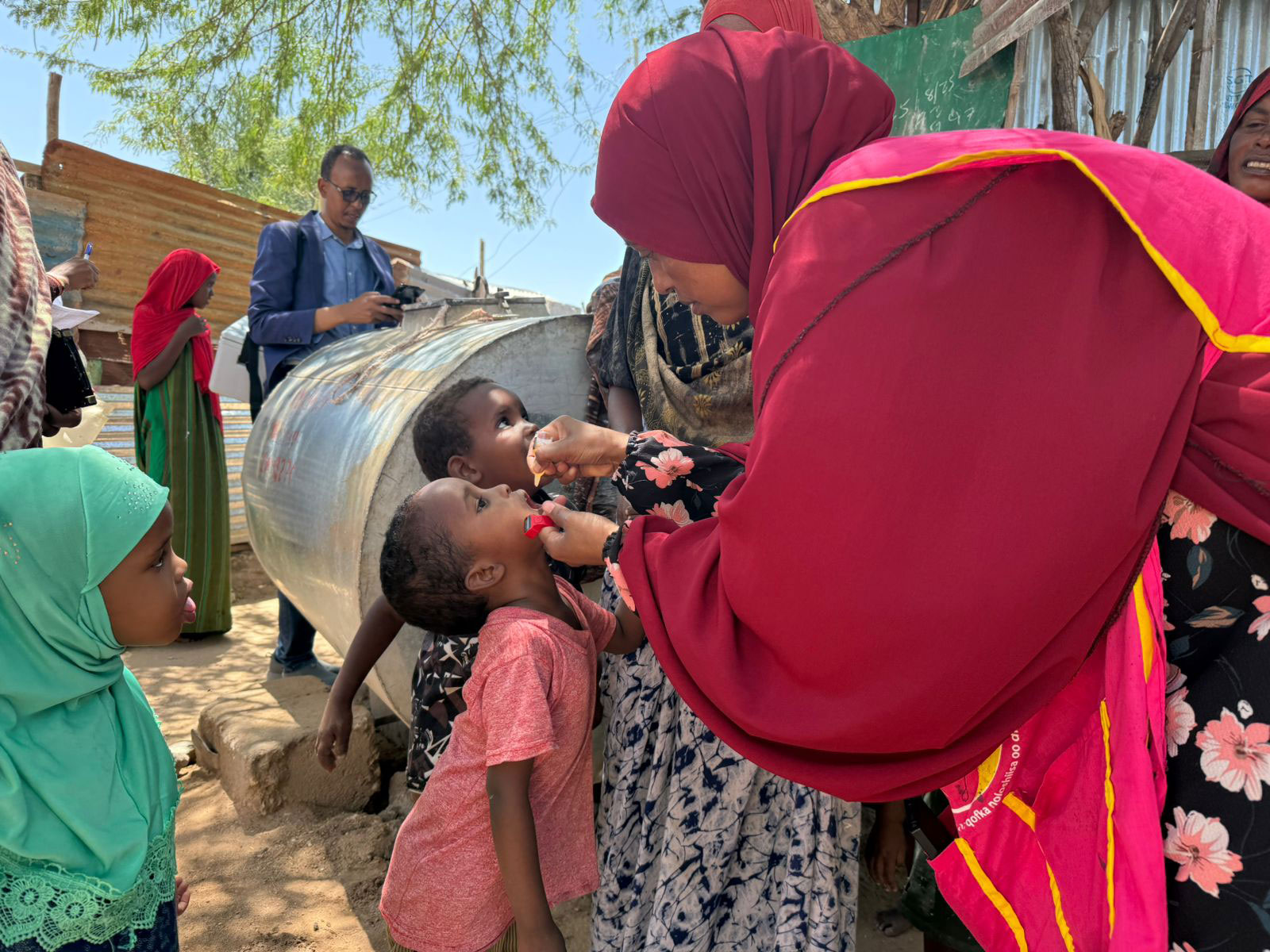 2 September 2025, Mogadishu, Somalia – More than 1.5 million children under 5 received the novel oral polio vaccine type 2 (nOPV2) in Somaliland and Puntland during the second round of a nationwide vaccination campaign.
The campaign – part of Somalia’s ongoing efforts to end polio once and for all – launched on 24 August in Somaliland, where health teams successfully vaccinated 852,000 children – from urban and remote rural communities – with nOPV2. In Puntland, the campaign began on 26 August and protected 676,000 children across all districts, including in hard-to-reach areas where access to health care is limited.
In both states, the campaign was led by the respective ministries of health, in collaboration with the World Health Organization (WHO), the United Nations Children’s Fund (UNICEF), and Global Polio Eradication Initiative (GPEI) partners. Ahead of the vaccination drive, frontline health workers were trained to administer the vaccine safely, maintain accurate records, and follow strict safety protocols, ensuring that every child reached was fully protected.
“We have not yet reached where we need to be, but we remain committed to eradicating polio,” said Dr Ahmed Jama, Director General of the Ministry of Health Development, Somaliland. “Vaccination is helping safeguard our children and prevent deadly outbreaks. The communities of Somaliland, especially parents, have worked hand in hand with us. Delivering vaccines to our children is vital. It strengthens public health, which in turn builds healthier, more educated and resilient communities. We will continue our awareness efforts to ensure that lifesaving messages reach every corner of Somaliland.”
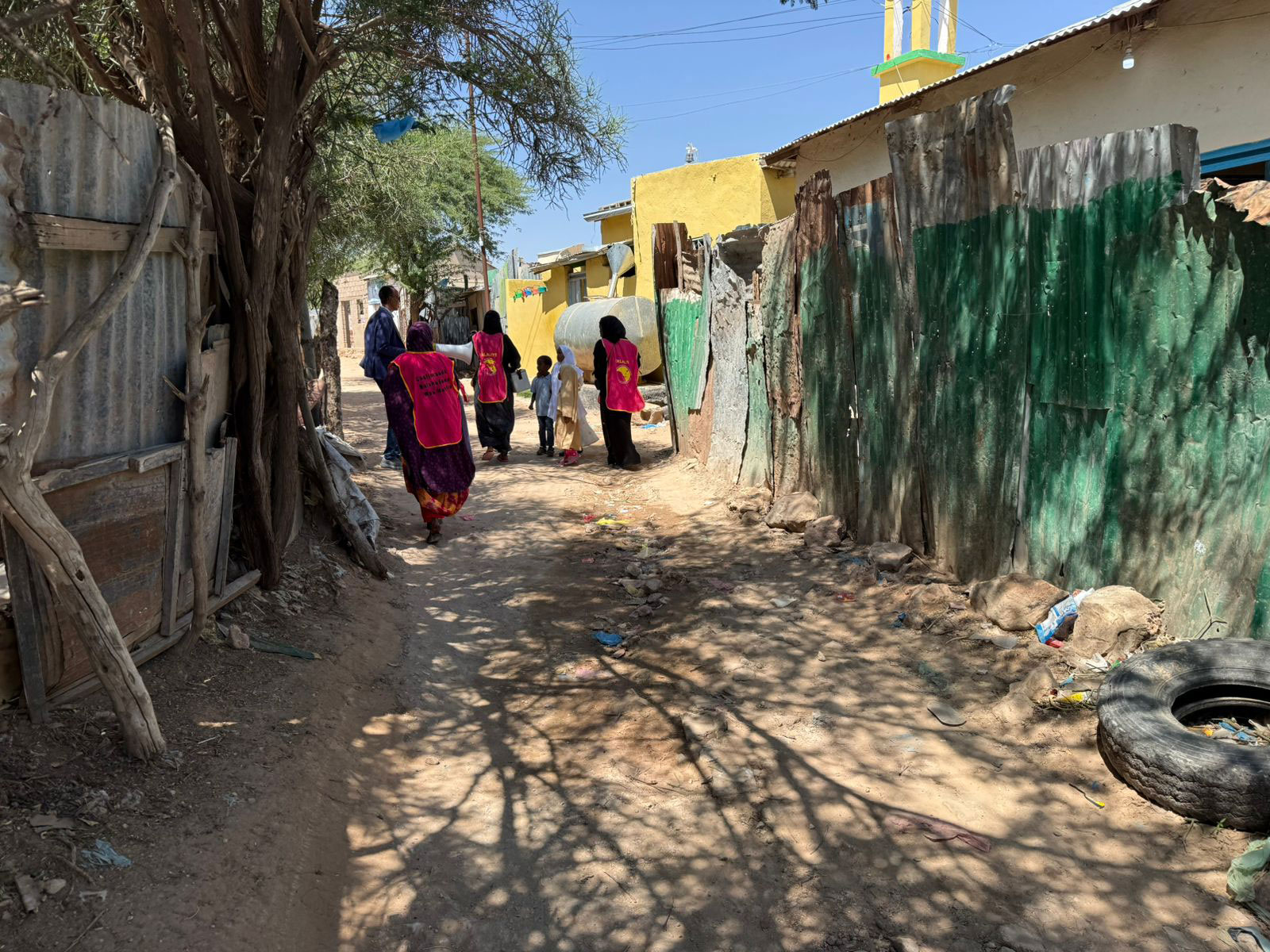 In addition to administering polio vaccines, the campaign strengthened routine immunization services and engaged communities to build trust, address concerns and raise awareness about the importance of immunization.
Similar polio campaigns, with ministries of health working closely with WHO and UNICEF, have been conducted in other Somalia’s states. So far in 2025, 3 rounds have been completed in southern and central states – a sub-national immunization round and 2 national immunization rounds – targeting around 2.7 million children under 5. These rounds have helped strengthen protection against polio while maintaining high levels of community awareness and trust.
Somalia’s progress in immunization extends beyond polio. In May 2025, Somalia successfully introduced the pneumococcal conjugate vaccine (PCV) and the rotavirus vaccine into its national immunization schedule. Together, these protect children against pneumonia and severe diarrhoea, 2 leading causes of death among Somali children under 5.
For more information, please contact:
Khadar Hared, Communication Officer, WHO Somalia
Tel: +252619800011
Email:
WHO Somalia enhances staff skills to develop impactful health interventions
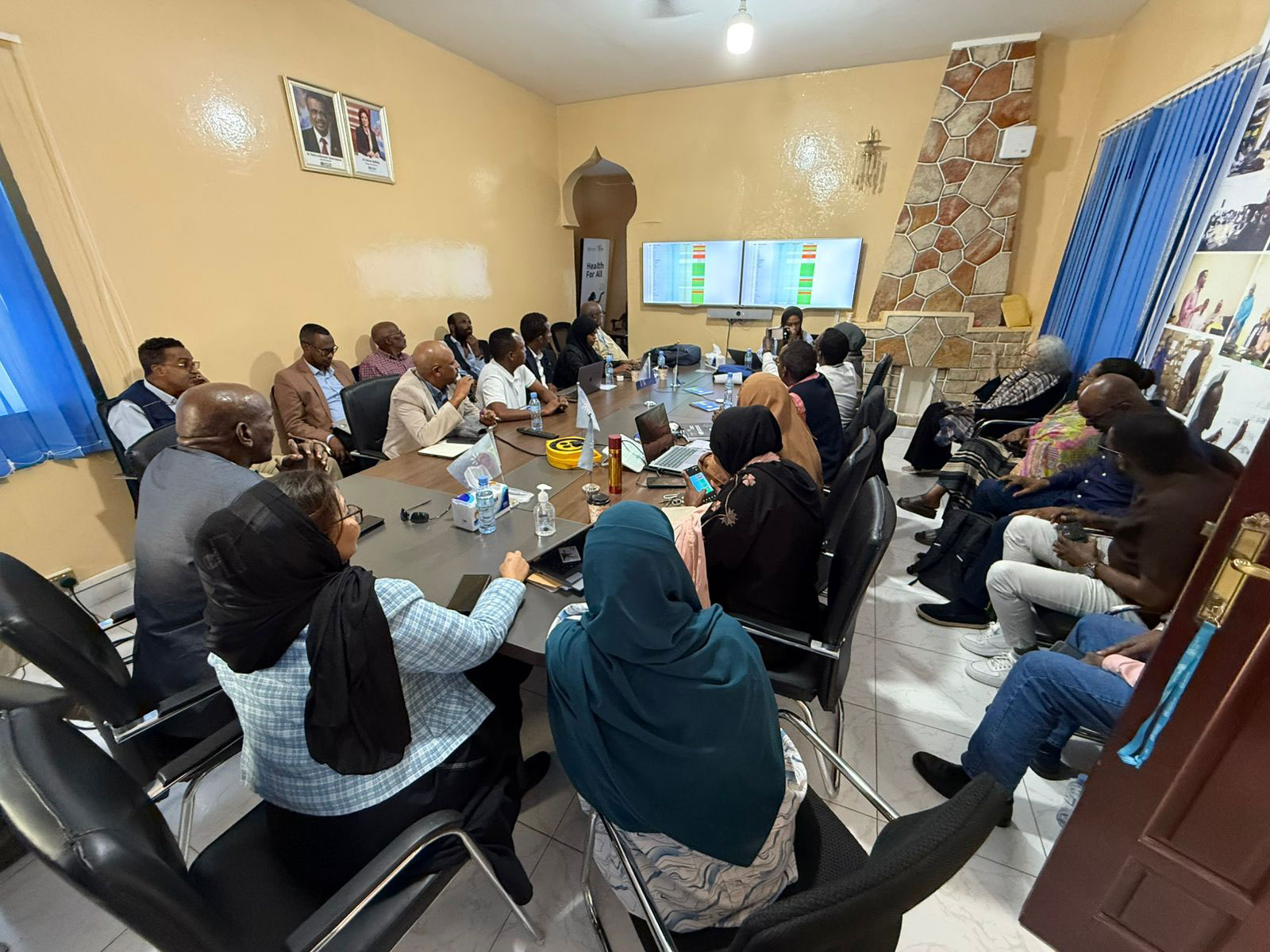 25 August 2025, Mogadishu, Somalia – World Health Organization (WHO) Somalia recently, 20-21 August 2025, completed a lively 2-day professional development training on results-based management (RBM), with a focus on the theory of change (ToC). The sessions aimed to equip technical staff with new skills and tools to plan, monitor, and report on health programmes.
WHO staff from various departments across Somaliland gathered for the training which focused on fostering a unified, results-driven approach and enhancing the Organization’s capacity to develop impactful interventions aligned with national goals and WHO’s regional vision.
Led by the Country Office, the Hargeisa Sub-Office engaged in practical sessions designed to enable teams to improve programme design, strengthen accountability and more effectively highlight WHO Somalia’s role in creating a healthier future.
Comprehensive skill development
On the first day, participants explored RBM and ToC as tools to connect daily work with long-term health outcomes. Through case studies, including on maternal mortality in Djibouti and pneumonia in Somali children, staff practiced building problem trees, solution trees and causal pathways, demonstrating how interventions contribute to measurable impact.
The second day focused on workplan development and management, laying the foundation for a broader training series on award monitoring, reporting and financial accountability. Staff gained hands-on experience developing results-oriented work plans, aligning them with WHO strategic priorities and donor requirements, and applying WHO systems such as GSM.
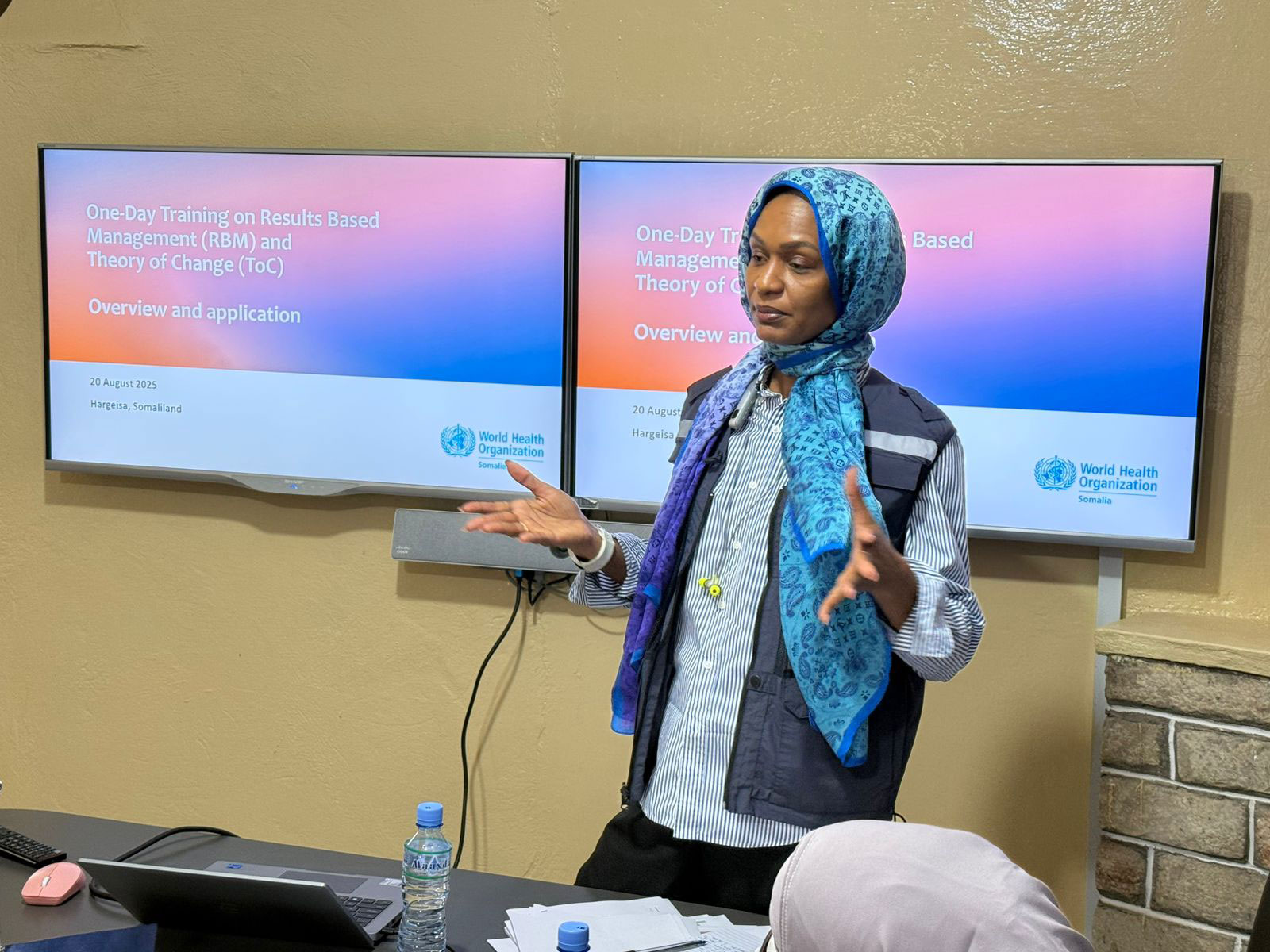 “The training is important because it helps our teams connect their daily work to long-term results,” said Programme Management Specialist at WHO Somalia Nazik Elshiekh. “By using the theory of change, we can better articulate how our interventions lead to improved health outcomes, while also enhancing accountability to the people we serve.”
Workplan development and management is the first of a 3-part training series. The session equipped participants to develop comprehensive, realistic and results-oriented workplans, align workplans with WHO's strategic objectives and donor agreements, apply RBM principles directly to operational planning and use WHO templates and systems, such as GSM, for workplan development.
Participants reported that the training enhanced their capacity to improve accountability, strengthen donor reporting and increase programme impact. Somaliland Polio Eradication Officer Dr Hussein Abdi said the workshop had also served as a reminder of the importance of accelerating essential health work.
Key takeaways from the training included greater confidence in applying RBM and ToC to Somalia’s health programmes, practical experience in linking strategic objectives to operational work plans with SMART indicators and strengthened accountability and donor reporting capacity across departments.
By strengthening staff capacity, WHO Somalia is reinforcing its commitment to results-driven programming, transparency and impact, helping to ensure that every activity contributes to a healthier future for Somalia’s people.
For more information, please contact:
Khadar Hared, Communication Officer, WHO Somalia
Tel: +252619800011
Email:
WHO supports Somaliland as it finalizes a new operational plan to strengthen public health systems
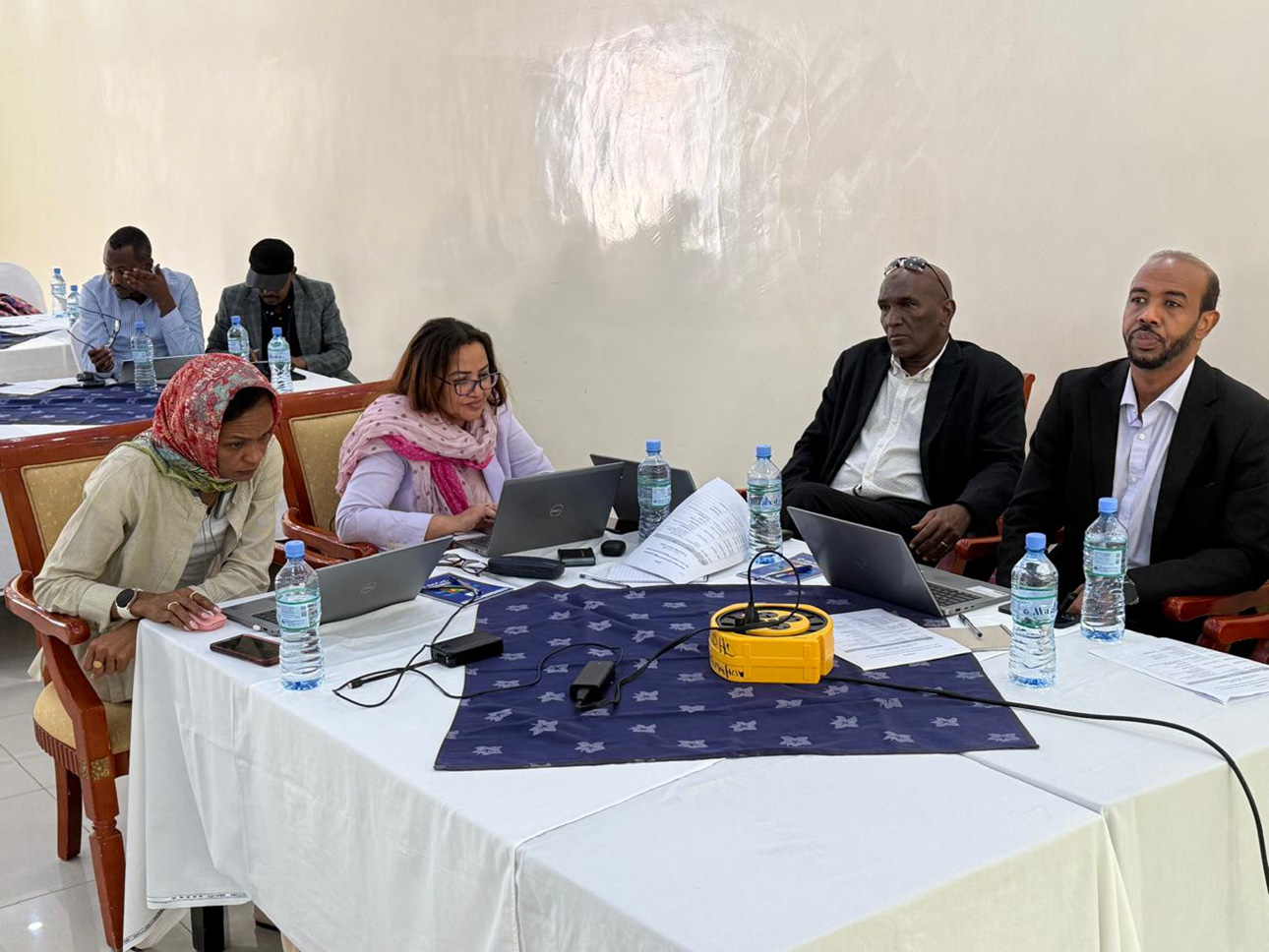 21 August 2025, Mogadishu, Somalia – The World Health Organization (WHO) is working alongside the Somaliland Ministry of Health Development (MoHD) and partners to improve public health services and strategic planning. A key component of the drive is the development of an operational plan for health priorities to guide health development in Somaliland.
On 18–19 August 2025, WHO Somalia and MoHD held a high-level meeting in Hargeisa to review Somaliland’s health priorities for 2026–2027. Attended by senior Ministry officials, WHO Somalia technical experts and representatives from the United Nations Children’s Fund (UNICEF), international partners and other key stakeholders, discussions focused on aligning Somaliland’s priorities with partner strategies to ensure a coordinated approach to meeting community health needs.
During the meeting, MoHD officials highlighted the importance of strong collaboration with international partners to achieve national health goals. In response, WHO Somalia pledged ongoing support for Somaliland as it strengthens its health systems, works to ensure access to quality care and advances universal health coverage.
“Working together with WHO on this operational plan is an important move for us as we work to strengthen our health system and meet the real needs of our people,” said the Director of Planning of Somaliland MoHD, Dr Khalid Ali Ahmed. “This plan is a testament to our shared promise to make vital services more accessible and to join forces with partners so that people across Somaliland can lead healthier lives."
The final operational plan will outline a clear, actionable strategy to guide future health interventions and investments, strengthening the health sector's capacity to deliver essential services to all populations, including those in remote and underserved areas.
Aligning health system priorities
The main objective of the meeting was to match the Ministry’s priority goals with those of international partners and local organizations that provide direct support to health services. Alignment is essential to avoid duplication, ensure efficient use of resources and create a single operational framework to guide coordinated action over the next 2 years.
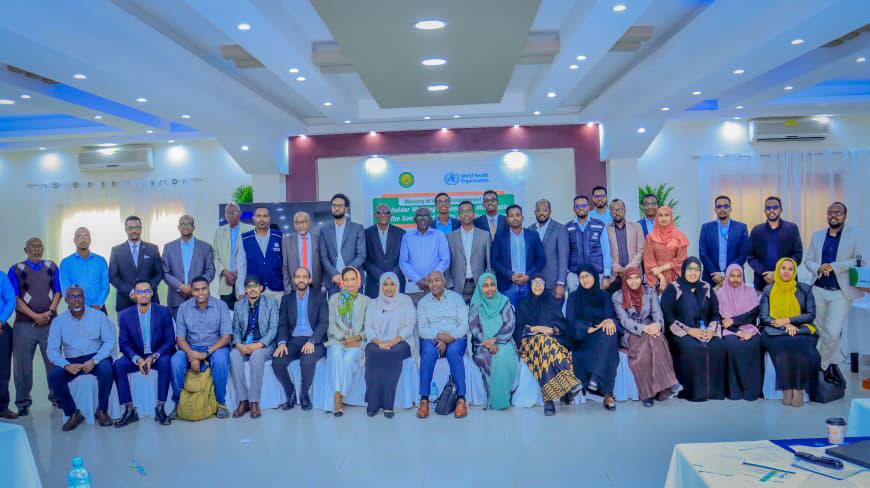 The operational plan will serve as a blueprint for strengthening health systems, shaping future health projects and improving the delivery of essential services. It will set out clear monitoring and implementation mechanisms, helping MoHD and partners track progress, respond to emerging challenges and remain accountable to the government and the communities being served.
By combining strategic planning with staff capacity-building, the initiative aims to enhance the skills and systems necessary to translate health priorities into tangible impact on the ground.
“This plan isn’t just paperwork – it’s a promise to work together for better health in Somaliland. By teaming up with our partners and making sure we’re all moving in the same direction, we can use our resources wisely, help those who need it most and make our communities stronger. WHO is glad to join hands with the Ministry of Health Development and others to turn these goals into real changes for the people of Somaliland,” said WHO Somalia Deputy Representative Dr Kamil Mohamed.
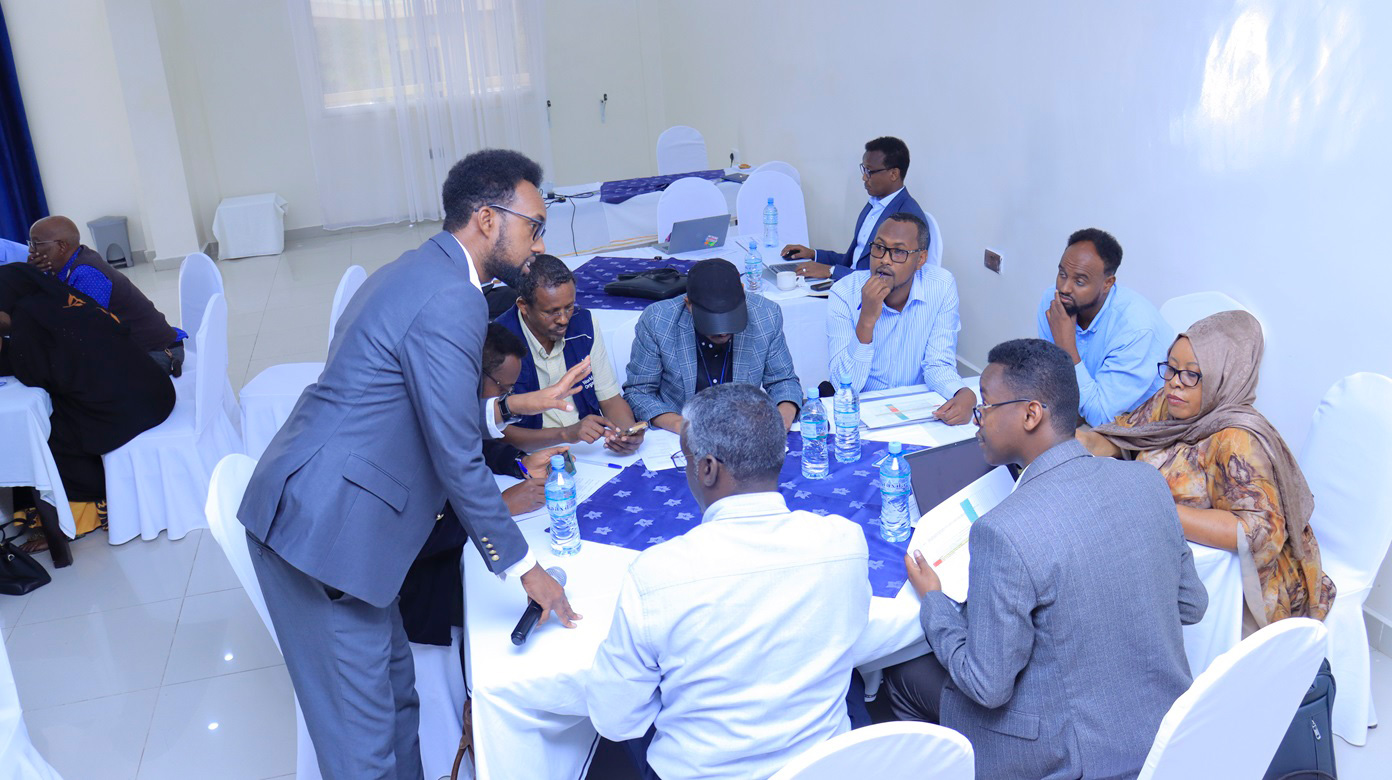 During the 2-day meeting in Hargeisa, WHO and MoHD laid out new health priorities to tackle the most significant gaps in Somaliland’s health system. By coming together, these efforts will lead to:
a finalized and validated operational plan for health priorities 2026–2027;
a clear framework for implementation, monitoring and evaluation;
stronger government ownership and leadership in the health sector;
improved collaboration and coordination among partners; and
enhanced capacity of WHO and MoHD staff to manage and deliver results.
Somalia’s health sector is going through tough times. With funding stretched thin, working together and making the most of every resource matters more than ever in advancing our shared vision of a future in which every community has equitable access to the care they need.
By building strong and resilient health systems, we can protect the well-being of people not just today, but for generations to come.
For more information, please contact:
Khadar Hared,
Communication Officer, WHO Somalia
Tel: +252619800011
Email: