

Sélectionnez votre langue
UN Envoy calls for continuing support for Somalia’s ongoing response to COVID-19 and praises frontline health workers
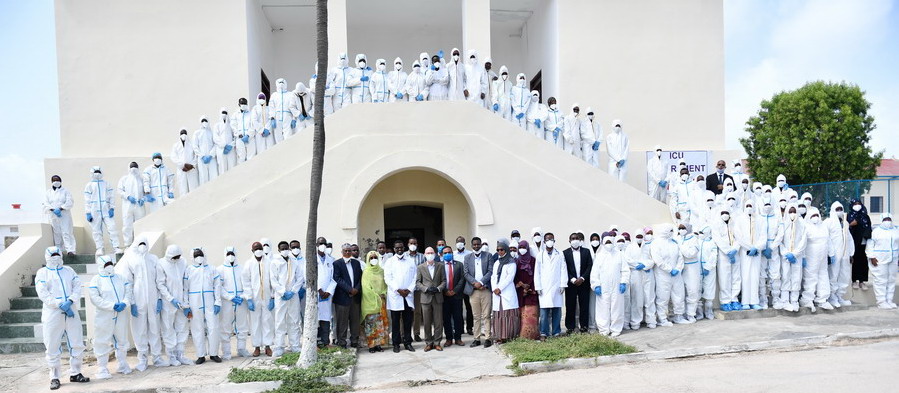 During his visit to De Martino Hospital in Mogadishu United Nations Secretary General’s Special Representative to Somalia Mr James Swan with WHO Representative Dr Sk. Md Mamunur Rahman Malik stands with health care workers and praises their tireless efforts in the fight against COVID-19
2 July 2020, Mogadishu – On a visit to the major tertiary hospital in Mogadishu, which plays a critical role in the management of COVID-19 patients' care, on 21 June, the United Nations Secretary General’s Special Representative to Somalia Mr James Swan called for continuing international support to the Government’s response to COVID-19 and praised the efforts of frontline health care workers.
“Since the start of the pandemic, the United Nations family has supported the Somali Government’s response to the COVID-19 pandemic in a range of integrated ways. The De Martino Hospital has been central to testing, case detection and critical care support in Somalia,” said the United Nations Secretary General’s Special Representative. “I am glad to have had the chance to see firsthand the work being carried out by Somali health workers in responding to the need for patient care and critical care support. It has been a welcome opportunity to express the UN’s solidarity with these courageous individuals who are on the frontline of Somalia’s efforts in combating the outbreak,” he added. "I commend health workers and the Government on their tireless efforts."
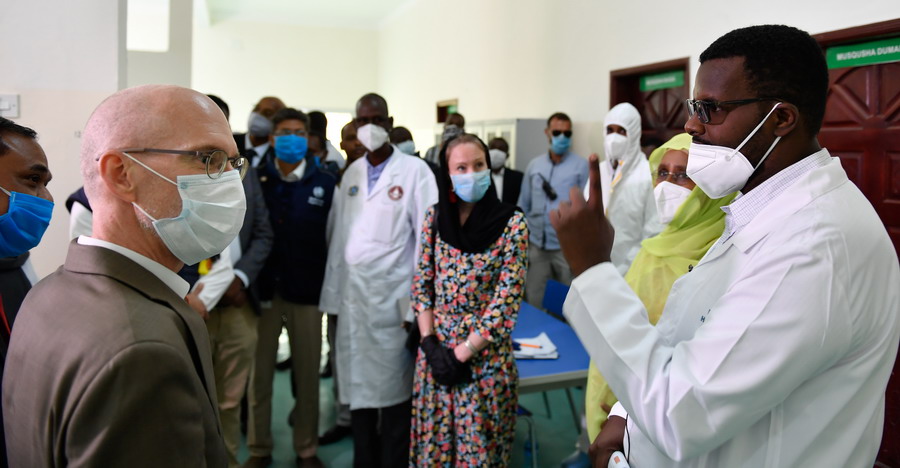 The UN envoy was accompanied by the Federal Minister of Health Fouzia Abikar Nur (second to right) and WHO Representative Dr Sk. Md Mamunur Rahman Malik (first left) during his visit to the hospital.
Located in the capital city of Mogadishu, the hospital is the major and only tertiary hospital in the public sector with an intensive care facility for critical care. The hospital has been recently upgraded with 71 dedicated isolation beds for the treatment of COVID-19 patients. 16 of these beds are fitted with ventilators donated by WHO and the United Nations International Organization for Migration.
Along with other partners of the UN system in Somalia, WHO continues to provide technical, logistical and operational support to this hospital for patient management and care. Recently, WHO has donated ventilators, oxygen concentrators and other essential medical and hospital supplies for patient care. WHO is also supporting budget support to the Ministry of Health to cover salaries of additional health care workers who have been hired to respond to the surge in patient numbers and provide patient care at this hospital. Recently, WHO has also helped in managing patient data with an electronic information management system for the hospital.
While commenting on the visit, the WHO Representative stated, “We have come here to thank the health care workers of this hospital where the majority of patients with COVID-19 have been treated since the first case was officially confirmed on 16 March 2020. Since that period, health care workers have been providing dedicated services by sacrificing their own comfort. Many lives have been saved in this hospital owing to the early intervention of the health care workers. This hospital has treated over 200 patients in the last few months which is testimony to its paramount role in responding to this epidemic. We express our solidarity with them and assure them of our continued support in the days ahead".
The United Nations family’s support for Somalia’s COVID-19 response has included planning, coordinating and supporting policy development; building the capacity of health professionals working in hospitals; establishing and supporting operation of intensive care beds, making available medical oxygen, supplying personal protective equipment, ventilators and other equipment for the hospital and providing operational support to run and manage the intensive care unit in the hospital.
According to the Federal Ministry of Health and WHO, as of 2 July, 2020, there have been more than 2900 confirmed cases of COVID-19 in Somalia, including another 90 associated deaths. These cases include 93 health care professionals, with one reported death among them.
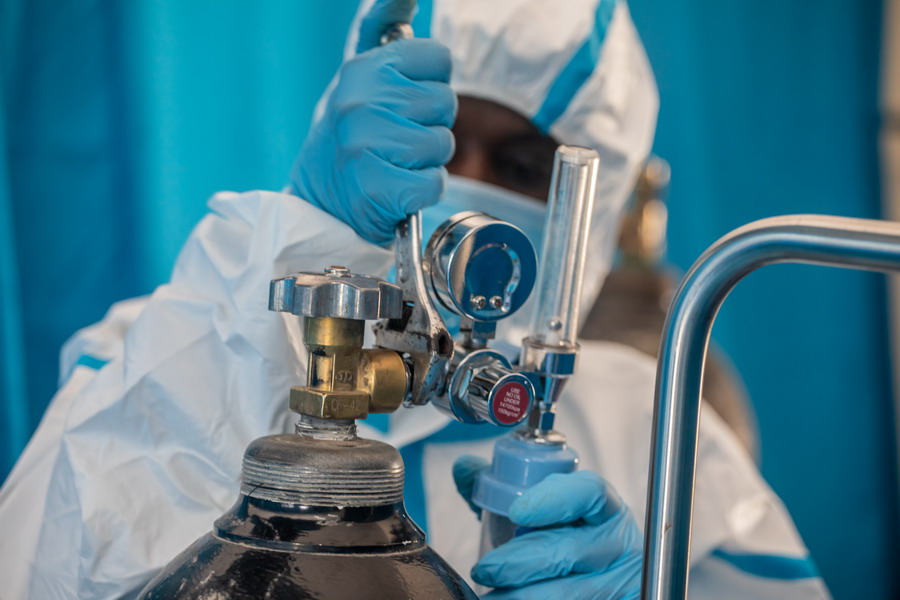 WHO has donated ventilators, oxygen concentrators and other essential medical and hospital supplies for patient care
COVID-19 disrupts essential health services in fragile settings; risks reversing health gains
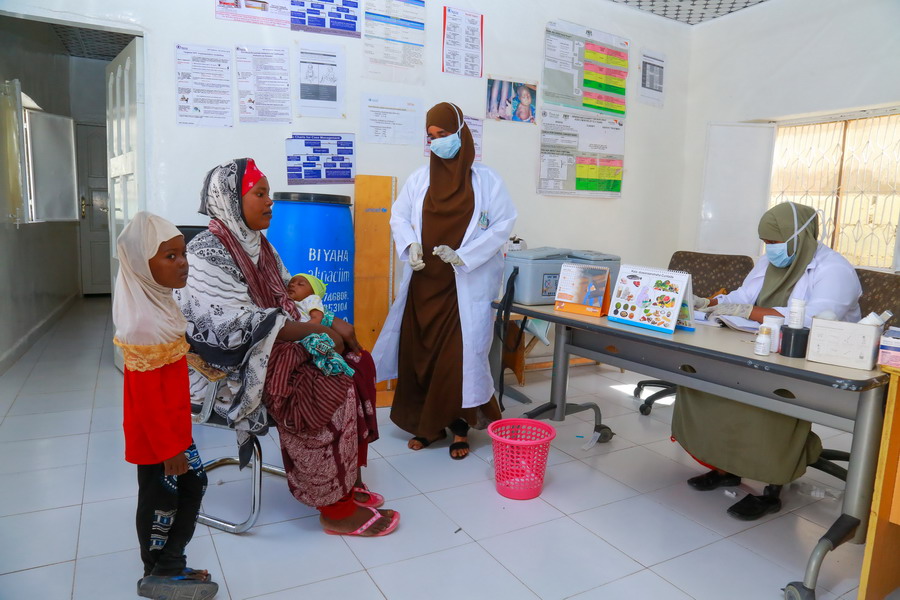
17 June 2020 – The current pandemic caused by COVID-19 has strained the fragile health system in Somalia as the number of cases increases. Despite some early signs that the virus spread may be slowing down in its capital city Mogadishu and in major urban centres, cases continue to grow at subnational level as transmission spreads.
The lockdown and the social distancing measures have also raised fear among health care workers providing other routine essential health care, such as immunization for children, care of pregnant and lactating women, as well as care for malnourished children. The number of people visiting health centres for routine care has significantly dropped recently as a result of lack of public transport and other means to accessfacilities. Visiting health centres without personal protective measures, such as masks and maintaining physical distancing, puts individuals at rsik. Owing to the lack of basic and essential protective equipment, such as masks and gloves, for health care workers some vaccinators and other health care providers are not reporting for work.
In a fragile and weak health system like in Somalia, the immediate and long-term effects to disruption of health services can be catastrophic. Somalia has made good progress in reducing under-5 mortality and maternal mortality. Thanks to the work of WHO and many other partners such as the UNICEF and UNFPA, the maternal mortality ratio was reduced by 31% overall in less than 2 decades from 1210 deaths per 100 000 live births in 2000 to 829 deaths per 100 000 live births in 2017. The under-5 mortality rate was also reduced by 27% overall in less than 2 decades from 171.1 deaths per 1000 live births in 2000 to 124.4 deaths per 1000 live births in 2017. Despite the progresses made, COVID-19 is now overshadowing and potentially reversing these health gains as the demand for routine health care is declining for fear of being infected while seeking or providing health care services.
A modelling study published recently in a peer-reviewed medical journal has shown that the disruption of routine health care services for a prolonged period may have a devastating impact, including:
- a 20% reduction in life-saving vaccination coverage
- a 4% reduction in facility-based health care delivery
- a 13% increase in childhood mortality.
A similar situation was also observed during the 2014–2015 outbreak of Ebola virus disease in Africa where analyses suggested that the increased number of deaths caused by measles, malaria, HIV/AIDS and tuberculosis attributable to health system failures exceeded deaths that were directly attributable to Ebola virus disease.
Considering the urgency of scaling up essential health services and to protect health gains, the WHO country office, in partnership with UNICEF, UNFPA and other partners has distributed face masks and gloves to all vaccination centres in the country for mass use by vaccinators and health care providers. This has allowed immunization services to resume normally. Using physical distancing and other public health measures, WHO staff have also increased monitoring and supervisory visits to these vaccination, maternal and child health care centres to ensure that routine health services resume operations, while at the same time reducing the risk of exposure of COVID-19 to both health care seekers and providers.
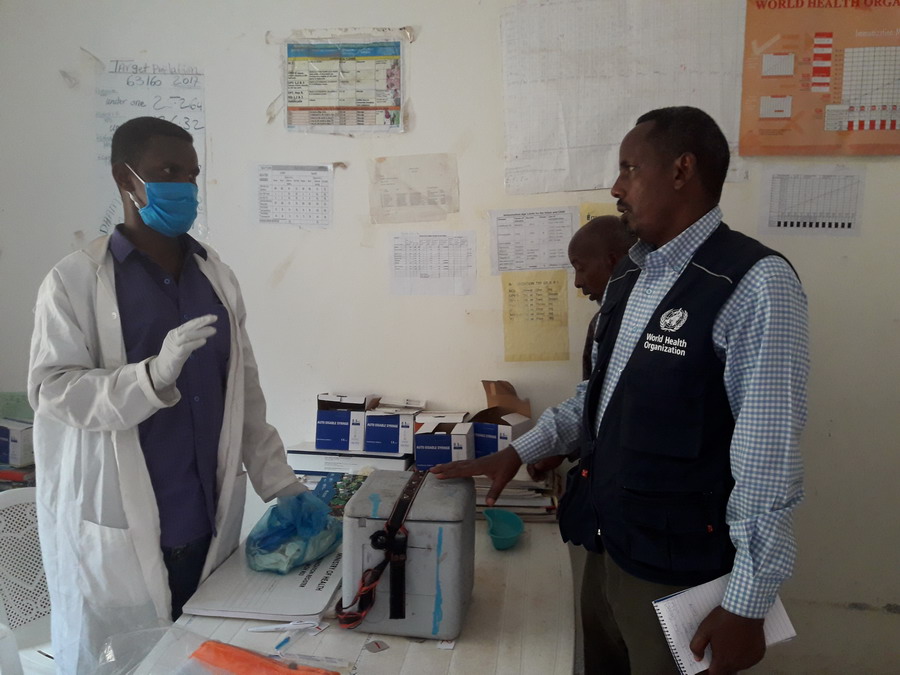
WHO continues to scale up operations to contain the transmission of COVID-19 and end the pandemic and work with partners to ensure that essential health care services resume as soon as possible. WHO’s work for COVID-19 in Somalia which also includes support for essential health care remains underfunded. Only 20% of WHO’s emergency response appeal for COVID-I9 response has so far been funded.
For more information:
Kyle Defreitas
External Relations & Resource Mobilization Officer
World Health Organization, Somalia
Mob: +254-782-501-324
Email:
Fouzia Bhatti
Communication Officer
WHO Country Office Mogadishu - Somalia
Tel: +252619235880
Email:
European Union and WHO Somalia deliver more emergency hospital supplies
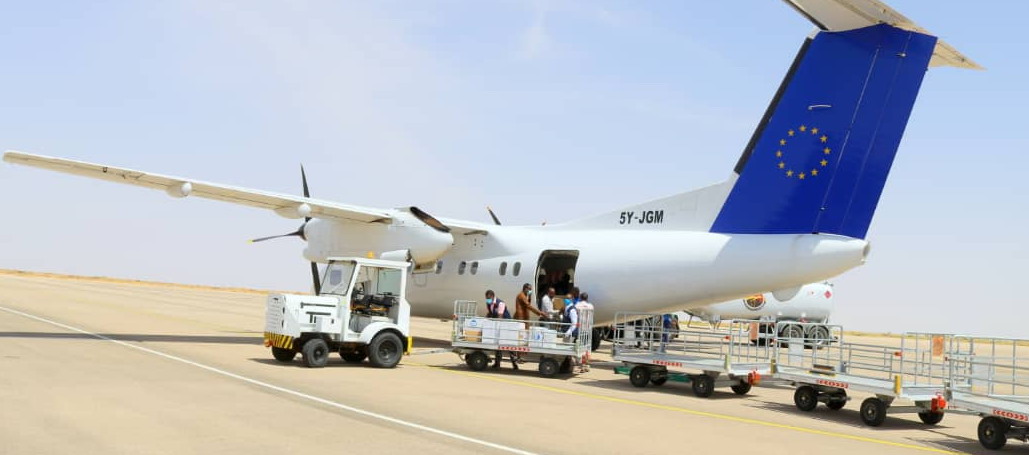
Mogadishu, 18 June 2020 – The Delegation of the European Union (EU) to Somalia conducted another special flight at the request of WHO in Somalia to airlift lifesaving medicine and other emergency hospital supplies to Beletweyne, as well as medical and laboratory supplies to Hargeisa and Garowe. These flights took place between 11 and 12 June 2020.
In Beletweyne, an area recently affected by flooding caused by heavy rainfall, the flight delivered 3535 kgs of supplies, including oral rehydration solution, cholera saline and other emergency medicines for patient care, capable of treating over 700 suspected cases of cholera over the next 3 months. Since heavy rains are predicted for the remainder of June, these supplies will support emergency health care for cholera and other waterborne diseases for vulnerable populations in affected areas, as well as offer basic health care services in these areas, long after flood waters recede.
The flights to Hargeisa and Garowe delivered a total of 1362.5 kgs of medical and laboratory supplies to support COVID-19 response efforts. The supplies include personal protective equipment, 13 500 medical masks, 9450 gloves, 270 protective goggles, 270 gowns, 4050 respiratory masks, as well as personal protective equipment, laboratory supplies and equipment to support PCR testing for COVID-19 at both locations. All items delivered will provide critical support to ongoing efforts aimed at combatting and protecting people from COVID-19 and its spread at community level.
This joint operation remains part of the new bilateral technical coordination mechanism established between the WHO country office and the Delegation of the EU to Somalia, which aims to strengthen operational response activities, including for COVID-19. On 3 May, EU flights also airlifted critical medical equipment and supplies from Mogadishu to Kismayo to support Jubaland state in tackling COVID-19. Then, on 20 and 21 May, the EU airlifted lifesaving medicine and other emergency hospital supplies to Jowhar, Kismayo and Baidoa ‒ areas which were also affected recently by floods due to heavy rains. In addition, the European Civil Protection and Humanitarian Aid Operations (ECHO) hasy provided US$ $1.8 million to WHO’s COVID-19 preparedness and response operations in Somalia.
Related links
WHO and EU unite to fight COVID-19 in Somalia
EU and WHO unite to deliver critical life-saving supplies to flood-affected areas in Somalia
For further information:
Abdikadir Abdi
Press and information officer
EU Delegation to Somalia
Email:
Mr Kyle Defreitas
External Relations & Resource Mobilization Officer
World Health Organization, Somalia
Mob: +254-782-501-324
Email:
Somalia expands surveillance to better track COVID-19 outbreak
10 June 2020 – Somalia continues its fight against COVID-19 which has so far infected over 2300 people and killed 83. The fragile and weakened health system is being overwhelmed by demands for patient care in light of the pandemic, and Somalia has recorded the highest death toll among East African countries.
The surveillance system’s ability to rapidly detect, trace, track and test cases is being challenged. In the absence of a functional disease surveillance system in the country, the Early Warning, Alert and Response Network (EWARN), established in 2008 and reactivated as a web-based electronic early warning system for disease outbreaks in 2017, has been expanded to early detect suspected cases of COVID-19 in in both primary and secondary level health care centres across the country.
 .
.
WHO has been supporting this expansion through adding new health facilities, especially those in the private sector, to the reporting system of EWARN. Within the next couple of weeks, WHO plans to roll out the EWARN system to an additional 230 health centres from the current existing 533 reporting sites. The system reports on 14 epidemic-prone diseases on a weekly basis and by 2019, an estimated 6.5 million people, including 2 million internally displaced people, were covered by the EWARN system. With this expansion, COVID-19 will now be a reportable health condition in Somalia.
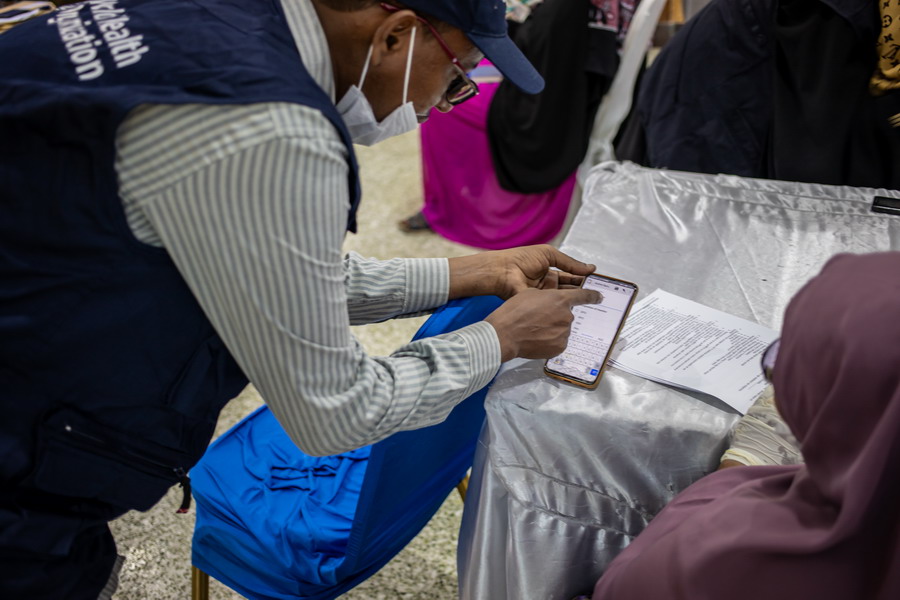
The expansion of EWARN relies on knowledge and skills of health care workers on the correct use of case definition and use of threshold values for generating alerts. Currently, a mobile app is also used to report on any suspected case of COVID-19 or any other reportable health condition in real-time, edspecially in security-compromised areas. Last week, the WHO country office conducted training of health care workers in the capital city on surveillance for COVID-19 as part of EWARN expansion. The health care workers were trained on reporting, as well as on tracking alerts using the mobile application.
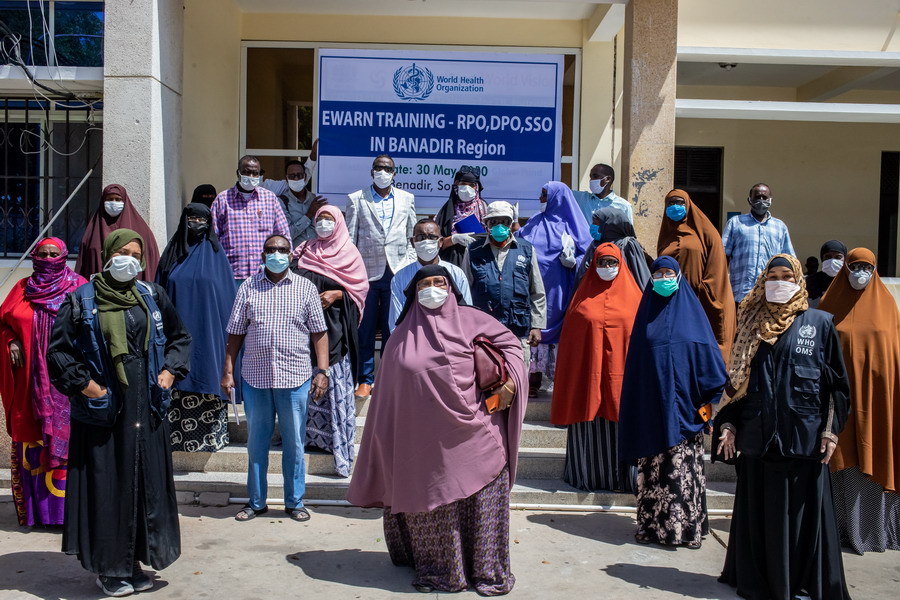
In May, 127 health care workers were trained by WHO as part of the EWARN expansion programme and 50 additional health facilities have been added to the reporting system. Data from the EWARN surveillance system are regularly analyzed to better understand the progression of the disease at both national and sub-national level and monitor the effectiveness of ongoing public health interventions to combat and contain transmission. The WHO country office has also mobilized an additional 65 rapid response teams who regularly verify and investigate all alerts reported from the EWARN system. EWARN in Somalia, apart from proving its value as a real-time early warning system is the main building block in the country now for the collection, analysis and reporting of suspected cases of COVID-19.