

Sélectionnez votre langue
WHO, the International Humanitarian City of Dubai and Government of United Arab Emirates extend life-saving support to twin-blast victims of Mogadishu
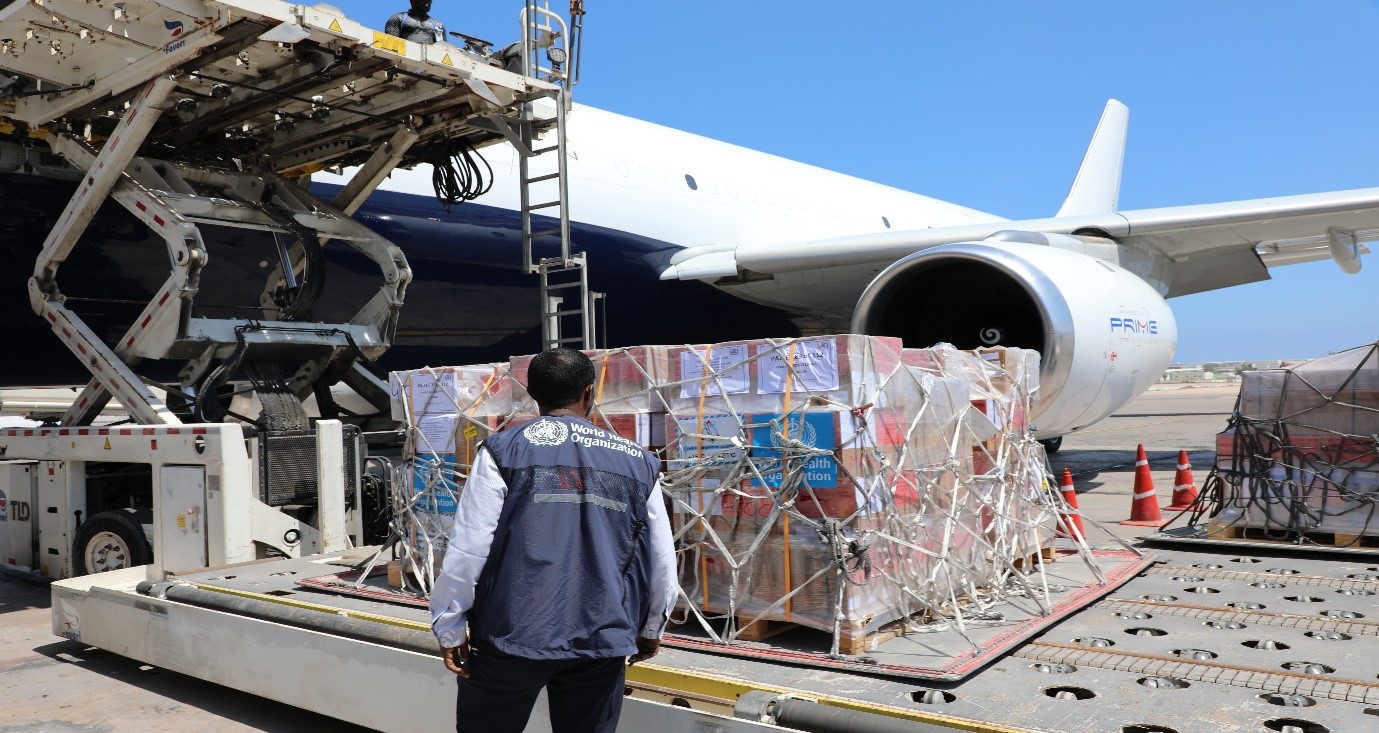
Mogadishu, 13 November 2022 – The World Health Organizations (WHO) Somalia country office, received over 38 metric tons of life-saving medical supplies on 8 November to help support the victims of the twin blasts that shook Mogadishu, the capital city of Somalia on 29 October.
The International Humanitarian City of Dubai Government and the Government of the United Arab Emirates generously offered a charter flight from WHO’s Dubai Logistics Hub to Mogadishu to transport these medicines and infusions urgently needed to care for victims of the blast and ensure an uninterrupted supply of essential medicines to support emergency medical teams. These supplies are in addition to 39 metric tons of other trauma care supplies that WHO brought it urgently from its Dubai Logistic hub and handed over to the Federal Ministry of Health on 5 November 2022 in the presence of the Minister of Health of Federal Government of Somalia, HE Dr Ali Hadji Adam Abubakar).
The twin blasts, reportedly took the lives of over 100 people, while critically injuring over 300 more. Immediately after the blasts and in record time, WHO was able to bring in these supplies to Mogadishu, Somalia from its logistic hub in Dubai. These supplies, ideal for trauma care, will be sufficient to treat over 2500 patients with multiple injuries, burns and other blast wounds.
These supplies worth US$ 750 000 are life-saving support for Somalia during this difficult time and WHO remains thankful and grateful to the International Humanitarian City, the Dubai Government, His Highness Sheikh Mohammad Bin Rashid Al Maktoum and the Government of the United Arab Emirates for providing this airbridge for transportation of these emergency medical supplies to Mogadishu, Somalia.
Expressing his personal gratitude, WHO Regional Director for the Eastern Mediterranean Dr Ahmed Al-Mandhari, said, “These emergency medical supplies are critically needed to ensure that essential medicines and infusions are available in Mogadishu to care for victims of the blast and prevent further loss of life. Thanks to the support of the Dubai Government, the International Humanitarian City, and the Government of the United Arab Emirates, WHO’s logistics hub in Dubai were able to rapidly respond to this emergency in Somalia as well as to other acute health emergencies around the world to deliver humanitarian aid to those in greatest need, in line with our collective regional vision of “Health for all, by all”.
For additional information, please contact:
Kyle DeFreitas
External Relations Officer
Fouzia Bano
Communications Officer
Note to editors
Please see the links below for additional information on recent support:
Short video message by WHO Representative to express sympathy and solidarity with blast victims
Tweet by the Federal Minister of Health Dr Ali Haji thanking WHO for the support
World Polio Day 2022 and beyond: a healthier future for mothers and children in Somalia
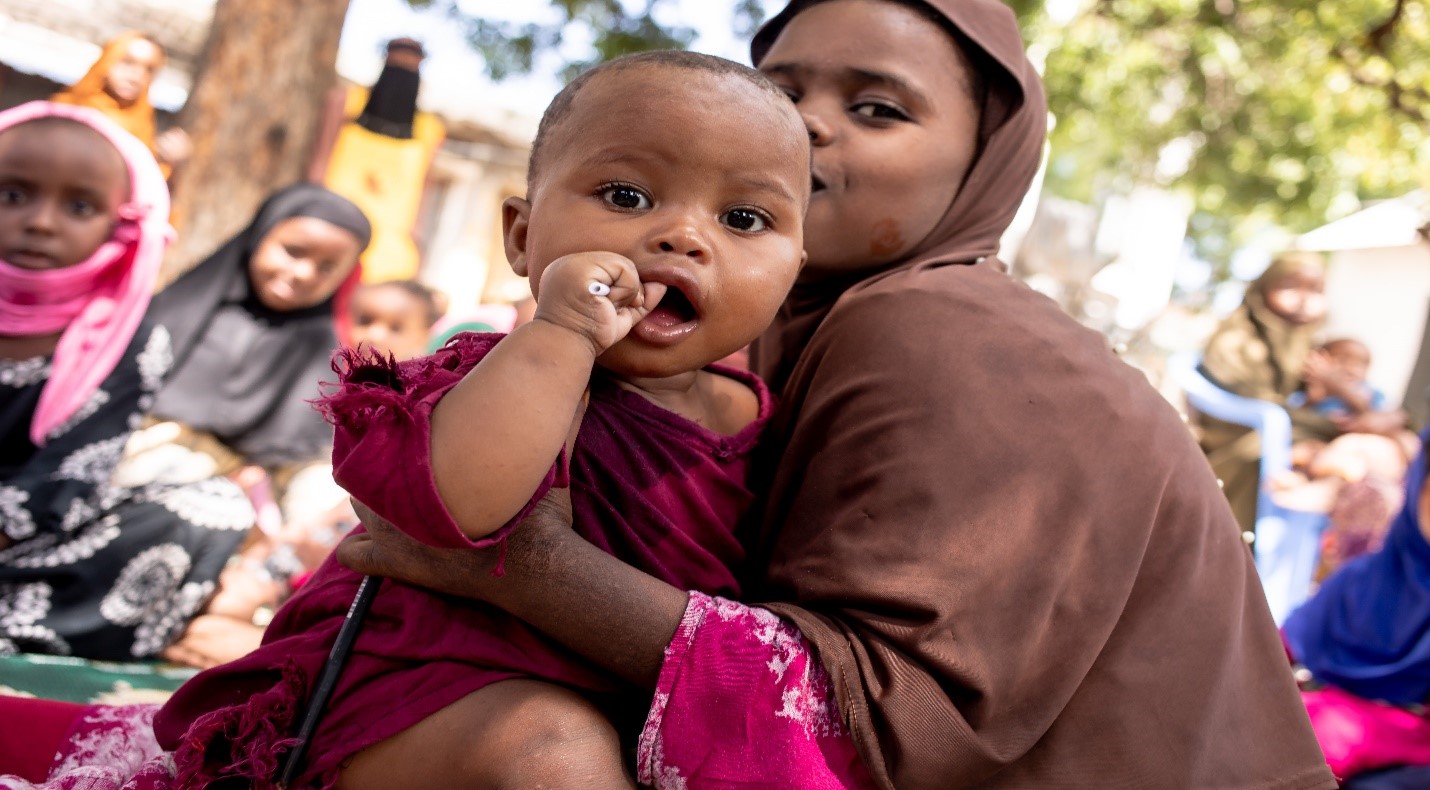 A mother brings her child to get polio vaccination on first day of campaign in Banadir region, Somalia 22 October 2022
Mogadishu, 24 October 2022 – Living by its principle of ‘delivering on a promise’, WHO and the Government of Somalia are commemorating the World Polio Day by launching fifth round of this year’s sub-national vaccination campaign across high-risk areas to keep the country free from wild polio virus and ensure every child in this country lives a healthier life.
The World Polio Day was established by Rotary International over a decade ago to commemorate the birth of Jonas Salk, who led the first team to develop a vaccine against poliomyelitis. Use of this inactivated poliovirus vaccine and subsequent widespread use of the oral poliovirus, developed by Albert Sabin, led to the establishment of the Global Polio Eradication Initiative (GPEI) in 1988.
Though the country is free from wild polio virus, a rare strain of polio-called the vaccine-derived polio virus continues to circulate in the country owing to poor immunization coverage amongst the children living or residing in hard-to-reach and partially inaccessible areas. So far, 4 children have been identified with circulating vaccine-derived polio virus type 2.
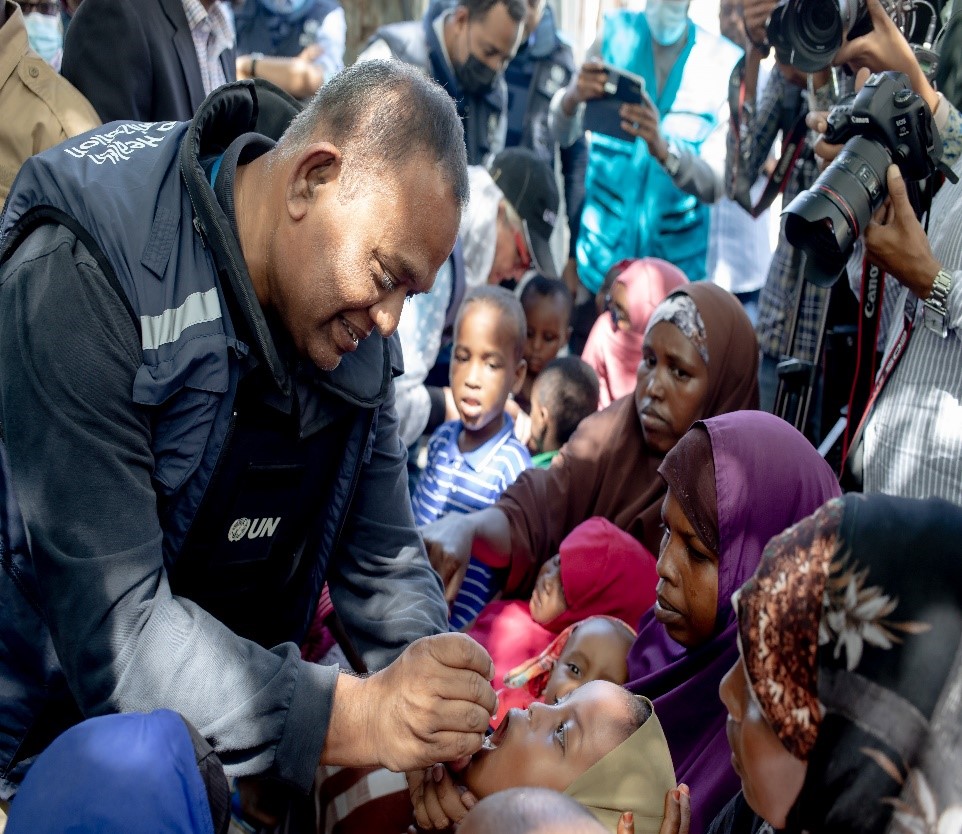 Dr Mamunur Malik, WHO Representative in Somalia administering polio vaccine in Banadir region, June 2022Facing multiple outbreaks of cholera and measles, amid an unprecedented drought and an ongoing pandemic (COVID-19), WHO Somalia in collaboration with its partners has helped the federal and state health ministries to complete four successful polio campaigns this year. About 3.6 million children under 5, including 327 467 zero dose children (first time vaccinated) and an additional 2.4 million children aged between 5 and 10 years were vaccinated during these campaigns. The completed polio campaigns include 2 rounds of country-wide national immunization days (NIDs) conducted in March and June 2022, while another 2 rounds of sub-national immunization days in selected high-risk districts were completed in February and August 2022. The fifth round has coincided with this year’s World Polio Day and is currently under way in 79 districts in Banadir, Galmudug, Hirshabelle, South West and Jubaland states targeting 4.75 million under-10 years of age children.
To maintain its polio free status, WHO and the Government of Somalia owes this sustained marathon effort to their trusted partners like UNICEF, Rotary International, Bill & Melinda Gates Foundation, the United SCentre for Disease Control and Prevention, and United States Agency for International Development (USAID). Together with WHO, these partners have been helping to not only raise the immunization profile of the country but also introduced a polio transition plan to switch the focus from polio-only efforts to improved routine immunization, data-driven surveillance, risk communication and community engagement, and integrated health outreach activities. This WHO-led transition is proving its utility as the infrastructure and platforms established under polio programme is now helping to save many precious lives across Somalia during the ongoing pandemic and multiple outbreak responses.
Somalia’s polio transition plan is capitalizing on the existing network to improve routine immunization strengthen surveillance and outbreak response activities as well as to improve access to healthcare for marginalized section of the community using the primary health care system. The plan will ensure a better, fairer, and healthier future for mothers and children in the country.
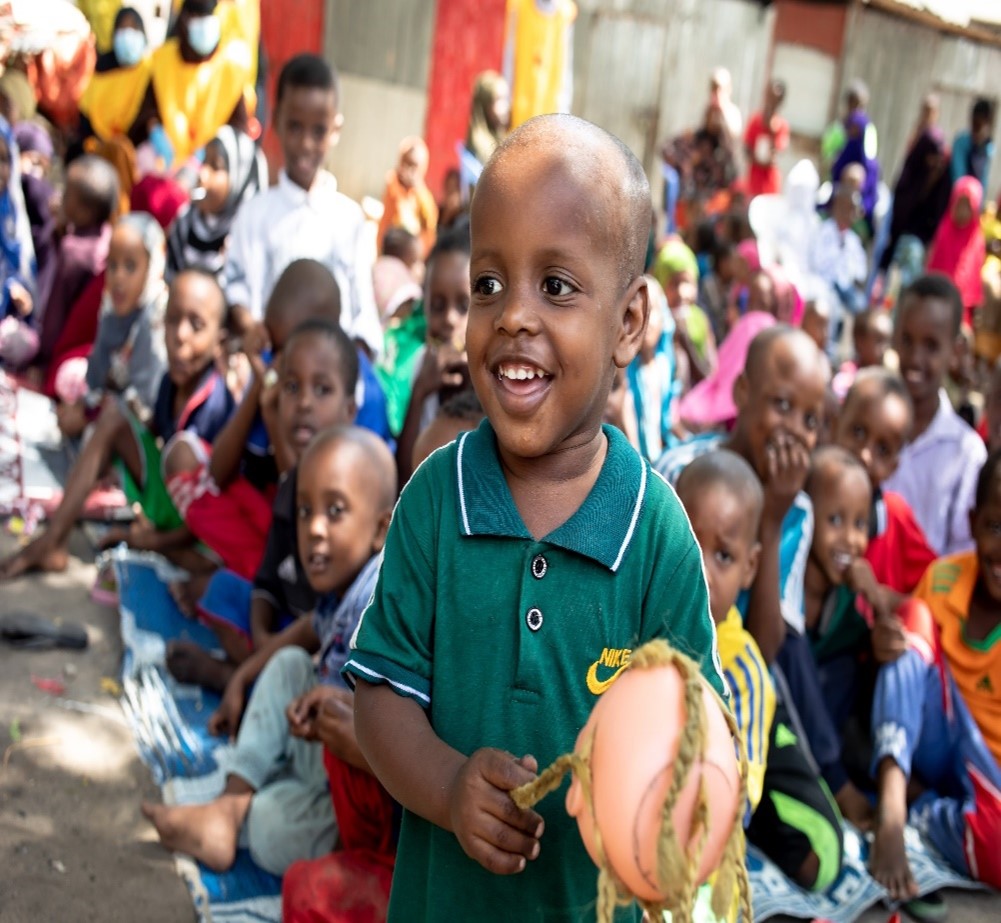 Responsible parents bring their children for polio vaccination site in Banadir region, Somalia during the ongoing supllementary national immunization day, October 202“We are thankful to WHO for helping us conduct a polio campaign in 11 hard to reach districts this year. This was the first-ever campaign in these areas in the past 10 years and helped to vaccinate almost 52% of previously unvaccinated children in these districts. We are confident of ‘delivering on our promise’ of keeping every child safe from all vaccine preventable diseases in our country,” said polio focal point for Somalia Mr Mohammed Nur.
WHO Somalia has faced many challenges to come this far in its fight against polio and is committed to help the Somali health system qualify to the next level of sustenance by maintaining the gains achieved during the implementation of polio programme.
Dr Ali Ben Break, the acting Team Lead for polio programme at the WHO country office said, “As the world is expecting realization of polio eradication promise in the coming years, it will be imperative to ensure smooth integration of its experiences, lessons and health assets in high risk and endemic countries, especially in a post-pandemic world. WHO Somalia team had adopted to this changing reality more quickly than perhaps many other countries. Our team has shown the resolve and resilience to work on multiple fronts in perhaps one of the most difficult places on the face of earth and will continue to save the humanity through our integrated and professional approach.”
For additional information, please contact:
Kyle DeFreitas, WHO Somalia External Relations Lead,
Fouzia Bano, WHO Chief of Staff ai, Communications Officer,
-----------------
Related links
World Polio Day 2022 and Beyond: A healthier future for mothers and children (who.int)
WHO Regional Office | Expanded Programme on Immunization | Priority areas | Somalia site
Somalia achieves historic landmark in its fight against COVID-19: 30% of eligible population now fully vaccinated
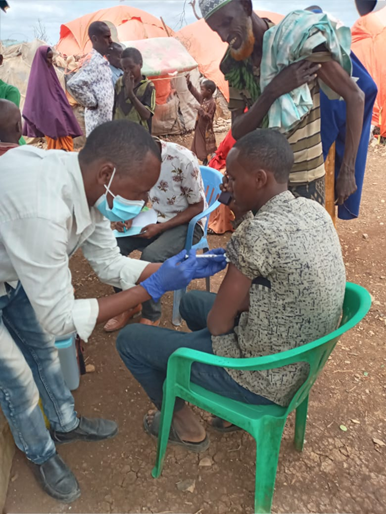 Outreach vaccination team in action at IDP camp in Baidoa, 8 October 2022Mogadishu, 11 October 2022 – Amid multiple outbreaks in the country, Somalia with support of WHO, UNICEF, donors and other partners have achieved another landmark in its fight for ending the COVID-19 pandemic. The country reached its target vaccinating 30% of its population fully against COVID-19 disease on 8 October 2022. The country is now well poised to achieve its target of fully vaccinating 40% of the target population by the end of the current year.
At the start of the year, Somalia had reported just 5% of its population as fully vaccinated, but with persistent efforts, an innovative approach, and eventually through a number of accelerated COVID-19 vaccination campaigns, the last of which has been ongoing since 6 September 2022 across the country, this milestone was achieved.
The target for the ongoing accelerated campaign is to administer 3.5 million doses of Johnson & Johnson vaccine to its vulnerable population, which will eventually help increase the fully vaccinated percentage to around 37% by the end of the current accelerated campaign scheduled to end on the 20 October 2022. WHO has deployed 5000 outreach teams comprising of 30 600 individuals who will be working for a month to manage this accelerated campaign Special strategies have been planned for November and December of this year to help achieve the promised target of fully vaccinating 40% of population in Somalia against COVID-19.
In the lead up to this campaign, WHO Somalia helped the federal and state ministries undertake a rigorous microplanning exercise to ensure all eligible and high-risk populations living in marginalized communities are reached and receive a COVID-19 vaccine, irrespective of their geographic location.
Somalia, with the support of WHO, UNICEF and other partner donors have administered around 7 million of doses of COVID-19 vaccines thus far in a country of approximately 15 million people. Careful planning, robust, responsive, and targeted approach has resulted in fully vaccinating 30% of its population and partially vaccinating another 14% of its people. Data reveal that the vaccinated population includes 49% of females and 1 660 940 internally displaced persons (IDPs). The use of digital technology and electronic registration system for COVID-19 immunization roll out programme in Somalia has enabled the country to identify, track and register all eligible people and record their vaccination status in real-time.
“I express my profound gratitude to the government, donors, partners, and especially the front-line health workers who have shown courage and determination for achieving this historic milestone amid multiple ongoing emergencies in the country and that too by reaching out to people who are living in extremely hard-to-reach areas. Our staff are certainly over-stretched owing to the fact that they are responding to multiple emergencies ad making sure that our each and every health action contribute to saving lives, but this achievement testifies the fact that WHO’s work in Somalia is safeguarding and protecting the vulnerable Somali populations living in some of the worst, life-threatening and challenging environments. We have integrated this COVID-19 vaccination programme with routine immunization as the investment on the roll out of COVID-19 vaccines is also helping us to identify and vaccinate children who are missing out on routine immunization owing to various access-related issues,” said Dr Mamunur Malik, WHO Representative in Somalia.
The launch of the COVID-19 vaccination programme in the country has brought about additional benefits as it is contributing positively to rebuilding the health system such as developing and strengthening a strong immunization system which is also essential for routine immunization. This has also helped establishing a surveillance system for adverse events reporting and monitoring as well as identifying “zero dose” children using innovation and digital technology. This way, the country is progressing towards achieving universal health coverage.
For additional information, please contact:
Kyle DeFreitas
WHO Somalia External Relations Lead
Fouzia Bano
WHO Communications Officer
Related links
COVID-19 Information note 22: turning COVID-19 vaccine doses into vaccinated people
COVID-19 information note 20: Accelerated immunization campaign for COVID-19 and childhood vaccines
COVID-19 information note 16: Accelerated-immunization campaign-for-COVID-19 and childhood vaccines in Somalia
ECHO and WHO deliver essential and life-saving medical supplies to meet emergency health needs of drought-affected communities
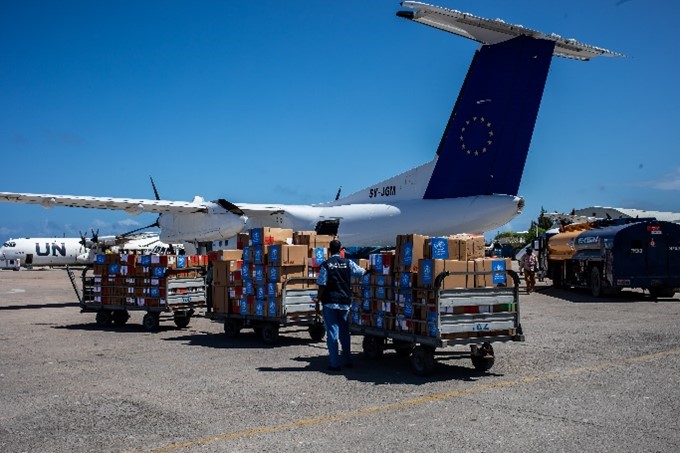 Since 2020, the EU and ECHO have provided continuous support to WHO emergency response activities, including by airlifting vital medical equipment and supplies across Somalia, including during the COVID-19 lockdown Mogadishu, 24 September 2022 – The World Health Organization (WHO) country office for Somalia has launched a €1 000 000 project, which aims to deliver crucial emergency health supplies and essential medicines to drought-affected populations across Somalia in support of the organization’s ongoing life-saving essential health interventions. This project is funded by the European Union’s Humanitarian Aid and Civil Protection Operation.
Through this support, the federal and state ministries of health and WHO will provide integrated life-saving health services to drought-affected people at the community level through the outreach services, as well as through primary health centres. Part of these supplies will also be used to support critical care for severe pneumonia, diarrhoeal diseases, as well as for other medical conditions that might be needed to be treated at the secondary health facility level. These supplies will also help Somalia mount an appropriate response to disease outbreaks caused by the drought, including cholera and measles. Provisions being delivered will include medical kits to address cholera and severe acute malnutrition with medical complications, as well as other emergency medical equipment and items from WHO’s catalogue of prequalified supplies. The consignments will also comprise laboratory testing kits and reagents, in addition to 59 different kinds of basic and supplementary medicines, among other items.
Supplies procured by WHO through this EU contribution will be delivered to WHO warehouses located in Mogadishu, Garowe, and Hargeisa, after which they will be handed over to the Government or partners at health facility level to provide life-saving services to vulnerable populations. The district health information system (DHIS2), alongside the early warning alert and response network (EWARN) surveillance system, will store information on supplies that are received and used at state level
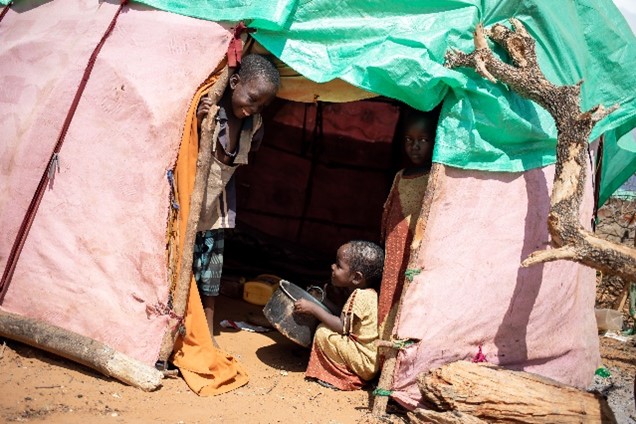 The interventions will deliver life-saving resources to the most vulnerable populations living in different states of the country, including communities that have had their immunity lowered due to the ongoing drought, which makes it easier for them to get infected with diseases. Credit: Somalia/Arete The project will directly benefit over 740 000 drought-affected people, around half of whom are women. Direct beneficiaries also include people displaced by drought living in camps for internally displaced persons, as well as host communities in drought-affected districts. The project will also target people living with disabilities, people with little or no access to health services, and people living in areas where epidemic-prone diseases are highly prevalent. The interventions will address the needs of drought-affected communities living in the Banadir region and districts in Galmudug state, Hirshabelle state, Jubaland state, Puntland, Somaliland, and Southwest state.
“Somalis are no strangers to droughts, but what the country confronts now is unprecedented and demands our best collective effort. The reported number of acute watery diarrhoea/suspected cholera cases is way over doubling that of last year; for measles, the reported cases this year are more than four times that of 2021. Children under the age of 5 are those most likely to die in the absence of medical and nutritional support,” said Javier Rio Navarro, Head of the EU Humanitarian Office for Somalia. “Through this support, part of the EU humanitarian contribution of over € 61 million in 2022, health facilities and humanitarian staff in hardest hit locations will be better equipped to continue their lifesaving efforts.”
“We have said it before, and we are saying in again – the current food security crisis is also a health crisis. When people are starving, and in hunger, their basic immunity goes down. As a result, they become more vulnerable to diseases. These people affected by the drought are from marginalized communities, they were living in very tough conditions and had limited access to health, immunization, and other basic services even before this drought. By partnering with ECHO, we will provide essential medical supplies to meet critical healthcare needs of these and more vulnerable groups and protect their health. Through improving access to health care for these marginalized group, we are certain that many deaths will be averted, many diseases will be prevented,” said Dr Mamunur Rahman Malik, WHO Representative to Somalia and Head of Mission.
These life-saving resources complement Somalia's Essential Package of Health Service (EPHS), 2020, which aims to offer the most basic essential services, and supplementary services where possible, to every person no matter where they live.
In November 2021, the Federal Government of Somalia declared a state of emergency over the ongoing drought. As a result of the drought, around 7.7 million people are currently in need of humanitarian assistance and protection, and one million people have been displaced. Between January and September 2022, Somalia’s EWARN system reported spikes in epidemic-prone diseases, such as acute diarrhoea, cholera and other waterborne diseases. Additionally, cases of vaccine-preventable diseases such as measles, increased by 20% during this period.
The current support of ECHO for WHO’s ongoing life-saving interventions is expected to help avert an additional 8106 new cases of cholera; 64 393 cases of acute diarrhoea; 30 000 cases of measles; 8464 cases of severe acute malnutrition with medical complications; and 10 000 cases of severe acute respiratory infections in the drought-affected communities by way of scaling up and delivering the life-saving health interventions to these communities at places where they are . Using lessons learnt from the 2016–2017 drought in Somalia, these intensive and urgent life-saving interventions rolled out by WHO, in close collaboration with federal and state health ministries, ECHO, other partners as well as the clusters for health, water, sanitation and hygiene (WASH) and nutrition, will cushion communities from the effects of drought.
For additional information, please contact:
EU Humanitarian Aid: Mathias Eick,
Kyle DeFreitas, WHO Somalia External Relations Lead,
Fouzia Bano, WHO Chief of Staff ai, Communications Officer,
-----------------
Note to editors
Please see the links below for additional information on recent support received from the European Union Delegation to Somalia:
EU-WHO Newsletter 2021: *|MC:MC_MC_SUBJECT|* (campaign-archive.com)