WHO EMRO
  • Sites régionaux
WHO EMRO
Sites régionaux de l’OMS
Afrique Afrique
Amériques Amériques
South-East Asia South-East Asia
Europe Europe
Eastern Mediterranean Eastern Mediterranean
Western Pacific Western Pacific
  • Accueil
  • Thèmes de santé
  • Données et statistiques
  • Centre des médias
  • Ressources
  • Pays
  • Programmes
  • À propos de l'OMS
Recherche Recherche

Recherche

- Tous les mots: renvoie uniquement les documents correspondant à tous les mots.
- N'importe quel mot: renvoie les documents correspondant à n'importe quel mot.
- Phrase exacte: renvoie uniquement les documents qui correspondent à la phrase exacte saisie.
- Préfixe de phrase: fonctionne comme le mode Phrase exacte, sauf qu'il permet des correspondances de préfixe sur le dernier terme du texte.
- Wildcard: renvoie les documents qui correspondent à une expression générique.
- Requête floue: renvoie les documents contenant des termes similaires au terme de recherche. Par exemple : si vous recherchez Kolumbia. Il renverra les résultats de recherche contenant la Columbie ou la Colombie.
  • Site mondial
  • Sites régionaux
    Sites régionaux de l’OMS
    • Afrique Afrique
    • Amériques Amériques
    • Asie du Sud-Est Asie du Sud-Est
    • Europe Europe
    • Méditerranée orientale Méditerranée orientale
    • Pacifique occidental Pacifique occidental
Recherche Recherche

Recherche

- Tous les mots: renvoie uniquement les documents correspondant à tous les mots.
- N'importe quel mot: renvoie les documents correspondant à n'importe quel mot.
- Phrase exacte: renvoie uniquement les documents qui correspondent à la phrase exacte saisie.
- Préfixe de phrase: fonctionne comme le mode Phrase exacte, sauf qu'il permet des correspondances de préfixe sur le dernier terme du texte.
- Wildcard: renvoie les documents qui correspondent à une expression générique.
- Requête floue: renvoie les documents contenant des termes similaires au terme de recherche. Par exemple : si vous recherchez Kolumbia. Il renverra les résultats de recherche contenant la Columbie ou la Colombie.

Sélectionnez votre langue

  • اللغة العربية
  • English
WHO EMRO WHO EMRO
  • Accueil
  • Thèmes de santé
  • Données et statistiques
  • Centre des médias
  • Ressources
  • Pays
  • Programmes
  • À propos de l'OMS
  1. Home
  2. Palestine site
  3. Palestine site-Information resources

Trauma stabilization points: key to optimized trauma care in Gaza

For the first time in Gaza, the Palestinian Ministry of Health, in collaboration with partners and with technical support from WHO, has established trauma stabilization points (TSPs) throughout the critical zones of Gaza in order to respond to the mass influx of casualties as a result of the ongoing violence. Five Ministry of Health TSPs and 5 Palestinian Red Crescent Society TSPs were established along the Gaza Strip, only minutes away from the border fence.

TSPs perform 2 main roles:

1. Triage, treatment and discharge of patients with minor injuries;

2. Triage, stabilization and referral of critical patients with life-threatening or limb-threatening injuries.

Both of these functions can substantially decrease the burden on referral hospitals.

1 / 14
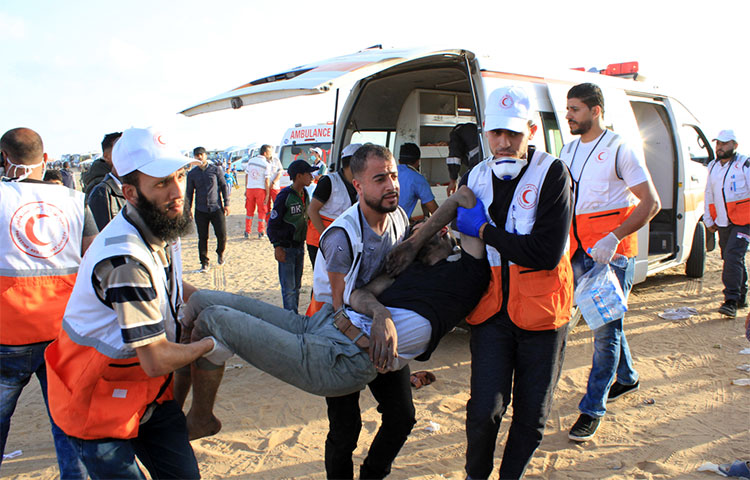
A critically injured patient is taken from the point of injury to a TSP in Gaza.
Photo credits: WHO oPt
2 / 19
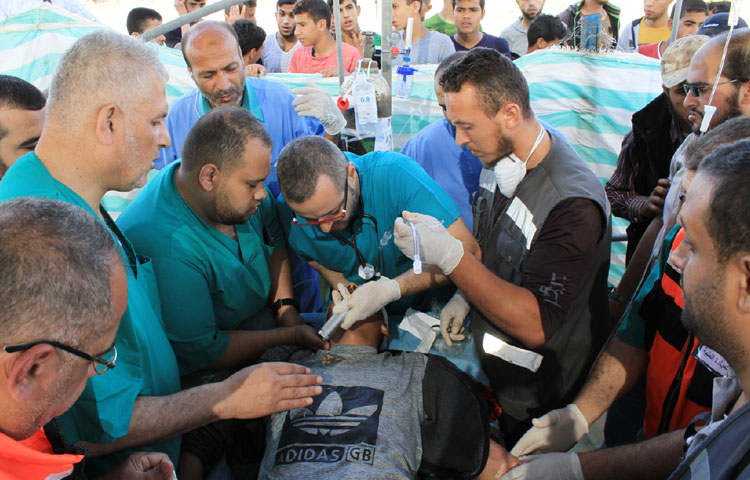
Airway management in a critically injured patient carried out at a TSP. TSPs across Gaza are providing life- and limb-saving interventions, as well as acting as a buffer zone to treat minor and mild injuries, thus reducing the burden on hospitals. Scarce hospital resources are being spared and patients are being given an increased chance of survival.
3 / 19
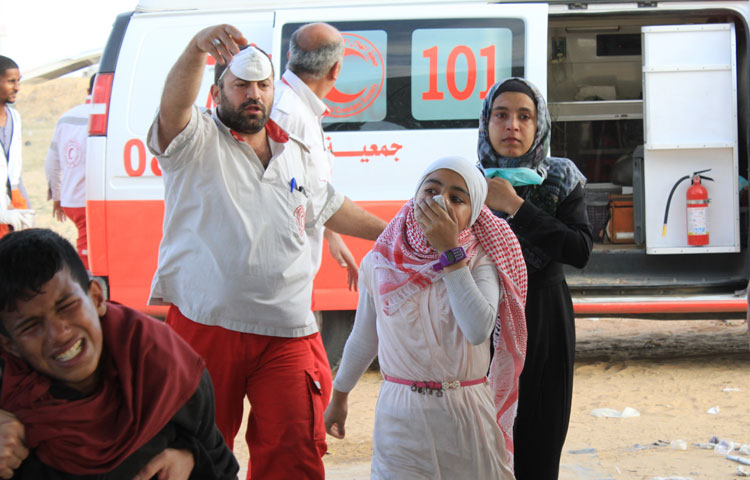
From 30 March to 19 May, a total of 4255 tear gas inhalation cases have been treated at TSPs, according to latest available figures from the Ministry of Health, reducing the burden already overloaded hospitals. At the onset of this initiative, TSPs in Gaza were staffed with primary health care physicians, nurses, and paramedics. Today, TSPs have been further capacitated to include surgeons and intensive care .
4 / 19
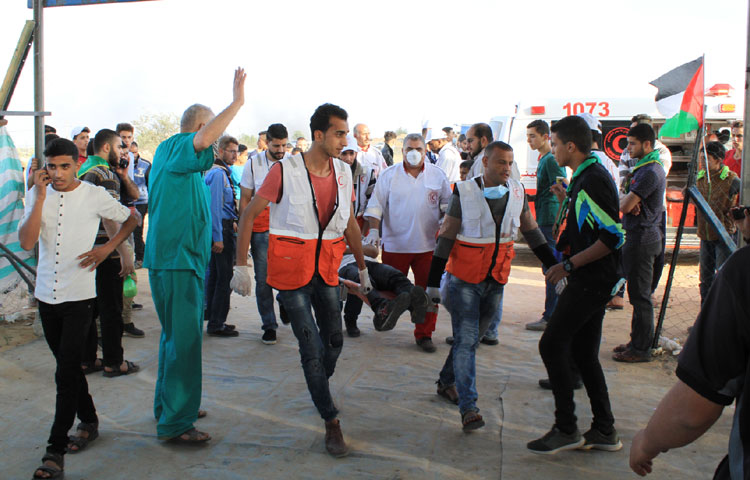
TSPs serve to triage and resuscitate patients. Once stabilized, seriously wounded patients are transported by ambulance from TSPs to hospitals in Gaza.
5 / 19
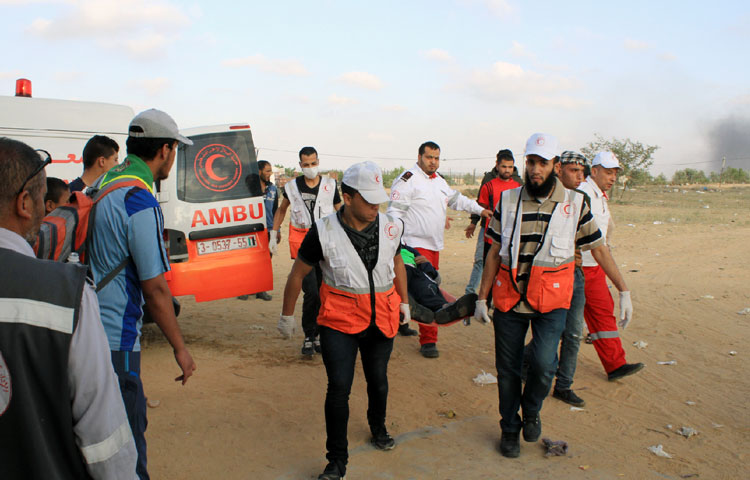
To ensure that patients have a better chance of survival from the point of injury, a total of 10 TSPs are currently operational in Gaza to receive critically injured patients, who arrive from the so-called points of injury. Depending on the severity of trauma and the capacity of the facilities, patients are rushed to the nearest TSP for treatment and stabilization.
6 / 19
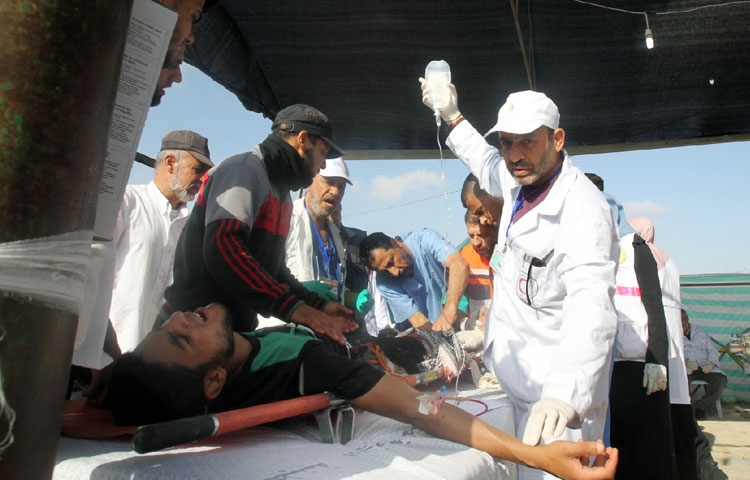
TSPs in Gaza undertake the challenging task of the initial evaluation of patients who are critically injured critically from multiple traumas. TSPs are a special kind of emergency medical team (Type 1) where initial outpatient emergency care of injuries and other significant health care needs are provided. Key services include triage, first aid, stabilization, referral of severe trauma, non-trauma emergencies, and care for minor .
7 / 19
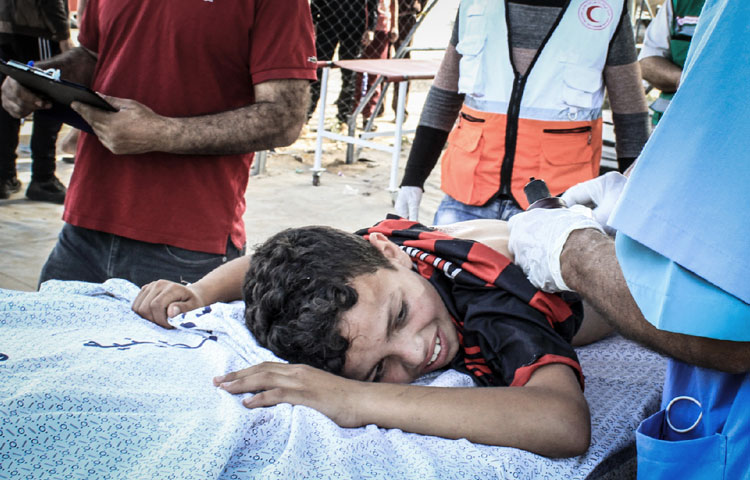
Medical teams at frontline TSPs throughout Gaza treat dozens of patients, many of whom are women and children.
8 / 19
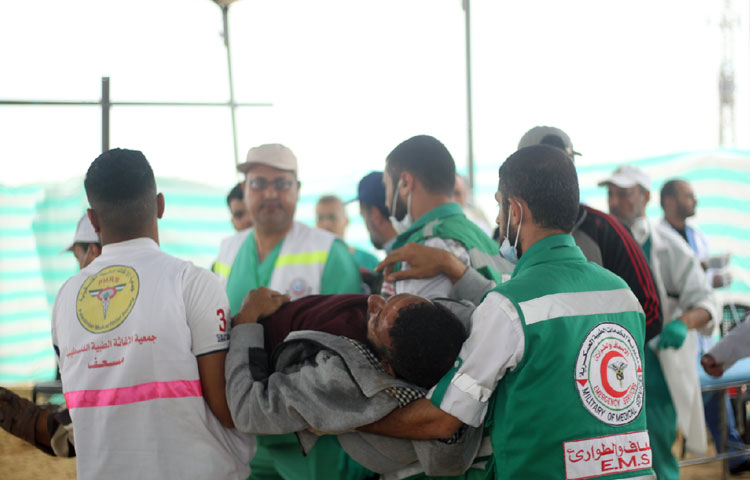
Life-saving stabilization and emergency care is provided to Palestinians demonstrating near the security fence in Gaza. In essence, TSPs need to be established close to points where injuries are expected to ensure that life-threatening injuries can be dealt with in a timely and effective manner.
9 / 19
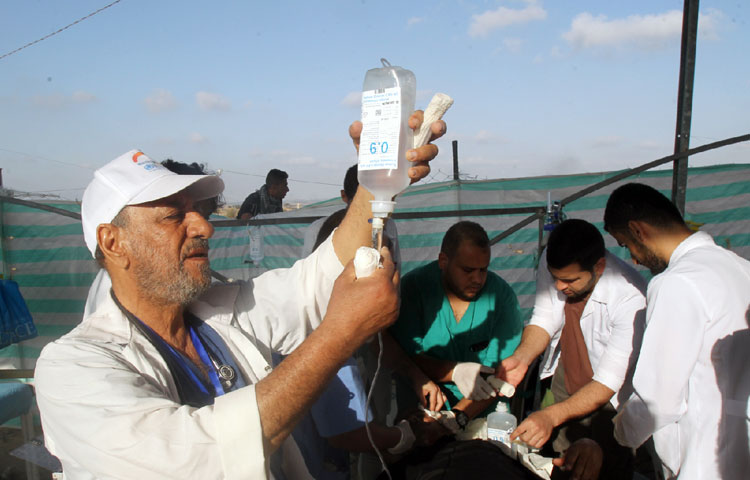
Doctors try to keep pace with the steady stream of injured arriving at TSPs in Gaza.
10 / 19
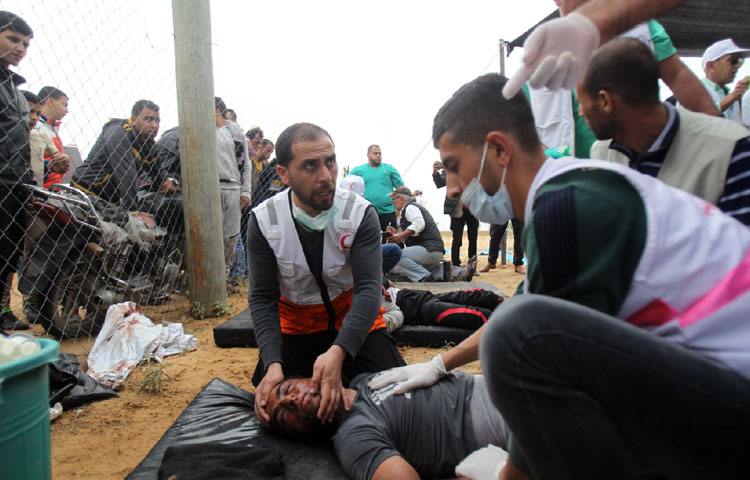
Doctors and nurses working in the TSPs close to the mass demonstrations have been affected by attacks on health care. From 30 March to 20 May, 245 health workers were affected by attacks, according to data provided by the Palestinian Ministry of Health, Palestinian Red Crescent Society, Palestinian Medical Relief Society and the Union of Health Work Committees.
11 / 19
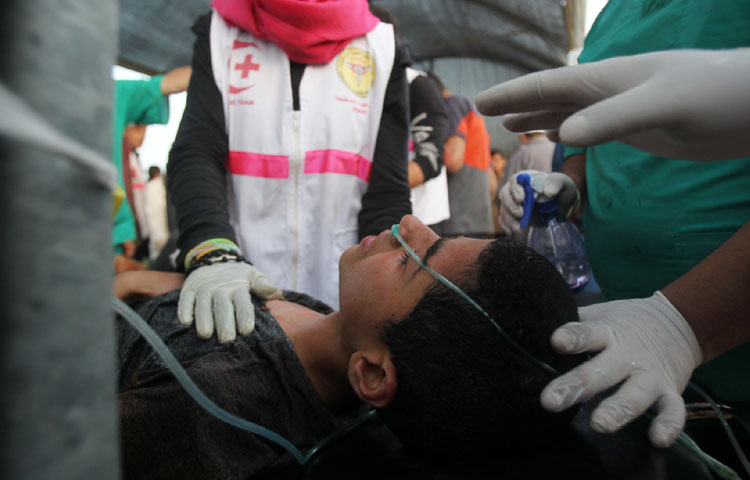
Each TSP is equipped with beds, emergency equipment and surgical items, supported by doctors, nurses and paramedics.
12 / 19
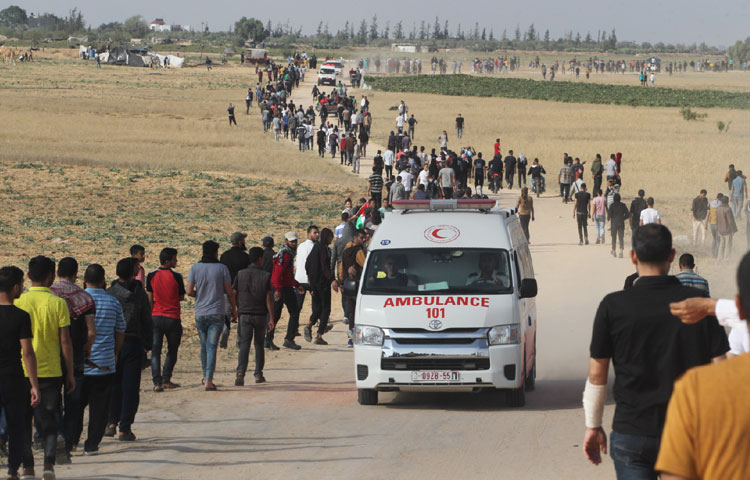
Once severely injured patients are stabilized at a TSP, ambulances rush them to nearby hospitals for further treatment.
13 / 19
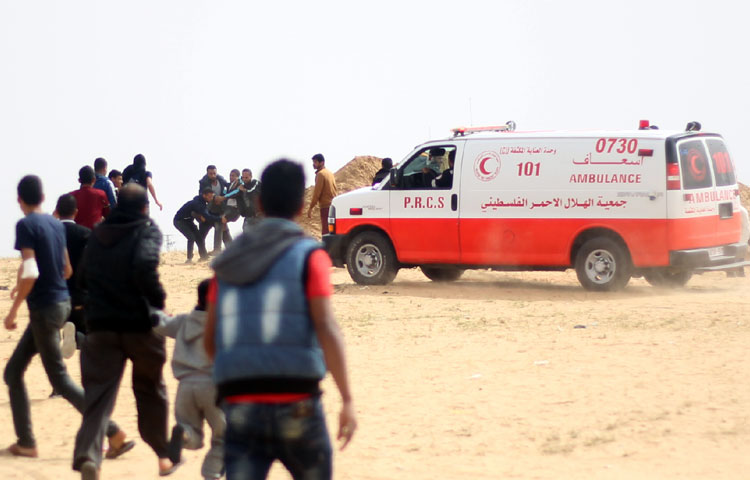
Since the start of demonstrations on 30 March, 40 ambulances have been damaged, according to data provided by the Palestinian Red Crescent Society, the Palestinian Medical Relief Society and the Ministry of Health in Gaza.
14 / 19
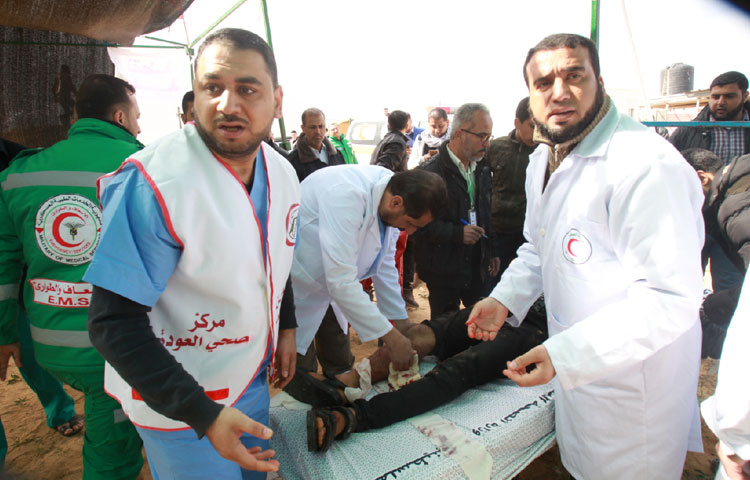
Since the start of the demonstrations on 30 March, a growing number of attacks on health facilities and health personnel working on the frontline in Gaza has been witnessed, which is affecting the ability to treat and save lives.
15 / 19
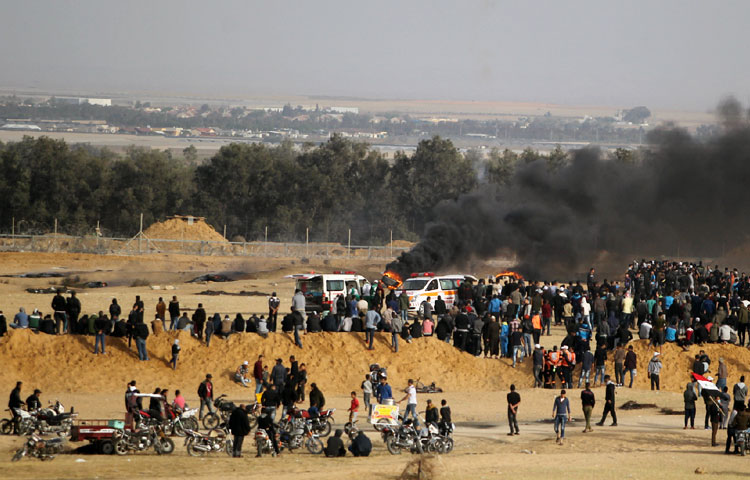
Demonstrators gather near the ambulances that assist the injured and transfer them from the point of injury to the TSPs.
16 / 19
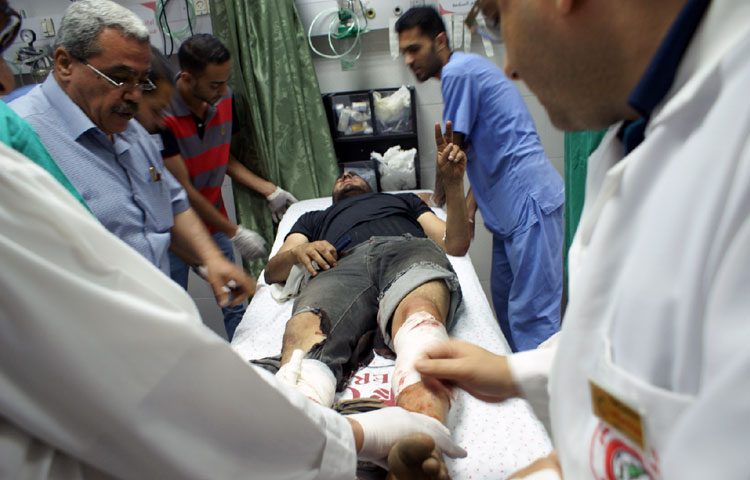
A patient is referred from a TSP to Al Shifa hospital in Gaza. Ensuring timely referrals from TSPs to hospitals is critical to saving lives.
17 / 19
Al Awda hospital, Gaza. According to the Ministry of Health in Gaza, as of 22 May, there have been 1293 casualties with lower limb injuries.
18 / 19
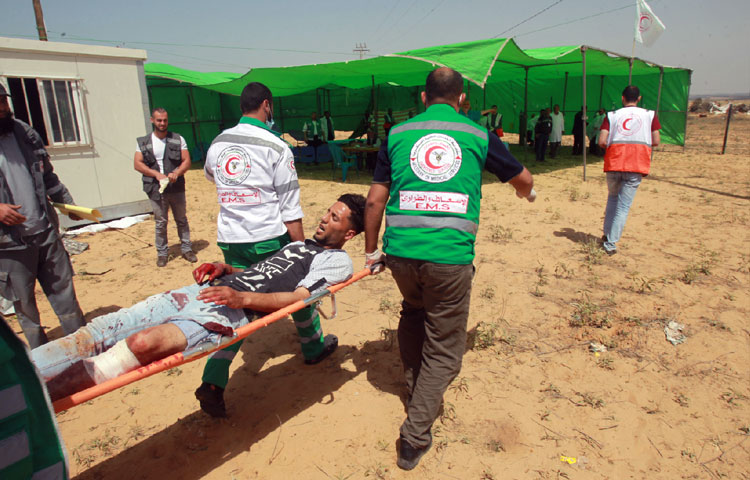
Since 30 March to 26 May, a total of 6180 people had been treated at TSPs in Gaza, according to figures provided by the Ministry of Health.
19 / 19
TSPs provide crucial life- and limb-saving stopover interventions for those patients who would otherwise die on their way to hospitals.
❮ ❯
Information resources

WHO flash updates
WHO flash updates 2026
Occupied Palestinian territory: WHO Health Emergency Appeal 2026
How WHO supported Gaza in 2024
WHO’s response in the occupied Palestinian territory
April 2024 – December 2024
How WHO supported Gaza in 2024
WHO operational response and early recovery plan for the occupied Palestinian territory
2025
How WHO supported Gaza in 2024
Environmental and Social Safeguards Management
Environmental and Social Safeguards Management - annex
Emergency situation reports
Gaza Hostilities 2023 - Emergency Situation Reports
images/stories/palestine/WHO_WHO_oPt_Operational_Plan_April_2024.pdf
WHO operational response plan: occupied Palestinian territory
April 2024 – December 2024
images/stories/palestine/WHO_oPT_Response_Report_March_2024.pdf
WHO’s response in the occupied Palestinian territory
October 2023 – March 2024
Stakeholder Engagement Plan (SEP)
Environmental and Social Commitment Plan
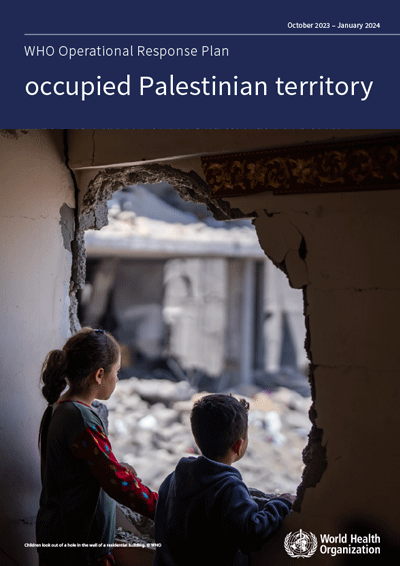
WHO Operational Response Plan occupied Palestinian territory
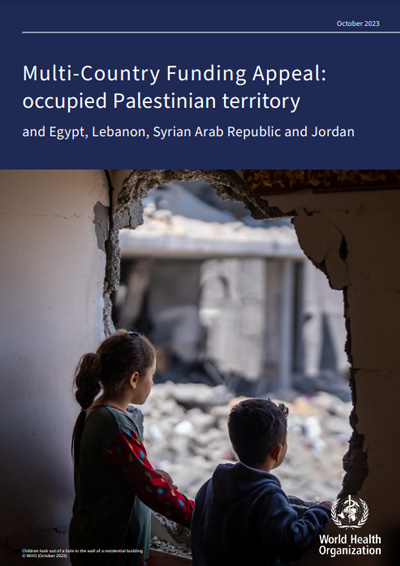
Multi-Country Funding Appeal: occupied Palestinian territory and Egypt, Lebanon, Syrian Arab Republic and Jordan
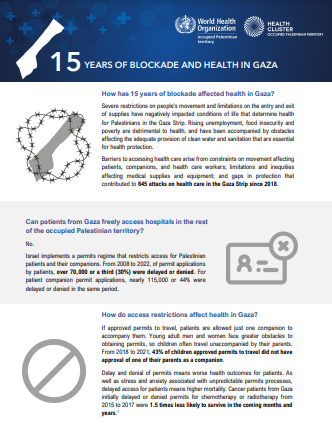
15 years of blockade and health in Gaza
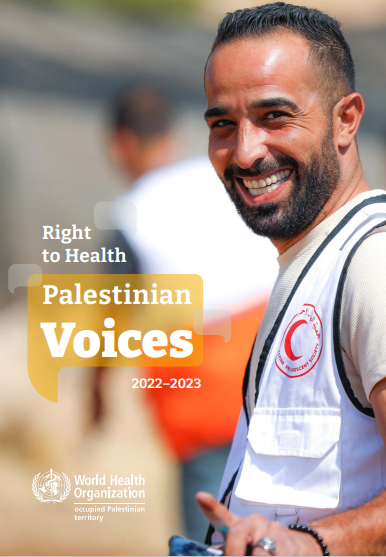
Palestinian Voices, 2022–2023
15 years of blockade and health in Gaza
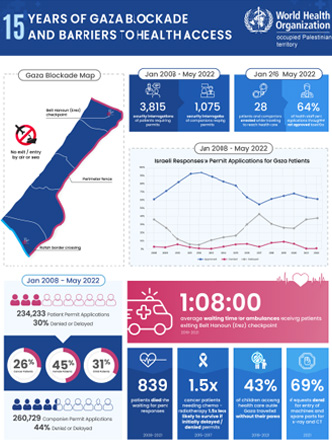
15 years of blockade and barriers of health access
15 years of blockade and health in Gaza
COVID-19 situation reports
COVID-19 weekly epidemiological bulletin
Monthly report on health access in oPt
Monthly report on health access
Situation reports
Situation reports
Situation reports
2021 escalation of conflicts
Right to Health photo book: Palestinian voices
WHO publications
Health infographics
Infographics
Human stories
Human stories
Photo essays
Photo essays
Somalia EMHJ related articles
EMHJ related articles

Multimedia

WHO brings solar energy to Gaza

Powering health: WHO brings solar energy to the health sector in Gaza

More videos

Frontline shift Nombre d'articles :  3

Page 6 sur 6

  • 1
  • 2
  • 3
  • 4
  • 5
  • 6
  • Plan du site
    • Accueil
    • Thèmes de santé
    • Centre des médias
    • Données et statistiques
    • Ressources
    • Pays
    • Programmes
    • À propos de l'OMS
  • Aide et services
    • Travailler à l'OMS
    • Droits d’auteur
    • Privacy
    • Nous contacter
  • Bureaux de l'OMS
    • Siège de l'OMS
    • Région de l'Afrique
    • Région des Amériques
    • Région du Pacifique occidental
    • Région de l'Asie du Sud-Est
    • Région de l'Europe
WHO EMRO

Politique de confidentialité

© OMS 2026