

Sélectionnez votre langue
KSrelief funding saves young lives in Yemen
 18 March 2025, Aden, Yemen – As of 1 December, Yemen had reported over 249 900 suspected cases of cholera, with 861 associated deaths, since the start of 2024, accounting for 35% of the global cholera burden and 18% of reported mortality.
Cholera remains a major health threat in Yemen, economic hardship and crumbling infrastructure. Caused by contaminated water and poor sanitation, the disease continues to claim lives, particularly among children.
In May 2024, with US$ 3 million in funding from the King Salman Humanitarian Aid and Relief Center (KSrelief), lifesaving interventions were launched to reduce illness and prevent further spread.
Health facilities like Al-Mualla Diarrhoea Treatment Centre (DTC) in Aden Governorate have become critical actors in the battle against cholera, offering free-of-charge, timely care to vulnerable communities.
For Rami Ibrahim Omar Hassan, a 28-year-old father from Aden, support came just in time. Life for his family of 7 was already a daily struggle when his two young daughters, aged 10 and 6, suddenly fell ill with severe diarrhoea and vomiting. The situation escalated quickly, with both girls experiencing vomiting and diarrhoea up to 3 times a day.
 “I was very afraid for my daughters,” Rami says. “The lives of our children are precious, and I couldn’t bear to think of losing them.”
With only 3000 Yemeni Riyals in his pocket Rami acted quickly, hiring a private car to Al-Mualla Centre after it was recommended by neighbours.
The girls received immediate treatment at the centre, including intravenous fluids and essential medicines made possible through KSrelief funding. While treatment outside the centre remains costly, Al-Mualla provides free-of-charge care.
The medical staff treated the girls and gave the family guidance to prevent future infections. “They explained the importance of hygiene, keeping the house clean, maintaining personal hygiene and acting quickly at the first sign of illness to avoid complications and prevent the sickness spreading,” explains Rami.
 For health staff, seeing patients recover is deeply rewarding. Ansam Farah Ramadan, Head of the Nursing Department at the Centre, describes these moments: “Watching patients recover, especially those who arrive in such a critical state, is indescribable. It is like seeing a loved one brought back to life.”
Rami’s daughters are now on the path to recovery. Their story serves as a powerful reminder of how timely care can mean the difference between life and loss.
Since the launch of the KSrelief-funded project, 250 beneficiaries have received treatment, of whom 178 (71%), experiencing moderate to severe dehydration, were admitted for lifesaving care at Al-Mualla Centre between 1 November and 18 December 2024.
KSrelief support to DTCs includes essential medicines and medical supplies, training and supervision of health workers, and incentives for staff working 24/7. This vital support ensures that those affected by cholera can access timely care, preventing further suffering and saving lives.
Yemen’s path to zero malaria
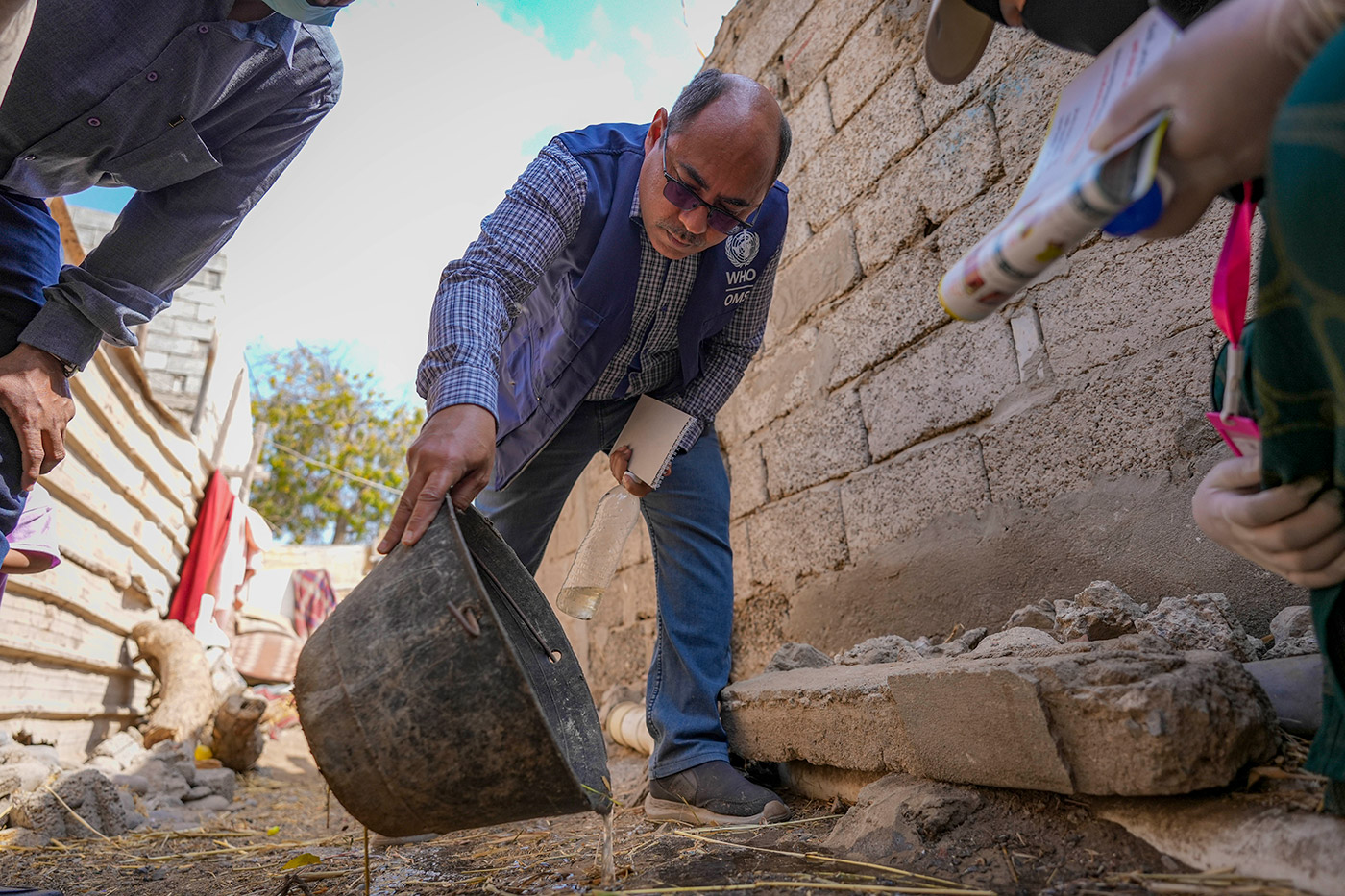 Aden, Yemen, 25 April 2025 - On World Malaria Day 2025, the World Health Organization (WHO) is calling for urgent and united action to control malaria in Yemen. This year’s global theme, “Malaria Ends with Us: Reinvest, Reimagine, Reignite”, underscores the need for collective responsibility, innovation and investment to end this preventable and treatable disease.
Malaria continues to place a heavy burden on vulnerable communities across Yemen, particularly in hard-to-reach areas. A weakened health system, the result of years of conflict, and climate change, compound the challenges of fighting against malaria. WHO, together with the Ministry of Public Health and Population (MoPHP) and its partners, is stepping up efforts to deliver tailored, lifesaving interventions and ensure access to timely diagnosis and effective treatment.
“Despite the immense challenges, Yemen has an opportunity to make real progress against malaria,” said Acting WHO Representative in Yemen Dr Ferima Coulibaly-Zerbo. “We are working hand-in-hand with the Ministry of Public Health and Population and health partners to scale up prevention, strengthen surveillance and reach those most in need with essential services.”
WHO and MoPHP are implementing context-specific approaches guided by realities on the ground. They include enhancing malaria surveillance systems, addressing malaria drug and insecticide resistance, promoting community-based vector control and expanding access to diagnostics and treatment services, particularly in remote and underserved districts.
Key figures from Yemen’s malaria programme
In 2024, Yemen recorded 210,022 confirmed malaria cases, with 18 related deaths. Over 2 million insecticide-treated nets (ITNs) were distributed nationwide, and 1,735,000 suspected cases tested at sentinel and peripheral health facilities. More than 2,294 community health workers have been trained to support local malaria surveillance and response. These efforts, though significant, need to be urgently scaled up to meet elimination targets.
Eliminating malaria in Yemen will require sustained political commitment, stronger national ownership and increased domestic and international investments. WHO is advocating for greater resource mobilization and collaboration with donors, UN agencies, NGOs, civil society and the private sector to bridge critical funding gaps and deliver on the promise of a malaria-free future.
“Malaria elimination in Yemen is an ambitious yet achievable target,” added Dr Coulibaly-Zerbo. “It will take commitment, strategic investment and strong partnerships. WHO remains fully committed to supporting the government and communities across Yemen in this vital fight. A Yemen free from malaria is a step towards health security, resilience and sustainable development.”
As the world marks World Malaria Day, WHO Yemen urges all stakeholders to reaffirm their commitment and scale up support to end malaria in Yemen once and for all.
Media contacts
WHO Yemen Communications:
About WHO
Since 1948, the World Health Organization (WHO) has been the United Nations agency dedicated to advancing health for all, so that everyone, everywhere can attain the highest level of health. WHO leads global efforts to expand universal health coverage, direct and coordinate the world’s responses to health emergencies and connect nations, partners and people to promote health, keep the world safe and serve the vulnerable.
World Immunization Week 2025
‘Immunize for life’: Yemen marks World Immunization Week 2025
 24 April 2025, During World Immunization Week, the World Health Organization (WHO) in Yemen joins global partners in celebrating immunization as one of humanity’s greatest achievements. The week provides an opportunity to reflect on progress made in preventing life-threatening diseases and reaffirm our commitment to ensuring everyone has access to lifesaving vaccines.
Immunization has saved millions of lives and is one of the most powerful tools in the fight against preventable diseases. It has contributed to healthier communities and reduced child mortality. In Yemen, around one Million children have been vaccinated in the past year, protecting them from diseases like measles, polio and diphtheria.
Vaccines offer disease prevention, give children the opportunity to grow, learn and thrive, and reduce the burden on families and health care systems.
To reach millions of children under 5 in underserved and conflict-affected areas, WHO Yemen and partners are actively working to strengthen routine vaccination with the global Big Catch up initiative. Yet despite progress, many people in Yemen continue to face barriers. The ongoing conflict has weakened the health care infrastructure, and logistical obstacles mean families in remote and underserved areas face major challenges in accessing lifesaving immunizations. As a result, Yemen is grappling with severe outbreaks of vaccine-preventable diseases.
During the 2024 measles outbreak in Yemen, 27 517 cases and 260 deaths were reported, among the highest figures globally. Since 2017, more than 1500 diphtheria cases have been recorded, resulting in over 200 fatalities. Since 2021, 272 children have been affected by circulating variant poliovirus. These alarming figures are a stark reminder of the devastating consequences of limited vaccine access.
WHO Yemen is committed to making immunization for all a reality. We are working closely with the Ministry of Public Health and Population to overcome barriers and ensure that every person in Yemen can access lifesaving vaccines.
Vaccination is not a privilege, it is a human right. Immunization for all is possible, and we can achieve it together. During World Immunization Week 2025, WHO Yemen is calling on governments, authorities, health organizations and communities to unite and ensure that everyone gets the protection they deserve.
“Immunization is not just about protecting individuals, it is about safeguarding the future of entire communities. In Yemen, as in the rest of the world, every child has the right to grow up healthy, and every life saved through immunization brings us closer to a more equitable and resilient society. We urge all stakeholders – representatives of all authorities, health workers, partners and communities – to redouble efforts to ensure every individual in Yemen, especially every child, has access to lifesaving vaccines, no matter where they live,” says Acting WHO Representative in Yemen Dr Ferima Coulibaly-Zerbo.
For a healthier, stronger Yemen and a safer world, let’s immunize for life.
Media contacts
WHO Yemen Communications: email
About WHO
Since 1948, the World Health Organization (WHO) has been the United Nations agency dedicated to advancing health for all, so that everyone, everywhere can attain the highest level of health. WHO leads global efforts to expand universal health coverage, direct and coordinate the world’s responses to health emergencies and connect nations, partners and people to promote health, keep the world safe and serve the vulnerable.
A mother’s struggle: fighting malnutrition in Yemen
 14 April 2025, Aden, Yemen – At just 5 months old, Amir Taher Ali has already endured more than any child should. Born in Salah Al-Din, Aden, he has battled severe acute malnutrition, a chest infection, persistent diarrhoea and an umbilical hernia that needs surgery.
His mother remembers the helplessness she felt as his health deteriorated. “He was so sick and no matter what I did, I couldn’t comfort him. My milk dried up because of the stress. I felt completely helpless,” she says. “Now, at least, he is receiving care. I just want him to be healthy again.”
After struggling at home, Amir was eventually brought to the therapeutic feeding centre where he is now receiving treatment.
“The doctors and nurses have been kind, and I see him improving. But I pray no other mother has to watch her child suffer like this.”
A daily struggle
Life for Amir’s family has never been easy. His father, a daily wage worker, earns barely enough to buy food. On some days there is nothing to eat.
“When that happens, we fast,” his mother says quietly. “A stranger gave us baby clothes when Amir was born. We have always relied on the kindness of others.”
Malnutrition in Yemen: a widespread crisis
 Amir is one of 2.3 million children in Yemen suffering from acute malnutrition. Half a million of them face severe acute malnutrition and 69 000 need urgent medical care. Without treatment, malnutrition leaves children vulnerable to infections like pneumonia and diarrhoea, among the leading causes of child deaths in Yemen.
With support from the German Foreign Office, WHO is working to save lives. It provides medical care to 31220 malnourished children at 96 stabilization centres, and is training 1546 health care workers to ensure more children get the treatment they desperately need.
“Malnutrition remains one of the biggest threats to children’s health in Yemen,” says Acting WHO Representative in Yemen Dr Ferima Coulibaly-Zerbo. “No child should have to suffer from hunger or preventable diseases. With the support of our partners, WHO is committed to ensuring that children receive the care and nutrition they need to survive and thrive.”
While Amir’s journey is not over, his mother refuses to lose hope. “I just want to take him home healthy. That is every mother’s wish.”