

Sélectionnez votre langue
World NTD Day 2026: Unite. Act. Eliminate.
WHO urges sustained commitment to protect progress against neglected tropical diseases in Yemen
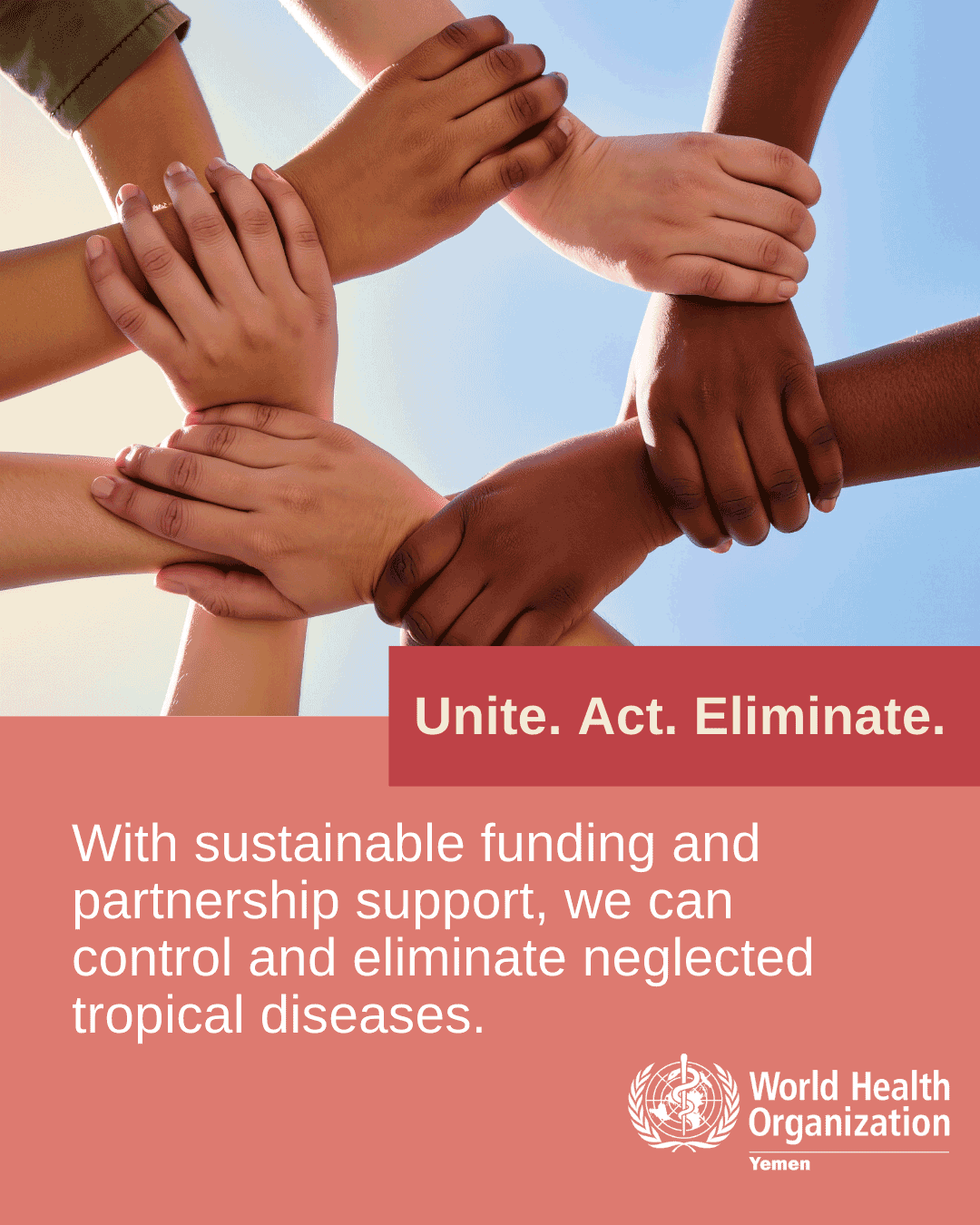 30 January 2026 – Aden, Yemen – On World Neglected Tropical Diseases (NTD) Day 2026, marked under the theme “Unite. Act. Eliminate.”, the World Health Organization (WHO) in Yemen renews its call for collective action to end NTDs as a cornerstone of health equity, resilience and sustainable development.
NTDs continue to affect more than 1 billion people globally. In Yemen, diseases such as leishmaniasis, schistosomiasis, leprosy, trachoma and dengue fever remain deeply entrenched in the most vulnerable communities. Years of protracted conflict, repeated climate shocks and a severely fragmented health system have intensified exposure to these diseases and constrained access to timely prevention, diagnosis and treatment.
Despite these challenges, global experience shows that elimination is achievable. By 2024, the number of people worldwide requiring NTD treatment declined to 1.4 billion, representing a 36% reduction since 2010. As the world enters 2026, 58 countries have eliminated at least one NTD, demonstrating tangible progress towards WHO’s 2030 target of 100 countries achieving elimination.
Yemen now stands at a critical crossroads. Sharp reductions in global health financing risk undermining more than a decade of progress against NTDs. Underfunded programmes do not merely slow momentum: they create conditions for disease resurgence, threatening lives, livelihoods, and economic stability – particularly among marginalized populations already bearing the brunt of conflict and poverty.
Dr Syed Jaffar Hussain, WHO Representative to Yemen, underscored the urgency of sustained commitment, stating: “Neglected tropical diseases thrive where health systems are weakest and communities are most vulnerable. In Yemen, progress against NTDs has shown that even in the most challenging settings, elimination is possible when commitment, funding and partnerships are sustained. Turning away now would not only reverse years of hard-won gains, but would condemn communities to entirely preventable suffering. Protecting the most vulnerable is not optional – it is our shared responsibility.”
Investing in NTD programmes remains one of the most cost-effective public health interventions. Evidence shows that preventive treatment and early care avert lifelong disability, protect children’s education, sustain adult productivity and strengthen primary health care from the ground up. In fragile and conflict-affected settings such as Yemen, these programmes also act as economic stabilizers, safeguarding human capital while reinforcing national health systems.
Climate change and ongoing conflict further compound the risk. Rising temperatures, flooding, population displacement and weakened infrastructure create ideal conditions for disease transmission. Without sustained investment, the gains achieved over the past decade could be rapidly erased.
On this World NTD Day, WHO calls on national authorities, donors and international partners to move beyond short-term emergency responses and commit to integrated, sustainable solutions. Maintaining funding for existing programmes, embedding NTD services within Yemen’s national health strategy and advancing a clear pathway toward greater domestic ownership are essential to securing progress and preventing resurgence.
By uniting behind these priorities today, Yemen can protect hard-won gains, accelerate progress toward elimination and build a healthier, more resilient future for its people.
For media inquiries, please contact:
WHO Yemen Communications
Email:
About WHO
Since 1948, the World Health Organization (WHO) has been the United Nations agency dedicated to advancing health for all, so that everyone, everywhere can attain the highest level of health. WHO leads global efforts to expand universal health coverage, direct and coordinate the world’s responses to health emergencies and connect nations, partners and people to promote health, keep the world safe and serve the vulnerable.
Restoring dignity and safety through WASH – a new chapter for Marib and Matna hospitals
12 January 2026, Aden, Yemen – For years, stepping into Marib General Hospital meant entering a place fighting its own battles. Overcrowded corridors. Walls swollen with humidity. Bathrooms that constantly leaked or clogged. Floors cracked from overuse. Air heavy with the weight of too many patients and too few functional systems.
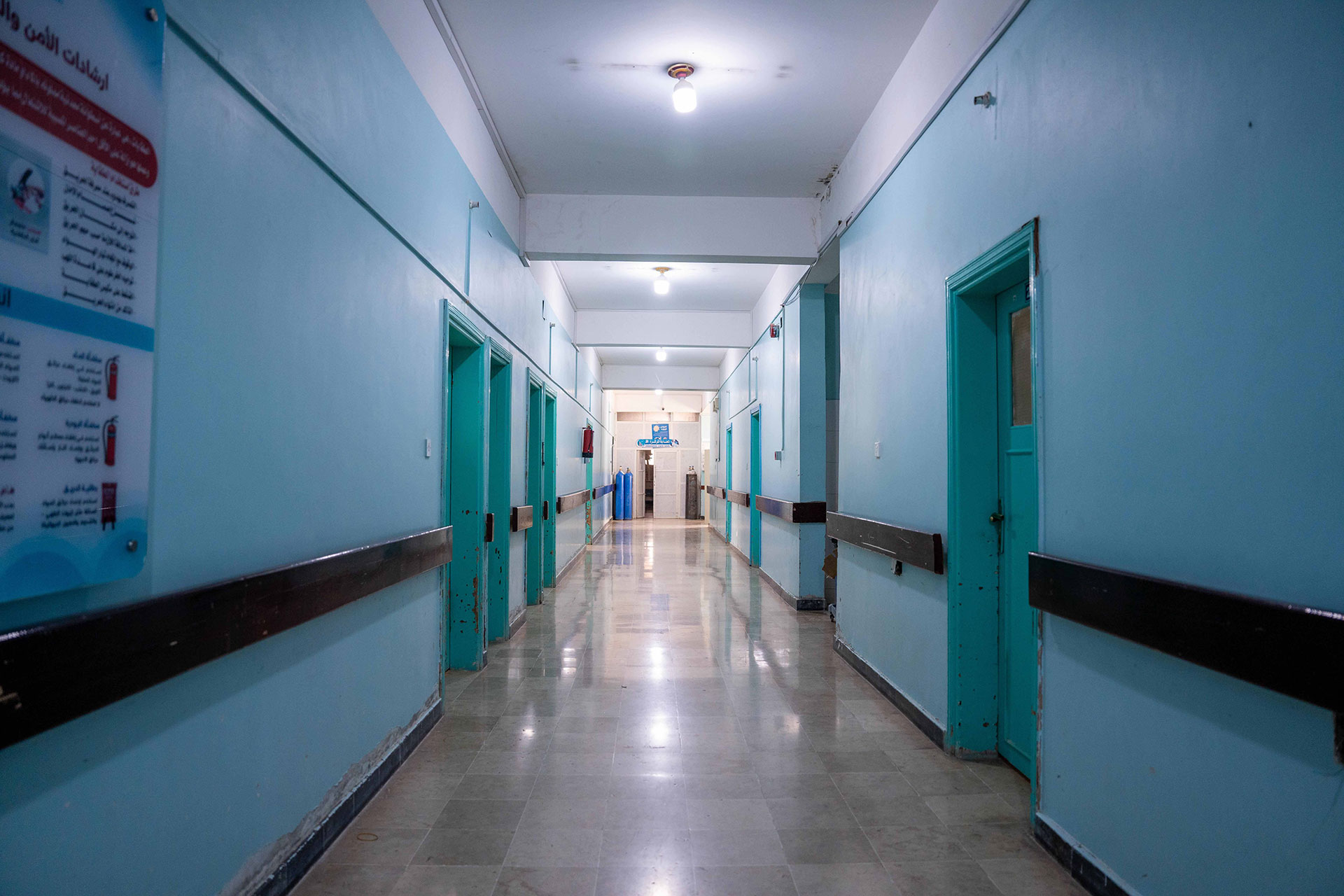 The hospital corridors are in poor condition, with peeling paint. Photo credit: WHO Yemen
It was a hospital doing its best – but one, where the environment itself worked against healing.
“Before the renovation, we faced constant humidity, water leaks and malfunctioning bathrooms,” recalls Abdulkarim Abdulhussein, Director of Marib General Hospital Authority.
“These issues affected medical services and even the psychological well-being of patients.” Yet thousands continued to walk through its doors, because they had nowhere else to go.
A transformation families can feel
Today that reality has changed – profoundly.
With generous support from King Salman Humanitarian Aid & Relief Centre, and in close partnership with the Ministry of Public Health and Population, WHO restored not just buildings but the sense of dignity and safety that families in Yemen have long deserved.
 Exterior view of the hospital building, showing the main structure and surrounding area with the signboard of Ksrelief. Photo credit: WHO Yemen
Across Marib and Matna hospitals, WASH rehabilitation has brought:
- modern, disability-inclusive restrooms
- reliable water systems built to withstand pressure
- clean, restored floors and walls
- sanitation systems that actually protect health
- proper ventilation and functioning air-conditioning
- infection-prevention upgrades in high-risk areas.
These improvements are more than infrastructure – they are a lifeline.
“The difference is very significant,” says Hussain, a long-time patient. “Before, we had to look for several hospitals to meet our needs. Now everything is here – better equipment, better services, better specialists and a clean environment.”
A hospital reborn in the eyes of its community
For patients like Ibrahim, who brings his family for treatment every few months, the change is immediate, visible and deeply felt.
“The renovations to the floors, walls and bathrooms created a real transformation,” he shares.
Families now walk into spaces that feel clean and safe, not stressful and uncertain.
On the frontlines: a safer emergency room
 Improved hospital corridors following rehabilitation and painting works. Photo credit: WHO Yemen
Inside one of Yemen’s busiest emergency departments, where 150 to 300 patients arrive every single day, the transformation has been lifesaving.
“Upgrading the sanitation system, installing hand-washing stations and adding epoxy floors made our work faster and safer,” explains Dr Malik Al-Faqih, Head of Emergency. “It improved the environment for patients, visitors and staff.”
For doctors treating war injuries, trauma cases and critical patients, a clean and organized environment is not a luxury – it is the difference between risk and safety, between delay and survival.
More than renovation – a renewal of trust
The impact of the WASH upgrades extends far beyond physical improvements. It restored something fragile, yet essential: trust.
Trust that a hospital can be a place of healing, not harm.
Trust that families can enter with fear and leave with relief.
Trust that health workers have the environment they need to save lives.
“This project created a positive impression among all patients,” says Director Abdulkarim. “It improved the working environment and the quality of health care we provide.”
A foundation for hope
Challenges remain – overcrowding, the need for expanded clinics and growing demand from a displaced population. But the WASH rehabilitation has already rewritten the daily experience of thousands.
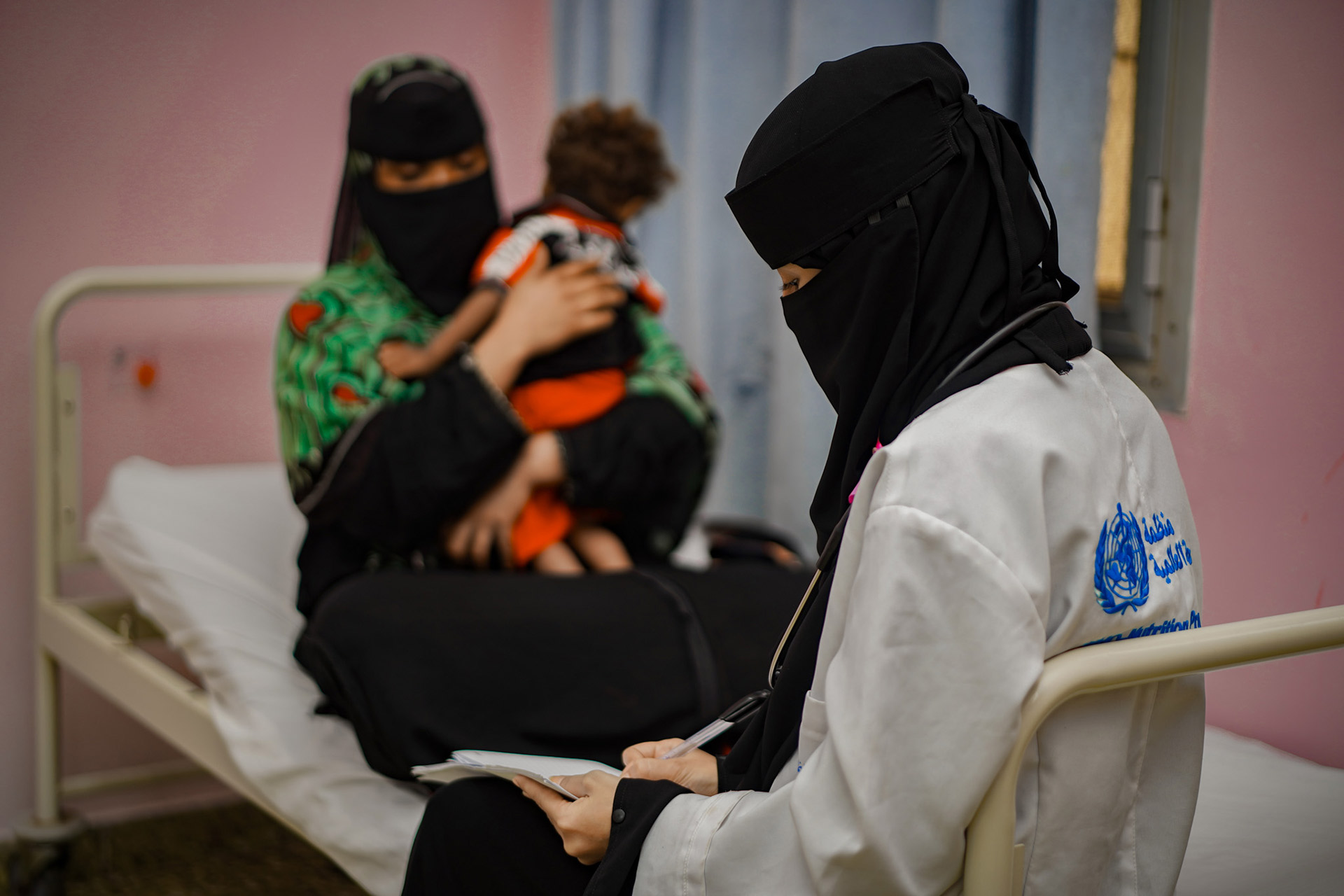
 Doctor checks the patient and carefully place a feeding tube to ensure proper nutrition and medical care. Photo credit: WHO Yemen
Clean water now flows where it once barely reached.
Bathrooms are accessible, functional and safe.
Walls no longer leak; floors no longer pose infection risks.
Health workers stand taller, supported by a system that supports them back.
This transformation is more than a project. It is a promise fulfilled: that every person deserves dignity, safety and quality care.
It is a reminder that even in the most challenging contexts, rebuilding begins with restoring the basics – water, sanitation and the simple human right to heal in safety.
All of it made possible through the generous support of King Salman Humanitarian Aid & Relief Centre, whose contribution helped turn a long-standing struggle into a story of renewal and restored dignity.
To know more about the WASH project, read the full press release below:
WHO strengthens the energy resilience of Yemeni health facilities with support from the Kuwait Fund for Arab Economic Development
 06 November 2025, Aden, Yemen – With generous funding from the Kuwait Fund for Arab Economic Development (KFAED), the World Health Organization (WHO) is launching a new project to strengthen the energy resilience of Yemen’s health sector through the installation of solar energy systems and battery storage in 6 health facilities across the country.
Frequent power cuts severely disrupt the delivery of lifesaving health services across Yemen. The new KFAED-funded initiative will help ensure continuous and sustainable power for hospitals and primary health care facilities, enabling operating theatres, intensive care units and vaccine cold chains to function without interruption.
Through this 12-month project, WHO will:
- install solar photovoltaic systems and battery storage units in 6 health facilities in priority governorates;
- provide technical support and capacity-building to health staff and maintenance teams for effective system operation and sustainability;
- strengthen climate resilience and the environmental sustainability of Yemen’s health infrastructure; and
- provide technical support to undertake energy needs assessments and identify additional facilities that could benefit from renewable energy resources, increasing climate resilience and reducing carbon emissions
A step toward climate-resilient health systems
“Reliable electricity is the backbone of every functioning health facility,” said WHO Representative in Yemen Dr Syed Jaffer Hussain. “Through the generous support of the Kuwait Fund, WHO is helping ensure that health services remain uninterrupted even during power outages, protecting lives, improving service quality and contributing to a greener, more resilient health system in Yemen.”
The project complements WHO’s broader efforts to integrate renewable energy solutions into Yemen’s health facilities, reduce operational costs and ensure that vulnerable communities can continue to access essential medical care despite ongoing crises and climate challenges.
WHO expresses its gratitude to the Government and people of Kuwait and the Kuwait Fund for Arab Economic Development for their steadfast partnership and support of the health sector in Yemen. This collaboration builds on Kuwait’s longstanding commitment to humanitarian and development assistance, particularly in health, infrastructure and energy.
About WHO
Since 1948, the World Health Organization (WHO) has been the United Nations agency dedicated to advancing health for all, so that everyone, everywhere can attain the highest level of health. WHO leads global efforts to expand universal health coverage, direct and coordinate the world’s responses to health emergencies and connect nations, partners and people to promote health, keep the world safe and serve the vulnerable.
Media contacts
WHO Yemen Communications:
WHO strengthens trauma and nutrition care in Yemen’s high-risk districts with support from ECHO
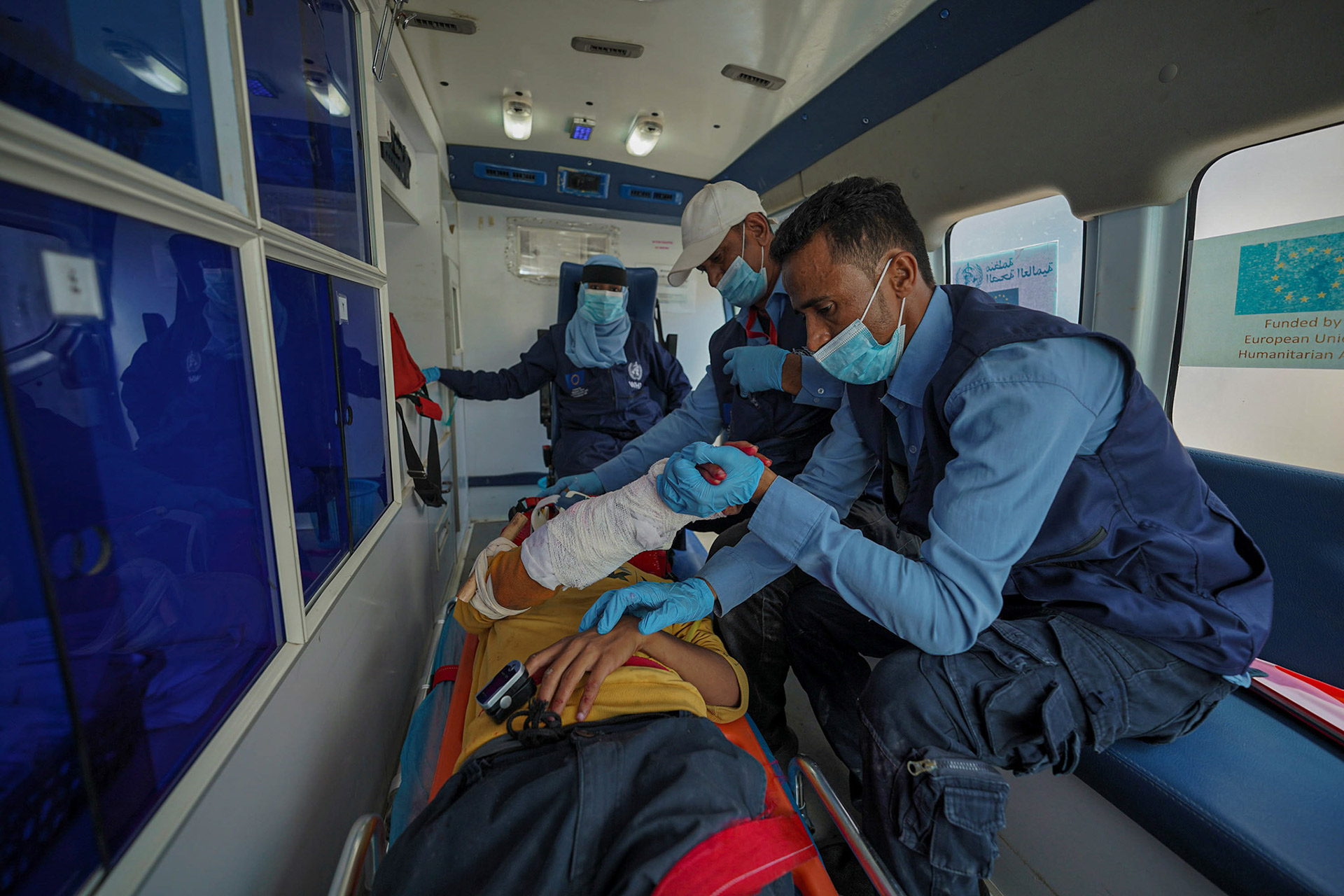 06 November 2025, Aden, Yemen – With funding from European Civil Protection and Humanitarian Aid Operations (ECHO), the World Health Organization (WHO) is scaling up lifesaving trauma and nutrition services in high-risk and conflict-affected districts.
The 12-month project aims to strengthen essential health and livesaving nutrition services and improve access to quality care for vulnerable communities amid an increasingly fragile humanitarian situation.
Expanding emergency and trauma services
Years of protracted conflict and regional hostilities, including continued air strikes, have left Yemen’s health system struggling to cope with the growing number of trauma and emergency cases. To address these gaps, WHO will deploy 6 specialized surgical teams to hospitals in Taiz, Hajjah, Al Hudaydah and Marib, restoring 24/7 emergency trauma and surgical services and the procurement of lifesaving medicines and surgical supplies.
The project will train 100 first responders and emergency health workers on mass casualty incident management, including basic life support, strengthening immediate trauma response closer to the front lines to help ensure access to timely care – within 1 hour after injury – for patients, facilitate referrals and save lives.
In close coordination with the Ministry of Public Health and Population, WHO will also support the establishment of a national emergency medical team framework to improve preparedness during health emergencies and mass-casualty incidents, engaging the 3 levels of the Organization, including the Emergency Medical Team Secretariat at WHO headquarters.
“With ECHO’s support, WHO is saving lives by bringing surgical and trauma care closer to those most in need, bridging a critical gap in Yemen’s health system,” said WHO Representative in Yemen Dr Syed Jaffer Hussain. “The project will help Yemen build national systems and skilled teams capable of responding effectively to future health crises through the establishment of a national emergency medical team framework engaging the 3 levels of the Organization and other stakeholders.”
Protecting children from life-threatening malnutrition
Malnutrition remains one of the leading causes of illness and death among children in Yemen. With ECHO’s support, WHO will sustain and strengthen services in 26 therapeutic feeding centres in priority governorates to treat children suffering from severe acute malnutrition with medical complications.
The intervention also provides transportation support for 488 frontline health workers to ensure they can reach facilities and funds essential operational costs such as meals for caregivers, WASH materials, oxygen and utilities. To ensure service quality and adherence to national treatment standards, WHO will conduct regular mentoring and supervision visits.
“Every child deserves a chance to recover and grow healthy,” said Dr Hussain. “By keeping lifesaving nutrition centres functional we are preventing avoidable deaths and giving families renewed hope.”
Reinforcing the humanitarian health response
The project will reach more than 155 000 people, including displaced families, women and children across 12 governorates, and strengthen coordination under the Health Cluster, co-led by WHO, helping to ensure an effective, equitable and complementary health response nationwide.
WHO continues to work with partners to maintain essential services, train health workers and ensure the availability of lifesaving medicines and supplies in Yemen’s most affected districts.
This intervention is made possible through funding from the European Civil Protection and Humanitarian Aid Operations (ECHO) which continues to support WHO efforts to sustain essential health and nutrition services and protect the lives of Yemen’s most vulnerable communities.
About WHO
Since 1948, the World Health Organization (WHO) has been the United Nations agency dedicated to advancing health for all, so that everyone, everywhere can attain the highest level of health. WHO leads global efforts to expand universal health coverage, direct and coordinate the world’s responses to health emergencies and connect nations, partners and people to promote health, keep the world safe and serve the vulnerable.
Media contacts
WHO Yemen Communications: