

Sélectionnez votre langue
Polio immunization campaign to protect 1.3 million children in 12 governorates of Yemen
 25 February 2024, Aden, Yemen – Around 1.3 million children aged under 5 years will be protected against polio in a vaccination campaign launched today with the support of the Global Polio Eradication Initiative, the United Nations Children’s Fund (UNICEF) and the World Health Organization (WHO). The Ministry of Public Health and Population aims to reach every child and UNICEF and WHO are assisting by providing the vaccine through cold chain storage and providing funding for training and deployment of vaccinators for the campaign targeting 12 governorates in Yemen.
This vaccination campaign is in response to an outbreak of variant poliovirus type 2, which to date has paralysed 237 children across Yemen. Polio infection can result in permanent, debilitating paralysis. It has no known cure but can easily be prevented through vaccination.
“For Yemen’s children, vaccination offers much-needed protection in one of the world’s most challenging contexts. The teams have been working around the clock to train vaccinators and make sure the cold rooms and solar fridges are working and cold boxes are in place to keep the vaccine cold from the moment it arrives in Yemen until it reaches every girl and boy under the age of 5 years,” said UNICEF Representative in Yemen Peter Hawkins.
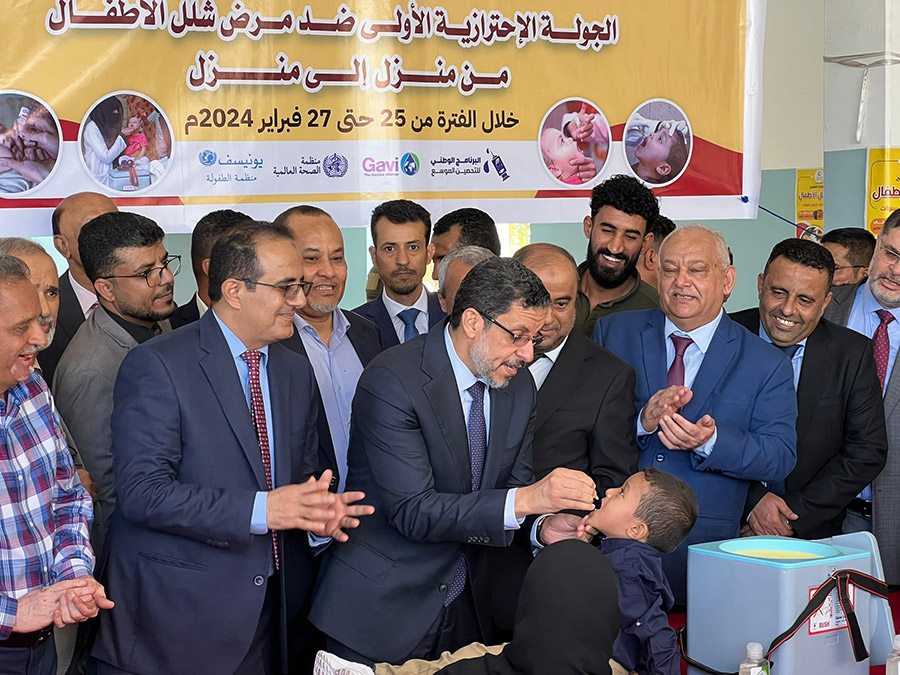 “We know that it is not enough to tell parents why it is important to vaccinate their children. In Yemen, where parents are dealing with conflict, economic crisis and extremely limited public health infrastructure and services, we need to improve access to vaccination. We need to make it easier. In this campaign, we have worked closely with the Ministry of Public Health and Population to ensure the vaccine will be brought to the doorstep of every house in every community in these 12 governorates,” added WHO Representative in Yemen Dr Arturo Pesigan.
Mass immunization campaigns aim to boost population immunity in a context of increased risk. This polio campaign comes as children continue to be paralysed, and as testing of wastewater shows the presence of poliovirus in communities. The campaign aims to give girls and boys aged under 5 years an extra boost of protection, on top of their regularly scheduled immunizations and the supplementary immunization campaigns that took place in 2022 and 2023. A second round of the polio vaccination campaign will happen after Ramadan.
The vaccination campaign in Yemen is part of the global effort to eradicate poliovirus, spearheaded by the Global Polio Eradication Initiative.
February 2024 polio vaccination campaign in numbers
3-day campaign: 25, 26 and 27 February
1 290 046 children targeted
120 districts across 12 governorates
5882 mobile vaccination teams
845 vaccination teams working from health facilities
1 billion children globally have already benefited from novel oral polio vaccine type 2 (nOPV2) protection.
Zero cost to parents: vaccination is free.
Media contacts
WHO Yemen Communications
Email:
UNICEF Yemen Communication
Email:
About WHO
Since 1948, the World Health Organization (WHO) has been the United Nations agency dedicated to advancing health for all, so that everyone, everywhere can attain the highest level of health. WHO leads global efforts to expand universal health coverage, direct and coordinate the world’s responses to health emergencies and connect nations, partners, and people to promote health, keep the world safe and serve the vulnerable.
About UNICEF
UNICEF promotes the rights and wellbeing of every child, in everything we do. Together with our partners, we work in 190 countries and territories to translate that commitment into practical action, focusing special effort on reaching the most vulnerable and excluded children, to the benefit of all children, everywhere.
Polio outbreak in Yemen: situation update
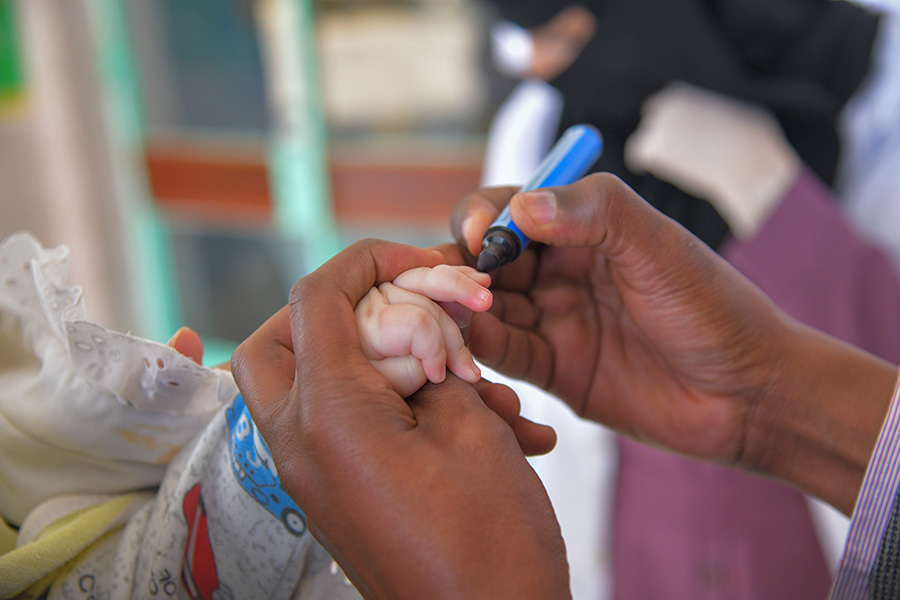 21 February 2024, Aden, Yemen – Conflict could have the worst impact on vulnerable children, who are victims of circumstances beyond their control or capabilities. Almost a decade of conflict has led Yemen to experience devastating outbreaks of vaccine-preventable diseases, which disproportionately affect children. Key contributing factors include extremely limited public health infrastructure and services, limited water availability, and growing levels of vaccine denial and hesitancy.
“Children are particularly vulnerable to vaccine-preventable diseases such as polio, measles, pertussis and diphtheria,” said Dr Arturo Pesigan, WHO Representative and Head of Mission in Yemen. “One in 4 Yemeni children has not received all the recommended vaccinations on the national routine immunization schedule, and 17% are zero-dose children, who have not had a single dose of diphtheria-tetanus-pertussis vaccine.”
Low vaccination coverage and vaccine hesitancy leave children vulnerable to outbreaks of potentially fatal diseases that can easily be prevented. Organized and widespread antivaccination campaigns that misinform the public have also prevented the effective control of disease outbreaks in many communities.
From 2021 to 2023, Yemen reported 237 variant poliovirus type 2 cases – both circulating vaccine-derived poliovirus type 2 (cVDPV2) and vaccine-derived poliovirus (VDPV). These are known to emerge in contexts of chronic underimmunization. The cases came from 117 districts, and 90% of the affected children were aged under 5 years, while 10% of the cases were among children over 5 years.
Yemen is classified as a country with a high risk of further international spread of cVDPV2. Already, the virus circulating in Yemen has since emerged in Djibouti, Egypt and Somalia.
Fig. 1. Geographic distribution of laboratory-confirmed variant poliovirus type 2 cases (2021–2023)
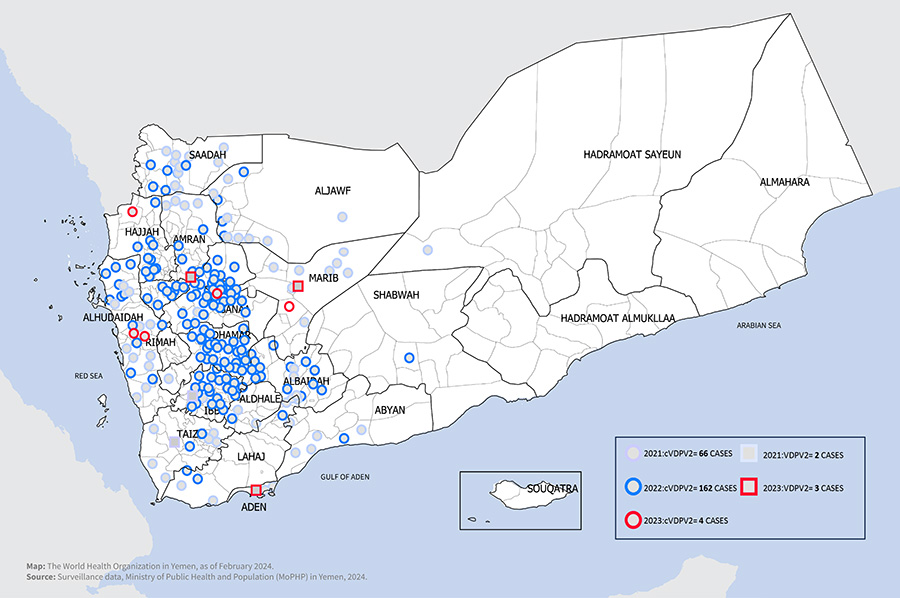 Disclaimer: The boundaries and names shown and the designations used on this map do not imply the expression of any opinion whatsoever on the part of the World Health Organization concerning the legal status of any country, territory, city or area or of its authorities, or concerning the delimitation of its frontiers or boundaries.
Fig. 2. Confirmed cVDPV2 cases in Yemen (2021–2023)
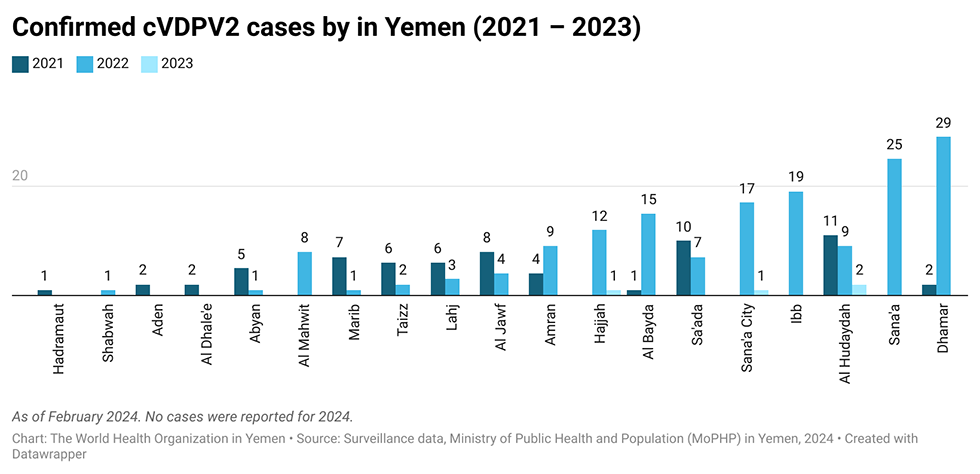
View Fig. 2 in an interactive format
In 2022 and 2023, WHO supported the implementation of 4 vaccination campaigns using trivalent oral polio vaccine (tOPV) in 12 governorates across Yemen. The first and second campaigns targeted about 2.4 million children aged under 10 years; the third and fourth campaigns targeted about 1.2 million children aged under 5 years. In total, 6 925 255 doses of tOPV were delivered through the 4 campaigns. Rising levels of vaccine hesitancy were observed, however, resulting in missed children.
“From 25 to 27 February 2024, Yemen will join countries across the Middle East, Africa and Europe in using novel oral polio vaccine type 2 (nOPV2),” said Dr Pesigan. “The Ministry of Public Health and Population, WHO and other partners are planning a campaign targeting 1 290 000 children from 120 districts in 12 governorates. A total of 6727 teams are deployed: 845 fixed-site teams and 5882 mobile teams.”
More information
Media contacts
WHO Yemen Communications
Email:
About WHO
Since 1948, the World Health Organization (WHO) has been the United Nations agency dedicated to advancing health for all, so that everyone, everywhere can attain the highest level of health. WHO leads global efforts to expand universal health coverage, direct and coordinate the world’s responses to health emergencies and connect nations, partners and people to promote health, keep the world safe and serve the vulnerable.
Yemen’s children grasp life amid the crisis
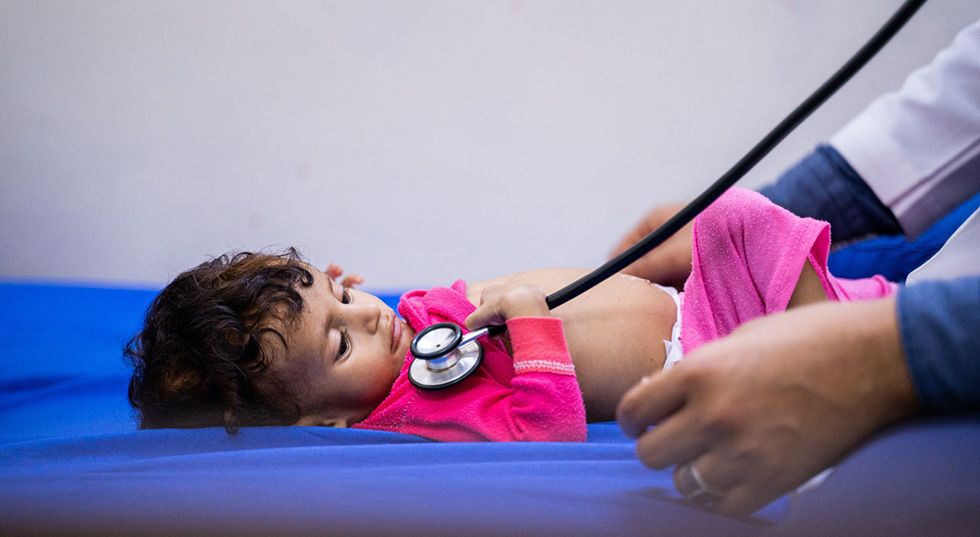
11 February 2024 – In war-ravaged Yemen, children’s lives are overshadowed by poverty, malnutrition, and diseases, robbing them of a carefree childhood. An estimated 5 million children in the country are acutely malnourished.
Behind this number are the individual stories of children facing malnutrition, families struggling to afford treatment, and journeys made to seek help. Families in Yemen not only struggle to keep their children safe from war but also from death from hunger and disease as a result of poverty made worse by the ongoing crisis. At the same time, the health system is crumbling under the weight of the conflict.
Yemen’s conflict-driven economic and humanitarian crisis has shattered the country’s health system, disrupting basic health services at health facilities across the country. With the system unable to address the increasing emergence of diseases, families are left struggling to access basic medical care.
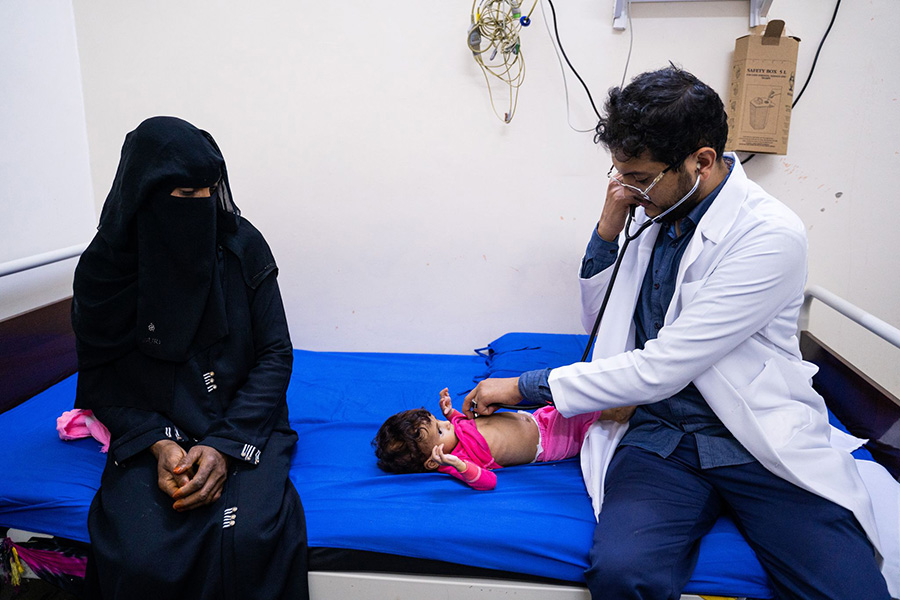 Dr Jamal Al Babeli, a dedicated doctor at the therapeutic feeding centre (TFC) at Bajil Hospital, Hudaydah governorate, embodies the hope that persists amid this despair. Fuelled by an ambition to become a doctor and his passion to elevate the country’s health standards, Dr Al Babeli realized his dream and completed his medical studies, even amid the difficulties in Yemen. Despite continuing to face immense challenges, he fights tirelessly to save the lives of children ravaged by malnutrition and disease.
Dr Al Babeli works within a network of 4 TFCs supported by WHO through its support from the Central Emergency Response Fund (CERF). These centres provide life-saving nutrition interventions, essential medical supplies, oxygen and safe water to children suffering from malnutrition, dehydration and other illnesses.
In the second half of 2023, up to 1876 children were admitted, many from remote areas with limited access to health care. Cases often exceed capacity, forcing referrals to other strained facilities. Some children are admitted with dehydration or at a stage that is close to critical because of their family’s inability to have them brought to the hospital on time. Critical life-saving emergency care is then needed to save the children’s lives.
During the same period, 1876 children aged under 5 years were treated and their caregivers benefited from counselling. In addition, to ensure detection and referral to prevention or treatment, about 8703 children aged under 5 years were screened for different forms of malnutrition. Acute malnutrition was identified in 40% of these children, who were then referred to therapeutic feeding programmes for treatment.
“We couldn’t stand by helpless – quality care was provided at no cost,” said Dr Al Babeli, sharing the moving case of a child in critical condition, whose family was unable to afford treatment. “Most admitted children – 99% – cannot afford treatment. Thanks to collaboration like WHO and CERF, it’s free, significantly reducing the death rate.”
Free-of-charge treatment has significantly reduced mortality rates, highlighting the impact of the WHO–CERF project. Cost of treatment is not the only hurdle, though: reaching the TFC can also be costly for families, who must divert already scarce resources from basic needs to do so. WHO-supported transportation assistance eases this burden. WHO buys and distributes admission kits and covers transportation costs for caregivers, easing their financial burden.
To ensure children’s long-term health, counselling sessions equip families with essential knowledge on proper nutrition and feeding practices, and how to follow up with the outpatient therapeutic feeding programme to get medication if needed. WHO also supports early childhood development activities in baby-friendly spaces to enhance the recovery progress of young children.
Through this collaboration, nearly 112 paid medical workers who provide life-saving care have received crucial training to strengthen quality service delivery. The free services have demonstrably reduced the death rate for malnourished children by offering a lifeline to families who cannot afford treatment for their children.
Dr Al Babeli himself has benefited from on-the-job training, gaining specialized skills in the treatment of malnourished children. “I became more confident in my work,” he explained. “Working at the TFC has given me a new set of skills and knowledge. I have learned clinical diagnosis and methods of treating malnourished children, who differ from other children in terms of criticality of the cases.”
“My experience in dealing with malnourished children made me more passionate about elevating the level of health. Having the ability to save a child affected by malnutrition and disease ... is worth the life itself,” declared Dr Al Babeli. His dedication, fuelled by passion, offers hope in Yemen’s fight for a healthier future for its children.
With CERF support, WHO has addressed the needs of children suffering from the complications of severe acute malnutrition. It has also provided health care for patients referred from the community and other health structures by supporting referral hospitals in 3 districts. WHO also provided essential medicines, medical supplies and rapid diagnostic tests and supported disease surveillance through rapid response teams in the targeted districts to detect and urgently respond to outbreaks. More than 22 000 patients benefited from the health and referral services provided by WHO and its national nongovernmental organization partners.
WHO Yemen concludes KSrelief-funded project to provide life-saving services, through the installation of 5 oxygen stations
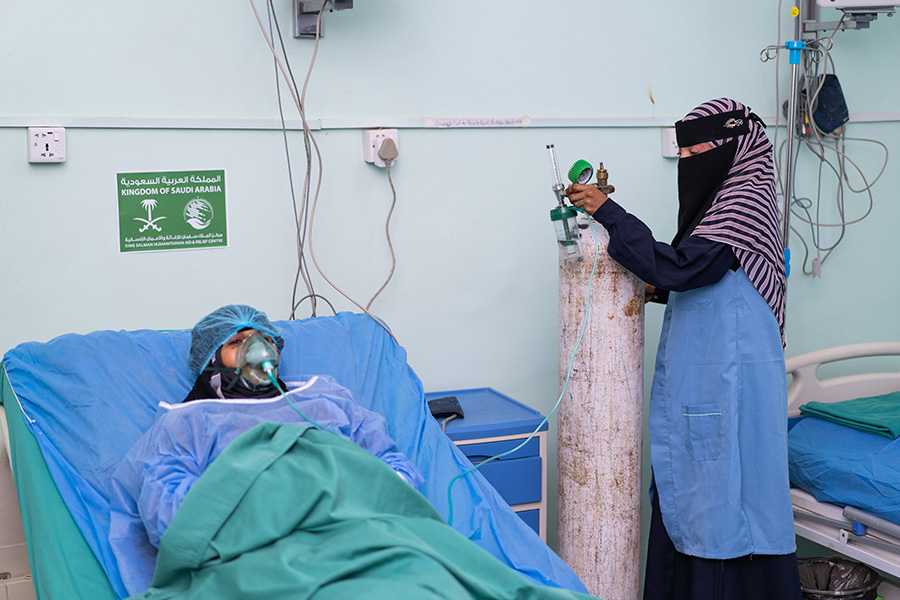 29 January 2024, Aden, Yemen – WHO and Yemen’s Ministry of Public Health and Population have successfully implemented a project entitled “Provide Life-saving Services in Selected Hospitals in Yemen through the Installation of 5 Oxygen Stations”. The project was made possible thanks to generous funding from King Salman Humanitarian Aid and Relief Centre (KSrelief).
From March 2022 to October 2023, the project installed 5 oxygen stations in strategic locations in Abyan, Al Maharah, Hadhramaut, Marib and Shabwah governorates. This collaborative effort between WHO and KSrelief reflects a shared commitment to strengthen health systems in Yemen and exemplifies resilience-building through ensuring health service continuity in targeted hospitals.
The 5 oxygen stations now supply critical oxygen to hospitals and cater to the oxygen needs of 88 nearby health centres. This has significantly enhanced the health infrastructure in remote districts, especially in high-risk areas.
Oxygen network piping systems were also set up as part of the initiative, to bring the oxygen from the production site directly to the wards of the relevant hospital. In addition, 21 technical and hospital personnel were trained on station maintenance, and a monitoring system was put in place to ensure the effectiveness of the overall effort.
To date, nearly 236 000 beneficiaries from the communities next to the hospitals have benefited, with an estimated 85 454 patients receiving essential oxygen therapy. These figures highlight the profound impact on patients in need, emphasizing the life-saving nature of the project.
“On behalf of WHO Yemen, I would like to express our deepest gratitude for the funding received from KSrelief,” said Dr Arturo Pesigan, WHO Representative in Yemen. “This project has not only enhanced the financial efficiency of oxygen supply to health care facilities but also improved access to consistent medical oxygen in prioritized governorates through strategic procurement and deployment. This emphasizes the commitment to sustainable and accessible health care solutions for communities in need.”
Mr Naif Asiri, Assisting Director, KSrelief Aden branch , said: “King Salman Humanitarian Aid and Relief Centre has played a crucial role, in collaboration with the World Health Organization, in bolstering health care services by supporting programmes and projects that encompass various institutions within the health care sector in Yemen. Oxygen stations stand out as vital projects with significant impact, functioning to supply government hospitals across 5 Yemeni governorates. These stations, with their production capacity, contribute to the enhancement of health services within the corresponding health departments.”
“We highly appreciate the partnership with the World Health Organization in the implementation of the project to support oxygen stations in Yemen – the second phase. Additionally, we acknowledge the commendable efforts of the Yemeni Ministry of Public Health and Population in overcoming challenges associated with the project,” added Mr Asiri.
The successful collaboration between WHO, the Ministry of Public Health and Population and KSrelief supports the sustainable presence of oxygen in the 5 governorates for the people of Yemen. It also sets a precedent for future collaborative efforts in health infrastructure development.
KSrelief has been one of the largest contributors to the Yemen Humanitarian Response Plan since 2017, having contributed over US$ 320 million to WHO in support of humanitarian and health response operations.