

Sélectionnez votre langue
Emergency medical team deployed in Somalia as WHO scales up efforts to strengthen trauma care services
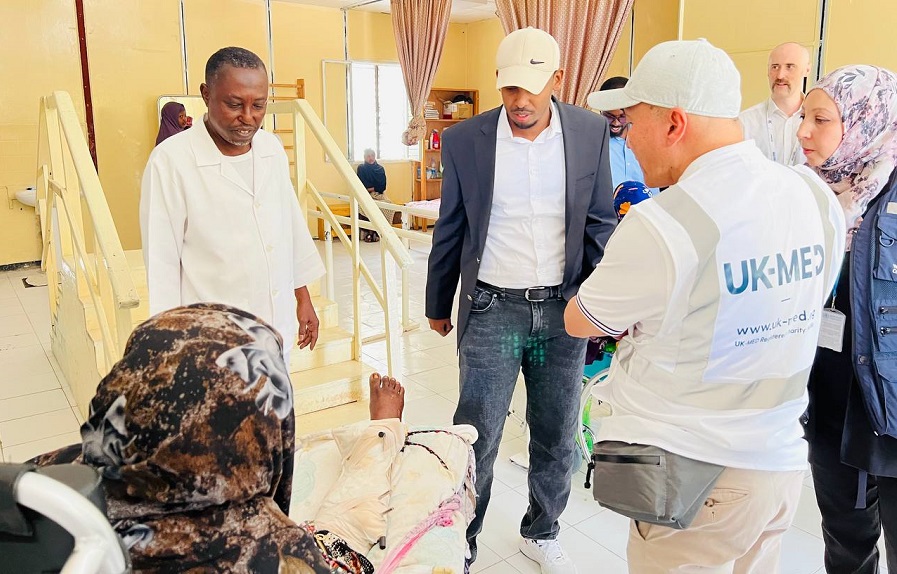 Experts of emergency medical team on a post re-constructive surgery visit at Madina Hospital, Mogadishu. Credit: WHO/Somalia
Mogadishu, 12 March 2023 – The WHO Country Office in Somalia recently deployed an emergency medical team (EMT) in Mogadishu to support trauma care and also help build local capacities of doctors, nurses and paramedics s in trauma care services, especially in the areas of reconstructive surgery, nursing management of traumatic brain injury, initial assessment, and triage in emergency and thoracic trauma injury.
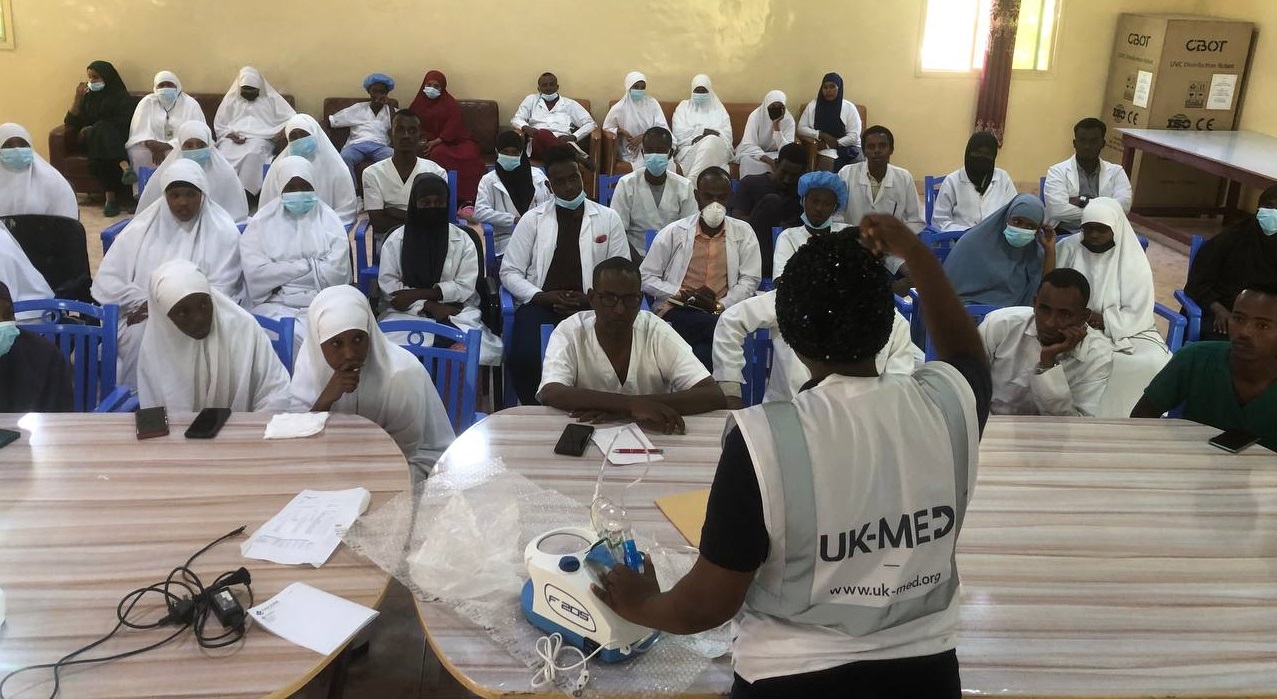
As part of responding to the twin blasts which rocked the capital city of Somalia in October 2022, WHO deployed this EMT from the United Kingdom, known as UK-Med, which is a frontline medical aid charity borne out of the National Health Services (NHS) of the United Kingdom. The WHO EMT is a global initiative that assists organizations and countries to build capacity and strengthen health systems by coordinating the deployment of qualified medical teams in emergencies. This initiative also helps countries develop national teams, which can be deployed where they are needed most in the shortest time. The deployed team included an orthopaedic surgeon, nurse, infection prevention and control (IPC) specialist and trauma care experts and spent 6 weeks in Somalia between January and February 2023. During their deployment at Madina hospital, they collectively helped to build capacities of 21 doctors and 82 nursing staff working in ICU, emergency and IPC units.
Team lead for UK-MED delegation Catherine Smith considered the deployment of 6 weeks as relatively short but expressed satisfaction about her team’s achievements during this deployment. While concluding her placement experience in Somalia, she said that, “A comprehensive series of training and mentoring support has been provided at Madina Hospital for health staff in the emergency department, high dependency unit and in the operating theatres, as well as with the cross-departmental IPC committee, both face to face and online. The trainees felt more confident after series of engagements with UK experts but certainly would need more sustained mentoring to help polish their newly learned skills and provide quality care to challenging cases.”
Appreciating the WHO Somalia for deployment of the UK-MED team, the General Director of Madina Hospital Dr Mohamed Jama said that, “Besides carrying out life-altering surgeries, this deployment has helped improve the capacities of the Somali physicians, surgeons and nurses in the areas of emergency preparedness, orthopedics, including reconstructive surgeries, trauma care and IPC.” Adding he said, “Together with the rollout of the capacity-building plan of first responders and hospital directors/managers, WHO has helped us bridge some very critical gaps existing in our trauma care facilities and services. More than 40 first responders and about 22 hospital directors and managers have already received the trainings since the October 2022 blast in trauma care handling, management and preparing the hospitals for dealing with the emergencies. Now with these UK-MED experts, our local staff feels more confident and ready to serve but we will request WHO for sustained support in coming weeks and months to help us become self-sufficient.”
International Women's Day: WHO and Ministry of Health strive to achieve gender equity in Somalia by employing technological innovations
Mogadishu, 8 March 2023 – The Federal Ministry of Health, in collaboration with the World Health Organization (WHO), commemorates International Women's Day under the theme of "DigitALL: Innovation and technology for gender equality" by calling on all the partners to collaborate in accelerating progress toward universal health coverage (UHC) by leveraging technological, social, and economic resources to ensure that all Somali women and girls can lead healthy, equitable, and quality lives.
The WHO Country Office has been supporting the Ministry of Health in advancing women's rights and the Sustainable Development Goals (SDGs), particularly Goal 3, “to ensure healthy lives and promote well-being for all” and Goal 5, “to achieve gender equality and empower all women and girls.”
Appreciating the support provided by WHO Country Office in Somalia, Dr Naima Abdulkadir, Reproductive Health Manager at the Ministry of Health and Human Services, said, “In the given context of Somalia, addressing the gender inequalities remains a big ask for the Ministry. While managing a global pandemic, the country is dealing
discrimination and seek to ensure that every person, regardless of sex, can live a healthy life. However, to achieve this dream goal, we need sustained cooperation from WHO and other humanitarian partners to ensure that no one is left behind."
Somalia ranks among the countries with the lowest gender equality globally, with a gender inequality index of 0.776. Maternal and infant mortality rates remain alarmingly high, and early marriage is prevalent. Additionally, an overwhelming 99% of women and girls have undergone female genital mutilation and gender-based violence is widespread, with a prevalence of 14%, yet access to prevention and protection services remains limited. Additionally, despite the high mortality rates, no national maternal and perinatal death surveillance and reporting is in place, making evidence-based planning difficult.
WHO’s strives for gender equality in Somalia
The WHO Country Office is supporting the Ministry of Health to address various gaps, challenges, and gender inequalities and inequities in health by generating more gender-segregated data used for improved planning and programming and enhancing service delivery, particularly for women and children. WHO has been supporting the Ministry of Health in improving access to health care for women and children, particularly in remote, underserved areas, by deploying over 2100 community health workers, of which more than 60% are women, in 79 districts.
Dr Al-Umra Umar, Programme Lead for Reproductive, maternal, neonatal, child and adolescent health at the Country Office, said that “WHO teams have been collaborating with the government and partners to address the yawning gaps in gender equity and equality across Somalia by providing quality and accessible health services to women by employing innovative technological approaches like solarization of health facilities, capacity-building of women in health-related fields and providing employment to women. While progress has been made, there is still a significant demand for gender empowerment and skills development among Somali women in the digital age. WHO urges the donor community to support these efforts to help Somali women achieve greater empowerment and equality.”
WHO has delivered essential health care services to pregnant and lactating women in drought-affected areas. In 2022, over 124 000 pregnant and lactating women received iron and folic acid supplements, while over 34 000 pregnant women were vaccinated against tetanus-diphtheria. As part of the effort to promote optimal nutrition, health, and development for infants and young children (0–2 years of age), and safe and appropriate feeding practices, 626 000 mothers received education on infant and young child feeding.
To improve gender inclusion in the COVID-19 response, WHO Somalia conducted a gender, equity and rights analysis in November 2021 to identify gaps, challenges, and opportunities for improved integration of gender, equity and rights in the COVID-19 national response. This helped WHO to focus on gender balance in its vaccination, outreach, tuberculosis and cholera responses. By the end of 2022, WHO has recorded vaccinating 49% of women across Somalia with the COVID-19 vaccine; among all smear-positive pulmonary tuberculosis cases, 43% were among women, and women accounted for 49% of all reported cases of cholera/acute watery diarrhoea.
WHO, in collaboration with the United Nations Population Fund, funded health and gender-based violence-integrated projects through the Somalia Humanitarian Fund, reaching over 2100 women and girls with overall services, including services for the clinical management of rape. WHO has also been working with the Ministry of Health to prevent and respond to female genital mutilation by integrating a response into midwifery pre-service training, advocating against its medicalization, and enhancing the capacity of health workers to provide quality care for women and girls living with female genital mutilation.
To increase accountability for preventing and responding to sexual exploitation, abuse and harassment, WHO Somalia has made special efforts to ensure that policies, practices and interventions to prevent, detect and respond to sexual exploitation, abuse and harassment are in place. The WHO Country Office has prioritized addressing preventing and responding to sexual exploitation, abuse and harassment by implementing a multi-disciplinary risk-based approach and providing communication and training to over 90 staff and affiliates. Matilda Kirui, Health Cluster Support Officer and Gender Focal Point, said that "Collective efforts, including active participation of men in the promotion of and protection of women's rights, is paramount in advancing women's health.”
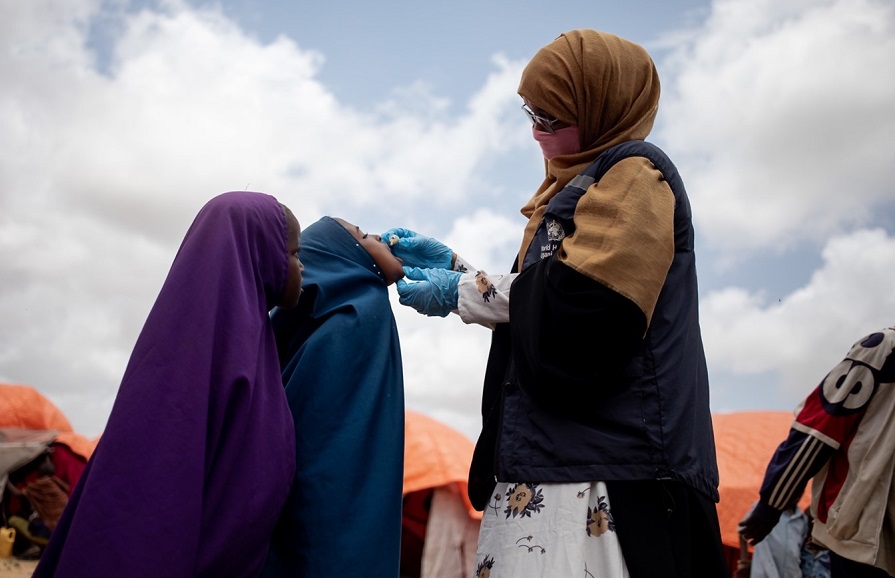 The majority of the health workforce are women, playing a pivotal role in providing health services to vulnerable communities. Credit: WHO/Somalia
Status of women and girls in Somalia
Extended periods of droughts and subsequent food insecurity have negatively impacted the health and well-being of the Somali population, especially women and girls. Somalia is ranked sixth in Africa for a high maternal mortality ratio, estimated at 692 maternal deaths per 100 000 live births, and has the highest under-5 mortality in the Eastern Mediterranean Region, standing at 117 per 1000 live births. One in 1000 women aged 15-49 die due to pregnancy- or birth-related complications, and 1 in 20 women is expected to die from pregnancy-related causes during their reproductive lifetime. Access to lifesaving reproductive, maternal, and child health services is limited, and only 32% of births are delivered with support from skilled health care providers, while 21% are delivered at a health facility.
The gender gap is vast, and women and girls face widespread gender inequality manifesting in numerous ways. Harmful practices, such as early marriage, gender-based violence and female genital mutilation, remain persistent, and 99% of women and girls aged 15–49 have undergone some form of female genital mutilation – the highest prevalence in the world. The medicalization of female genital mutilation is an emerging challenge as more health practitioners perform this practice in health facilities. Women and girls have very limited access to violence protection and prevention services, and most survivors of gender-based violence and other forms of violence depend on traditional justice mechanisms, including customary law, which has limitations in ensuring the human rights of the survivors.
For additional information, please contact:
Kyle DeFreitas
External Relations Officer
Fouzia Bano
Communications Officer
Related links
WHO pilots first-ever programme leadership and management training for RMNCAH in Somalia
Universal Health Coverage Day: building the world we want to deliver a healthy future for all
Commemorating Zero Discrimination Day: reducing stigma against HIV/AIDS
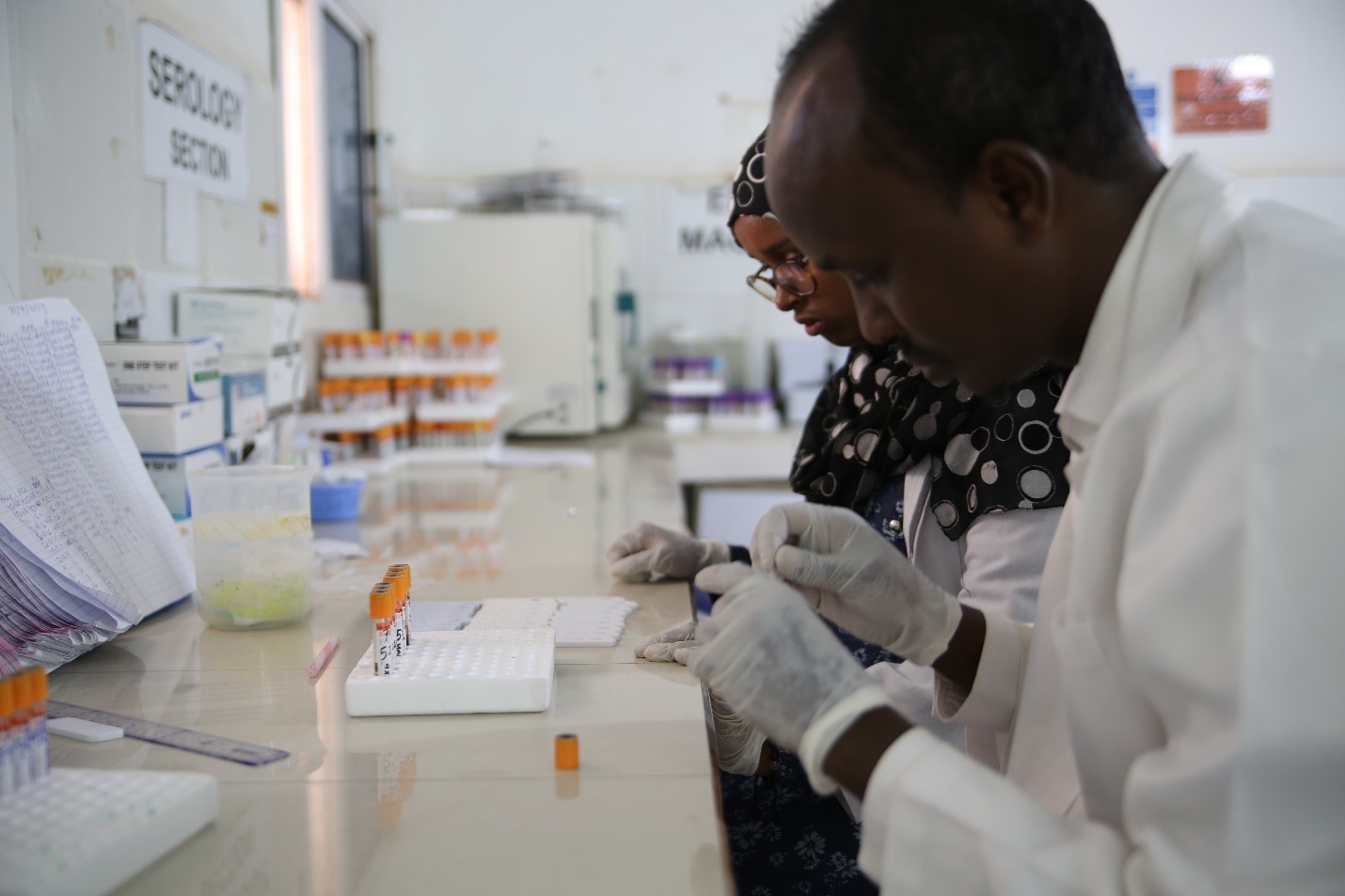 Laboratory workers conduct blood testing in Hergeisa, Somaliland. Photo credit: WHO Somalia/Fouzia Bano
Mogadishu, 01 March 2023 – On Zero Discrimination Day (1 March), which is organized annually by UNAIDS to combat HIV/AIDS-related discrimination, WHO Somalia stands in solidarity with people living with HIV/AIDS. In 2023, the theme for the day is “Save lives: decriminalize”. While the Somali government, in partnership with WHO and other stakeholders, has made great strides in reducing the prevalence of HIV, stigma and discrimination remain and must be addressed.
WHO’s HIV/AIDS work in Somalia focuses on building the capacity of the health system to offer HIV testing, counselling and treatment, including antiretroviral therapy (ART), and conducting regular monitoring and modelling to understand the burden of HIV in the country. Despite challenges of accessibility, ongoing drought and insecurity, programme data show significant progress against HIV/AIDS. By the end of December 2022, 4100 patients were receiving ART. Some had been on the treatment since 2005 when the service was first opened in the country. Other treatment quality programme indicators show commendable performance, with Somalia holding its own in comparison with immediate neighbours, and other countries in the Region.
However, stigma and discrimination remain a major constraint. Many newly diagnosed patients avoid enrolling for treatment for fear of public stigma or enrol at distant facilities where they are unknown, jeopardizing longer term treatment adherence.
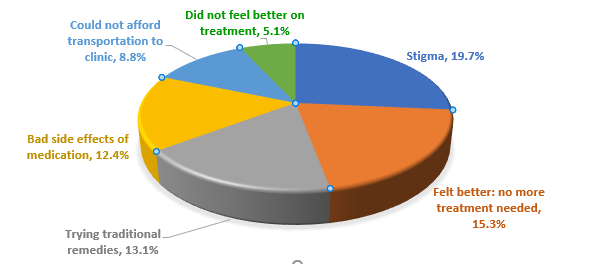
In 2022, WHO and state Ministries of Health undertook a study to examine causes for defaulting and deaths among patients on ART. Using the patients’ phone numbers on file, the study managed to reach almost a fifth of the 712 patients who had defaulted and stopped their treatment since ART first started in the country. Stigma was the number one reason given for defaulting on treatment, and was cited by 1 in 5 respondents.
Reasons for defaulting on ART
Restrictive laws and societal stigma also limit the ability of HIV/AIDs prevention and treatment programmes to reach key populations most at risk.
WHO’s Medical Officer for HIV/AIDS Dr William Rogers Busulwa said, “New data is emerging that despite the declining trends in the general population, the same decline has not been seen among key population groups who are at particular risk of contracting HIV. In fact, with limited research, it is difficult to assess the true burden of HIV within key populations – and in a context with limited resources, restrictive laws and significant stigma associated with HIV/AIDs, filling these research gaps is highly challenging. This year, a new study established for the first time that there are significant numbers of injecting drug users in the country[1]. Efforts to understand and address HIV/AIDS in Somalia must not be allowed to slacken, but rather geared up.”
WHO, alongside the Ministries of Health, AIDS Commissions, the Global Fund to Fight AIDS, Tuberculosis and Malaria, and other partners, has supported public advocacy activities to reduce stigma and promote health for all. In its work with health facilities and communities, WHO emphasises confidentiality and has included content against stigma and discrimination in HIV counselling, testing and treatment training. However, broader societal stigma and restrictive laws impede progress against HIV/AIDS and it is clear that more efforts are needed to ensure that all Somalis can access essential, lifesaving health services free from stigma and discrimination.
WHO extends its appreciation and thanks to the Global Fund to Fight AIDS, Tuberculosis and Malaria, which has contributed US$ 2 433 300 since 2018 to support WHO’s work against HIV/AIDS in the Somali states.
------------------
For additional information, please contact:
Kyle DeFreitas
External Relations Officer
Fouzia Bano
Communications Officerr
-----------------
Related links
[1] FGoS /ACHESEREM. Mapping and size estimation of key vulnerable populations in Somalia, February 2023.
Somalia calls for help as 1.8 million Somali children under 5 experience acute malnutrition and health complications
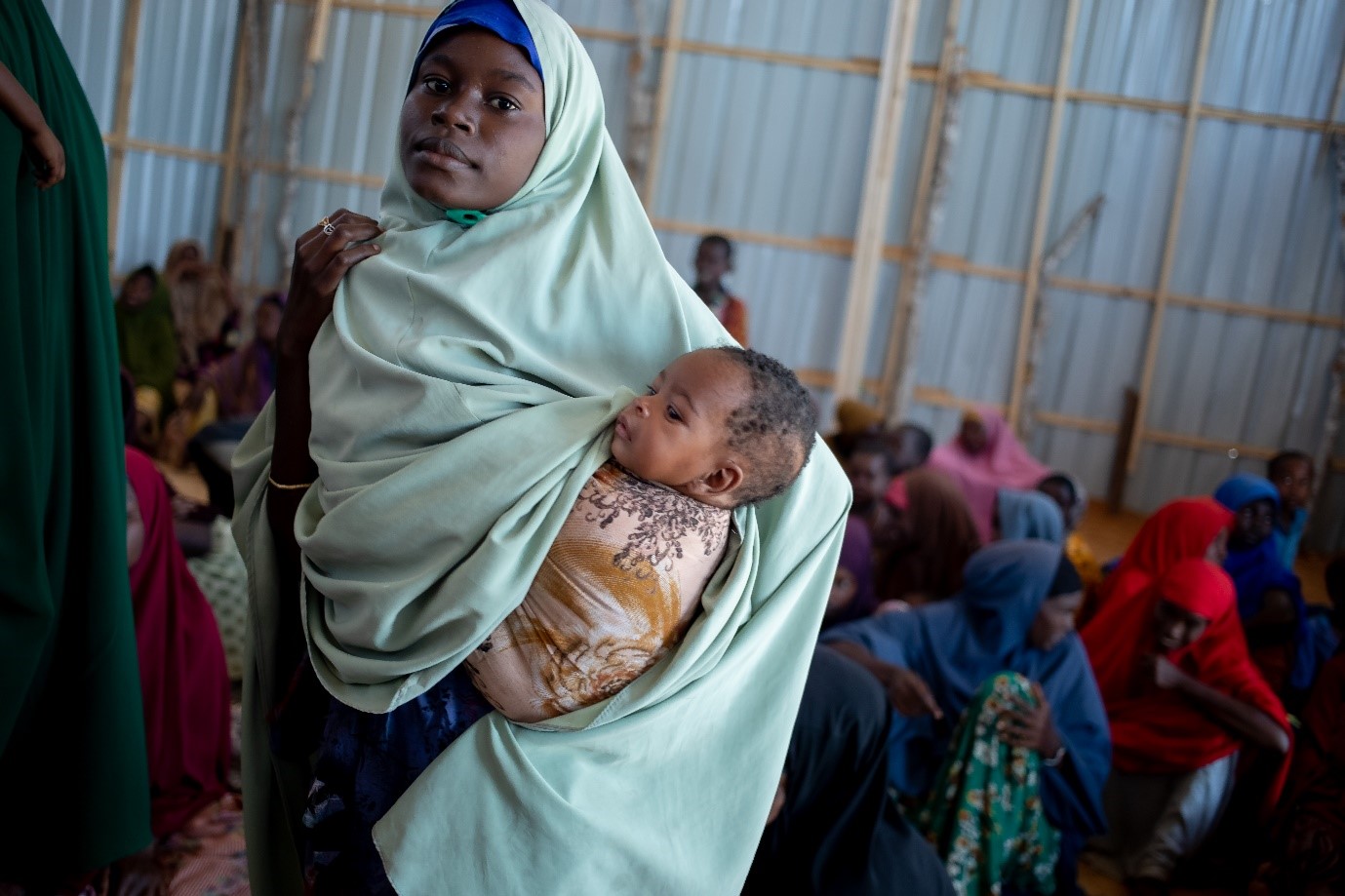 A mother and a child await their turn for medical attention, as WHO outreach team provides life-saving services in a remote district of Puntland. Credit: WHO Somalia
WHO utilizes CERF funds to minimize health impact of drought
Mogadishu, 1 March 2023 – A rapidly evolving drought and famine-like situation in Somalia continue to affect 7.8 million people and has already resulted in displacing 1.4 million,while putting the lives of more than 1.8 million under 5 children at risk of severe malnutrition and related health complications.
The WHO Country Office, with the funding from Central Emergency Response Fund (CERF), has scrambled all its ground resources to halt a catastrophe from happening by providing hope and resilience to distressed populations through provision of essential lifesaving primary health care services in 31 hard-hit districts across the country. However, experts believe that situation is getting worse and that the international community should pay greater attention by extending their support to avoid a calamity and repeat of the 2011–2012 famine in which more than 260 000 lives were lost due to prolonged drought and a famine – the worst in its history.
“CERF funding has certainly helped us keep morbidity and mortality to a minimum, but with rapid and increased displacement of populations and liberation of previously inaccessible districts, the situation may spiral out of hand in the coming weeks and months. Our planned intervention targets are becoming bigger by the day because of the increased demand both at health facilities and outreach sites across the country. It’s time that the world should open up their coffers to help Somali populations cope with one of the worst droughts in more than a decade,” commented the WHO's acting Incident Manager, Khalid El-Tahir who is leading drought response activities in Somalia.
Since July 2022, WHO, has used the CERF funding as a catalyst to spearhead health interventions reaching 724 525 vulnerable people with emergency health care services by procuring and distributing essential medical lifesaving equipment, medicines, and supplies to 57 health facilities in target areas, including support to 7 laboratories with essential laboratory items for timely detection of diseases with epidemic potential and response activities.
The Central Emergency Response Fund is a humanitarian fund established by the United Nations General Assembly on 15 December 2005 and launched in March 2006. CERF’s objectives include promoting early action and response to reduce loss of life, enhance response to time-critical requirements and strengthen core elements of the humanitarian response in underfunded crises. CERF seeks to enable timelier and more reliable humanitarian assistance to those affected by natural disasters and armed conflicts. The fund is replenished annually through contributions from 125 Member States and more than 30 private and regional donors.
Currently, Somalia is experiencing multiple emergencies at the same time with rising incidence of diseases that are preventable. To meet the growing demand from the target districts, WHO has scaled up its emergency drought response operations massively, yet the need is outstripping the supplies.
CERF-enabled drought response
There is a continued sharp increase in the number of people requiring urgent support, it is estimated that approximately 1.8 million children under 5 might face acute malnutrition until June this year, which represent 54.5% of the total children population in the country. Of whom, 513 550 are estimated to be severely malnourished. The median prevalence of severe acute malnutrition has also worsened from 1.5% in 2021 Gu and 2.1% in 2021 Deyr to 3.1% in 2022 Gu. Humanitarian cluster partners in Somalia are reporting that almost half of Somalia’s 15.7 million population has been affected by the current drought and over 1.9 million people have left their homes in search for food, water, and livelihoods.
WHO supported public health interventions provided through both the fixed health facilities and through outreach teams in the communities has managed to consult, treat, immunize and refer. Since the beginning of last year, WHO has reached close to 7.7 million people (including women and people with disabilities) in the 31 drought-affected districts with health care. Acute food insecurity has continued to worsen across Somalia, with an estimated 7.8 million people across Somalia experiencing high levels of acute food insecurity (IPC Phase 3 or above), including 4.7 million facing crisis (IPC Phase 3), 2.1 million people facing emergency (IPC Phase 4) and more than 213 000 facing catastrophe (IPC Phase 5). Rates of stunting are also higher than the last decade by 28%.
“If the situation is not addressed the future of Somali children is jeopardized as stunting in children is associated with an increased risk of mortality, reduced cognitive development, reduced adult income earning capacity,” warned WHO Somalia’s Health Operation Manager, Simon Kaddu Ssentamu.
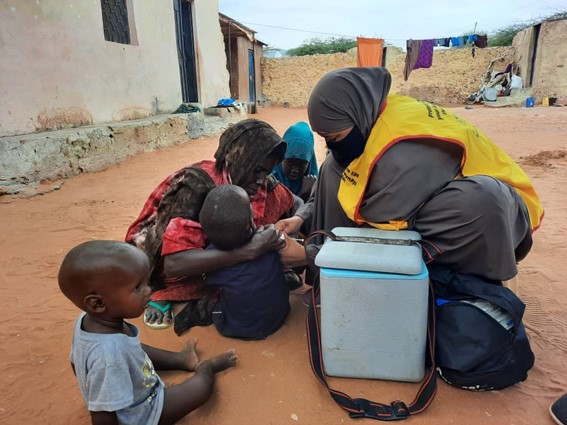 WHO-supported outreach activities are proving beneficial as front-line health workers bring health services to the doorsteps of local communities and displaced people. Credit: WHO Somalia
Under the ongoing CERF-funded interventions, WHO has deployed 372 vaccinators, 2137 community health workers and mobilizers across 31 drought-affected districts and have reached over 7 million at-risk population with preventive and promotive health interventions, vaccinating 905 229 children (6 months to 5 years of age), administering vitamin A supplementation and/or micronutrient supplements to 152 202 children (6 months to 5 years), deworming 133 703 children (12-59 months) and generating 2350 health-related alerts for investigations during the last 3 months and supporting 281 health facilities across affected districts. WHO teams have surpassed the initial targets of interventions by almost 50% due to continued surge of populations from recently liberated areas towards settled districts.
The community health workers besides referring critical patients to health facilities also delivering key messages for reproductive health services, including family planning and child spacing, screened and referred children to the OTP/stabilization centre and providing supplementation with micronutrients to pregnant women. The community health workers were also trained on identification and referral of cases of gender-based violence for additional support.
For additional information, please contact:
Kyle DeFreitas
WHO Somalia External Relations Lead
Fouzia Bano
WHO Somalia Communications Officer, Chief of Staff ai
Related links
Weekly cholera situation report