

Sélectionnez votre langue
Making strides for Somalia’s children: working to close the longest variant poliovirus outbreak in the Region
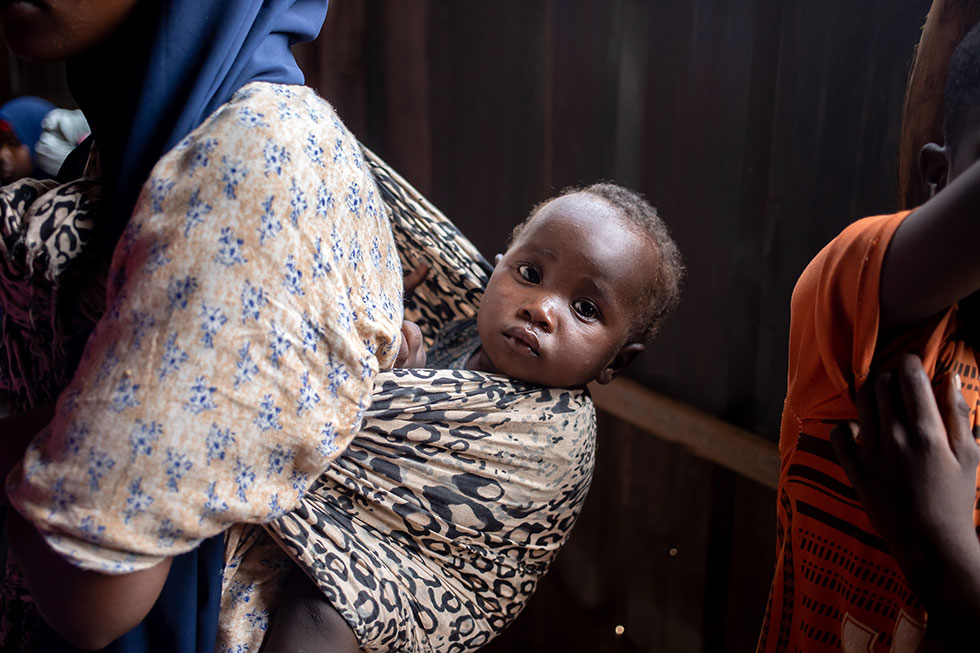 A child waits to receive vaccines during an integrated campaign, Mogadishu, 2022. Credit: WHO/Mukhtar Sudani/Ismail Taxte
18 July 2023 – On a March day in the village of Burhakaba, Somalia, two-year-old Turki Abdinor Osman’s family didn’t find it unusual when he developed a fever and started to vomit. But soon afterwards, the toddler developed weakness in his left leg – an indicator of acute flaccid paralysis (AFP), the most common symptom of poliovirus infection. The family notified health workers in their village, who collected stool samples from the boy and, soon afterwards, confirmed the diagnosis: Turki had been infected by poliovirus. His family was stunned and struggled to reimagine their active toddler’s life with permanent paralysis.
This grim milestone has been faced by too many Somali families in an outbreak of circulating variant poliovirus that is now in its sixth year. A total of 31 children have been paralysed.
To ensure that no more families receive this kind of news about their children, tens of thousands of health workers, partners and policymakers are working with urgency to end the ongoing outbreak of variant poliovirus in Somalia.
Rollout of novel oral polio vaccine type 2
Following the global introduction of the novel oral polio vaccine type 2 (nOPV2) − which is genetically more stable than the both the trivalent oral polio vaccine (tOPV) and monovalent oral polio vaccine (mOPV2) – two years ago, with guidance from WHO and UNICEF, the Federal Government of Somalia completed the verification process for use of nOPV2 under the Emergency Use Listing.
On 27 May 2023, nOPV2 was used to vaccinate around 2.5m children under age five in parts of southern and central areas of Somalia as the second round of a subnational polio campaign. The first round of this campaign was conducted using tOPV in February 2023. On 22 June, over 740 000 under-fives were vaccinated in Somaliland.
WHO’s Eastern Mediterranean Region deployed nOPV2 to supplement other polio vaccines to protect children, particularly those living in areas with low immunization coverage, from all forms of polio. So far, seven of 11 high priority countries in the Region –Afghanistan, Djibouti, Egypt, Iran, Iraq, Pakistan and Somalia − have been verified to be ready for nOPV2 use in response to an outbreak of variant poliovirus type 2. Somalia is the Region’s third country to use nOPV2, following Egypt (2020) and Djibouti (2021).
Second phase of the Somalia Emergency Action Plan launched
The rollout of nOPV2 is one of several tactics Somalia is using to bring an end to the ongoing polio outbreak. In March 2022, the Federal Ministry of Health and partners developed and signed off the first phase of the Somalia Emergency Action Plan (SEAP). This strategic plan rolled out six rounds of campaigns, including an integrated one delivering both polio and measles vaccinations, to leverage resources and the opportunity to reach out to children.
Following an extensive review, a second phase of the SEAP that was launched a year later in Mogadishu built on health teams’ and partners’ momentum to end polio in Somalia. This phase incorporates valuable lessons learned from the initial phase. It zeroes in on enhancing the quality of polio immunization, intensifying poliovirus surveillance, focusing on mobile and vulnerable populations and strengthening partner coordination. The plan includes two nationwide immunization campaigns and three subnational rounds of in southern and central areas of Somalia. An additional set of five short interval additional dose (SIAD) vaccination opportunities will boost the immunity of children aged under 10 in newly accessible areas.
The recent creation of national and state-level polio coordination cells, led by national and state authorities, is also bringing together Somalia’s stakeholders’ strengths to reach every last child with polio vaccines.
Reaching previously unreached children
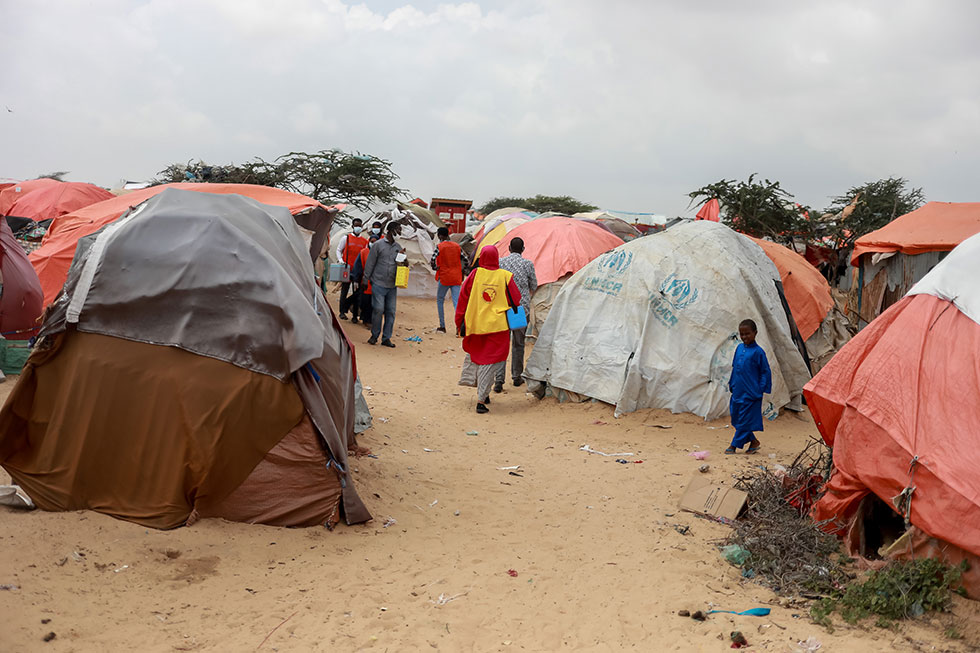 A health worker visits a camp for internally displaced families to vaccinate children, Mogadishu, 2022. Credite: WHO/Mukhtar Sudani/Ismail Taxte
Over the years, one of the consistent challenges health workers have faced in Somalia is to reach the unreached children with the life-saving polio vaccine against the backdrop of social and political instability, that has resulted in many areas being unreachable. However, recent security efforts and ongoing negotiations have resulted in better access to communities that were previously out of reach.
As a result, the number of inaccessible children has been reduced by over 80%, from 560 000 in 2019 to 89 000 by mid-2023.
Combined, all these efforts aim to vaccinate children like Turki, who have their entire lives ahead of them, to protect them from polio and other vaccine-preventable diseases.
In the face of an alarming increase in conflict-related sexual violence, WHO scales up response for prevention and elimination of sexual and gender-based violence
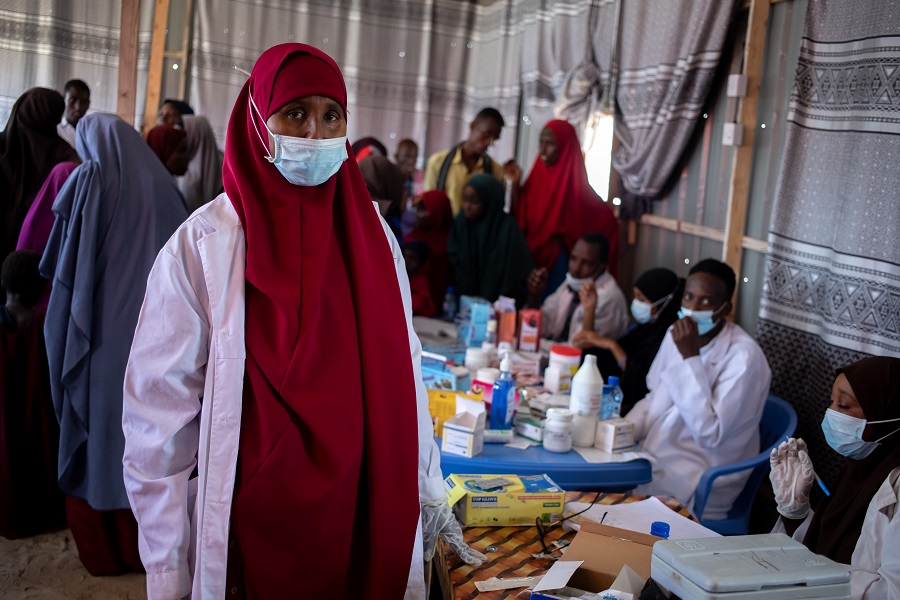
19 June 2023 – Since 2015, every year the International Day for the Elimination of Sexual Violence in Conflict is commemorated on 19 June. The date chosen marks the adoption of the 2008 Security Council resolution condemning sexual violence as a “tactic of war and an impediment to peacebuilding.” Each year, the United Nations and other partners seek to raise awareness of conflict-related sexual violence and the need to end it, to honour the victims and survivors around the world, and to recognize those who have dedicated their lives to its prevention and elimination.
Somalia has long experienced conflict and instability, worsened by climatic shocks, including droughts, floods and cyclones. As a result, the UNOCHA estimates that 3.8 million Somalis have been displaced within the country, 80% of whom are women and children. Many live in camps for internally displaced people (IDPs).
In 2021, the United Nations reported an alarming increase in conflict-related sexual violence in Somalia. This included the use of sexual violence and forced marriage by non-state actors, as well as attacks attributed to government forces and clan militia. Alongside sexual violence as a weapon of war, drought, displacement and instability exacerbate existing inequalities and vulnerabilities and undermine protection mechanisms, heightening risks of sexual and gender-based violence (SGBV). The same conflict, instability and disasters that have caused people to flee their homes also disrupt health and psychosocial support services, which are essential for survivors of SGBV.
WHO Somalia country office works with partners, including the Health Cluster and federal and state ministries of health, to strengthen the health sector’s capacity to prevent and respond to SGBV, particularly in emergencies. This includes supporting the integration of SGBV prevention and response within health programmes, improving case management and referral services for survivors, as well as promoting coordination between partners and providing information and training on preventing and responding to sexual exploitation, abuse, and harassment. WHO as the cluster lead agency is supporting the Health Cluster in Somalia to establish a funding scheme and mentorship programme for the integration of SGBV response activities within health outreach. Throughout 2021, on-the-job capacity development for implementing health and SGBV projects was provided culminating in a now annual workshop where partners meet to share experiences and get opportunities for peer-to-peer support. Overall, over 2100 women and girls have been reached by Health Cluster partners since 2021, with SGBV services, including services for the clinical management of rape.
Further, the Health Cluster worked closely with the gender-based violence area of responsibility to identify supply gaps between Health Cluster partners, when the COVID-19 pandemic caused disruptions in the supply chain, leading to a shortage of post-exposure prophylaxis kits (a crucial component of post-rape care to prevent the survivor from contracting HIV) within the country. WHO, working with the United Nations Population Fund (UNFPA), was crucial in re-establishing supply lines to Health Cluster partners and reducing disruption to services.
Currently, WHO and UNFPA are working together to maintain a cohort of certified clinical management of rape trainers. Cohort members receive regular refresher training and provide training to health care workers across Somalia. During a technical mission from WHO’s Regional Office for the Eastern Mediterranean gender-based violence specialist, conducted in June 2023, the Ministry of Health, UNFPA and WHO undertook a joint mission to Banadir and Madina Hospitals to assess clinical management of rape services. Here, the partners identified areas of health system strengthening to address gender-based violence, including sustainable capacity development and improving health system response like expanding laboratory diagnostic capacities to aid in treatment and care of survivors. The team also met with the Federal Ministry of Health, cluster partners, a donor, and UN agencies working on SGBV. Partners agreed to strengthen coordination, standardize service training content and activate the clinical management of rape technical working group.
“Every woman, man and child everywhere has the right to live free from sexual and gender-based violence,” said WHO Representative to Somalia Dr Mamunur Rahman Malik. “For too long, Somalis, particularly the most vulnerable women and girls, have faced a heightened risk of sexual violence due to conflict and instability. We are proud of what we have been able to accomplish so far with dedicated partners including UNFPA, the Ministry of Health and the Health Cluster – expanding access to services for the clinical management of rape and strengthening referral systems through the integration of SGBV services into routine health care. WHO is committed to ensuring that not only can survivors of sexual violence access the care and support they need, but that this scourge that undermines the human rights of the most vulnerable can be eliminated altogether.”
Although prevalent, SGBV is preventable, even in conflict-situations, and the health sector has a crucial role to play. As well as ensuring that services are available and accessible to survivors of SGBV, WHO will continue to work with the Federal and State governments in Somalia, including the Ministries of Health, Women and Youth, as well as other partners, to reduce the prevalence of SGBV across Somalia.
Cholera cases on the rise in Somalia amid rising displacement of people
Suspected cholera cases surge in Somalia as conflict and a multi-season drought displace more than 1.4 million people, many into camps lacking access to safe water and sanitation
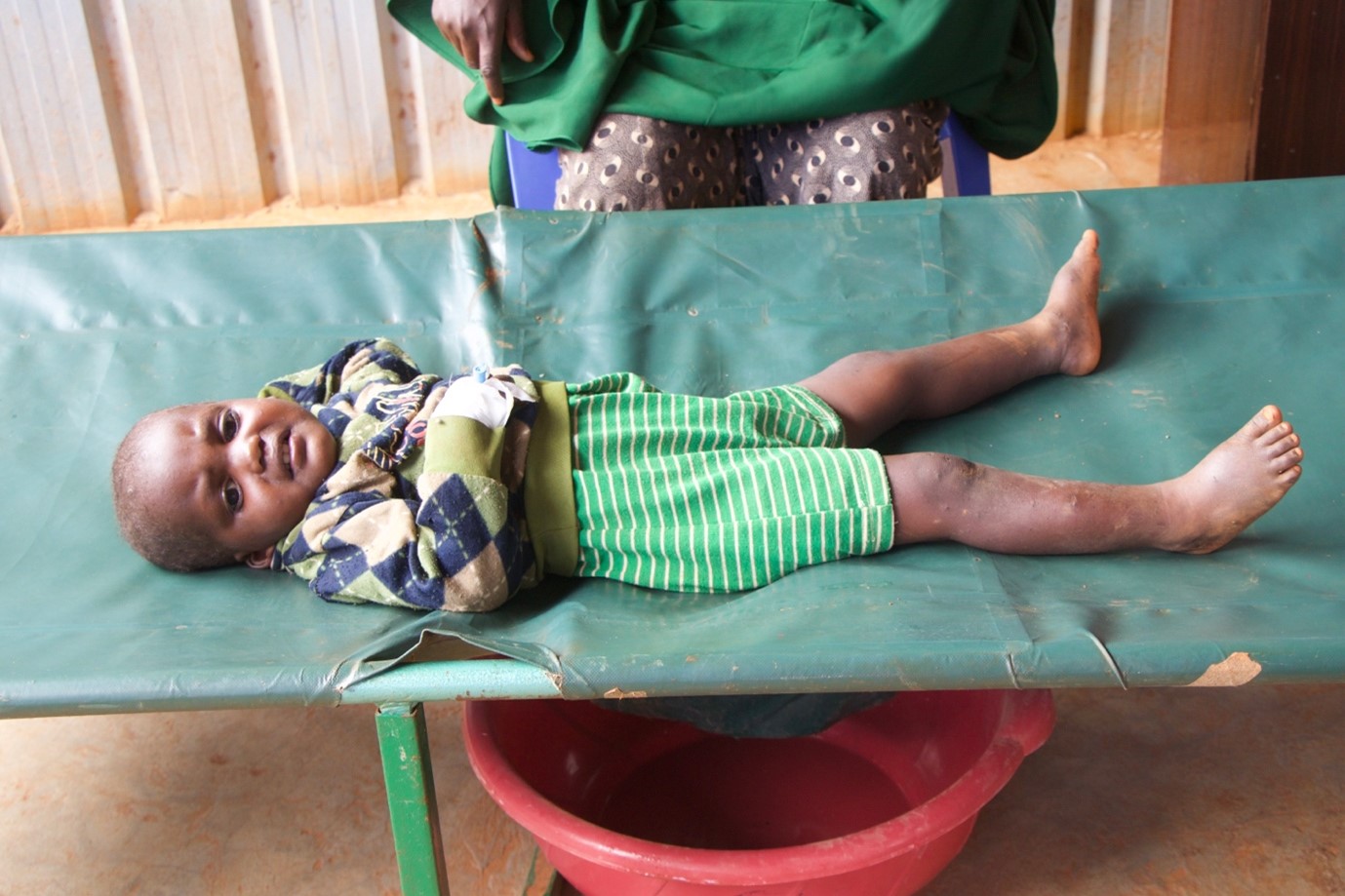 A 3-year-old Somow lies stretched out on a cholera cot at Bayhow General Hospital in Baidoa, Somalia, 21 March 2023. Credit: WHO/Somalia
BAIDOA, 17 May 2023 – Stretched out on a cholera cot, 3-year-old Somow defaecates directly into a bucket through a hole in a thin mattress. Since drinking contaminated water, he has been wracked by vomiting and violent episodes of watery diarrhoea.
“He fell ill earlier, and then it came back, that’s when I decided to seek treatment,” his mother, Nuney Ibrahim Yusuf explains, brushing flies from the young boy’s face and legs, at a cholera treatment facility in Baidoa, in southwest Somalia.
Somow is among an increasing number of patients with suspected cholera across Somalia, where forced displacement, poor sanitation and climate shocks are creating the perfect conditions for large-scale outbreaks of the disease.
Nationally, about 8 million people lack access to safe water, sanitation and hygiene services in Somalia, where drought and insecurity displaced 1.4 million people in 2022.
Last year, WHO treated more than 130 000 cases of acute diarrhoeal disease – including 15 600 cases of suspected cholera in cholera treatment centres – the highest number in 5 years, although more cases likely went unreported in this Horn of Africa country owing to underreporting and other weakness in the disease surveillance system.
On his admission to the treatment centre at Bayhow General Hospital in Baidoa, doctors gave Somow oral and intravenous rehydration, and began treatment with antibiotics. He also received zinc supplements, which have been shown to reduce the severity and duration of diarrhoea in children suffering from cholera.
Displaced by insecurity and severe drought, the numbers of internally displaced people trekking to Baidoa reached 660 000 last year, nearly double the number in 2018. Most live in unsanitary conditions in dozens of informal settlements of fragile shelters built of sticks and covered with plastic and rags that ring the city.
“The latrines we have are full, there is nowhere to wash, and we have new people arriving,” says Abdulkadir Abdinur Adan, a community leader at the city’s Raama Cadey settlement, which is home to more than 1800 people. “Children have diarrhoea and there could be a cholera outbreak at any time. It is a great concern,” he adds.
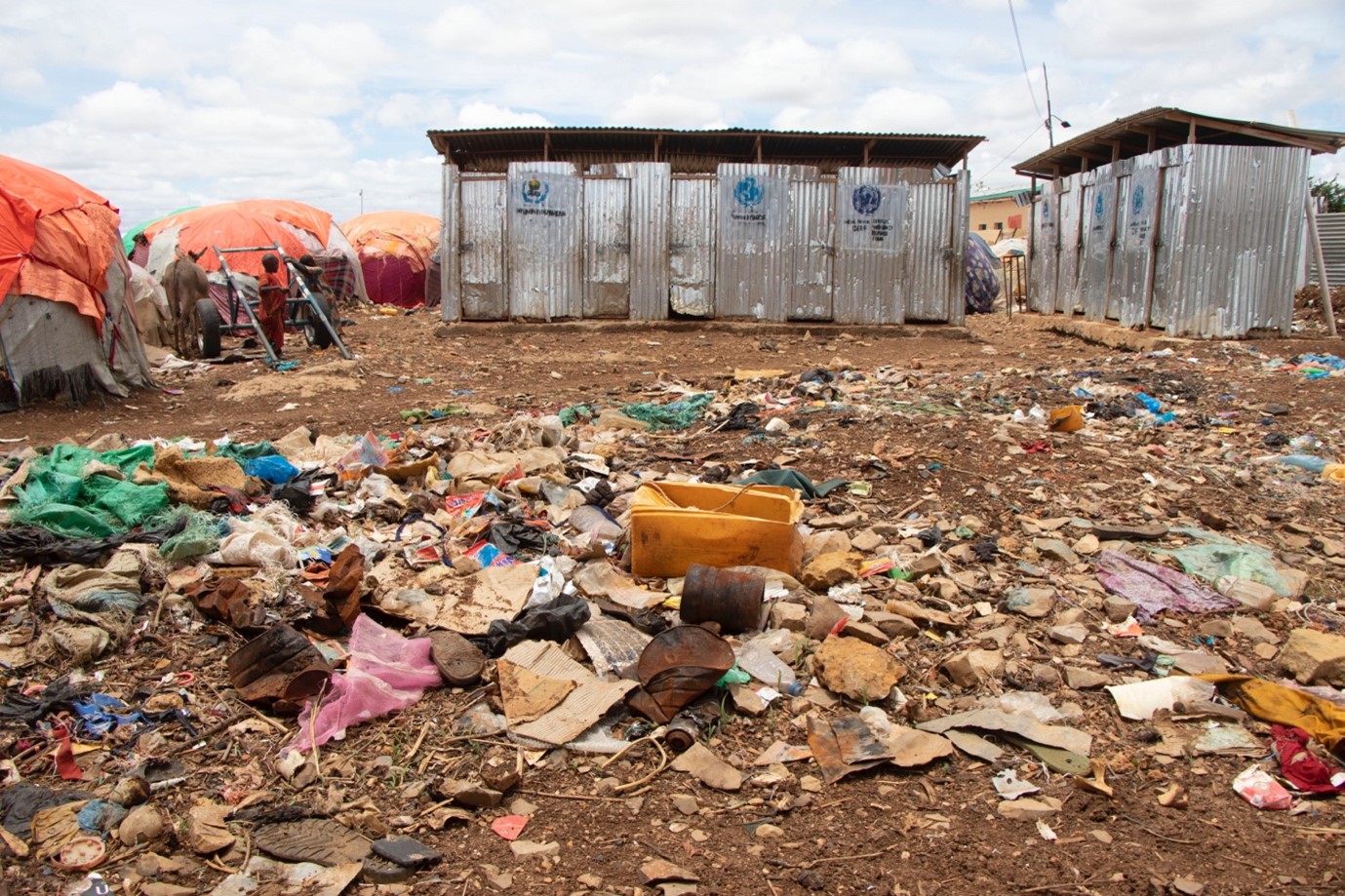 Shuttered latrines at Raama Cadey camp for internally displaced people in Baidoa, Somalia, 22 March 2023. Credit: WHO Somalia
Like others across Somalia, the settlement comprises tightly packed, single-room shelters hastily erected on bare earth. It has just 10 latrines, all padlocked shut at the time of one recent visit. Open defecation is common, and many residents collect contaminated water from shallow wells, known as war, or hauled in on donkey carts in barrels.
Epidemiologists say waterborne disease transmission is being further exacerbated by a persistent multiyear drought. They cite a recently published retrospective mortality estimates titled “From insight to action: examining mortality in Somalia” according to which 43 000 excess deaths might have happened in 2022 alone. The drought devasted successive crops, killed off livestock and made residents dependent on dwindling sources of water.
“Boreholes dry up, water sources become more scarce, which means more people are concentrating to drink from a single source. If that source is contaminated, you get an outbreak,” says Joaquin Baruch, a WHO epidemiologist. “Cholera is highly contagious and has the risk of increasing and going through the roof very quickly. It can be very explosive if the suspected cases are not identified and treated early on when transmission is ongoing in a community.”
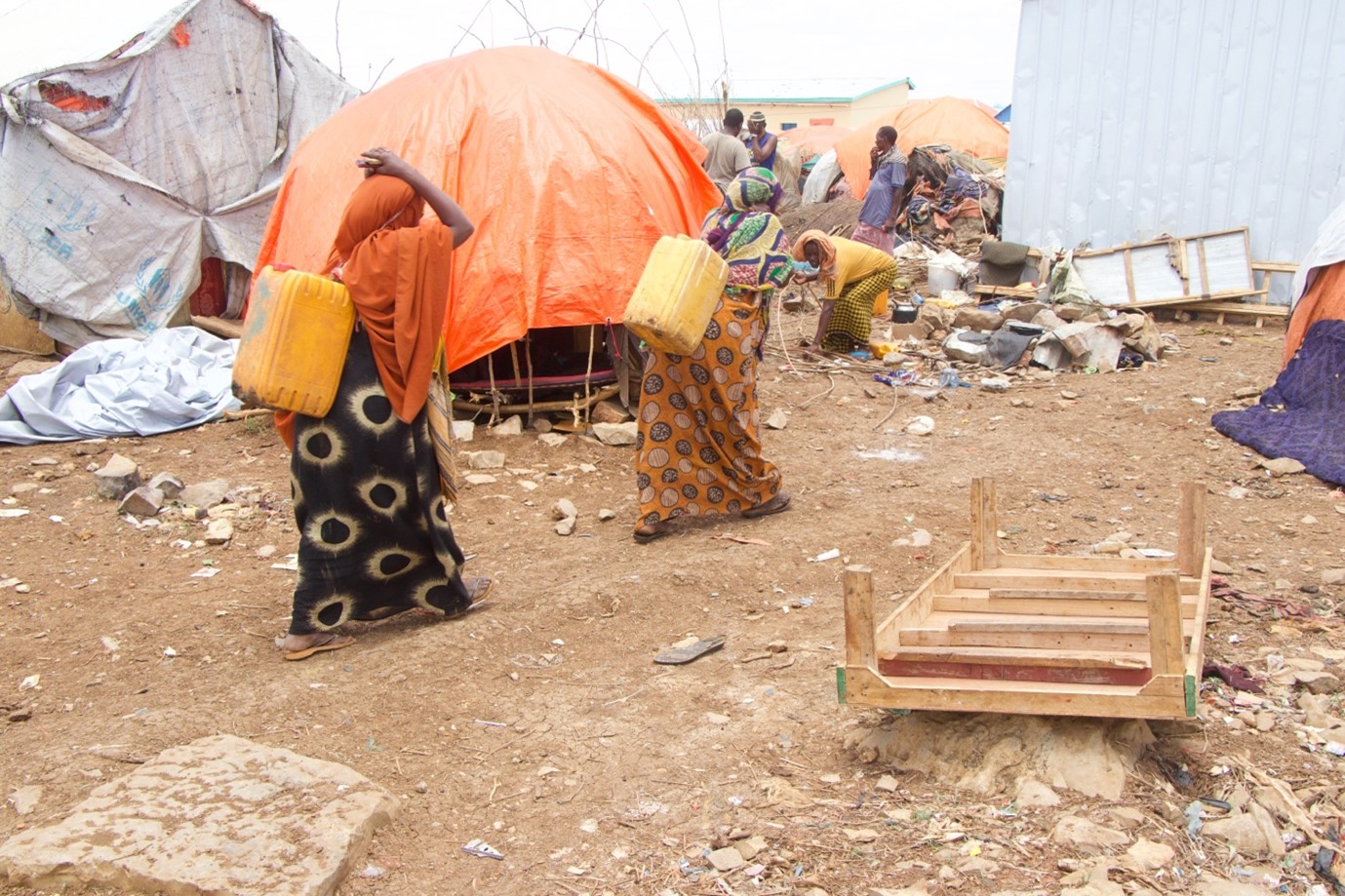 Women carry water at Raama Cadey camp for internally displaced people in Baidoa, Somalia, 22 March 2023. Credit: WHO Somalia
Cholera is an endemic disease in Somalia. Uninterrupted transmission is ongoing in certain parts of Somalia since 2017. This situation has exacerbated in recent time owing to severe drought in the country and currently, high-levels of transmission is ongoing in four districts in Somalia. As this year’s wet season gets under way with heavy rains and flashfloods in some areas, WHO is very concerned that cholera cases could rise sharply among the forcibly displaced owing to rapid community spread as cholera organisms thrive and survive in contaminated water.
“Displacement is driving people into camps where access to clean water and sanitation are extremely limited,” warned WHO Representative to Somalia, Dr Mamunur Rahman Malik. “Cholera is present, and there is a serious risk of an explosive outbreak that would prove difficult to contain if early actions and recommended public health measures such as availability of safe drinking water and safe sanitation services, improved hygiene and improved access to treatment are not ensured.”
In a race to prevent it, WHO is working closely with the Ministry of Health and Human Services to ensure that everyone suffering from acute watery diarrhoea has access to early treatment and care. WHO is also working to implement reactive vaccination campiagn using oral cholera vaccine (OCV) in the hotspots In addition, it is improving access to primary health care services and working with its partners such as UNCEF to improve availability of safe water and adequate sanitation for the high-risk populations.
But for many Somalis, displaced from their homes by conflict and drought, the issue remains a lack of access to potable safe water. In Baidoa, clean water is available at a cost of three US cents per litre, a sum out of the reach of most displaced people, like Nuney, who lost her livelihood when drought forced her to abandon her land.
“We don’t have any source of money to buy clean water, so we use the well,” says Nuney, who is concerned for Somow once he is discharged. “I am worried that if he drinks that water, he will fall sick again,” she adds.
On the other side of the cholera treatment ward is Hasale Khalif Jibi, standing vigil beside her 18-month-old son, Abdi Hasanow. The youngster was admitted the previous evening with violent diarrhoea and vomiting after drinking water from a communal well at a displacement camp. He too is on the mend after treatment, although Hasale remains concerned for his chances of staying healthy once discharged. “Nothing has changed,” she says, with resignation. “The water is there, and we will drink it.”
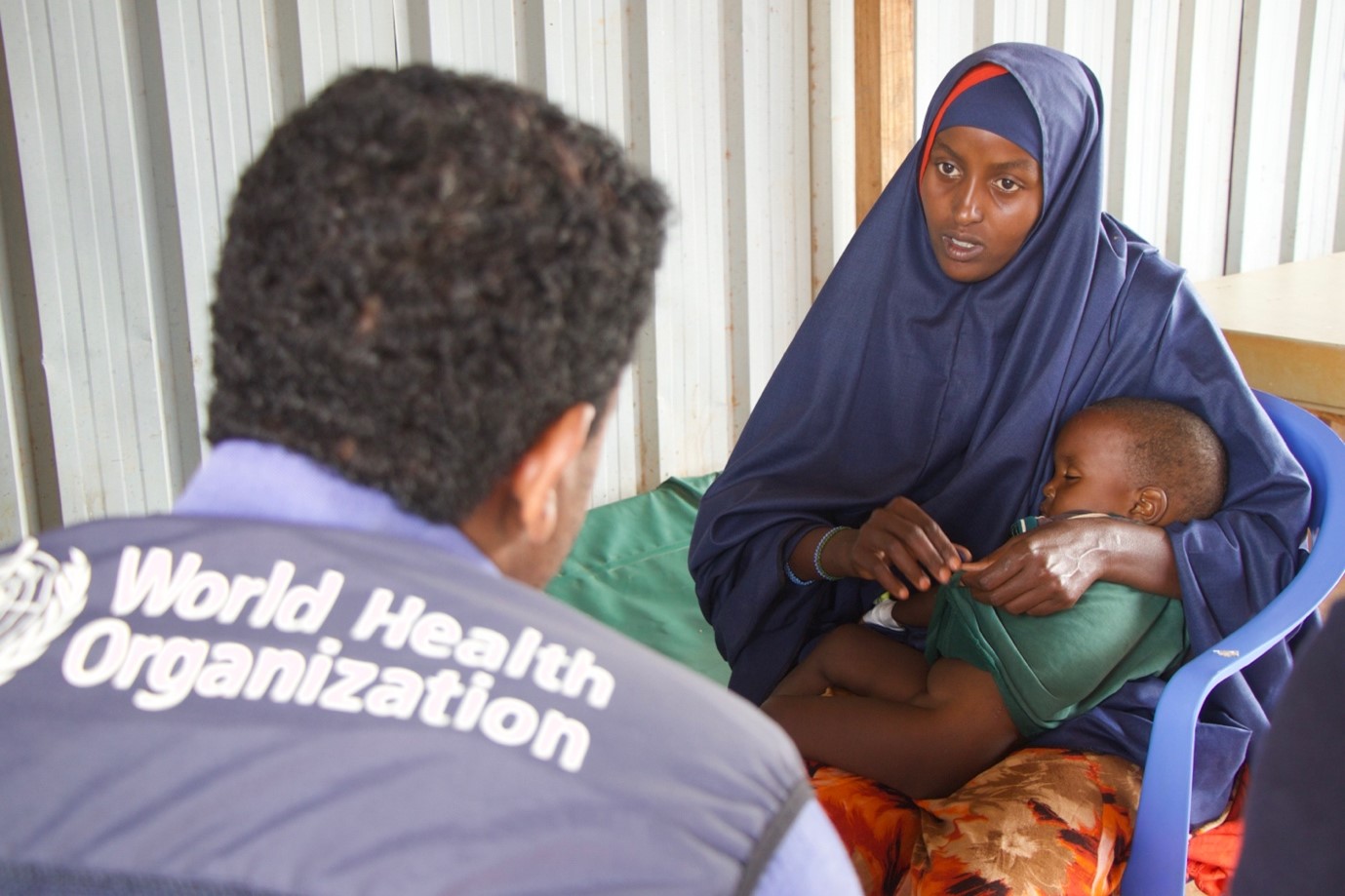 Hasale Khalif Jibi sits with her 18-month-old son Abdi Hasanow at a cholera treatment centre at Bayhow General Hospital in Baidoa, Somalia, 21 March 2023. Credit: WHO Somalia.
For additional information, please contact:
Kyle DeFreitas, External Relations Officer,
Fouzia Bano, Communications Officer,
Related links
Please see the links below for additional information:
Acute watery diarrhoea/cholera situation report, Week 16, 17-23 April 2023
/images/stories/somalia/documents/technical-programme-update-september-december-2022.pdf?ua=1
WHO launches training to transform the care of mothers and newborns in Somalia
Mogadishu 5 May 2023 – The World Health Organization (WHO) Country Office in Somalia and the Federal Ministry of Health have come together on the International Day of the Midwife to recognize the essential role of midwives in delivering quality health care services and reducing preventable maternal and neonatal morbidity and mortality.
Befitting to this year's International Day of Midwife theme of "Together Again: From Evidence to Reality”, WHO Is supporting the Ministry of Health to launch a standardized national basic emergency obstetric and newborn care (BEmONC) training programme across the country. Somalia is considered one of the most dangerous places to give birth, where every 25th mother dies while giving birth, compared to one in 49 in comparable low-income countries, and according to the 2023 report on trends in maternal mortality 2000 to 2020, Somalia had a maternal mortality ratio of 621 per 100 000 live births in 2020. The high maternal mortality ratio is attributed to health system failures resulting in delays in seeking and receiving care, poor quality of care, shortages of essential medical supplies, and poor accountability of health systems.
"Enhancing the skills and knowledge of health workers, especially midwives and nurses, using manual is critical for saving lives and improving the health and well-being of mothers and children in Somalia”, commented Dr Al-Umra Umar, Programme Lead for Reproductive, Maternal, Neonatal, Child and Adolescent Health at the WHO Somalia Country Office, while highlighting the importance of the skilled health workforce.
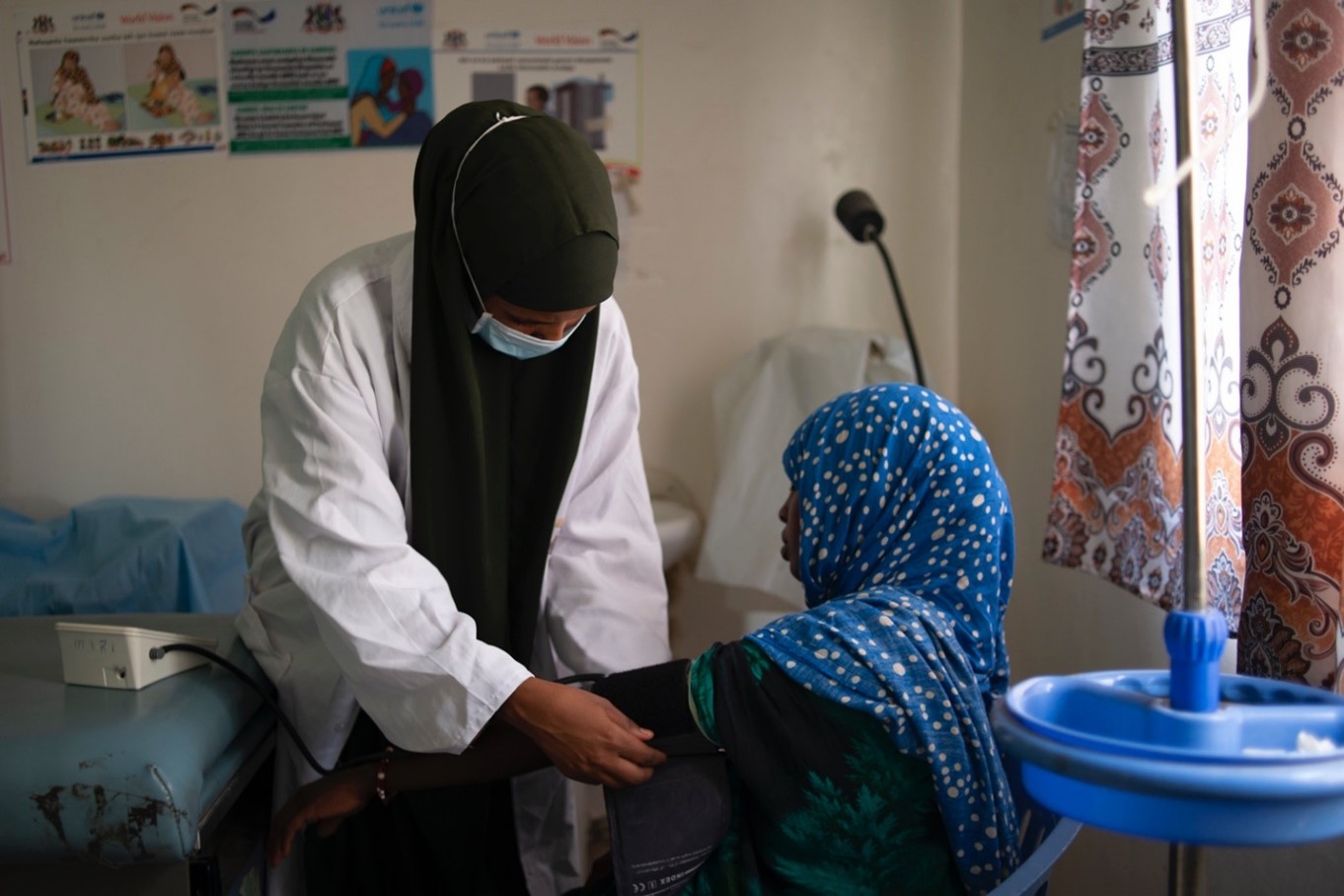 Early identification of risk factors for pregnancy and delivery complications can prevent maternal and newborn deaths. Credit: WHO/Somalia
A standardized BEmONC training package is being developed to train midwives and nursing staff at health facilities to manage major causes of maternal and newborn mortality, such as haemorrhage, infection, pre-eclampsia/eclampsia, obstructed labour, and newborn asphyxia. The training package will also help improve the readiness of health facilities to deliver good quality obstetric and newborn care.
Dr Naima Abdulkadir, Maternal and Reproductive Health Manager from the Federal Ministry of Health, while thanking WHO for their continued support, said, “The roll-out of standardized BEmONC training nationally will benefit mothers and newborns and is a significant step towards providing harmonized high-quality maternal and newborn health services in Somalia”.
For additional information, please contact:
Kyle DeFreitas
External Relations Officer
Fouzia Bano
Communications Officer
Note to editors
Globally, about 45% of maternal and 36% of neonatal deaths occur during the first 24 hours after birth. These deaths are mainly preventable if BEmoNC services are available at all health facilities. However, the 2016 SARA (service availability and readiness assessment) survey conducted in Somalia illustrated that in 2016 BEmONC services were only available in 45% of urban health facilities and 20% of rural health facilities. Only 32% of births had skilled health care provider support, and 21% were delivered at a health facility. Currently, WHO is conducting another survey using the Harmonized Health Facility Assessment (HHFA) tool to better understand the coverage of BEmONC services and identify service gaps in emergency obstetric and newborn care. To respond to these challenges, WHO Somalia supports the Federal Ministry of Health in improving the country's reproductive, maternal, neonatal, child, and adolescent health services through various means such as policy, norms and standards settings, guideline development, leadership training, capacity-building of health care workers, and implementation of evidence-based interventions. Although progress has been made, the country remains off-track for most of the health-related Sustainable Development Goals (SDG3), particularly targets 3.1, 3.2, 3.7 and 3.8.
Related links
WHO pilots first-ever programme leadership and management training for RMNCAH in Somalia