

Sélectionnez votre langue
World Health Day 2026: science protects lives and strengthens health systems in Yemen
07 April 2026, Aden, Yemen – The theme of World Health Day 2026, Together for Health, Stand with Science, celebrates the power of scientific collaboration to protect the health of people, animals, plants and the planet. The World Health Organization (WHO) in Yemen joins the global call to highlight the critical role of science and evidence-based action in protecting lives and sustaining health services.
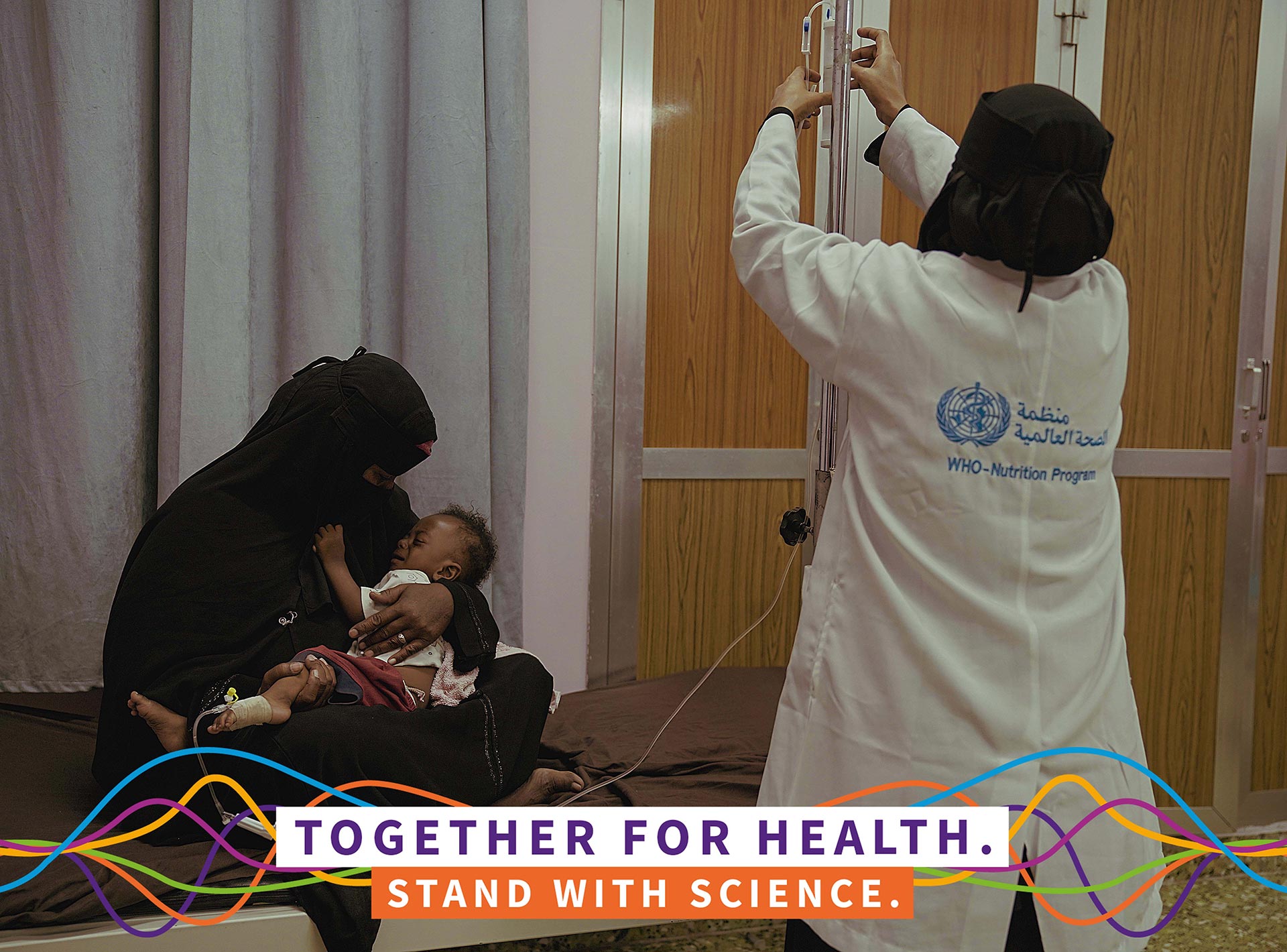
Science is a lifeline In Yemen, where conflict, economic hardship and recurring health emergencies continue to strain the health system. From controlling disease outbreaks to ensuring access to essential health services, evidence-based interventions guide every aspect of the health response, saving lives and supporting communities when they are at their most vulnerable.
Across the country, WHO works closely with health authorities and partners to translate science into action. This includes strengthening disease surveillance systems, supporting laboratories, training thousands of health workers and delivering lifesaving medicines and supplies to health facilities. These efforts ensure that health decisions continue to be informed by data, expertise and global standards in the most challenging environments.
Science-driven approaches have been central to recent public health gains in Yemen. Immunization campaigns have reached millions of children, helping to stop the spread of vaccine-preventable diseases. Emergency response operations have enabled rapid detection and control of outbreaks of diseases such as cholera, dengue and measles. Continued investment in health workforce capacity and health system resilience is helping ensure that essential services remain available for millions of people.
“Science is at the heart of every lifesaving intervention in Yemen,” said WHO Representative in Yemen Dr Syed Jaffar Hussain. “From outbreak response to emergency care, evidence-based action allows us to reach those most in need. On this World Health Day, we call on partners and communities to stand with science and ensure that health services continue to reach every person, everywhere.”
This year’s global theme highlights the importance of the One Health approach, recognizing the interconnected health of people, animals and the environment. In Yemen, where climate-related risks and disease outbreaks intersect, strengthening science-based, multisectoral collaboration is essential to prevent and respond to health threats.
WHO is urging communities, partners and decision-makers to support science-led health action, promote accurate information, strengthen trust in public health guidance and invest in sustainable health systems.
On World Health Day and beyond, WHO reaffirms its commitment to working with partners across Yemen to ensure that science continues to guide the response, protect communities and build a healthier future for all.
Media contacts
WHO Yemen Communications
Email:
About WHO
Founded in 1948, the World Health Organization (WHO) is the United Nations agency dedicated to promoting health, keeping the world safe and serving the vulnerable. WHO leads global efforts to expand universal health coverage, coordinate responses to health emergencies and advance well-being for all.
Saving lives on the frontline: how the Contingency Fund for Emergencies sustained Yemen’s health response in 2025
24 March 2026, Aden, Yemen – Conflict intensified across Yemen in 2025. Repeated air and naval strikes placed immense pressure on the already fragile health system. Hospitals, which were already struggling with critical shortages of medicines, medical supplies and functioning referral services in Sana’a, Hodeida, Al-Baidha and other affected governorates, faced a sudden surge in trauma cases.
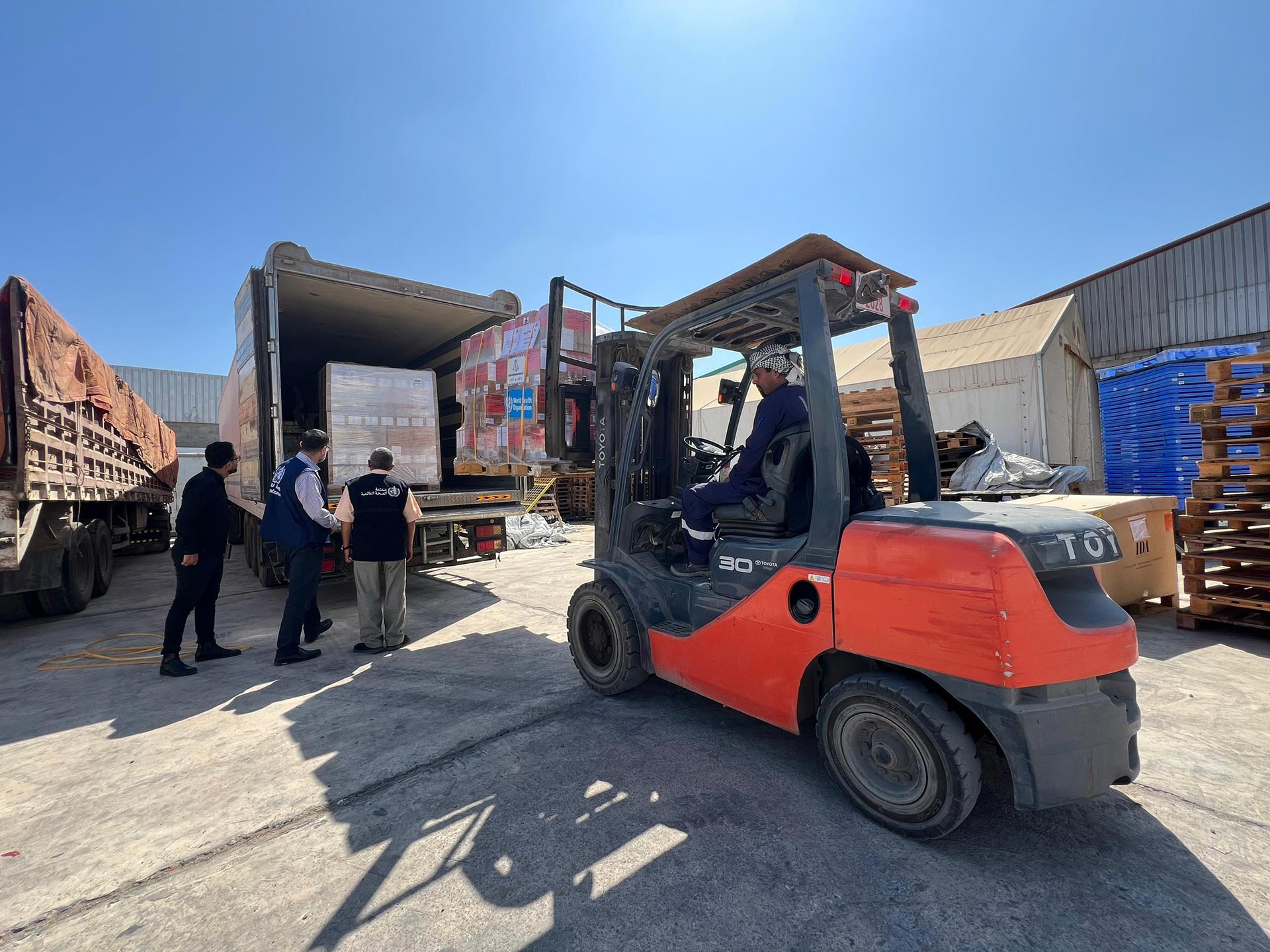 Medicines and Supplies Distribution, Aden. Credit: WHO Yemen/Nesma Khan
For injured civilians, access to lifesaving care depended on the ability of health facilities to continue operating under extremely challenging conditions. At this critical moment, the World Health Organization (WHO) rapidly mobilized support through the Contingency Fund for Emergencies (CFE), enabling an immediate scale up of lifesaving health services.
Through this rapid financing mechanism, WHO delivered more than 60 metric tons of essential medicines and medical supplies to hospitals across Yemen. The shipments included intravenous fluids, trauma emergency surgical kits (TESK), Interagency Emergency Health Kits (IEHK), blood bags and laboratory reagents, allowing hospitals to continue performing emergency surgeries, blood transfusions and critical diagnostic services.
The supplies helped health facilities provide lifesaving care to more than 200 000 people affected by the escalating violence.
 The surgical team at Al-Thawarah Hospital performs a surgical intervention, providing critical and lifesaving care to patients. Photo credit: WHO Yemen/2025
CFE support to Yemen in 2025 strengthened emergency care capacity, with 6 WHO-supported surgical teams performing over 2000 major lifesaving surgeries and providing consultations and treatment for more than 7000 patients in Sana’a city, Hodeida, Al-Baidha and Al-Dhale’e. Sixteen ambulances supported referral services, enabling the safe transport of 1800 critical patients to facilities capable of providing advanced medical care in Sana’a, Hodeida, Marib and Taiz.
To improve emergency preparedness, WHO trained 296 health workers in mass casualty management and basic life support, strengthening the ability of hospitals to respond to sudden surges of trauma cases. Six mobile health teams delivered essential primary health care services to more than 42 000 internally displaced people and vulnerable communities in Hodeida, Hajjah and Taiz.
To keep hospitals functioning amid severe electricity shortages, with CFE support WHO supplied around 610 000 litres of fuel to 59 health facilities across northern Yemen, powering generators for operating theatres, laboratories and critical medical equipment and enabling continued emergency care for over 22 000 patients.
Though these interventions saved lives and helped stabilize critical services, Yemen’s health system remains under enormous strain. Continued international support and flexible emergency funding are essential to sustain lifesaving operations, protect health services and ensure that millions of Yemenis continue to receive the care they urgently need.
Restoring immunity by reaching every child: Yemen reinforces immunization
16 March 2026, Aden, Yemen – Amid one of the world’s most complex humanitarian crises, Yemen has reinforced its national immunization system and successfully interrupted variant poliovirus type 2 (cVDPV2) transmission in the south.
Between 2024 and 2025, the World Health Organization (WHO), with financial support from Gavi, the Vaccine Alliance; the Global Polio Eradication Initiative (GPEI) and the King Salman Humanitarian Aid and Relief Centre (KSrelief), delivered comprehensive technical and operational assistance to the Ministry of Public Health and Population. This support strengthened the Expanded Programme on Immunization (EPI) and the national Polio programme.
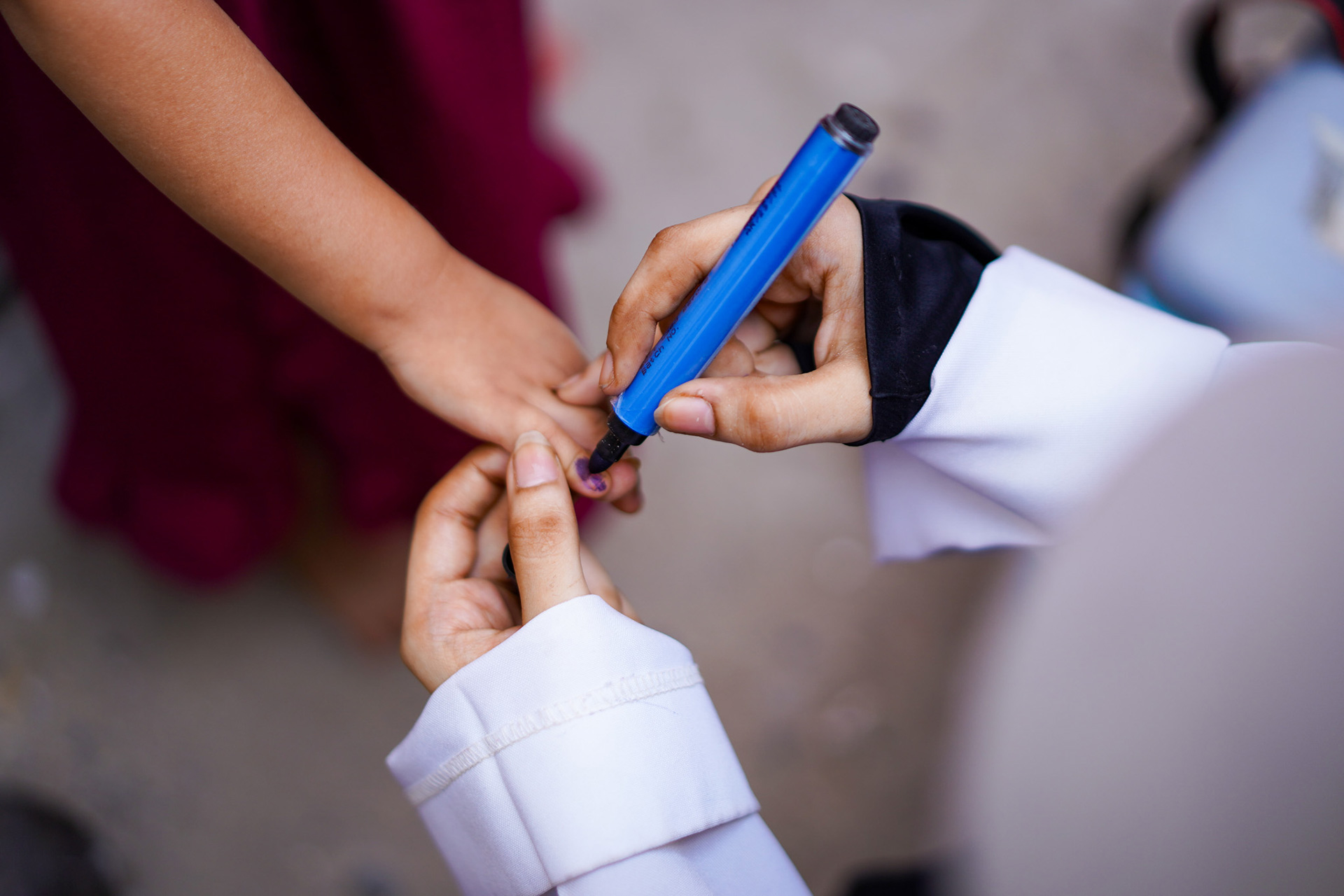 A health worker marks a child’s finger during a community vaccination campaign
A total of 18,832 immunization staff were trained to enhance routine services and 800 polio and vaccine-preventable diseases personnel trained to improve surveillance, outbreak investigation and sample management capacities. Laboratories in Aden, Sana’a and Taiz received nearly US$ 1 million in essential supplies to improve sample storage and testing, and laboratory workforce capacities were strengthened with continuous training.
Faced with the threat of cVDPV2 transmission, the response was swift and coordinated. WHO supported the rollout of novel oral polio vaccine type 2 (nOPV2), training over 9000 vaccinators and deploying more than 7,000 vaccination teams. Two nationwide vaccination rounds in 2024 achieved 100% coverage. They were followed by 2 additional 100% coverage rounds in 2025, protecting millions of children and expanding access to vitamin A supplementation.
 Community health volunteer Ahlam Ahmed visits households to support vaccination efforts
“When the outbreak began, we knew we could not afford delays. We went door to door, sometimes walking for hours to reach children in remote villages and displacement sites. Every child vaccinated meant one more family protected and brought us one step closer to stopping the virus,” said community health volunteer Ahlam Ahmed.
Reaching those previously unreached was central to the success of the initiative. During 9 integrated outreach rounds across 12 southern governorates, 7620 health workers travelled to remote valleys, mountain settlements and displacement sites.
These efforts reached 542,183 children under 5, including 119,702 zero-dose children. More than 222,120 pentavalent doses and 184 063 measles vaccines were administered, helping close long-standing immunity gaps.
In northern Yemen, outreach services resumed for the first time in more than 3 years. In 2025, 2.2 million measles-rubella vaccinations were delivered alongside integrated child, maternal and nutrition consultation services.
Behind these statistics are families whose confidence in health services is being rebuilt.
“For months, we lived in fear of disease spreading among our children. When the vaccination teams arrived, I did not hesitate. I made sure my children were vaccinated immediately. Protecting them is my responsibility. I encourage every parent to vaccinate their children. Every dose brings us closer to a healthier, safer future for all,” said Abdullah Raged.
These successes have been made possible by the unwavering commitment of national health authorities and the support of WHO’s donors and partners whose investments enabled workforce training, surveillance strengthening, laboratory improvements, extensive outreach campaigns and the rapid deployment of lifesaving vaccines.
The work must continue. In a health landscape shaped by conflict, displacement and system fragility, millions of children remain vulnerable to vaccine‑preventable diseases. Sustained and flexible donor support is essential to maintain immunization coverage, close remaining immunity gaps, sustain robust surveillance and ensure every child receives lifesaving vaccines.
With continued partnership and solidarity, Yemen can secure a polio‑free future for its children.
Yemen introduces a national emergency medicine diploma to address the critical shortage of specialists
11 March 2026, Aden, Yemen – After a decade of conflict, Yemen’s health system is severely strained.
In the face of enormous challenges and overwhelming needs, health care workers remain at the heart of the system, continuing to serve on the front lines. They are the lifeline that keeps hospitals and emergency services functioning. But the critical shortage of specialized emergency physicians limits hospitals’ ability to provide timely, lifesaving care.
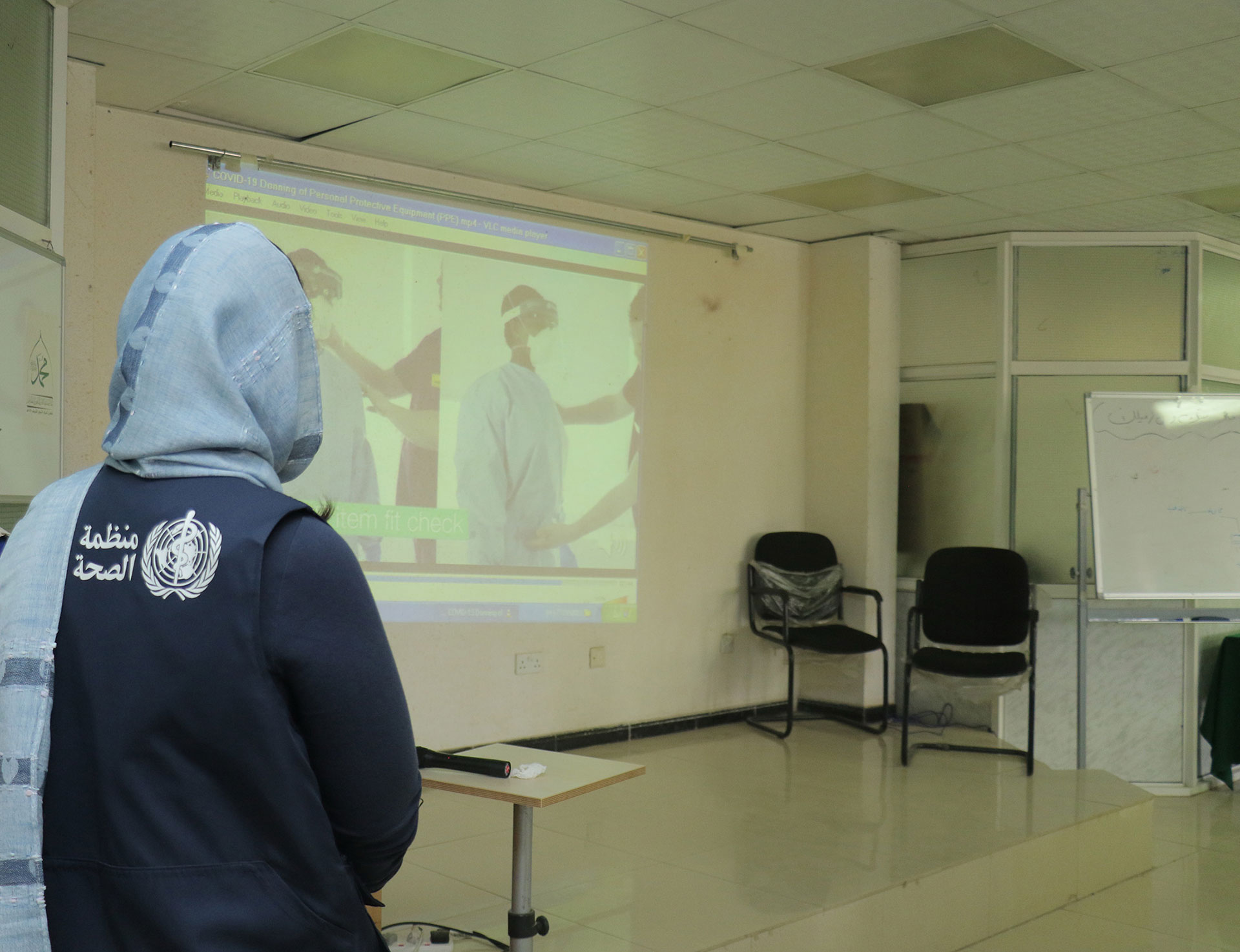 Strengthening emergency response across Yemen. Photo credit: WHO Yemen
As of 2026, approximately 23.1 million Yemenis require humanitarian assistance and protection services, with projections indicating more than half of the population will remain in crisis or emergency conditions, underscoring the critical need to invest in the workers that sustain the health system.
To help address this gap, WHO Yemen, in collaboration with the Ministry of Public Health and Population and the Yemeni Medical Council for Specialties, supported the launch of Yemen’s first Postgraduate Diploma in Emergency Medicine in Aden on 12 April 2025 via the Emergency Human Capital project funded by The World Bank.
The initiative strengthens national institutional capacity by embedding the curriculum within Yemen’s own medical educational system, delivered through the Yemeni Medical Council for Specialties. By collaborating with national institutions and accredited bodies, the programme ensures emergency medicine specialization is locally led and sustainably integrated into health workforce development.
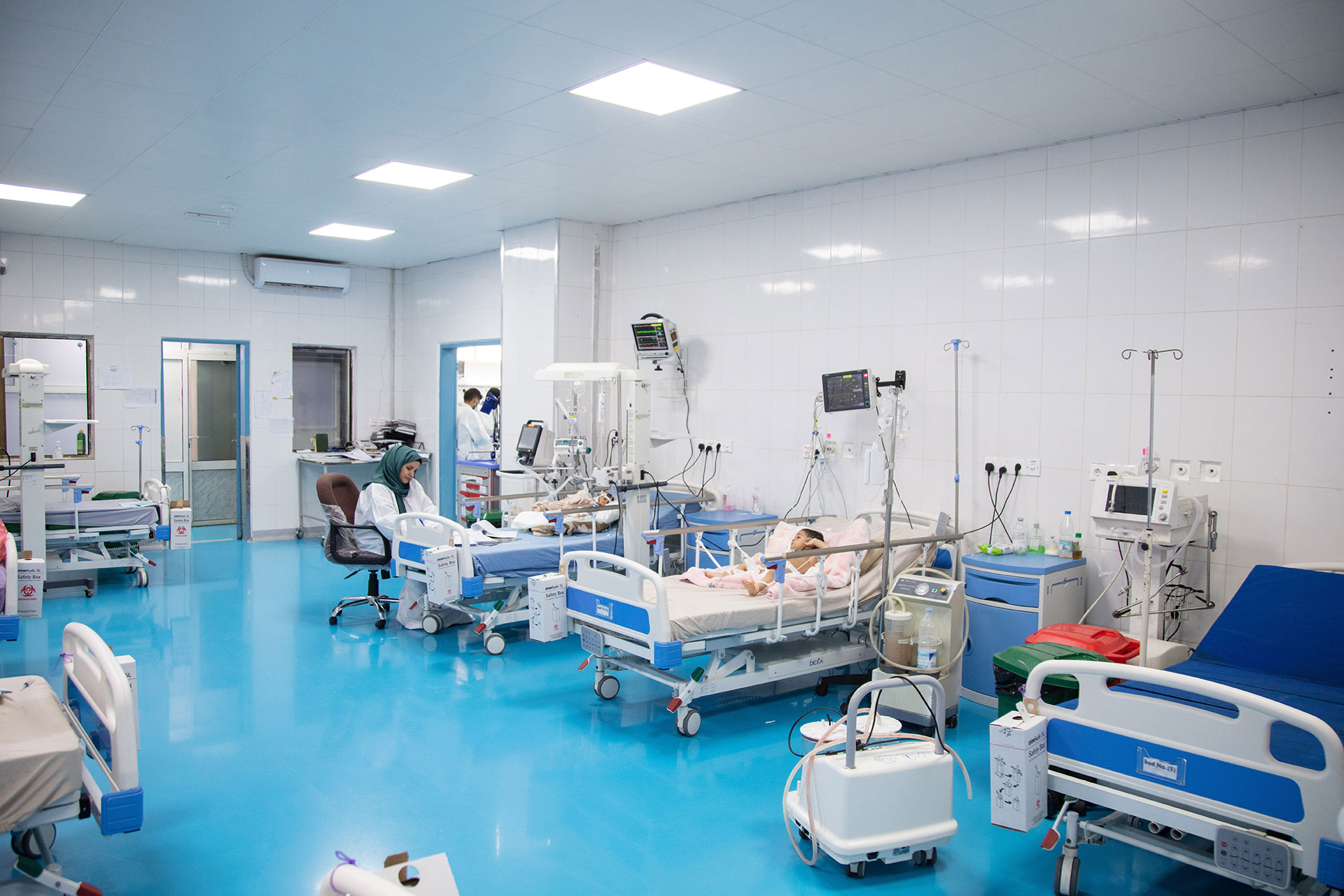 Health workers receive emergency care response training in the intensive care unit. Photo credit: WHO Yemen
The landmark 9-month programme enrolled 25 physicians from public hospitals across southern governorates, including facilities in rural and underserved areas. The training, which combined theoretical instruction with hands-on clinical rotations in emergency rooms and intensive and cardiac care units, equipped participants with the skills needed to manage critical emergency conditions, including trauma, infectious diseases and mass casualty incidents.
The programme represents a long-term investment in Yemen’s health workforce, helping establish a national pool of qualified emergency medicine professionals to serve vulnerable populations. By strengthening physicians’ skills, the diploma enhances the quality and timeliness of lifesaving emergency care services in public hospitals, building institutional capacity.
As Yemen continues to face one of the world’s most complex humanitarian crises, strengthening the health workforce is vital to sustaining critical health services.
Initiatives such as the Postgraduate Diploma in Emergency Medicine help ensure that hospitals can continue delivering lifesaving care under challenging conditions. By investing in national capacity, WHO and its partners are supporting Yemen’s path towards a more resilient health system capable of responding to emergencies and saving lives.