

Sélectionnez votre langue
World Malaria Day 2026: Yemen rallies to end malaria
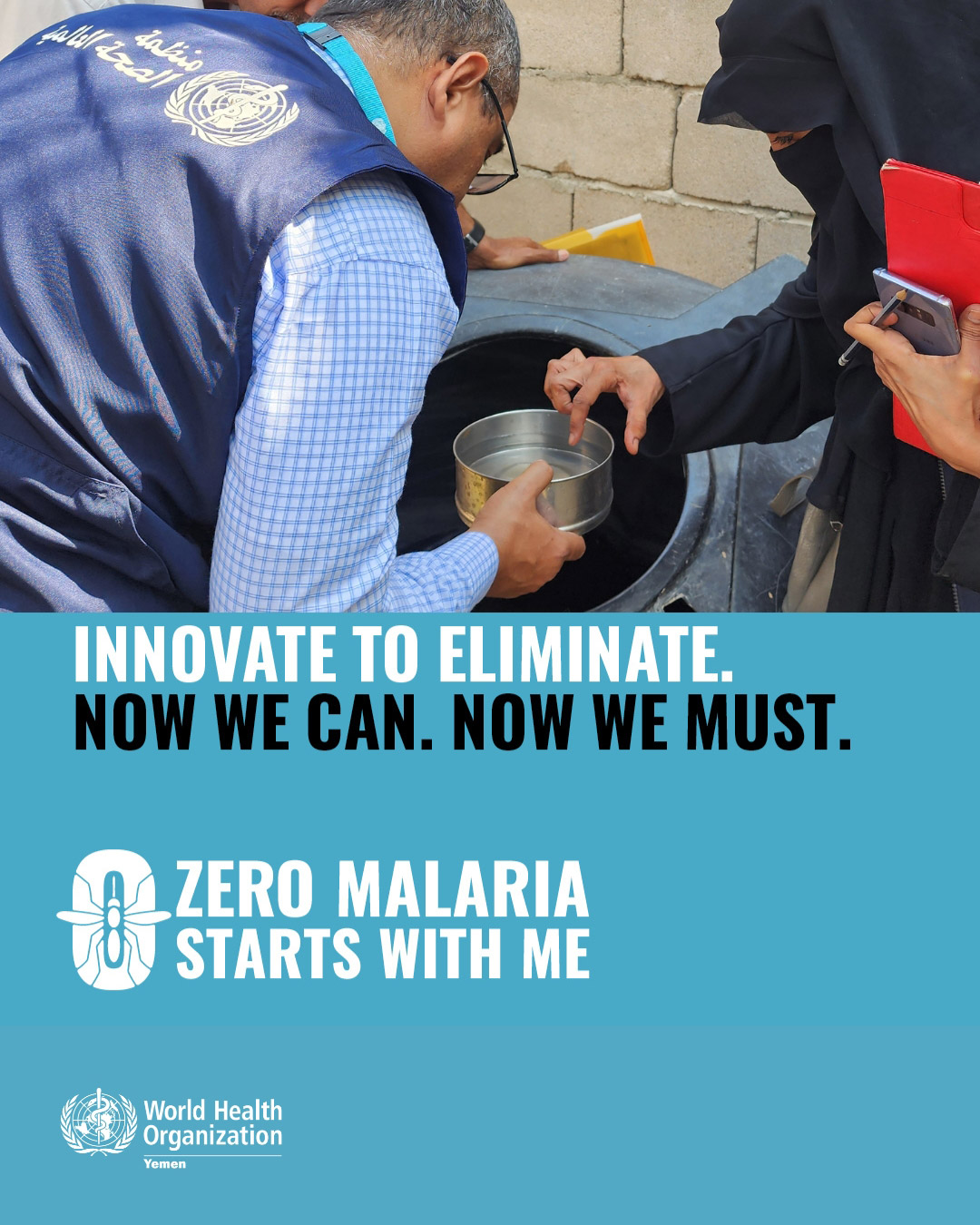 25 April 2026, Aden, Yemen – On World Malaria Day 2026, under the global theme “Driven to End Malaria: Now We Can. Now We Must”, the World Health Organization (WHO) joins the Ministry of Public Health and Population and partners in Yemen to reaffirm commitment to ending the disease.
Malaria remains a major public health concern in Yemen, with approximately 64% of the population residing in areas at risk of transmission. In 2025, 1,442,270 malaria cases were tested. The most vulnerable groups include pregnant women and children under five years of age. While malaria is endemic across the country, regions with historically low transmission rates are increasingly susceptible to outbreaks, particularly due to population movements, limited access to healthcare in remote areas, and climatic changes such as rising temperatures, heavy rainfall, and high humidity.
Despite ongoing conflict, climate shocks and strained health systems, progress is being made through coordinated national efforts and sustained partner support. Hope is within reach. Scientific advances are transforming the global malaria response. New vaccines, innovative treatments, next-generation mosquito nets and emerging technologies are bringing the world closer than ever to ending malaria.
Around the world, countries are scaling up lifesaving tools. The urgency is real. Malaria does not wait. Any disruption to funding and services can quickly reverse progress, putting lives at risk and increasing the burden on already fragile health systems. In Yemen, where access challenges and resource constraints persist, sustained investment is urgently needed to protect gains and prevent resurgence.
Action must be taken now. With support from partners, including the King Salman Humanitarian Aid and Relief Centre (KSrelief), WHO continues to implement large-scale malaria prevention and control interventions across multiple governorates. Efforts include the deployment of mobile health teams, distribution of essential medicines and supplies, strengthening surveillance systems and community awareness campaigns aimed at early detection and treatment.
“Yemen stands at a critical moment in the fight against malaria,” said WHO Representative in Yemen Dr Syed Jaffar Hussain. “We have the tools, the knowledge and the partnerships to end malaria. What we need now is sustained commitment and investment. Every delay risks lives – especially among the most vulnerable.”
WHO calls on all partners, donors and stakeholders to grasp the moment, protect lives now and fund a malaria-free future. Continued investment will ensure that lifesaving interventions reach those who need them most and that progress towards elimination is accelerated.
On this World Malaria Day, communities, health workers and partners across Yemen are united behind a shared message: Now We Can. Now We Must.
Media contacts
WHO Yemen Communications
Email:
About WHO
Founded in 1948, the World Health Organization (WHO) is the United Nations agency dedicated to promoting health, keeping the world safe and serving the vulnerable. WHO leads global efforts to expand universal health coverage, coordinate responses to health emergencies and advance well-being for all.
World Immunization Week 2026: WHO calls for every generation to be protected in Yemen
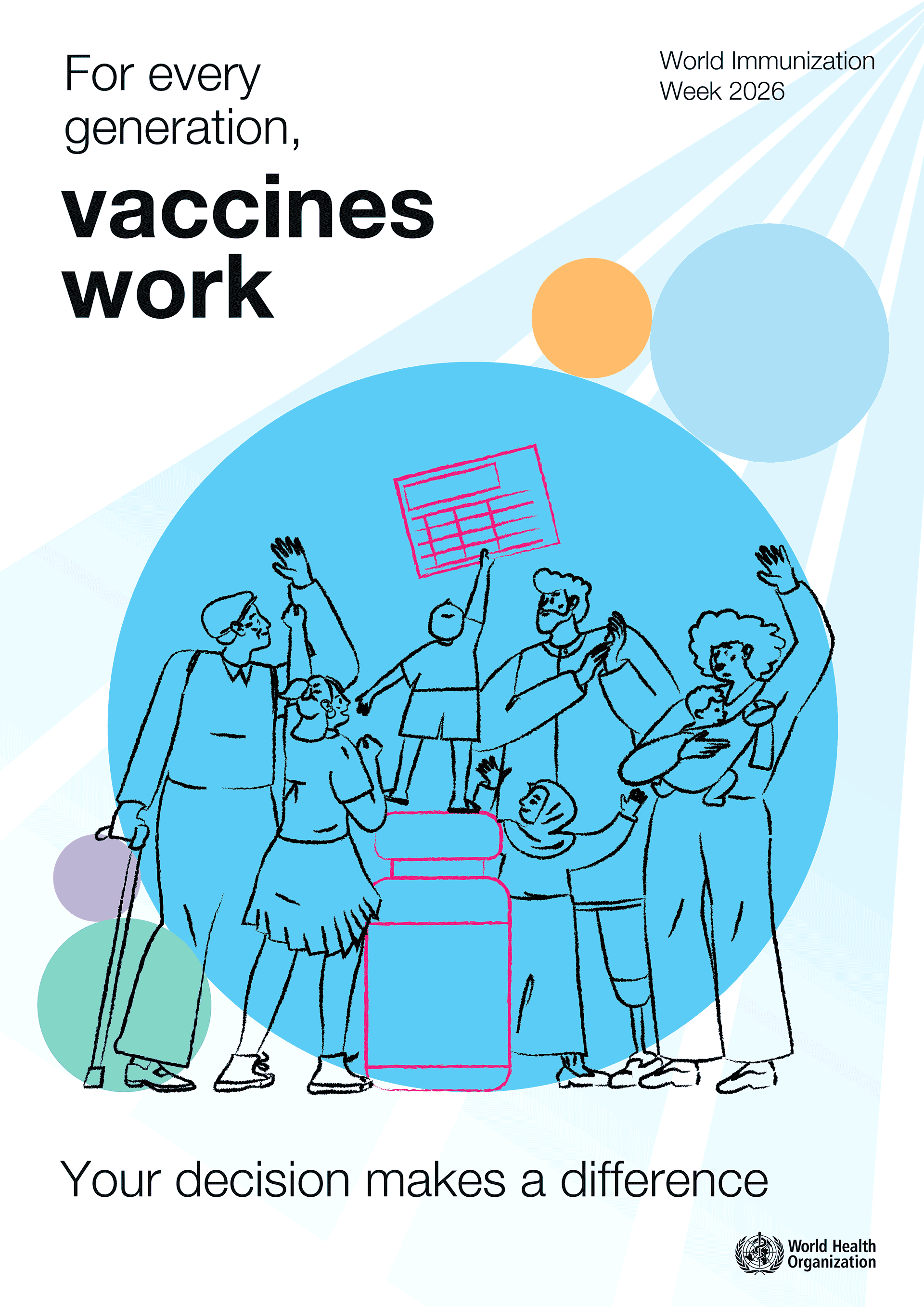 24 April 2026, Aden, Yemen – The World Health Organization (WHO) is marking World Immunization Week 2026 with the theme, “For every generation, vaccines work.”
Observed from 24 to 30 April, the week highlights the lifesaving power of vaccines. This year’s campaign amplifies a simple message – “Your decision makes a difference. Get vaccinated”.
Vaccines have been protecting people from preventable diseases for more than 200 years. Over the last 50 years alone, vaccines have saved more than 154 million lives- the equivalent of six lives every minute, every day, for five decades. Vaccination has contributed to a 40% improvement in infant survival globally, enabling millions of children to live healthier lives, free from preventable disease. In Yemen, as elsewhere, vaccines are one of the most powerful tools in public health. Despite ongoing challenges, including), A sustained outbreak of Polio Variant type 2 (cVDPV2) has persisted since 2021, underscoring ongoing immunity gaps.
In 2025, a total of 31 VDPV cases were reported across Yemen representing a substantial decline from the 187 cases reported in 2024. Measles remains endemic in Yemen, with a persistently high disease burden reported since 2020. In 2025 alone, the country recorded 27,560 confirmed measles cases and 218 associated deaths nationwide. Vaccination remains a critical pillar in protecting children and communities across the country from vaccine‑preventable diseases such as Measles, Polio, Diphtheria, Pertussis and tetanus.
WHO, in collaboration with the Ministry of Public Health and Population and with the support of partners including Gavi, the Vaccine Alliance, the Global Polio Eradication Initiative (GPEI) and the King Salman Humanitarian Aid and Relief Centre (KSrelief), continues to strengthen routine immunization services, expand integrated outreach and enhance sensitive Vaccine preventable disease surveillance across the country.
Recent progress in 2024-25 underscores the impact of sustained immunization efforts in Yemen. Nine outreach rounds reached 542,183 children, including 119,702 zero‑dose children. Through the HEER response, 2.1 million children received measles–rubella (MR) vaccination, while four nOPV2 polio campaigns successfully protected 1.4 million children under five years of age, achieving 100% coverage. These achievements were further reinforced by system‑strengthening efforts, with more than 18,832 immunization staff trained to improve service delivery, and 800 polio and VPD personnel enhancing their capacities in surveillance, outbreak investigation, and specimen management.
“Vaccines save lives, protect futures and strengthen communities,” said WHO Representative in Yemen, Dr Syed Jaffar Hussain, “This World Immunization Week, we call on all families, communities and partners to play their part to ensure every child in Yemen has access to vaccines to safeguard them from a wide range of preventable diseases. Protecting every generation starts with the action we take today.’’
Vaccination is essential at every stage of life. From early childhood adolescents, pregnant women and older adults, it reduces the risk of severe illness and death and are among the most cost-effective tools to safeguard public health, reducing families’ financial burden by protecting them from the effects of diseases.
This World Immunization Week, WHO calls for strengthened collective action to build trust, promote accurate information and ensure equitable access to vaccines for all. In Yemen, protecting future generations depends on creating sustainable systems that reach every child, everywhere with vaccines.
Your decision makes a difference Ensure people of all ages receive their vaccines.
Media contacts
WHO Yemen Communications
Email:
About WHO
Founded in 1948, the World Health Organization (WHO) is the United Nations agency dedicated to promoting health, keeping the world safe and serving the vulnerable. WHO leads global efforts to expand universal health coverage, coordinate responses to health emergencies and advance well-being for all.
World Bank and WHO Strengthen Yemen’s National Emergency Response
22 April 2026, Aden, Yemen – Amid persistent public health threats driven by years of conflict, fragile infrastructure, disease outbreaks and limited access to essential health services, coordinated emergency response is more critical than ever in Yemen.
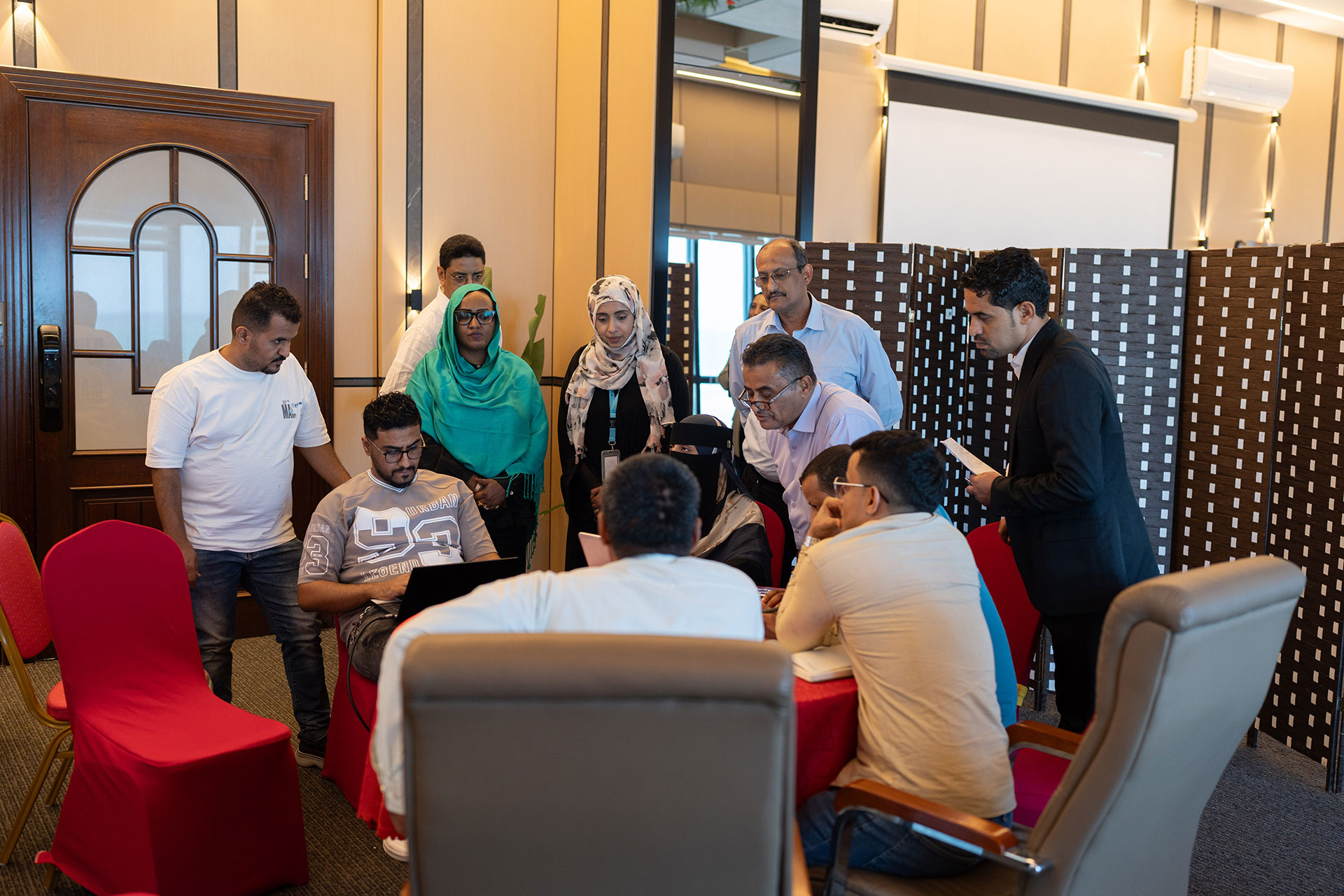 Participants collaborate during a WHO-supported PHEOC training in Aden, strengthening coordination and decision-making for effective emergency response
To help address gaps, the Ministry of Public Health and Population, in collaboration with the World Health Organization (WHO), conducted a training of trainers (ToT) on public health emergency operations centres (PHEOCs) from 15 to 24 December 2025, with support from the World Bank through the Emergency Human Capital Project (EHCP) and from the Pandemic Fund through the Pandemic Preparedness and Response Project.
The training brought together 35 participants, including 9 females, representing key positions such as PHEOC staff, point of entry staff and risk communication and community engagement unit staff. The training aimed to equip participants with the knowledge, practical skills and confidence to lead emergency operations and coordinate responses to public health threats using the WHO Incident Management System.
The interactive training programme, delivered in Arabic, combined theoretical modules with hands-on exercises. Participants learned about the fundamentals of public health emergency management, the core components of PHEOCs and different operational modes. Practical sessions included tabletop exercises, case studies and a multi-day functional simulation exercise covering events such as cholera and measles outbreaks and flooding.
The exercises enabled participants to apply emergency management frameworks, develop situation reports and practice decision-making under simulated crisis conditions.
A key feature of the training was the collaborative design and execution of the simulation exercises. Participants worked in groups to develop scenarios and response matrices. Peers observed and provided feedback. The exercises enhanced the critical thinking, problem-solving and coordination skills needed to respond effectively to emergencies.
 Hands-on simulation exercises build practical skills in data analysis and emergency management to respond rapidly to public health threats
Pre- and post-training assessments showed significant knowledge gain. Participants’ average score, measuring their understanding of PHEOC operations, increased from 57 percent before the training to 79 percent after the training. Feedback from participants highlighted the functional simulation exercises as the most beneficial component of the training.
“This training is a vital step in strengthening Yemen’s capacity to detect, assess and respond rapidly to public health emergencies,” said WHO Representative in Yemen Dr Sayed Jafar. “It demonstrates the Ministry’s commitment to building a resilient health system, supported by WHO and the World Bank.”
Immediate outcomes of the ToT include a roster of trained PHEOC facilitators, Arabic-adapted training materials, and stronger capacity to conduct future simulation exercises. In the medium term, the training will support the development of national PHEOC guidance, standard operating procedures and emergency response plans.
The training underscores Yemen’s commitment to public health emergency preparedness and the continued importance of collaboration between the Ministry, WHO and the World Bank to strengthen national capacities and protect communities from health crises.
Strengthening early warning systems to detect health emergencies in Yemen
19 April 2026, Aden, Yemen – In Yemen, where a fragile health infrastructure, undermined by years of conflict, faces recurring disease outbreaks, strengthening early detection and coordinated response to public health threats remains a priority.
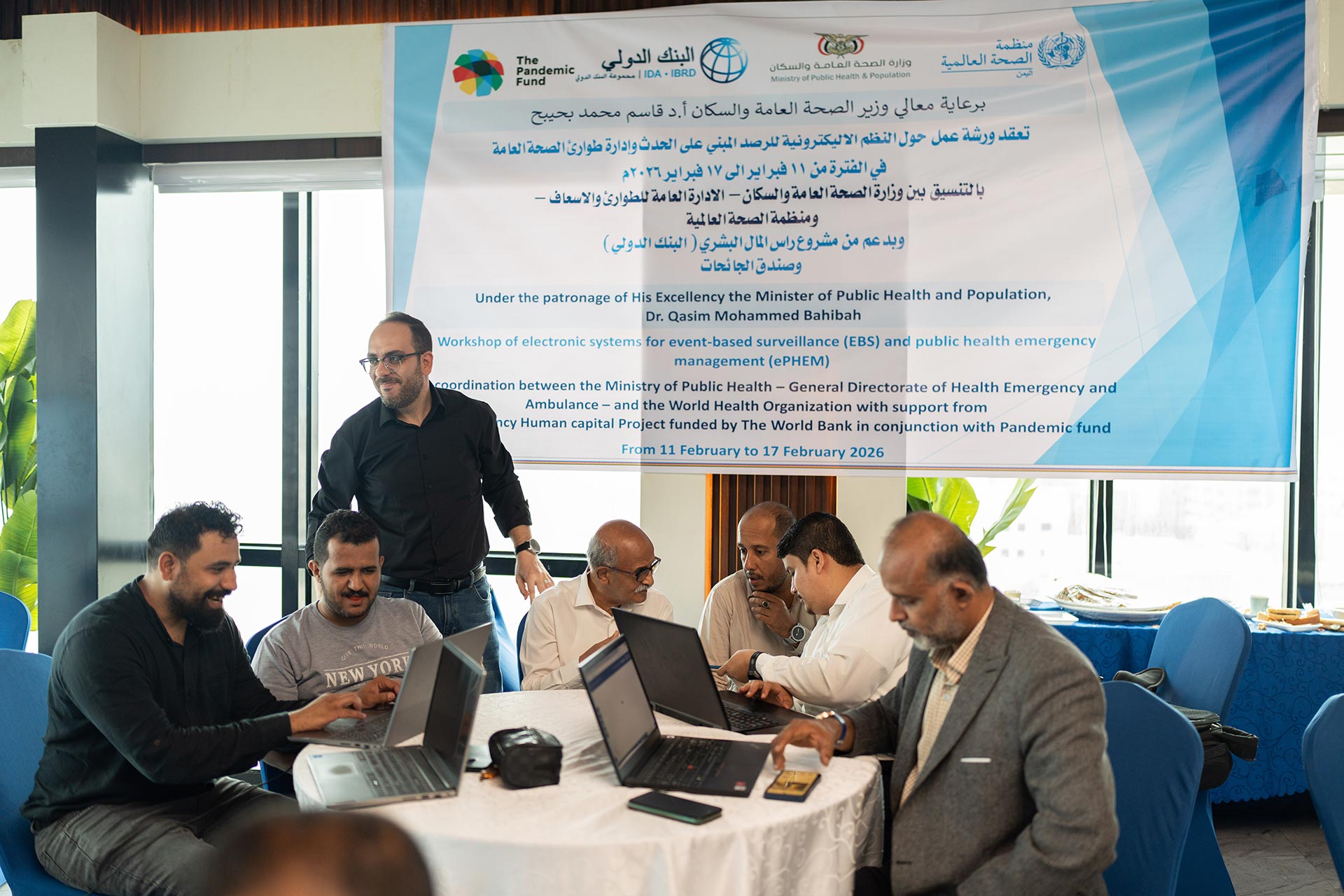 Participants strengthen digital surveillance and emergency management skills during a WHO-supported workshop in Aden. Photo credit: WHO Yemen
To strengthen early warning systems and emergency management capacities, the World Health Organization (WHO), in collaboration with the Ministry of Public Health and Population, convened a training workshop in Aden from 11 to 16 February 2026 on electronic event-based detection systems (EBS) and public health emergency management (PHEM).
The workshop was supported by the World Bank through the Emergency Human Capital Project (EHCP) and by the Pandemic Fund through the Pandemic Preparedness and Response Project.
The 37 participants were drawn from key staff at public health emergency operations centres (PHEOCs), epidemiological departments and other relevant units at both national and governorate level.
Through interactive sessions, discussions and live demonstrations, participants strengthened their knowledge of core public health emergency management concepts and enhanced their ability to detect, assess and manage health events through digital systems.
 Group photo of participants during the WHO-supported workshop on digital surveillance and public health emergency management in Aden. Photo credit: WHO Yemen
The workshop included practical training on two key digital platforms: Epidemic Intelligence from Open Sources (EIOS) and the electronic Public Health Emergency Management system (ePHEM). EIOS enables health authorities to identify early signals of potential public health threats by analyzing publicly available information, including news reports and online sources, for public health purposes. The ePHEM supports structured tracking, and the coordination/ management of emergency responses in real time.
 Hands-on training enhances capacity to detect and respond to public health threats using digital systems. Photo credit: WHO Yemen
Participants gained hands-on experience in the use of these tools in managing public health and emergency response data, identifying early warning signals of public health threats and coordinating emergency response actions more effectively.
“Strengthening digital early warning and emergency management systems is essential in a context like Yemen, where health threats can emerge rapidly and resources are limited,” said WHO Representative in Yemen, Dr Sayed Jaffar. “Through the Emergency Human Capital Project, with support of the World Bank, WHO is committed to building the skills of Yemen’s health workforce and strengthening systems that help detect health risks early and protect communities.”
By investing in digital tools and strengthening the capacities of health professionals, WHO and its partners are supporting Yemen in building stronger early warning and emergency response systems and ultimately saving lives.