


اختر لغتك

Conflict-ridden Yemen faces unprecedented risk as COVID-19 starts to spread
 13 May 2020 — Existing vulnerabilities, an already fragile health system and limited availability of medical supplies makes the risk COVID-19 poses to public health in Yemen unique, and mitigating the pandemic's effects all the more critical. With 24 million people in need of humanitarian assistance and millions surviving on emergency food aid, the magnitude of chronic malnutrition in the Yemeni population has become precarious, immune systems against infectious disease are lowered while levels of vulnerability heightened.
While dealing with the pandemic, the already devastated health system in Yemen continues to be ravaged by multiple overlapping infectious disease outbreaks, such as cholera and diphtheria, which still require an emergency response.
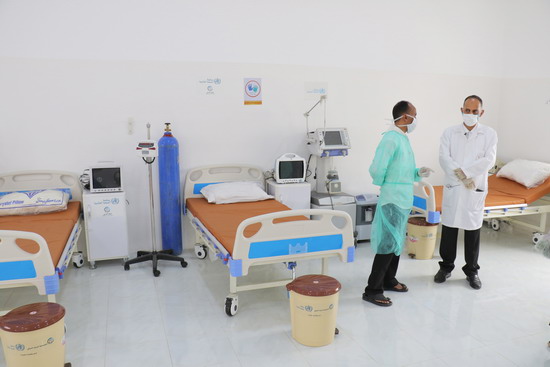
Health care workers on the frontlines of conflict are trained to manage COVID-19 patients
As the conflict in Yemen enters its sixth year, the myriad of infectious diseases has been another battle the population has had to face. One of the last countries to confirm COVID-19 cases, Yemen has been in preparation for weeks. On 10 April the first case of the virus was declared in Hadramout, now weeks in, the cases are now at 35, including 7 deaths and one recovery.
“We have heard about the virus — it is all over the news, you can’t help but be fearful. Here in Yemen, the resources are few, especially in Saada, an active frontline,” said Dr Mohammed Al Naggar, WHO hub manager in Saada.
With the looming threat of COVID-19 now spreading across the country, health care workers are focused on prevention and clinical case management of the virus.
“We know the resources are few, they are not enough, but we are doing the best we can with what we have, and right now, we are leveraging the knowledge of medical experts in the country to train health care workers on how to manage this virus, without getting infected themselves,” said Mohammad Al Naggar.
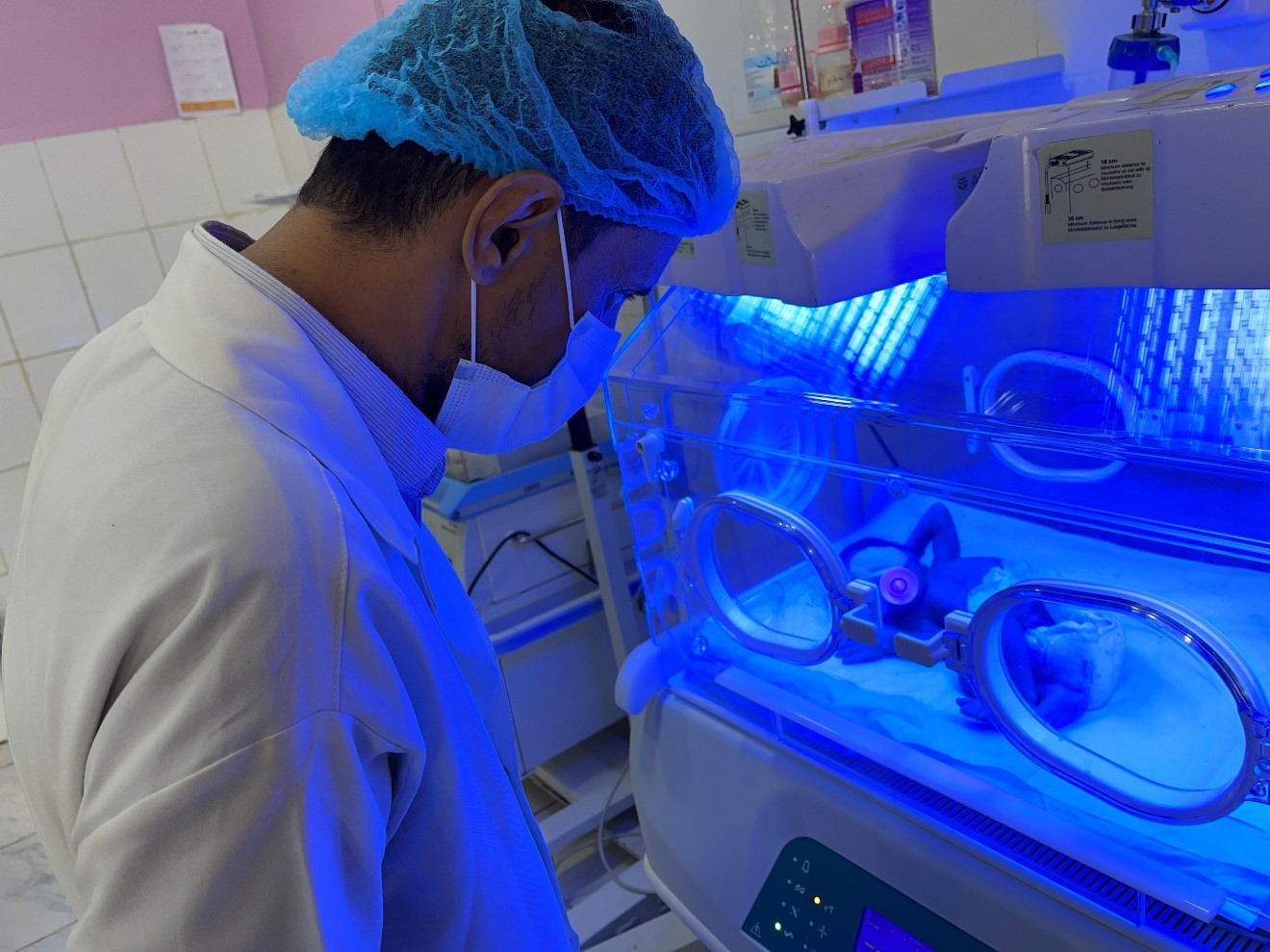
In April, COVID-19 clinical case management trainings were conducted in Saada, for health care workers staffing the Al Talh isolation centre in Sa’ada, ranging from doctors and nurses to medical assistants. This 4-day training covered various types of cases health care workers may see present at hospital so that they are prepared to treat or manage the case.
“We are afraid—but we must do something, and we are. We need people who understand what to do when this disease comes to our hospital,” he continues.
“This disease has declared war on us—and with small steps like this, we are fighting back.“
WHO, IOM raise concern over COVID-19 discrimination against migrants in Yemen
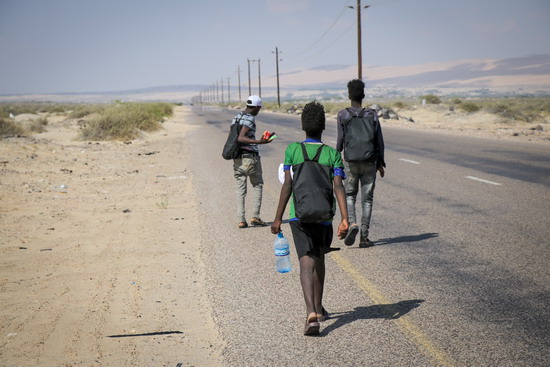 Migrants in yemen face growing protection risks as a result of COVID-19 fears. Photo IOM
Cairo, 10 May 2020 – COVID-19’s presence in Yemen was officially confirmed on 10 April. Nearly a month later, Sana’a city’s first case was announced, that of a Somali refugee. Migrants in the country are being stigmatized as “transmitters of disease”. Xenophobia and scapegoating campaigns are leading to retaliation against these vulnerable communities, including physical and verbal harassment, forced quarantine, denial of access to health services, movement restrictions, and forced movements to frontline and desert areas, leaving them stranded without food, water and essential services.
The World Health Organization (WHO) and International Organization for Migration (IOM) call on national authorities and the people of Yemen to continue their longstanding charitable acceptance of, and support to, vulnerable communities, including migrants.
“This virus respects no borders—it targets everyone, regardless of race, political affiliation or geographical location. There is absolutely no evidence that one group of people is more responsible for its transmission than another. There are, however, groups of people who are more vulnerable as a result of having pre-existing medical conditions and/or limited access to care, especially in emergency settings. It is our collective duty to prioritize and protect these groups. This is a global pandemic, and the only way to fight it is do so together. No one is safe until everyone is safe,” said Dr Ahmed Al Mandhari, WHO Regional Director for the Eastern Mediterranean.
Migrants travel through Yemen intending to reach other countries in the Gulf. Although the numbers of arrivals in Yemen has decreased as a result of the pandemic — from 11 101 in January to 1725 in April — many migrants and refugees remain stranded in Yemen, having begun their journey before movements were restricted. An increasing number face crowded and often unsanitary conditions in transit, detention and quarantine centres.
“Migrants should not be stigmatized or associated with the risk of importing diseases. It is conditions on the route from Africa to the Arabian Gulf, including barriers to health services, poor living and working conditions and exploitation, which pose serious health risks. We must join together to address these risks and stop stigmatization,” said Carmela Godeau, IOM Regional Director for the Middle East and North Africa.
WHO, IOM and partners have ensured the inclusion of migrants in the public health response led by the Yemeni authorities, with the support of the humanitarian community — an important step towards non-discrimination that needs to be actioned on the ground.
To help protect themselves and the communities hosting them from the virus, WHO, IOM and humanitarian partners have increased migrant awareness of COVID-19 across the country. The Organizations are also increasing health services for all people in Yemen, as well as other assistance to ensure access to clean water and essential hygiene items. The priority health needs of migrants are included in all response activities targeting the population in Yemen as a whole.
With an increasing number of people who have COVID-19 confirmed in Yemen, people across the country need support now more than ever to combat the spread of the virus and ensure that the most vulnerable communities — including displaced people and migrants — have access to health services and information on preventative measures.
Statement by WHO’s Regional Office for the Eastern Mediterranean on COVID-19 in Yemen
Collective action and commitment is the only way to mitigate the pandemic
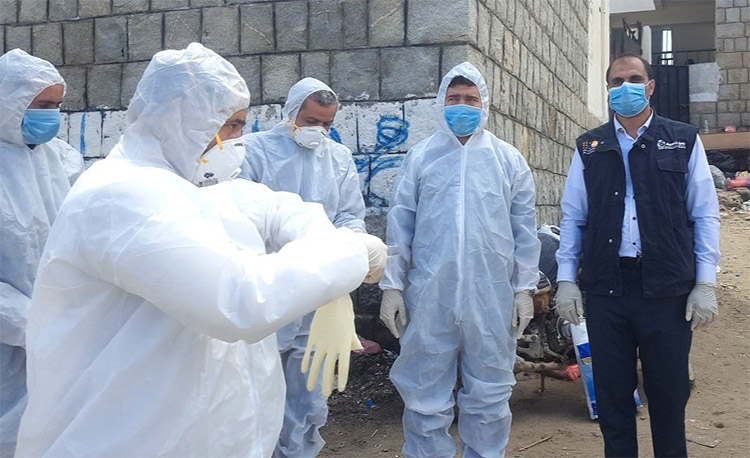 2 May 2020 - To date, there are seven confirmed cases of COVID-19 in the south of Yemen, including two deaths, as declared by national authorities. No other cases have been officially reported to WHO, although we anticipate the virus is actively circulating throughout the country.
Best practices have shown that when people are informed and warned about outbreaks early on, and where measures are in place to test, trace, isolate and care for cases, transmission of the virus can be controlled.
More than 215 countries, territories and areas have reported cases of the virus to date, and the pandemic has overwhelmed some of the most advanced and sophisticated health systems in the world. After five years of war, Yemen’s health system is fragile and facing catastrophic shortages. COVID-19 supplies in country are grossly insufficient.
Since the declaration of the pandemic, we have been presenting various evidence-based scenarios to ensure that health authorities have the full picture of how this virus may potentially affect 16 million men, women and children who make up over 50% of the population.
Operating on the assumption that community transmission is already taking place across the country, WHO and partners continue to support national and health counterparts with the limited resources at hand. Additional resources are being mobilised, in the context of major global shortages of essential supplies and equipment to respond to COVID-19. We continue to prioritize the most vulnerable and are working to identify ways of ensuring that a more reliable supply chain is established.
Health authorities are providing capacities for testing, treating and isolating suspected and confirmed cases, relying on established nation-wide hotlines and 333 rapid response health teams in the country who are working 24/7 to detect, investigate, test and refer suspected cases to designated health facilities.
Health authorities have also enhanced COVID-19 capacities in four central public health laboratories in Sana’a, Aden, Sayoun, and Taiz, which have full capacity to test for COVID-19. Four more public health laboratories will soon have similar capacity.
As long as even one case is unidentified and not properly treated, isolated and contacts traced, COVID-19 will continue to pose a significant threat to the Yemeni people and the country’s struggling health system.
Even in resource-poor settings, collective action integrating the full commitment of government, community groups, and the private sector can effectively mitigate the impact of the pandemic.
WHO, in partnership with UNFPA, ensures availability and access to lifesaving reproductive health services in Yemen
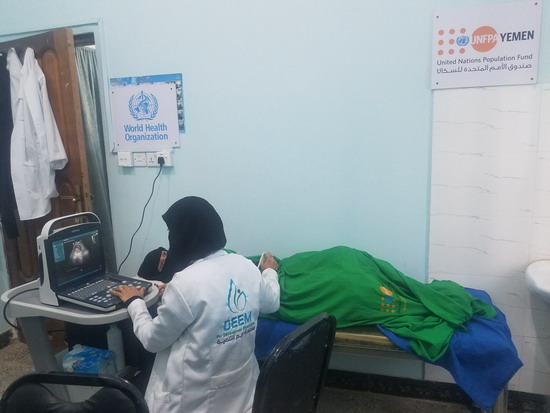 Health worker performing ultrasound at Al-Wadhah health centre in Taiz
27 April 2020 – Yemen was struggling with a poor reproductive health system even before the situation was worsened by the war which pushed millions of people into further vulnerability and the health system into near collapse. In 2020, 3.75 million women and girls of reproductive age and 600 000 who would become pregnant or deliver are at risk of mortality and morbidity. The health system is functioning at half capacity, with only one third of functioning health facilities providing reproductive health services due to staff shortages, lack of supplies, inability to meet operational costs or damage due to conflict. The need to continue supporting health facilities across the country with critical reproductive maternal and newborn health service is crucial.
WHO and the United Nations Population Fund (UNFPA) partner with the support of UAE aid to build the capacity of health systems and community-based services to ensure access and increased availability of emergency reproductive health services for women, especially pregnant women and vulnerable communities impacted by the ongoing conflict.
After 16 years of trying, (F.M.S) became pregnant in a remote village on a rocky mountain in Hajjah governorate where basic services like health, water and transportation are not available. The nearest health facility (Azan health centre) is almost an hour and a half away on rough terrain by car. The hardship of transportation did not stop her from seeking regular check-ups at the centre, during which time she discovered she was carrying twins. (F.M.S) delivered her twin baby boys Iyad and Muayyad safely. She and her husband are grateful to see their twins safe and healthy.
 A woman receiving reproductive health care in WHO/UNFPA-supported Al Thawra hospital in Al HodeidaAzan health centre is supported by WHO and UNFPA. The centre serves about 730 500 people, of whom about 36.5 thousand are male, 37 thousand female and about 16 000 are women of childbearing age.
Millions of women and girls in need of further support
UNFPA estimates 6 million women and girls of childbearing age (15 to 49 years) are in need of support. Increasing food shortages have left more than one million pregnant and lactating women malnourished, who risk giving birth to newborns with severe stunted growth. In addition, an estimated 144 000 women are likely to develop complications during childbirth.
Khayal is 21 years old. She was 9-months pregnant and ready to give birth at home attended by a midwife. But complications led to severe bleeding and they had to rush her to Mokha maternal and child health hospital where she was provided with medical care. “After the doctor examined me, I was informed that my baby has died due to the amount of bleeding. If I had not come to the centre I would have died too,” says Khayal. The loss of her baby was an agonizing experience, yet her family was grateful for the second chance at life with which she was blessed.
The partnership between WHO and UNFPA through the support of UAE aid has helped serve 103 health facilities in 17 governorates across Yemen. Between October 2019 and February 2020 alone, nearly 200 000 women and girls were protected with lifesaving reproductive health services, over 60 000 people reached with family planning services, and some 74 000 safe deliveries were supported. In addition to over 4000 caesarean sections successfully carried out.
Increased and continued funding is needed to continue the provision of emergency reproductive health services to women and girls. If no further funding is received by April 2020, reproductive health services at the 103 of currently supported health facilities will have to be discontinued.
