


اختر لغتك

Amid Yemen’s humanitarian crisis, the fight against polio continues
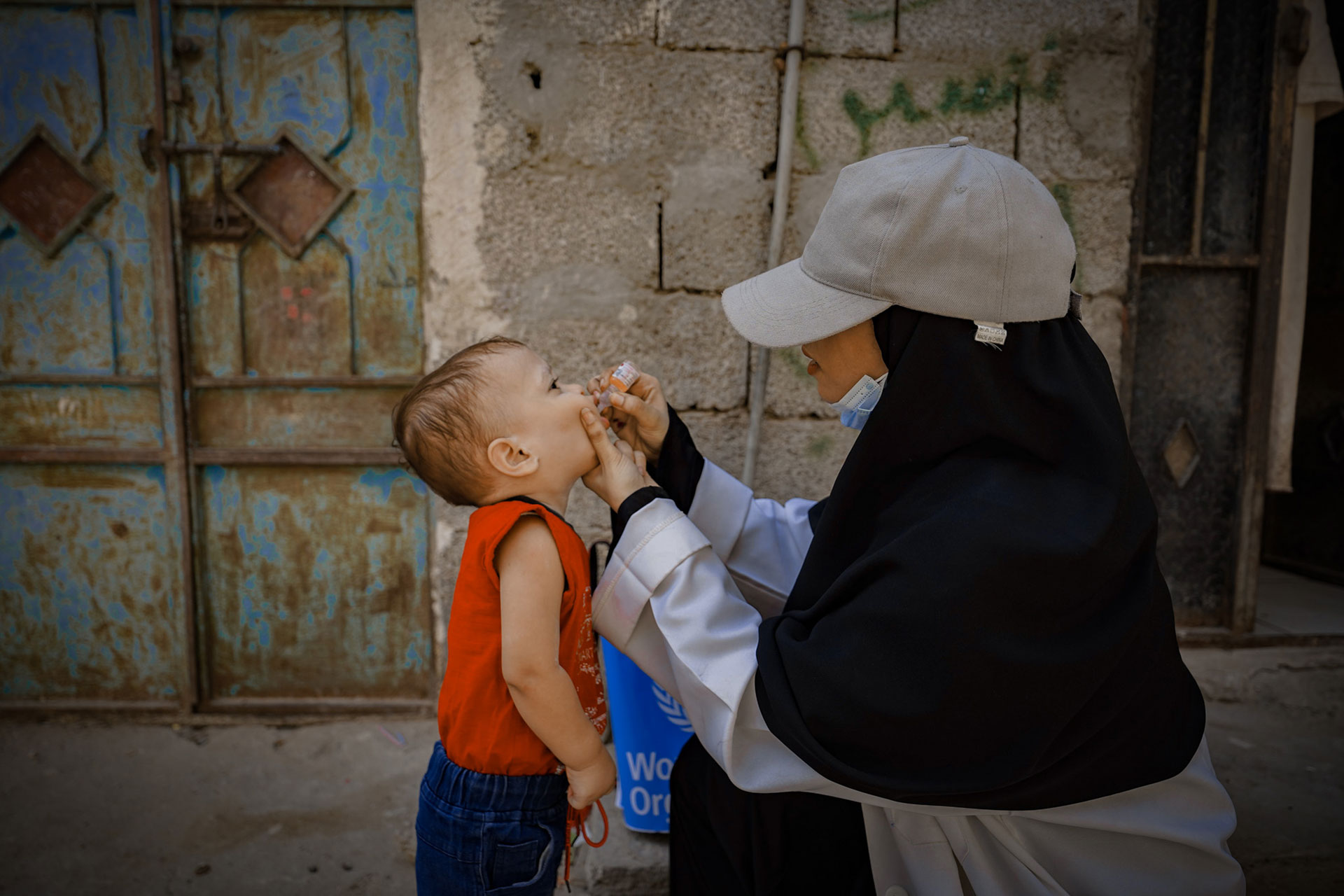 24 October 2025, Aden, Yemen – On World Polio Day, the World Health Organization (WHO) is warning of the ongoing spread of poliovirus and calls for intensified efforts to protect every child.
Polio, a preventable disease that can cause irreversible paralysis and death, remains a threat to Yemen’s children as the nation grapples with multiple overlapping health emergencies including cholera, measles, diphtheria and severe malnutrition.
Yemen has been battling an outbreak of variant poliovirus type 2 since 2021. The World Health Organization (WHO) warned today that 29 confirmed cases had been reported so far in 2025 amid the country’s protracted humanitarian crisis, declining vaccination coverage, and limited access to essential health services. These cases were reported from 10 governorates — the vast majority (28 cases) in the north — compared to 187 cases from 15 governorates in the whole of 2024.
“The outbreak of variant poliovirus type 2 in Yemen continues to strain an already overburdened health system,” said WHO Representative in Yemen Dr Syed Jaffer Hussain. “Through strengthened coordination with health authorities and partners and renewed integrated efforts to reach every child in every community we can stop the transmission of poliovirus and prevent further suffering.”
To bridge the immunity gap and curb the spread of the virus, WHO, working with the Ministry of Public Health and Population, has implemented 8 mass vaccination campaigns with type specific oral polio vaccine from 2022 to 2025. Complex security challenges in northern governorates, however, meant the campaign could not extend there, though both northern and southern governorates have been vaccinating children with injectable polio vaccine through routine immunization and integrated service delivery in an attempt to reach missed and vulnerable children in high-risk areas.
In 2025, 2 major vaccination rounds were conducted. The first, in July, reached 1.4 million children. The second, in September, saw more than 1.4 million children receive vaccines across 12 governorates. The campaigns are a testament to the determination of health workers operating in challenging and hard-to-reach environments.
WHO continues to support the Ministry of Health in integrating vaccination with broader primary health care services to ensure children in remote and underserved areas receive essential lifesaving interventions. WHO is strengthening acute flaccid paralysis (AFP) surveillance, laboratory capacity and community-based reporting to enable early detection and rapid outbreak response to new poliovirus cases.
“Polio eradication is possible, even in complex emergencies like Yemen,” said Dr Jaffer. “But it requires sustained investment, unrestricted access for health teams and continued partnership at all levels.”
While progress has been made, WHO stresses that additional resources and operational support are needed to sustain vaccination efforts and strengthen Yemen’s health system. The Organization calls on national authorities, donors and humanitarian partners to:
prioritize vaccination of all children under 5 through nationwide campaigns;
strengthen routine immunization systems to sustain long-term protection;
ensure safe, unhindered access for health workers in all governorates; and
protect and support frontline health staff delivering vaccines in challenging conditions.
Through collective effort and continued commitment, Yemen can move closer to ending variant poliovirus transmission and ensuring that every child grows up healthy, safe and protected from preventable diseases.
About WHO
Since 1948, the World Health Organization (WHO) has been the United Nations agency dedicated to advancing health for all, so that everyone, everywhere can attain the highest level of health. WHO leads global efforts to expand universal health coverage, direct and coordinate the world’s responses to health emergencies and connect nations, partners and people to promote health, keep the world safe and serve the vulnerable.
Media contacts
WHO Yemen Communications:
Every door matters: Yemen’s fight for a polio-free future
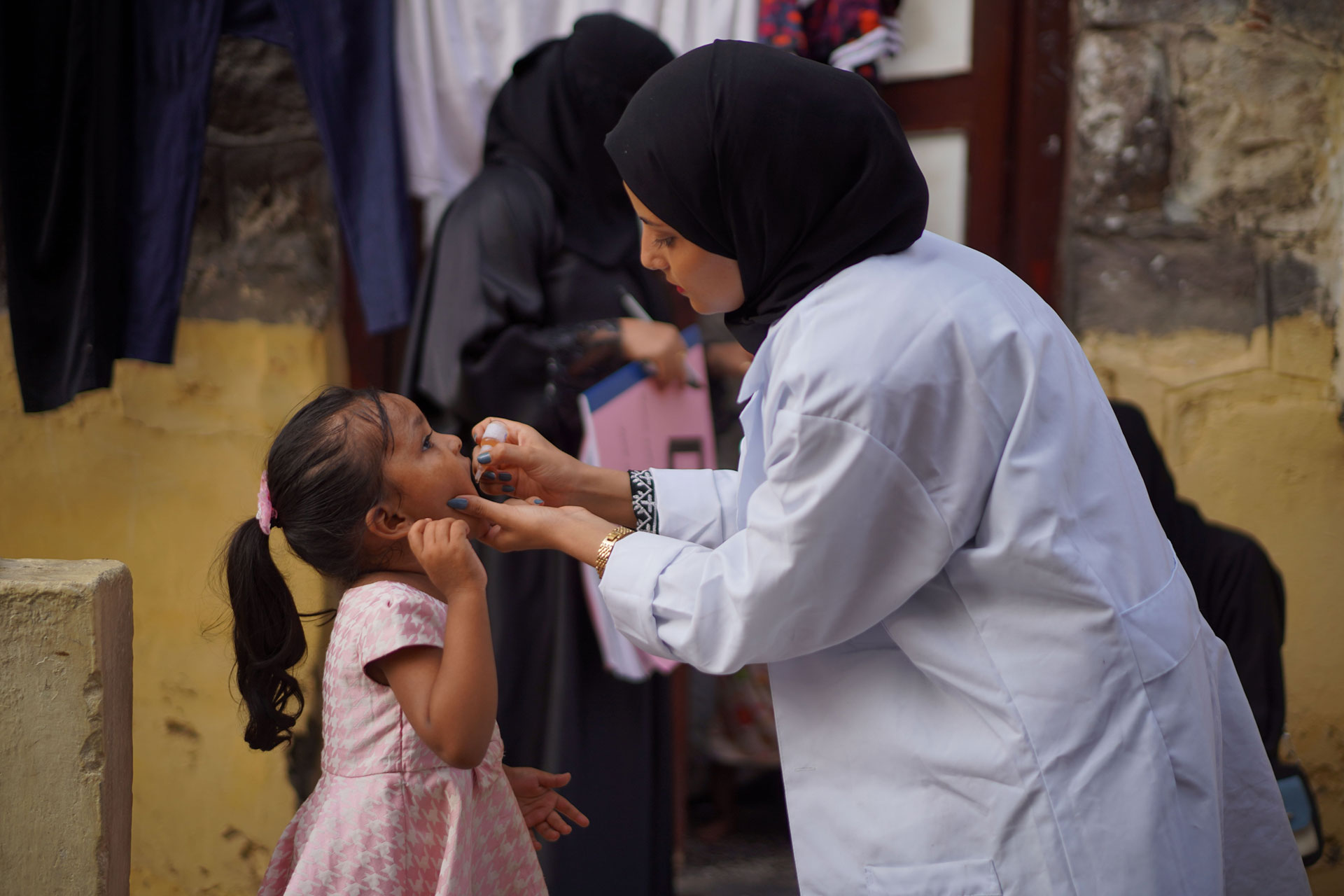
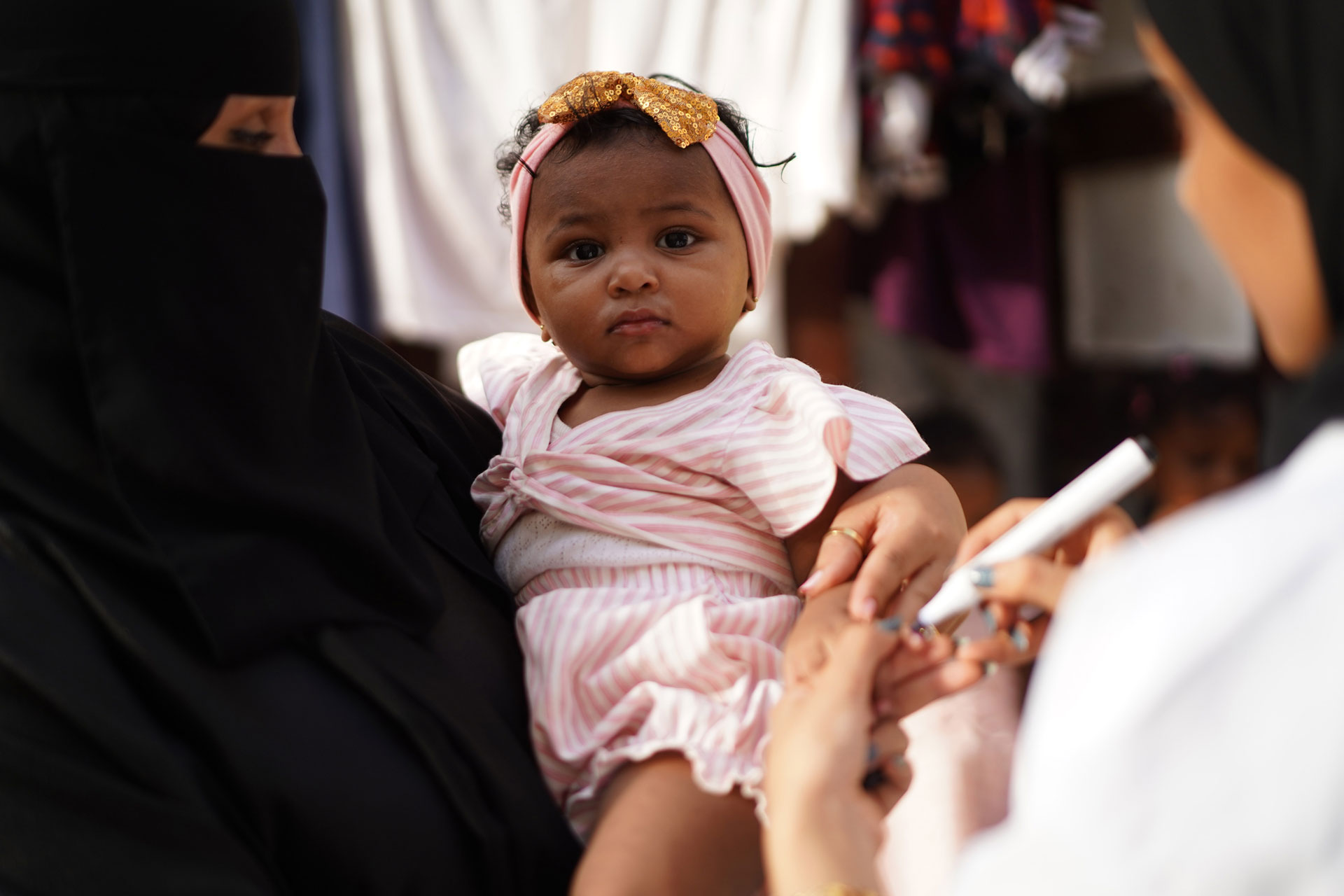 7 October 2025, Aden, Yemen – In the heart of Aden’s Crater district, two young sisters — Nehal, just 11 months old, and Nuha, 3 years old, received their polio vaccines as part of Yemen’s nationwide campaign to protect every child. Their mother welcomed the health worker with quiet relief. In a world full of uncertainty, safeguarding her daughters felt like a promise fulfilled.
Across Yemen, families are opening their doors in a powerful act of hope. On the other side stands a health worker, ready to deliver two drops that could change a child’s life forever.
For the health worker – Nagwa Ali – who knocked on Nehal and Nuha’s door, each child she vaccinates is part of a larger story. “Every door we knock on brings Yemen closer to a day without polio,” she says.
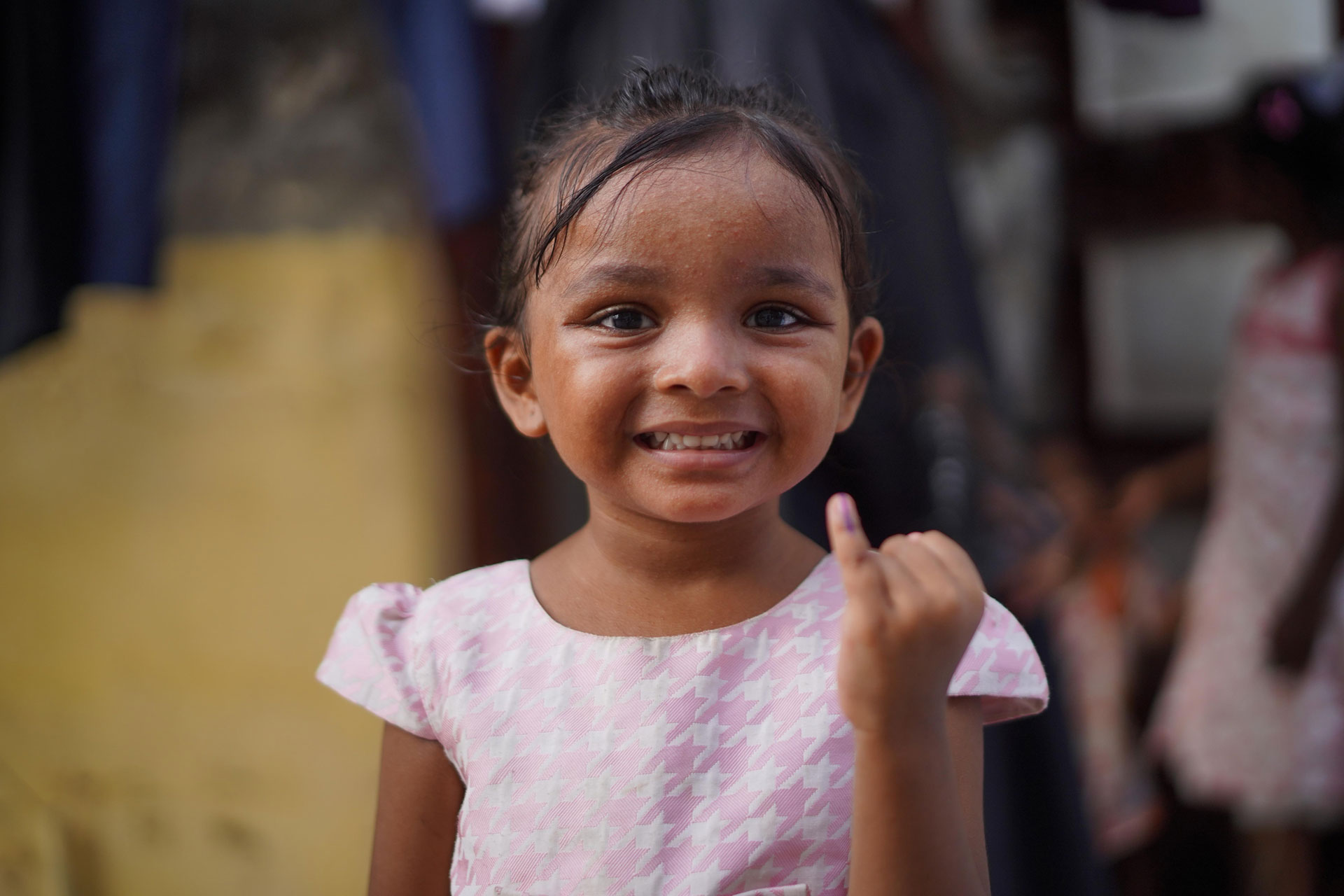 Conflict, barriers to access and misinformation make it hard to reach every child but Yemen’s health workers, with the Ministry of Public Health and Population (MoPHP) and the World Health Organization (WHO) at their side, are finding ways to overcome the challenges. They travel far, reassure worried parents, and persist through every challenge.
“No child should suffer a disease we know how to prevent. Together, we can make polio history,” says WHO Representative in Yemen Dr Syed Jaffer Hussain.
 Each time a child receive the vaccine Yemen moves closer to freedom from polio. Each knock on a door, each gentle conversation, each purple mark on a child’s finger is a step toward a healthier future.
The vital support of the Global Polio Eradication Initiative (GPEI) makes it possible to deliver vaccines to the most vulnerable communities of Yemen, keep cold-chain systems running despite difficult conditions, train and equip thousands of health workers and sustain the tireless campaigns that keep hope alive.
With GPEI’s commitment and the unwavering determination of MoPHP, WHO and Yemen’s frontline vaccinators, the vision of a country free from polio is no longer distant. It is within reach for every child.
WHO, UNICEF and MoPHP launch a second round of polio vaccination in Government of Yemen-controlled areas
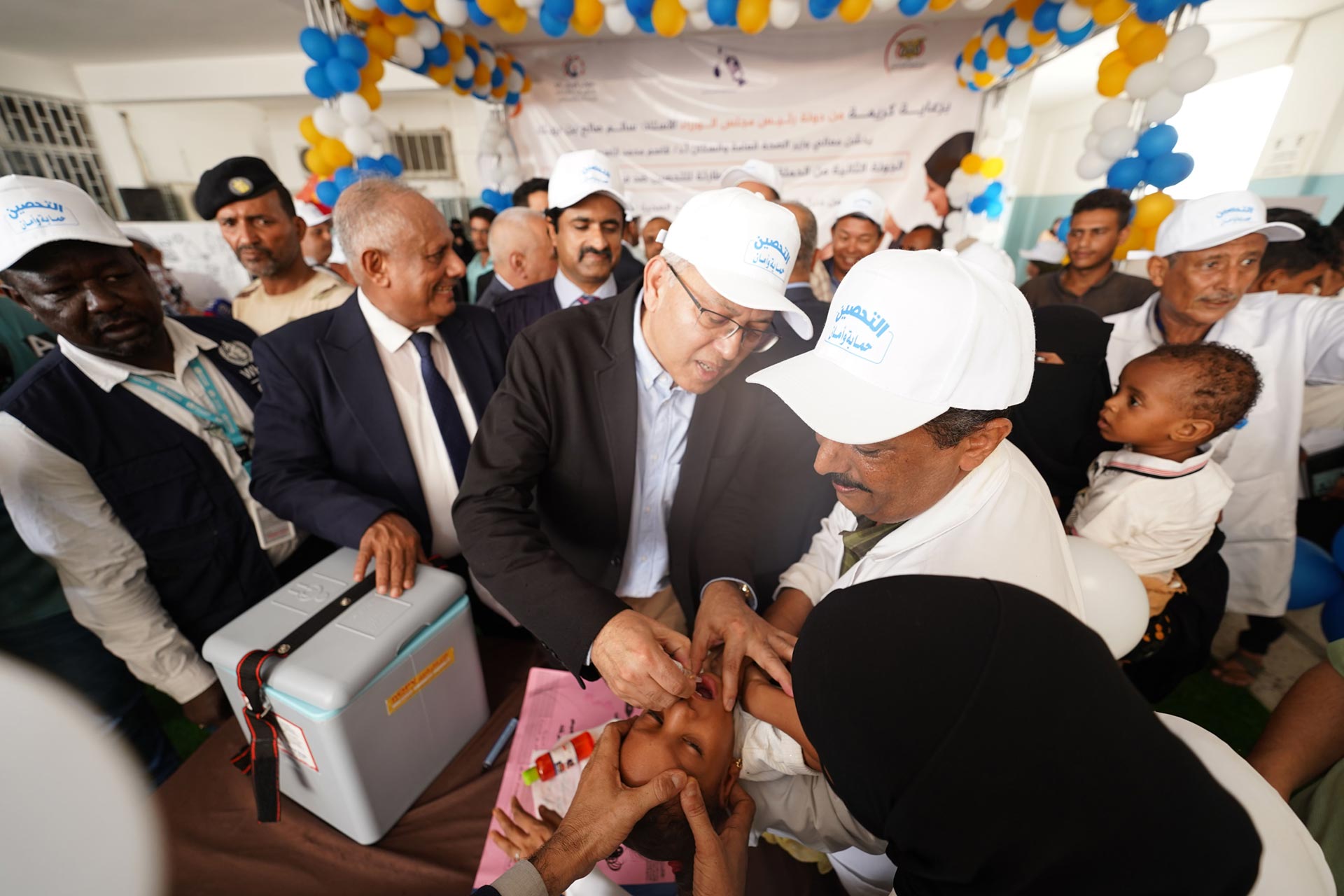 30 September 2025, Aden, Yemen – The Ministry of Public Health and Population (MoPHP), the World Health Organization (WHO) and the United Nations Children’s Fund (UNICEF) successfully launched the second round of the polio vaccination campaign across 12 GoY controlled governorates. The 3-day campaign, running from 29 September to 1 October 2025, aims to immunize over 1.3 million children under 5 against poliovirus.
This second round follows the first nOPV2 campaign in July 2025 and forms part of Yemen’s urgent response to the ongoing circulation of variant poliovirus type 2 (cVDPV2). As of week 38 of 2025, 29 confirmed variant poliovirus type 2 have been reported in 28 children in the north and one in the south. Since 2021, Yemen has recorded 451 cases, the vast majority (96%) among children under 5. Environmental surveillance continues to detect poliovirus in sewerage water, underscoring the need for repeated vaccination rounds to halt the circulation of the virus.
“With the support of the Global Polio Eradication Initiative (GPEI), this second round is crucial for closing immunity gaps and moving Yemen closer to stopping poliovirus transmission," said WHO Representative in Yemen Dr Syed Jaffer Hussain. “Working alongside the Ministry of Public Health and Population, UNICEF and our partners, WHO is committed to reaching every child, including those in the most vulnerable communities”
This campaign will be implemented by a network of around 15,000 health workers in
mobile door-to-door teamsand at fixed sites in health facilities. Nearly 1,000 supervisors, from Government and partner agencies, will provide supervision for the campaign.
“Every child in Yemen deserves protection from preventable diseases such as polio,” said Peter Hawkins, UNICEF Representative in Yemen. “This campaign brings vaccines to doorsteps, health centers and remote communities, ensuring that even the most vulnerable children receive the protection they urgently need."
WHO and UNICEF, key partners in GPEI, are providing unwavering support to the Government of Yemen as it works to eradicate polio and bolster routine immunization. Continued, synchronized investment is essential to achieve full coverage and ensure no child is left behind.
About WHO
Since 1948, the World Health Organization (WHO) has been the United Nations agency dedicated to advancing health for all, so that everyone, everywhere can attain the highest level of health. WHO leads global efforts to expand universal health coverage, direct and coordinate the world’s responses to health emergencies and connect nations, partners and people to promote health, keep the world safe and serve the vulnerable.
About UNICEF
UNICEF works in some of the world’s toughest places, to reach the world’s most disadvantaged children. Across more than 190 countries and territories, we work for every child, everywhere, to build a better world for everyone. For more information about UNICEF and its work for children visit http://www.unicef.org/yemen
Media contacts
WHO Yemen Communications:
UNICEF Yemen Communications:
World Humanitarian Day 2025: WHO Yemen honors health workers and their dedication to saving lives in times of crisis
 19 August 2025. Aden, Yemen – On World Humanitarian Day, the World Health Organization (WHO) in Yemen is paying tribute to the courage, dedication and sacrifice of health workers and humanitarian personnel who work tirelessly to save lives in one of the world’s most complex emergencies.
Over 19.6 million people in Yemen are in need of humanitarian assistance to meet their most basic needs. WHO and its partners continue to work alongside the Ministry of Public Health and Population and other health actors to ensure the delivery of lifesaving health services in the face of escalating needs, insecurity and restricted access.
“Health workers in Yemen are on the frontlines every day – delivering babies, responding to disease outbreaks, treating the wounded and ensuring communities have access to essential care – often at great personal risk,” said Acting WHO Representative in Yemen Office Dr Nuha Mahmoud. “They are the backbone of our humanitarian lifeline. It is their resilience that inspires us to continue our mission.”
This year Yemen has seen multiple disease outbreaks, including cholera, measles and dengue fever, and a growing burden of malnutrition, mental health needs and noncommunicable diseases. On the face of severe challenges, including damaged infrastructure, shortages of medicines and movement restrictions, WHO Yemen has:
supported over 141 health facilities with supplies, equipment and operational costs;
deployed rapid response teams to investigate and contain outbreaks;
strengthened disease surveillance systems for early detection and action; and
provided mental health and psychosocial support services to communities in need.
WHO Yemen mourns the loss of humanitarian colleagues who have given their lives in service to others. In Yemen, incidents of violence against humanitarian personnel continue to threaten the delivery of critical aid.
On World Humanitarian Day, WHO Yemen is calling on all parties to the conflict to uphold international humanitarian law, protect health workers and facilities and ensure safe, sustained access to communities in need.
For media inquiries, please contact:
Communications
Email:
About WHO
Since 1948, the World Health Organization (WHO) has been the United Nations agency dedicated to advancing health for all, so that everyone, everywhere can attain the highest level of health. WHO leads global efforts to expand universal health coverage, direct and coordinate the world’s responses to health emergencies and connect nations, partners and people to promote health, keep the world safe and serve the vulnerable.
