


اختر لغتك

WHO and Kuwait: Protecting Yemen’s “Right to Health”
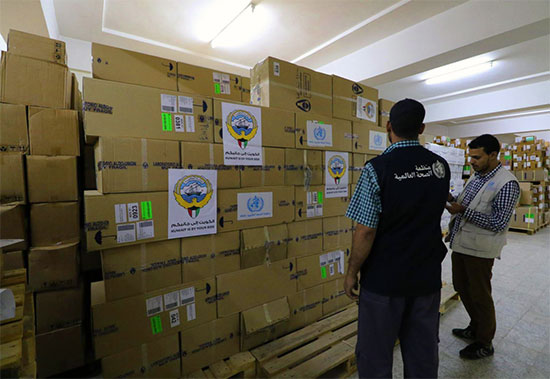 3 October 2019 – Thanks to the generous support of the Government of Kuwait, in terms of continued funding, based on a long-standing partnership—in the amount of US$ 23 million, this flexible funding is currently allowing WHO to meet the most urgent needs of the people of Yemen even as the situation evolves on a daily basis—impacting response operations frequently.
Almost 20 million people lack access to adequate healthcare, and 17.8 million people lack access to safe water and sanitation—a large contributor to the world’s largest, most explosive, cholera outbreak that has sickened over 1 million men, women and children.
Vaccine preventable diseases, poor sanitation and diseases, including cholera, measles, dengue, and diphtheria outbreaks left millions of people ill last year. Yemen’s health system is on the brink of collapse and is at-risk of famine. It is unique from other food insecure contexts due to the sheer scale of those at-risk—an estimated 20 million people, who are facing pre-famine conditions are on the verge of starvation.
“Almost five years of war has left the country in ruins and its health system extremely fragile. There are currently 32 active front lines across 10 of the 22 governorates in Yemen. In the midst of this conflict, the Yemeni people’s “right to health” hangs in the balance, said Altaf Musani, WHO Representative in Yemen.
Kuwait—by Yemen’s side
The Government of Kuwait has supported multiple UN agencies, including the WHO—going above and beyond the remit of support to just humanitarian response operations. Over the years, even prior to the conflict, Kuwait has been by the side of the Yemeni people—building hospitals, universities and secondary schools in the country.
“The Kuwaiti people and government are committed to continuing their longstanding support to the Yemeni people. Kuwait is working along both political and humanitarian paths to resolve the Yemeni crisis’’. Said Ambassador Jamal Al Gunaim, The Permanent Representative of the State of Kuwait to the United Nations Office and other International Organizations in Geneva.
The friendship and partnership between Kuwait and Yemen is several years old, and the support of the Government of Kuwait has been meeting the needs of the people of Yemen for decades.
“WHO’s partnership with the Government of Kuwait has been life-saving, due to the flexibility of these funds. Funding flexibility allows our response to be more targeted and agile—as we concentrate on areas and communities that are most vulnerable,” said Altaf Musani , WHO Representative in Yemen.
WHO continues to scale up health activities and with the support of Kuwait, conducted multiple rounds of vector control campaigns to fight dengue, supported 60 medical teams, including 10 emergency medical mobile teams and 21 surgical teams stationed near active frontlines, provided anti-cancer drugs to 12 oncology centers, and provided 21 dialysis centres with renal sessions across Yemen.
This and other donor contributions are the only lifeline for the people of Yemen. Without it, WHO would have to shut down operations, which means millions will be without food, shelter, water, and access to health care. The time to act is now—and we have already run out of time.
Note to editors
The 2019 Yemen Humanitarian Response Plan (YHRP) requires US$4.2 billion to assist more than 20 million Yemenis including 10 million people who rely entirely on humanitarian assistance to meet their basic needs every month. As of today, the YHRP is 56% funded, we need to close this gap. At the High-Level Pledging Event for the Humanitarian Crisis in Yemen convened by the UN Secretary-General in February 2019, the United Nations and humanitarian partners were promised USD$ 2.6 billion to meet the urgent needs. Humanitarian agencies are appealing to donors to provide funds as quickly as possible.
WHO and OFDA preserving and protecting Yemen’s health system
3 October 2019 – As Yemen approaches more than 4 years of war, an estimated 20 million people are in need of access to healthcare. Through the generous support of the Office of U.S. Foreign Disaster Assistance (OFDA), WHO has been able to meet health needs in the midst of this evolving conflict.
Strategic partnerships save lives
“In Yemen, the operative word is “survival” -- not only are we meeting the immediate and urgent health needs of the people, we are also protecting the health system from collapse—and we cannot do it alone. Thanks to OFDA and other partners—we don’t have to.” said Altaf Musani, WHO Representative in Yemen.
Support from OFDA, one of the largest donors to the health and nutrition response in Yemen has enabled WHO to meet nutrition needs and increase health care access through the health service delivery mechanism known as the Minimum Service Package (MSP). The combined lines of efforts in these two major response areas aims to reach millions.
Yemen is a population on the brink of starvation, and an estimated 20 million Yemenis are food insecure—the most vulnerable of these are children. Through critical funding from OFDA in the amount of US$ 27 million, WHO will be able to sustain 60 feeding centres—increasing lives saved in the upwards of an estimated 15,000 children suffering from severe acute malnutrition (SAM) with medical complications.
These children are the sickest of the sick, and since the country is on the brink of famine, there are plans to add 30 more feeding centers to reach more children, with OFDA paving the way forward.
Overcoming challenges, strengthening nutrition response capacity
This the world’s most challenging operational environment. Mounting a sustained and effective response to critical health needs is next to impossible when done alone, but thanks to OFDA and its partnership with the WHO, national NGOs and international NGOs have been pulled in and expanded. And, the consolidation of their efforts has saved children from malnutrition and worse yet—death.
“Yemen is an “all-risk” environment. Day in and day out we face challenges no other mission faces. This is still the world’s largest humanitarian crisis that is politically complex and operationally challenging. Yemen cannot wait and we will not allow innocent Yemenis to die unnecessarily, said Altaf Musani, WHO Representative in Yemen.
This has been a long and valued partnership, for which WHO is grateful. This funding will allow WHO to deliver health services and increase access to it, scale up cholera preparedness efforts in close coordination with the Health Cluster partners.
Note to editors
The 2019 Yemen Humanitarian Response Plan (YHRP) requires US$4.2 billion to assist more than 20 million Yemenis including 10 million people who rely entirely on humanitarian assistance to meet their basic needs every month. As of today, the YHRP is 56% funded, we need to close this gap. At the High-Level Pledging Event for the Humanitarian Crisis in Yemen convened by the UN Secretary-General in February 2019, the United Nations and humanitarian partners were promised USD$ 2.6 billion to meet the urgent needs. Humanitarian agencies are appealing to donors to provide funds as quickly as possible.
WHO and OFDA preserving and protecting Yemen’s health system
3 October 2019 – As Yemen approaches more than 4 years of war, an estimated 20 million people are in need of access to healthcare. Through the generous support of the Office of U.S. Foreign Disaster Assistance (OFDA), WHO has been able to meet health needs in the midst of this evolving conflict.
Strategic partnerships save lives
“In Yemen, the operative word is “survival” -- not only are we meeting the immediate and urgent health needs of the people, we are also protecting the health system from collapse—and we cannot do it alone. Thanks to OFDA and other partners—we don’t have to.” said Altaf Musani, WHO Representative in Yemen.
Support from OFDA, one of the largest donors to the health and nutrition response in Yemen has enabled WHO to meet nutrition needs and increase health care access through the health service delivery mechanism known as the Minimum Service Package (MSP). The combined lines of efforts in these two major response areas aims to reach millions.
Yemen is a population on the brink of starvation, and an estimated 20 million Yemenis are food insecure—the most vulnerable of these are children. Through critical funding from OFDA in the amount of US$ 27 million, WHO will be able to sustain 60 feeding centres—increasing lives saved in the upwards of an estimated 15,000 children suffering from severe acute malnutrition (SAM) with medical complications.
These children are the sickest of the sick, and since the country is on the brink of famine, there are plans to add 30 more feeding centers to reach more children, with OFDA paving the way forward.
Overcoming challenges, strengthening nutrition response capacity
This the world’s most challenging operational environment. Mounting a sustained and effective response to critical health needs is next to impossible when done alone, but thanks to OFDA and its partnership with the WHO, national NGOs and international NGOs have been pulled in and expanded. And, the consolidation of their efforts has saved children from malnutrition and worse yet—death.
“Yemen is an “all-risk” environment. Day in and day out we face challenges no other mission faces. This is still the world’s largest humanitarian crisis that is politically complex and operationally challenging. Yemen cannot wait and we will not allow innocent Yemenis to die unnecessarily, said Altaf Musani, WHO Representative in Yemen.
This has been a long and valued partnership, for which WHO is grateful. This funding will allow WHO to deliver health services and increase access to it, scale up cholera preparedness efforts in close coordination with the Health Cluster partners.
Note to editors
The 2019 Yemen Humanitarian Response Plan (YHRP) requires US$4.2 billion to assist more than 20 million Yemenis including 10 million people who rely entirely on humanitarian assistance to meet their basic needs every month. As of today, the YHRP is 56% funded, we need to close this gap. At the High-Level Pledging Event for the Humanitarian Crisis in Yemen convened by the UN Secretary-General in February 2019, the United Nations and humanitarian partners were promised USD$ 2.6 billion to meet the urgent needs. Humanitarian agencies are appealing to donors to provide funds as quickly as possible.
Keeping Yemen from the brink of famine: Italy and WHO fight malnutrition
3 October 2019 – WHO and the Italian Agency for Development Cooperation (AICS) are working together to fight malnutrition in Yemen. This valued partner has generously donated critical funding in the amount of EUR 2 million in support of the nutrition response in Yemen. This is a testament to the Government of Italy’s sustained commitment to the people of Yemen. This new funding is a symbol of the continuing partnership between AICS, WHO, and the Government of Italy, which started in 2018.
People on the brink of starvation
Almost 20 million people in Yemen are food insecure, while an estimated quarter of a million are on the brink of starvation.
“I am grateful for this partnership, and the trust built between our agencies. We are both committed to meeting the needs of over 50 000 children who suffer from severe acute malnutrition (SAM) with medical complications. We have saved the lives of over 8,000 children but the fight is far from over—and together we have made progress.” said Altaf Musani, WHO Representative in Yemen.
AICS and the Government of Italy, along with other active partners, are frontrunners in the fight against malnutrition, giving support to the response in Yemen. People are barely able to survive rather than thrive, and their immune systems are compromised by lack of nutrition, which is even more apparent in children, leaving them weak to fight multiple diseases and infections.
“Yemen is a country where more than half of the population is unemployed, due to destroyed civil and social infrastructure—so, this support is truly life-saving on all fronts. A family does not have to lose everything to treat their starving child,” said Altaf Musani, WHO Representative in Yemen.
This critical project aims to treat thousands of SAM children with medical complications. When these children are treated in these centers, their parents are relieved of the financial and emotional burden of their child’s suffering. This contribution is representative of half of what was pledged in February’s Yemen Pledge Conference, and has been essential to the nutrition response moving forward.
Note to editors
The 2019 Yemen Humanitarian Response Plan (YHRP) requires US$4.2 billion to assist more than 20 million Yemenis including 10 million people who rely entirely on humanitarian assistance to meet their basic needs every month. As of today, the YHRP is 56% funded, we need to close this gap. At the High-Level Pledging Event for the Humanitarian Crisis in Yemen convened by the UN Secretary-General in February 2019, the United Nations and humanitarian partners were promised USD$ 2.6 billion to meet the urgent needs. Humanitarian agencies are appealing to donors to provide funds as quickly as possible.
