


اختر لغتك

النضال الصامت: أزمة الصحة النفسية في اليمن

لم تخلّف سنوات النزاع الطويل في اليمن ظلالاً قاتمةً على بنيتها التحتية فحسب، بل امتدت آثارها أيضاً إلى صحة ورفاه سكانها. ولطالما تم تجاهل الصحة النفسية، حتى تفاقمت هذه الأزمة الخفية في عمق المجتمع.
تعاني العديد من المناطق في اليمن نقصاً حاداً في خدمات الصحة النفسية والدعم النفسي الاجتماعي، ذلك بسبب قلة عدد الأخصائيين المدربين والمراكز العلاجية. حتى في المناطق التي تتوفر فيها مثل هذه الخدمات، قد يعاني البعض من صعوبة الوصول إليها بسبب الوصمة الاجتماعية.
يُقدّر عدد الأشخاص الذين يعانون من الصدمات النفسية والإجهاد الناجم عن النزاع المستمر بنحو 7 ملايين شخص، أي ما يقرب ربع سكان اليمن. بينما يحتاج جميعهم إلى دعمٍ صحيّ نفسي، لا يتمكن سوى 120 ألفاً فقط من الوصول المستمر للخدمات.
ساهمت شراكة منظمة الصحة العالمية مع دائرة الحماية المدنية والمساعدات الإنسانية الأوروبية (إيكو) في تعزيز الصحة النفسية والدعم النفسي الاجتماعي في اليمن، وإعطاء الأولوية للفئات الأكثر ضعفاً التي تعاني من أمراض نفسية.
قصتان من بين ملايين
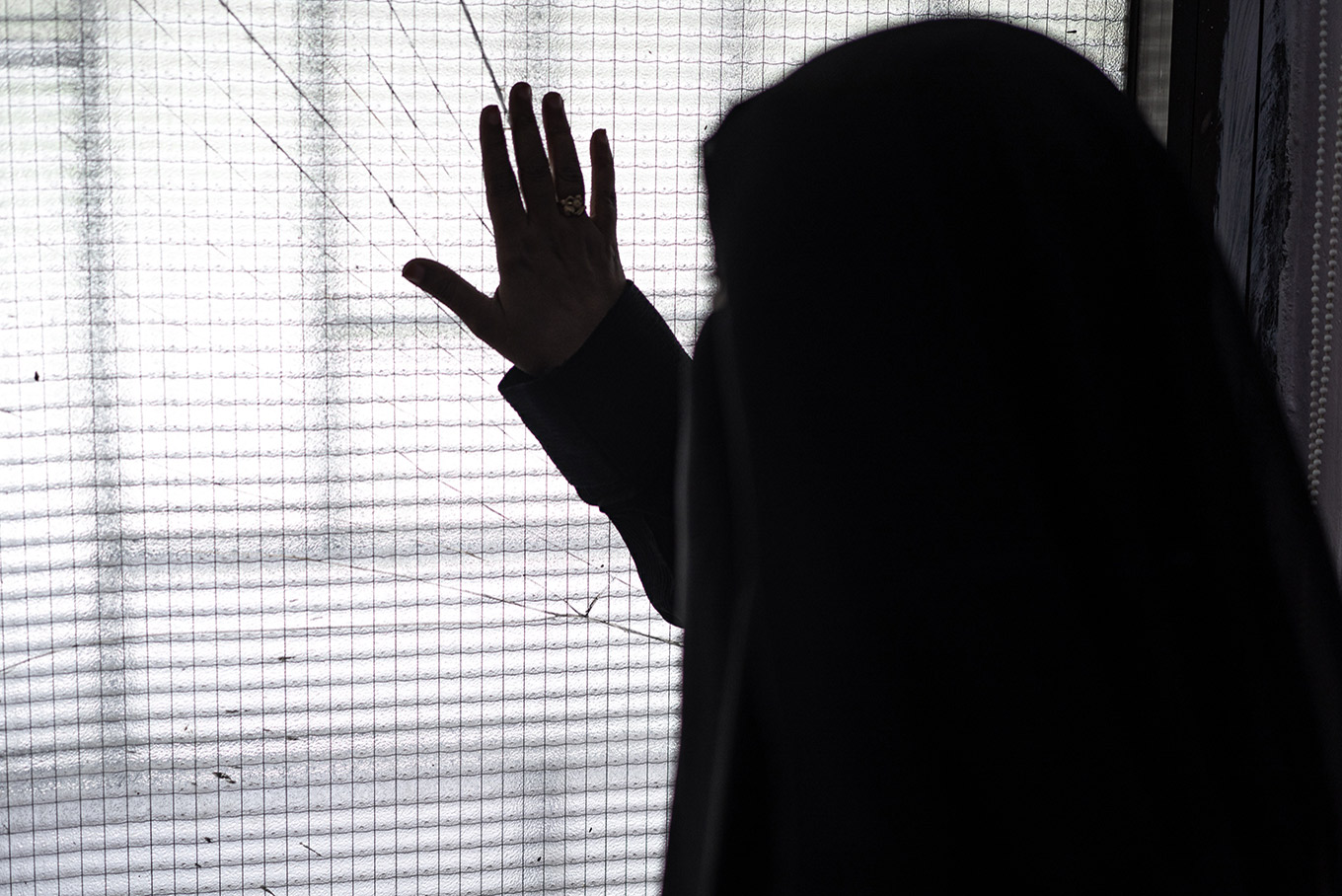
تجسد قصة أسماء* مأساة هذه الأزمة المنسية والصراع الصامت الذي يخوضه المصابون. عانت أسماء من ضغوط مستمرة أدت إلى الاكتئاب، فعزلت نفسها من الحياة تفكر في الهروب.
وتروي أسماء: "شعرت بالإحباط، كنتُ دائماً غائبة عما يدور حولي ولا أود الخروج من غرفتي". وبمرور الوقت استمر تدهور صحتها النفسية حتى وصلت إلى مرحلة لم ترغب فيها بمقابلة أي شخص وتاقت إلى الهرب: "شعرتُ أنني محاصرة في منزلي. أردت أن أترك الجميع ورائي وأهرب".
لجأت عائلتها إلى طلب المساعدة عندما شعرت أنها على وشك فقدانها، بدأت أسماء بتلقي العلاج في قسم الصحة النفسية المدعوم من منظمة الصحة العالمية. وبفضل جلسات العلاج والاستشارة، وجدت أسماء الراحة وسبيلاً للشفاء، واستعادت قدرتها على التواصل مع أحبائها لتبني مستقبل أكثر إشراقاً.
قصة أسماء ليست فريدة من نوعها. يعاني الكثيرون في صمت ويتجنبون طلب الدعم، خوفاً من وصمة العار المرتبطة بالمرض النفسي. لكن نبيلة*، معلمة اللغة الإنجليزية وأم لخمسة أطفال، اختارت مساراً مختلفاً. تحدّت نبيلة بسبب إدراكها لمعاناتها النفسية الوصمة وطلبت ولم تخف من طلب المساعدة، فقد اختارت الشفاء.
في البداية، عانت نبيلة على ما بدا أنه أعراض الحساسية، بالإضافة إلى اضطراب النوم والقلق. زارت طبيب الأمراض الجلدية، الذي كشف أن شكوى نبيلة الجلدية ناجمة عن عوامل نفسية. نصحها الطبيب بإيجاد طرق لتقليل مستويات التوتر لتقضي على المشكلة، أو البحث عن دعم الصحة النفسية.
أدركت نبيلة الصلة بين قلقها والأعراض الجسدية التي تعاني منها، وجدت الدعم الصحي قبل أن يزداد الوضع سوءاً. تقول نبيلة: "ليس هناك ما يدعو للخجل، المرض النفسي مثل المرض الجسدي، يحتاج إلى علاج. يعد قبول المرض هو السبيل الوحيد للشفاء".
درست نبيلة علم النفس في الجامعة لمدة 3 سنوات، لذا كانت على دراية بالمرض النفسي وأنواع الاضطرابات النفسية، وقالت: "كنت أدرك تماماً أنني أعاني نفسياً وأن ذلك قد بدأ يؤثر على حالتي الجسدية. حاولت التغلب على مرضي بمفردي بحكم معرفتي ووعيي، لكن ذلك كان فوق طاقتي. كان عليّ طلب المساعدة قبل أن تزداد حالتي سوءا".
تسلط قصة نبيلة الضوء على أهمية التوعية والتعليم. علاوة على ذلك، تكشف شجاعتها الحاجة إلى كل من الوعي الفردي والقبول الاجتماعي لمشاكل الصحة النفسية.
توسيع نطاق الوصول إلى دعم الصحة النفسية
تحدثت الدكتورة أشجان يوسف، أخصائية صحة نفسية، عن النقص الحاد في الموارد والمتخصصين المدربين والحاجة إلى عمل جماعي لتوسيع الخدمات وبناء نظام دعم قوي للصحة النفسية، تقول: "تعاني خدمات الصحة النفسية في اليمن من نقص واضح، خاصة فيما يتعلق بتوفر الكوادر المدربة. تُعد الصحة النفسية جزءً مهماً من الرعاية الصحية الشاملة. ولذا نعمل على رفع مستوى الوعي بأهمية الصحة النفسية وتقديم الدعم اللازم للأشخاص الذين يعانون من اضطرابات نفسية. نأمل في مواصلة تحسين الخدمات وتوسيع نطاق الرعاية الصحية النفسية للوصول إلى المزيد من الأشخاص الذين يحتاجون إلى مساعدتنا".
تشكل الشراكات، مثل الشراكة بين منظمة الصحة العالمية ودائرة الحماية المدنية والمساعدات الإنسانية الأوروبية (إيكو)، أمراً ضرورياً لزيادة الوصول إلى خدمات الصحة النفسية والدعم النفسي الاجتماعي عالية الجودة. من خلال هذه الشراكة، دعمت منظمة الصحة العالمية 17 وحدة للصحة النفسية والدعم النفسي الاجتماعي في جميع أنحاء اليمن. شمل هذا الدعم إعادة تأهيل المرافق وتوفير الأثاث والمعدات الجديدة. كما زودت منظمة الصحة العالمية نفس الوحدات بالأدوية النفسية، وعملت على توفير برامج بناء القدرات في مجال الصحة النفسية والدعم النفسي الاجتماعي للعاملين في مجال الصحة النفسية في جميع أنحاء البلاد.
في عام 2022، تعاونت منظمة الصحة العالمية مع وزارة الصحة العامة والسكان لتطوير أول استراتيجية للصحة النفسية منذ عام 2010. تدعم هذه الاستراتيجية الوطنية نظاماً شاملاً ومتاحاً للصحة النفسية في اليمن.
حاجة ملحّة إلى المزيد من العمل
إن أزمة الصحة النفسية في اليمن هي معركة صامتة تتطلب اهتماماً عاجلاً. ومن خلال إعطاء الأولوية للرعاية الصحية النفسية، ومكافحة وصمة العار عبر رفع الوعي، وبناء نظام دعم قوي، سيكون بإمكان اليمن مساعدة أولئك الذين يعانون بصمت على عيش حياة أفضل مرة أخرى.
تظهر رحلة نبيلة من العزلة إلى التعافي كيف يمكن الشفاء حتى في أحلك الظروف: "أخيراً، يمكنني التواصل مع عائلتي وعيش حياة طبيعية. لقد أحدث هذا التغيير تحولاً لي ولمن حولي".
* تم تغيير الأسماء لحماية الهويات.
Epidemiological situation in Yemen: diphtheria
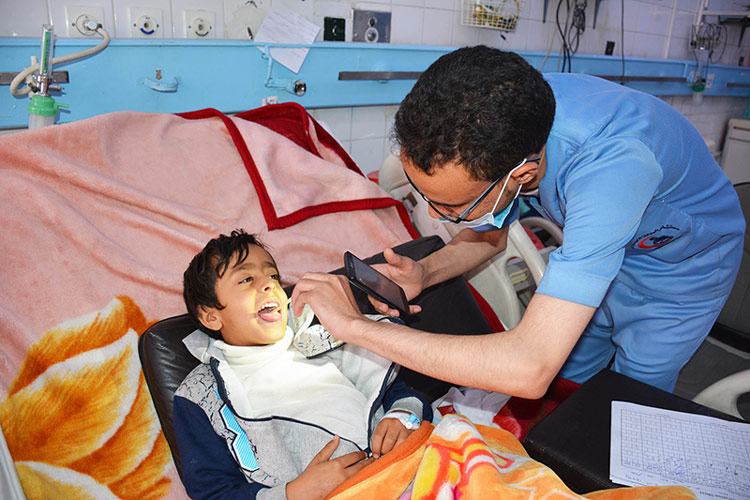
16 November 2023, Sana’a, Yemen – Reports of diphtheria cases in Yemen (to 14 October 2023) are 57% higher than in 2021 and 2022. Cases have risen gradually since 2021, with a significant increase noted in 2023.
So far this year, 1671 suspected diphtheria cases have been reported in the country, with 109 associated deaths, compared with 1283 cases reported in the whole of 2022. Diphtheria is typically a winter illness, so the increase in cases noted from June to September 2023 marks a change from the usual seasonal pattern.
In response to the current increase in cases, WHO is working to supply Yemen’s Ministry of Public Health and Population with an urgent quantity of 2200 vials of diphtheria antitoxin, which will be distributed to the most affected areas. Due to the complexities of the Yemen situation, however, only 220 vials have been delivered to date, whereas the global shortage of diphtheria antitoxin affects its availability and increases prices.
“The 2200 doses that WHO has secured are only enough to treat 300 severe patients, which is inadequate to address the issue,” said Dr Arturo Pesigan, WHO Representative in Yemen. “It is projected that in 2024 multiple ongoing and growing outbreaks of vaccine-preventable diseases – including diphtheria – will persist, with the proportion of unvaccinated, or zero-dose, children reaching 28%. The funding shortage and issues of inaccessibility are affecting the health and lives of vulnerable people in Yemen.”
Among children in Yemen, there has been a significant drop in immunization rates and a correlated increase in cases of vaccine-preventable diseases. This decline in coverage continues to worsen owing to economic deterioration, low incomes, displacement, and overcrowded living conditions in camps, coupled with an overstretched health system and chronic funding shortage. Millions of children cannot be reached by routine immunization activities, and suspected cases of vaccine-preventable diseases have risen to unprecedented levels.
WHO continues to monitor and analyse outbreak trends and reported cases on a weekly basis, to ensure a full understanding of the epidemiological situation for various circulating outbreaks.
About diphtheria
Diphtheria is an infection caused by the bacterium Corynebacterium diphtheriae. Signs and symptoms range from mild to severe and often come on gradually, with a higher mortality rate among unvaccinated younger children. In severe cases, the bacteria produce a poison (toxin) that causes a thick grey or white patch at the back of the throat that can block the airway, making it hard to breathe or swallow.
The toxin may also get into the bloodstream, causing complications that may include inflammation and damage of the heart muscle, inflammation of nerves, kidney problems and bleeding problems. The damaged heart muscle may result in an abnormal heart rate and inflammation of the nerves may result in paralysis.
For more information on Yemen’s health situation, visit: Yemen Health Emergency
For more information on diphtheria, visit: Diphtheria Questions and Answers
Media contacts: WHO Yemen Communications,
About WHO
Since 1948, the World Health Organization (WHO) has been the United Nations agency dedicated to advancing health for all, so that everyone, everywhere can attain the highest level of health. WHO leads global efforts to expand universal health coverage, direct and coordinate the world’s responses to health emergencies and connect nations, partners and people to promote health, keep the world safe and serve the vulnerable.
Yemen struck by Tropical Cyclone Tej as its health system struggles to cope
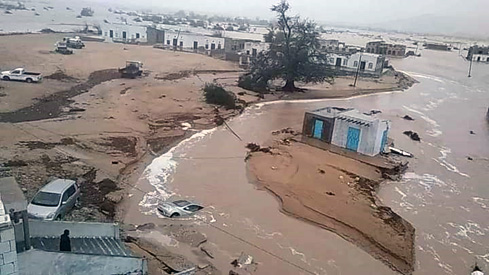 An image of the impact of Tropical Cyclone Tej on Huswain District, Al Mahrah Governorate, Yemen, taken on 24 October 2023. Photo credit: Emergency operations centre, Al Mahrah Governorate29 October 2023, Sana’a, Yemen – Tropical Cyclone Tej hit Yemen’s eastern coast areas of Al Mahrah Governorate and Socotra archipelago on 23 and 24 October 2023. As of 24 October, the storm moved towards the eastern regions of Hadramout Governorate. The affected areas experienced heavy and torrential rains that led to major damage to infrastructure including health facilities, roads, telecommunications lines and electricity.
In Al Mahrah Governorate, severe weather conditions and damage to roads hindered access to rescue stranded people and protect lives. Information about the situation remains limited but efforts are under way by local authorities and partners to access affected areas. Yemen’s health system is already overburdened with the direct impact of 9 years of conflict. Health facilities lack specialized doctors, medical supplies, and adequate infrastructure to address the most basic needs.
According to the United Nations Office for the Coordination of Humanitarian Affairs (OCHA), a local media outlet has reported at least 7 deaths, with more than 1000 people displaced. The same source attested that the authorities had declared a state of emergency and temporarily shut schools in Al Mahrah Governorate.
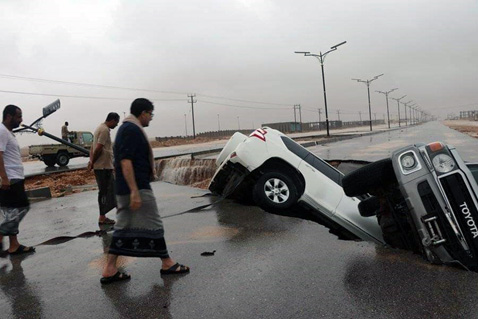 An image of the damage wreaked by Tropical Cyclone Tej on Huswain District, Al Mahrah Governorate, Yemen, taken on 24 October 2023. Photo credit: Emergency operations centre, Al Mahrah GovernorateOn Socotra Island, 2 minor injuries were reported and, fortunately, no deaths. A total of 192 households have been displaced, with 314 houses fully or partially damaged. It is not yet clear how many health facilities have been damaged. Main roads connecting the southern island to Socotra’s centre were affected, limiting access to these areas. Most roads to the town of Hadibu remain closed, with local authorities and medical teams unable to assess the damage.
Current situation
“WHO and other humanitarian actors are facing many obstacles and funding shortages to identify and respond to multisectoral needs,” said Dr Arturo Pesigan, WHO Representative in Yemen. “The unprepared hospitals in the affected areas will require fuel and medical supplies to enable rapid interventions to contain the surge in demand. Intravenous fluids; antibiotics; laboratory reagents; and medical kits for cholera, dengue and malaria are urgently needed in the affected areas.”
A fuel shortage represents a major problem for hospitals and emergency operations centres. WHO has been able to re-establish the satellite internet service for Al Mahrah emergency operations centre. This is a lifeline as it is the only means of communication available to coordinate the emergency response, given the damage caused by Tropical Cyclone Tej to telecommunications and electricity infrastructure in the area.
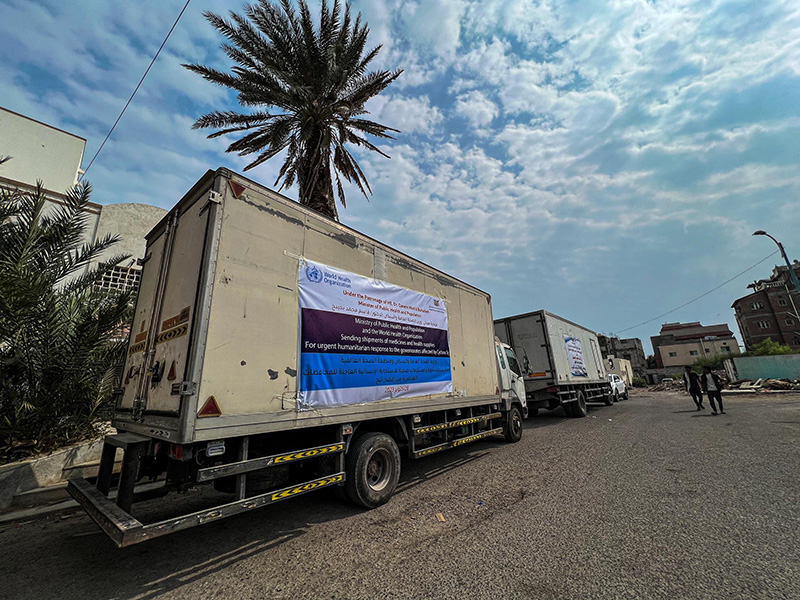 A shipment of medical supplies provided by the Ministry of Public Health and Population and WHO sets off for the affected governorates. Photo credit: WHO/WHO YemenThe WHO-led Health Cluster is mobilizing collective efforts by all Mukalla Hub health partners and coordinating the movement of 3 mobile clinic teams to the affected areas. More than 4100 emergency kits have been dispatched through the Rapid Response Mechanism Cluster to the affected areas in Al Mahrah Governorate. As of 24 October, local authorities in Al Mahrah and Socotra have started to desludge water and open roads.
Yemen’s Ministry of Public Health and Population, WHO and other partners have been supporting 2 main hospitals, 3 secondary hospitals and 61 public health centres. Additionally, WHO and the Health Cluster have dispatched essential medicines, surgical kits and medical supplies worth approximately US$ 80 000, and basic medical stockpiles have been provided to Socotra Island.
For more information, visit: Yemen Health Emergency
Media contacts: WHO Yemen Communications,
About WHO: Since 1948, the World Health Organization (WHO) has been the United Nations agency dedicated to advancing health for all, so that everyone, everywhere can attain the highest level of health. WHO leads global efforts to expand universal health coverage, direct and coordinate the world’s responses to health emergencies and connect nations, partners and people to promote health, keep the world safe and serve the vulnerable.
Children battle preventable childhood diseases in Yemen as immunization coverage declines
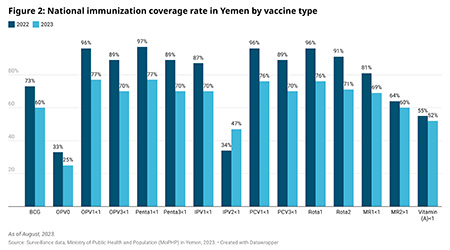
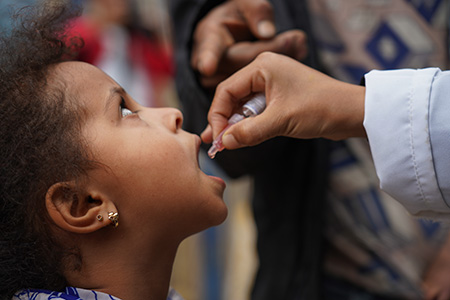 24 October 2023, Sana’a, Yemen – Yemen is facing a significant drop in immunization rates among children. This decline continues to worsen owing to economic deterioration, low incomes, displacement, and overcrowded living conditions in camps, coupled with an overstretched health system. This has led to a resurgence and rise in vaccine-preventable diseases and associated deaths among children in Yemen.
Millions of children cannot be reached by routine immunization activities, and suspected cases of vaccine-preventable diseases have reached unprecedented levels. According to the WHO-UNICEF National Immunization Coverage Estimate for 2022, about one third (27%) of children aged under 1 year in Yemen are not immunized against measles and rubella. Nor have these children received the minimum remaining vaccines required for full protection.
From January to September 2023, 42 400 children in Yemen had measles, and there were 514 associated deaths. In addition, there were about 1400 diphtheria cases and 6000 cases of whooping cough among Yemen’s children.
The re-emergence in Yemen of poliovirus type 1 (cVDPV1), in 2020, was soon followed by the re-emergence of poliovirus type 2 (cVDPV2), in 2021. This has put Yemen back on the world map of 35 countries currently afflicted by this debilitating and incurable disease. So far in 2023, there have been 928 suspected cases among Yemen’s children of acute flaccid paralysis, which can be caused by the poliovirus.
 View Chart 1 in an interactive format“The pattern of immunization levels for all vaccines is declining, especially this year. This has direct and severe health implications for children and for Yemen’s future. The reduced demand by communities and parents for immunization will cause the spread of deadly childhood and infectious diseases, especially those that can be prevented by vaccines,” said Dr Arturo Pesigan, WHO Representative and Head of Mission in Yemen.
“Yemen’s health system is already overstretched, yet it faces a rapid increase in health emergencies that is beyond its capacity,” added Dr Pesigan. “Health facilities can barely continue to provide basic health services. And with the shortage of international support, many facilities will be forced to shut down operations. This will put millions of vulnerable people in Yemen at imminent risk.”
WHO efforts in Yemen
WHO works closely with Yemen’s Ministry of Public Health and Population and health partners to increase support for routine vaccination interventions. WHO also continues to work within the National Health Framework to provide technical and financial support to improve immunization rates among children.
 View Chart 2 in an interactive formatThese efforts include work to:
enhance national disease surveillance and data management, ensuring timely detection of cases;
maintain public health teams dedicated to vaccine-preventable diseases;
improve the quality and coverage rates of preventive and outbreak response campaigns;
support the implementation of the equity accelerator proposal to reduce the number of zero-dose children; and
implement integrated vaccination and outreach campaigns.
Since the re-emergence of cVDPV1 and cVDPV2, WHO has closely supported the Ministry of Public Health and Population to develop a polio outbreak response plan; implement outbreak response immunization activities; and intensify surveillance, advocacy and capacity-building efforts.
Learn more about Yemen’s Expanded Programme on Immunization.
For more information, visit: Yemen Health Emergency
Media contacts: WHO Yemen Communications,
About WHO: Since 1948, the World Health Organization (WHO) has been the United Nations agency dedicated to advancing health for all, so that everyone, everywhere can attain the highest level of health. WHO leads global efforts to expand universal health coverage, direct and coordinate the world’s responses to health emergencies and connect nations, partners and people to promote health, keep the world safe and serve the vulnerable.
