


اختر لغتك

Strengthening surveillance and response capabilities in Yemen
 1 December 2024, Aden and Sana’a, Yemen – Yemen’s enduring crisis has created one of the world’s most disease-vulnerable environments, with persistent outbreaks of cholera, measles and dengue.
In collaboration with the World Bank – via the International Development Association and the Pandemic Fund – WHO provides support to help Yemen detect and respond to the constant barrage of infectious disease threats.
“Disease outbreaks pose severe risks to Yemen’s most vulnerable populations, particularly children and the displaced, straining public health and social cohesion,” says WHO Representative to Yemen Dr Arturo Pesigan.
Since 2017, WHO has facilitated the operation of Yemen’s Electronic Integrated Disease Early Warning System (eIDEWS). The system now has almost 2400 sentinel surveillance sites, designated locations across Yemen where consistent health data collection allows disease trends to be mapped. Each day, more than 270 alerts are generated through the system, most of them via heath facilities reporting cases of infectious diseases presenting for care.
 The system is complemented by 333 rapid response teams (RRTs) across Yemen. Composed of health workers who can deploy within 24 hours, RRTs investigate alerts, contact trace and provide treatment and/or supportive supervision and health education to communities. RRTs deploy multiple times a week, playing a crucial role in detecting and containing outbreaks.
WHO is helping build future generations of disease detectives by supporting the Field Epidemiology Training Programme (FETP). FETP has been operating in Yemen since 2011. In 2024, the intermediate course graduated 15 new field epidemiologists who will go on to serve in 7 governorates across Yemen.
WHO will continue to provide support to strengthen Yemen’s surveillance and response capabilities in line with the International Health Regulations. The Pandemic Preparedness and Response Project (PPRP), funded by the Pandemic Fund and with financing from the Emergency Human Capital Project (EHCP) in partnership with the World Bank, is key to delivering this support.
Learn more about the activities of eIDEWS coordinators and RRTs
WHO support to Yemen’s hospitals delivers life-saving services and guides strategic investments
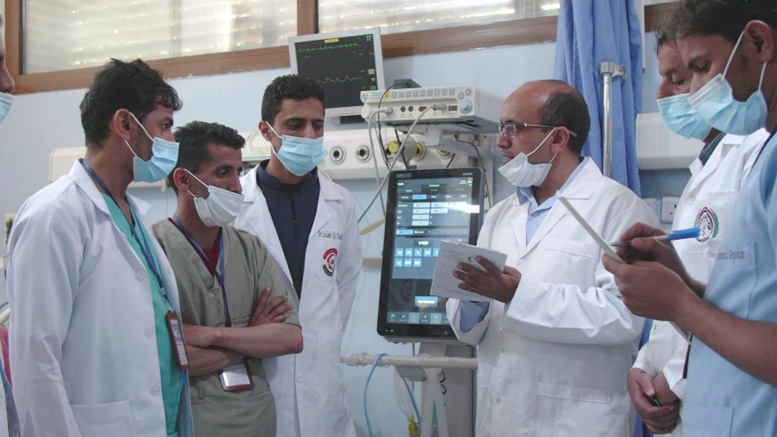 1 December 2024, Aden and Sana’a, Yemen – Hospitals provide life-saving medical care to people suffering from severe illness, injuries, complications from chronic diseases and other critical medical conditions. In Yemen, when people need health care, they often turn first to their nearest hospital.
Since the start of Yemen’s protracted crisis, WHO and the country’s health authorities, in partnership with the World Bank, have helped prevent the collapse of more than 100 hospitals.
WHO’s support provides essential resources like medicines, equipment, and fuel, directly benefiting hospitals and mitigating frequent power cuts.
Each year, the support benefits millions of Yemenis. Between November 2023 and June 2024, over 3.9 million people received health care at supported hospitals: 1.1 million people were treated in emergency rooms, 324 000 received inpatient care and 206 000 surgeries, 93 000 deliveries and 38 000 caesarean sections were performed.
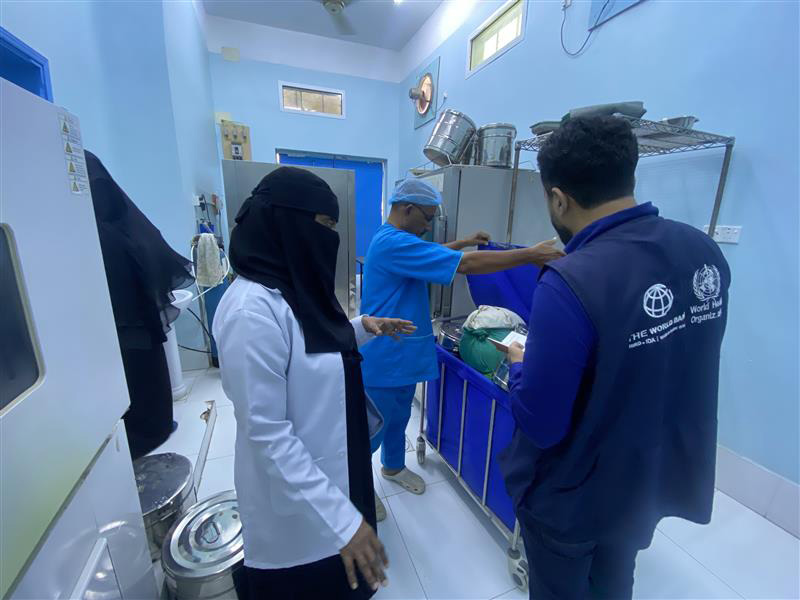 WHO support in 2024 has included the procurement of US$ 7 million of essential commodities, including insulin and other diabetic and cardiovascular medicines, intravenous fluids to treat infections, including cholera, and diagnostic laboratory kits. The Organization also distributed 66 374 cylinders of oxygen to 37 facilities and 3.7 million litres of fuel to 143 facilities. Supplies are distributed on a needs basis, determined in collaboration with health authorities and facilities.
WHO Representative to Yemen Dr Arturo Pesigan explained the impact of WHO’s partnership with the World Bank: “These essential investments not only save lives but stabilize Yemen’s entire health infrastructure amidst a prolonged crisis, ensuring essential services reach those in need. Without these resources, the system would be at risk of collapse”.
In recent years, in accordance with the humanitarian-peace-development nexus approach, WHO has complemented its provision of life-saving support with efforts to improve the quality of care in supported facilities and strategic action to guide future investments.
In collaboration with WHO and the Ministry of Public Health and Population, 7 hospitals are engaged in an initiative to strengthen their resilience to climate change. The initiative focuses on developing hospitals that are safer, greener and more capable of responding to emergencies. WHO plans to expand the pilot initiative to more hospitals, improving emergency preparedness, operational efficiency and health system resilience.
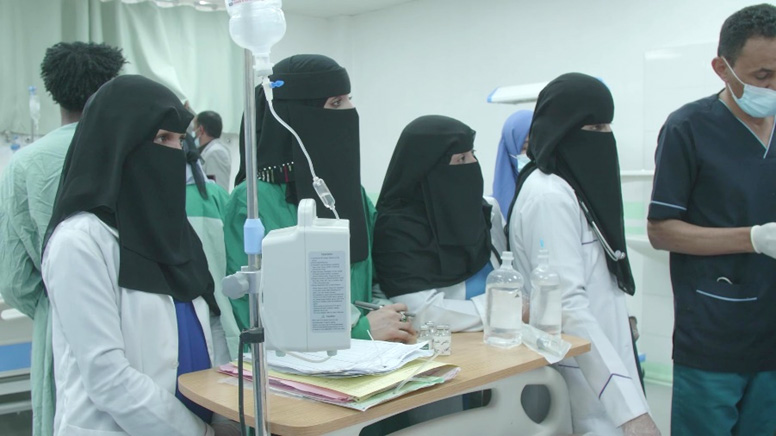 In 2022, WHO worked with the Ministry of Public Health and Population to endorse a national quality indicator tool. Collaboration was subsequently ramped-up to establish quality committees in hospitals charged with assessing facility adherence to the standards and developing and implementing improvement plans. With efforts leading to endorsing the national quality of care strategy on 22 September 2024.
WHO has played a crucial role in strengthening the skills of health workers through targeted capacity-building initiatives. In addition to clinical and technical training, WHO has focused on often overlooked areas such as human resources, finance and hospital management in order to ensure that facilities are equipped to effectively manage everyday health services and respond to emergencies.
WHO guided the development of Yemen’s first-ever hospital sector profile and in 2024 initiated work on the country’s first hospital sector strategy. This strategic approach aims to improve planning and implementation of people-centred hospitals, improve preparedness and response to emergencies and support monitoring and evaluation of hospital sector performance.
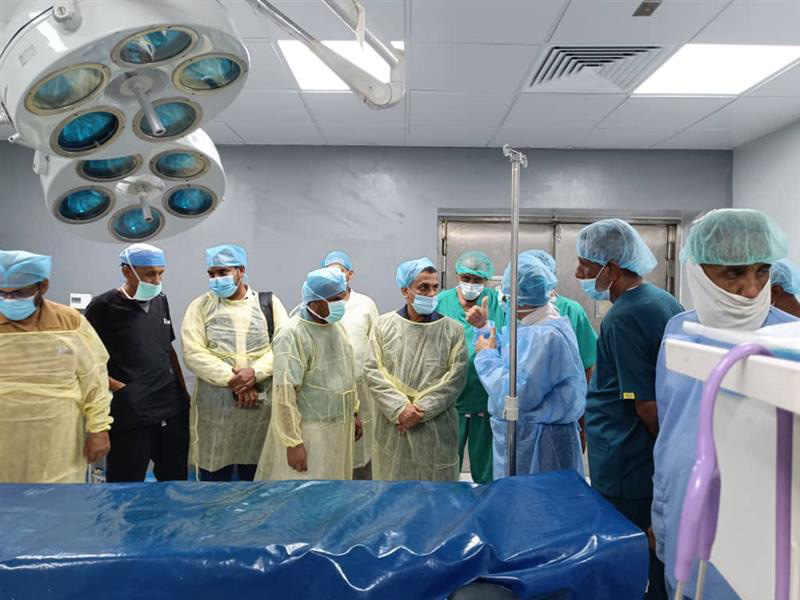 To improve the management of medical equipment provided to supported facilities, WHO is working with the Ministry of Public Health and Population to pilot an inventory management system. Already operating in 5 hospitals, the system records details such as the quantity, condition, location and maintenance status of each medical device in the facility. The project will contribute to optimizing the procurement, use and maintenance of medical equipment, improve operational efficiency and enhance patient safety.
Looking ahead, WHO support to hospitals is expected to continue with World Bank funding, and efforts are underway to mobilize additional domestic and international resources. Such investments are crucial to provide services, save lives and improve the well-being of millions of vulnerable Yemenis.
Note:
WHO and the World Bank have partnered on 4 life-saving projects in Yemen since 2017: the Emergency Health and Nutrition Project, 2017–2022; the Yemen COVID-19 Response Project, 2020–2022; the Emergency Human Capital Project, 2021–2025 and the Pandemic Preparedness and Response Project, 2023–2026 (funded from the Pandemic Fund).
A new system of possibilities: digitalizing blood bank information in Yemen
 1 December 2024 Sana’a/Aden, Yemen – A single bag of blood can mean the difference between life and death. Blood banks are indispensable, especially during humanitarian crises. In Yemen, the National Blood Transfusion and Research Centre, in collaboration with the National Central Public Health Laboratory and its governorate branches, provides essential services that save lives.
Over the past 8 years, WHO and the World Bank have partnered on projects to support 9 blood transfusion centres in Yemen with procurement and capacity-building to sustain these lifesaving services. Since 2021, this support has been provided via the Emergency Human Capital Project which delivers essential health and nutrition services in Yemen and is widely regarded as the backbone of the country’s health sector.
National blood transfusion centres ensure a steady stockpile of blood and blood products are available when and where they are needed. This involves maintaining efficient storage and supply systems for public hospitals and emergency service providers, enabling swift distribution to those in need.
 Despite the critical functions it provides, the National Blood Transfusion Centre in Sana’a struggles to manage and track blood donations, testing and distribution due to its reliance on paper-based processes. These manual records are time-consuming and susceptible to human errors which can cause significant delays in emergencies, hindering the timely provision of lifesaving blood.
To address these issues, WHO and the World Bank have supported the upgrading of the Centre’s information management system and the training of its staff for a smooth transition from manual to electronic records, connecting branches in Hajjah, Hudaydah, Ibb and Sa’ada governorates. This upgrade will streamline operations, enhance data accuracy and accessibility and, ultimately, save more lives.
 “The rollout of the new system will occur in 3 phases. The first phase integrates departments within the National Blood Transfusion and Research Centre. The second links the Centre’s branches across governorates with the central hub while the third phase connects blood banks in all public and private hospitals to a standardized system,” said the technical manager of the National Blood Transfusion and Research Centre Dr Adnan Al Hakimi.
 Blood samples are taken from individuals to determine their blood type and test for infectious diseases like hepatitis as part of a process of ensuring the blood is safe and effective.
Blood is drawn from patients by a health care professional for testing, transfusions, donations or research at a phlebotomy draw station, typically via venipuncture or a finger stick. It is collected in sterile bags, with anticoagulants to prevent clotting. The blood is then separated into red blood cells, plasma and platelets using a centrifuge. Each component is then tested again.
In the storage department, blood and plasma bags are kept in refrigerators. Red blood cells are stored for up to 42 days, plasma can be frozen for up to a year and platelets are kept at room temperature for up to 5 days. These components are then sent to hospitals and clinics, with priority given to areas facing health emergencies.
 The new system will enable efficient electronic management and tracking of the blood inventory, including donations, expiry dates and available units. It securely stores donor and patient information and provides real-time monitoring of blood supply levels, with notifications for low stock. By integrating processes into a single system, the Centre’s operations will be streamlined.
Trainees practice their skills by entering patient information into the system before donations, assessing suitability. Trainers guide them on how to input data correctly into the computer system.
“We will now have a comprehensive database of blood donors and patients which will significantly streamline our archiving and documentation processes,” said Dr Ali Aqabat, an Immunohaematology Department health care worker.
“The new system facilitates data entry, reduces errors and diminishes reliance on manual archives. This approach will enhance both the quality and speed of our performance,” added Dr Maria Al Salat, deputy head of a phlebotomy draw station.
WHO signs a €3.4 million agreement with the Government of Germany to sustain lifesaving health services in Yemen
 27 November 2024, Sana’a, Yemen – The World Health Organization (WHO) has signed a €3.4 million agreement with the Government of Germany to sustain lifesaving health and nutrition services in Yemen. The initiative comes at a critical time: Yemen is grappling with a protracted, grade 3 emergency – the highest level of WHO health emergency response.
Yemen faces multiple and parallel outbreaks of vaccine-preventable diseases, including circulating vaccine-derived poliovirus type 2 (cVDPV2), acute watery diarrhoea and cholera, measles, diphtheria, malaria and dengue fever. Between the outbreak of cholera in March 2024 and the end of September 2024, Yemen reported 204 000 suspected cases and 710 deaths. Since the beginning of the year, 33 000 suspected measles cases have been reported, with 280 associated deaths.
Food insecurity in Yemen has worsened. Nearly half of all households now struggle to access sufficient food. Recent Integrated Phase Classification (IPC) results indicate alarmingly high malnutrition levels. By the end of 2024, it is projected that over 223 000 pregnant and breastfeeding women and more than 600 000 children will be malnourished. Among these children, nearly 120 000 are expected to suffer from severe acute malnutrition (SAM), a 34% increase on the previous year.
The agreement aims to strengthen health emergency preparedness and response measures, targeting priority hazards and locations. It will strengthen surveillance and rapid response mechanisms, provide essential medicines and medical supplies and support essential lifesaving health services and the deployment of qualified and skilled personnel.
To address the pressing issue of malnutrition, the agreement aims to improve access to integrated nutrition services and ensure the functionality of 96 targeted therapeutic feeding centres (TFCs) dedicated to treating cases of SAM in children and those linked to pediatric wards. Operational support will enable the targeted TFCs to provide essential care for children suffering from SAM with medical complications.
Health cluster coordination mechanisms at the national and subnational levels will also be supported. Project implementation by partners will be facilitated, and lifesaving medicines and supplies provided as needed under Yemen’s humanitarian response plan.
Since 2017, the Government of Germany has been a crucial supporter of WHO, providing €25.4 million to address the dire humanitarian crisis in Yemen. Germany's contributions have enabled WHO to improve access to priority health services, strengthen Minimum Service Package (MSP) support to health facilities, respond rapidly to epidemics, enhance disease surveillance and preparedness and address severe acute malnutrition in children under 5.
The partnership has been vital in ensuring that millions of Yemenis, particularly vulnerable groups, receive essential health care during ongoing conflict and challenging conditions.
