


WHO urges sustained commitment to protect progress against neglected tropical diseases in Yemen
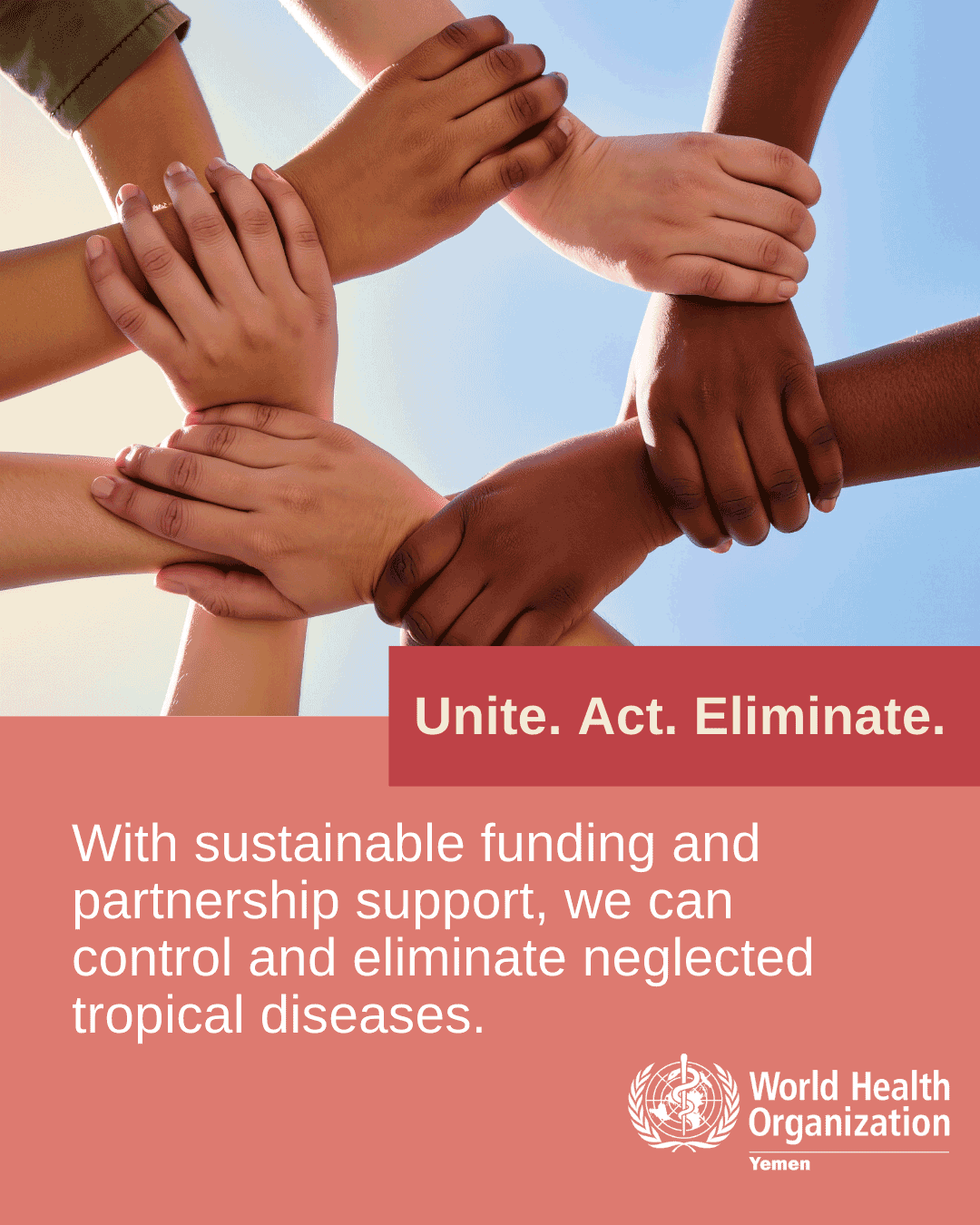 30 January 2026 – Aden, Yemen – On World Neglected Tropical Diseases (NTD) Day 2026, marked under the theme “Unite. Act. Eliminate.”, the World Health Organization (WHO) in Yemen renews its call for collective action to end NTDs as a cornerstone of health equity, resilience and sustainable development.
NTDs continue to affect more than 1 billion people globally. In Yemen, diseases such as leishmaniasis, schistosomiasis, leprosy, trachoma and dengue fever remain deeply entrenched in the most vulnerable communities. Years of protracted conflict, repeated climate shocks and a severely fragmented health system have intensified exposure to these diseases and constrained access to timely prevention, diagnosis and treatment.
Despite these challenges, global experience shows that elimination is achievable. By 2024, the number of people worldwide requiring NTD treatment declined to 1.4 billion, representing a 36% reduction since 2010. As the world enters 2026, 58 countries have eliminated at least one NTD, demonstrating tangible progress towards WHO’s 2030 target of 100 countries achieving elimination.
Yemen now stands at a critical crossroads. Sharp reductions in global health financing risk undermining more than a decade of progress against NTDs. Underfunded programmes do not merely slow momentum: they create conditions for disease resurgence, threatening lives, livelihoods, and economic stability – particularly among marginalized populations already bearing the brunt of conflict and poverty.
Dr Syed Jaffar Hussain, WHO Representative to Yemen, underscored the urgency of sustained commitment, stating: “Neglected tropical diseases thrive where health systems are weakest and communities are most vulnerable. In Yemen, progress against NTDs has shown that even in the most challenging settings, elimination is possible when commitment, funding and partnerships are sustained. Turning away now would not only reverse years of hard-won gains, but would condemn communities to entirely preventable suffering. Protecting the most vulnerable is not optional – it is our shared responsibility.”
Investing in NTD programmes remains one of the most cost-effective public health interventions. Evidence shows that preventive treatment and early care avert lifelong disability, protect children’s education, sustain adult productivity and strengthen primary health care from the ground up. In fragile and conflict-affected settings such as Yemen, these programmes also act as economic stabilizers, safeguarding human capital while reinforcing national health systems.
Climate change and ongoing conflict further compound the risk. Rising temperatures, flooding, population displacement and weakened infrastructure create ideal conditions for disease transmission. Without sustained investment, the gains achieved over the past decade could be rapidly erased.
On this World NTD Day, WHO calls on national authorities, donors and international partners to move beyond short-term emergency responses and commit to integrated, sustainable solutions. Maintaining funding for existing programmes, embedding NTD services within Yemen’s national health strategy and advancing a clear pathway toward greater domestic ownership are essential to securing progress and preventing resurgence.
By uniting behind these priorities today, Yemen can protect hard-won gains, accelerate progress toward elimination and build a healthier, more resilient future for its people.
For media inquiries, please contact:
WHO Yemen Communications
Email:
About WHO
Since 1948, the World Health Organization (WHO) has been the United Nations agency dedicated to advancing health for all, so that everyone, everywhere can attain the highest level of health. WHO leads global efforts to expand universal health coverage, direct and coordinate the world’s responses to health emergencies and connect nations, partners and people to promote health, keep the world safe and serve the vulnerable.
