


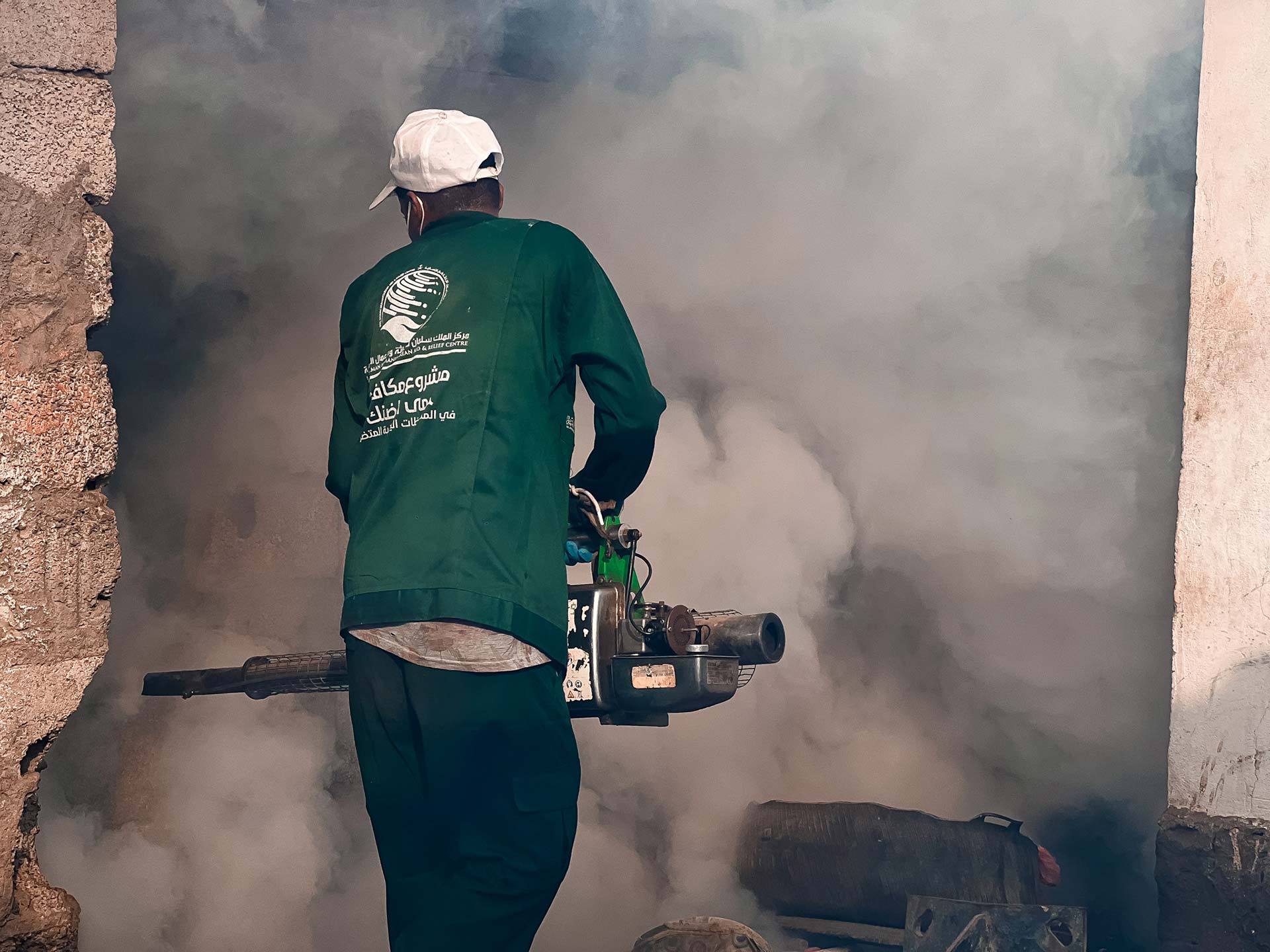
 A comprehensive emergency vector control campaign in targeted districts in Yemen. Photo credits: WHO Yemen/ Nesma Khan23 February 2026, Aden,Yemen - The World Health Organization (WHO), with the generous support of the King Salman Humanitarian Aid and Relief Centre (KSrelief), is currently implementing Phase 2 of a project to strengthen malaria control and prevention in Yemen, expanding life-saving malaria and arboviral disease interventions across 15 governorates and more than 200 districts nationwide.
Running from March 2025 to February 2028, the project’s goal is to strengthen prevention, surveillance and case management services in high-risk and epidemic-prone areas, prioritizing pregnant women, children under-5, internally displaced persons (IDPs), refugees, migrants and communities in hard-to-reach locations.
Ongoing interventions reaching millions
The project is expected to benefit 8.7 million people, through an integrated package of interventions designed to reduce malaria-related morbidity and mortality and contain outbreaks of dengue and other arboviral diseases.
Activities currently underway include:
- distribution of malaria rapid diagnostic tests and laboratory supplies to strengthen early detection and confirmation of malaria and dengue
- provision of essential antimalarial medicines, ensuring timely treatment for uncomplicated and severe malaria cases
- reactivation of quality assurance/quality control systems for malaria microscopy in targeted health facilities to improve diagnostic accuracy
- expansion of integrated community case management, including training and supervision of community health volunteers to increase access to testing and treatment in remote districts
- implementation of indoor residual spraying in prioritized high-burden and epidemic-prone areas
- establishment of continuous distribution of insecticide-treated nets through antenatal care and immunization services to protect pregnant women and infants
- strengthening of integrated entomological surveillance in 16 sentinel sites to monitor mosquito vectors and guide targeted control measures
- deployment of mobile teams to deliver surveillance and case management services in IDP sites and high-risk border areas.
Malaria and arboviral diseases remain significant public health threats in Yemen, particularly in areas affected by displacement, environmental changes and limited access to essential services. Sustained surveillance and targeted vector control remain critical to preventing outbreaks and protecting vulnerable communities.
“WHO remains committed to ensuring that the most vulnerable populations have access to timely diagnosis, effective treatment and proven prevention tools,” said Dr Syed Jaffar Hussain, WHO Representative in Yemen. “Through strengthened surveillance and community-based services, we are helping to reduce the burden of malaria and other arboviral diseases across the country.”
WHO expresses its sincere appreciation to the King Salman Humanitarian Aid and Relief Centre (KSrelief) for its continued support to malaria control and prevention efforts in Yemen, enabling the delivery of these life-saving interventions to millions of people at risk.
Media contacts
WHO Yemen Communications
Email:
About WHO
Founded in 1948, the World Health Organization (WHO) is the United Nations agency dedicated to promoting health, keeping the world safe and serving the vulnerable. WHO leads global efforts to expand universal health coverage, coordinate responses to health emergencies and advance well-being for all.
