


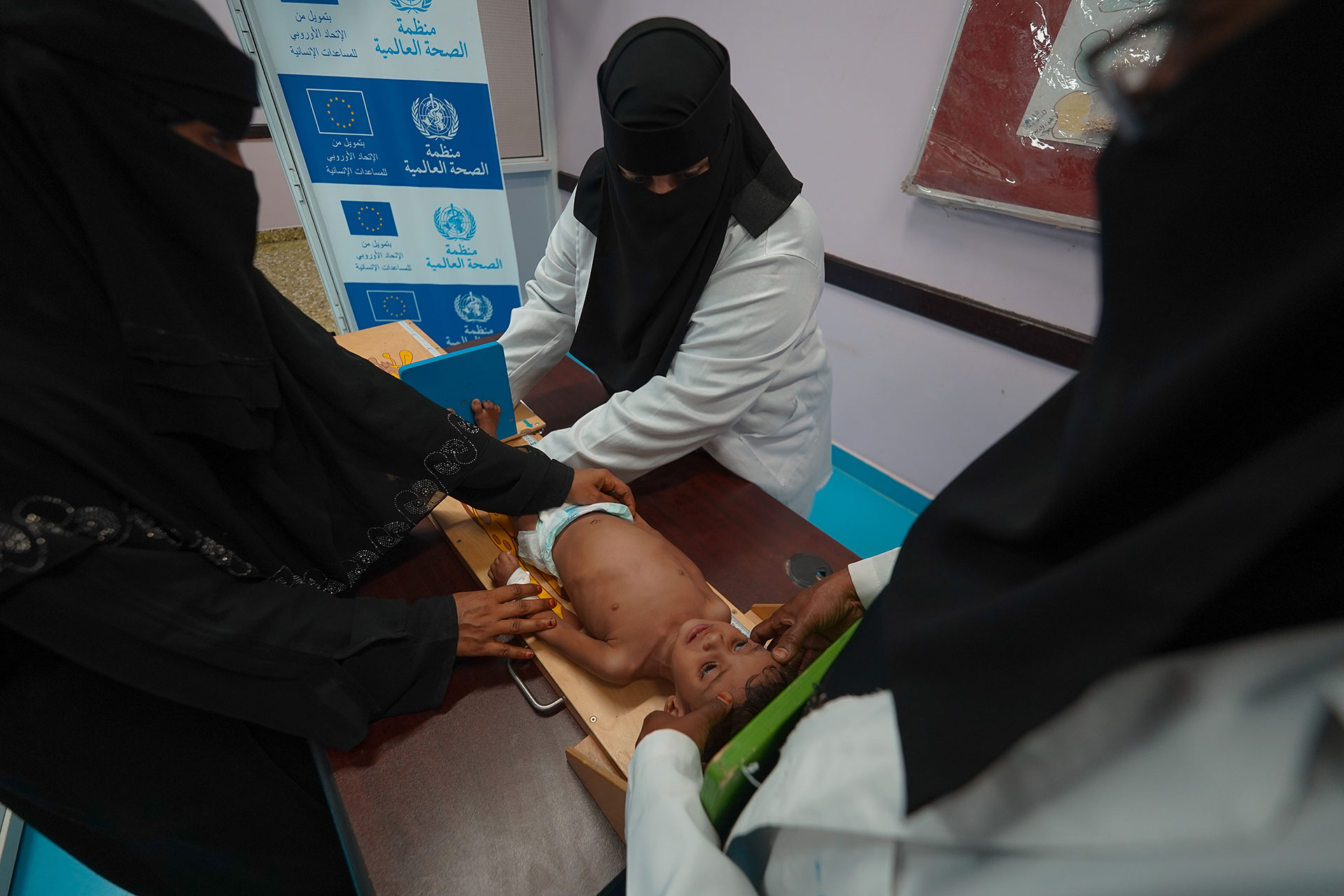
 The doctor measures Razan’s height as part of her clinical assessment, carefully recording the results to evaluate her growth and nutritional status.03 June 2026, Lahj, Yemen – What began with diarrhoea and vomiting quickly became more serious. Razan’s health rapidly deteriorated. Within days the active little girl, full of energy and curiosity, had stopped eating, drinking and even breastfeeding. As she grew weaker, her family moved from place to place, desperately seeking help.
The fear was overwhelming. Razan’s family watched as her condition worsened, knowing they could not afford to pay for the care she needed. Like many families across Yemen, they were living in profound hardship, a result of years of conflict, displacement and economic collapse. By the time Razan arrived at Ibn Khaldoon Hospital in Lahj, her family had exhausted their options.
At the hospital’s therapeutic feeding centre (TFC), Razan was immediately assessed and admitted for lifesaving treatment. Supported by the World Health Organization (WHO) and funded by the European Civil Protection and Humanitarian Aid Operations (ECHO), the centre provides free care for children suffering from severe acute malnutrition and medical complications.
For 7 days Razan received therapeutic milk, medications, nutrition support and continuous medical care – all free of charge. Slowly, she began to recover. Razan started accepting food again, gaining strength day by day.
Razan’s story is part of a larger crisis. Across Yemen, conflict, food insecurity and limited access to essential services, including TFCs, place thousands of children at high risk of severe acute malnutrition (SAM). Health facilities are under immense pressure, with increasing numbers of SAM children arriving with multiple health complications.
 The doctor gently checks Razan’s feet for any signs of swelling, as part of a full clinical examination to assess her nutritional status and overall health condition.With funding from ECHO, WHO is supporting lifesaving inpatient nutrition services across 33 TFCs in high-burden districts, helping thousands of vulnerable women and children access lifesaving treatment and critical support services. These interventions provide therapeutic feeding supplies, laboratory services, oxygen, WASH support, caregiver meals and care for children whose survival depends on timely treatment.
Behind every recovery are frontline health workers, who work around the clock in seemingly impossible conditions to save lives.
"Every child deserves the chance to survive, grow and thrive. No parent or caregiver should have to fear losing a child because they cannot access the care they need. Every child who recovers is a reminder that hope can be restored and that together we can give children a chance for a healthier future," said WHO Representative in Yemen Dr Syed Jaffar Hussain.
Today, Razan is recovering. As her strength returns, so too does hope, for Razan’s family and for the many other families in similar situations. For thousands of vulnerable children across Yemen, timely access to lifesaving nutrition services means another chance at childhood.
With funding from ECHO, in coordination with the Ministry of Public Health and Population, WHO is delivering lifesaving nutrition support across Yemen, helping children survive and giving families renewed hope for the future.
