


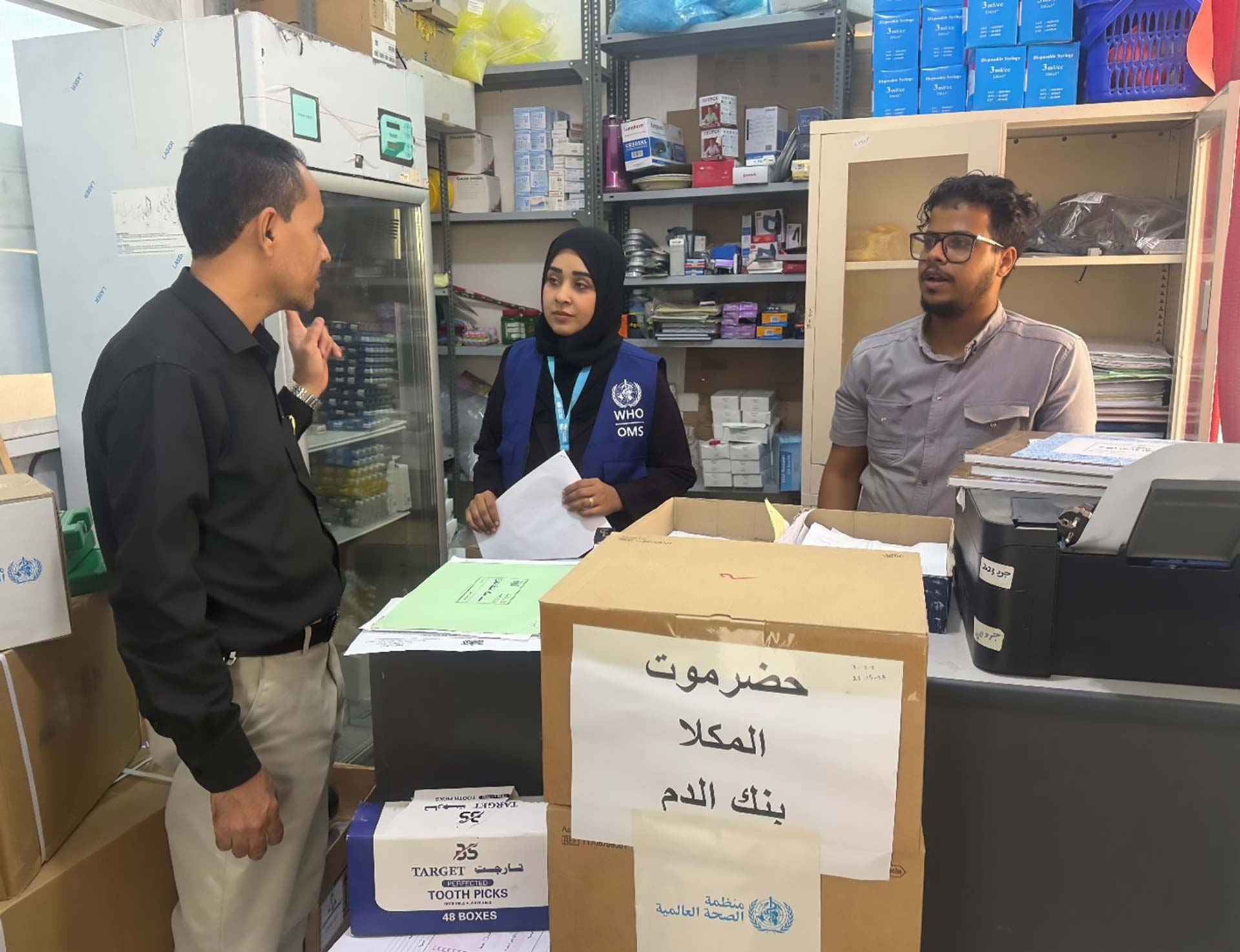
 WHO sub-national health cluster coordinator Ms. Khalil Ba-Matraf visits the National Blood Transfusion Centre in Mukalla. Photo credit: WHO Yemen05 May 2026, Mukalla, Yemen – Patients arrive daily at the National Blood Transfusion and Research Centre in Mukalla, including children with thalassemia who need regular transfusions, cancer patients undergoing treatment, and people living with chronic conditions such as kidney and heart disease. For them, and their families, the Centre represents hope, and is a vital lifeline.
With support from the World Bank through the Emergency Human Capital Project (EHCP), the World Health Organization (WHO) is helping sustain these services by providing over 90 percent of the essential supplies, reagents and materials required for blood screening. This support enables the Centre to continue delivering safe and reliable services.
Behind the scenes, health workers screen every unit of donated blood for infectious diseases, to ensure it is safe for transfusion. This process protects patients from serious health risks and reinforces confidence in the care they receive.
“For many patients, access to safe blood is a matter of life and death. Ensuring access to safe blood is a cornerstone of resilient health systems,” said WHO Representative in Yemen, Dr. Syed Jaffar Hussein. “Through our partnership with the World Bank, WHO remains committed to supporting essential health services in Yemen and safeguarding the lives of the most vulnerable populations.”
This support allows the Centre to provide transfusion services free of charge, easing the financial burden on families who already face significant hardship. For many, it makes the difference between accessing treatment and going without it.
The steady provision of supplies allows the Centre to operate without interruption, ensuring patients can access care when they need it, without fear of delays or shortages.
The National Blood Transfusion and Research Centre in Mukalla demonstrates what sustained support can achieve. Through the partnership between WHO and the World Bank, thousands of lives are being protected.
A vital health service continues to offer hope to those who depend on it every day.
