


Select your language

8th UN Global Road Safety Week
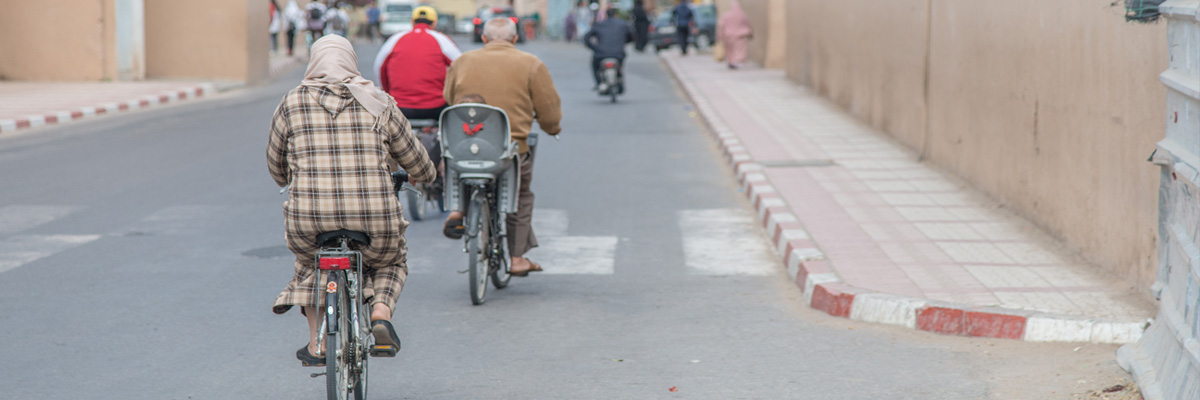
8th UN Global Road Safety Week
12-18 May 2025
Road traffic injuries are the leading cause of death and disability globally and in the Eastern Mediterranean Region (EMR). The Region has the second-highest road traffic death rate in the world with 125 781 deaths every year, more than a third of them among pedestrians and cyclists. This year, the eighth UN Global Road Safety Week is from 12-18 May 2025. The international campaign, requested by the United Nations General Assembly, is “make walking and cycling safe.”
The campaign provides an opportunity to advocate for national and local action to make walking and cycling safer through evidence-based interventions grounded in a comprehensive safe system approach. Actions to enhance safety can be implemented by a range of stakeholders, including governments, international organizations, corporations, schools, communities and civil society.
Make walking and cycling safe
 Safe walking and cycling have a direct impact on road safety, contribute to making people and societies healthier and help ensure that cities are equitable and sustainable. Additionally, walking and cycling contribute to the prevention and management of noncommunicable diseases, cancer and diabetes and help to enhance mental and brain health.
By enhancing mental and brain health and reducing symptoms of depression and anxiety, walking and cycling have positive implications for overall health and well-being. They can also help prevent and manage substance use and limit relapse.
Among children and adolescents, these activities encourage healthy growth and muscle development and improve motor and cognitive development. Safe walking and cycling also enhance urban transport systems, helping to prevent road traffic injuries and reduce air and noise pollution.

11%
The WHO Eastern Mediterranean Region accounts for 11% of road traffic fatalities worldwide.
2nd
The EMR has the second highest road traffic death rate of all WHO regions.
30%
Pedestrians and cyclists make up more than 30% of road traffic deaths in the Region, the second highest proportion of pedestrian deaths among traffic fatalities globally.
Country interventions to improve pedestrian and cyclists' safety in the Region

Eleven countries have safe crossings for pedestrian and cyclists
Seven countries separatee pedestrians and cyclists from vehicular traffic
Three countries of the 13 countries that have a national road safety strategy have targets for promoting walking as an alternative to car travel
Two countries apply insurance on bicycles
Five countries have dedicated cycle lanes that form 7% of their total paved kilometers (km)
Related links
8th UN Global Road Safety Week global campaign site
8th UN Global Road Safety Week: #MakeWalkingSafe #MakeCyclingSafe
8th UN Global Road Safety Week fact sheet
Promoting walking and cycling: a toolkit of policy options
Global Plan for the Decade of Action for Road Safety 2021–2030
Strategic action framework to strengthen road safety systems in the Eastern Mediterranean Region
Global status report on road safety 2023
Pedestrian safety: a road safety manual for decision-makers and practitioners, 2nd edition
Cyclist safety: an information resource for decision-makers and practitioners
Health Economic Assessment Tool (HEAT) for walking and cycling
Global Outlook on Walking and Cycling Report Update
Designing for safety, accessibility, and comfort in African cities
