WHO EMRO
  • Regions
WHO EMRO
WHO Regional websites
Africa Africa
Americas Americas
Asie du Sud-Est Asie du Sud-Est
Europe Europe
Méditerranée orientale Méditerranée orientale
Pacifique occidental Pacifique occidental
  • Home
  • Health topics
  • Health topics
  • Data and statistics
  • Media centre
  • Information resources
  • Countries
  • Programmes
  • About Us
Search Search

Search

- All words: Returns only documents that match all words.
- Any word: Returns documents that match any word.
- Exact Phrase: Returns only documents that match the exact phrase entered.
- Phrase Prefix: Works like the Exact Phrase mode, except that it allows for prefix matches on the last term in the text.
- Wildcard: Returns documents that match a wildcard expression.
- Fuzzy query: Returns documents that contain terms similar to the search term. For example: If you search for Kolumbia. It will return search results that contain Columbia or Colombia.
  • Global
  • Regions
    WHO Regional websites
    Africa Africa
    Americas Americas
    Asie du Sud-Est Asie du Sud-Est
    Europe Europe
    Méditerranée orientale Méditerranée orientale
    Pacifique occidental Pacifique occidental

Search Search

Search

- All words: Returns only documents that match all words.
- Any word: Returns documents that match any word.
- Exact Phrase: Returns only documents that match the exact phrase entered.
- Phrase Prefix: Works like the Exact Phrase mode, except that it allows for prefix matches on the last term in the text.
- Wildcard: Returns documents that match a wildcard expression.
- Fuzzy query: Returns documents that contain terms similar to the search term. For example: If you search for Kolumbia. It will return search results that contain Columbia or Colombia.

Select your language

  • اللغة العربية
  • Français
WHO EMRO WHO EMRO
  • Home
  • Health topics
    • All Topics »
    • A
    • B
    • C
    • D
    • E
    • F
    • G
    • H
    • I
    • J
    • K
    • L
    • M
    • N
    • O
    • P
    • Q
    • R
    • S
    • T
    • U
    • V
    • W
    • X
    • Y
    • Z
  • Health topics
  • Data and statistics
  • Media centre
  • Information resources
  • Countries
  • Programmes
  • About Us
  1. UHC-PBP
  2. About

About the UHC priority benefits package (PBP)
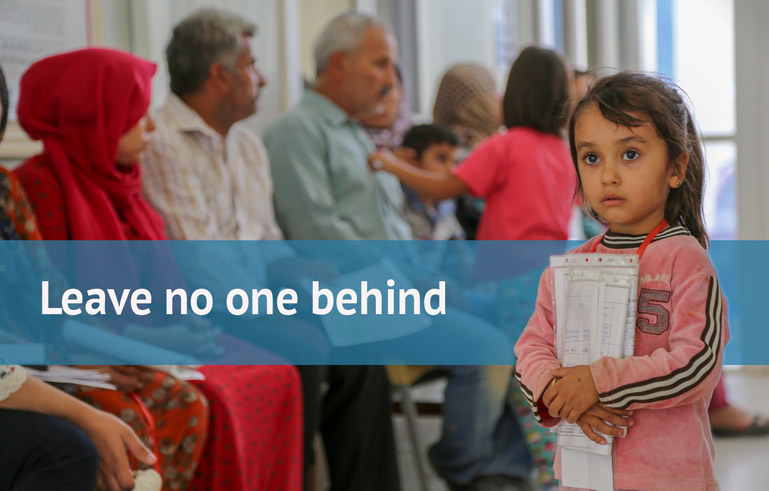
 A UHC priority benefits package (UHC-PBP) is a list of health services, interventions, multi-sectoral actions and fiscal policies that respond to and address the main health needs of communities and individuals, including the most vulnerable members of those communities.

A universal health coverage-priority benefits package (UHC-PBP) is a set of evidence-informed prioritized health interventions, services and programmes, including intersectoral actions and fiscal policies, defined through a deliberative process that accounts for economic realities and social preferences. A UHC-PBP should be available for all, in good quality, at the appropriate service delivery platform(s) using an integrated people-centred approach and covered by relevant financial protection arrangement(s).

A priority benefits package should offer services of optimized quality. Services should be effective, efficient, accessible, patient-centred, equitable and safe, supported by fair and sustainable financing arrangements. Interventions must be delivered by qualified providers who are able to provide standard services in a timely manner at the appropriate level of a regulated health system and target specified groups.

Why countries need it?

Health care expenditure is increasing as a result of new technologies, population ageing and patients’ increasing expectations of health care. Rising health care costs represent a significant challenge to all countries who need to identify innovative ways of health care financing to reach national and global development goals.

For countries to make progress towards UHC (SDG target 3.8), they need to identify cost-effective and practical interventions and strengthen health systems to ensure equity, resilience and sustainability. Health care financing is one of the core components of any health system and mobilizing sufficient resources is an important step of the process.

One of the key principles of the 2030 Agenda for Sustainable Development is to “leave no one behind”, this involves ensuring that people know which services are available to them to achieve maximum attainable population health outcomes as an ultimate goal.

Karin Stenberg, WHO Technical Officer, Economic Analysis and Evaluation, Health Systems Governance and Financing

Related links

Developing a universal health coverage priority benefit package for Member States of the Eastern Mediterranean Region

Health financing: benefit design

Sustainable Development Goals

  • Site map
    • Home
    • Data and statistics
    • Health Topics
    • Media centre
    • Information Resources
    • Countries
    • Programmes
    • About Us
  • Help and services
    • Careers
    • Copyright
    • Privacy
    • Contact us
  • WHO Offices
    • WHO Headquarters
    • WHO African Region
    • WHO Region of the Americas
    • WHO European Region
    • WHO South-East Asia Region
    • WHO Western Pacific Region
WHO EMRO

Privacy policy

© WHO 2026