


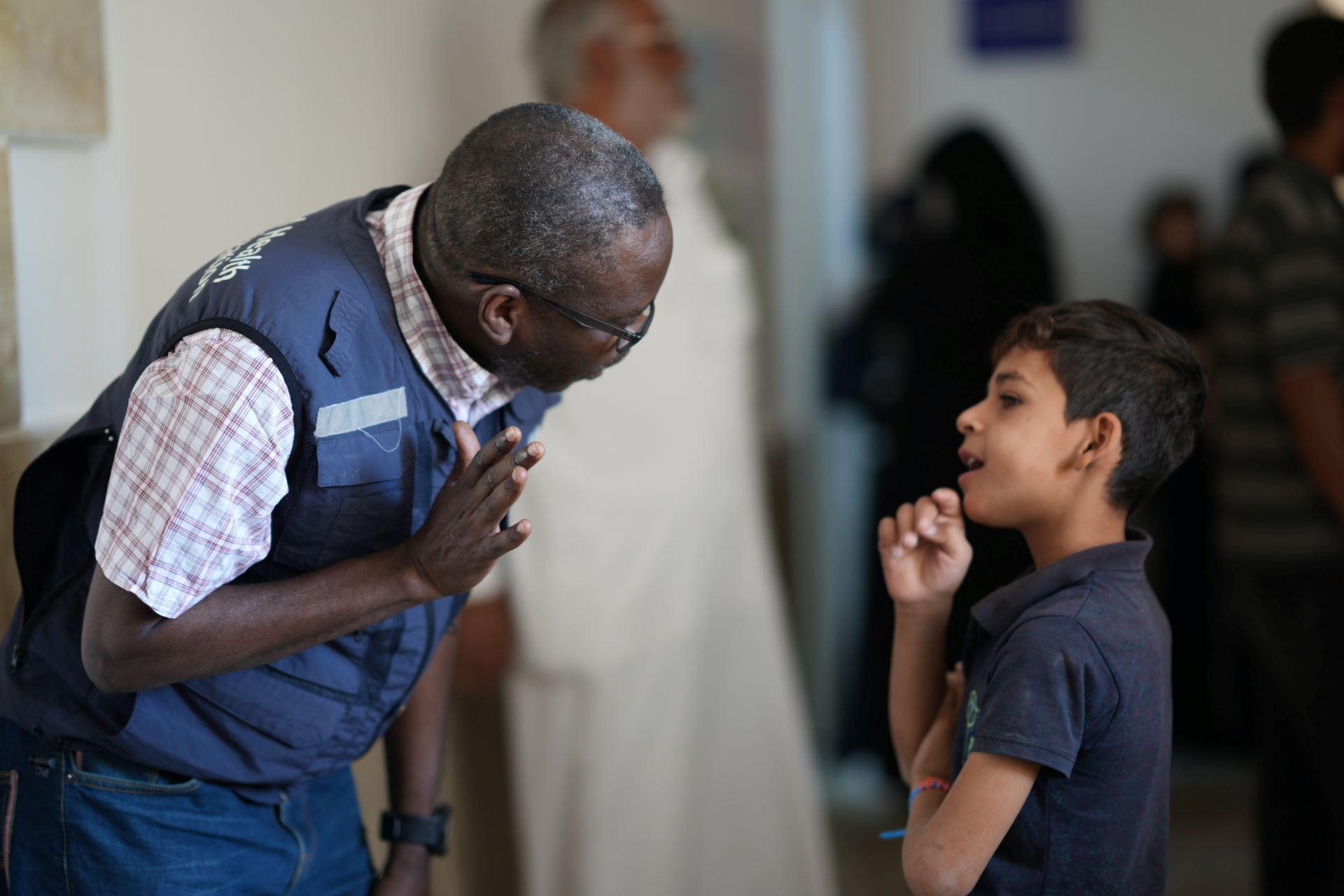
 WHO staff during a visit to Ma’arrat An Nu’man Primary Health Centre, where children and families are accessing services following the restoration of the facility. Photo credit: WHO
24 December 2025, Damascus, Syrian Arab Republic – The World Health Organization (WHO) welcomes a NOK 10.2 million contribution from the Government of Norway to strengthen Syria’s national health information system and support the country’s transition toward a more integrated, reliable, and secure digital health platform.
The funding will enable WHO to work with the Ministry of Health to upgrade essential digital infrastructure, expand secure data storage, and improve connectivity for health teams. It will also support the development of a national framework to guide Syria’s shift toward a unified digital reporting system used across health programmes and levels of care. These investments will help improve the quality, timeliness, and use of health data across the country.
“The ability to collect and analyse accurate data is essential for planning services, responding to outbreaks, and ensuring people receive the care they need,” said Acting WHO Representative in Syria Christina Bethke. “Norway’s support comes at a critical moment, as Syria works to upgrade its health information architecture and build stronger, more resilient national systems.”
“This contribution also supports the Ministry of Health’s efforts to strengthen digital systems and improve how health information is used,” Christina added. “By helping Syria move towards a modernized, streamlined reporting platform, it will make it easier for health workers to monitor quality, respond to emergencies and ensure no one is left behind. It is a major step toward stronger surveillance and more efficient use of resources across the health system.”
“Norway is committed to supporting Syria and its people on their path toward reconstruction, reconciliation, inclusion, and peace. Our support to the Syrian Ministry of Health and WHO Syria reflects this commitment, with a shared vision of strengthening the health system. Norway is also proud of the DHIS2 framework – developed by the University of Oslo – as a model for health information management. As we mark one year of a new chapter for Syria, we take pride in our collaboration with the Ministry of Health of Syria and the transitional government as they undertake this vital work during a time of hope and renewal,” said Hilde Haraldstad, Ambassador, Embassy of Norway to Lebanon and Syria.
Under the agreement, WHO will procure and install key digital equipment for the Ministry of Health, including high-capacity servers, secure data-storage systems, and tools that improve internet connectivity. WHO will also establish a dedicated IT hub to support health programme teams with reliable workstations and uninterrupted internet for routine reporting.
The project will further strengthen national expertise. More than 100 Ministry of Health staff will receive training on digital infrastructure management, data security, and the unified reporting system that Syria aims to adopt. A national core team will also be formed to guide the future roll-out of this system and ensure long-term sustainability and future growth.
For media inquiries, please contact:
Mrinalini Santhanam
Halah Kabash,
