


09 March, Damascus, Syrian Arab Republic – Severe acute malnutrition remains a critical public health challenge in Syria, particularly among children under five. Timely identification and proper treatment are essential to reduce mortality and prevent long-term complications.
 A trainer delivers a session during the TOT on WHO's new guidelines on managing severe acute malnutrition with complications. Photo credit: WHO
More than 50 health workers from across Syria recently participated in a training-of-trainers workshop on managing severe acute malnutrition with complications. The workshop, supported by the World Health Organization (WHO) and funded by the European Union (EU) through its Civil Protection and Humanitarian Aid Operations (ECHO), aims to prepare national trainers who can cascade life-saving knowledge and skills to hospital staff nationwide.
 د. هالة داود، مديرة برنامج التّغذية في وزارة الصّحّة، خلال إحدى الجلسات.
Dr. Hala Dawoud, Director of the Nutrition Program at the Ministry of Health, emphasized that strengthening hospital capacity directly benefits children’s health: “Updating and reinforcing the national guidelines improves the care children receive and enhances the national nutrition program, particularly for those with severe acute malnutrition and complications.”
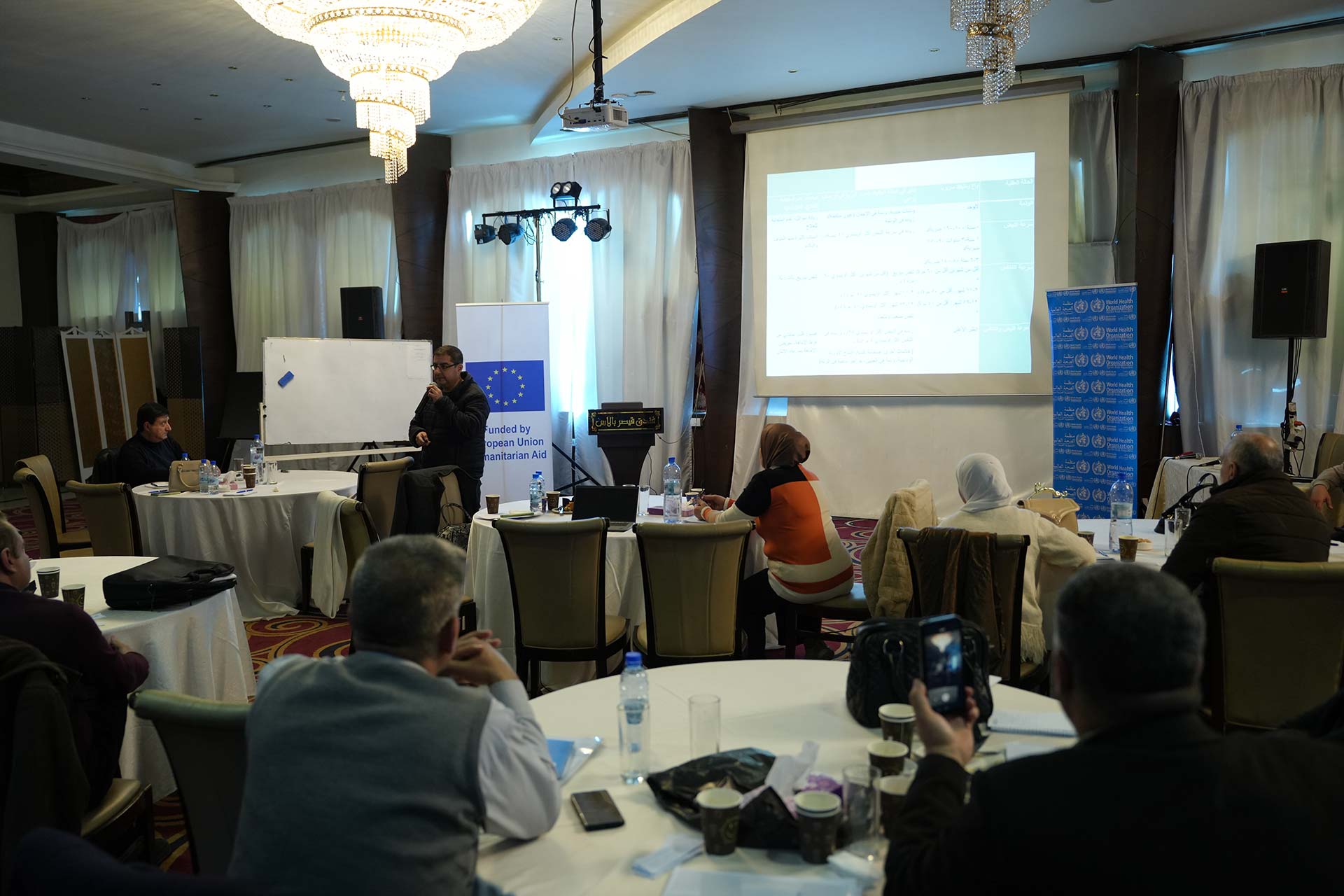 Participants engage with the trainer at one of the sessions. Photo credit: WHO
The training focuses on unifying treatment practices across governorates to ensure all hospitals follow standardized protocols. “By establishing a unified protocol, medical staff across Syria can provide consistent, high-quality care to children with acute malnutrition,” said Bassam Shahadeh, Nutrition Program Coordinator in Quneitra Governorate.
 Dr Mahmoud Bouz, Nutrition and Child Health Program Officer at WHO Syria, during one of the sessions.
Dr. Mahmoud Bouzo, Nutrition and Child Health Program Officer at WHO Syria, described the training as a critical step forward. “This training provides life-saving care for children at high risk who suffer from severe acute malnutrition with complications such as diarrhea, dehydration, pneumonia, or meningitis,” he said. “It ensures that medical staff are equipped to manage these cases effectively, following updated WHO protocols.”
As trained health professionals return to their hospitals and communities, they apply strengthened technical knowledge and practical skills to improve the quality of care provided to vulnerable children.
WHO, in coordination with the Ministry of Health and with continued support from the European Union, remains committed to strengthening Syria’s health system and supporting national efforts to address malnutrition. Through investments in capacity-building and essential health services, this support contributes to improving health outcomes and enhancing resilience for communities across the country.
