


15 February 2026, Idlib, Syrian Arab Republic: As Syria advances in its recovery, restoring essential health services remains central to rebuilding a resilient health system. At a surgical hospital in Idlib, surgeons are once again performing minimally invasive procedures with confidence.
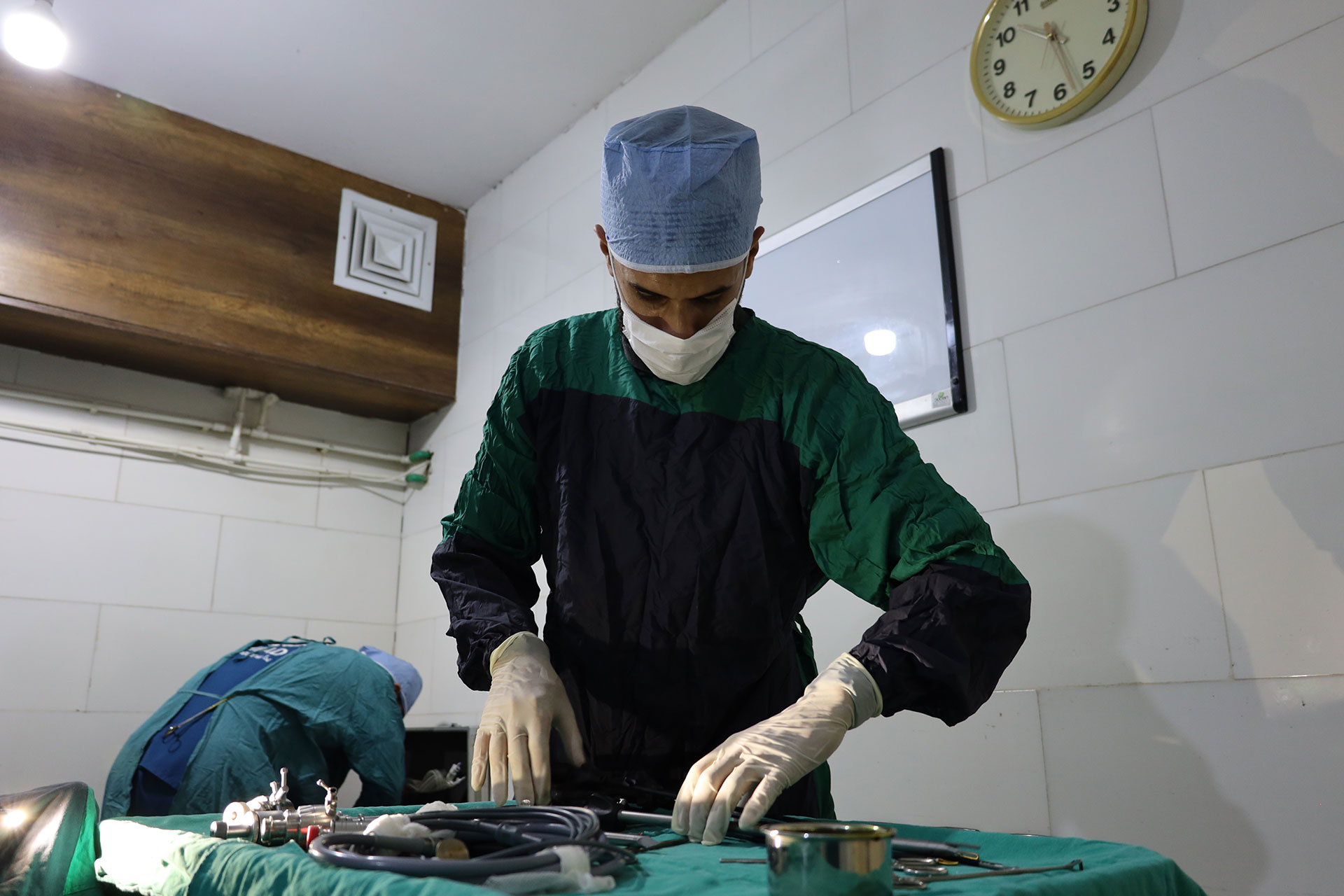 Dr. Suleiman Abdulhamid Al-Jassim, a fifth-year surgical resident in Idlib, prepares endoscopy instruments inside the operating theatre. Photo credit: WHO
For Dr. Suleiman Abdulhamid Al-Jassim, a fifth-year surgical resident working in Idlib, the arrival of a new endoscopy device has changed daily practice in tangible ways.
“For many years, we relied on an old endoscopy unit that had constant technical problems,” he says. “The instruments were worn out. The camera failed frequently. Because of these issues, there were times when we had to abandon laparoscopic surgery and proceed with open abdominal surgery instead.”
This was especially true for procedures such as gallbladder removal — operations that are typically performed laparoscopically. “When the device failed, we had no choice,” he explains. “We would convert to open surgery.”
Each month, the hospital performs between 15 and 20 laparoscopic procedures, including gallbladder removal, gynecological surgeries involving the ovary or uterus, and diagnostic laparoscopy. “With the new device, we can now perform these operations properly,” Dr. Al-Jassim says. “It represents a real qualitative shift for the hospital and in how we serve our patients.”
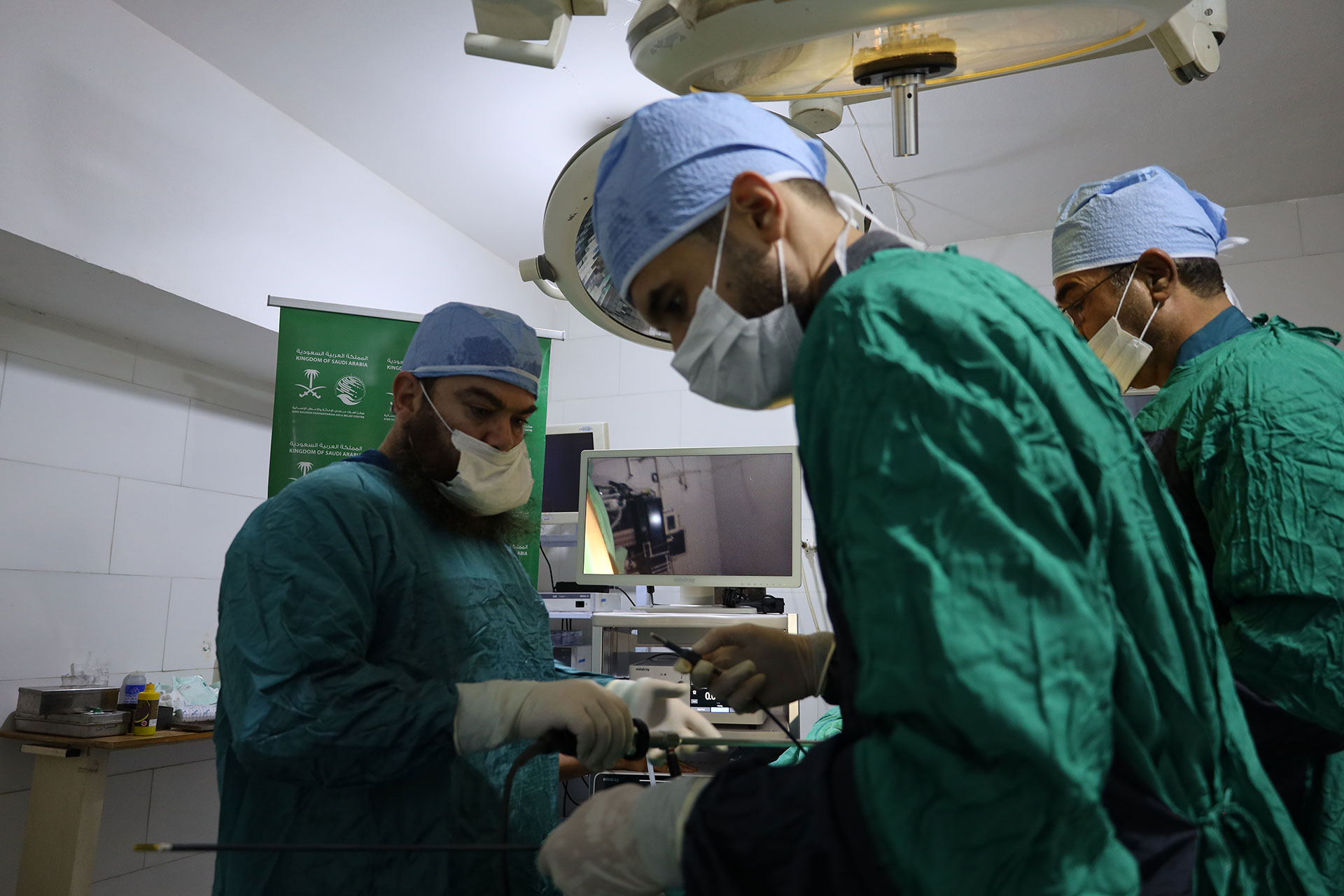 Surgeons in Idlib perform a laparoscopic procedure using newly installed endoscopy equipment, helping restore minimally invasive surgical care. Photo credit: WHO
Strengthening surgical capacity across Idlib
As part of broader efforts to support health system recovery, WHO, with support from KSrelief, has delivered new endoscopy equipment to three hospitals in Idlib governorate — Idlib Surgical Hospital, Al Hidaya Hospital and Harim General Hospital — helping reinforce essential surgical services as facilities rebuild and modernize.
After years of strain on health infrastructure, much of the surgical equipment in operating theatres across Idlib remains outdated or worn. “The new endoscopy unit has made a significant difference,” Dr. Al-Jassim says. “But some instruments are still missing. We hope the supporting organizations can help provide the remaining tools.”
He also points to broader needs inside operating rooms. “There is other old and worn-out equipment that affects our work,” he explains. “These limitations sometimes impact procedures and, in some cases, force us to make clinical decisions we would not otherwise choose.”
The impact is not only technical. “When patients see modern, functioning equipment, it changes how they feel before surgery,” he says. “Instead of preparing them for the possibility of open surgery because of equipment problems, they see effective tools. This improves their psychological state significantly.”
As recovery progresses, restoring surgical precision is about more than replacing devices. It is about strengthening safe surgical practice, rebuilding confidence in health services, and ensuring that people in Idlib can access quality care with dignity.
