


16 February 2026, Idlib, Syrian Arab Republic – As Syria advances in its recovery, improving the safety and reliability of hospital services is helping facilities operate with greater confidence. In the Jisr-Ash-Shugur district of Idlib governorate, that recovery is taking shape inside operating theatres, where precision equipment is helping reduce preventable surgical risk.
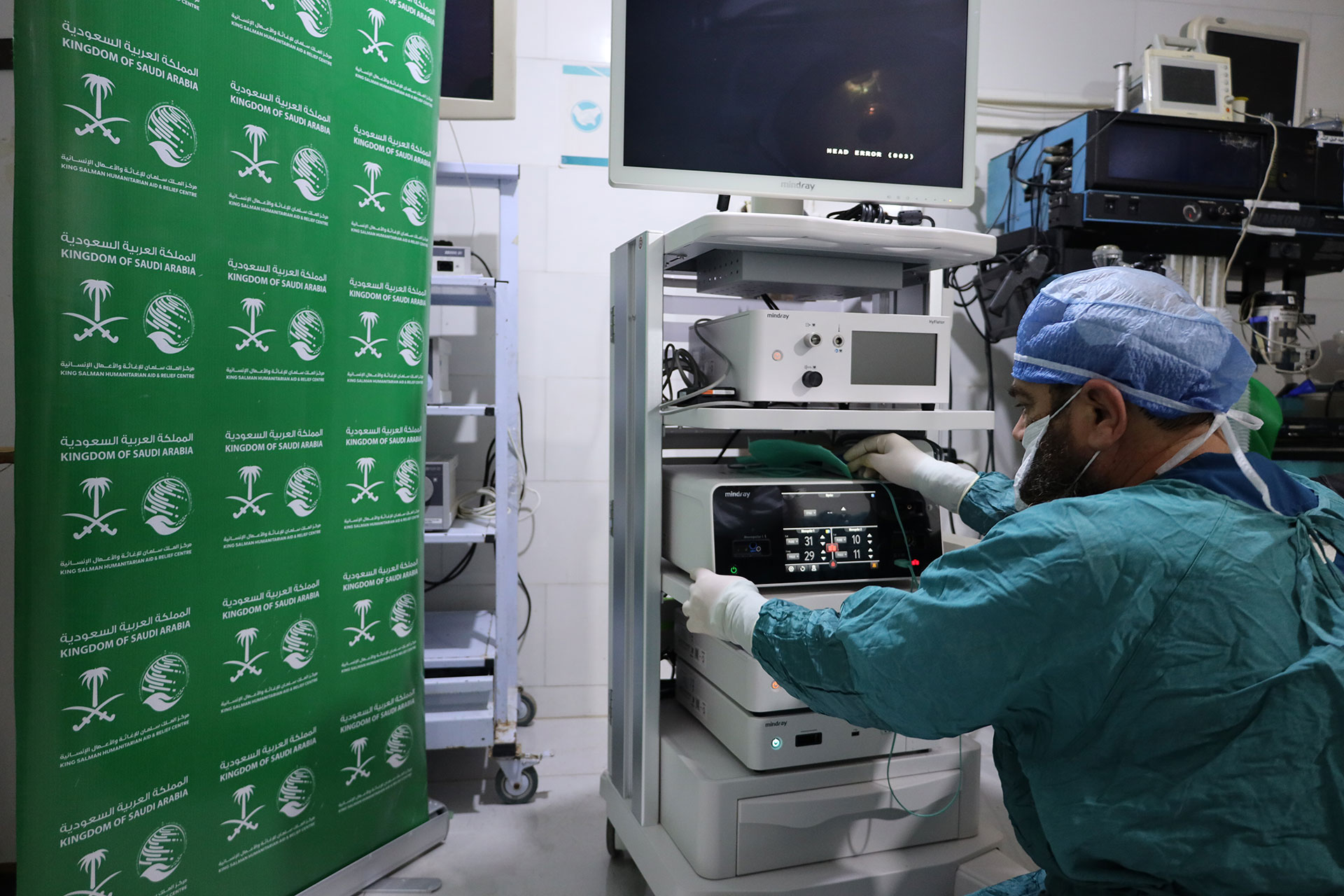 Mohammed Al-Hallaq, operating room technician at Arrahma Hospital in Jisr-Ash-Shugur district, Idlib, prepares laparoscopic equipment before surgery. Photo credit: WHO
At Arrahma Hospital, laparoscopic procedures such as gallbladder removal, ovarian cyst surgery and other abdominal interventions are performed regularly. For years, however, the hospital relied on an ageing endoscopy device that had reached the end of its lifespan.
“It would disconnect during operations,” explains Mohammed Al-Hallaq, an operating room technician at the hospital. “Sometimes we would lose up to 30 minutes trying to restart it. The surgeon, the anaesthetist, the assistants – everyone would become unsettled.”
Those interruptions had direct consequences for patient safety. “Every minute under anaesthesia matters,” he says. “The longer the anaesthesia, the greater the potential risk to the patient. When the device stopped working, the operation time increased, and that increased risk.”
During critical moments of surgery, the equipment could fail unexpectedly. “Sometimes the camera would disconnect. Sometimes the gas supply would stop. The bipolar cautery would malfunction,” Mohammed recalls. “It was not one issue – there were many.”
There were occasions when the team came close to stopping procedures entirely. “We reached points where we were about to suspend the operation,” he says. “Then at the last moment the device would restart, and we would continue. But that waiting period created tension for everyone in the room.”
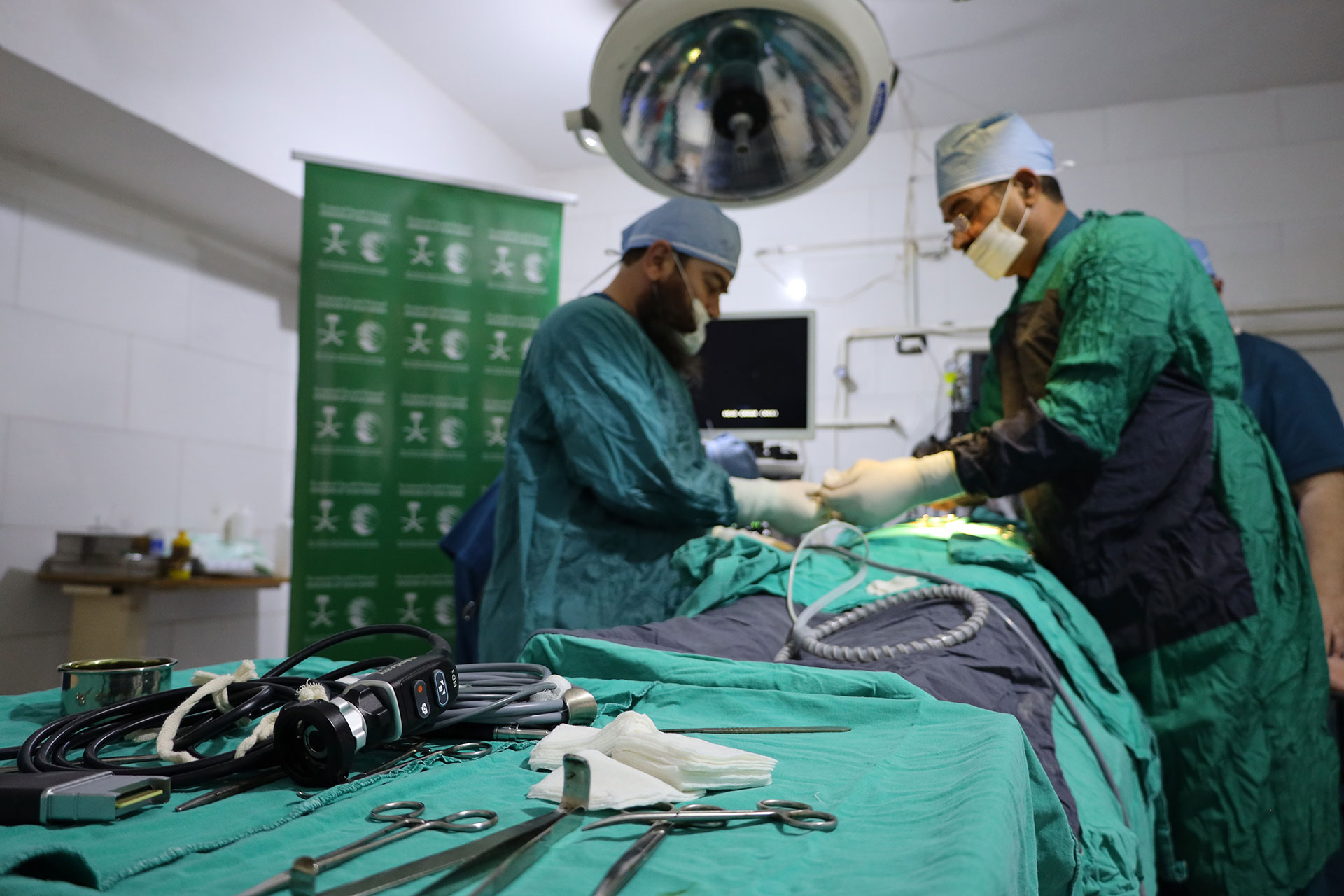 Surgeons at Arrahma Hospital in Jisr-Ash-Shugur district, Idlib, perform a laparoscopic procedure using newly installed endoscopy equipment supported by KSrelief. Photo credit: WHO
Supporting surgical recovery across Idlib
With support from KSrelief, WHO has delivered four standard laparoscopic surgery towers – complete with basic laparoscopic instruments and semi-rigid ureteroscopes – to hospitals in Idlib governorate. The equipment was distributed to Idlib Surgical Hospital, Sham Surgical Hospital, Harim General Hospital and Arrahma Hospital, strengthening surgical capacity across multiple districts.
At Arrahma Hospital, the impact has been immediate. “The new device is digital and much more precise,” Mohammed explains. “Its settings are more accurate, the technique is smoother and the operation time is shorter.”
Shorter procedures mean reduced anaesthesia exposure, fewer potential complications and improved recovery for patients. Reliable equipment also allows surgical teams to focus fully on the procedure rather than managing technical breakdowns.
“Now we are not worried that the camera will switch off or that the gas will stop during surgery,” he says. “For the patient, this means safer surgery. For the team, it means greater confidence.”
As recovery continues across Syria, strengthening operating rooms with modern equipment is not simply a technical upgrade. It is an investment in patient safety, surgical precision and the long-term resilience of the health system in Idlib.
