


27 April 2026, Ar-Raqqa, Al-Hasakah, Deir ez-Zor and Aleppo, Syrian Arab Republic – Before sunrise, vaccination teams begin their day, setting out across villages, towns and displacement sites to reach children who may have missed routine immunization. Some travel long distances to remote communities, while others prepare health centres to receive families arriving throughout the day.
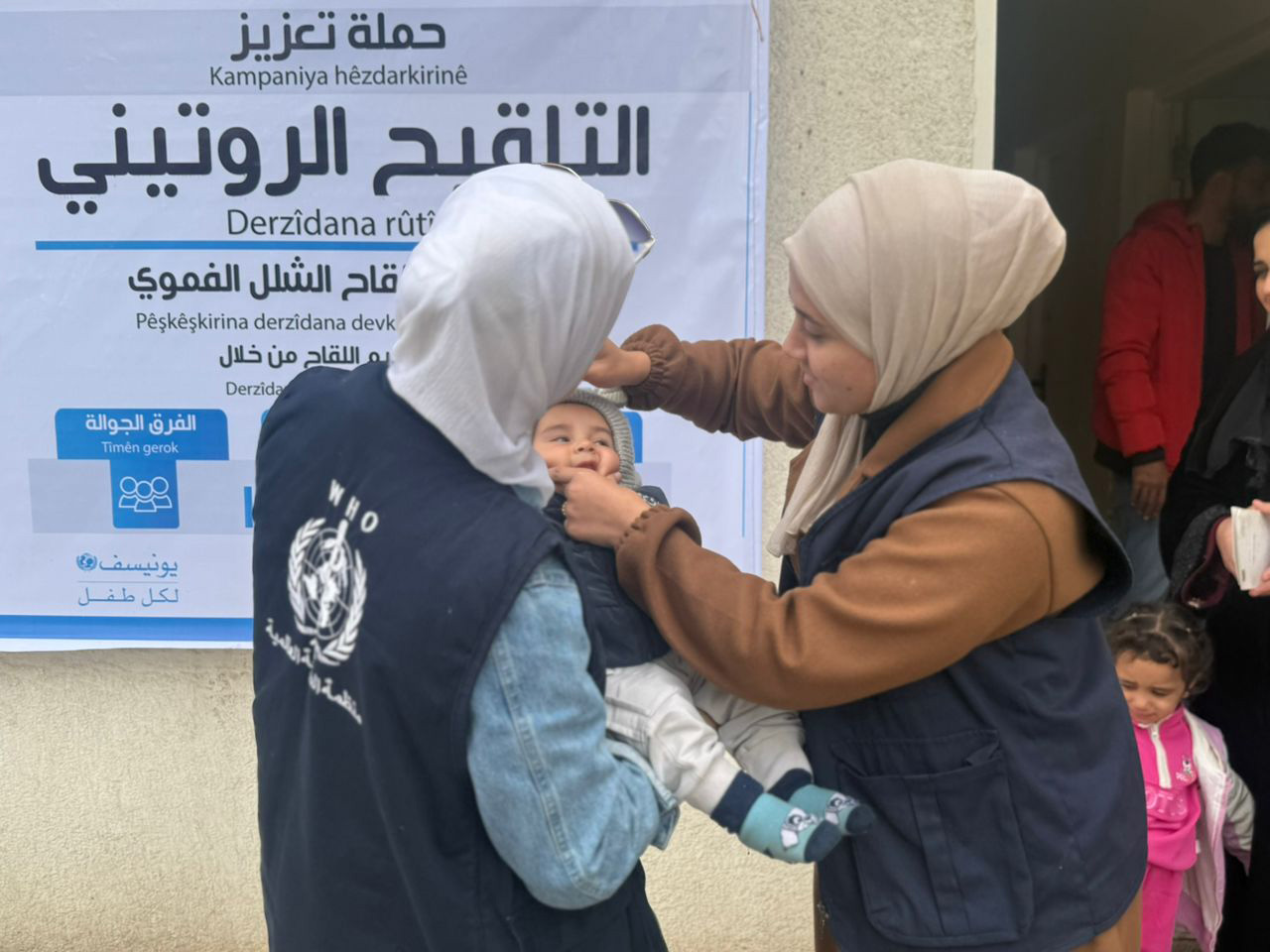 Rania, a vaccinator in Al-Hasakah, administers a routine vaccine to a child during the Big Catch-Up campaign, while speaking with the caregiver to address questions and build trust. Photo credit: WHO
 Basil Al Atel, Vaccination Officer in Al-Hasakah, carries Mona after she received her vaccine at the health centre — a moment that reflects care, protection, and the importance of immunization for every child. Photo credit: WHOFrom 31 March to 26 April, the Ministry of Health, with support from WHO, UNICEF and vaccines funded by Gavi, the Vaccine Alliance, implemented a nationwide Big-Catch Up campaign to trace zero-dose and under-immunized children and close critical immunity gaps. Nearly 900,000 children were targeted across 19 districts in four governorates, including all districts in Deir ez-Zor, Al-Hasakah and Ar-Raqqa, in addition to Manbij, Ain Alarab and Deir Hafeer in Aleppo. Children reached during the campaign also received oral polio vaccine, regardless of their previous vaccination status.
“Our work is not only giving vaccines,” she said. “It is also listening to parents and helping them feel comfortable. People want to protect their children. Sometimes they only need someone they trust to explain.” She explained that some families are initially hesitant, often influenced by rumours or lack of information. But many change their minds after speaking directly with health workers.
Among the children reached was Mona, whose family learned about the campaign when vaccination teams moved through the village with loudspeakers. For families unable to travel to urban health facilities, the arrival of mobile teams has made access to services easier.
Mona’s mother said her family had previously missed a dose due to limited awareness. “Now I understand how important it is,” she said. “When the team came to our area, it made it easier for us to vaccinate our children.”
In Ar-Raqqa, vaccinators described the detailed planning behind the campaign. Communities were mapped in advance, target numbers reviewed, and mobile teams assigned to reach hard-to-access areas.
“We prepare area by area, so no child is missed,” one vaccinator said. “When families see us arrive, most welcome us because they know the teams and trust the vaccines.”
In Deir ez-Zor, Ghufran Walid Al-Khazan, a vaccination supervisor at Al-Qusour Health Centre, said the impact of the campaign is most visible when children who previously missed are reached. “When a child who missed earlier doses receives the vaccine, it means they are now protected,” she said.
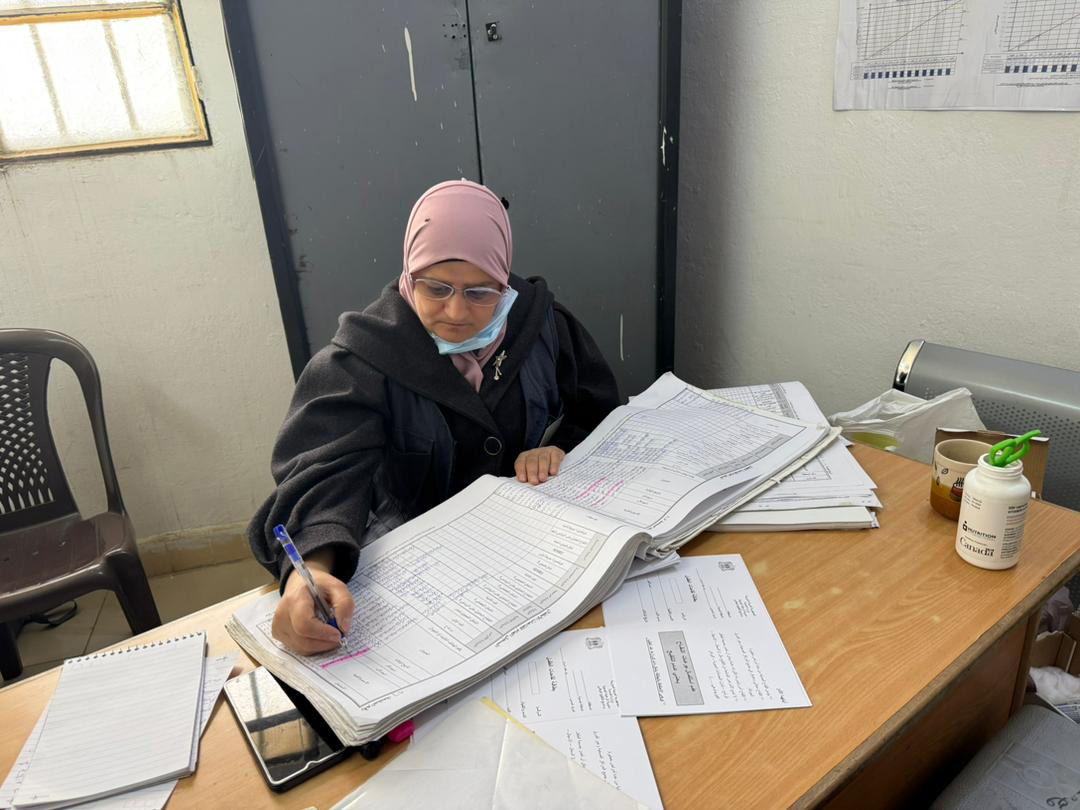 Ghufran Walid Al-Khazan, the vaccination officer at Al-Qusour Health Center in Deir ez-Zor, recording the data of children who have been vaccinated. Photo credit: WHO
At the same health centre, Aseel arrived with her family after hearing about the campaign through social media and community outreach. “Sometimes we miss information,” her mother said. “But when we understand, we make sure our children receive every vaccine.”
She added that having services available closer to home reduces the burden on families and encourages more people to come forward.
 At Al-Qusour Medical Center in Deir ez-Zor, Aseel’s mother making sure her daughter receives all of her vaccinations. Photo credit: WHO
To date, approximately 776,000 children (~87%) were screened, with 179,000 receiving routine vaccinations. Among those reached, only 2% of children were identified as zero-dose, underscoring not only the reach vaccination services have had to date, but also the importance of targeted efforts to find and vaccinate children who had not previously received any routine immunization. Thanks to previous efforts and coordinated partnership among health authorities, WHO and UNICEF, most children were either fully vaccinated or on track with their routine schedules. The campaign was also integrated with polio vaccination, with around 771,500 children receiving the oral polio vaccine (bOPV) across targeted districts. These figures remain subject to change and are expected to evolve as final reports are received from all campaign areas.
As Syria marks World Immunization Week, the Big Catch-Up campaign is a reminder that the promise of vaccines depends on reaching every child, including those missed by routine services. As efforts continue to strengthen routine immunization, campaigns like this play a critical role in preventing outbreaks of vaccine-preventable diseases and ensuring children are not left behind. By reaching missed children, strengthening community engagement, and expanding access through mobile and fixed teams, the campaign is helping rebuild confidence in essential health services and setting a course for a healthier future for Syria.
