


28 January 2026, Latakia, Syrian Arab Republic - Each morning in the eastern countryside of Latakia, Al-Haffeh Hospital comes alive as patients from nearby villages queue outside for care they can afford nowhere else. Serving more than 180 villages, the hospital treats hundreds of people each day — many travelling long distances for urgent care.
 Dr Essam Gomira, General Director of Al-Haffeh Hospital, explains how the new operating table is improving surgical care. Photo credit: WHO
With support from the King Salman Humanitarian Aid and Relief Centre (KSrelief), in partnership with the World Health Organization (WHO) and the Ministry of Health (MoH), Al-Haffeh Hospital recently received new medical equipment — including a state-of-the-art operating table, an advanced anaesthesia machine, and an X-ray device. The upgrade has strengthened the hospital’s capacity to provide safe surgeries and essential diagnostics.
“Before this support, our old machines were outdated and often broke down,” says Dr Essam Gomira, General Director of Al-Haffeh Hospital. “This equipment has helped bridge critical gaps and strengthened our capacity to serve those most in need.”
The new support from KSrelief is helping hospitals like Al-Haffeh overcome long-standing shortages, improving access to essential diagnostics and surgical care for communities in rural Latakia. To date, KSrelief has supported hospitals across Syria with more than 130 pieces of essential medical equipment – ranging from tools for surgery and diagnostics to devices used in intensive care and dialysis. This support is helping facilities overcome long-standing shortages and maintain critical health services in governorates facing high demand.
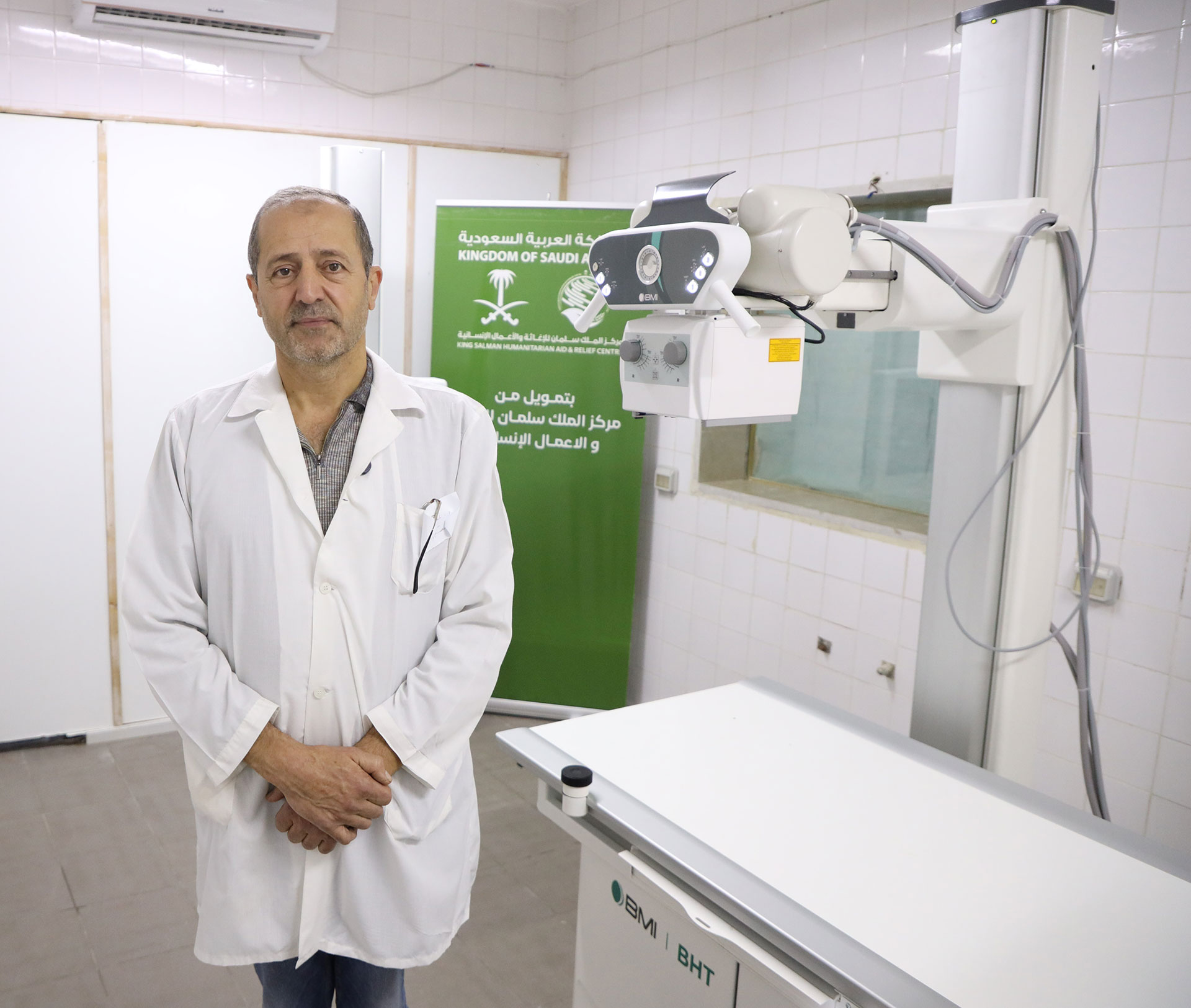 Dr Abdullah Haydar, Head of the Radiology Department at Al-Haffeh Hospital, stands beside the new X-ray machine provided through KSrelief support. Photo credit: WHO
For Dr Abdullah Haydar, head of the radiology department, the new X-ray machine has been transformative. “Previously, we had to send many patients to Latakia city for imaging. Now, we can diagnose and treat them immediately. It has made a huge difference for families who cannot travel for care.”
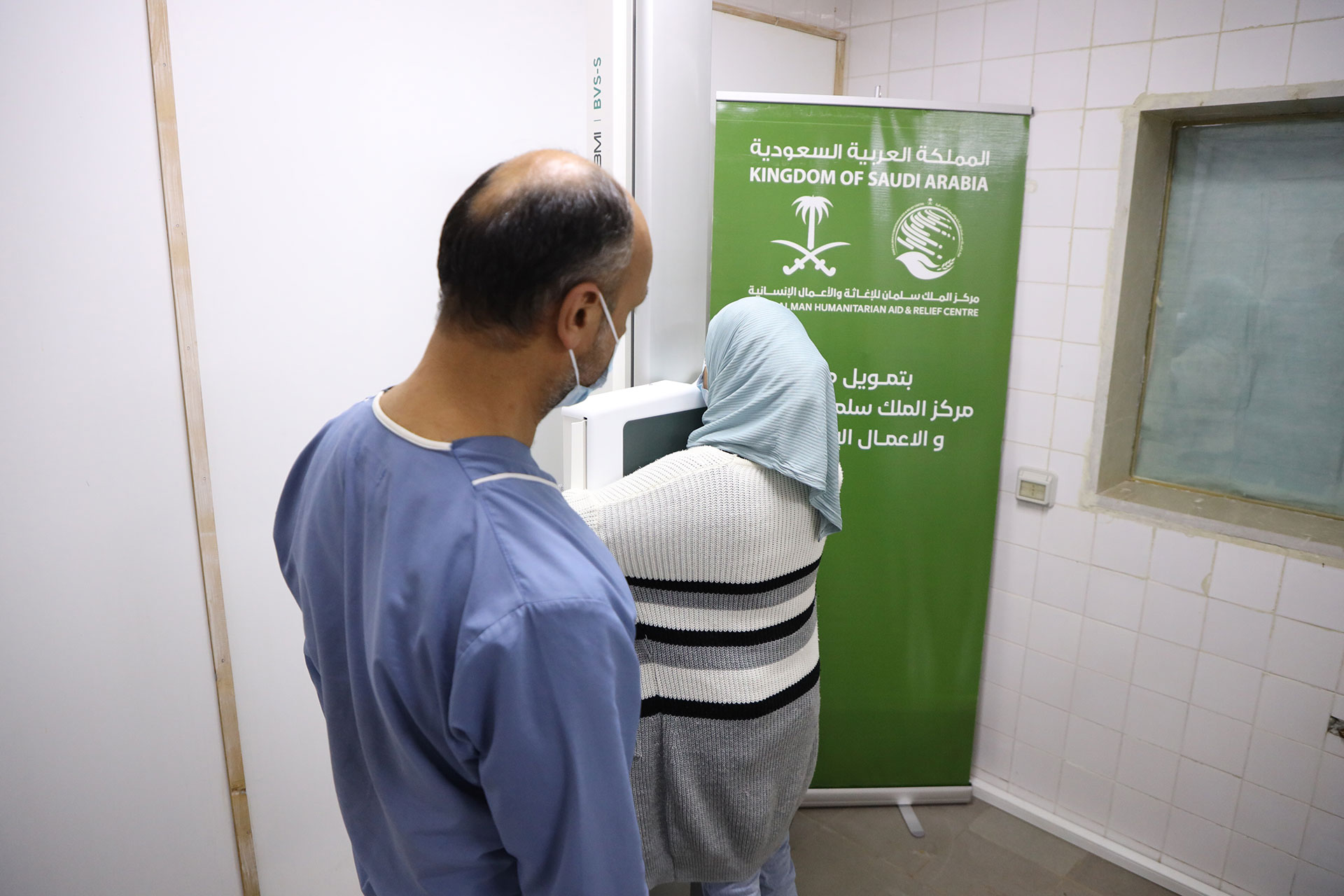 A patient undergoing an X-ray at Al-Haffeh Hospital using the new imaging machine provided through KSrelief support. Photo credit: WHO
Christina, a 21-year-old student, injured her wrist in a fall and came to the hospital for urgent treatment. “I was in so much pain, and I didn’t know where to go,” she recalls. “The doctors took X-rays and performed surgery immediately. The treatment was free and fast. Without this hospital and this new equipment, my injury could have been much worse.”
 Christina, a 21-year-old student, receives medical care at Al-Haffeh Hospital after being injured in a fall. Photo credit: WHO
At Al-Haffeh Hospital, these upgrades are felt every day. Surgeons have reliable equipment, radiology teams can complete imaging on site, and emergency cases are managed more safely. For many families in rural Latakia, this means receiving the care they need without travelling far from home.
