


15 December 2025, Idlib, Syrian Arab Republic – The Ministry of Health, with support from WHO, held a national event in Damascus to strengthen Syria’s response to antimicrobial resistance (AMR) through a One Health approach that brings together the human health, veterinary, agriculture and environmental sectors. More than 100 participants joined the discussions, reflecting growing national momentum to improve coordination, surveillance and governance to address AMR.
Antimicrobial resistance is making common infections harder to treat, posing increasing risks to people, animals and the environment alike. In Syria, gaps in surveillance, information sharing and laboratory capacity continue to limit a full understanding of resistance patterns and slow coordinated action across sectors.
Dr Yasser Farouh, Director of Communicable and Non-Communicable Diseases at the Ministry of Health, underscored the need for a comprehensive, cross-sector response. “Addressing antimicrobial resistance requires strong coordination across human, animal and environmental health,” he said. “Our goal is to strengthen laboratory capacity and raise awareness about antimicrobial resistance at the national level. Assessments give us a realistic understanding of current capabilities and clear recommendations to guide next steps.”
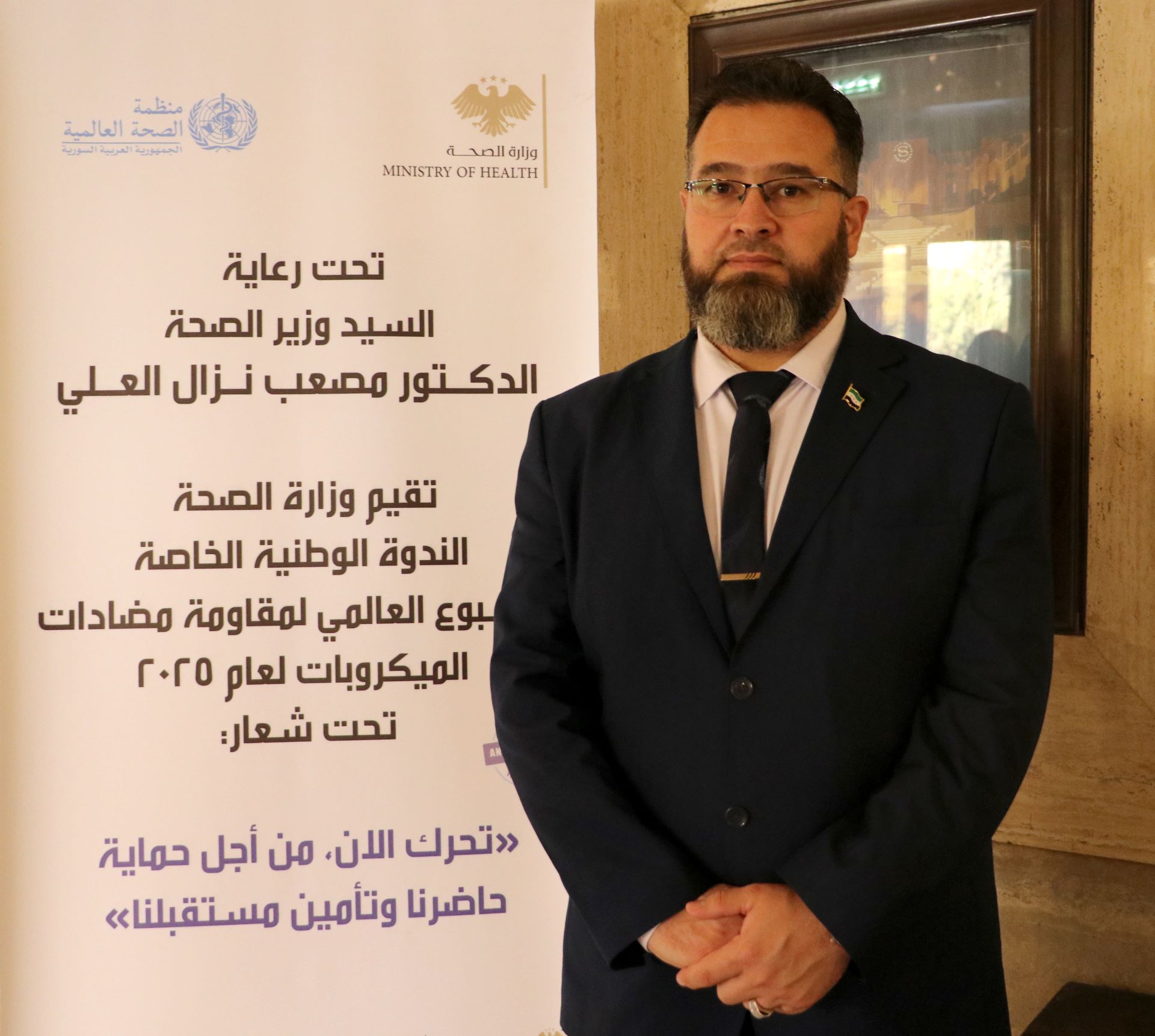 Dr Yasser Farouh, Director of Communicable and Non-Communicable Diseases at the Ministry of Health, during the national event on antimicrobial resistance in Damascus. Photo credit: WHO
He explained that enhancing laboratory services — alongside rapid response teams, water quality monitoring and integrated surveillance — will support earlier detection of resistant infections and better information sharing between sectors. “Resistance is rising worldwide — including here. Protecting our present and our future requires action from every sector,” he said.
Dr Ismail Khateeb, Deputy Director of Primary Health Care, emphasized the urgency of translating discussion into action. “We can no longer say that time is running out. It already has. Syria is not isolated from this global challenge, and every sector must act now.”
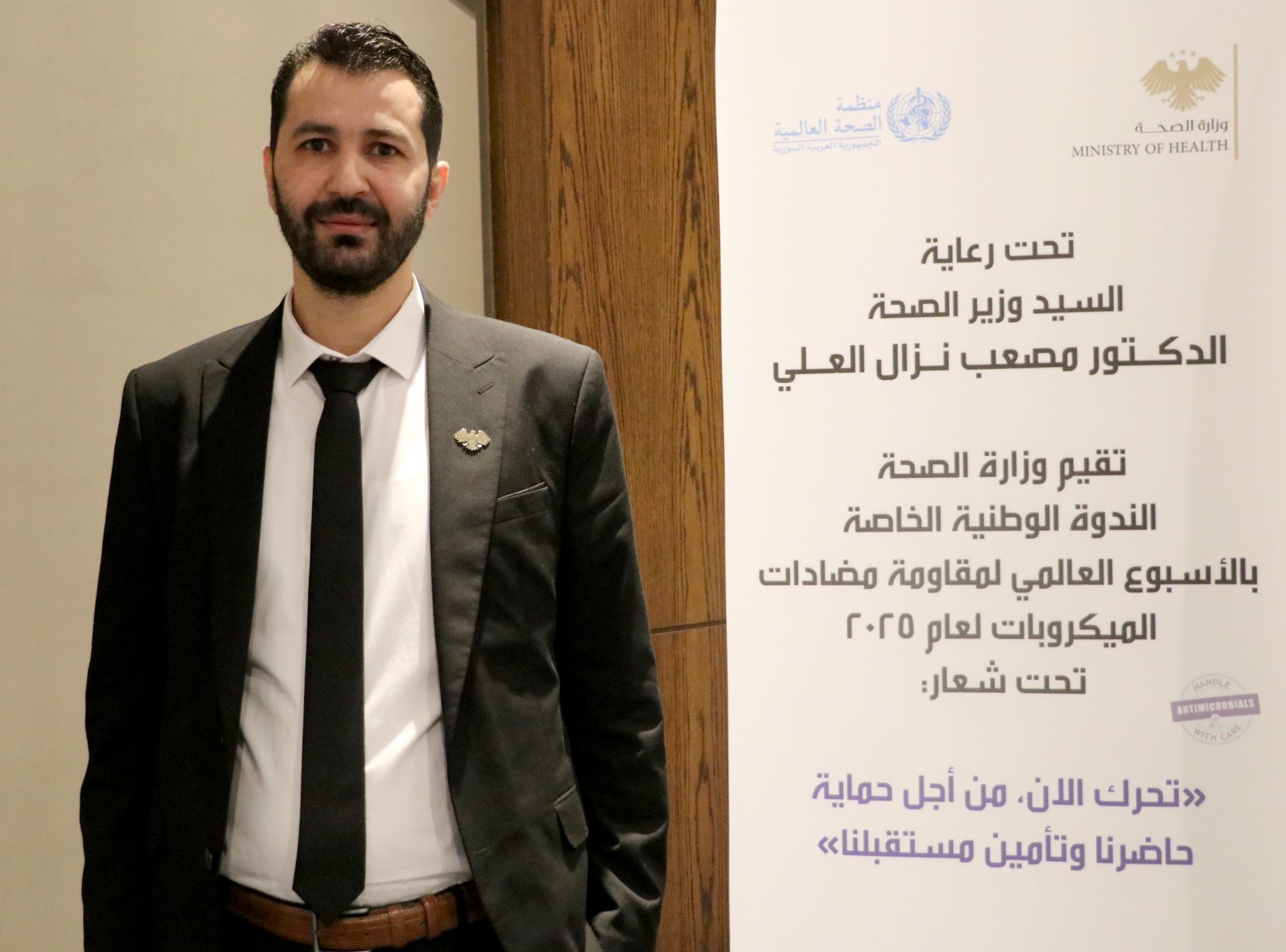 Dr Ismail Khateeb, Deputy Director of Primary Health Care at the Ministry of Health, during the national event on antimicrobial resistance in Damascus. Photo credit: WHO
The discussions highlighted the importance of risk communication and community engagement. Raising public awareness about the responsible use of antibiotics, encouraging timely healthcare-seeking behaviour and sharing clear messages through trusted channels are essential to slow the spread of resistance.
Participants agreed on priority actions: strengthening One Health collaboration across human, animal, agricultural and environmental sectors; expanding testing and improving laboratory tools and procedures; raising awareness on safe and rational antibiotic use in both human and animal health; enhancing infection prevention and control; improving water, sanitation and hygiene in healthcare facilities; and strengthening access to evidence-based information to guide decision-making.
Discussions throughout the event highlighted the importance of strengthening interministerial coordination, improving surveillance systems across human, animal and environmental health, and establishing a national One Health and AMR coordination committee. Participants also emphasized the need to expand laboratory capacity, enhance infection prevention and control, improve water, sanitation and hygiene in health facilities, and promote the responsible use of antibiotics in both human and animal health.
Risk communication and community engagement were also identified as essential. Raising public awareness, encouraging timely care-seeking, and sharing clear, evidence-based messages through trusted channels remain critical to slowing the spread of antimicrobial resistance.
Following the event, the Ministry of Health and WHO will work together to follow up on the recommendations, strengthen coordination mechanisms, and support integrated surveillance and information sharing across sectors — key steps toward safeguarding health in Syria against the growing threat of antimicrobial resistance.
