


24 February 2026, Homs, Syrian Arab Republic – Every day, Homs University Hospital receives thousands of people seeking urgent care. From emergency trauma cases to patients managing chronic diseases, the hospital operates at full capacity, serving both the city and surrounding rural communities.
 Dr Fahd Shreibati, Director General of Homs Hospital, explains how the new medications and emergency kits are improving health care. Photo credit: WHO
In a health system still recovering from years of strain, ensuring the availability of medicines and emergency supplies can mean the difference between delay and survival.
In Homs Governorate, recent support has enabled the delivery of more than one ton of essential medicines, medical supplies, and trauma and emergency surgical kits to Homs University Hospital. Each month, more than 58 000 patients rely on the hospital’s emergency, outpatient, laboratory, imaging and surgical services.
 Dr Shreibati checking on the health situation of a young girl in Homs University Hospital. Photo credit: WHO
Dr Fahd Shreibati, Director General of Homs University Hospital, has witnessed firsthand how shortages affect care. “The situation in the past was very challenging,” he says. “At times, we faced gaps in critical medicines and supplies. With recent support, we are better able to manage urgent cases and ensure patients receive timely treatment.”
The emergency and surgical kits have strengthened the hospital’s capacity to respond to trauma and complex cases, while the shipment of medicines for chronic diseases such as hypertension and diabetes helps patients maintain continuity of care.
Rahaf Ibrahim, a pharmacist at the hospital, explains the impact from inside the pharmacy. “We received medicines for chronic diseases, as well as trauma and emergency kits,” she says. “These supplies are essential, especially in emergencies when every minute matters. When medicines are available, we can focus on patient care rather than worrying about shortages.”
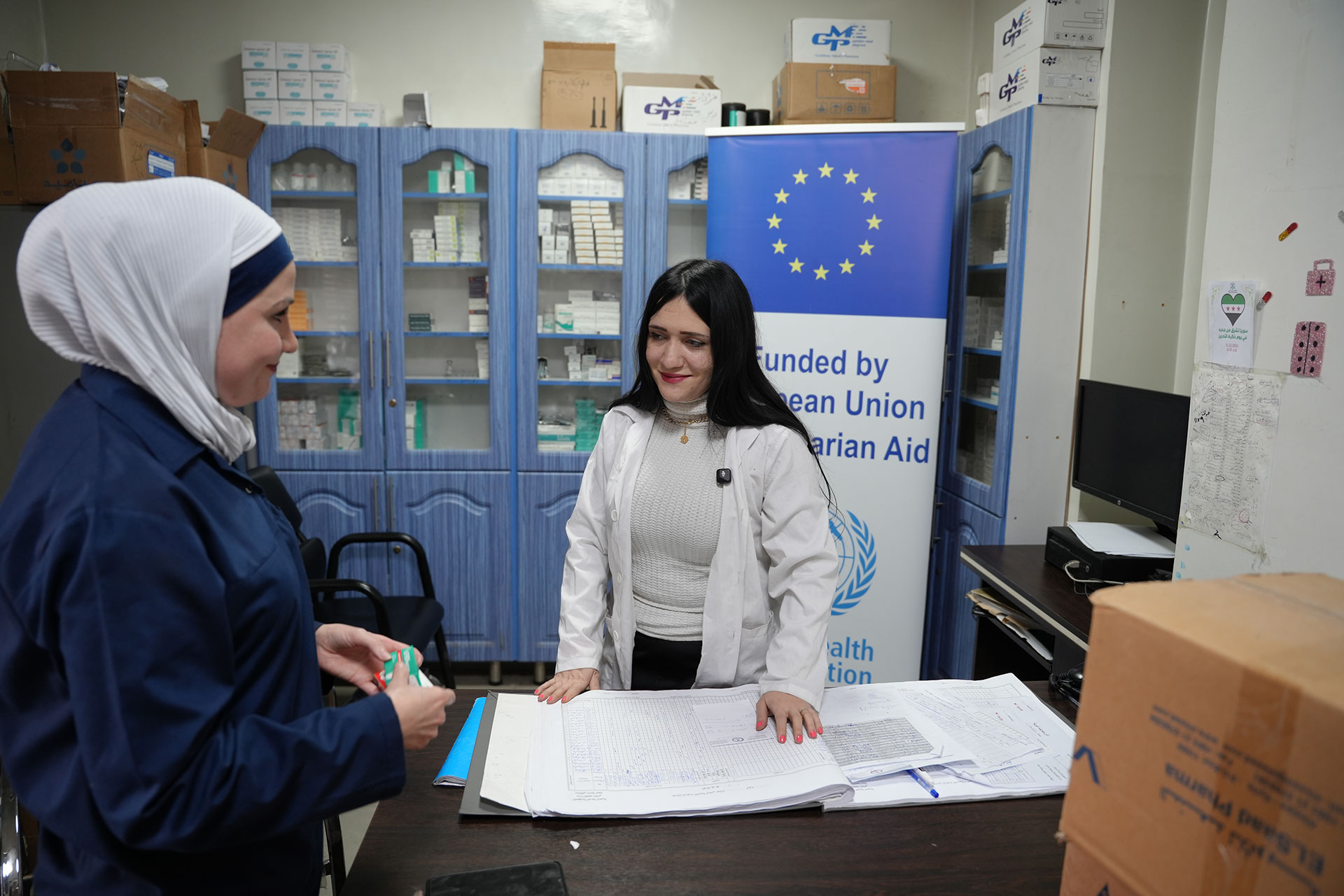 Pharmacist Rahaf, following up with a patient and provides her with the medicines she needs. Photo credit: WHO
Despite improvements, needs remain significant. “There is still a strong demand for medicines, medical supplies and diagnostic equipment,” Dr Shreibati notes. “With the growing number of patients, continued support is very important to sustain services.”
 A nurse tests a patient's pulse and follows up with the needed health services at Homs University Hospital. Photo credit: WHO
The Ministry of Health continues to lead efforts to maintain essential health services across the country. The World Health Organization supports these efforts through technical assistance and the delivery of priority medical supplies. Funding from the European Union through EU Civil Protection & Humanitarian Aid has helped ensure the continuity of life-saving services in Homs.
As hospitals work to meet rising demand, sustained investment in essential medicines and emergency preparedness remains critical to protecting patients and strengthening access to care across Syria.
